
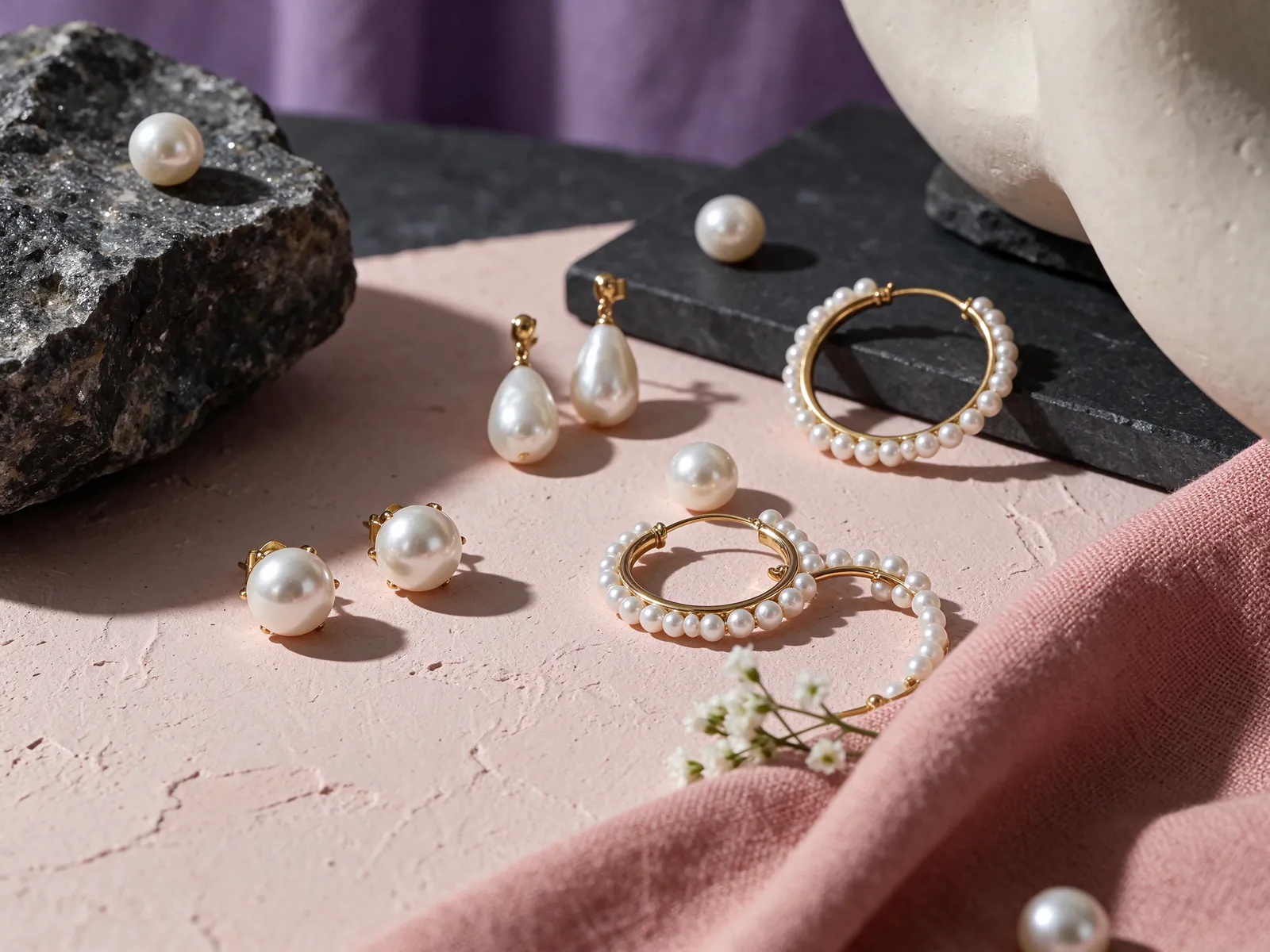
How can you judge proportion when comparing baby pearl jewelry with small pearl jewelry or mini pearl jewelry?
Choose the visual role you want before deciding how small a pearl should be. You might want a subtle detail close to your face, a pendant that stands out against a simple top, or a fine strand that creates a complete line. Each goal involves more than diameter. The setting, number of pearls and open space between them all contribute to the finished silhouette. A small pearl surrounded by defined metalwork may look more prominent than a similarly sized pearl with a quieter outline.
WSP’s public collection introduction describes baby pearls as typically up to around 6 mm. This is an example of that brand’s size terminology, not a universal size or quality classification. When comparing baby pearl jewelry, small pearl jewelry or mini pearl jewelry, request the actual measurements. Photography can magnify tiny details and remove the setting from view. Consult the pearl size guide to distinguish pearl diameter from the overall width and length of a piece, then judge how those proportions relate to its intended wearing position.
Why check the actual measurements of baby pearl jewelry rather than rely on the labels small pearl jewelry or mini pearl jewelry?
Look at where the piece will sit as well as how large the pearl is. A stud needs space on the earlobe, a pendant has a bail and chain, and a bracelet has a complete arrangement around the wrist. For a pearl with an elongated outline, length and width can be more informative than one number. The mini label cannot describe those relationships, which is why the complete dimensions deserve attention. This page’s images are styling and educational illustrations, not evidence of pearl type, origin, grade, certification, dimensions or stock.

A delicate scale still deserves a complete quality comparison
Small pearls are not exempt from the details that make pearl jewelry appealing. Under comparable lighting, observe the reflections, surface features and overall color impression. Turn the piece to see whether its appearance changes, rather than judging only the brightest highlight in a photograph. Decide which features you notice at your normal wearing distance. That keeps the comparison grounded in the experience of wearing the jewelry, without treating a tiny size as either a flaw or a quality guarantee.
GIA identifies seven pearl value factors: size, shape, color, luster, surface quality, nacre quality and matching when a piece contains more than one pearl. Diameter is one part of that framework. Merchant labels such as AAA and AAAA are not universal grades or GIA classifications. Small earrings may appeal because their pearls look harmonious; a strand may rely on consistency or deliberate variation across many pearls. The pearl grading guide helps frame these comparisons without treating the most flattering photograph as a complete assessment.
Decide whether you prefer uniformity or visible variation
A neat symmetrical pair and a deliberately varied strand have different design goals. Before judging a difference as distracting, identify whether the piece is aiming for a consistent look or a more irregular rhythm. Scan the full arrangement and ask whether that rhythm suits your style. Matching is a useful consideration, but it should be understood alongside the effect the design is trying to create.
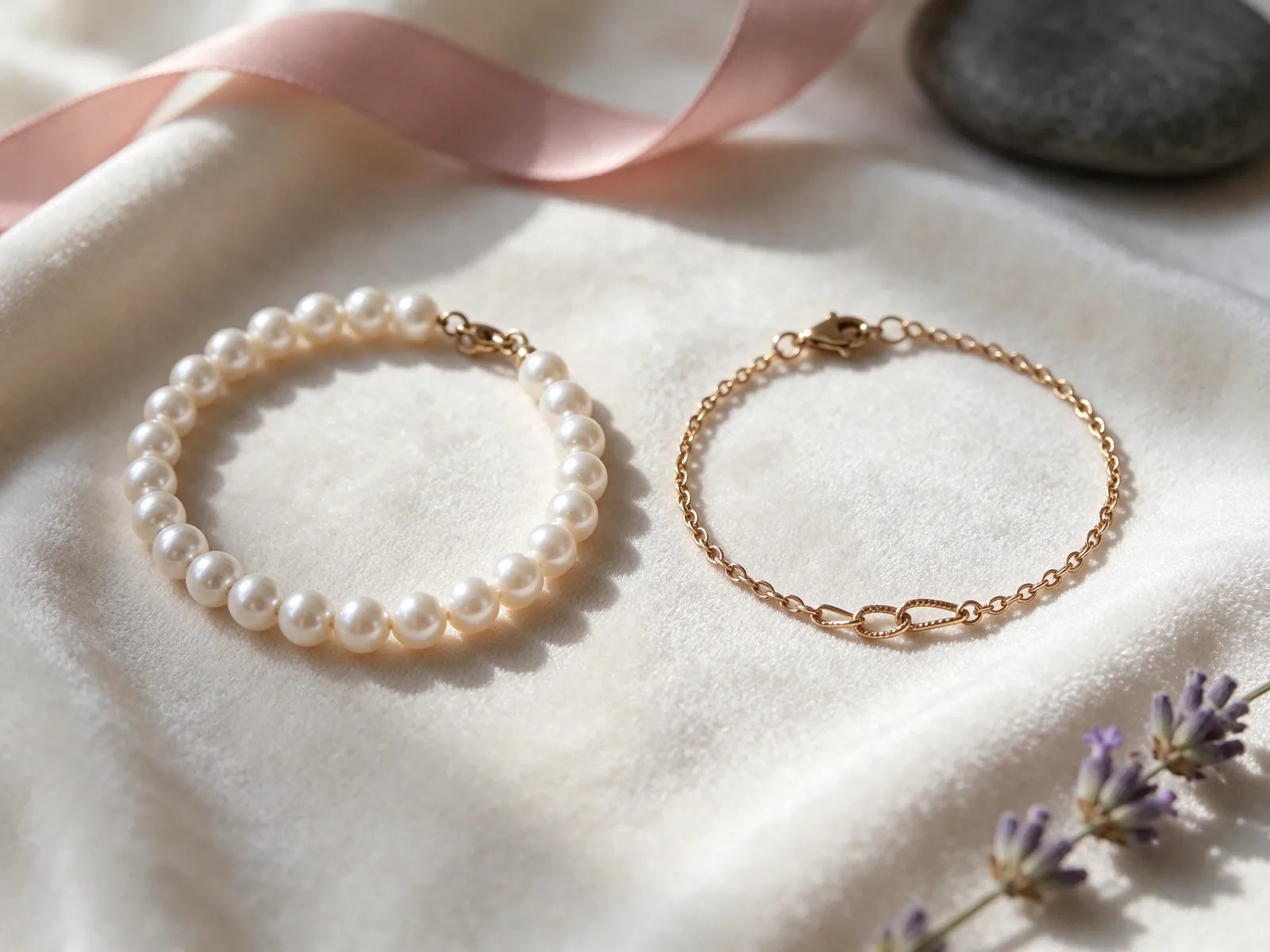
For earrings, assess placement rather than diameter alone
A small stud can be an understated accent, but placement on the earlobe changes how it reads. Check the space around the pearl and whether the setting projects more than you expected in profile. Then try the hairstyle you wear most often. Loose hair may partly conceal a delicate earring, while pulled-back hair makes the same piece easier to see. You are choosing a level of visibility, not following a rule that smaller or more noticeable must always be better.
The guide to small pearl stud earrings can help you compare the complete earring. Look at the post and backing, how easily you can fasten them, and how the piece sits afterward. If you wear glasses or spend time on the phone, check the side profile with those habits in mind. Known metal sensitivities need a separate question about every skin-contact component, including the backing. Small diameter does not establish comfort or freedom from an allergic reaction; structure and material both matter.
Let the earrings share space with the rest of your outfit
Start with the complete outfit and earrings before adding more accessories. A structured collar or bold pair of glasses may already provide strong lines near the face. With a simpler neckline, the earrings can become a clearer detail. View the outfit from a normal distance to judge balance. Close-up images remain helpful for details, but they do not show the same overall effect as everyday conversation.
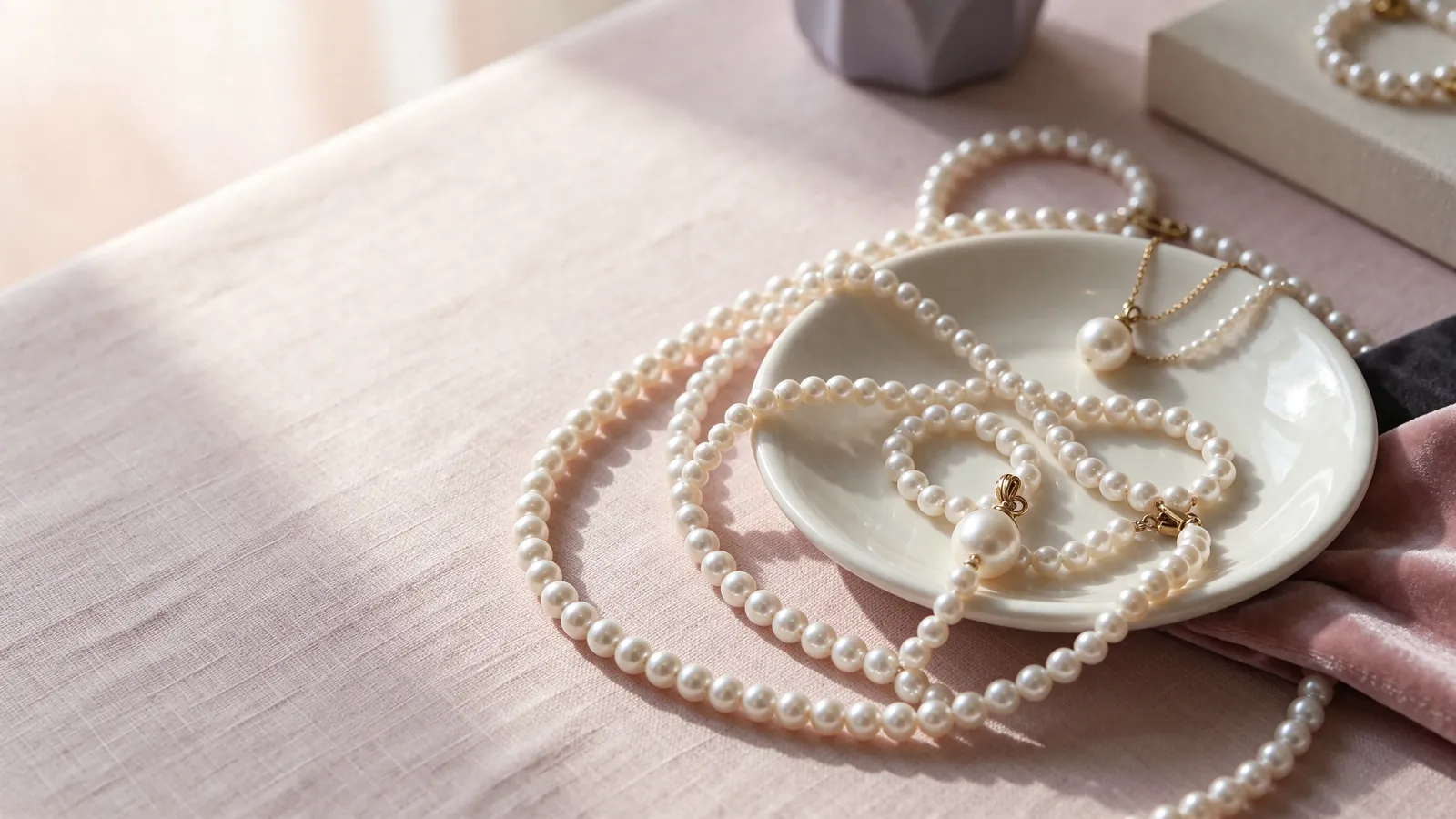
For pendants, compare the pearl with its frame and neckline
A single small pearl rarely appears independently of its metalwork. The bail, setting and chain may reinforce its outline or draw some attention away from it. Compare the finished pendant rather than focusing exclusively on the pearl. If you want a quiet point of light, a visually restrained connection may suit your preference. If you enjoy a defined outline, the metalwork can be an intentional part of the style rather than something that must always disappear.
Try a dainty pearl pendant with the tops you reach for most often. A crew neckline may place it against fabric; an open collar may put it against skin. That background affects visibility. When layering, observe whether another chain hides or repeatedly touches the pearl. The guide to choosing metals for pearl jewelry can organize color preferences around 18K 750 white gold, 18K 750 yellow gold, 18K 750 rose gold, PT950 platinum and PT900 platinum. The metal option is separate from pearl identity and quality, and the specific construction should be discussed for the design.
Layer only after you have checked the pendant's own position
Wear the pendant by itself first and observe its position while standing and sitting. Add another chain only after you know where the pearl rests. If two pendants repeatedly overlap, change the arrangement rather than assuming you need a larger pearl. A patterned top may make the pearl an intimate detail, while a plain background can give the same piece a more distinct focal role.
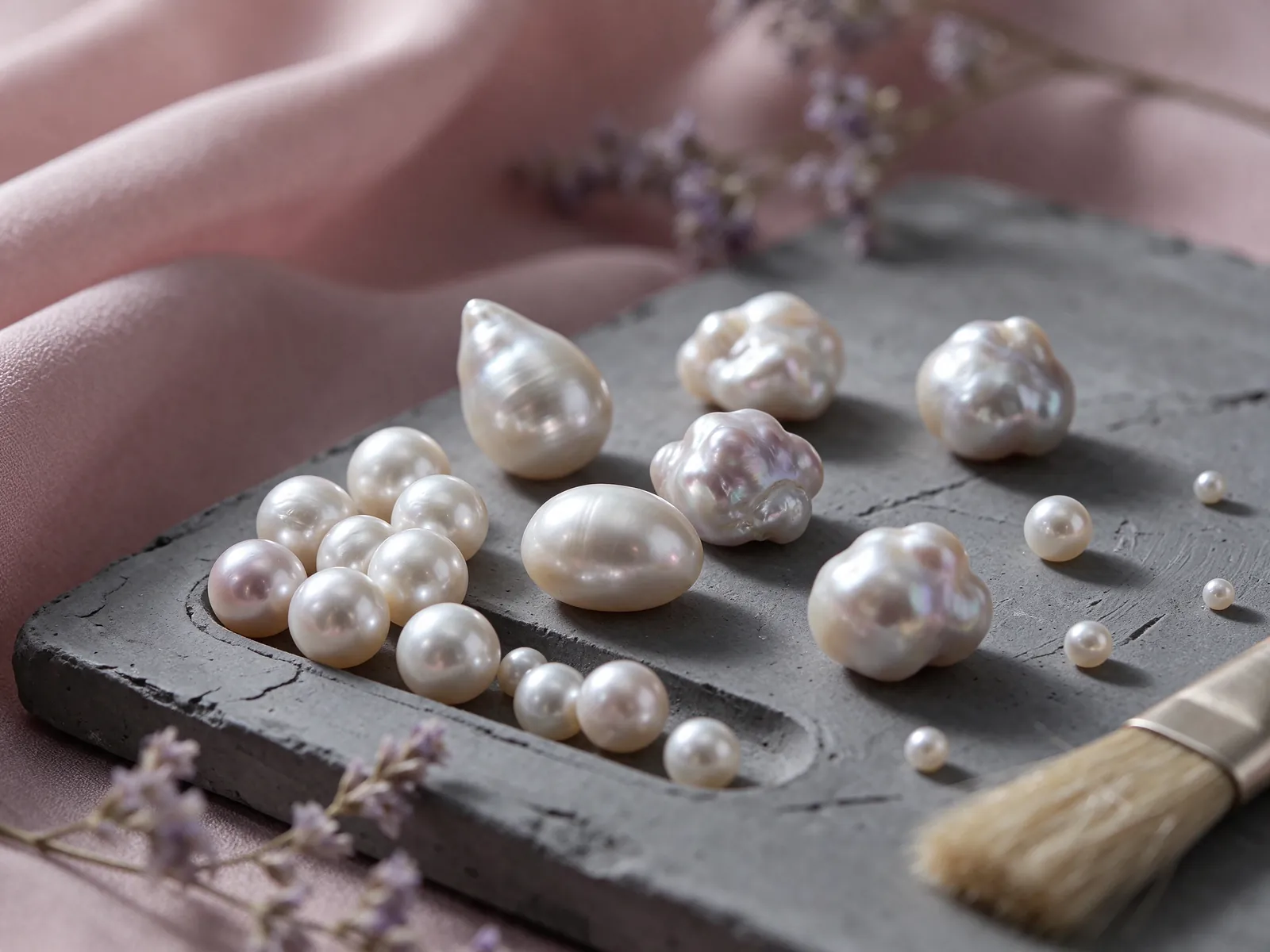
For bracelets and necklaces, study the rhythm of the whole piece
Many small pearls placed close together can create a continuous line with a noticeable presence. Spacing them apart gives a different rhythm even when individual pearl sizes are similar. When considering a small pearl bracelet, look at its full width, wrist fit and fastening. Observe where the clasp and any metal intervals settle as you turn your wrist. Those details tell you more about daily wear than a single pearl photographed in isolation.
If a watch is part of your routine, try the bracelet alone before putting them together. Notice whether the pearls repeatedly touch the watch case, desk or another bracelet. For a necklace, consider whether your preferred effect is a continuous line around the neckline or separate small accents. Total length, spacing and the clothing background all matter. The most useful question is often how the arrangement behaves as a whole, rather than how far you can reduce the pearl size.
Test ordinary movement and look at the connections
Move your wrist, reach for a bag and shift your shoulders while checking fit. Watch for twisting or contact with clothing and other accessories. A delicate outline does not prove that a piece tolerates every activity. On strung jewelry, look for slack or wear in the string and examine the connections. If a pearl is loose, the string damaged or the clasp insecure, stop wearing the piece and arrange an assessment. Its size cannot establish durability or guarantee a repair outcome.

Separate baby pearl terminology from shape and identity
Baby, small and mini mainly describe scale, not origin, pearl type or natural-versus-cultured identity. In the CIBJO 2024 Pearl Book, a Keshi cultured pearl is a non-beaded cultured pearl formed through human intervention in marine pearl oysters as a by-product of culturing. CIBJO also advises that Keshi needs the appropriate natural or cultured qualification. A small irregular pearl is not identifiable as Keshi from its outline alone, and having no bead does not establish an absence of human intervention.
CIBJO’s seed pearl definition is different again: a small saltwater or freshwater natural pearl, generally below 2 mm and no more than 3 mm in diameter. Natural identity is part of that definition, so it is not a substitute name for any tiny cultured pearl. WSP’s approximate 6 mm baby-pearl usage describes scale in its collection. Read the actual dimensions and identity separately, even when two pieces look equally delicate, rather than letting one size label stand in for the full description.
A rounded outline creates a compact point, while an elongated shape can add a sense of direction. If you enjoy a longer silhouette, explore rice shaped pearls as a shape topic and consider their length-to-width relationship. Orientation matters too: placing a pearl across a chain can create a different rhythm from aligning it along the chain. Shape can guide a personal aesthetic choice, but it cannot establish origin or certification on its own.
Use a separate reading step for the pearl description
Narrow your shortlist by the proportions you enjoy, then read the pearl description independently. If a particular pearl identity matters to your decision, look for that information rather than substituting a visual impression. This lets you appreciate the style while distinguishing a size label from a complete specification. The outline, the description and any accompanying document each have their own role.

Bring care and documentation into the final decision
Before choosing, organize the measurements, wearing position, pearl description, metalwork, connections and care. If a document accompanies the jewelry, how to read a pearl certificate helps explain its scope. Check whether the report addresses identity, treatment information or specific quality observations and match its description to the piece. Do not extend it into an unstated price, investment guarantee or brand affiliation. To discuss proportions with Flint Jewelry, share the wearing position, everyday necklines and size preferences on WhatsApp; a specific design proposal and quote require individual discussion.
GIA lists pearl at 2.5 on the Mohs hardness scale and says pearls should never be cleaned in ultrasonic or steam cleaners. After wearing, use a very soft, clean cloth. Put perfume and hair spray on before your pearls, and avoid acids and excessive heat. Store them separately from jewelry that could scratch them. Small pearls benefit from the same considerate approach: a tiny appearance is not permission to ignore handling or expose the piece to rough contact.
Match the style with a care routine you can maintain
Cleaning depends on the entire construction. GIA’s mention of occasional gentle washing does not mean that every glued, mounted or strung piece can be soaked, and prolonged soaking should be avoided. If the string gets wet, let it dry completely before wearing; the pearl surface may look dry first. The pearl care guide can help you plan when to remove jewelry for abrasive activities or household cleaning and how to check connections before use. A delicate style should suit your clothes, movements and realistic care routine.
| Jewelry format | What shapes the effect | Outfit check | Handling check |
|---|---|---|---|
| Stud earrings | Earlobe space and setting profile | Compare loose and pulled-back hair | Post and backing operation |
| Single pendant | Pearl, bail and chain balance | Test the usual neckline background | Position when sitting or layering |
| Bracelet | Full arrangement and wrist fit | Try alone before combining with a watch | Clasp and repeated contact |
| Pearl strand | Close spacing or separated accents | View against plain and patterned tops | Length, string and connections |
| Elongated outline | Length, width and orientation | Choose compact or directional styling | Read identity separately from shape |
Pearl knowledge and authoritative references
GIA identifies 7 pearl value factors: size, shape, color, luster, surface quality, nacre quality and, for multi-pearl pieces, matching. Pearl size is one part of the overall assessment, not a complete grade.
Read the reference for this factFrequently asked questions
Is mini pearl jewelry a recognized quality grade?
The word mini describes a small visual scale, not a complete pearl quality grade. GIA's quality framework includes seven factors, so size should be considered alongside luster, surface quality, matching and the other factors.
Does baby in the name indicate that a piece is child-safe?
No. Baby pearl is commonly a size expression and should not be interpreted as approval for babies or children. The word does not establish suitability or safety.
Why does a pearl look larger online than I expected?
A close crop, enlarged image and lack of surrounding context can change the impression of scale. Read the actual measurements of the pearl and complete piece rather than estimating size from a photograph.
Can small pearls be a noticeable part of an outfit?
Yes. Close spacing can form a clear line, and a defined setting or contrasting background can make a small detail more visible. Consider the complete silhouette instead of diameter alone.
Should I wear a pearl bracelet next to my watch?
Try the bracelet alone first, then observe the combination during ordinary wrist movement. Repeated contact with the watch case or other jewelry is a reason to reconsider the arrangement. Small size does not make the pearls resistant to abrasion.
Are seed pearls and Keshi simply other names for baby pearls?
No. Baby pearl is a size expression. CIBJO’s 2024 Pearl Book defines seed pearl as a small natural pearl, generally below 2 mm and no more than 3 mm, while Keshi cultured pearl concerns non-beaded cultured pearls formed through marine pearl culturing. Read identity and dimensions independently; a photograph cannot make the names interchangeable.
Updated: