
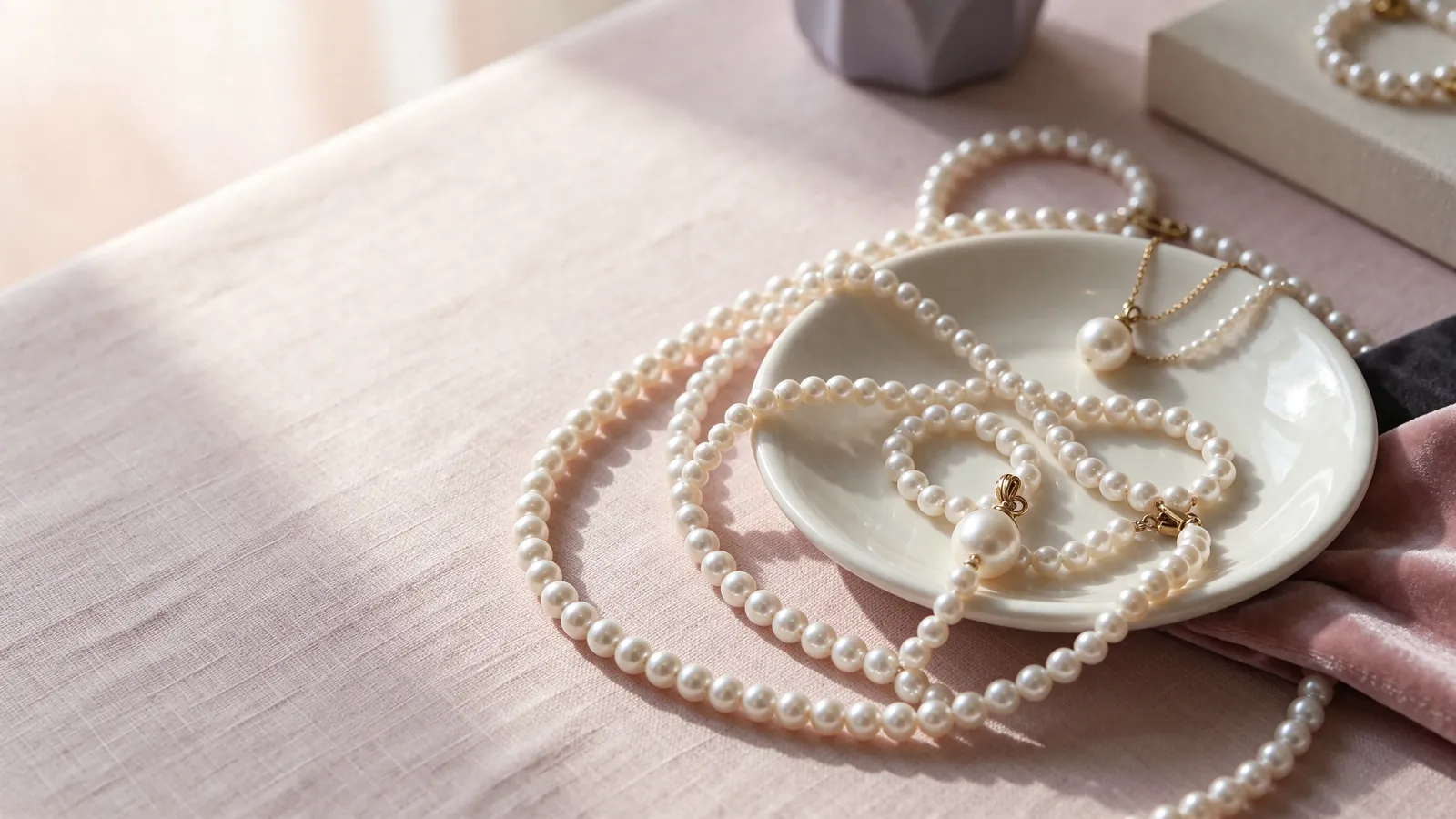
Which component does the metal label describe on a PT850 pearl pendant necklace or an 850 platinum pearl pendant chain?
For help framing your pendant and chain questions, contact Flint Jewelry on WhatsApp +85260106207 to discuss PT900 or PT950 platinum options. A necklace description can compress several different parts into one short title. Before comparing it with another piece, identify the chain, clasp, connection rings, and pendant. Look for wording attached to each component rather than assuming the nearest metal name applies to everything. Two pieces can look similarly white while their descriptions refer to different parts of the assembly.
An 850 platinum pearl pendant chain and a PT850 pearl pendant are useful search terms, but their word order cannot verify construction. The first may focus on the chain; the second may focus on the pendant. A guide to pearl pendant chain compatibility helps put those phrases in context. Read the complete description before deciding which component you are actually comparing.
Do the chain, clasp, and pendant labels agree on a PT850 pearl pendant necklace or an 850 platinum pearl pendant chain?
Check the coverage of a label as carefully as its lettering. A clasp marking alone does not explain the pendant's material, and a pendant description does not identify an included chain. Ask the seller to distinguish those parts in the written description and clarify whether the chain comes with the pendant. Missing component information should remain an open question rather than becoming an assumption.

Choose an attachment system before choosing the chain's appearance
First determine how the pendant connects. A bail opening must accommodate the chain's end fitting, which can be wider than its links. A necklace that routes the chain through the pearl position raises another question: is removing the chain an intended user operation? A photograph showing a sliding appearance does not answer that question. Understand the attachment system before trying to change parts.
If you plan to switch pendants, focus on the actual threading path and the parts that must pass through it. If you want one necklace worn as an assembly, focus instead on its resting position and normal movement. A dainty pearl pendant also calls for visual proportion: a prominent bail or chain can change the effect of a small pendant even when the components fit.
Look for clearance without bending or pulling
A fitting demonstration should follow the construction's normal method, explained by someone familiar with it. Watch the widest chain end, not just the links, and check that the attached pendant is not crowded against the connection. Do not squeeze a bail or pull a clasp to make a mismatch work. A smooth fit is useful information, but it does not verify metal identity or predict lifetime wear.
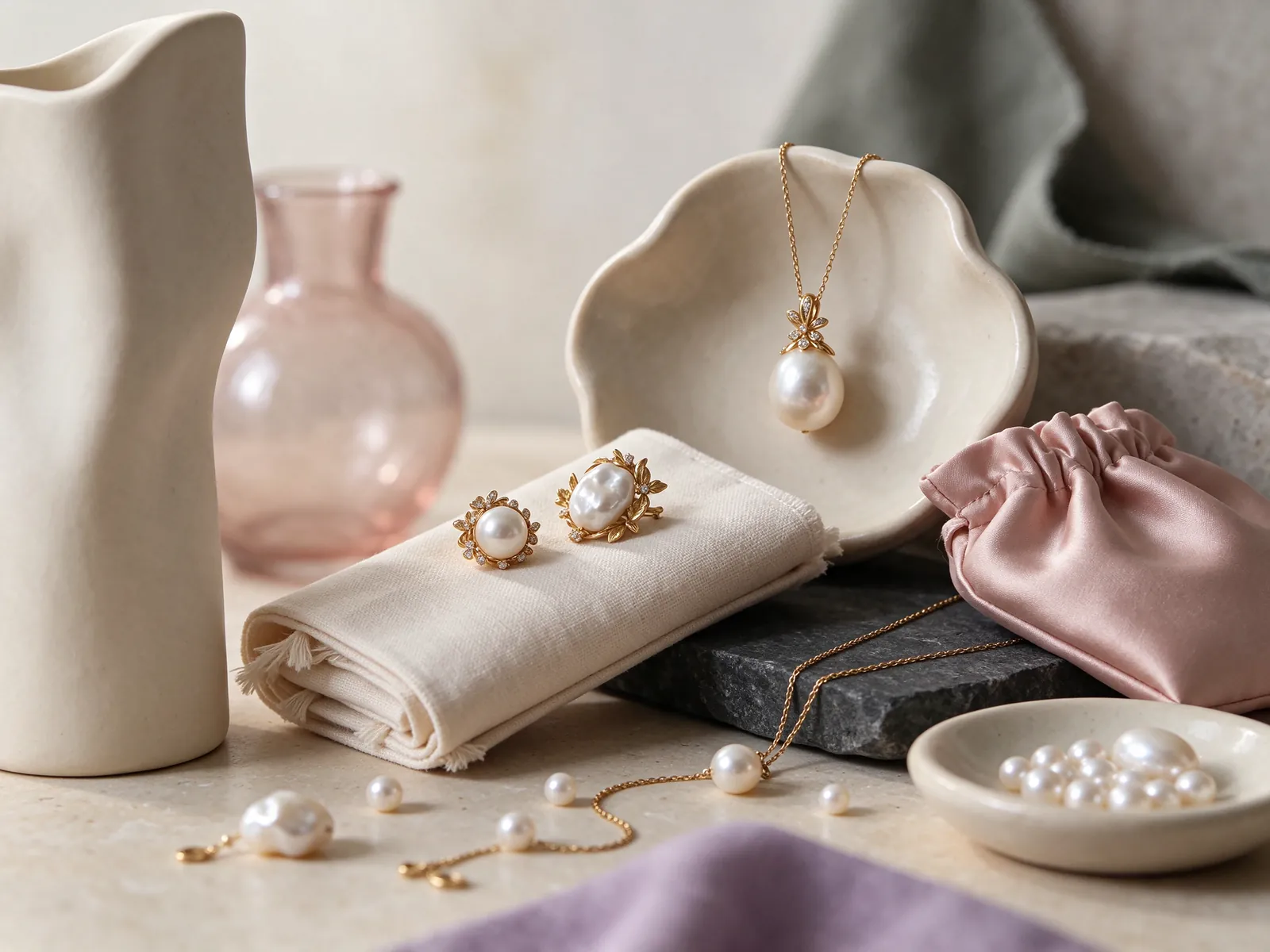
Use actual outfits to decide where the pendant should rest
The same listed chain length can create different results on different wearers. Your neckline, collar fabric, and pendant position all matter. Try the necklace with a button-down shirt and check whether the pendant catches at the opening or disappears beneath it. With a crew neck, compare a position above the edge with one on the fabric. Neither choice is automatically correct for everyone.
Outline matters as well as height. A crescent moon pearl pendant provides a useful example for thinking about direction and balance: a shaped pendant may turn differently from a simple single-pearl design. Consider whether the neckline frames that outline or interrupts it. Sit down, lean forward normally, and turn your head before deciding based only on a still, front-facing image.
Check the chain tail when an adjustment feature is present
An adjustable construction, if present, offers positions to try rather than a universal solution. Learn how its mechanism is meant to operate; do not assume every chain has one. After choosing a position, check the loose tail at the back and its interaction with hair or the collar. A useful length decision balances the pendant's front position with straightforward handling of the complete necklace.
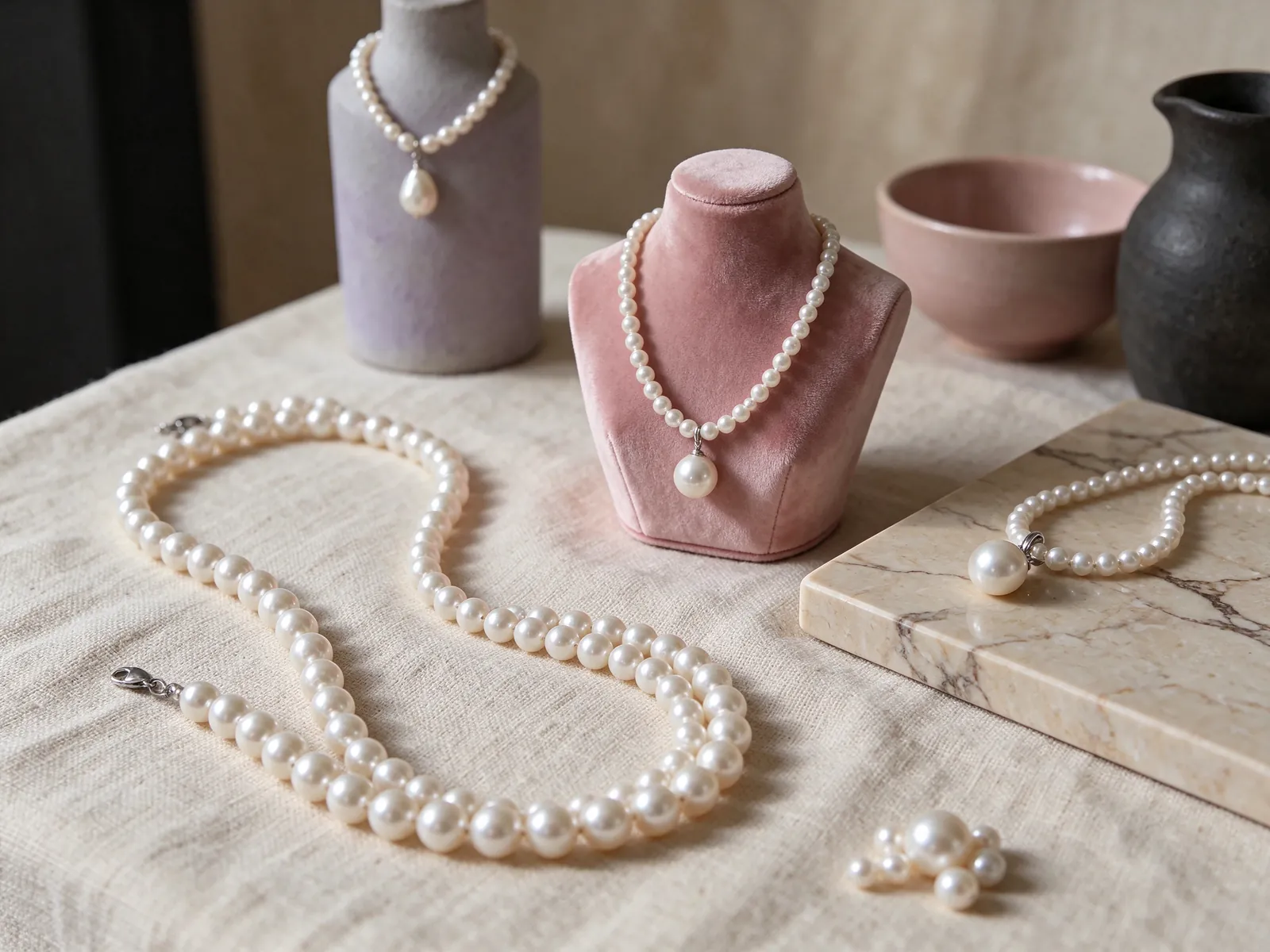
Decide whether the pearl or the chain should lead the look
Link shape and reflected light influence how noticeable a chain appears. When the pearl is your intended focal point, compare the whole necklace in consistent lighting instead of relying on an enlarged pendant crop. Notice whether the chain frames the pearl or competes with it. Stronger reflection can suit a deliberate statement, while a quieter line may better support an understated outfit.
Thinking about a pearl and sapphire pendant can sharpen this choice because a colored element creates another possible focal point. Decide whether your interest is in the pearl, the color detail, or the overall silhouette, then assess the chain accordingly. This styling exercise cannot identify a gemstone in a different piece. Other jewelry can echo the mood without having identical reflections or matching every detail.
Keep pearl evaluation separate from metal wording
GIA identifies seven pearl value factors: size, shape, color, luster, surface quality, nacre quality, and matching. A PT850 label cannot supply answers about those factors. Look at visible luster and surface alongside the pendant's outline, and consider matching when coordinating several pearls. A round shape or white color does not establish origin, natural-versus-cultured identity, or a certificate for the piece.
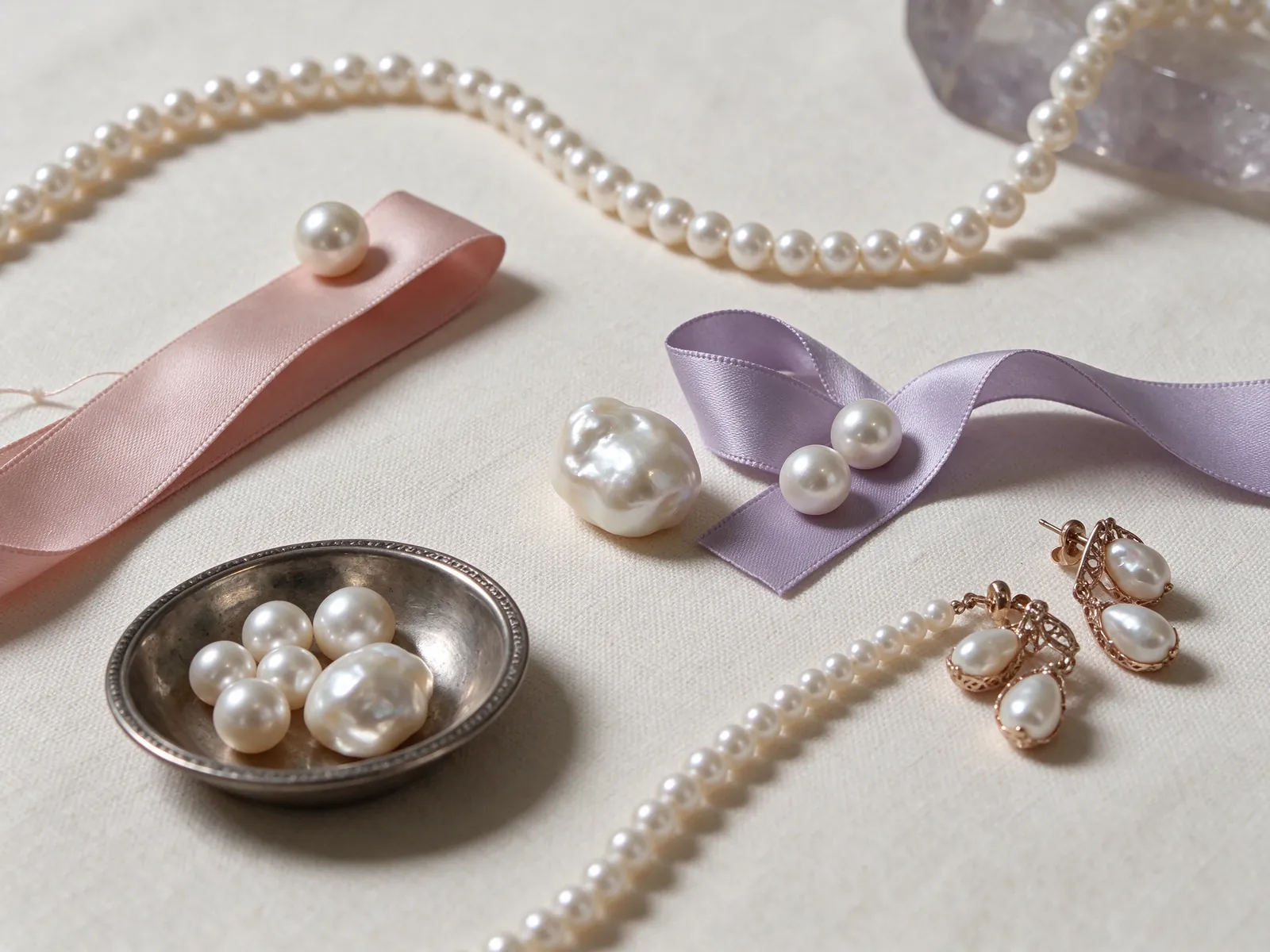
Test layered looks for movement and repeated contact
Layering is more than choosing two different chain lengths. Pendants can still meet as you move or sit, so observe where the pearl touches the other necklace. Start with the pearl pendant alone and introduce the second piece afterward. If the chains continually tangle or the pendants overlap, wearing them separately can make the intended focal point clearer and reduce the need for constant rearrangement.
A PT850 pearl bracelet can be considered as a separate coordination topic, not as proof that the necklace and bracelet share one metal. Read both pieces' component descriptions independently. You might keep the wrist look restrained while giving the pendant more presence. Desk contact at the wrist and collar contact at the neck create different wearing situations, so each piece deserves its own practical assessment.
Bring ordinary accessories into the try-on
A crossbody strap, scarf, or long hair can change where the necklace catches or shifts. Use normal movements to notice those interactions rather than deliberately pulling on the chain. Remove jewelry for sleep, exercise, or activities likely to snag it. The aim is a practical wearing arrangement that you understand, not a test intended to prove that a material cannot break or cause inconvenience.

Clean for the pearl, not only for the platinum chain
The pearl remains part of the cleaning decision even when the chain is platinum. GIA lists pearl at 2.5 on the Mohs hardness scale and says pearls should never be cleaned in ultrasonic or steam cleaners. That number supports a gentle-care approach. It does not measure the chain's pulling strength or mean a particular chain metal makes the pearl resistant to scratches.
GIA recommends a very soft, clean cloth for routine wiping after wear and advises avoiding acids, perfume, hair spray, and excessive heat. Finish fragrance and hair products before putting the necklace on. If the chain and pendant stay attached, select care for the complete construction rather than applying a metal-only method to everything. Ask about difficult-to-reach areas instead of experimenting with a cleaning machine.
Keep the pearl away from other pieces during storage
Give the necklace its own storage space so another pendant or metal component does not repeatedly rub against the pearl. Straighten the chain gently before putting it away. On the next wear, observe whether the clasp closes as usual and whether any link or pendant movement has noticeably changed. Stop using it if something seems different; forcing parts back into shape is not a substitute for assessment.

Prepare clear questions for a PT900 or PT950 discussion
Flint Jewelry's platinum options are PT900 and PT950. Explain your preferred neckline position, whether you intend to layer, and whether an existing pendant is involved. Lessons from reading a PT850 description can help structure that conversation, but they do not establish a Flint PT850 chain offer or imply that another company's necklace construction can be reproduced or supplied. Material options are limited to 18K 750 white gold, 18K 750 yellow gold, 18K 750 rose gold, PT950 platinum, and PT900 platinum; PT850 is not a Flint material option.
For an existing necklace, describe the bail, clasp, normal resting point, and the specific movement that bothers you. An overall photo may help communicate the shape, but it cannot alone identify a metal or a pearl. Practical concerns such as turning at a collar or an awkward threading route give the discussion a clearer purpose than asking which metal name is best in every situation.
Record observations without turning them into guarantees
Separate your notes into written component descriptions, observed fitting behavior, and personal styling goals. Keep an unconfirmed material question open, and describe a preferred look as a preference rather than a quality grade. This simple distinction helps you compare like with like. It also keeps attention on the parts and wearing situations that matter, instead of relying on broad conclusions from a search title. Contact Flint Jewelry on WhatsApp +85260106207 with your neckline, pendant position and chain-fitting preferences to discuss PT900 or PT950 platinum options.
| Check | What to read or observe | Outfit consideration | Avoid assuming |
|---|---|---|---|
| Chain body | Which description identifies the chain and its end fitting? | Whether reflection competes with the pendant | That all components share its material |
| Clasp and connecting parts | Scope of the wording and normal operation | Interaction with hair and the rear collar | That one mark identifies the whole assembly |
| Pendant attachment | Intended threading route and clearance for the widest end | Turning, crowding, or riding at the neckline | That a sliding appearance means removable |
| Pearl appearance | GIA's seven pearl value factors are separate questions | Luster and outline within the complete look | Origin or certification from PT850 wording |
| Care and contact | GIA: Mohs hardness 2.5; no ultrasonic or steam cleaning | Whether layered pieces touch in normal movement | That platinum makes the pearl scratch-proof |
Pearl knowledge and authoritative references
GIA describes seven pearl value factors: size, shape, color, luster, surface quality, nacre quality and matching across multiple pearls. PT850 metal wording cannot replace pearl evaluation and is not evidence of a Flint product grade or certification.
Read the reference for this factFrequently asked questions
Can a white-looking chain identify the metal of the pendant?
No. Appearance cannot replace component descriptions. Read the chain, clasp, and pendant wording separately and establish what any marking covers before applying it to the complete necklace.
Why check the chain end when the links look thin enough?
The end fitting may be wider than the links and may not pass through the bail. Follow the intended threading method and do not force the opening. Clearance, pendant movement, and normal clasp operation all matter.
Do two different chain lengths prevent layered pendants from touching?
Not necessarily. Pieces can shift during sitting or movement. Test the pearl necklace alone, then with the second piece, and watch the contact points. Separate wear may be more practical when the chains continually tangle.
Does platinum allow ultrasonic cleaning of an attached pearl pendant?
No. GIA says pearls should never be cleaned with ultrasonic or steam cleaners. Choose care for the entire construction, including the pearl, rather than treating a metal chain as permission for a metal-only cleaning method.
Is this a Flint Jewelry PT850 chain selection?
This is a component-reading and styling comparison. Flint Jewelry's platinum options are PT900 and PT950. You can discuss those options using your fitting and outfit preferences without assuming a PT850 chain is offered.
Updated: