

How can chain proportions and necklines frame a dainty pearl pendant or small pearl pendant in a mini pearl pendant necklace?
Think of the neckline as a frame before deciding how small the pendant should be. A scoop neck leaves a different area open than a button-down shirt, and an outline resting directly on the fabric edge can appear interrupted. Compare necklaces with clothes you actually wear. Look at the result from normal conversation distance, then sit down to see whether the pendant still has a clear place within the outfit.
A chain can either support a dainty pearl pendant or become the dominant element. Highly reflective links and a broad connecting loop may draw the eye before the pearl does. Looking through pearl pendant silhouettes is useful for identifying your preferred balance between pearl and setting. The goal might be a quiet accent or a defined focal point, rather than a search for the smallest silhouette.
How does the placement of a dainty pearl pendant or small pearl pendant change the look of a mini pearl pendant necklace?
Higher placement can bring the accent into the open area of a neckline, while a lower position may put it against fabric. Neither is automatically better. Compare any actual chain adjustment points with the same top, checking a front view and a side view. Keep your posture relaxed. A necklace that looks balanced only when carefully posed may not give the everyday effect you wanted.

How do you compare a tiny pearl with a compact overall design?
Small pearl pendant is not a standardized diameter category. The pearl may be modest while a frame extends widely around it, or the connecting loop may add noticeable height. When dimensions are provided, distinguish the pearl measurement from the complete pendant measurement. A close-up can make a compact object look substantial, so it should explain detail rather than serve as the only evidence of scale.
For a single point of interest, examine how a single pearl pendant organizes its connection above the pearl. Notice whether the outline directs attention toward the pearl or toward a decorative upper element. If you like horizontal designs, consider the empty space around the pearl as part of the composition. Clarifying which element you want to notice first makes the word mini much more useful in a design conversation.
What can a wearing photograph explain that a close-up cannot?
A wearing photograph helps show how the outline relates to an outfit, while a close-up helps reveal reflections and setting details. Neither permits you to infer a pearl's diameter from the wearer's proportions. Check whether a stated length describes the chain or the pendant, and whether width includes the setting. This prevents two different kinds of measurement from being treated as interchangeable.
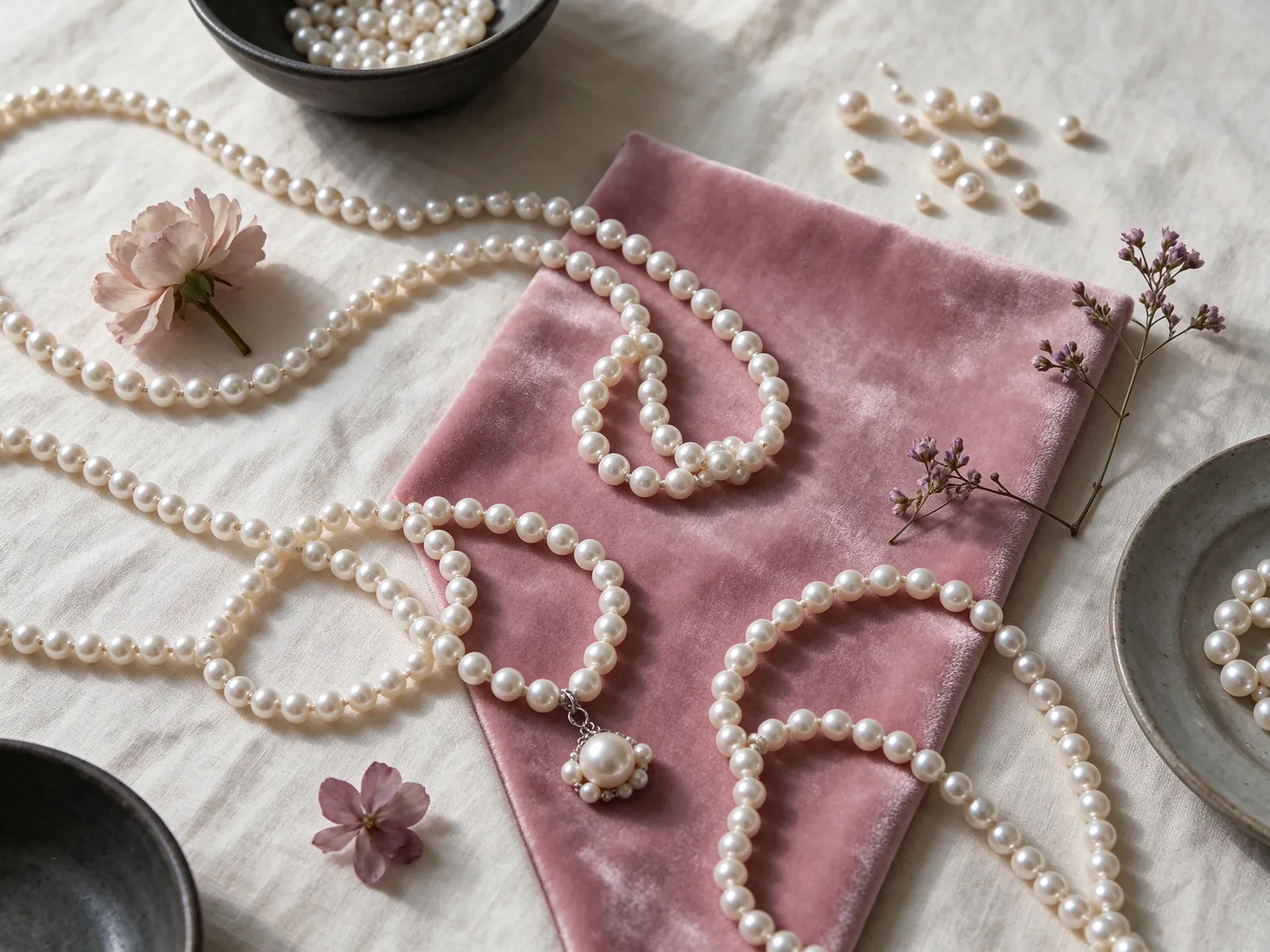
What makes a fine chain practical for your routine?
Delicate appearance alone does not establish compatibility between a chain and a pendant. Consider the connecting loop's opening, the link shape and the way the pendant hangs. If changing chains matters to you, find out whether the pendant is removable and whether the clasp can pass through the opening. A fixed pendant can suit a different routine from a removable one; the front view may not reveal that construction.
Test ordinary movement gently during a fitting: look down, turn your head and raise your arms. Check for contact with hair, a collar, a bag strap or a work badge. Do not pull hard on a chain to assess strength. A small necklace should be considered in the context of what shares the same space, especially if another cord or strap regularly crosses the center of your chest.
Should a pendant that shifts sideways be ignored?
Observe what happens before deciding. A collar can push the chain, and the clasp may move as you change position. Straighten the garment, relax and look at both sides of the pendant. Note whether shifting happens when sitting, walking or carrying a bag. These details are more informative than repeatedly arranging the piece for a picture, and you should not bend the loop yourself to correct its direction.
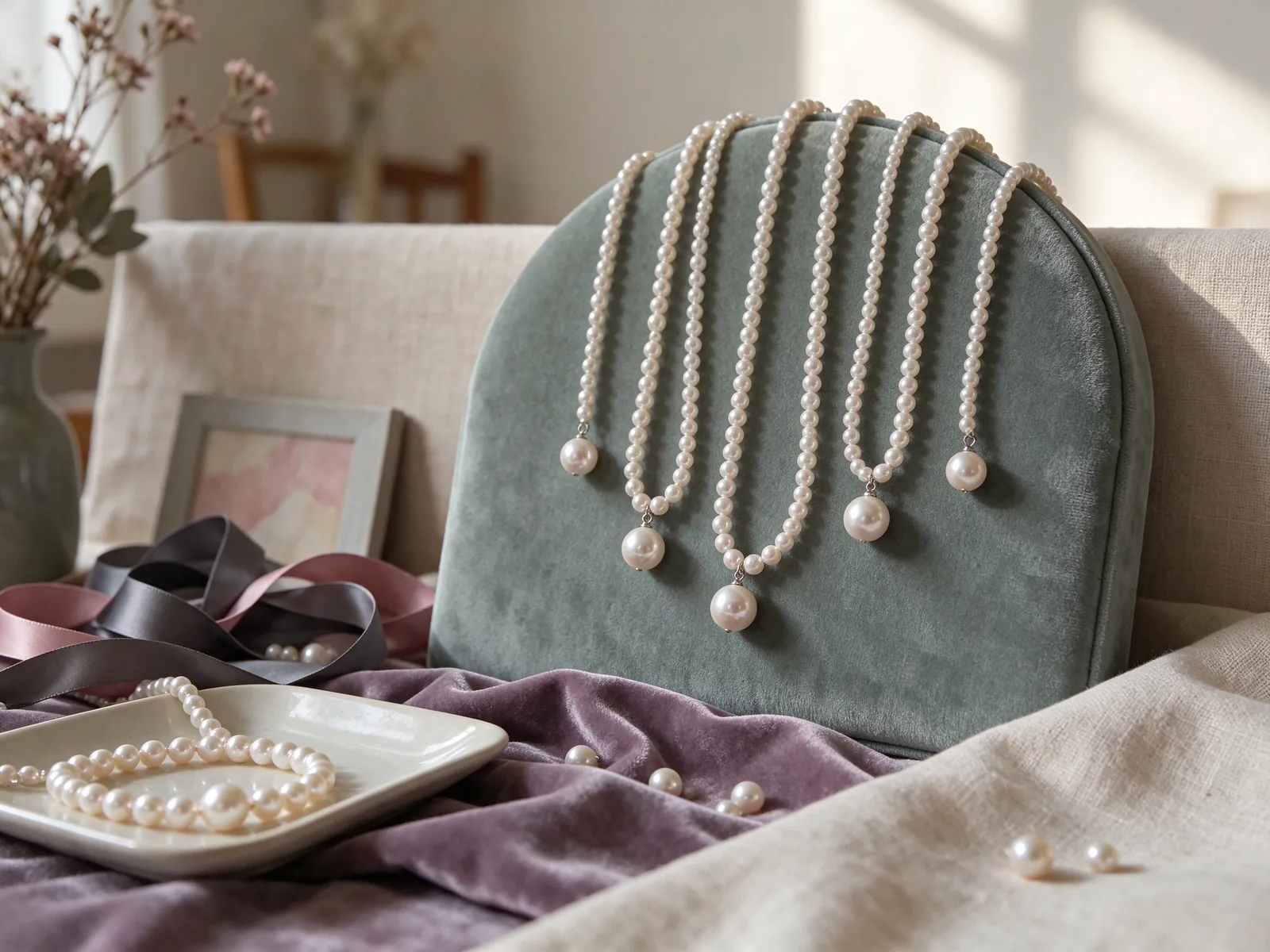
Which pearl qualities remain important at a small scale?
Look at the pearl under soft light rather than relying on an intense spotlight. Changing the angle helps you see the definition of reflected highlights and the location of surface features. A compact pendant can still have a clear visual presence through luster. Understated styling does not require a dull surface; a simple outline can keep a bright reflection from feeling visually crowded.
GIA lists seven pearl value factors: size, shape, color, luster, surface quality, nacre quality and matching. That framework makes size one consideration rather than a complete quality judgment. A small pearl is not automatically inferior or superior because of its diameter. Compare its appearance against your clothing too: dark fabric may emphasize contrast, while a pale background can make the same outline feel quieter. Matching applies to pieces with multiple pearls; for a single-pearl pendant, focus on the individual pearl and the proportions of the complete design.
Can color alone tell you what kind of pearl it is?
No. GIA distinguishes bodycolor, overtone and orient, and not every pearl has all three. A change in reflected color as you move does not by itself establish pearl type, origin or the presence of a report. Evaluate the visual effect in daylight and indoor light, then read the actual description for identity information. Keeping appearance and identification separate helps prevent an attractive photograph from carrying more meaning than it can support.

How can everyday styling keep a small pendant visible?
With a button-down, look for open space away from crowded buttons and fabric folds. With a textured sweater, check whether the pendant's outline remains distinct against the knit. A plain casual top offers a calmer background. You can coordinate earrings through simplicity without making them identical in size. Decide whether the neckline or the earrings should lead, then give the other element room to remain an accent.
Comparing a crescent moon pearl pendant can help if you enjoy a curved outline with space extending to either side. Considering a pearl and sapphire pendant is useful when you want to think about color relationships with your clothes. These comparisons separate an interest in a tiny pearl from an interest in a particular silhouette or color composition; those preferences may lead to different visual choices.
How much room should layered necklaces have?
Judge the space on the wearer rather than assigning one fixed length difference. Put both necklaces on and observe overlap when seated, contact during movement and any chain tangling. Select the main focal point first. If two reflective chains compete with the pearl, reduce other neck accessories. The useful gap is the one that works with pendant height, posture and fabric, not merely the one that photographs neatly.

How should you use descriptions and documentation when choosing?
Separate the pearl's information from the necklace's construction. Diameter, pendant height, chain length and connection type answer different questions. Likewise, identity or treatment descriptions do not determine whether the necklace sits where you want it. Make a short priority list: the intended placement, your preferred surface appearance and the connection you need. This gives comparisons a practical structure without making unfamiliar terminology the center of the decision.
If reports are important to you, the pearl pendant with GIA certificate guide offers a route into understanding documentation. Read which pearl or item is described and how the description corresponds to the piece under consideration. White color, round shape or small size does not establish that a report accompanies a pendant. Documentation and a fitting serve different purposes: one explains described identity, while the other helps you judge personal balance and comfort.
What is a better gift question than asking whether someone likes tiny jewelry?
Ask about the recipient's regular necklines, whether they layer necklaces and how visible they want an accessory to be. Their favorite existing necklace may reveal preferred placement and how comfortable they are operating a clasp. A compact outline does not suit every person in the same way. Choosing around actual habits is more thoughtful than assuming a small pendant is universally easy to wear.

How do care and storage fit into small-necklace ownership?
Use a very soft, clean cloth to gently wipe the pearl after wearing. Put the chain away without knots and keep the pearl separate from other jewelry that could rub against it. Apply perfume and hair spray before adding the necklace, and arrange your clothing first. Its small size does not remove the need to watch contact with zippers, collars and other hard objects in everyday use.
GIA gives pearl a Mohs hardness of 2.5 and says ultrasonic and steam cleaners should never be used for pearls. The figure supports gentle care; it is not a prediction of how long a necklace will last. Avoid scraping near the setting with a sharp tool or using harsh cleaning liquids. Thinking about your wider Pearl Jewelry collection should include where fine chains are stored, not only how the pieces coordinate.
What makes a discussion of pendant preferences specific?
Share a familiar neckline, the position where you want the pendant to rest and the amount of chain presence you enjoy. Mention any necklace you hope to layer alongside it. There is no need to guess a pearl diameter or pearl type to explain the look you want. Clothing examples and everyday habits make a WhatsApp conversation about preferences clearer than a highly enlarged image without context. Talk about your pendant placement, chain and styling preferences on WhatsApp +85260106207.
| Outfit or use | Background | Visual priority | Chain check | Question to ask |
|---|---|---|---|---|
| Button-down shirt | Open collar and fabric folds | Keep a clear focal area | Observe collar contact | Is it visible after sitting down? |
| Plain round neck | Fabric or open neckline space | Avoid sitting on the border | Compare reflected brightness | Does the chain or pearl lead? |
| Textured sweater | Noticeable knit pattern | Look for a distinct silhouette | Check for fabric contact | Does it catch during movement? |
| Layered necklaces | Shared space above clothing | Pick the principal accent | Check overlap and tangling | Can both pieces move without crowding? |
| Gift comparison | Recipient's everyday wardrobe | Match their preferred visibility | Consider clasp use | Does this fit their usual routine? |
Pearl knowledge and authoritative references
GIA identifies seven pearl value factors. Size is one factor alongside shape, color, luster, surface quality, nacre quality and matching, so small diameter alone is not a complete quality assessment. Matching applies to pieces with multiple pearls; for a single-pearl pendant, focus on the individual pearl and the proportions of the complete design.
Read the reference for this factFrequently asked questions
Is a mini pearl pendant defined by one measurement?
No. Mini is a visual description rather than a universal diameter. Read pearl size separately from the full pendant's width and height, including its frame and connection.
How can I keep a small pendant from blending into a light top?
Compare its luster and outline against the actual fabric, and try a position within open neckline space. Visibility is not determined by color or pearl size alone.
Can an existing fine chain take any compact pendant?
Not automatically. Check whether the pendant is removable, whether the clasp and links fit through the opening, and how the combination hangs. Avoid forcing components together.
Do earrings have to match the pendant's size?
No. A simple outline or a coordinated level of visual detail may be enough. Decide which accessory is the main focus and allow the other to support it without crowding.
Can a small pearl pendant go into a steam cleaner?
No. GIA advises against steam and ultrasonic cleaning for pearls. Gentle wiping with a very soft, clean cloth after wearing is appropriate routine care; do not scrape away dirt with sharp objects.
Updated: