

How can you balance a pearl brooch, pearl pin or pearl lapel brooch with fabric and proportion?
Choose a jacket or blouse you expect to wear and use it as the starting point. Its collar shape and fabric give the brooch a setting that a product photograph cannot supply. On a broad lapel, a compact accent may leave useful breathing room; on a narrow one, an elongated shape could extend beyond the edge. Compare the outer silhouette with buttons, seams and pockets before deciding how much detail you want.
Visual lightness and physical support are separate questions. A design made of open lines can still pull on soft fabric, and the position of its decorative elements may affect how it sits. Pearl pin and pearl lapel brooch are not enough to identify the mechanism on the back. Look at the stem and catch, then consider whether the garment stays smooth after placement. For a wider comparison of neckline accents, Pearl Jewelry offers a starting point beyond the brooch itself.
Which fastening and support details should you check when choosing a pearl brooch, pearl pin or pearl lapel brooch for your fabric?
Check that the stem is straight, the catch completes its intended closure and the sharp point is contained when fastened. Inspect the clothing's care label and weave before putting a pin through it. Loose threads and delicate surfaces deserve particular caution, not repeated hidden test holes. The brooch should not press into your body or force a collar to sag; if that happens, reconsider the garment or placement rather than forcing the fabric tighter.

Plan the placement before choosing the decoration
Think about where you want the eye to pause. A brooch near a lapel can reinforce the jacket's diagonal line, while a horizontal outline may create a deliberate contrast. If the collar is already dramatic, keep the surrounding area less crowded. A breast pocket or shiny button deserves space of its own. Left and right are practical choices rather than universal rules: consider your hairstyle, the jacket's overlap and the shoulder on which you carry a bag.
A collar accent should not interfere with opening the garment or touch your skin every time you look down. For a scarf, establish the folds and drape first, then consider the suitability of its weave for a pin. Do not rely on a decorative brooch to make an unstable scarf arrangement secure. The guide to how to wear a pearl brooch explores these placement decisions when the neckline or layers change.
Use the side view to catch hidden problems
Turn sideways after checking the front, and compare the jacket open with it closed. A brooch that looks flat in a mirror may project enough to meet an arm or strap. Its shape should also remain readable beside a folded lapel. A prescribed distance from the shoulder is less useful than observing the actual collar width, empty space and range of motion in your own outfit.
Read pearl quality as several questions, not one label
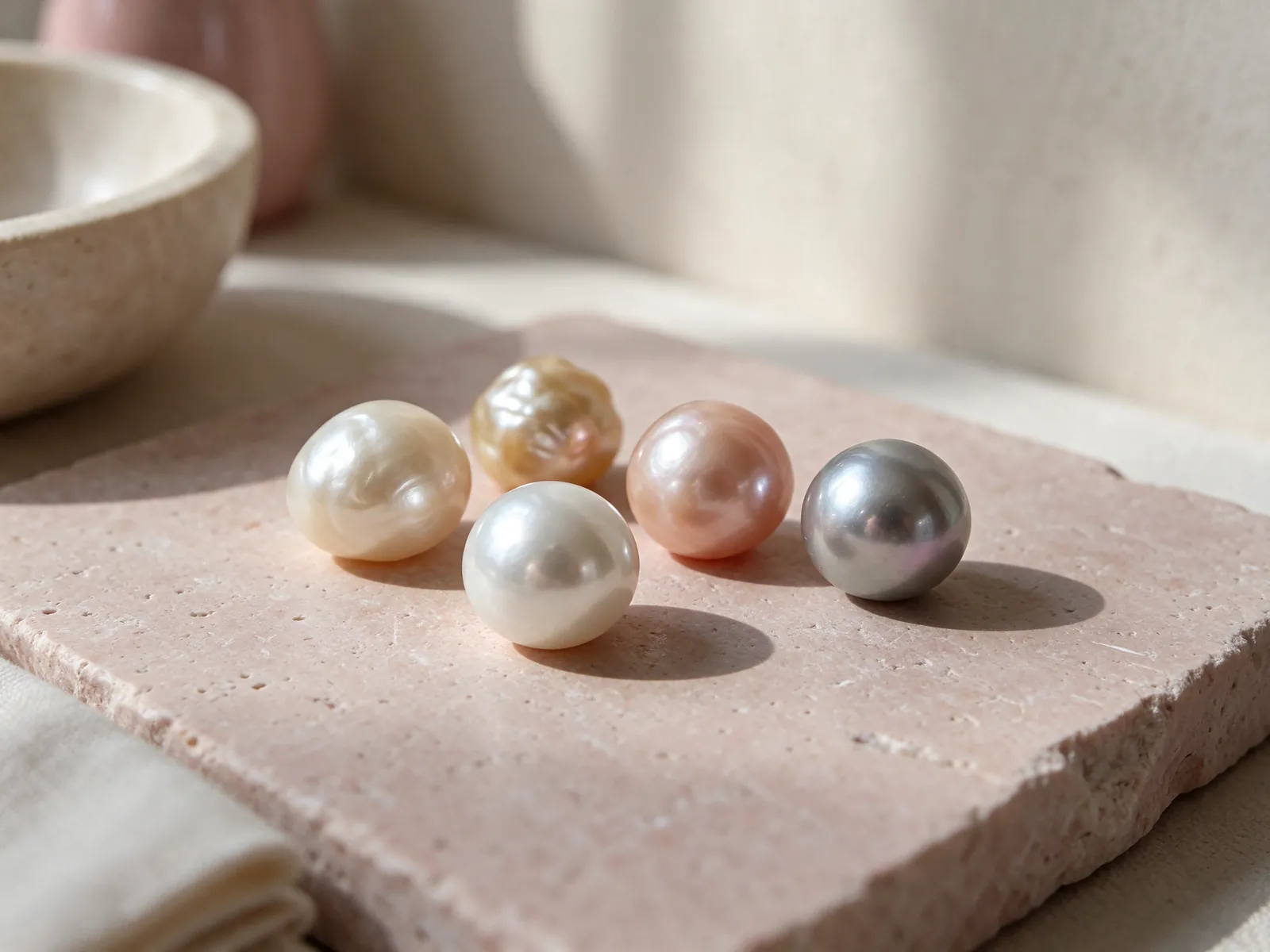
Notice how clearly the pearl reflects light and how its surface and shape contribute to the complete design. In a group of pearls, ask whether variations create an intentional rhythm or whether a closely matched look is the goal. GIA identifies seven pearl value factors: size, shape, color, luster, surface quality, nacre quality and matching. They help organize a comparison, but a photograph does not let you assess every factor or assign a reliable grade.
Bring the intended clothing color into the comparison. A bright outline may stand out against a dark blazer, while a warm top can make the same arrangement feel less contrast-driven. The light and surrounding metal lines also influence the result. Bodycolor, overtone and orient are different color components, and a pearl does not necessarily display all three. Appearance alone does not establish origin or natural-versus-cultured identity; read the description attached to the individual piece.
Decide whether the outline or the detail should lead
On a patterned jacket, a clearly defined edge may be easier to appreciate than tiny internal details. Open decoration lets the fabric show through, while a dense arrangement can make a stronger block of emphasis. Compare both ideas at a normal viewing distance. The best choice for your outfit is not necessarily the most elaborate one, but the one whose intended shape remains visible.

Evaluate animal motifs through silhouette and pose
An animal theme can be restrained or expressive depending on its outline. When considering a cat pearl brooch, look at how the ears, tail and body make the subject recognizable on your clothing, not only in a close-up. The position of the pearl can create a visual center away from the middle of the motif. Compare that balance with the available lapel space before deciding whether a playful or quieter shape feels right.
A horse pearl brooch invites attention to pose and the direction of movement. A long silhouette might echo a diagonal lapel, but lose clarity if it crosses a deep fold. With a parrot pearl brooch, consider the sequence of head, body and tail and whether its vertical emphasis suits the jacket. These are ways to evaluate a design theme, not reasons to assume an animal motif brings luck or represents every wearer's personality.
Make orientation work with the back construction
A motif facing toward the collar can feel different from one facing outward, but the usable fastening direction must come first. Do not rotate a piece into an unsuitable orientation just to achieve a preferred pose. A paper silhouette can help visualize spacing beside a garment before trying the piece; it remains only a shape exercise and cannot demonstrate weight, fabric response or how the catch closes.

Give everyday and event outfits a clear hierarchy
For a workday blazer, let the brooch lead and use quieter jewelry nearby if that suits your style. You do not need every accessory to match, but the collar should not feel like several competing focal points. A ruffle, bow or busy print may already supply enough detail at the neckline. Move the accent to a simpler area, or choose a more legible outline, rather than adding decoration to an already crowded space.
For a wedding reception or evening event, check how the clothing behaves when seated. A wrap can shift, and fine dress fabric may support a brooch differently from a tailored jacket. If you wear a necklace as well, make sure the two pieces do not meet or rub during movement. When space is limited, a single focal point can feel more intentional. A polished look depends on proportion and orderly lines, not automatically on greater size or quantity.
Try the movements the occasion will involve
Sit, gently turn and reach for something after placing the brooch. Look for twisting fabric, a changing angle or uncomfortable pressure from the back. These checks reveal obvious problems rather than guaranteeing that a fastening cannot loosen. If the outfit involves taking a jacket on and off, remove the brooch before handling the clothing so it is less likely to catch on a sleeve or bag strap.
Protect the pearl surface without overlooking the catch
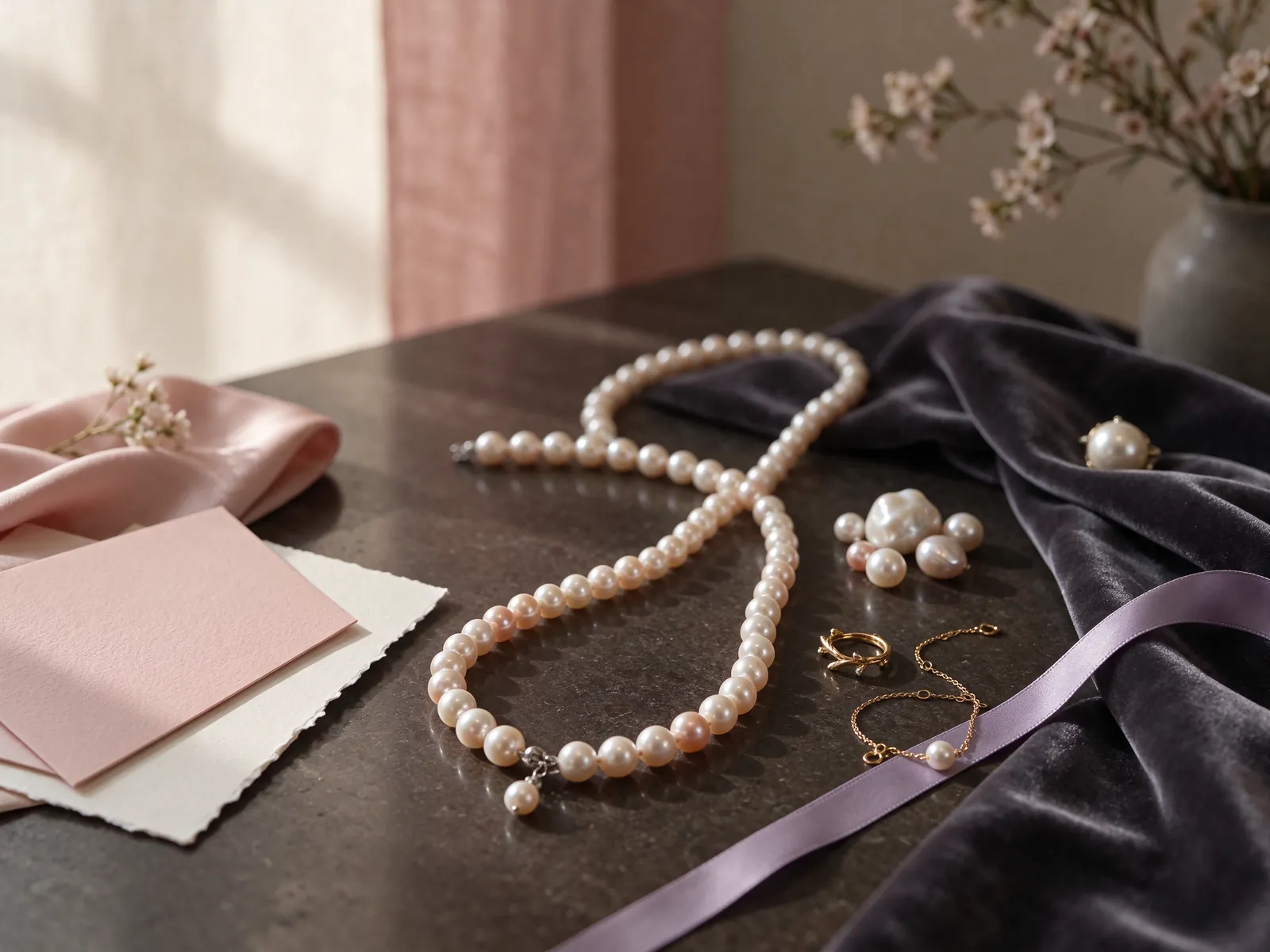
GIA places pearl at 2.5 on the Mohs hardness scale. That is relevant to avoiding surface scratches, not to predicting how much weight a brooch catch holds or whether the piece can survive a drop. After wear, gently wipe the pearl with a very soft clean cloth. Check the stem area for trapped clothing fibers and notice whether the catch closes normally. A bent stem or unreliable closure should not be forced through fabric.
Avoid acids, direct contact with perfume or hair spray, and excessive heat. Put the brooch on after your fragrance and hair routine, and take it off before changing or cleaning your clothes. Pearls should never be cleaned in an ultrasonic or steam cleaner, according to GIA. Do not assume the whole brooch can be soaked because one visible component seems water-resistant; care needs to account for the pearl and the complete construction.
Store it separately from hard jewelry edges
Close the pin using its intended mechanism and place the brooch in a soft separate storage area. Keep the pearl away from hard edges that could rub against it. Leaving the brooch on a jacket that is going to be cleaned mixes two different care routines unnecessarily. Look for snagged threads before storage and inspect the fastening again next time, even if the front still looks bright.

Turn preferences into a practical comparison
List the garments you wear most, the proposed placement and any feature you do not want hidden, such as a pocket or collar tie. Separate questions about the front silhouette from questions about the back. For the pearl, read the identity description and available quality information. For the complete brooch, examine direction, projection and fabric suitability. This makes a shortlist more informative than choosing solely by the appeal of a styled image.
For a gift, notice the recipient's actual wardrobe before relying on a style label. Frequent blazer wear and a preference for delicate dresses create different opportunities for a pin. Their usual jewelry positions, collar shapes and shoulder-bag habits can help narrow the decision. A motif can be meaningful because the recipient likes it, without assigning a universal symbolic message to an animal or a pearl color.
Use clothing details to make a styling discussion concrete
A front and side photograph of the collar, the fabric type and the event you have in mind are useful starting points. Say whether the brooch should blend into the outfit or stand out as the main feature. If piercing a treasured garment is not acceptable to you, make that a condition from the beginning. A satisfying choice balances appearance with the clothing you own and the way you move. For a discussion of fabric, silhouette and placement, contact us on WhatsApp +85260106207 with a collar photograph and the occasion you have in mind.
| Outfit or placement | What to compare first | Practical check |
|---|---|---|
| Blazer lapel | Silhouette against the fold and edge | Check pockets and buttons with the jacket closed |
| Soft blouse collar | Support without pulling the neckline down | Look for distortion or skin contact when bending your head |
| Folded scarf | Weave and the path of the pin | Watch for snagging; the scarf needs a stable arrangement of its own |
| Printed jacket | Contrast and readability of the outer shape | See whether the motif remains distinct at a distance |
| Event dress or wrap | Fabric support and seated placement | Turn and reach to check movement and nearby jewelry contact |
Pearl knowledge and authoritative references
GIA identifies seven pearl value factors: size, shape, color, luster, surface quality, nacre quality and matching. They help compare the pearls within a brooch; they are not a grade or certification of Flint Jewelry products.
Read the reference for this factFrequently asked questions
Is a pearl pin necessarily smaller or lighter than a pearl brooch?
The name does not establish size, weight or construction. Compare the individual piece's outline, back mechanism and balance rather than assuming that pin means a particular physical specification.
What if my favorite dress is too delicate for a pin?
Do not force the placement or repeatedly pierce a hidden area. Consider wearing the brooch on a more supportive outer jacket instead. The garment's care label, weave and structure should guide the decision.
Can I wear a pearl brooch and a necklace together?
Yes, as a styling choice, provided the neckline has enough room and the pieces do not touch or rub during ordinary movement. If they compete for the same space, keeping one main accent can make the outfit clearer.
Can pearl color tell me its origin?
Color alone cannot establish origin or natural-versus-cultured identity. Use the individual piece's written description for identity information, while treating color as an appearance factor to compare with your clothing.
Does a Mohs hardness of 2.5 describe how secure the pin is?
No. GIA's pearl hardness figure concerns the pearl's surface and scratch precautions. It does not measure the fastening's load capacity. Inspect the catch, stem and fabric support separately, and avoid wearing a piece whose closure is not working properly.
Updated: