
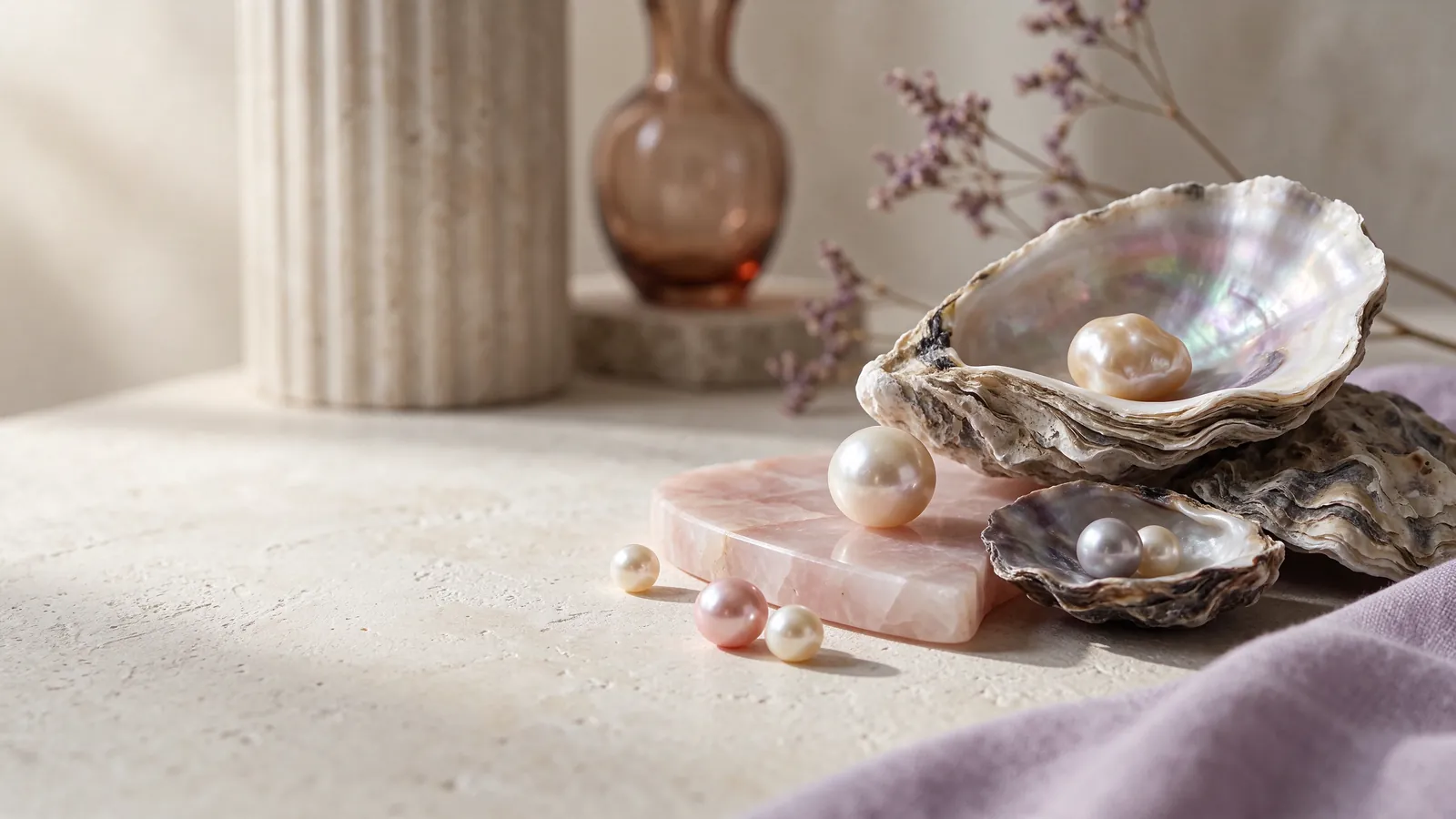
Japanese Akoya vs freshwater pearls: how do growing environments explain the difference between Akoya and freshwater pearls?
If you are choosing between Akoya and freshwater pearls, begin by setting aside the idea of real versus fake. Both are cultured pearl categories. They differ in the environments where they grow and the mollusks that form them: Akoya refers to a saltwater cultivation category, while freshwater pearls are cultivated in freshwater environments. The introduction to what are Akoya pearls gives you a foundation for reading that label without turning it into a blanket quality claim.
The category is useful background, but your purchase is an individual piece of jewelry. Its appearance needs its own attention. You can pair this reading with what are freshwater pearls and then widen the context through freshwater vs saltwater pearls. That broader view matters because saltwater is not another name for Akoya alone. Once the terms are clear, compare the actual earrings, necklace or pendant you are considering.
Japanese Akoya vs freshwater pearls: why does the difference between Akoya and freshwater pearls in growing environments not determine individual quality?
A type name cannot tell you whether you will prefer a particular pearl's reflections, outline or surface appearance. There can be variation within a category, and attractive choices across categories. Write down what you are looking for before reading the labels: perhaps visual symmetry, a color you enjoy or a strong accent near your face. Those priorities give the comparison a direction that a universal ranking cannot provide.
Look for reflections you enjoy, not simply a white photograph
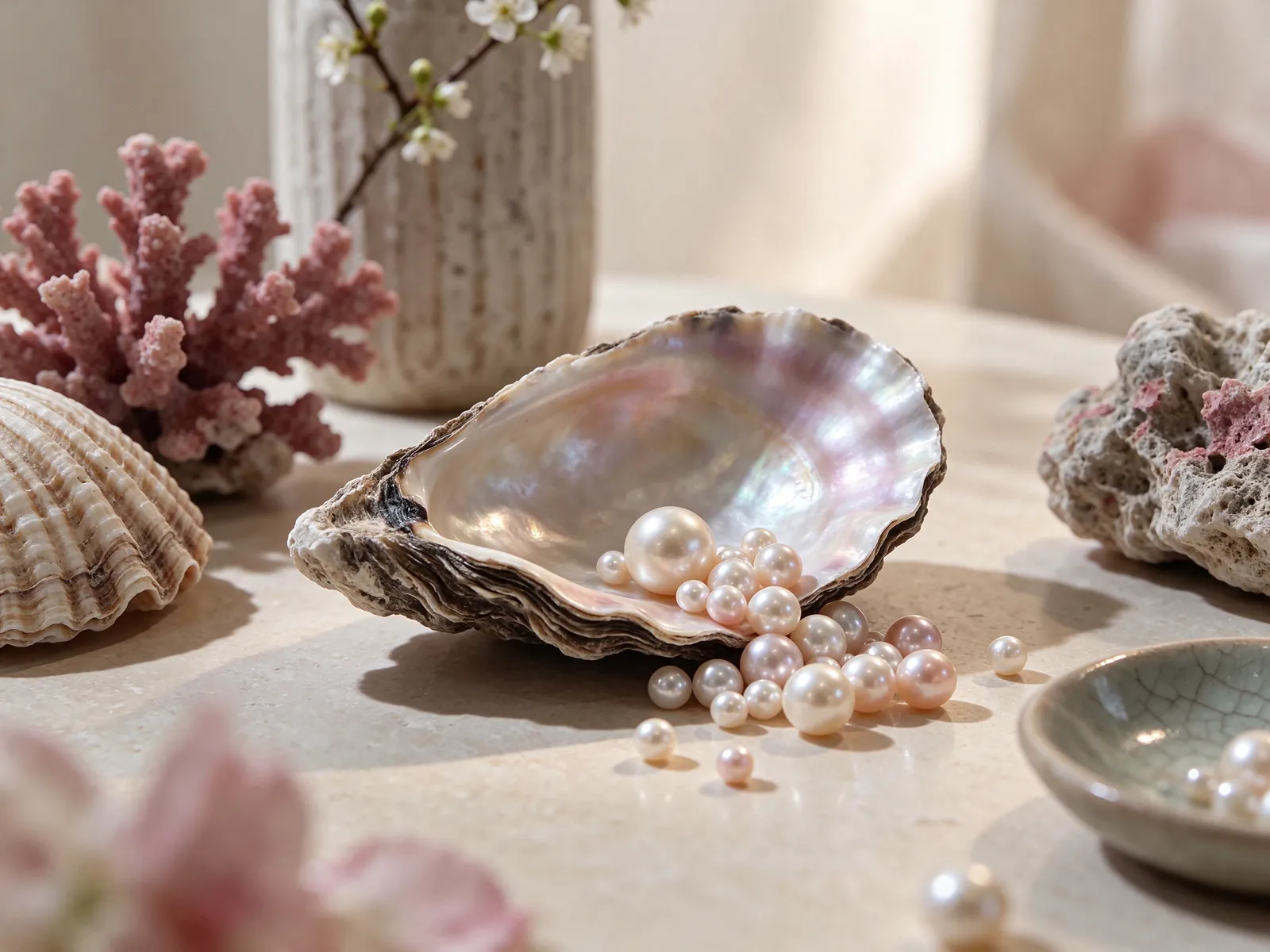
When assessing luster, pay attention to reflected shapes and their clarity on the pearl. Look at the contrast between lighter and darker areas and, where you can view the piece moving, how that effect changes. Photographic exposure can lift an entire image without demonstrating better luster. Comparing unrelated pictures taken in different light may tell you more about photography than about the pearls themselves.
Color deserves a similarly careful look. GIA separates bodycolor, overtone and orient, explaining that not every pearl has all three components. Start with the main color you perceive, then consider additional color effects visible at different angles. Use those observations to judge your personal preference. They do not, on their own, identify a pearl's geographic origin or establish whether its color has been treated.
Take the comparison out of the close-up
Place both candidates against a familiar top under similar lighting if you have that opportunity. A light background can help you notice color distinctions; a dark one helps show the silhouette and visual impact. Also look from the distance at which someone would normally see you. A detail that dominates a magnified image may play a much smaller role in the jewelry's overall appearance when worn.

Choose shape deliberately and check the whole arrangement
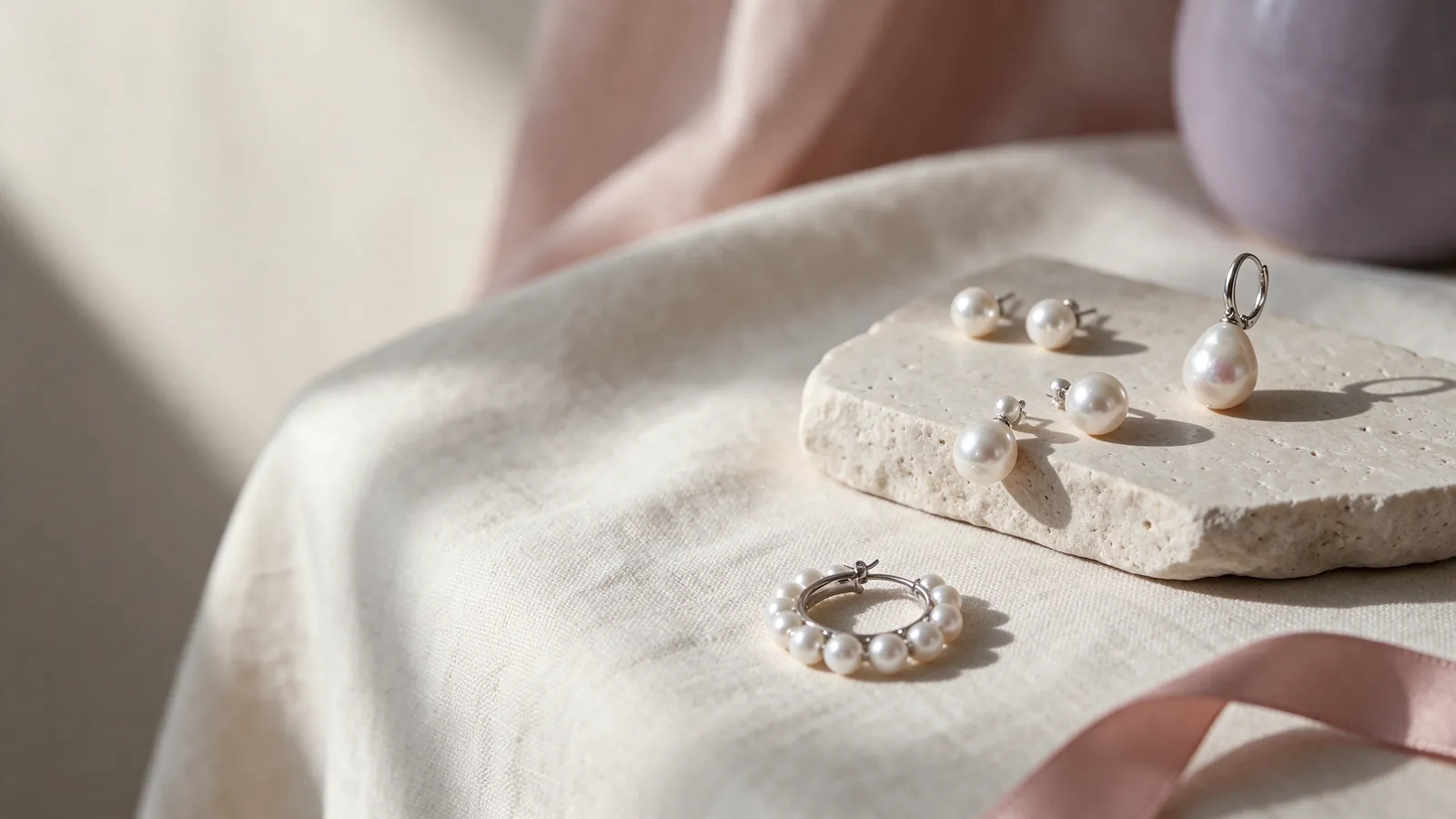
Decide whether you want orderly symmetry or a more individual outline. Neither preference makes one pearl category inherently right. With earrings, compare the two pearls together for visible size, color, shape and reflection. For irregular forms, ask whether the pair feels complementary rather than demanding the same contour on both sides. A type label does not replace that visual judgment.
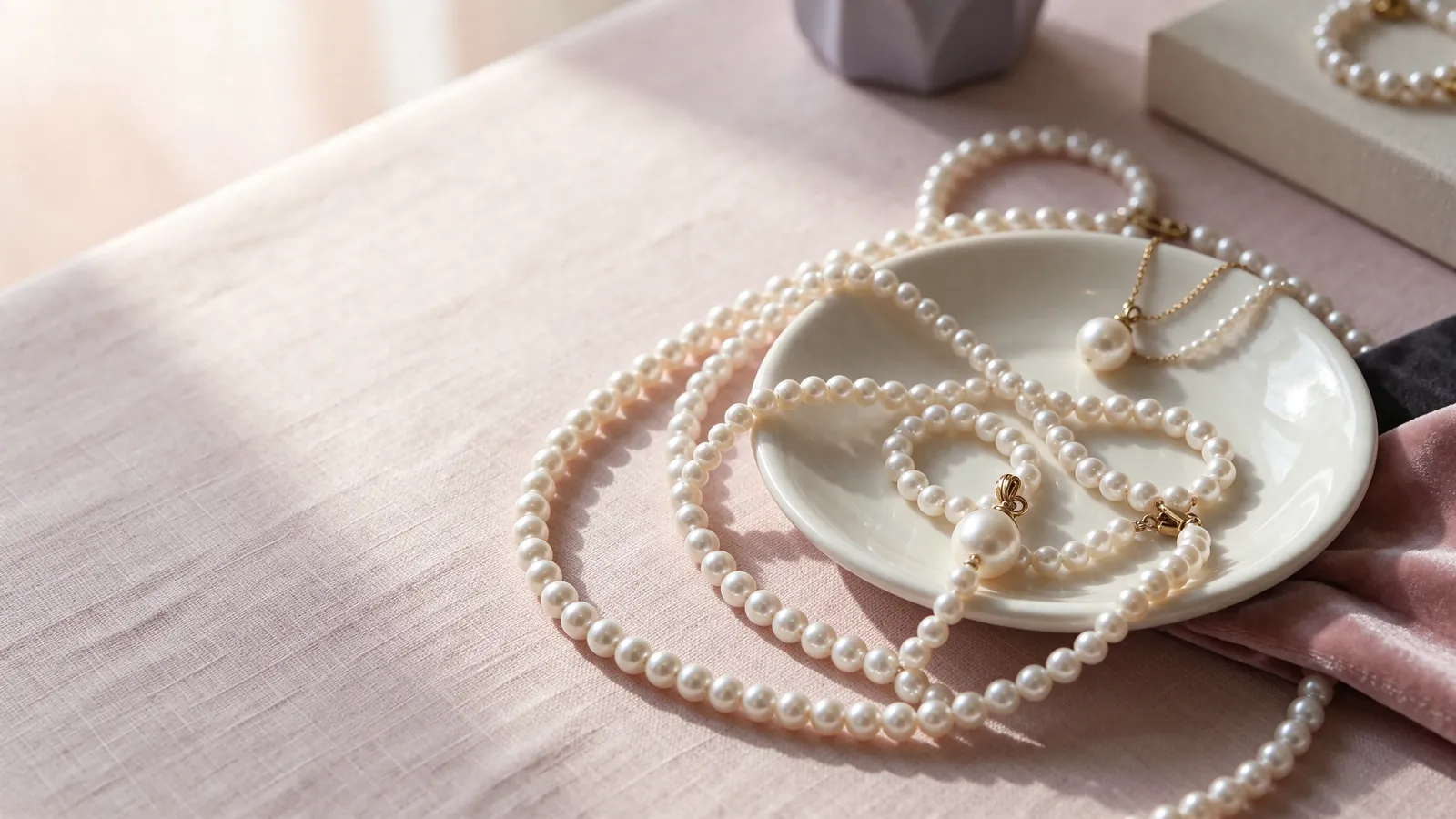
A necklace calls for attention across the entire sequence, not just the pearl selected for a close-up. Look for an overall relationship among the pearls that you find appealing. A pendant has a different emphasis: the principal pearl's visible surface and its balance with the setting. Inspect surface details closely, but also return to an ordinary wearing view so that the decision reflects how you will actually use the piece.
A seven-factor framework prevents a one-feature decision
GIA lists seven pearl value factors: size, shape, color, luster, surface quality, nacre quality and matching. This framework encourages you to consider more than roundness or type. It does not mean every factor can be measured from a sales photograph; nacre quality, in particular, needs more than an attractive image. Matching matters differently for a single pearl and a multiple-pearl design. The framework itself is not a certificate for the jewelry.

Treat origin and pearl formation as separate information
Japanese wording can attract attention, but a geographic term and a pearl type are not interchangeable. Read the description to see whether the place name concerns origin, processing or naming. Japanese pearls vs Akoya pearls examines this issue directly. When origin is an important purchase condition, an explicit statement about the individual piece is more useful than assumptions based on packaging or a traditional-looking design. GIA notes that Akoya pearls are produced in Japan and China, while China is the main source of freshwater cultured pearls. Akoya therefore does not mean exclusively Japanese origin, and the category cannot establish the origin of an individual item.
Cultured pearls form with human involvement; that term does not classify them as imitation. Whether a pearl is bead-nucleated is a different question, and freshwater should not be treated as a full description of its internal structure. Read bead-nucleated vs non-bead-nucleated freshwater pearls for the focused discussion. When evaluating a specific item, do not infer nucleation from the shape or from the pearl category alone.
Match each question to an explicit statement
Ask separately about pearl type, cultured identity, geographic origin and treatment information. If documentation is offered, read what it covers and whether it identifies the piece you are considering. A broad name cannot stand in for all these details. This approach is especially helpful for a meaningful gift: it keeps a personal story about the purchase tied to information actually supplied rather than an interpretation of the photograph.

Build the choice around clothes and occasions you already have
For everyday dressing, start with your neckline and the amount of detail around your face. A patterned collar may benefit from a simpler earring outline; a plain top can leave more room for an expressive pearl shape. These are styling options, not rules that reserve Akoya or freshwater pearls for a particular setting. Look at the actual jewelry and decide whether the balance matches your preferred level of formality.
For a celebration, consider earrings, necklace, hair and clothing as one composition. You do not have to give every piece equal visual weight. A strong earring can be the main accent, while a clean neckline may create space for a necklace instead. If you are buying a gift, the recipient's existing habits are useful clues: what they wear often, which shapes they enjoy and whether they prefer understated or noticeable jewelry.
Test both candidates with the same outfit
Keep clothing, hairstyle and viewing distance consistent while comparing. First judge the overall proportion; then inspect pearl details. Consider how the jewelry would look with an outer layer or when you turn your head. If one candidate photographs beautifully but does not suit the outfits you actually reach for, that is a practical reason to reconsider. A label should support your choice, not override your experience of wearing it.
Make price comparisons specific to the jewelry
There is no useful universal price multiplier for every Akoya and freshwater purchase. Candidate pieces may differ in pearl appearance, pearl count, matching, setting design and metal content. Before attributing a price difference to pearl type, understand what is included in each piece. Then consider whether the particular difference matters to you enough to justify a change in your budget.
Choose a few nonnegotiable priorities, such as a pleasing earring pair or a color that works with your regular clothing. Keep features you feel less strongly about in a separate, flexible group. This helps you avoid paying for distinctions you do not personally value. If you need to step back and compare a wider range of categories, use the pearl types guide before returning to your two main candidates.
Replace prestige questions with observable comparisons
A productive question is how two pieces differ in matching, color impression or visible surface appearance at wearing distance. Another is how each works with the neckline you plan to use. These questions are more actionable than asking which type is always more luxurious. If a detail important to you remains unexplained, leave room to consider the decision rather than allowing a familiar label to fill the gap.
Use the same careful habits for either pearl category
GIA places pearl at 2.5 on the Mohs hardness scale. That fact helps explain why avoiding scratches matters; it does not predict a jewelry item's lifespan or guarantee durability. Keep pearls from rubbing against other jewelry in storage. After wearing, use a very soft, clean cloth to wipe them gently. The routine should be something you can maintain, rather than a reason to assume one category needs no attention.
Never use ultrasonic or steam cleaners for pearls, according to GIA's care guidance. Avoid acids, perfume, hair spray and excessive heat. Apply fragrance and finish hair styling before putting the jewelry on. Cleaning also involves the setting and any string, not just the pearl surface. If strung pearls are cleaned with water, let the string dry completely before wearing them again.
End with a realistic picture of ownership
Imagine the occasions when you will wear the piece, the clothes it will accompany and where it will go afterward. If the candidate fits those habits and you like its individual appearance, the choice has a sound practical basis. Knowledge of Akoya and freshwater categories should sharpen your questions. It should not replace the clear information, visual preference and care habits that make a purchase work for you. To discuss the comparison around your usual neckline, preferred color or gift occasion, contact Flint Jewelry on WhatsApp +85260106207 and tell us which pearl features matter most to you.
| What to compare | Akoya description | Freshwater description | How to compare fairly | Why it matters to you |
|---|---|---|---|---|
| Growing environment | Saltwater cultivation category | Freshwater cultivation category | Separate classification from individual quality | Understand the names before evaluating jewelry |
| Luster and color | Examine the particular pearl's reflections and color | Examine the particular pearl's reflections and color | Keep lighting and background similar | Judge the effect against your clothes |
| Shape and matching | Check outlines and the relationship between pearls | Check outlines and the relationship between pearls | Assess both earrings or the full necklace | Find the balance or individuality you prefer |
| Origin and formation details | A type name does not establish all origin information | A type name does not explain every nucleation detail | Read each explicit description separately | Avoid building a gift story on assumptions |
| Price and care | Consider the actual jewelry's contents | Consider the actual jewelry's contents | Do not use a fixed multiplier; protect either category | Choose a piece that fits your budget and routine |
Pearl knowledge and authoritative references
GIA describes seven pearl value factors: size, shape, color, luster, surface quality, nacre quality and matching. This is a framework for evaluating individual pearls, not a universal ranking of pearl categories.
Read the reference for this factFrequently asked questions
Is the Akoya-versus-freshwater choice a real-versus-fake comparison?
No. These are two cultured pearl categories, differentiated by growing environments and pearl-producing mollusks. Freshwater does not mean imitation. For a particular item, read its identity information rather than inferring it from the image.
How can I avoid confusing photographic brightness with luster?
Compare images made under similar lighting and look at the reflections on the pearl, not only the brightness of the background. Include a normal wearing view alongside close-ups. Exposure differences alone do not establish a quality advantage.
Should both pearls in irregular-shaped earrings look identical?
That depends on your taste. You may prefer complementary outlines and balanced color rather than identical contours. Judge the pair together for visual harmony; a shared type name does not make that decision for you.
What if Japanese origin is important for my gift?
Look for an explicit origin statement about the specific jewelry and distinguish it from pearl type or processing information. A Japanese name, packaging style or classic appearance does not supply every geographic detail.
Can I wear a pearl necklace immediately after its string has been washed?
If strung pearls are cleaned with water, GIA advises that the string must be completely dry before wearing. A dry-looking pearl surface is not enough to establish that. Pearls should also never be cleaned with ultrasonic or steam cleaners.
Updated: