

Which outline details distinguish individual drop shaped pearls and pear shaped pearls described as teardrop pearls?
Think of the silhouette as a transition: a narrower end opens into a fuller curve. With drop shaped pearls, the transition may be gradual, compact or strongly elongated. Pear shaped pearls can describe much the same visual idea, so a label alone does not tell you the proportions. Locate the broadest part and compare how each side reaches it instead of focusing exclusively on whether the top is pointed.
Teardrop pearls can have quite different visual centers. One may feel round and weighty toward its fuller end, while another reads as a long, fine line. Use the pearl shape guide to compare these preferences with neighboring forms. When inspecting images, keep orientation in mind: a tilted pearl can look slimmer or less balanced than the same pearl viewed straight on.
How do taper and symmetry shape the appearance of drop shaped pearls and pear shaped pearls known as teardrop pearls?
Trace an imaginary centerline from the narrow end to the middle of the fuller curve. Do the sides follow similar arcs, or does one swell more noticeably? Symmetry can create a composed appearance, while an offset taper can introduce individuality. Treat this as a preference about shape, not a conclusion about identity. Check whether that offset still appeals to you in the position from which the pearl will normally be seen.

Separate the front outline from the three-dimensional form
A teardrop seen from the front may belong to a rounded body or to a dome with a flatter back. Those forms can share an outline while having different depth and presentation. Side and back views are therefore important parts of a comparison. If a photograph crops out the back or shows only a bright front surface, it leaves the structure unresolved rather than proving a particular form.
The WSP pearl types guide mentions drop forms among freshwater shapes, and its mabé guide describes teardrop domes as well. This is a useful reminder that an outline is not exclusive to one pearl type. The discussion of half round pearls helps when comparing a dome presentation with an all-around rounded body. Ask about structure explicitly rather than assuming that similar front views mean identical pearls.
Watch the curve change as the pearl rotates
Compare a direct front view with both sides and the back. A curve that remains uneven through several angles tells you more than a distortion seen in one tilted image. A slow rotation can also reveal whether the body is fuller in one direction. This observation is useful for form and visible detail, but it cannot establish natural versus cultured identity, geographic origin or treatment history.

Compare proportions without inventing an ideal ratio
Length and maximum width are both relevant to a drop silhouette. Similar lengths do not guarantee a similar impression: a broad lower curve may feel much fuller than a slim one. Before comparing numbers, determine whether they measure the pearl itself or the complete jewelry piece. A connection or metal element can increase total length without changing the shape of the pearl underneath.
There is no need to impose a single preferred ratio on every buyer. If you favor two rounded ends and a gentle change in width, look at oval pearls as a comparison. If you want a fine, elongated body with narrowing toward both ends, rice shaped pearls offer a different reference. These descriptions can overlap at their edges; the practical goal is to identify the curve you enjoy.
Describe fullness and taper in plain visual terms
Try describing a preferred outline as a soft narrow end, a rounded lower curve and a widest point positioned toward that fuller end. Then contrast it with a shorter or slimmer sketch. This gives a clearer starting point than asking only for a beautiful drop. If actual measurements are available, they can guide the comparison; otherwise, focus on the curve rather than setting a fixed size in advance.
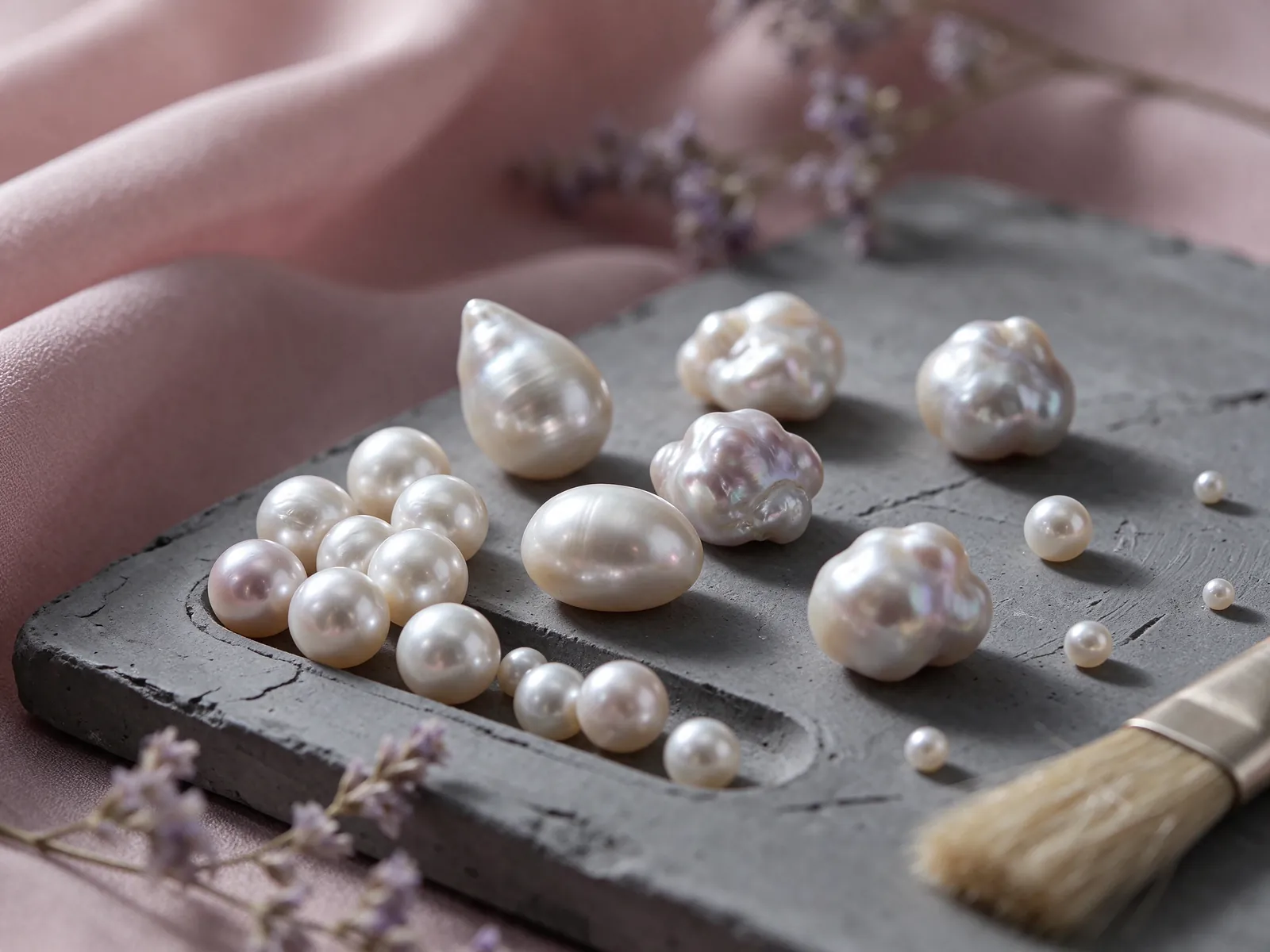
Look beyond the outline to reflections and texture
Once the silhouette appeals to you, inspect the reflections under soft light. Rotate the pearl to distinguish a shadow caused by curvature from a visible dip or raised area. The taper and rounded end face light differently, so one bright highlight cannot represent the whole surface. Pay particular attention to the side you expect to see most often instead of judging only the most flattering photographic angle.
GIA identifies seven pearl value factors: size, shape, color, luster, surface quality, nacre quality and matching. The drop contour contributes to shape, but it does not answer questions about the remaining factors. If there are rings around the body, circle pearls provide a useful texture comparison. An outer silhouette and ringed surface describe different features and should be considered separately rather than treated as competing labels.
Keep image conditions in mind when comparing luster
Strong lighting, a dark background and increased exposure can all change what appears in a photograph. Compare views under similar conditions when possible and distinguish brightness from the clarity of reflections. A pearl that looks lighter in one image has not thereby demonstrated a different color, grade or treatment status. Photographs are helpful observations, but written information is still needed for claims that the image cannot establish.
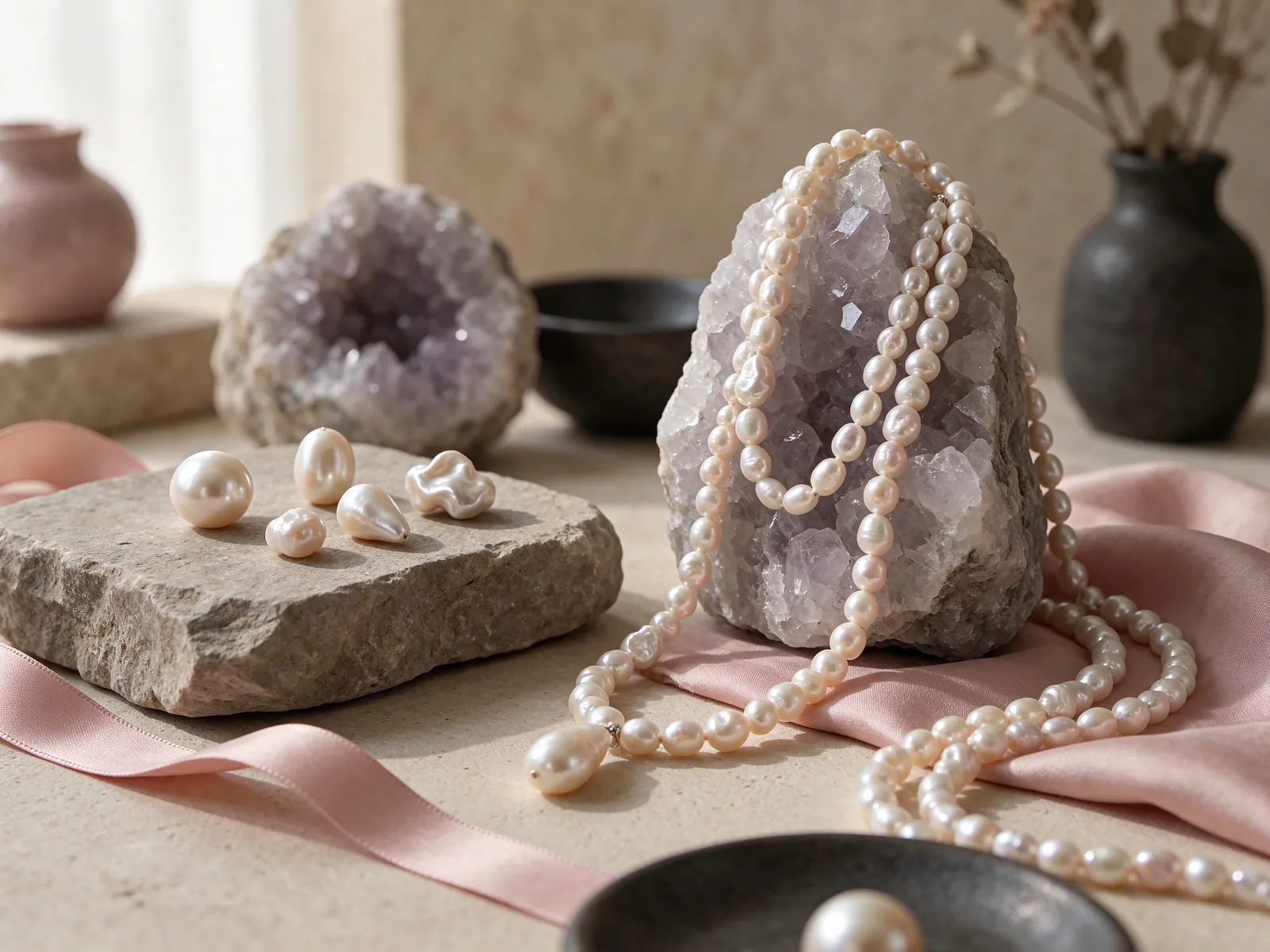
Match the direction as carefully as the dimensions
For two pearls intended to be seen together, start with their tapers pointing the same way. Compare the height of the broadest point, the fullness of the lower curves and the outline of each side. Then compare color and luster. Equal length alone can conceal an obvious difference in visual weight, especially when one body is noticeably wider or more rounded than the other.
An off-center taper introduces another choice: should the pearls mirror each other or lean in the same direction? Each arrangement can produce a different impression. Compared with round pearls, a directional form makes rotation more important to the overall balance. Decide whether you want close consistency or an intentional contrast, and view the pair together before allowing a pleasing individual pearl to dominate the decision.
Account for the way a mounted pearl is presented
When a pearl is already mounted, some of its outline may be concealed by metal or a connection. Look at the visible portion in its intended position, including how it turns or hangs, rather than only at a flat display. A difference in how much surface is exposed can affect apparent size. Do not automatically interpret that presentation difference as a flaw in the underlying pearl's shape.
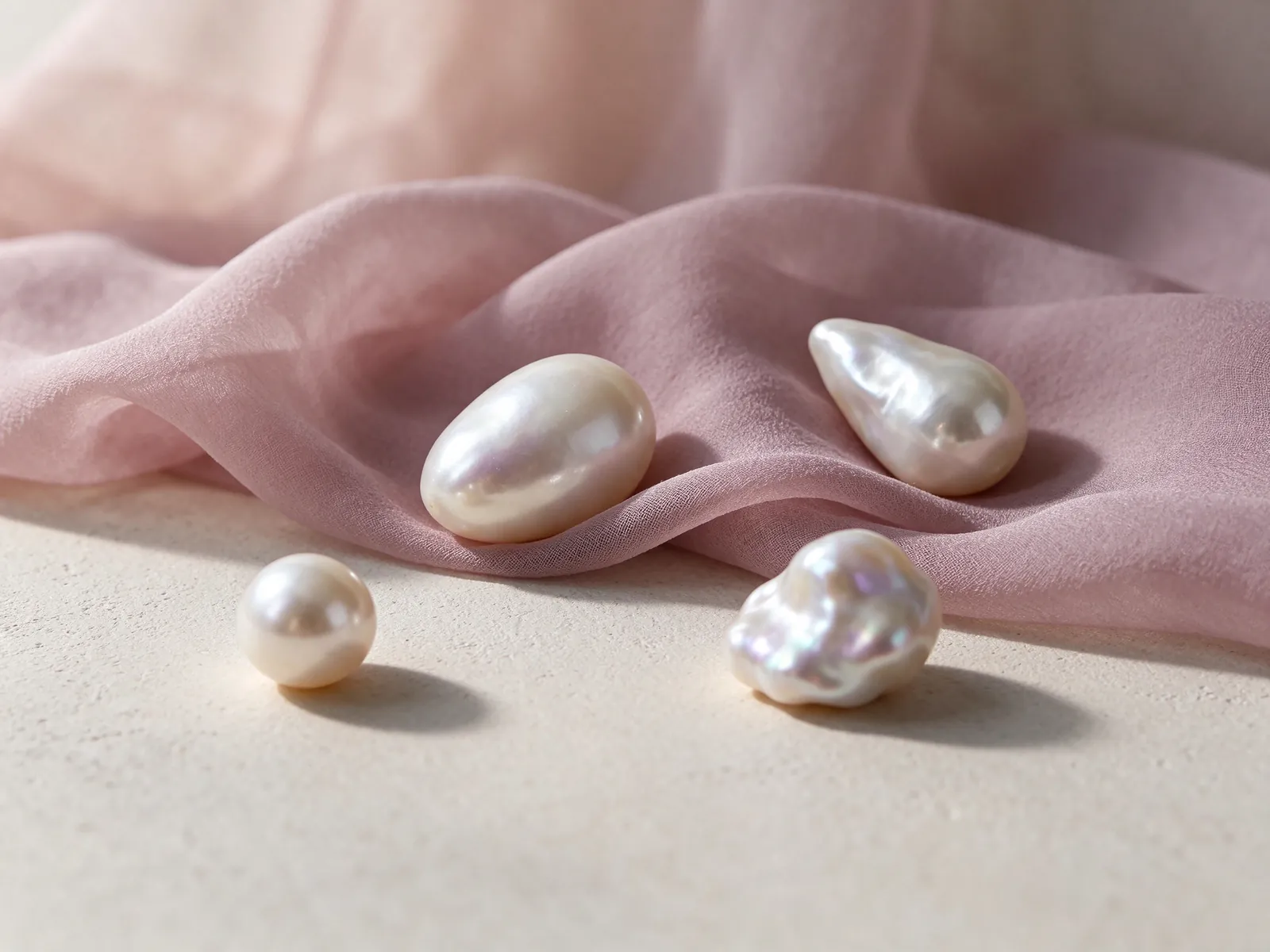
Use clothing lines to decide how prominent the curve should be
The narrow-to-full transition gives a drop a visual direction. Against a simple neckline or solid fabric, that line is often easier to distinguish. A busy print, gathered collar or decorative bow may share the viewer's attention. Rather than applying a fixed rule about face shape, ask whether you want a clear pearl focal point or a quieter detail within the outfit.
You can clarify the choice by contrasting the tapered curve with the broad face of coin pearls or the extended line of stick pearls. A rounded drop may suit a preference for soft contours, while a longer one may appeal to someone who likes slender lines. This comparison is about visual language, not a claim that one outline flatters everyone or is suitable for every occasion.
Check detail up close and presence from farther away
Begin close enough to see the surface and taper, then step back to an everyday viewing distance. Does the outline still read clearly, or does it merge into the clothing pattern? Turn gently to see how hair, a scarf or a collar changes the effect. This makes the decision relevant to real wear rather than to a still photograph in which every surrounding element has been carefully removed.
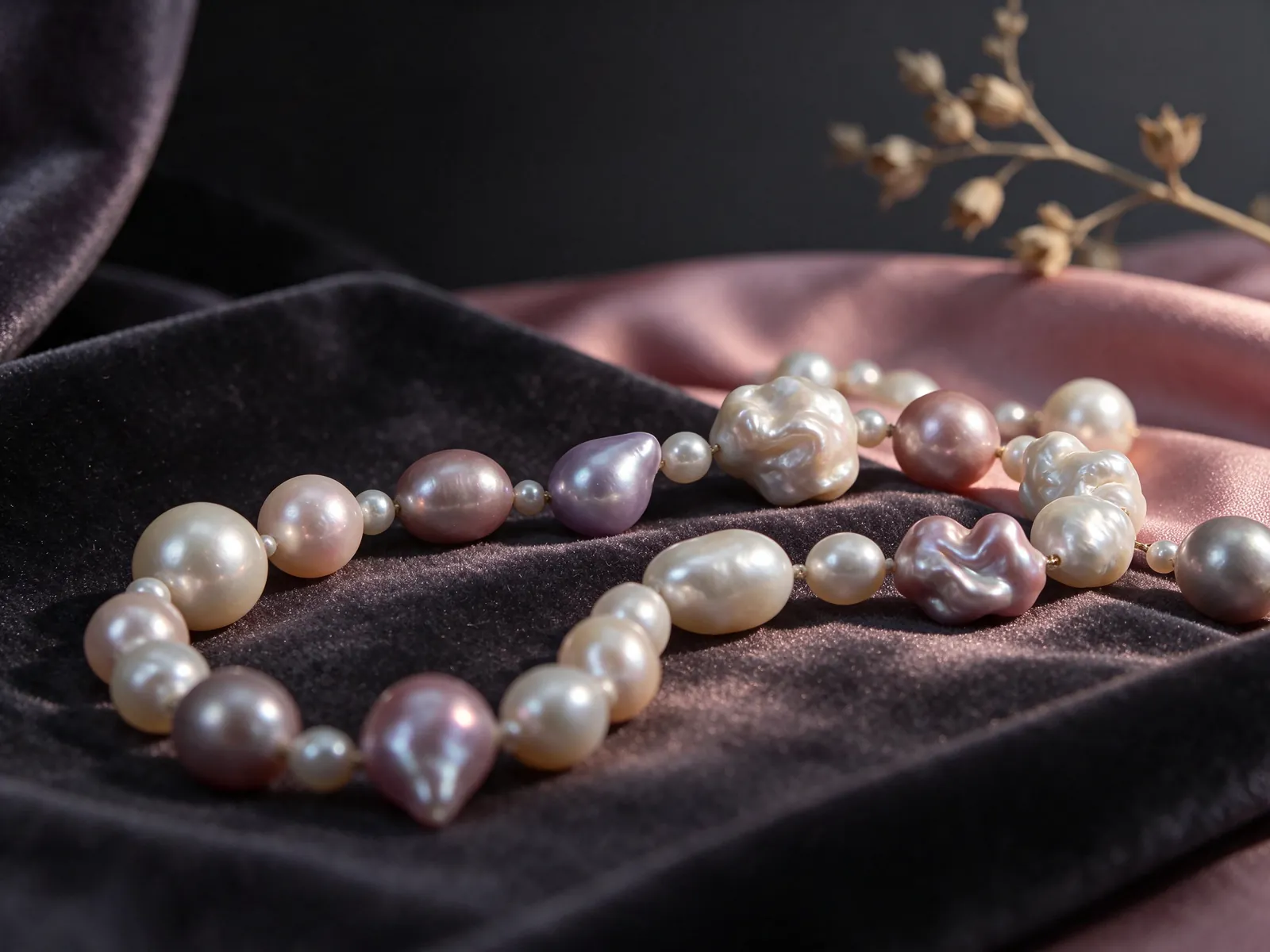
Make informed inquiries and protect the delicate surface
Organize a purchase conversation around three separate needs: the outline you prefer, the dimensions you understand and the identity information you want. Request front, side and back views where necessary. Ask what a measurement includes and what the written pearl description states. Natural or cultured identity, origin and treatment cannot be inferred from taper or color, even when the shape is very distinctive.
GIA places pearl at 2.5 on the Mohs hardness scale, making gentle handling important. Wipe pearls after wear with a very soft, clean cloth and avoid storing them in direct contact with harder jewelry. Do not pinch a narrow end to grip the pearl or scrape the surface with a fingernail. Protect the complete form, including areas that may be less visible when it is mounted.
Keep fragrance and harsh cleaning away from the pearl
Put on pearls after applying perfume and hair products so that the surface is less likely to receive a direct spray. GIA advises avoiding acids, excessive heat, ultrasonic cleaning and steam cleaning. If strung pearls are cleaned with water, the string must dry completely before wear. Store the piece where heavy objects and neighboring jewelry will not press against it; a defined taper does not mean the pearl tolerates rough handling.
Is your ideal silhouette a softly rounded pear or a longer, more tapered drop? Contact Flint Jewelry on WhatsApp +85260106207 to share your preferred outline and the profile details you want to compare. Start with the curves you enjoy and explore how they relate to your style.
| Visual form | Outline question | Profile question | Buying preference |
|---|---|---|---|
| Drop or pear | Where does the taper open into the fullest curve? | Does the rounded body remain balanced as it turns? | A long silhouette or compact fullness |
| Oval | How similar are the rounded ends? | How evenly does the body retain its depth? | An even curve rather than a pronounced taper |
| Rice-like | Does the body narrow toward both ends? | How slender is the side view? | A fine line rather than a broad lower curve |
| Teardrop dome | Can the front resemble a drop outline? | What do the dome and back look like? | Understanding structure before comparing appearance |
| Drop with rings | How do rings relate to the outer contour? | What texture appears during rotation? | Whether visible rings complement the preferred form |
Pearl knowledge and authoritative references
GIA describes seven pearl value factors: size, shape, color, luster, surface quality, nacre quality and matching. A teardrop outline concerns shape, leaving six other factors to consider in a broader assessment.
Read the reference for this factFrequently asked questions
Is pear a separate pearl type from drop?
Pear and drop describe outlines and may be used for similar silhouettes. Neither name establishes pearl type or natural versus cultured identity. Use actual views and explicit descriptive information to understand the individual pearl.
Why do two equally long pearls look different in size?
Maximum width, depth and the position of the fuller curve can change visual weight. Also check whether the listed length includes metal parts. Equal total lengths are not necessarily equal pearl dimensions.
Should I reject a drop because it looks uneven in one picture?
First compare other angles. A tilted camera view can distort the apparent balance. If the asymmetry persists, decide whether you enjoy it and whether it works in the intended orientation or alongside a paired pearl.
How can I tell whether a teardrop outline is a dome?
Side and back views help reveal a dome and flatter-back presentation, but the outline alone is insufficient. Read the stated structure or pearl description as well rather than assigning identity from one front photograph.
Does the narrow end need a different cleaning method?
It does not call for aggressive cleaning. Handle the whole pearl gently, use a very soft clean cloth after wearing, and avoid steam or ultrasonic cleaners. Do not grip, scrape or scrub the narrowing end just because it seems convenient to reach.
Updated: