

What makes a multi pearl pendant feel balanced when comparing a double pearl pendant with a three pearl pendant?
Think of the pendant as an arrangement rather than a tally. A side-by-side pair emphasizes the relationship between two points, while a vertical pair carries the eye downward. A three pearl pendant can anchor attention in the middle or continue a line across the neckline. Five pearls offer more repeated elements, but the effect still depends on size and spacing. When comparing a pearl pendant, decide which direction you enjoy before assuming a particular count will suit you.
The gaps are part of the design. Closely placed pearls may read as one compact shape; separated pearls let the eye notice each pearl and its connecting metalwork. Even within the double pearl pendant category, those choices can produce very different silhouettes. Check the whole neckline view rather than only a close crop. Ask whether the spaces look purposeful and whether the connections reinforce the arrangement or become the first thing you notice.
How can neckline and pendant placement bring a double pearl pendant or three pearl pendant into balance as a multi pearl pendant?
Wear a top you use often and compare the pendant above the neckline, inside the opening and on the fabric. A horizontal line may become visually tangled with the collar edge; a vertical design needs room for its lowest pearl. Check the result while seated and during a gentle turn, not only in a still pose. A useful placement keeps the arrangement readable without making you continually pull at the chain or adjust your clothing.

Separate pearl number from overall size
A five-pearl row is not automatically broader than a pair. Smaller pearls grouped closely can create a restrained accent, while two larger pearls with an open gap may take up more space. Distinguish the measurement of an individual pearl from the complete pendant's width and height. Photographic magnification can also mislead: a tightly framed detail does not establish the actual size of the jewelry or how it will appear on your body.
Look at the size relationship within the group. Equal pearls suggest a steady rhythm, while changing sizes can guide the eye toward a chosen point. A graduated pearl pendant is worth comparing if a smaller-to-larger progression appeals to you, but alternating sizes and deliberate asymmetry are different ideas. Identify where the visual emphasis falls and whether that location suits your clothes. This is more informative than using pearl count as a substitute for understanding the outline.
Check depth as well as the front outline
A front view explains the arrangement, while a side view may reveal pearls at different depths or projecting connections. Step back to an ordinary outfit-checking distance to see whether the shape stays distinct against your top. Compare similar views under similar lighting whenever possible. Otherwise, a difference in angle or crop may look like a difference in dimensions. Keep notes on the entire silhouette, rather than selecting only the pearl that photographs most brightly.

Evaluate the pearls as a group and individually
Several pearls in one pendant naturally invite comparison. Under soft, consistent light, look across the reflections, shapes and colors instead of judging one pearl in isolation. Similarity can create a calm arrangement, while intentional differences can introduce movement. Neither approach is automatically preferable. Decide whether the contrast serves your intended look, and avoid letting a strong spotlight on one surface stand in for an assessment of the whole group.
GIA lists seven pearl value factors: size, shape, color, luster, surface quality, nacre quality and matching. Counting pearls does not replace these considerations, and a well-coordinated outline does not tell you everything about the individual pearls. If you like sparkle between the elements, compare a pearl and diamond pendant. Notice whether the accents complement the pearls or dominate the view. Diamond accents alone do not establish the pearls' quality or make an arrangement better matched.
Decide what kind of matching you actually prefer
View the whole pendant first, then examine each pearl. A warm and cool color combination may be attractive if you want contrast, yet distracting if you want a uniform effect. Consider surface features at a wearing angle as well as in close inspection. Appearance is useful for choosing a look, but cannot establish pearl type, origin or natural-versus-cultured identity by itself. Those questions call for the description of the specific piece, not an inference from a photograph.
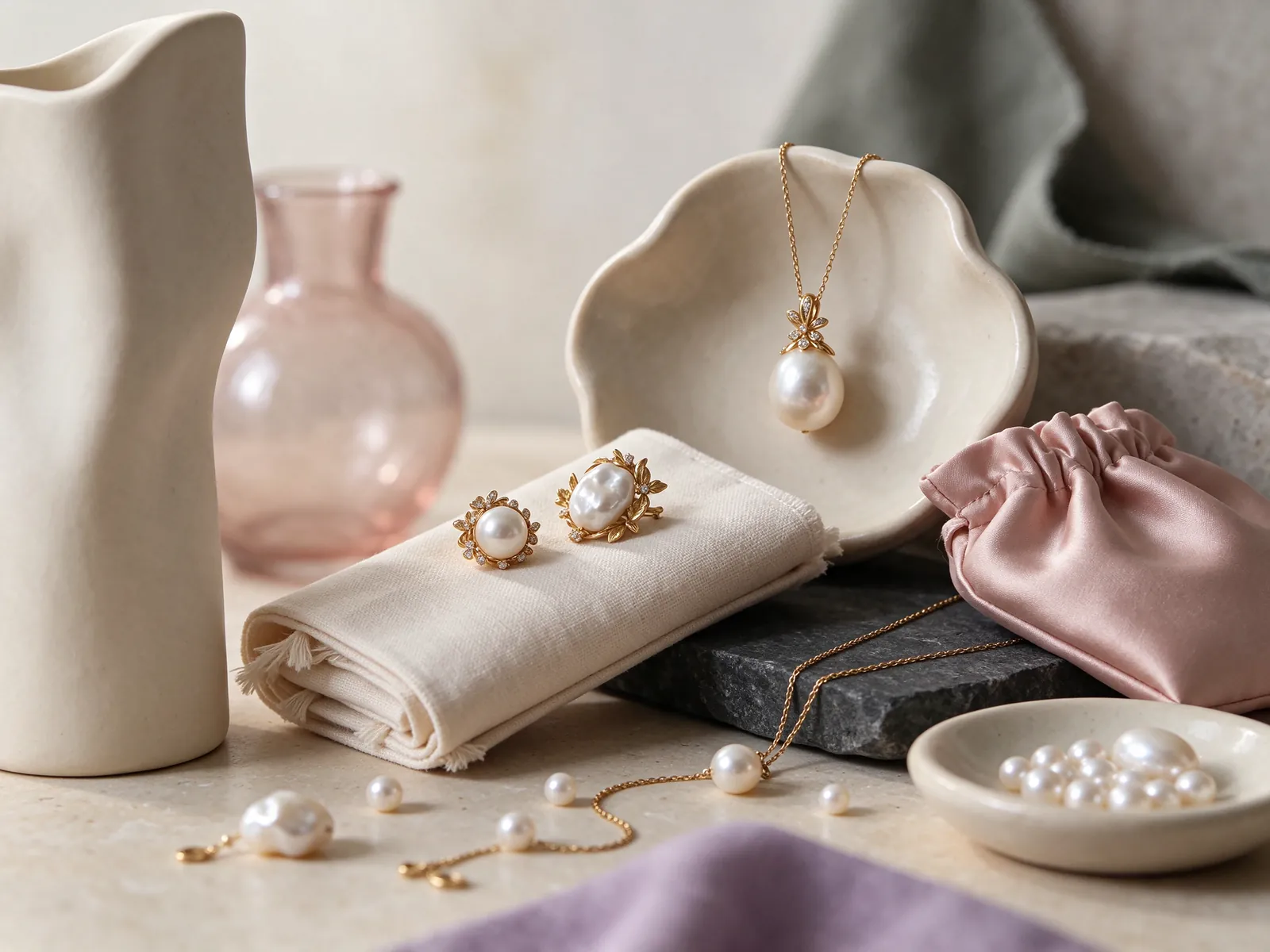
Read the chain as part of the construction
The attachment influences how a multi-pearl arrangement moves. A central bail, side connections and a chain passing through pearls are not interchangeable constructions. Before choosing a chain for pearl pendant designs, consider the opening, clasp and whether the pendant can be removed at all. Then assess the visible relationship: a substantial chain can compete with small pearls, while a different line may change the way the gaps are perceived. Matching metal color is only one consideration.
A vertical arrangement with an extended chain creates a different direction from a fixed row. If you want the eye to travel downward, compare a Y-shaped pearl pendant necklace and its placement possibilities. Do not confuse adjustable necklace length with adjustable spacing between pearls; these are separate features. During a fitting, watch whether pearls turn, overlap or move independently, and examine the reverse. The pendant's back may become visible as you move through an ordinary day.
Inspect the relevant connection points
For a through pearl pendant, pay attention to the openings, chain movement and direction of the pearls. For a bail-based design, look at the bail and the metal joining the arrangement. A simple appearance does not reveal the fixing method or establish durability. Examine each accessible connection rather than focusing only on the center. Understanding the assembly helps you ask useful questions before changing chains or wearing it alongside another pendant.

Build the outfit around a readable focal point
With a button-front shirt, look at the pendant in relation to the placket and collar opening. A horizontal row may sit neatly in the opening, while a downward arrangement needs space below its last pearl. With a crew neck, test both the open skin area and the fabric. A busy pattern can hide the gaps that make the design distinctive. Try a quieter top before deciding you need more pearls or a more prominent arrangement.
When layering, choose which necklace should lead. If the multi-pearl pendant is the focal piece, a simpler companion can preserve its rhythm. Keep the pendant outlines from repeatedly covering or striking each other as you move. A long pearl pendant necklace provides another idea for placing the emphasis lower, but check for bag straps or clothing decorations along that path. Leaving space around the pearls can be a more effective styling choice than adding another necklace.
Balance earrings through shape, not identical counts
Large earrings may call for a quieter pendant silhouette, while understated earrings can let the neckline arrangement stand out. Include your hairstyle in the comparison because covered ears change what is visible. Coordinating pieces can share a color direction or a similar line without repeating the same number of pearls. If a scarf or high neckline hides the pendant, reconsider its placement instead of assuming a more elaborate design will solve the problem.
Make comparison notes that explain your preferences
Use the same checklist for each arrangement: direction, overall shape, spacing, relative pearl sizes, color balance and attachment. Write observable differences instead of vague judgments. 'The row extends outside my collar opening' is more helpful than 'too big', while 'the bottom pearl disappears when I sit' points to a placement issue. This approach also separates the pendant's actual effect from the appeal of styling, lighting or a pose in a photograph.
Choose a shortlist around your regular wardrobe. A photo of a familiar neckline can help explain whether you prefer symmetry, contrast or a higher focal point. Mention any chain you would like to keep using, as well as concerns about movement or handling the clasp. There is no universal winner between two, three and five pearls. Specific wearing preferences create a clearer basis for discussion than asking which count is best for everyone. For material preferences, consider 18K 750 white gold, 18K 750 yellow gold, 18K 750 rose gold, PT950 platinum and PT900 platinum, then think about how your preferred metal color relates to the spaces between the pearls.
For gifting, observe the recipient's everyday style
Look for clothing habits: open collars, round necks or high necklines, and a preference for one necklace or layered jewelry. Those details say more than an age-based assumption. If the choice is uncertain, compare a compact paired accent with a more repeated line and ask which feels more natural. You may attach personal meaning to a pearl count, but explain it as your own gift message rather than a universal significance inherent in the pearls.

Protect the pearls and their adjoining spaces
Use a very soft, clean cloth after wearing, gently wiping accessible surfaces without tugging on the assembly. GIA ranks pearl at 2.5 on the Mohs hardness scale. Separate the pendant from harder jewelry in storage to reduce rubbing, and lay out the chain so a knot does not pull against the pearls. Movable components should not be compressed beneath other pieces in a crowded pouch. More adjoining surfaces call for care, not harder rubbing.
Put pearls on after applying perfume or hair spray, and avoid acids and excessive heat. GIA advises that pearls should never be cleaned with ultrasonic or steam cleaners, regardless of how small they are in the arrangement. If the outline changes unexpectedly or a connection feels loose, stop repeatedly pulling it into position and have the construction examined. Cleaning the surface cannot address a fixing problem, and repeated adjustment may place stress on the joining points.
Do not force access to a narrow gap
Avoid sharp objects between pearls and metalwork, and do not twist the arrangement apart to clean its reverse. Work only where a soft cloth can reach gently. If pearls are strung and cleaned with water, GIA says the string must dry completely before wearing. When you do not understand how a pendant is secured, avoid soaking it. Preserving the connections and intended spacing matters more than trying to clear every crevice in one cleaning session. To compare a double pearl pendant with a three pearl pendant, share your everyday neckline, preferred placement and existing chain details on WhatsApp +85260106207, and talk about the multi pearl pendant silhouette that suits your style.
| What to compare | Possible visual effect | Wearing check | Decision question |
|---|---|---|---|
| Two pearls | A paired accent or downward line | Look for turning and overlap | Do you want contrast or vertical emphasis? |
| Three pearls | A center focus or repeated line | Check where the middle pearl rests | Should the center or the complete outline stand out? |
| Five pearls | Additional repeated points, shaped by size and spacing | Check visibility across the collar opening | Do you prefer a compact group or clear gaps? |
| Size and color relationship | Even, graduated or deliberately contrasting | View all pearls under similar light | Is the contrast part of the look you want? |
| Attachment and chain | Central bail, side connections or through-pearl layout | Observe the assembly while seated and turning | Will it suit your chain and usual clothing? |
Pearl knowledge and authoritative references
GIA lists seven pearl value factors: size, shape, color, luster, surface quality, nacre quality and matching. A multi-pearl pendant benefits from considering the group relationship as well as each individual pearl.
Read the reference for this factFrequently asked questions
Will five pearls always make a bolder pendant than two?
No. Smaller pearls grouped closely can look restrained, while a widely spaced pair or prominent metalwork can be bolder. Compare the full width, height and worn outline rather than count alone.
Is an asymmetric three pearl pendant necessarily unbalanced?
Not necessarily. Unequal sizes or gaps can intentionally direct the eye. Assess whether the outline suits your preferred look and remains comfortable in movement instead of assuming symmetry is required.
Should every pearl in a multi-pearl pendant have the same color?
Only if a uniform effect is what you want. Intentional color contrast can form part of the design. Consider luster, surface appearance and matching together, in consistent light, before making a judgment.
Can a chain change alter how the arrangement looks?
Yes, the visible chain and placement can change the outline, but a swap is only appropriate when the attachment and clasp are compatible and removal is possible. Adjustable length does not necessarily change pearl spacing.
What should I check before layering a multi-pearl pendant?
Choose a main focal point, then check that the necklaces do not repeatedly overlap or strike each other while you sit and turn. Leave enough visual space to read the pearl arrangement and consider the collar and any bag strap.
Updated: