
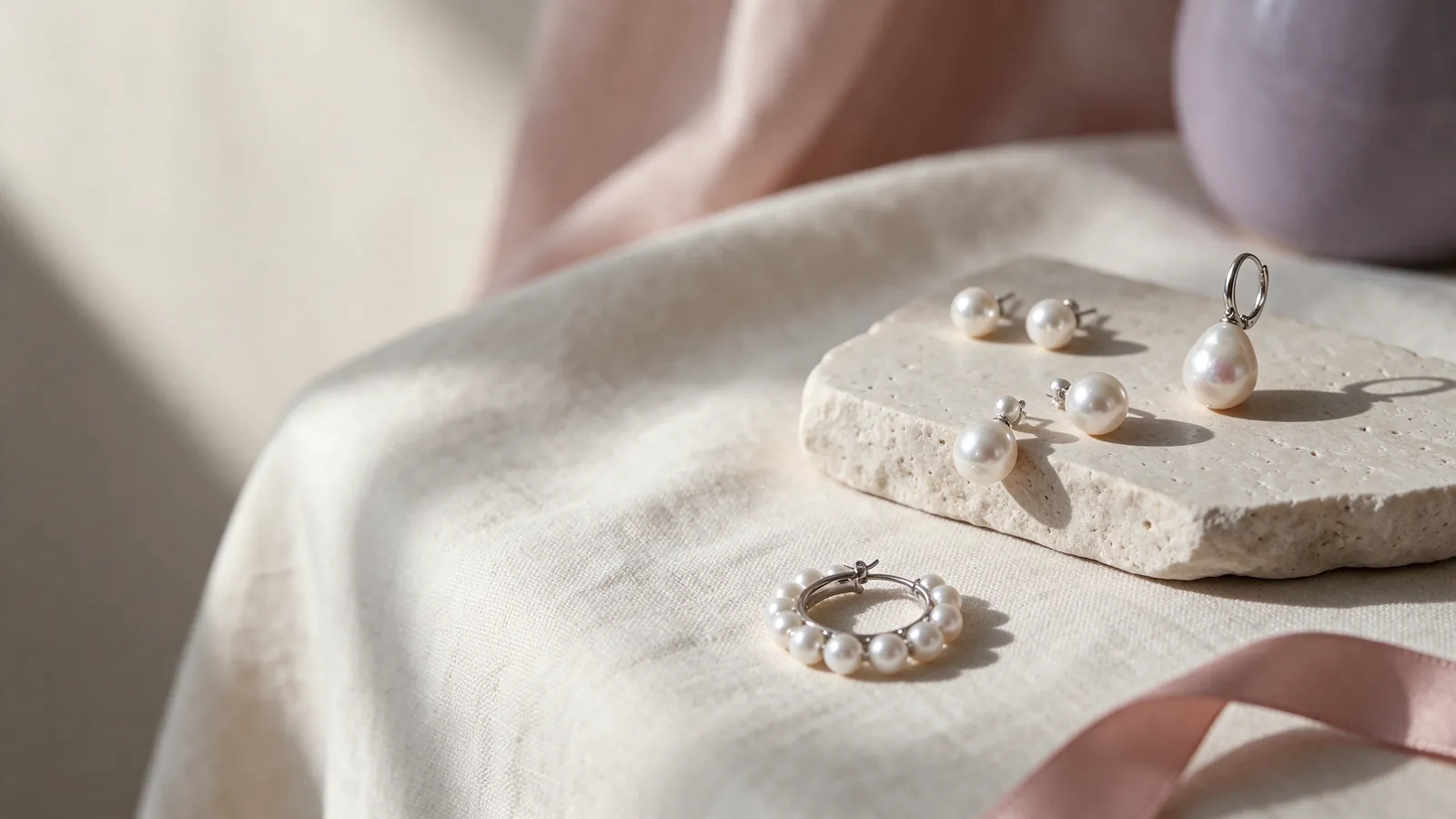
When choosing pearl jewelry for sensitive skin, why does an 18K gold and platinum allergy guide consider every contact point in pearl jewelry and metal allergies?
Start by tracing where a piece meets your skin. An earring can touch the lobe through its post, back and setting. A necklace has a chain and clasp as well as its visible pearl element. A bracelet's position can change as your hand moves. The overview of choosing metals for pearl jewelry is a useful starting point, but your next questions should address the components in those specific contact areas.
A description of the main metal does not establish identical details for every component. Ask whether information is available for the post and back separately, or for the clasp resting against your neck. Components that look the same color are not thereby proven to have the same material information. Clarify whether a description applies to the complete piece or only its main setting. Mapping these contact points makes the purchase conversation more specific without claiming to identify the cause of a skin reaction.
How can past reactions inform pearl jewelry and metal allergies questions when choosing pearl jewelry for sensitive skin with an 18K gold and platinum allergy guide?
Describe the location of past discomfort, the piece involved and any material information you kept. Add when symptoms appeared and what changed after removing the piece, along with context such as a collar or headphones. DermNet explains that a rash at a jewelry contact site is not always a metal allergy: friction, soap or water beneath the piece, and non-metal components can cause irritation. Separate what you observed from what you suspect. This history helps frame healthcare questions but does not prove an allergy to the pearl.
Treat metal options as a discussion, not a skin-suitability ranking
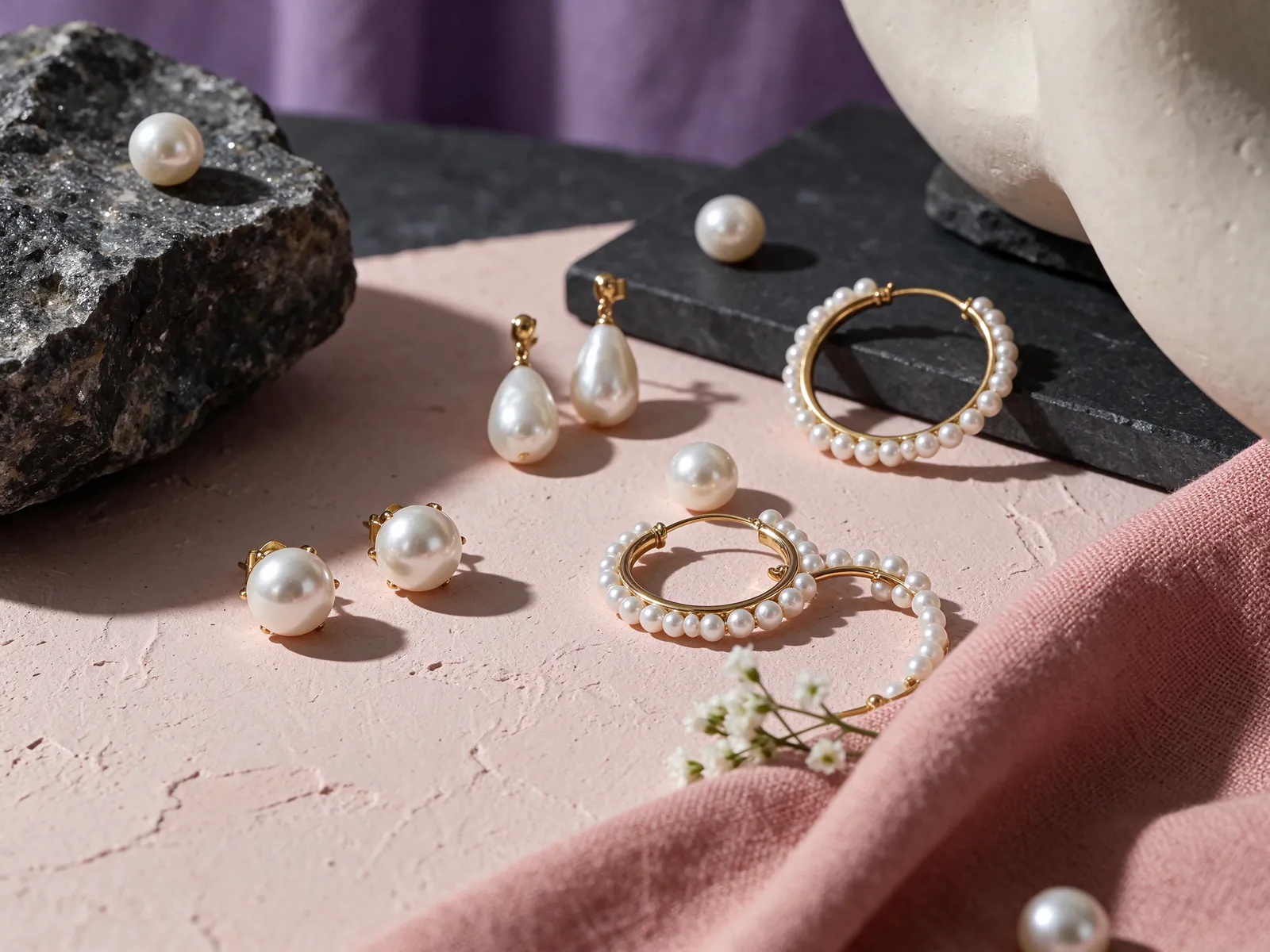
When discussing pearl jewelry with Flint Jewelry, the metal options are 18K 750 white gold, 18K 750 yellow gold, 18K 750 rose gold, PT950 platinum and PT900 platinum. This is neither an inventory statement nor a ranking of suitability for sensitive skin. Tell us which color and wearing position you prefer, then ask about relevant components. A hypoallergenic description should not be treated as a guarantee for every person. If your clinician has identified a substance to avoid, bring that guidance to the discussion rather than inferring composition from the metal name.
If a previous gold piece felt comfortable, share that experience without treating it as proof about all gold jewelry. If another piece caused discomfort, describe that too without assuming every similarly named metal will produce the same result. DermNet notes that contact allergy can develop after years of uneventful wear. Recent changes therefore matter alongside older experience. Neither 18K gold nor platinum supplies a universal answer through its name; evaluate the particular contact parts and your individual guidance separately.
Make color part of the outfit decision, not the allergy decision
A cool-looking metal can support a clean, understated outfit, while yellow and rose tones offer warmer styling directions. Compare those looks with your usual clothing rather than presenting one color as medically preferable. If you already have individual professional advice about a sensitivity, bring it into the discussion before making an aesthetic choice. Styling and skin suitability should remain separate considerations.

Check the complete earring against your daily routine
The front view alone leaves out important details. Ask how the back is secured, where the setting sits against the lobe and whether the complete weight is described. The selection guide for pearl earrings for sensitive ears focuses on such practical questions. A compact-looking front cannot tell you how an earring will sit behind the ear or whether it suits your own skin.
Picture wearing the earrings with glasses at a desk, headphones during a commute or a high collar outdoors. A drop may brush fabric when you turn, while a back may share space with another accessory. Ask about fastening, movement and complete weight instead of assuming that a tighter back solves every fit issue. If the skin is sore, swollen or damaged, repositioning the back is not a reason to continue wearing the piece. Keep the practical fit discussion separate from assessment of the skin concern.
Use small pearls as a visual choice, not a shortcut to comfort
The ideas in baby pearl jewelry can help if you prefer a subtle accent. However, pearl scale does not supply the weight of the entire earring or describe its backing. Choose the look you enjoy, then ask about structure and contact surfaces independently. A small-looking pearl is not a claim of suitability for sensitive ears.
Think about clasps while sitting, typing and turning
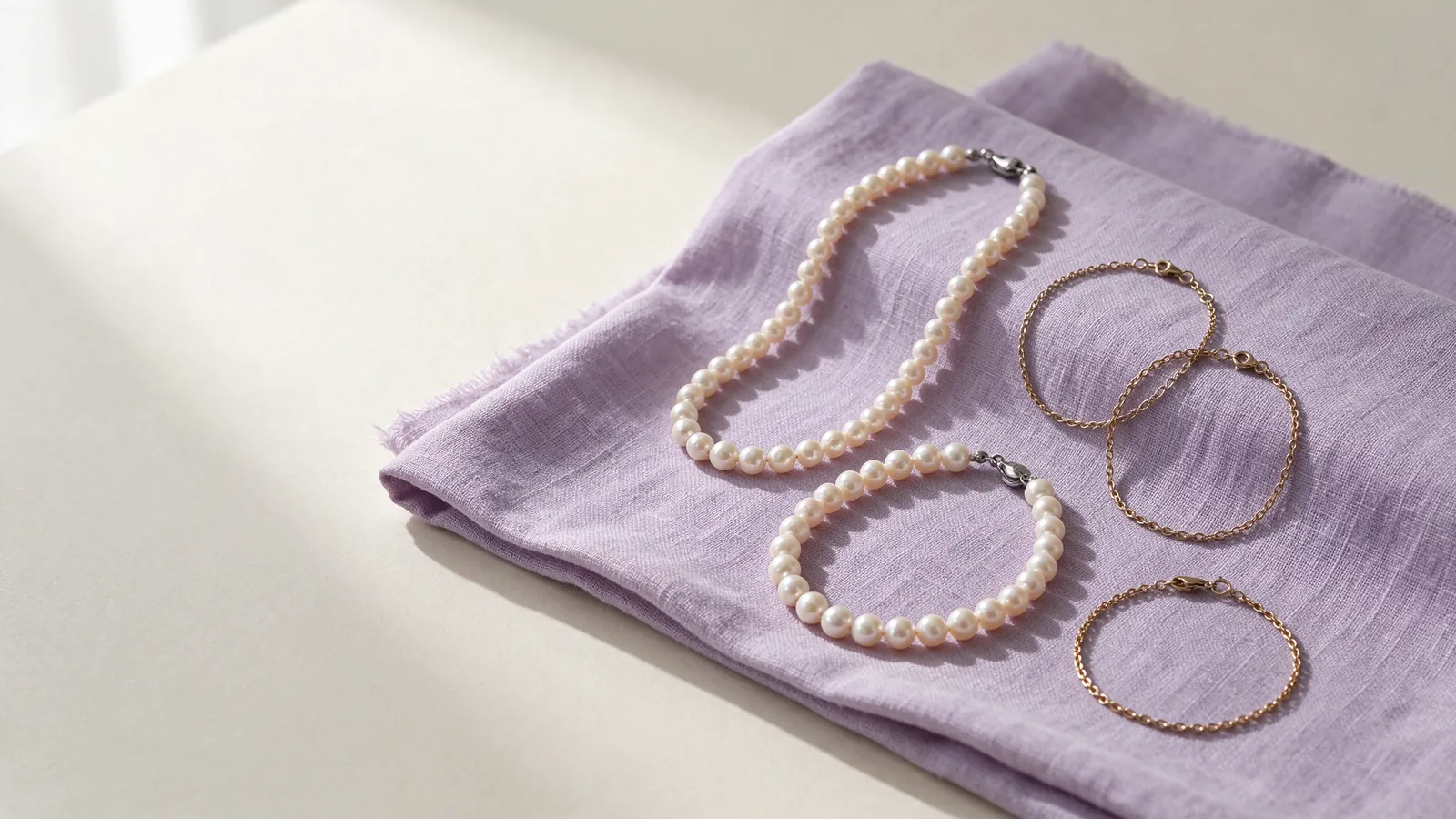
A necklace may sit differently once you move away from a mirror. Consider where the clasp rests when you sit or turn your head, and whether your favorite neckline presses around that area. You can choose an outline that works with your clothing, but fabric placement is not a substitute for evaluating material information or addressing a recurring reaction.
For bracelets, pay attention to desk work and watches. A clasp may rotate under the wrist, while another accessory may meet it during normal movement. Keeping the look simple or using the other wrist changes the outfit arrangement, not the metal. If a clasp or other component was replaced, keep that record so the current piece is not described solely with its original information. Less friction does not establish that a bracelet is reaction-free. If discomfort occurs, do not treat a sleeve covering the area as a reason to keep wearing it.
Ask for proportion and component information separately
The pearl size guide explains visual scale. Use it alongside, rather than instead of, questions about the full piece's weight and clasp arrangement. Pearl diameter does not establish clasp size or tell you which part will touch your skin. This approach works for both a bold focal piece and a discreet necklace: understand the look first, then the practical wearing details.

Keep pearl evaluation separate from metal-contact questions
GIA identifies seven pearl value factors: size, shape, color, luster, surface quality, nacre quality and matching; matching matters for two or more pearls in a piece. None guarantees how your skin will respond to a clasp or post. The pearl grading guide can help you organize the pearl-quality side of a purchase while you keep a second list for metal components. A seller's AAA label is not a universal or GIA grade. It should not be treated as evidence that jewelry will suit sensitive skin.
It is reasonable to care about both beautiful luster and comfortable wear, but the evidence for one does not answer the other. An appealing pearl surface cannot demonstrate the material details of an earring back. Likewise, a report about a pearl should not be extended into a promise about the skin suitability of the complete necklace or pair of earrings.
A pearl document does not make the whole piece hypoallergenic
The guide on how to read a pearl certificate helps separate identity information from quality observations and clarify which pearl or piece a document describes. Do not assume it certifies every jewelry component. Posts, backs and clasps still need their own material information. A photograph cannot establish pearl type, origin, natural-versus-cultured identity or certification from color and shape alone. An educational image also cannot show that a Flint Jewelry piece includes any particular report. Keep document questions separate from the parts that meet your skin.

Protect the pearl when caring for the whole piece
GIA places pearl at 2.5 on the Mohs hardness scale and advises that pearls should never be cleaned in ultrasonic or steam cleaners. Those details are relevant even when your attention is on a metal clasp: the neighboring pearl still needs appropriate care. A cleaning technique used on another type of jewelry should not automatically be used on a pearl piece.
Use the pearl care guide to separate routine wiping from cleaning the entire piece. GIA advises a very soft, clean cloth after wearing and avoiding acids, perfume, hair spray and excessive heat. Before water cleaning, consider stringing, glued attachments and the setting rather than soaking pearl jewelry. A cleaned string must be completely dry before wear. Store the piece so metal parts do not scrape the pearls. Care protects the jewelry; it does not establish that an allergy concern has been removed, even when the surface looks cleaner.
Do not use coatings or stronger cleaners to work around discomfort
If a piece causes discomfort, stop wearing it and seek appropriate healthcare advice for persistent or recurring problems. The American Academy of Dermatology (AAD) explains that a dermatologist may recommend patch testing when an allergic skin reaction is suspected, to help find the responsible substance. This is not a home test involving taping jewelry to your skin or wearing it for longer. Bring your notes and component information to the assessment. Do not improvise coatings or stronger cleaners to try to make the piece hypoallergenic.

Prepare a focused conversation before choosing a design
Bring three kinds of information to a jewelry discussion: where you want to wear the piece, what normally shares that space and what you remember about previous reactions. Follow with specific questions about posts, backs, clasps and complete weight. This gives more useful direction than a request for the safest metal without any personal context, and it avoids treating a sales conversation as a medical assessment.
For a gift, invite the recipient into the material discussion where possible. A casual statement that they wear gold does not establish that every proposed piece will suit them. For an event outfit, selecting one pearl focal point rather than several new pieces can keep the styling decision clear. It remains an aesthetic choice, not a guarantee about reactions.
Use WhatsApp to explain design and contact-point preferences
Discuss your preferences with Flint Jewelry on WhatsApp at +85260106207. Describe the wearing area, desired metal color and relevant experience, and ask whether the component information you need can be provided. A discussion is not a statement of current availability or a promise that replacing a part will prevent a reaction. If a healthcare professional has given individual guidance, keep it central to the decision. A remote jewelry conversation can address design and material questions but cannot diagnose an allergy.
| Part or topic | Information to request | Outfit or activity question | Do not assume |
|---|---|---|---|
| Earring post and back | Separate material and fastening details | Will glasses or headphones occupy nearby space? | The front view describes every component |
| Necklace chain and clasp | Details of parts meeting the neck | Where does the clasp sit with this neckline? | Clothing placement eliminates a reaction |
| Bracelet clasp | Clasp and connecting-part information | Where will it rest while typing or beside a watch? | Changing wrists changes the material |
| Pearl evaluation | Luster, surface and matching descriptions | Does the visual scale suit the outfit? | A pearl report guarantees metal suitability |
| Pearl care | GIA: Mohs hardness 2.5; no ultrasonic or steam cleaners | Can metal parts scrape pearls in storage? | More aggressive cleaning makes jewelry hypoallergenic |
Pearl knowledge and authoritative references
GIA rates pearl at 2.5 on the Mohs hardness scale and says pearls should never be cleaned in ultrasonic or steam cleaners. The figure informs care, not the likelihood of a metal reaction.
Read the reference for this factFrequently asked questions
Is platinum automatically the right choice if an old gold earring bothered me?
No metal name provides a universal comfort guarantee. Describe the earlier reaction and ask about the new piece's contact components and fastening. If the problem has persisted or recurred, seek appropriate healthcare advice rather than treating a switch of metal as a diagnosis or solution.
Why ask about a necklace clasp if I am buying it for the pearl pendant?
The clasp and chain may touch your skin independently of the pendant. Their position can also change with movement and clothing. Ask about the parts that will actually meet your neck instead of relying only on the pendant's main metal description.
Can I pick earrings by pearl diameter to know how they will feel?
Pearl diameter describes scale, not complete weight, backing structure or suitability for your skin. Ask for the wearing details of the whole earring and consider its position alongside glasses, headphones and clothing.
Does a pearl report cover metal allergy concerns?
Read a pearl document for what it actually describes. Do not infer a reaction-free claim for posts, backs or clasps from a pearl report name. Pearl quality and metal-contact suitability require separate questions.
What should I prepare before discussing a sensitive-skin jewelry gift?
Learn the recipient's preferred wearing style and, with their agreement, include their relevant experience in the component discussion. Avoid assuming that a previous gold purchase establishes suitability for every new piece. Professional advice about their own sensitivity should remain part of the decision.
Does a short symptom-free trial prove the jewelry will suit my skin?
No. AAD explains that allergic skin reactions can develop over hours or days, so a brief trial cannot rule out contact allergy. Persistent or recurring concerns deserve healthcare assessment, including a discussion of whether patch testing is appropriate, rather than taping jewelry to your skin or extending wear as a home test.
Updated: