

When evaluating certified Hanadama pearls, how do reports for “Hanadama pearls with certificate” and “Hanadama quality Akoya pearls” identify the issuer and the pearls assessed?
Treat the report as a document to read, not simply an accessory in the jewelry photograph. When a description says Hanadama pearls with certificate, find the issuing organization, the exact assessment and the identified sample. Read the body and any notes as well as the heading. A partial image may leave out the information that explains what was assessed. A report date belongs in the purchase record, but it cannot establish the current condition of pearls that have been worn since then.
Connect the document to the actual pearl or group under consideration. Where available, compare the identifying number, image, quantity and measurements; report formats need not all contain the same fields. For earrings, determine whether the pair is covered rather than assuming a document for one pearl covers both. For a necklace, ask which pearls belong to the identified sample. The pearl grading guide can help organize quality questions, while the sample connection still comes from the individual document and object. The related guide how to read a pearl certificate explains why a document’s type and its recorded conclusions need separate attention.
Why does a general authenticity document not establish certified Hanadama pearls status for descriptions like “Hanadama pearls with certificate” or “Hanadama quality Akoya pearls”?
A document about identity does not automatically record a named quality assessment. This distinction exists even within one laboratory’s services: Pearl Science Laboratory’s official guide lists grade-free documents establishing that a sample is pearl, including one that adds nacre thickness in the remarks. That measurement alone is not a Hanadama designation. AAA likewise does not identify who assessed the pearls or what a document covers. Organize identity, stated quality and sales wording separately, and leave any unanswered category as a question rather than using the presence of paperwork to answer everything.

Separate descriptive language from documented terminology
For Hanadama quality Akoya pearls, determine whether the wording describes appearance or cites an actual assessment. Pearl Science Laboratory’s official explanation says that Hanadama traditionally denotes highest-quality pearls without a clear definition, while the laboratory defines Aurora Hanadama through its own standards. The term describes quality within Akoya rather than a separate oyster species. Hanadama vs Akoya pearls provides useful context, but the status of an individual pearl comes from its own applicable document. A claim about Hanadama-like luster cannot take the place of that document.
The laboratory applies its Aurora Hanadama criteria to white-series Akoya pearls measuring at least 6 mm, with nacre thickness of at least 0.4 mm. It permits shapes through semi-round, checks surface against its standards, and gives particular weight to teri, evaluating brilliance and interference color. These conditions belong to that issuer’s designation; they are not every laboratory’s universal Hanadama rules or specifications for Flint jewelry. When comparing Aurora Hanadama pearls, preserve the full designation. Meeting one stated measurement alone does not establish that the pearl passed all of the laboratory’s assessment requirements.
Compare complete statements instead of isolated grade labels
Compare the full sales claim with the corresponding report statement. WSP’s current article says its Hanadama pearls include certificates issued by either Pearl Science Laboratory (PSL) or Pearl Research Laboratory (PRL), while acknowledging possible differences in laboratory standards and terminology. That statement describes WSP’s own offering; it does not establish that Flint holds the same certificates. WSP pearl grading is a related topic about commercial language, not a universal formula converting seller grades into laboratory designations. A meaningful comparison identifies the supplied document and the pearl or group assessed.
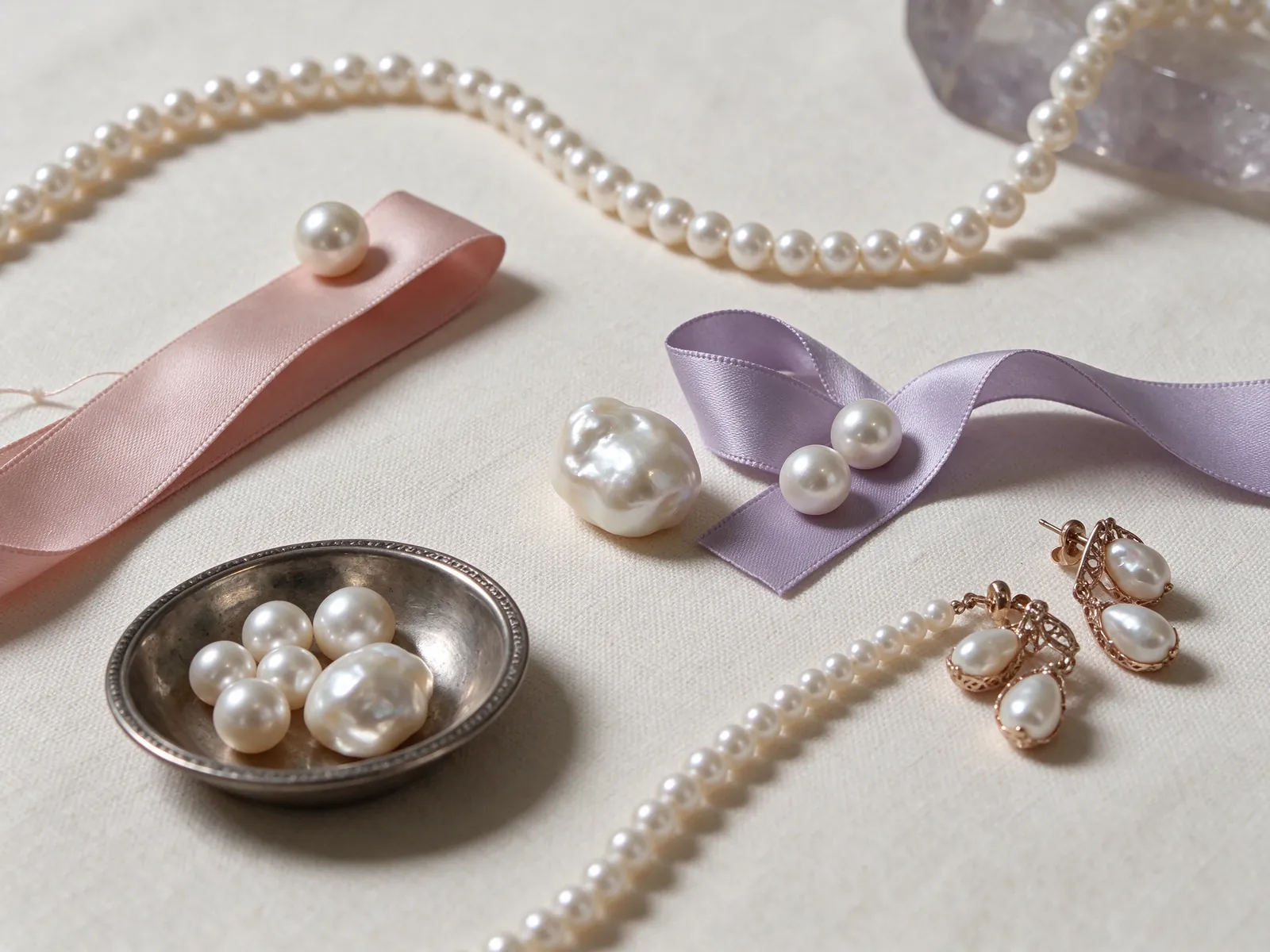
Look at the pearls as well as the report
GIA describes seven pearl quality and value factors: size, shape, color, luster, surface quality, nacre quality and matching. The matching factor concerns two or more pearls considered together, not a separate identity test for one focal pearl. Use this framework to make observations, without treating it as a Hanadama certificate. Examine reflection brightness and clarity, and look at visible surface characteristics from different angles. Consider the parts hidden by the mounting, too. A striking photographic highlight is not a measured result, and a single front-facing image cannot establish the condition of an unseen back surface.
Comparisons become more useful with similar lighting, viewing distance and background. A warm light can change the apparent color of the same object. GIA distinguishes bodycolor, overtone and orient, noting that not every pearl has all three. An ivory shirt may create a different impression from a white shirt, but that styling effect does not identify origin or certification. Discuss the visual effect you enjoy, then examine how the actual pearls respond rather than assigning an identity from their photographed color.
Judge the balance of the whole piece
A focal pendant highlights one visible pearl, while earrings need to be considered together and a strand creates a continuous line. Lay a necklace out before viewing it worn; place earrings side by side before looking at their effect around the face. This can reveal overall differences that individual close-ups hide. Matching concerns coherence within the described design, not an assumption that every visible feature must be identical.
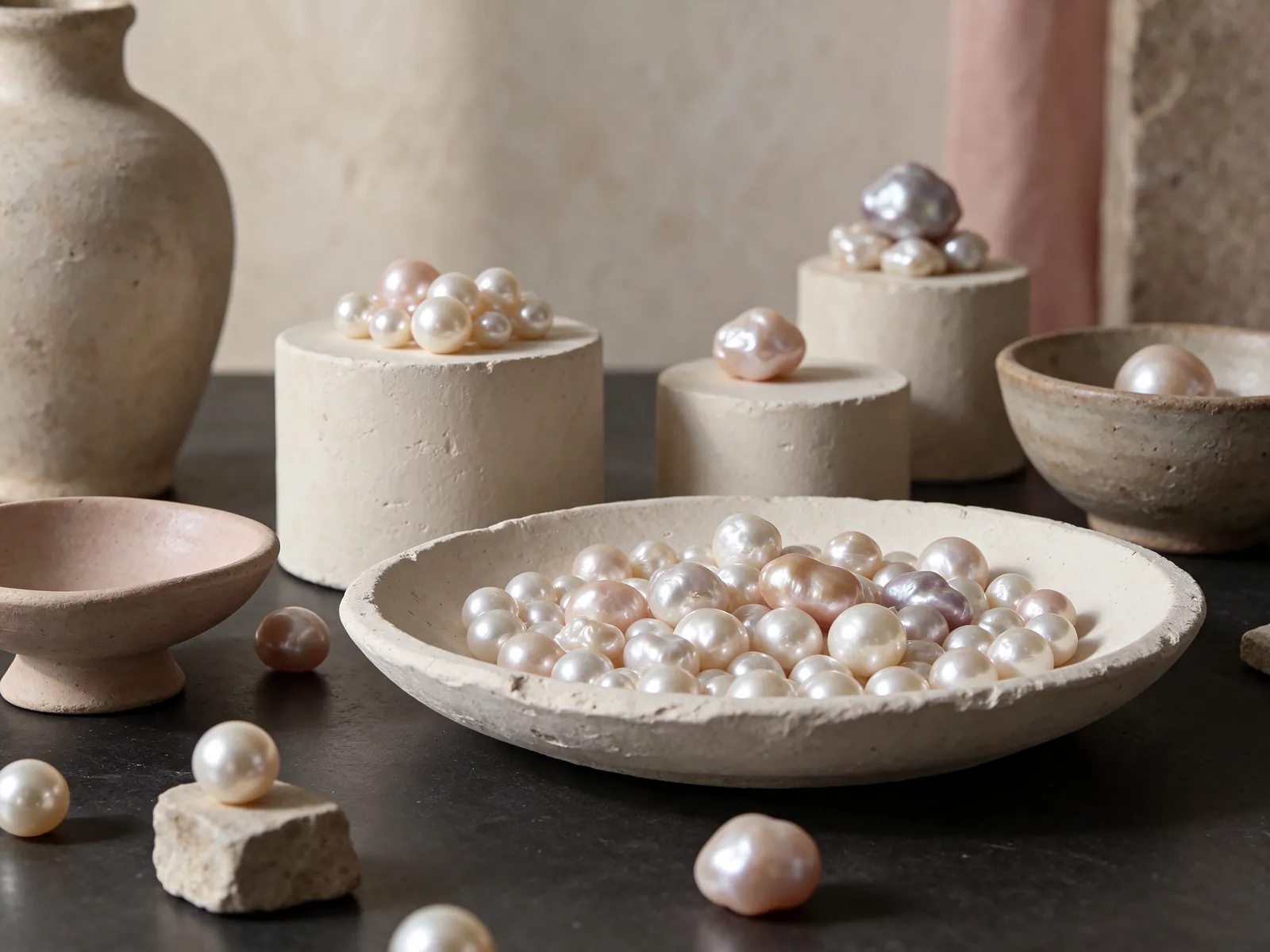
Ask different coverage questions for necklaces, pendants and pairs
For a Hanadama Akoya pearl necklace, distinguish the pearl assessment from the finished piece's clasp, construction and wearing length. A report addressing pearls does not automatically specify every metal component. Try the visual line against a simple neckline to judge continuity, then consider how it sits with the clothes you actually use. Decorative collars may cover parts of a strand. These are practical styling observations, not findings about the report's grade or evidence that one document covers the entire finished item.
A Hanadama pearl pendant places emphasis on the focal pearl, its visible surface and the pendant's orientation. Consider where the chain sits relative to your collar and whether other accessories compete with that focal point. A document for the pearl does not necessarily cover the chain or additional pearls. With earrings, compare both sides with hair pulled away, then with your normal hairstyle. The assessment can inform a purchase, but the jewelry format must still work with your own wardrobe and habits.
Read a jewelry set one component at a time
Write down each piece in a set and the document associated with its pearls. A report for a necklace does not automatically extend to the earrings. A report identifying one pearl does not apply to another merely because their appearance is similar. Keep the individual sample connection clear, particularly when a set description combines several pieces under one attractive name.

Build a comparison around measurements and intended use
Check both the unit and the object being measured. Pearl diameter is different from total pendant length or necklace wearing length. Photographic scale alone cannot tell you the dimensions. Compare pearl measurements in one category and finished jewelry measurements in another. If a listing supplies only the pendant's overall dimensions, do not use those figures as its pearl diameter. Once the stated dimensions are understood, consider the visual proportions around the neckline or ear rather than choosing solely by how large a close-up looks.
Before comparing prices, establish what each amount describes: a pearl, a strand or the complete finished piece. Shared Hanadama wording does not make pearl quantity, stated dimensions, matching, mounting and document scope identical. A quality document is not an appraisal and does not promise resale value. If selecting a gift, find out whether the recipient enjoys a single focal point, a continuous necklace or earrings. This practical preference is not answered by the most impressive label in a description.
Include everyday clothing and activities in the checklist
Think about high collars, headphones and bag straps when choosing something for frequent wear. For an occasion, compare the neckline, hairstyle and other jewelry as a whole. Keep these practical requirements beside the document information. Unknown specifications should remain explicit questions rather than being filled with assumptions to make competing descriptions appear equivalent. A transparent comparison is more useful than an apparently complete but inaccurate one.
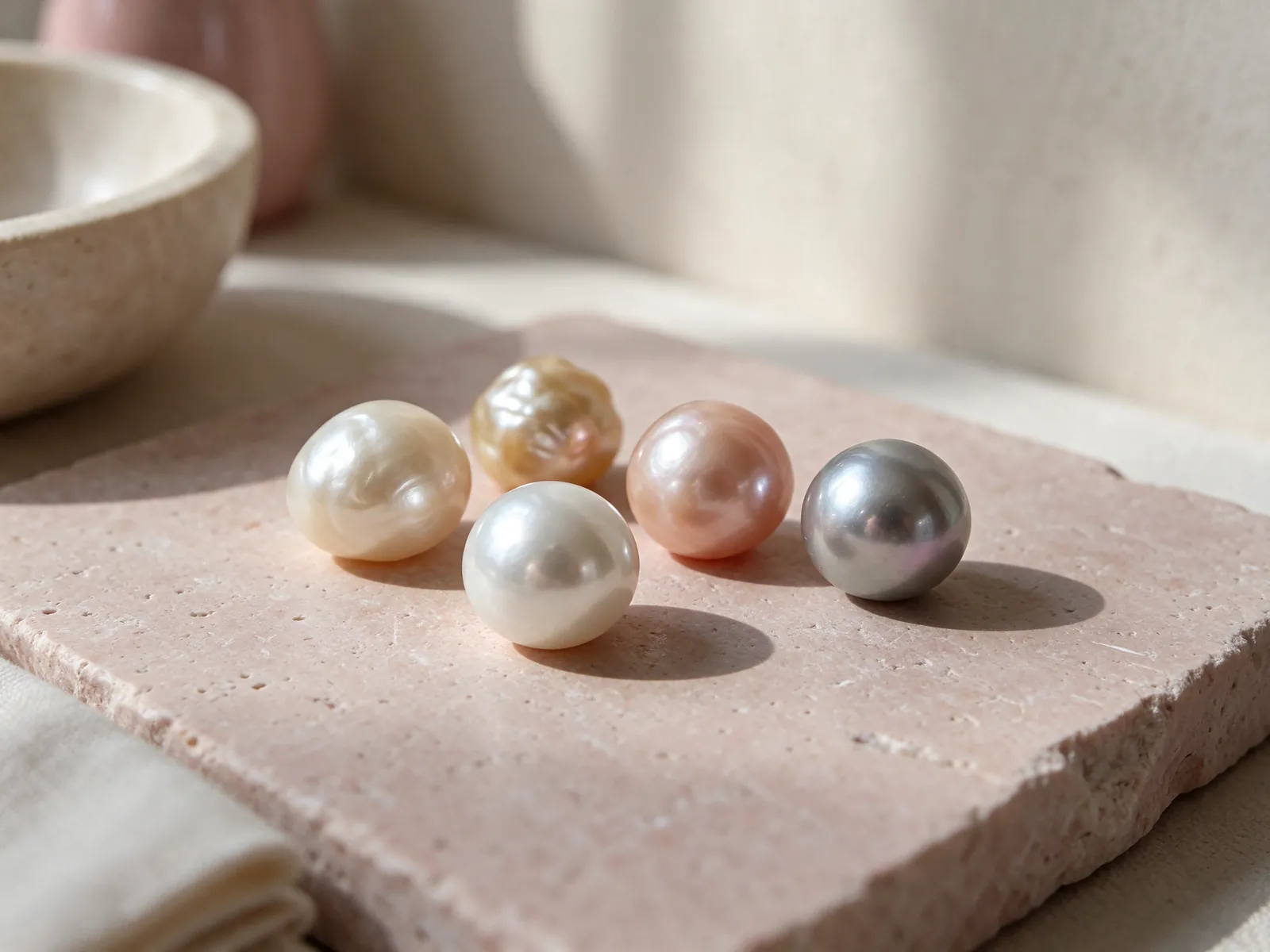
Understand the limits of the document and preserve the connection
Do not infer origin, treatment status or natural-versus-cultured identity from a round shape, white appearance or Hanadama label. Read what the document actually states. If it answers one of those questions, it does not necessarily answer the others. Ask separately about identity, quality assessment and the identified sample. This prevents the word certified from being expanded into several claims that the document may not make, while keeping the information useful for the particular purchase.
Keep the complete document, identifying photographs and purchase description together. If pearls are replaced, restrung or moved into another format, preserve a record explaining the changes and which pearls still correspond to the original sample. Newly added pearls do not automatically receive the earlier assessment. Also distinguish a historical assessment from present condition: after wear, inspect the current visible surfaces rather than assuming the older wording describes everything about the item today.
A pearl assessment does not answer metal-contact questions
The clasp, chain and ear posts require their own material information. A pearl report does not guarantee a skin response. If jewelry has caused discomfort before, pearl jewelry and metal allergies is a separate topic to consider, including which components touch the skin. For the wider selection process, read choosing metals for pearl jewelry and keep metal-contact questions separate from the pearl assessment. Certification should not be treated as a promise of universal suitability.

Protect the pearls through everyday wearing and care
GIA gives pearl a Mohs hardness of 2.5. A named quality assessment does not remove the need for gentle handling. Wipe pearls with a very soft, clean cloth after wearing and avoid acids, perfume, hair spray and excessive heat. Finish fragrance and hair preparations before putting the jewelry on to reduce direct spraying onto the pearls. In storage, separate them from other jewelry that could rub their surfaces, and do not pull or crush a strand to force it into a small space.
Never use ultrasonic or steam cleaners for pearls. Wet cleaning also requires attention to the entire item’s string, adhesive, mounting and metal; a certificate does not make prolonged soaking appropriate. When a strung piece has been cleaned with water, its string must dry completely before wearing, even if the pearl surface already looks dry. Cleaning is not a new quality assessment and does not promise to reverse wear or yellowing. Before the next wear, check the clasp, string and visible surfaces. Stop wearing the piece if a part looks damaged or insecure, and seek an appropriate inspection.
Separate the styling effect from what an image can establish
White clothing may produce a crisp outline, while warm ivory offers a softer background. Look at pearls with familiar clothes, the neckline you normally wear and your other accessories. Lighting, background and makeup can influence appearance without establishing any Hanadama status. This page’s images illustrate styling and pearl knowledge; they are not reports for individual pearls or evidence of type, origin, grade, measurements, price or stock. Treat personal preference, physical observation and report wording as distinct considerations rather than turning a pleasing photograph into a certification claim.
| Wording encountered | Information to examine | Unsupported shortcut | Question to ask |
|---|---|---|---|
| Certified Hanadama pearls | Issuing organization, assessment and identified sample | Assuming similarly described pieces share one report | Which pearl or group does this document identify? |
| Hanadama pearls with certificate | The type of document and its scope | Treating every authenticity statement as Hanadama assessment | Is it about identity, quality or both? |
| Hanadama quality Akoya pearls | Whether the phrase is descriptive or document-based | Letting the wording itself establish certification | What exact assessment is being referenced? |
| AAA | The seller's stated grading criteria | Converting letters directly into Hanadama status | Which characteristics define this seller's grade? |
| A strand or set with documentation | The connection for each pearl group or piece | Extending coverage to added pearls and all components | Which parts of the set are explicitly covered? |
Pearl knowledge and authoritative references
For its own Aurora Hanadama designation, Pearl Science Laboratory specifies white-series Akoya pearls of at least 6 mm and nacre thickness of at least 0.4 mm, together with its shape, surface and teri assessments. These are issuer-specific conditions, not universal Hanadama rules or Flint jewelry specifications.
Read the reference for this factFrequently asked questions
What is missing if I can see only a report cover?
The cover may not show the actual assessment, notes or sample connection. Obtain a clear view of the complete document and compare its identifying information with the pearls being considered. Avoid filling gaps from the title alone.
Does one documented pearl establish the status of a matching pair?
Not by itself. Determine which pearl the document identifies and what assessment applies to the second pearl. Matching appearance is a visual consideration, not proof that both pearls fall within one document's scope.
Can a description of Hanadama-like luster replace a certificate?
No. It describes an appearance or quality impression. A certification claim must be understood through the issuer, exact assessment and identified sample. Those are different kinds of information from an attractive luster description.
Why keep records when pearls are moved into a new piece?
The records help explain which pearls remain connected to the original document and which were added or changed. Keep photographs, the complete document and the change description together. The earlier assessment should not automatically be extended to new pearls or the entire new piece.
Does a quality certificate make ultrasonic cleaning suitable?
No. GIA states that pearls should never be cleaned in ultrasonic or steam cleaners. Use routine gentle care with a very soft, clean cloth after wearing, and keep perfume, hair spray and excessive heat away from the pearls.
Updated: