

How do signs pearls need restringing help you decide when to restring a pearl necklace and how often to restring pearls?
Before fastening the necklace, lay it on a soft, clean surface and look over the entire strand. Pay attention to the thread around knots and beside each clasp end. New space between pearls, visible fibers or an unfamiliar drape can be worth investigating. Resist stretching the necklace between your hands, shaking it while suspended or pushing pearls together as a strength test. Those actions cannot establish how strong the thread remains and can stress an area that already looks compromised. Photograph an unfamiliar loose fiber in place rather than cutting it off to make the strand look tidy.
Use the necklace's own history as the comparison. Some original stringing arrangements have visible spacing, and pearl shapes need not create a perfectly uniform line. The meaningful question is whether the spacing or thread has changed. An older photograph can help distinguish a familiar detail from a recently enlarged gap. Describe the location of the change instead of assuming that every space is a defect or forcing pearls closer together.
Pause wear after noticing signs pearls need restringing, then seek an assessment of when to restring a pearl necklace and how often to restring pearls
Take the necklace off and keep it supported as you place it in its own pouch or box. Do not add adhesive, retie an exposed section or try a temporary stringing fix. If a break has occurred, collect the pearls and fittings you can find and contain them securely. Keep the thread pieces as well. A simple record of the break location is useful without repeatedly handling the damaged strand.

Build a condition history instead of relying on the purchase date
The calendar does not tell the whole story. WSP’s public pearl-care page recommends maintenance every two to three years, including checking necklaces for stretched thread and restringing when needed. Its care article advises earlier restringing when the thread becomes loose or stretched. That recommendation is a maintenance reference, not a rule that every necklace must receive new thread on the same anniversary. It is also not a Flint Jewelry service interval. The present condition of this strand and what has happened during use remain central to the decision.
Two necklaces purchased together can have different wearing histories. One may accompany office outfits regularly while the other appears only at celebrations; clothing contact, handling and storage can differ. Keep the previous restringing date alongside notes about these conditions. Stored jewelry should also be checked before returning to use, because rare wear does not establish that its thread and attachments are unchanged. Take the necklace out before an occasion and record specific details, such as fraying beside the closure or a central gap absent from an earlier photograph. That history is more useful than simply labeling the piece old.
Reassess after a snag or an unexpected pull
A zipper, scarf or bag strap can catch a strand. After such an incident, examine the part that took the tension rather than relying on the clasp still working. If you see disturbed knots, new slackness or loose fibers, set the necklace aside. Explain both the event and your typical wearing routine during an assessment. A concerning change need not wait for a previously planned maintenance date.

Identify whether the change is in the thread, pearls or clasp area
Reduced brightness and loose stringing are not the same concern. Guidance on how to care for dull pearls is relevant when the issue is the appearance of the pearl surfaces. Note whether the whole necklace looks different or whether one area has a spot. Restringing is not a general solution for every surface change. Neither thread color nor pearl appearance alone establishes the material of the string or the identity of the pearls.
When the area beside the clasp looks dirty, distinguish deposits from worn fibers. Read how to clean pearl clasps and earring posts for the cleaning question, keeping it separate from thread assessment. If the mark is on a pearl, how to remove stains from pearls addresses a different concern. Do not soak the full strand or scrape a mark to test it. Note where the change appeared and what contacted the necklace. If residue and fraying are both visible, describe both: removing a deposit would not prove that the supporting thread is in good condition.
Keep surface care gentle while evaluating the strand
GIA gives pearl hardness as 2.5 on the Mohs scale and says not to use ultrasonic or steam cleaners. This is a pearl-surface fact, not a measurement of thread strength or a replacement interval. Inspect the strand while it rests on a soft support. GIA also advises that the string must be completely dry before wearing strung pearls that have been cleaned with water. Surface dryness alone does not answer that question.
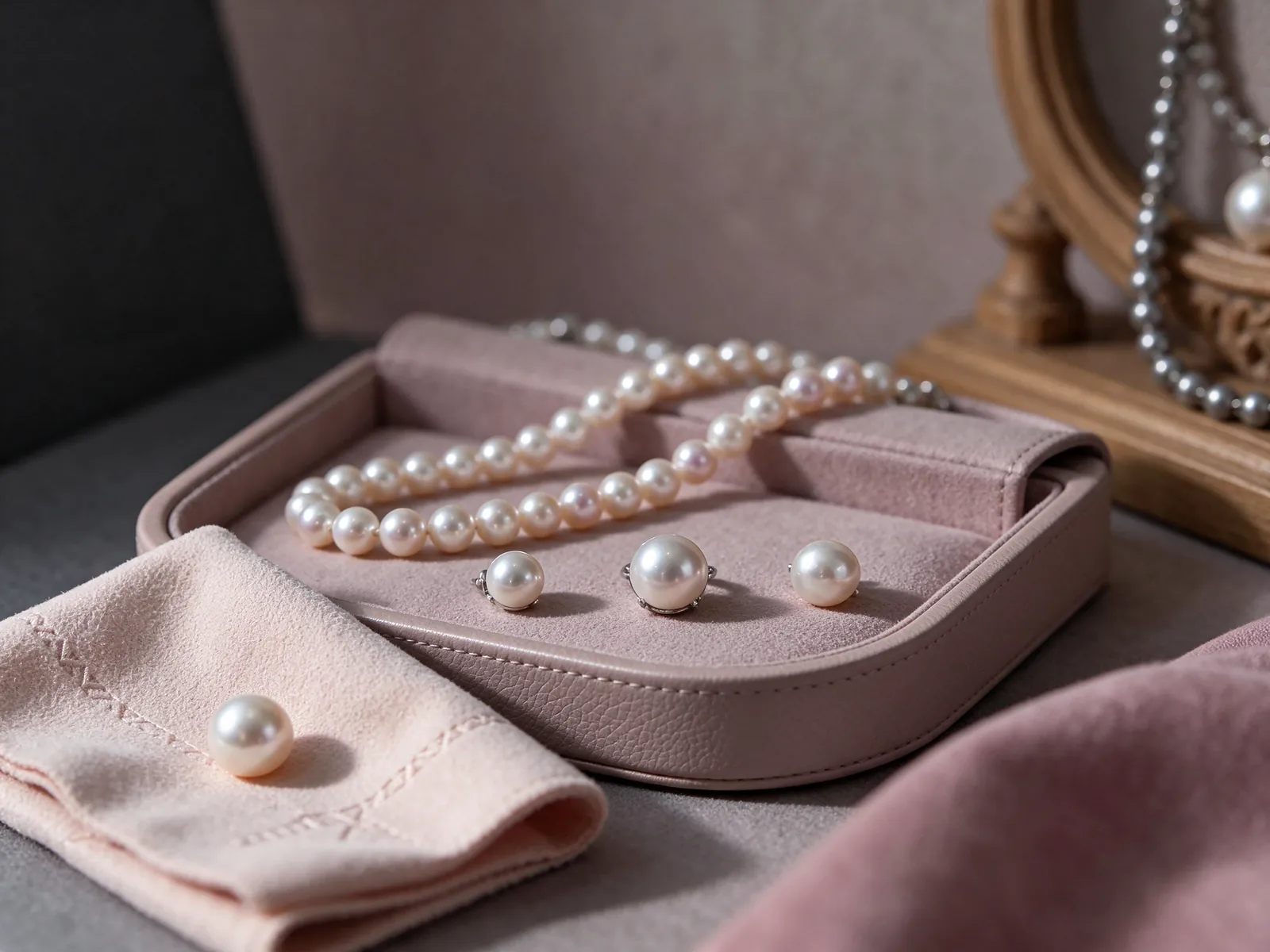
Choose an event outfit that does not depend on compromised thread
If a loose strand turns up while you are getting ready for an event, switch to jewelry in sound condition rather than wearing it as an experiment. Earrings or a well-chosen neckline can carry the outfit without that necklace. Covering the gap with a collar changes what other people see, not the thread’s condition. Wrapping the strand shorter or securing it with a pin cannot substitute for an assessment. Even wearing it briefly for a picture does not test its strength reliably. Check the necklace before the outfit fitting to allow time for an alternative combination.
For a necklace without concerning changes, consider garment contact during an outfit fitting. A rough collar edge, prominent zipper or textured embroidery may catch the strand or its knots. Shoulder straps can press the pearls against outerwear. Look at these practical details alongside how the necklace balances the outfit. Softer clothing can reduce avoidable contact, but it does not make an already slack or frayed strand ready to wear again.
Discuss desired length without cutting the existing strand
A necklace that appears lower on the chest may be responding to a different neckline, or its spacing may actually have changed. Compare the strand itself before deciding. If a length change is part of your goal, show the preferred wearing position and a flat photograph of the current arrangement. Do not cut out apparent extra thread. Pearl placement, knotting and the closure all belong in the discussion about the finished length.
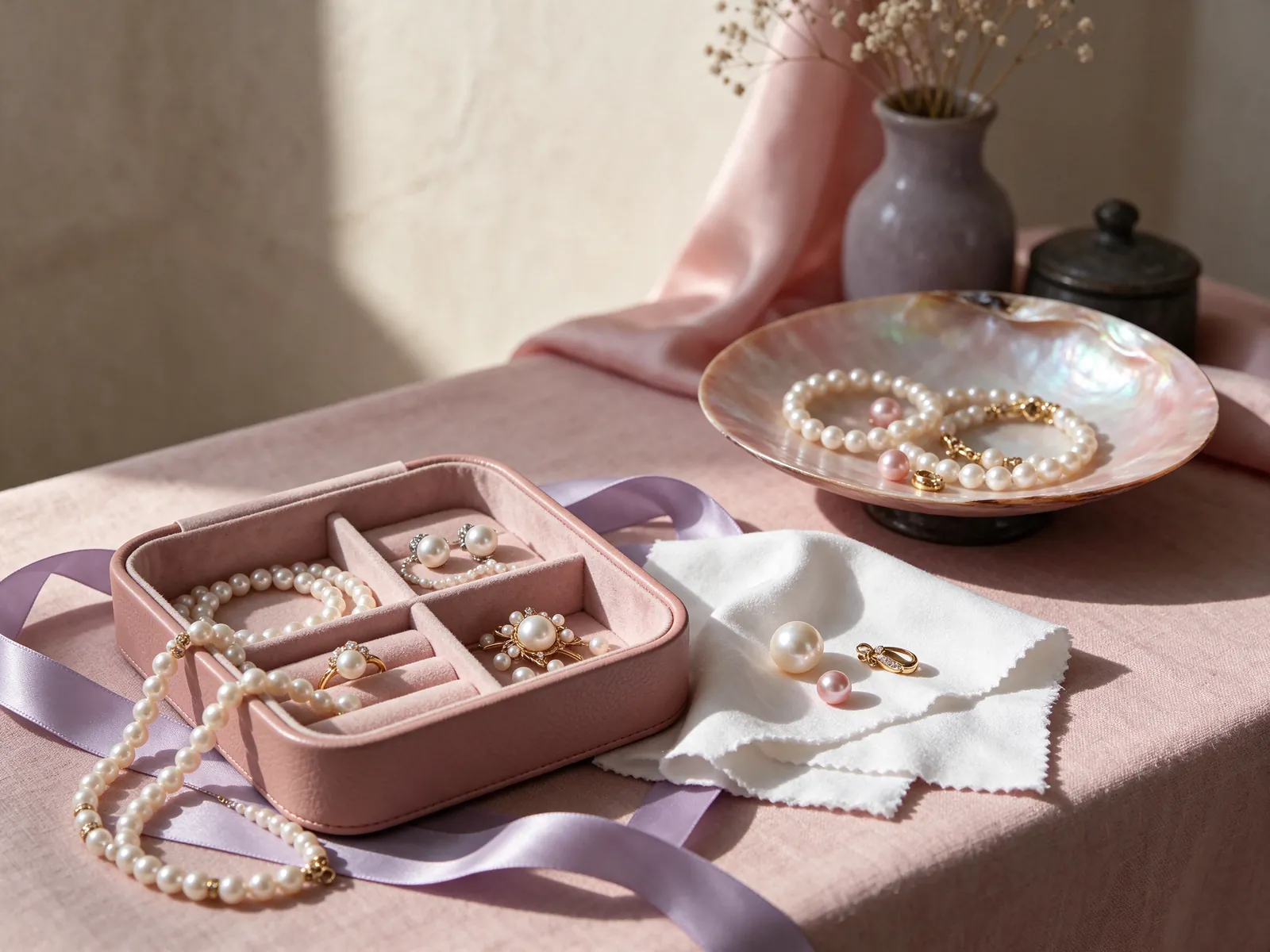
Keep closure problems distinct from the need for new stringing
Describe clasp problems directly when asking about a pearl repair service. A closure that feels unreliable, is hard to operate or looks distorted raises a different question from stretched thread. Identify whether movement is in the fitting or where the string meets it. Both areas may warrant attention, but new stringing alone does not show that the existing clasp should remain. Conversely, a smooth-working closure does not establish that the thread at its ends has no wear. Avoid repeatedly fastening or pulling it merely to reproduce the problem for a photograph.
With pearl necklace clasp replacement, explain whether your concern is operation, position or a visible change in the fitting. A styling preference can be discussed alongside maintenance, but it is helpful to name it as such. Consider how you reach the closure and how it sits when the strand is worn, not just its appearance in a picture. The attachment arrangement also needs consideration so the closure and pearl strand are evaluated together.
Knotted construction still calls for observation
Visible knots do not make a strand maintenance-free. Notice whether knots look different from earlier ones and whether wear is concentrated at an end. If the thread material is unknown, describe its condition without assigning a material based on feel. Bring any earlier stringing information if available. What can be seen and examined on the actual necklace is more useful than assuming all knotted pearl necklaces were made in the same way.
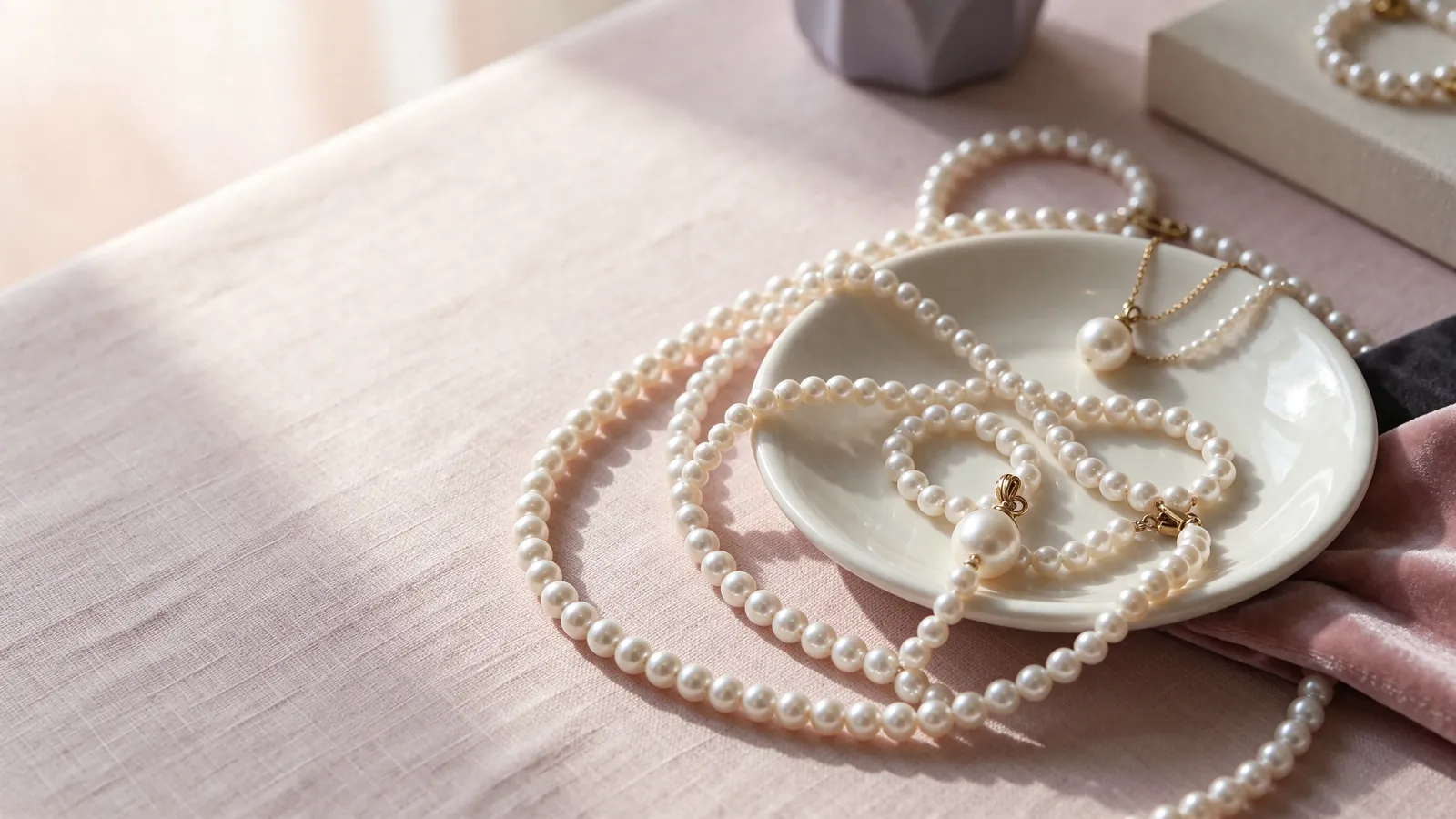
Prepare useful photographs and a concise account of the problem
Before discussing a pearl necklace restringing service, photograph the complete necklace lying flat, then each clasp end and the area where you noticed the change. Use clear light and different angles rather than stretching the strand to expose a hole. Add usual wearing frequency, any recent snag and a known record of earlier work. Include a preferred length or an existing pearl arrangement you want to retain. These details keep the conversation focused on your necklace and wearing goals rather than a generic replacement schedule.
Record the clasp appearance, recognizable features and any separated components before assessment. If the strand has broken, contain small fittings securely and note what you recovered; there is no need for home reassembly first. Images describe visible changes but cannot reveal all the thread inside pearl holes or establish the condition of every attachment. Contact Flint Jewelry on WhatsApp at +85260106207 to discuss assessment and a quotation. The appropriate scope needs to be confirmed for the actual necklace, and a tidy image should not cancel out slackness you have already observed.
Explain your intended use as well as the defect
Tell the person assessing the necklace whether keeping its current length matters, which collars you normally wear with it and whether the closure position is comfortable. If you want a change in length or knot arrangement, discuss its implications before deciding the work. A clear separation between thread condition and styling goals is more useful than a broad request to make the necklace like new.

Carry the care routine into future wear and jewelry selection
Once a strand has been restrung, understand care instructions for its new thread, clasp attachments and complete construction. Record the initial spacing and drape, photograph each clasp end and check how the closure operates. After wear, gently wipe with a very soft clean cloth and store the necklace separately from hard-edged jewelry, with the strand supported. Apply perfume and hair products before putting it on rather than spraying the pearls. If water has been used for suitable cleaning, wait until the string is completely dry before wear; do not accelerate drying with a hot hairdryer.
When browsing Pearl Jewelry, include practical questions about the clasp, storage and what to do if spacing changes. Your everyday collars and activities provide useful context for those questions. A photograph can help you consider a style, but it cannot establish pearl identity or quality documentation. Choosing a piece for regular use involves understanding how its strand is handled as well as liking the way the necklace looks with your clothes.
Make later checks easy to compare
Take later pictures on a similar soft background and from comparable angles, especially around the clasp and central spacing. Add a date and a short description of what changed. A record of a newly visible gap says more than dates without condition notes. The useful habit is recognizing changes and setting the necklace aside when necessary, instead of waiting until a break forces the next step.
| Visible issue | Question to separate | What to do now | What to document | Outfit choice |
|---|---|---|---|---|
| Recently enlarged gaps | Existing arrangement or changed thread | Rest the strand flat and stop wear | Comparable earlier and current views | Do not hide the change under clothing |
| Loose fibers at knots or ends | Where the thread is worn | Do not pull, trim or glue | Close photograph and recent snag details | Use another piece in sound condition |
| Closure feels unreliable | Clasp function or string attachment | Avoid repeated tests | Operation symptoms and both clasp ends | Discuss the closure separately |
| Pearl looks dull or marked | Surface condition versus stringing | Avoid abrasive cleaning or soaking | Location and known substance contact | Do not expect restringing to resolve surface changes |
| Strand has broken | Recovered pearls, thread and fittings | Secure separated components | Break location and recovered parts | Keep the necklace out of use |
Pearl knowledge and authoritative references
WSP’s public pearl-care guide recommends maintenance every 2–3 years, including checking for stretched thread and restringing when needed. This is a maintenance reference rather than a universal thread-replacement deadline. New slackness or fraying should prompt a pause in wear and an assessment.
Read the reference for this factFrequently asked questions
Is the necklace's purchase year enough to choose a restringing date?
No. Age is part of the history, but current thread condition and how the necklace has been used are more informative. Record visible changes and any recent pull or snag. Do not wait for a calendar milestone when new slackness or fraying is already apparent.
Can a higher neckline make a loose necklace usable for an event?
It may hide the gap, but it does not address the string that supports the pearls. Choose a different accessory in sound condition and keep the loose necklace supported for assessment. Pinning or trapping it under clothing is not a stringing repair.
What should I keep if the thread breaks?
Secure the pearls, clasp pieces and thread you can recover, keeping small components contained so they do not get lost. Note where the break occurred and photograph what is available. Avoid a home reassembly that could obscure the original condition.
Can photos confirm the whole strand is ready to wear?
Photos describe visible features but do not reveal every thread section inside the pearls or the condition of each attachment. If you have noticed slackness or fraying, a tidy-looking picture should not replace examination of the necklace itself.
Will restringing also restore the appearance of dull pearls?
Thread replacement and pearl-surface care are different matters. Describe dullness or marks separately so they can be considered on their own. Restringing should not be treated as a solution for every visible surface change.
Updated: