

How do different viewing angles help you compare round pearls and near round pearls within round vs baroque pearls?
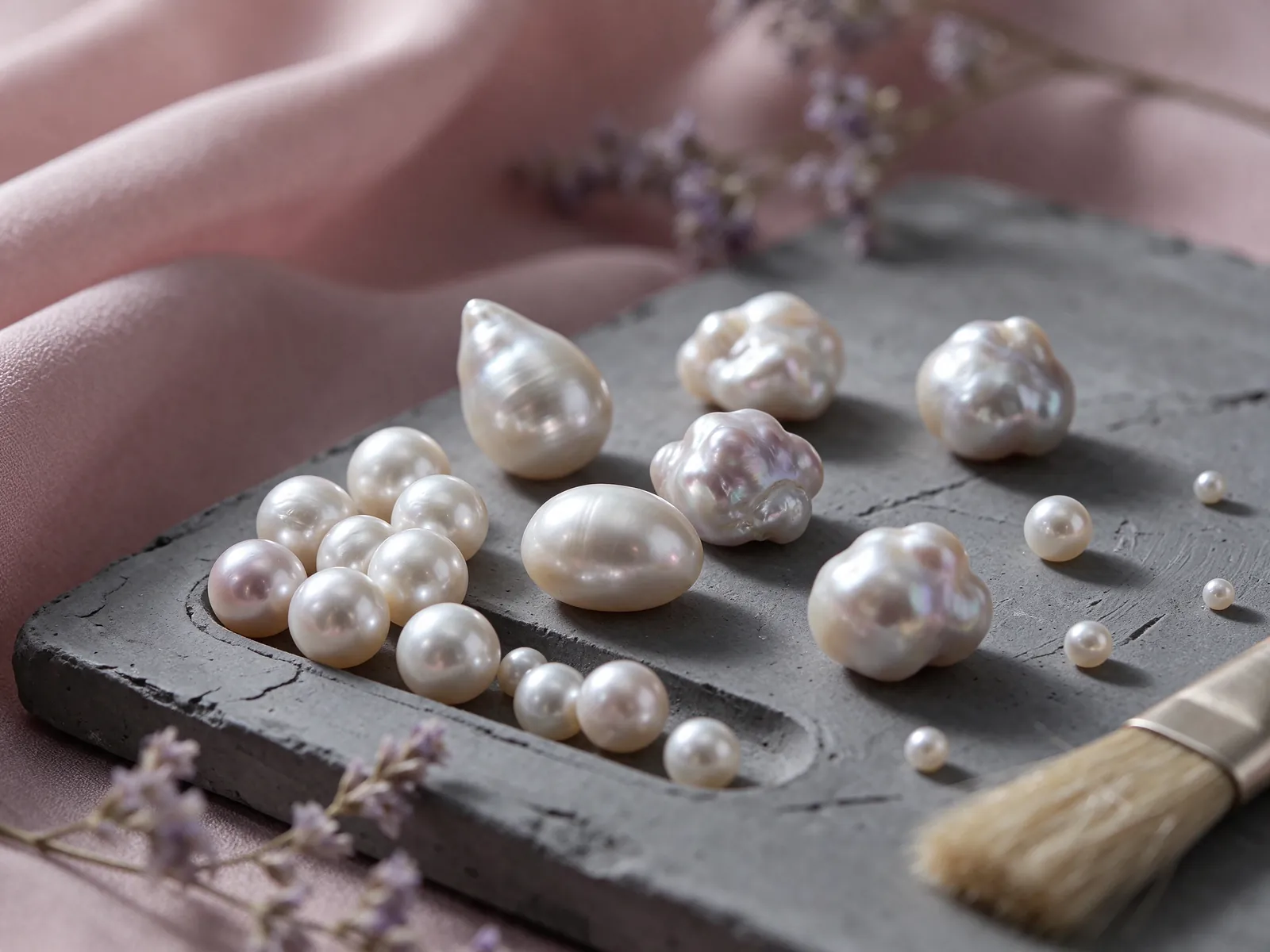
Start your comparison by tracing the outline with your eyes. Round pearls convey a spherical appearance; near round pearls keep that rounded character but may reveal a small unevenness or slight elongation as you change the angle. Look at the front, then the side, rather than deciding from the most flattering image. The pearl shape guide provides a broader vocabulary for those differences, helping you separate a subtle variation from a strongly directional or irregular shape.
Keep the viewing conditions reasonably consistent. A bright reflection can distract from the outer edge, and the mount may hide part of the pearl. A small variation facing the back of an earring can be less noticeable during wear than the same variation facing forward. Compare both the close detail and the complete piece at a normal distance. That approach answers a practical question: does this particular contour create the look you want in the jewelry?
Interpreting round pearls and near round pearls in a round vs baroque pearls comparison: shape is not proof of pearl type
Do not use a rounded silhouette as a shortcut to pearl identity. A large round pearl is not automatically a South Sea pearl, and an uneven outline does not automatically mean freshwater. Type, origin and natural-versus-cultured identity are separate questions. Read the stated identity information and relevant documents rather than asking shape to establish facts it cannot prove.

Name the visible difference before deciding whether you like it
A near round pearl can have a small contour change without a pronounced directional axis. If the length and width look clearly different, compare the effect with oval pearls: the longer line may become a feature in its own right. For drop shaped pearls, the narrowing end and fuller end create another kind of direction. Instead of treating these outlines as interchangeable, ask whether you prefer a compact rounded accent or a shape that draws the eye along a line.
The term near round does not mean half-dome. Compare half round pearls from the side to see the relationship between their raised face and flatter back. A ring around a surface is a separate detail: when considering circle pearls, notice the ring feature without assuming it explains the entire outer contour. Splitting your observations into overall form, local surface features and mounted orientation makes a shape preference much easier to communicate.
Let the outfit help define your preferred silhouette
Round forms can provide a restrained curve beside a sharp neckline. The irregular silhouette of baroque pearls can instead make a simple top feel more expressive. Neither effect is automatically better. Decide whether the pearl should quietly support the outfit or become its main visual detail, then compare shapes with that purpose in mind rather than applying a universal ranking.

Separate shape, luster and surface when evaluating appearance
The outer line and the reflection tell you different things. First look at how light reads across the pearl, including the clarity and character of the reflection. Then look back at the contour. A pearl with an appealing outline may still deserve a closer look at its visible surface, while a slight shape variation may coexist with luster you find attractive. Similar lighting makes these observations more useful than a comparison between dramatically different photographs.
Treat local surface details separately from overall roundness. A small mark does not necessarily alter the entire shape; a slightly longer profile does not tell you whether the visible surface is smooth. Note where each feature sits in relation to the setting and the viewer. Close inspection helps explain details, but a normal-distance view helps you decide how prominent those details are in the finished jewelry. Both perspectives belong in an informed aesthetic decision.
Roundness belongs within a seven-factor comparison
GIA identifies seven pearl value factors: size, shape, color, luster, surface quality, nacre quality and matching. A shape preference covers only part of that framework. Matching becomes especially relevant when pearls appear together as earrings or a strand. Using the framework can make your questions more organized; it does not imply that a specific piece carries a GIA certificate.
Assess earrings as a visible pair, not two isolated pearls
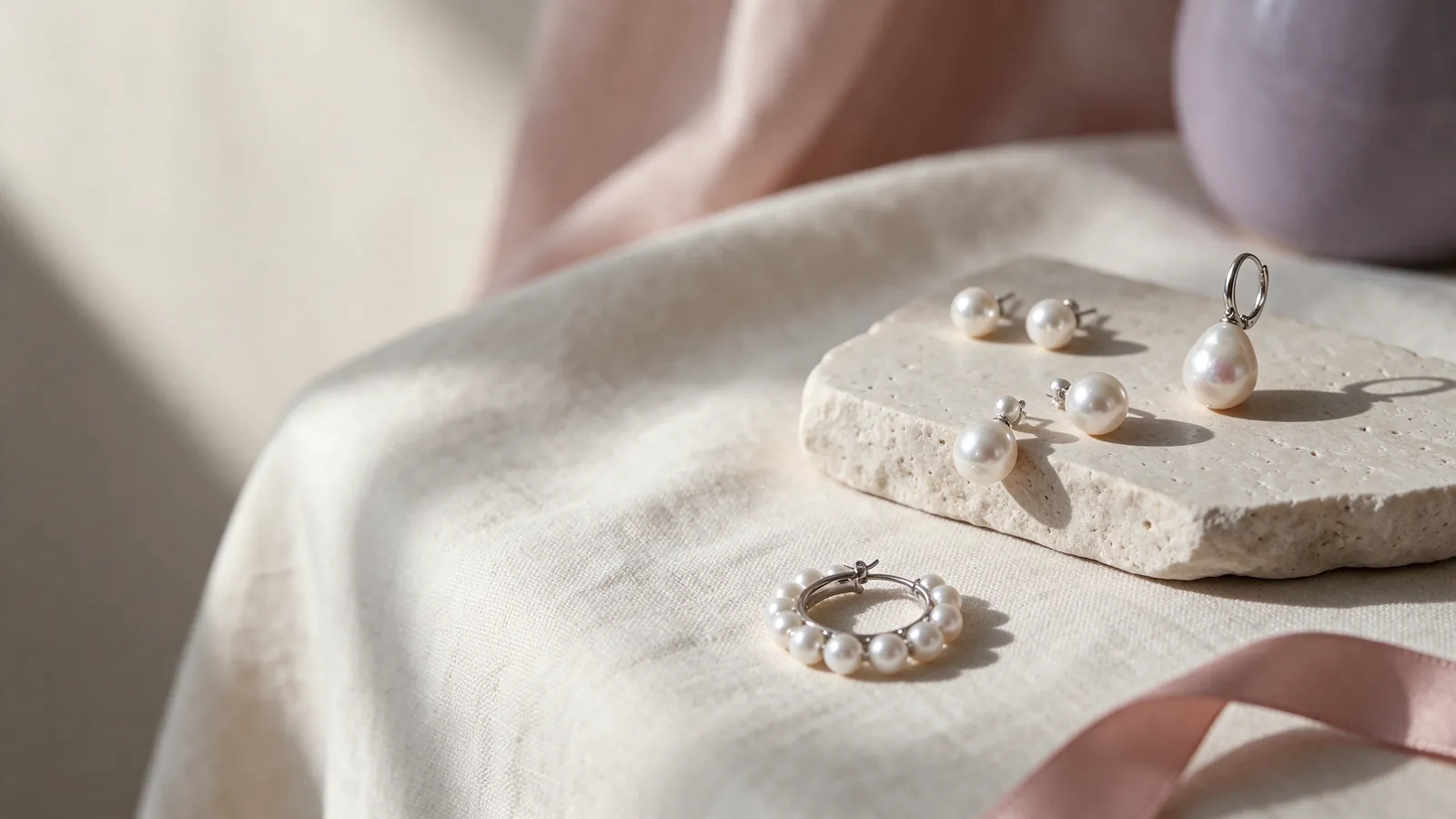
For earrings, place the two in the same view and examine their outward-facing profiles. Consider whether the contours feel compatible, then compare visible size, color and luster. Near round pearls do not have to reveal the same small variation in every hidden area to create a pair you enjoy. On the other hand, calling both pearls round does not answer all the matching questions. The finished presentation matters more than a shared word in a description.
Consider how you normally wear your hair. An updo exposes more of the side profile, while loose hair may leave the forward-facing pearl as the strongest visible accent. A button-down shirt offers different surrounding lines from a soft knit or an open neckline. Try to picture those real combinations instead of choosing solely from a face-shape chart. Your preferred balance may be understated symmetry, a gentle rounded accent, or a small variation that feels natural.
Check which way a slight elongation faces
If you notice a longer-looking side, ask how that feature is oriented across the pair. Similar directions may create a different impression from one vertical and one tilted profile. Describe the effect you want, such as a rounded front with compatible side views. Remember that the setting and the way the earring sits on the ear influence what the viewer actually sees.
Match the viewing method to a necklace or a pendant
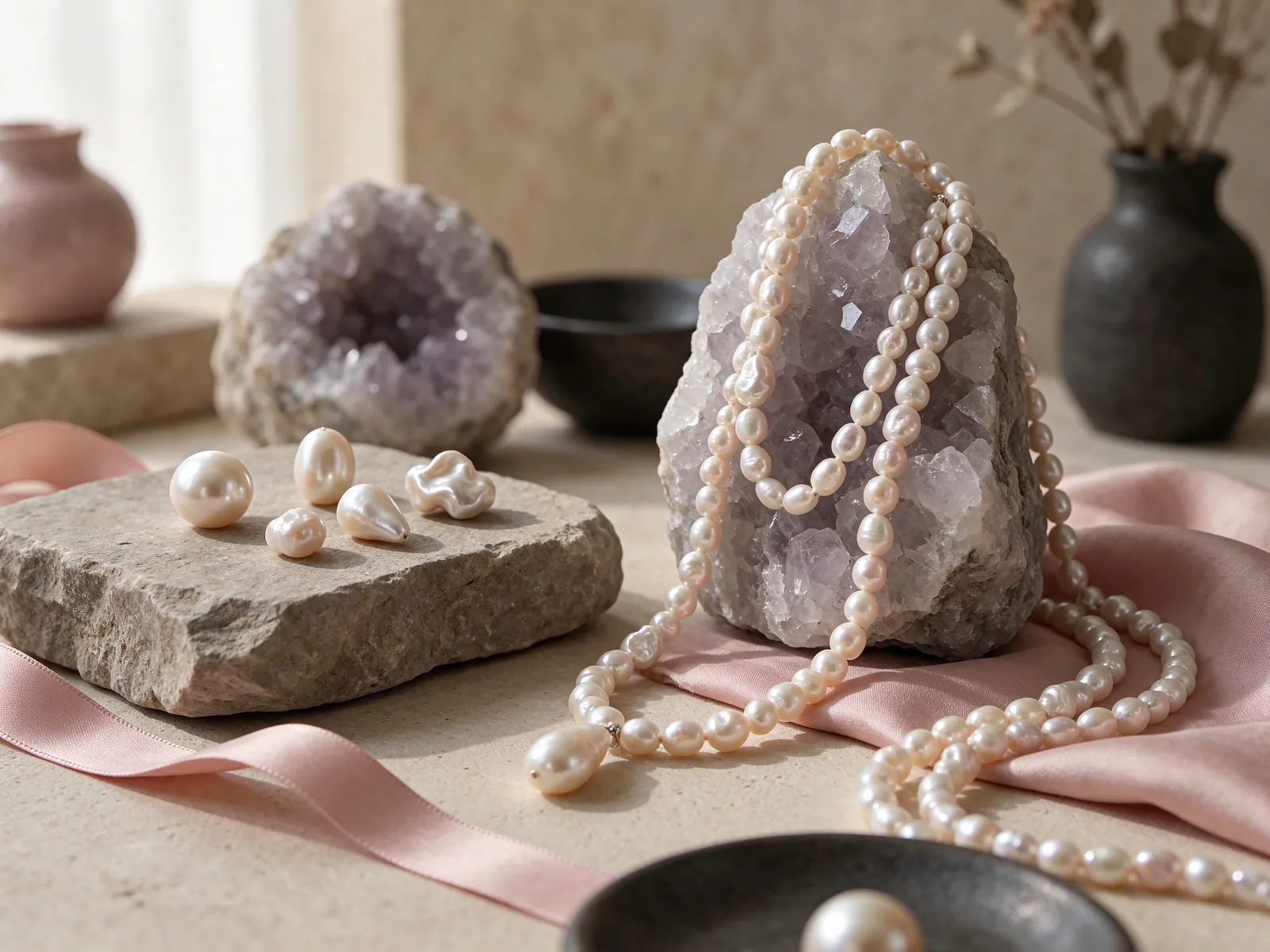
A strand is a repeated pattern, so begin with the full necklace rather than its most attractive individual pearl. Let the curve guide your eye from the center toward the sides, watching how shape, color and luster relate along the arrangement. Subtle near round differences may give a softer, varied rhythm, but you need a whole-strand view to decide whether you like it. Selected close-ups can explain details after that broader impression is established.
A single-pearl pendant works differently because one contour carries much of the visual focus. Examine the relationship between the exposed pearl, the setting and the point from which it hangs. A rounded shape can soften a straight clothing line; a slight elongation can reinforce a vertical direction if that is how the pearl is mounted. An image cropped tightly around the pearl leaves out this relationship, so include the whole pendant when comparing its effect.
Use familiar clothing as the background for your choice
Think about a plain T-shirt, a collared shirt and a jacket already in your wardrobe. A compact rounded contour may read clearly against texture, while a small asymmetry may become interesting against a simple background. Ask how strongly you want the jewelry to stand out. A label such as classic is less useful than knowing which outline feels right with clothes you actually wear.

Turn a visual preference into useful shopping questions
When looking at images, ask which parts of the shape remain unseen. A front view may hide the back, and a mount may obscure the side that explains a near round contour. Check whether the compared images use similar lighting and distance. If your concern is earring balance, ask to understand the pair together; if it is a pendant's direction, focus on its hanging position. These questions are more precise than asking whether a photographed pearl looks perfectly round.
Read shape terms without inventing an unstated tolerance or grading scale. Keep the pearl's identity description separate, and pay attention to what any accompanying document actually addresses. The appearance of a sphere is not evidence of origin, treatment status or a particular certificate. A good visual comparison and clear written information serve different purposes. Use each for the question it can answer rather than turning one appealing feature into a complete description of the pearl.
Explain the visible result you want, not an undefined ideal
A practical enquiry might say that you prefer round-looking earring fronts, accept small side variations, and care about coordinated brightness. For a pendant, you might want to compare a compact curve with a longer outline. You can share these shape preferences with Flint Jewelry through WhatsApp, along with your intended occasion, without using the vague phrase perfect pearl as the entire brief.
Care for pearls without assuming a round shape means toughness
A full, smooth-looking outline does not tell you a pearl will resist rubbing or rough handling. Wipe pearls after wear with a very soft, clean cloth, and keep them apart from other jewelry that could scratch against them. Notice when earrings might catch as you adjust your hair or outerwear, and when a pendant could be pulled by clothing. These practical habits matter for near round pearls too; there is no separate care shortcut based on roundness.
Apply perfume and hair spray before wearing pearls, and avoid direct contact with acids and excessive heat. GIA says pearls should never be cleaned in ultrasonic or steam cleaners. An especially shiny surface is not a reason to ignore that advice. Do not leave pearls soaking for long periods. If a strung piece is cleaned with water, let the string become completely dry before wearing it. Choose care methods based on pearl guidance, not on an assumption that a spherical appearance makes the jewelry waterproof or heat-resistant.
Return to the full piece before making the final decision
After checking the close details, look again from an ordinary viewing distance. Does the outline suit your taste, does the pair or strand look balanced, and does the jewelry work with your wardrobe? Detailed inspection informs that decision rather than replacing it. A round contour and a near round variation can each be a thoughtful choice when the overall effect matches your preferences. For a shape inquiry, contact Flint Jewelry on WhatsApp +85260106207 and share the outline you prefer and how you plan to wear it.
| Shape | Visible feature | View to compare | Possible styling role | Not proof of |
|---|---|---|---|---|
| Round | A spherical-looking contour | Front and side at similar angles | A restrained curve against a sharp neckline | Type or origin |
| Near round | A rounded form with slight variation | The position of the unevenness | A soft accent with individual detail | Natural-versus-cultured identity |
| Oval | A distinct longer axis | Orientation of the long line | A more directional visual accent | Complete quality assessment |
| Drop | A fuller end and a narrowing end | How the pendant hangs | A focal point with a clear direction | Diameter or weight |
| Half round | Raised face and flatter back | Side and back in the setting | A domed appearance related to the mount | Being a near round sphere |
| Baroque | An irregular outline | Multiple angles and the complete design | A distinctive shape against simple fabric | Treatment status or a certificate |
Pearl knowledge and authoritative references
GIA identifies seven pearl value factors: size, shape, color, luster, surface quality, nacre quality and matching. Roundness relates to shape, which is one factor rather than a complete assessment of a pearl.
Read the reference for this factFrequently asked questions
What should I look at first when comparing round and near round pearls online?
Look at the outer edge, then check whether a side view shows a variation hidden in the front view. Compare lighting and distance before judging the difference. Include the complete mounted piece so you can see which part of the contour will face the viewer.
Can near round pearls make a visually balanced earring pair?
They can create a balance you find appealing when the visible contours, size, color and luster work together. Inspect the pair as mounted rather than assuming that every hidden area must be identical. The direction of any slight elongation is worth checking.
Is a small surface mark the same thing as an irregular shape?
No. A local surface feature and the overall three-dimensional contour are separate observations. Identify where the detail sits, whether it changes the outside line, and how visible it is at normal wearing distance before deciding whether it matters to your preference.
Why might I prefer a near round pearl in a pendant?
You may enjoy a subtle variation that suits the setting or the way the pendant hangs. Compare the entire pendant against your usual clothing, including the pearl's visible direction. That is an aesthetic choice, not evidence that near round shapes are universally better for pendants.
Does a very round pearl come with a particular quality certificate?
Roundness alone does not establish certification. GIA's seven value factors are a comparison framework, not proof that a piece has been certified. Read any document for the information it actually provides, separately from the photographed contour.
Updated: