

Deciding how to store pearls to prevent scratches: choosing a well-ventilated space for pearl jewelry storage
The first decision in how to store pearls is where they will spend their time between outfits. WSP's public care guidance recommends a well-ventilated area with occasional exposure to air, away from direct sunlight, heat, and humidity. A jewelry box beside a bathroom sink or in a sunny display spot works against that advice. Choose a dedicated place away from water and sprays, where you can take the piece off over a clean surface without juggling cosmetics. Assign enough space to lift each item separately. The pearl care guide connects this storage step with the rest of everyday care.
When comparing containers, look inside rather than judging the finish outside. A suitable pouch has a soft, clean interior and enough room for the piece to sit naturally. A suitable compartment has lining, clearance around the jewelry, and a lid that does not press on a pearl. Check seams, zippers, and decorative hardware as well as the main surface. A soft appearance alone is not enough if the lining contains grit or dried cosmetic residue. Separation and a suitable location need to work together, not replace each other.
Practical steps for how to store pearls to prevent scratches in pearl jewelry storage: separate soft pouches or lined compartments
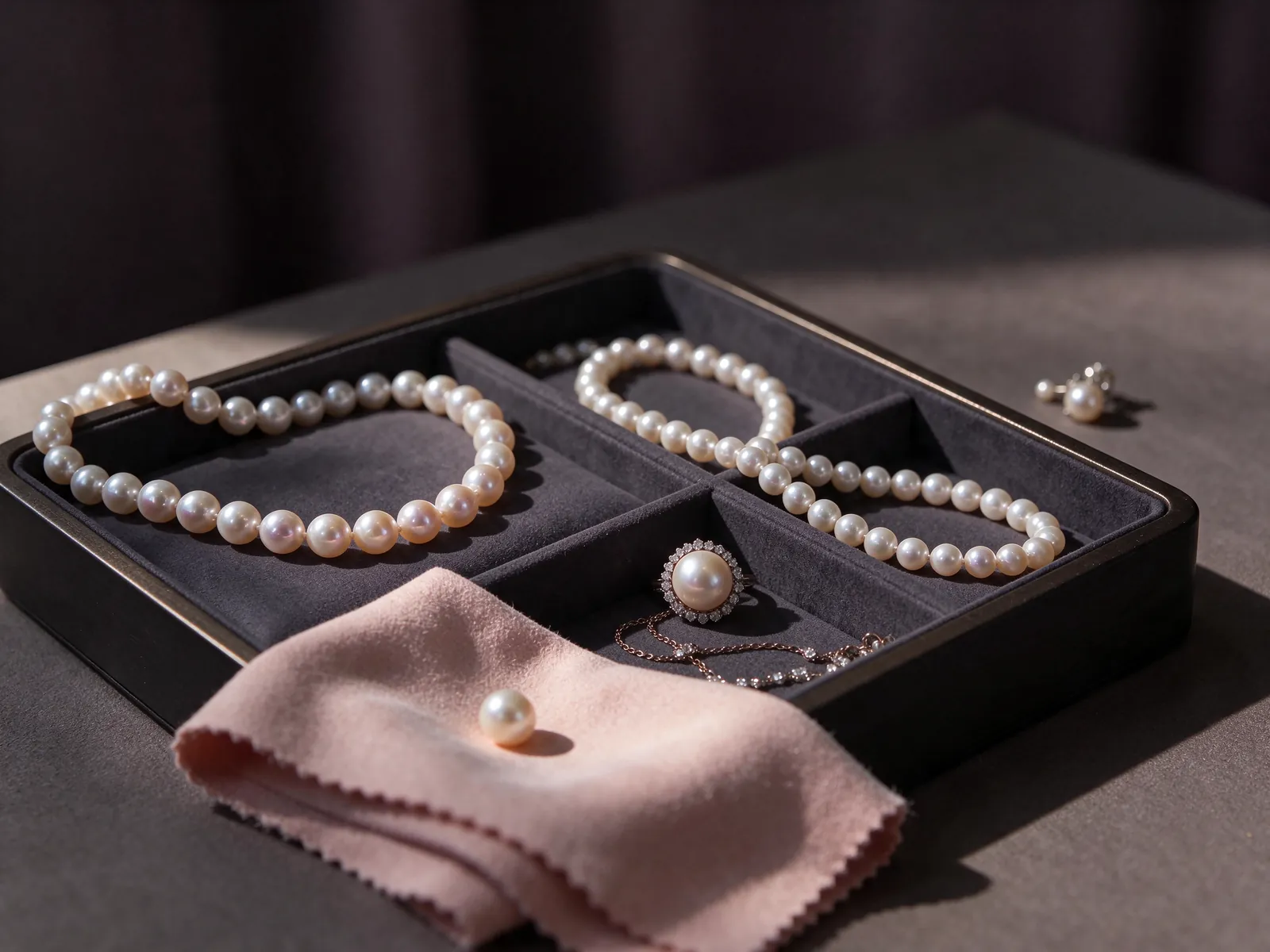
Place the piece in the pouch or compartment before deciding it fits. Keep pearl surfaces clear of closures and box edges, then close the container gently. If the lid shifts the piece or the pouch needs to be tightly stuffed, choose another arrangement. Individual breathable pouches and separate lined spaces let you plan around the actual jewelry instead of a standard box layout.

Map the contact points before you organize the collection
If you want to store pearls to prevent scratches, map what touches them during storage and removal. GIA lists pearl at 2.5 on the Mohs hardness scale and notes that it is easily scratched. This concerns resistance to scratching, not protection from dropping. Other jewelry should be kept apart, but the pearl piece's own posts, clasp, or chain can also touch its surface. Leave clearance rather than crowding the compartment. Inspect the lining for grit even if it looks soft: dirt caught in fabric can create friction. If lifting a piece drags it against another fitting, rearrange the layout.
For earrings, turn the posts away from the other pearl and allow space between the pair. For a pendant, arrange the chain so it does not wrap tightly around the pearl. For a ring, make sure a slot does not push the pearl against an edge when inserted or removed. Residue on a fitting is a separate care question; a method intended for metal should not automatically be used on the pearl. Read how to clean pearl clasps and earring posts when you need to distinguish these contact areas before putting the piece away.
Use construction, not matching color, to assign space
Pieces chosen to coordinate an outfit can still need different storage spaces. Start with the necklace's layout, the earrings' posts, and the pendant's chain, then use a consistent position to find them easily. If labels help, put them on the container rather than attaching them to pearls or string. Being easy to identify should not add another contact point.
Make putting jewelry away a clean, dry process
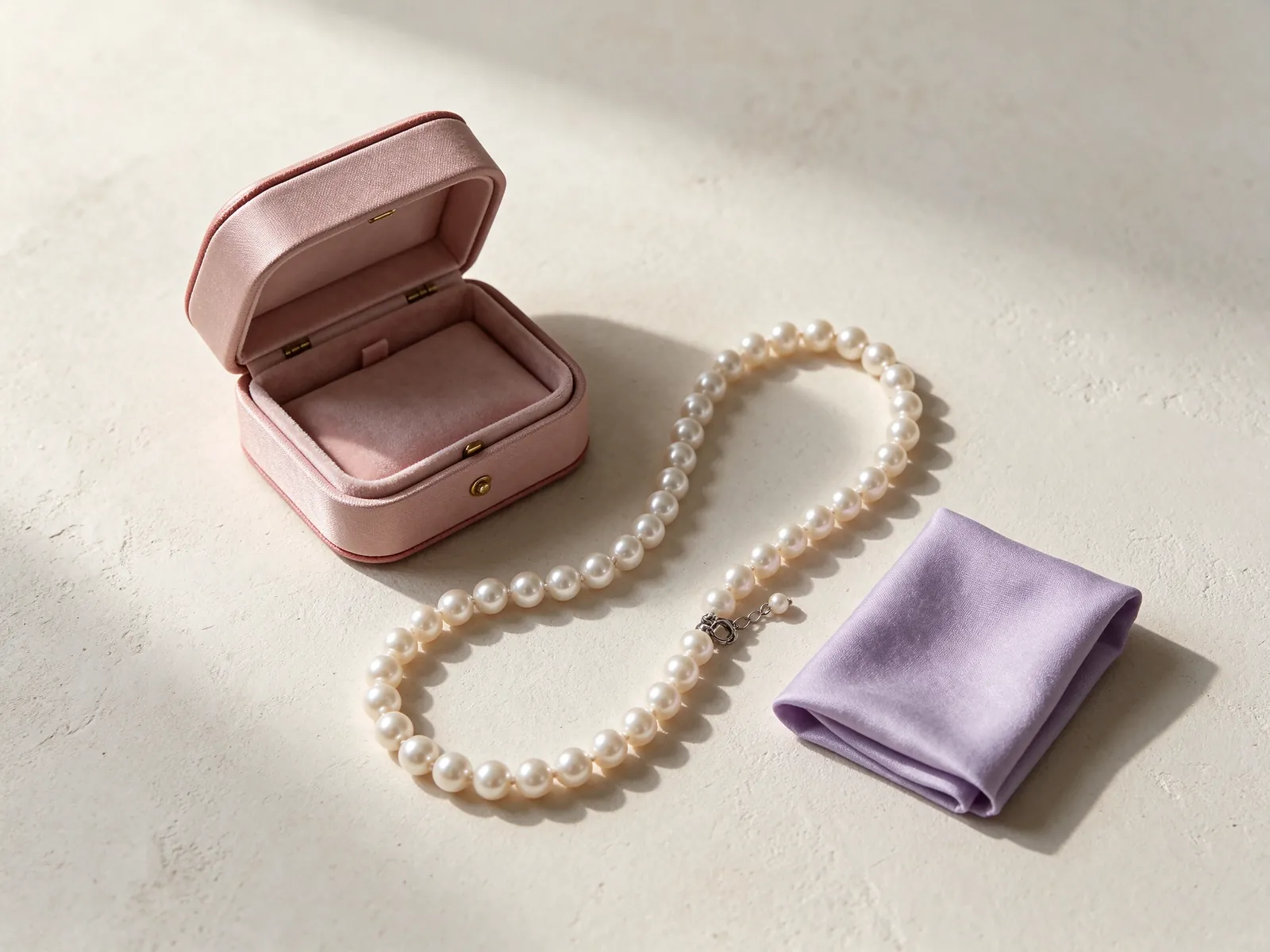
After wearing, remove the piece over a clean, soft surface and gently wipe the pearls with a very soft clean cloth. Avoid hard rubbing or drawing a necklace through a cloth while pulling its ends. Check the cloth for dust, lotion, and makeup before reuse. The pearl care cloth guide explains why the contact surface needs as much attention as the storage box. A cloth impregnated with metal-polishing chemicals is not suitable for wiping pearl surfaces. Putting jewelry away does not require a machine clean: GIA specifically advises never using ultrasonic or steam cleaners on pearls.
Moisture is a reason to pause before closing a pouch or box. Let the piece dry naturally on a clean soft surface away from direct sunlight and heat. GIA advises that string cleaned with water must be completely dry before the pearls are worn again. Pearls may look dry while moisture remains near drill holes or in knots. Gentle wiping is the routine starting point; advice about washing pearl surfaces is not permission to soak every glued, mounted, or strung piece. Consider the whole construction. If jewelry often gets wet during your evening routine, can you shower with pearls can help you establish a removal spot outside the bathroom.
Separate the storage spot from perfume and styling products
Finish applying perfume and styling products before putting on pearls. When you take them off, do not leave them on a surface carrying fresh spray or lotion. The question can sweat and perfume damage pearls connects this everyday habit with care after wearing. Keeping a clean soft cloth beside the storage area makes the next step easier to remember.
Understand what a sealed plastic bag cannot do
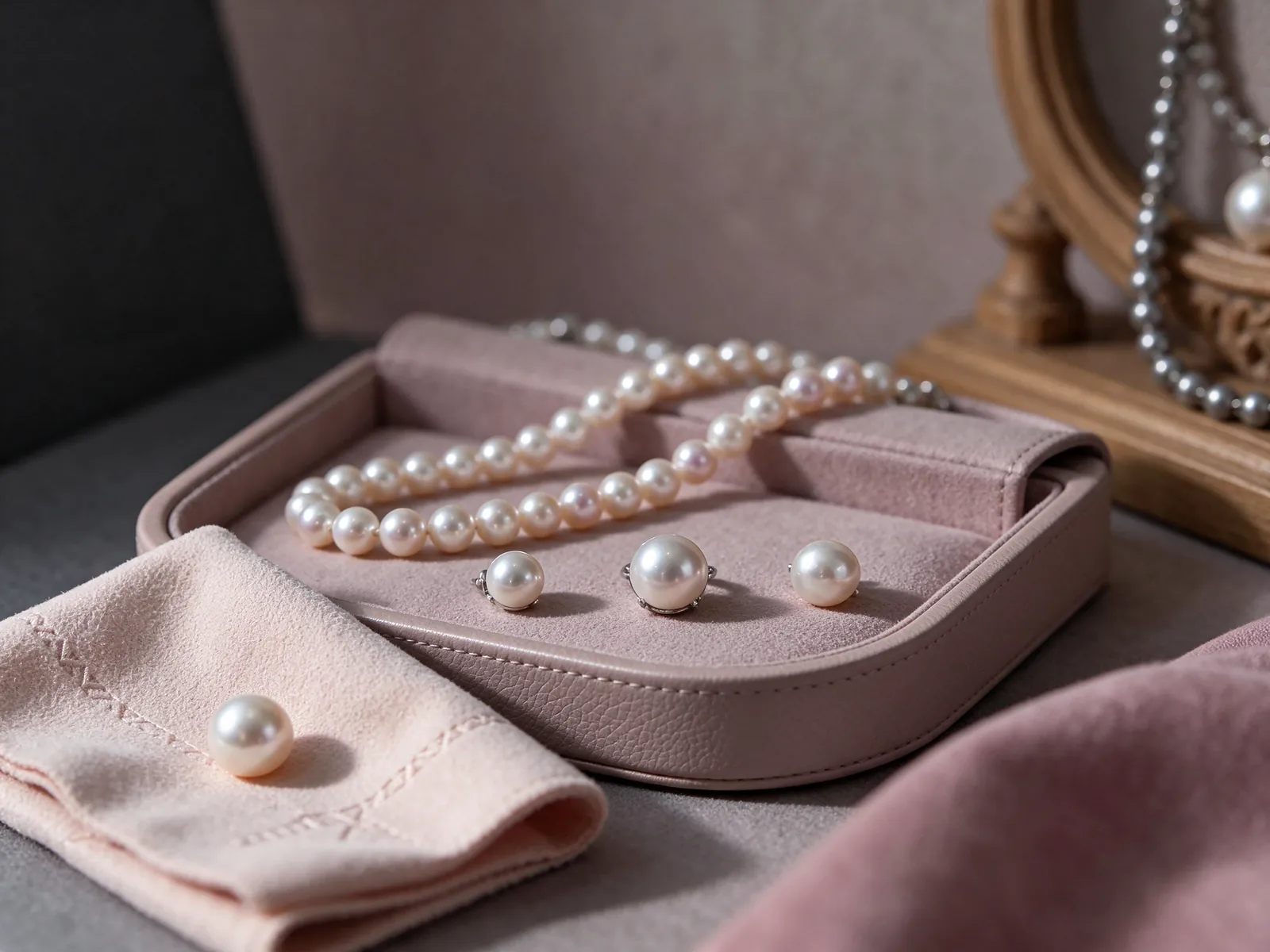
An airtight plastic bag is not an appropriate permanent choice for pearl jewelry storage. The Pearl Source's public care guide recommends soft fabric pouches, fabric-lined boxes, and separate compartments, while advising against permanent storage in airtight bags or extremely dry safe environments. WSP independently emphasizes ventilation and separation. A sealed closure may stop contents spilling, but does not dry a damp necklace or prevent several pieces rubbing inside. Check seams and closures even when sorting temporary packaging. For routine storage, give the piece a suitable separate pouch or lined space with a clean interior and room for fittings to remain clear.
Avoid damp surroundings without treating maximum dryness as the goal. Keep storage away from heating vents and heaters rather than trying to dry pearls deliberately. If a container feels damp, inspect its placement, lining, and the condition of the jewelry put inside. Move the piece to a clean, ventilated location away from heat, and check the container before reuse. There is no single humidity setting prescribed here for every pearl type, string, and mounting. If you see a mark, start with how to remove stains from pearls instead of repeated rubbing or a household treatment. A tighter seal does not address the cause.
Treat a presentation box as a container to inspect
Keeping an original box can be convenient, but its appearance does not prove it is suitable indefinitely. Look for a clean, soft lining, enough space, and closures that do not touch the jewelry. Recheck it when rearranging your pieces. A familiar box can still become crowded or need attention to its interior.
Give a strung necklace room to rest naturally
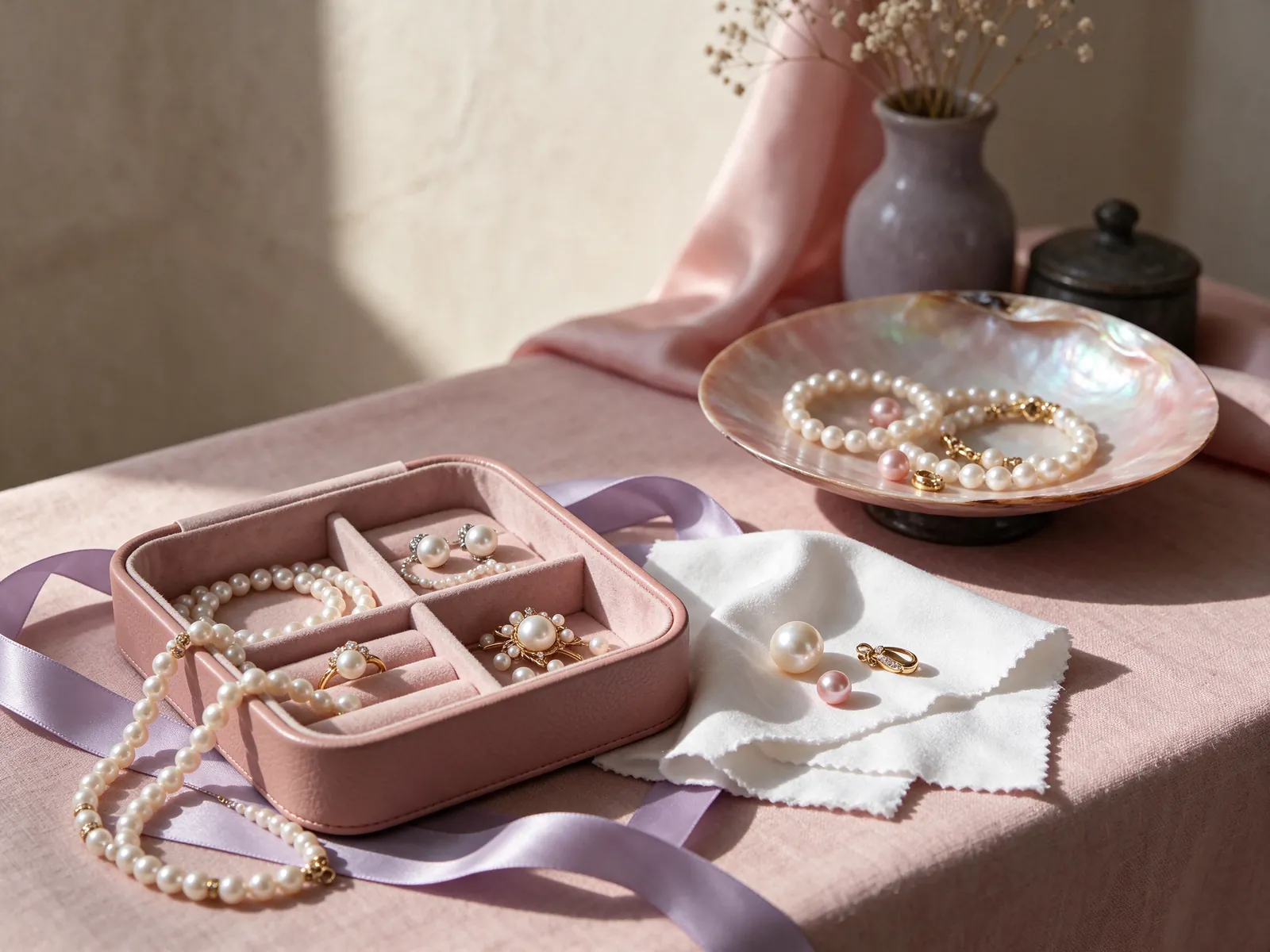
Lay a strung necklace flat in a lined area that accommodates its natural curve. The Pearl Source recommends flat storage for necklaces and bracelets to reduce tension on silk threads. The recommendation concerns strung pieces; a pendant on a metal chain needs an arrangement suited to that construction. Avoid sharp folding, prolonged hanging, and placing another chain on top. Keep the clasp away from pearl surfaces and undo tangles carefully. Open the container fully, check that nothing is caught, and support the necklace when lifting it. Do not shake it loose from one end. Easy access should not depend on pulling the thread.
Use these moments to observe the string and fastening. Fraying, unexpected gaps, or an unreliable clasp warrant a pause in wearing rather than being dismissed because the necklace is reserved for special occasions. The guide on when to restring a pearl necklace considers thread, use, and actual condition, not one deadline for every stored strand. Before a wedding or dinner, inspect the piece on a soft surface without tugging to test strength. Describe any problem before discussing restringing or repair; what can be done depends on the entire piece. Keeping it in a better box does not repair worn thread.
Check occasional pieces before the next event
Time in storage is not a repair process. Before wearing a seldom-used piece, look at its pearls, string, clasp, and the lining beneath it. If the appearance seems different, the guide on how to care for dull pearls is a better starting point than hard rubbing. A new storage arrangement can reduce contact but will not reverse an existing surface change.
Plan travel storage around movement and outfit changes
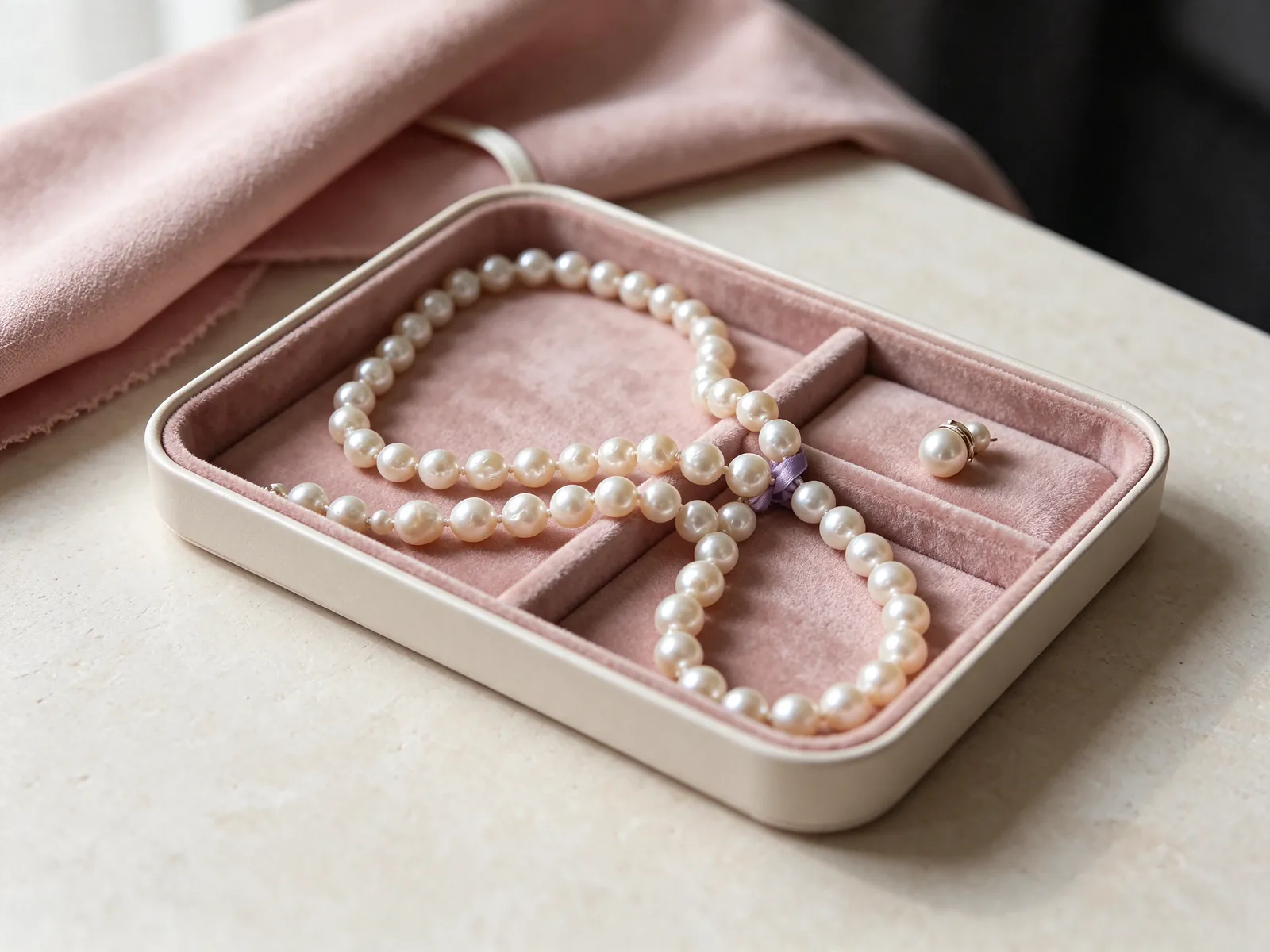
Travel adds movement and surrounding pressure to the storage problem. Pieces separated in an open case may touch when it closes or changes position. Give them suitable individual spaces, close the lid gently, and check for pressure before packing the case where other items cannot squash it. Do not shake the jewelry as a test. A large shared pouch allows pieces to move; a narrow slot may press fittings against pearls. Keep keys, coins, and cosmetic bottles separate. Try the actual pieces before departure and retain enough workable space to put everything away separately on the return trip.
Select what to pack by considering the clothing you plan to wear. An earring pair that works with several outfits may be more practical than several pairs competing for one compartment. Give a necklace used for day and evening a consistent place to return to after changing. At your destination, choose a spot away from the sink, direct sunlight, and heaters. Do not leave the case in a sunny window while you are out. Return pieces to their designated spaces rather than using towels or clothing pockets as temporary containers.
A manageable selection is better than an overfilled case
If packing requires an earring to sit on a necklace or a clasp to be pushed down by the lid, bring fewer pieces or use a better-fitting container. The arrangement should remain easy to use during the trip and when repacking. Being able to lift one item without disturbing the others is more important than filling every compartment.
Choose an organizer for real use, then keep the routine consistent
An organizer should suit the jewelry you own, not encourage you to force pieces into a predetermined layout. Before buying, consider clearance for earring posts, space for a necklace's curve, and room for a pendant's chain. Check the interior as carefully as the exterior and think about how you will keep it clean. A box with many tiny compartments may be less useful than fewer suitable spaces. For a piece that fits poorly, a separate soft pouch can be preferable to squeezing it into an attractive but impractical slot.
Keep the daily sequence simple: take off the piece, wipe gently, allow any moisture to dry, and return it to its separate place. Inspect it before the next wear. Store a clean cloth nearby while keeping perfume and hard loose objects away. To discuss your arrangement with Flint Jewelry, use WhatsApp +85260106207 and describe the construction, container, and fittings that may touch a pearl. A photo can illustrate contact points but cannot establish pearl type, treatment status, or quality grade. Begin with the specific storage concern before buying a larger organizer or discussing assessment of the piece.
Use a normal dressing routine to test the setup
Try removing the earrings and necklace you commonly wear, then returning them to their spaces. If you must move other jewelry, pull on a chain, or force a lid shut, adjust the layout. Clear visibility and gentle handling are useful tests. Revisit them when your collection changes or you replace the container.
| Storage option | Layout goal | Contact points | Environment | Everyday use |
|---|---|---|---|---|
| Soft breathable pouch | One piece with enough room to sit naturally | Check seams and closures | Keep the pouch clean and dry | Avoid filling it with several pieces |
| Lined compartment | Separate spaces by jewelry construction | Keep posts and clasps away from pearls | Choose a spot away from sun and heat | Lift a piece without moving its neighbors |
| Flat necklace area | Allow the necklace's natural curve | Keep clasps clear and avoid stacked chains | Let moisture dry before storage | Support the necklace when taking it out |
| Travel case | Separate pieces when closed and moving | Avoid pressure from the lid or other fittings | Keep away from sinks and sunny windows | Test with the pieces you intend to pack |
| Sealed plastic bag | Do not rely on it for long-term ventilated storage | Sealing does not prevent rubbing inside | Do not enclose damp jewelry | Choose a suitable separate pouch or compartment |
Pearl knowledge and authoritative references
GIA lists pearl at 2.5 on the Mohs hardness scale in its care information. The practical storage lesson is to reduce rubbing and contact with hard objects, not to treat the number as protection from impact.
Read the reference for this factFrequently asked questions
Will an airtight bag keep my pearls dry for long-term storage?
A sealed closure does not dry damp string or correct the surrounding conditions. Choose a clean fabric pouch or lined compartment for permanent storage, avoiding dampness, heat, and prolonged extreme dryness. Do not try stronger sealing or heated drying to fix a damp container.
Can I keep pearl earrings together without separate pouches?
Look at how they sit in the compartment. They need room to remain apart, with posts directed away from pearl surfaces. If they catch one another during removal or the lid presses them together, use separate spaces.
Does a luxury-looking gift box make good permanent storage?
Appearance alone does not answer that. Check the softness and cleanliness of the lining, the clearance under the lid, and the jewelry's contact points. Also consider the location where the box will be kept.
How should I arrange a strung necklace in a box?
Lay it flat along its natural curve in a sufficiently large lined area. Keep the clasp away from pearl surfaces and avoid stacking another chain over it. Do not fold it tightly just to fit the compartment.
Is one soft bag enough for several pearl pieces on a trip?
Soft fabric does not keep the pieces from rubbing inside. Separate the jewelry and check the closed case for pressure or contact. If everything cannot fit comfortably, reduce the selection or change the container.
What should I do if the storage lining feels damp?
Move the jewelry to a clean, suitable location where it can dry naturally away from sunlight and heat. Inspect the container and its placement before reuse. Do not seal damp jewelry inside or use heated drying to rush the process.
Updated: