

pearl blemishes explained: assessing pearl surface quality through the size and position of pearl growth marks
Start by asking what stands out when you see the entire pearl. Several small features toward the edge may be less distracting to you than one broad depression across the center. WSP’s surface discussion makes a similar point: the position and size of marks, together with their balance with luster, matter alongside their number. Record how much of the visible face a mark occupies and whether nearby marks form a concentrated area. Then check the whole view again rather than allowing the enlarged detail to dictate the choice.
Compare the reflections at the same time. Reading how to judge pearl luster helps distinguish the pearl's brightness from the cleanliness of its surface. These qualities can contribute differently to your preference: a pearl with obvious surface texture can still attract your eye with its luster, while a relatively smooth surface is not automatic evidence of vivid reflections.
pearl blemishes explained: why consider pearl growth marks alongside luster when judging pearl surface quality?
Watch a pearl turn gently under consistent illumination. Notice whether a particular feature stays prominent as the reflection moves or becomes secondary to the overall appearance. Use this exercise to understand your visual preference, not to excuse every irregularity. A possible crack, chip or peeling area raises a condition question that should be explained separately, even when the rest of the pearl looks bright.

Use precise descriptions instead of a blanket flaw label
An isolated pit, a narrow line, a raised spot and a broad uneven patch are different observations. Describe the feature and its location before judging the whole pearl. Ask for a view that shows its surroundings as well as a close-up. This makes the conversation concrete: the seller can demonstrate the area you mean, and you can decide whether that particular appearance bothers you.
Avoid turning a surface description into an identity claim. Pearl growth marks do not establish that a pearl is natural rather than cultured, and a photograph of a line does not establish its cause. For questions about identity or treatments, how to read a pearl certificate introduces the distinction between report information and an ordinary visual observation. Confirm that the report relates to the pearl or piece under discussion and check its stated examinations. An identification result is not automatically a complete quality assessment, a price appraisal or a guarantee of service.
An unclear spot is a reason for another view, not a scratch test
A dark area might remain difficult to interpret because of shadow, surface detail or something on the pearl. Request softer lighting and a different angle rather than using a fingernail, chemical or polishing compound to investigate. If the area appears chipped or peeling, ask about its condition instead of calling it ordinary growth texture. Not every uncertainty can be resolved from a single close-up.
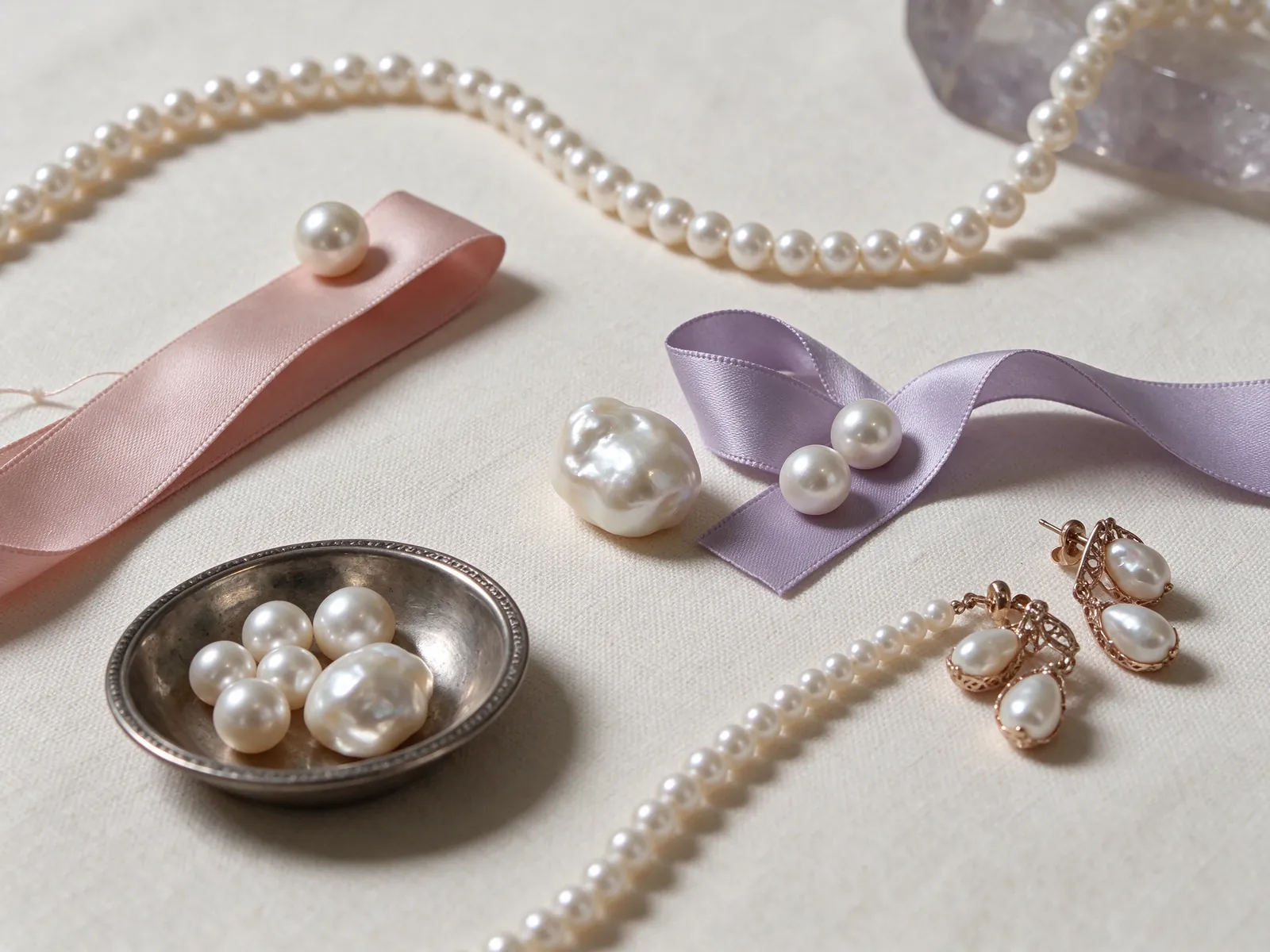
Control the presentation before comparing two pearls
A bright spotlight and a muted photograph can make two pearls look more different than a consistent presentation would. Ask for similar lighting, background and exposure, and compare the full views first. Then change the angle to reveal areas covered by highlights or shadows. The goal is a fair visual comparison, not a hunt for whichever photograph makes one candidate appear cleaner.
Use enlarged images for detail, but do not let enlargement become the entire buying experience. A feature that dominates a close-up may have a different impact in the wearing view. The pearl size guide can help you consider jewelry proportions; it does not make a screen image into a diameter measurement. Images at different scales are especially unsuitable for comparing the physical size of marks.
Connect front, side and back views of the same piece
For a remote purchase discussion, request views around the same pearl and, where helpful, a short video showing it rotate. Ask which surface is intended to face outward and confirm that the views relate to the piece being discussed. This sequence helps you follow a feature instead of guessing what lies beyond the edge of a flattering frontal photograph.
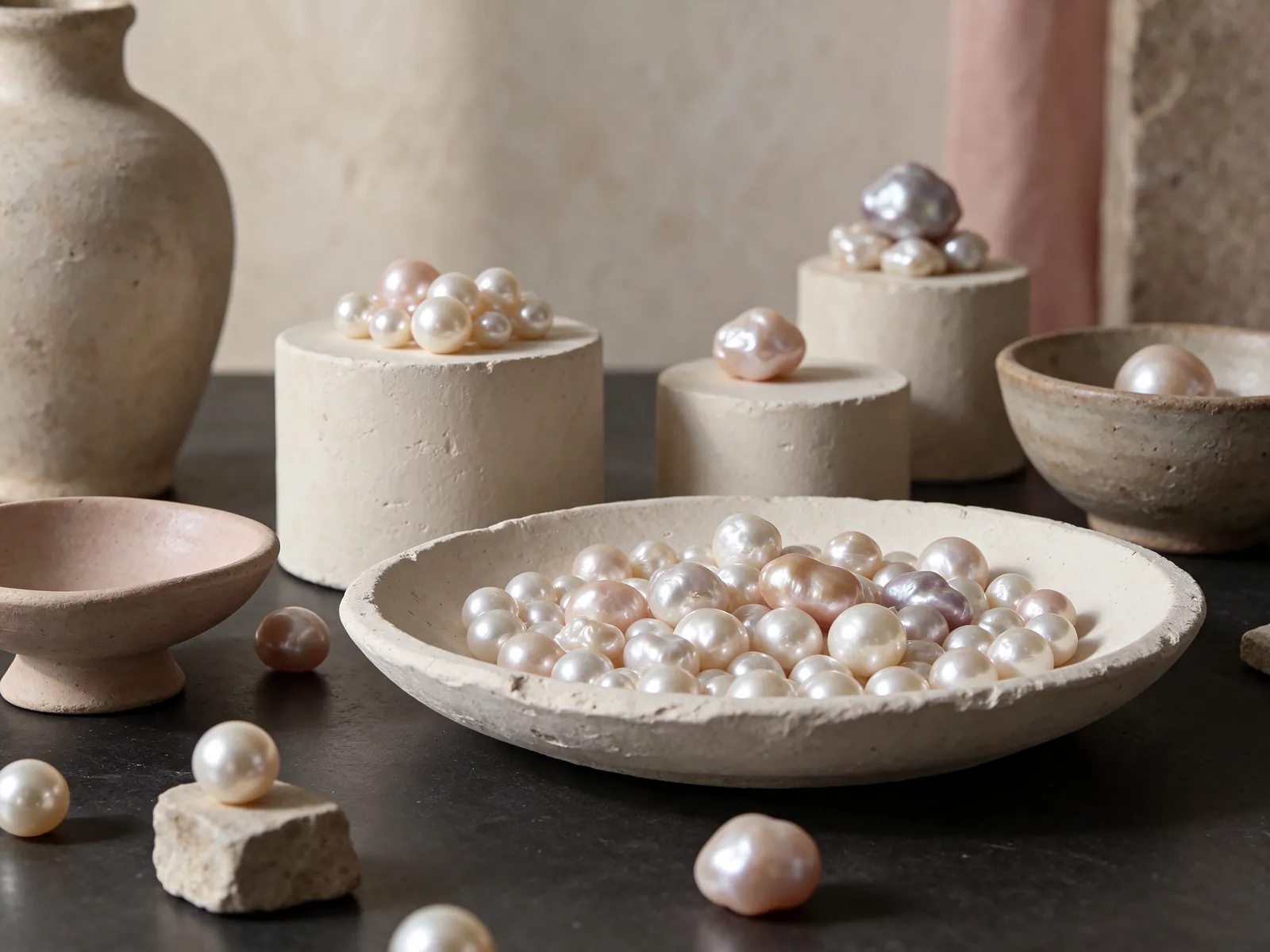
Check orientation and the areas near the setting
The cleanest face shown loose or flat is not necessarily the face you will see in jewelry. A pendant can turn against a neckline, earrings have a fitted direction, and a ring changes angle with the hand. Request a wearing-oriented demonstration. Consider whether a central mark remains in view or whether a side feature becomes prominent when the piece moves.
Do not treat the underside as irrelevant simply because it is less visible. Around an exposed drill opening or setting edge, an apparent chip or irregularity deserves a clear view and an explanation. A region covered by metal cannot be directly assessed from that photograph. Concealing a feature can affect appearance, but concealment alone does not demonstrate that any damage concern has been addressed.
Separate an appearance compromise from a condition assumption
You may be comfortable with a small feature on a face rarely presented outward. That is a personal selection decision. It is different from assuming that a hidden area must be sound or that a setting has repaired it. Ask what happens when the piece turns, look at all accessible views, and keep any unresolved condition question distinct from whether you like the front.
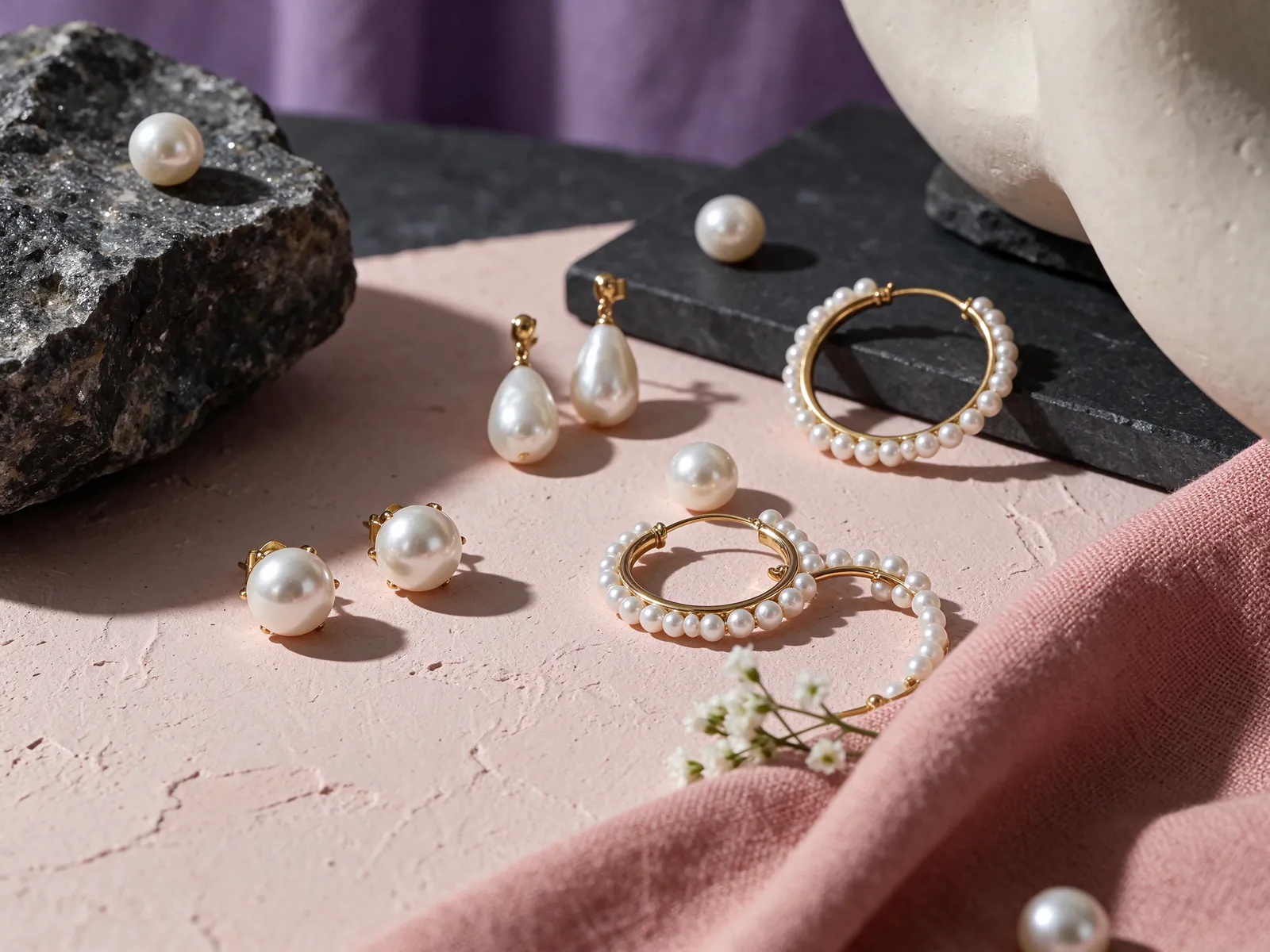
Look beyond the individual pearl when choosing jewelry
A pair of earrings should be assessed together. Similar outward appearance may matter more to your styling preference than choosing two unrelated pearls with the lowest individual mark counts. The pearl matching quality guide adds this wider view: brightness, shape and visible detail work together, and an obvious difference between the two sides may draw more attention than modest texture shared by both.
With a strand, inspect the overall flow before isolating each pearl. Look at the front section and how the appearance continues toward the clasp. With a ring, consider the changing views you see as you move your hand. A simple neckline can emphasize a pendant's main face, while a strand is read as a line; these different contexts can change which surface details you prioritize.
Translate your preference into a specific request
Instead of requesting an abstract perfect pearl, explain what would distract you: a central depression, an uneven-looking earring pair or a noticeable transition along a strand. Then ask to see that aspect in the intended orientation. Someone who closely studies a ring may choose differently from someone prioritizing the overall effect of earrings during conversation. Neither preference converts a condition issue into a better quality feature.

Do not let smoothness stand in for the whole assessment
GIA identifies seven pearl value factors: size, shape, color, luster, surface quality, nacre quality and matching. Matching applies to jewelry with two or more pearls, including earrings and strands. The pearl grading guide helps organize these separate observations. A pearl's surface provides part of the picture, not a complete conclusion. Likewise, a nearly clean-looking image does not establish the pearl's identity, its report status or exceptional performance in every other quality factor.
Surface appearance cannot be translated into an assumed thickness number. The assessment of pearl nacre thickness requires its own appropriate information; pits, shine and photographic color do not supply that measurement. For a broader buying framework, what determines pearl value considers more than mark quantity. Avoid treating the number of visible features as a universal pricing formula or assuming that fewer marks settle every comparison.
Clarify the meaning of a seller's descriptive terms
If a seller calls a pearl nearly flawless or uses AAA or AAAA, ask whether the description concerns an unaided view of the main face or the complete surface, and under what conditions. These commercial labels do not have a worldwide numerical equivalence and are not GIA grades. Request views that demonstrate the actual description. A grade word cannot replace those views or independently establish origin, natural-versus-cultured identity or treatment information.

Choose consciously, then care without trying to erase texture
Bring the decision back to what you know: the feature's appearance, its visibility when worn and any condition question still unanswered. You can accept small details that do not distract you without pretending they are absent. You can also decline a piece if you keep noticing its main mark. A useful question asks to see the exact area in motion rather than asking someone to promise perfection.
Once worn, protect the surface rather than attempting to grind away its texture. GIA ranks pearl at 2.5 on the Mohs hardness scale and states that ultrasonic and steam cleaners should never be used. Wipe with a very soft clean cloth after wearing and avoid acids, perfume, hair spray and excessive heat. Abrasives are not an appropriate way to turn a marked pearl into a smooth one at home.
Respond carefully to a feature you notice later
If a line or chip seems new, photograph it under comparable lighting and avoid activities that rub the area while seeking an appropriate assessment. Do not keep cleaning an unidentified feature in the hope of removing it. Consider the string, adhesive and setting before using water on the whole piece: general pearl-care guidance does not mean that every jewelry construction can be soaked, and prolonged immersion should be avoided. If a string gets wet, GIA advises letting it dry completely before wearing. Avoid high heat to speed this up. Routine care is maintenance, not a guaranteed removal of texture or repair of damage.
| Feature | Comparison method | Jewelry context | Question to ask |
|---|---|---|---|
| Location | Follow the mark around front, side and back views | A pendant or ring may present changing faces | Where will this feature sit when worn? |
| Extent and clustering | Compare at similar enlargement and lighting | A broad central area may be a visual focal point | Can I see this area within the whole pearl? |
| Balance with luster | Watch reflections move across the surface | Overall appearance is more than a mark count | Can you show a softly lit rotation? |
| Coordination | Inspect the pair together or the complete strand | Differences between pearls can interrupt the overall look | Can I see the finished arrangement rather than separate close-ups? |
| Possible condition issue | Get a clear view of exposed cracks, chips or peeling | A less visible spot still needs an explanation | What is known about the condition of that area? |
Pearl knowledge and authoritative references
GIA lists seven pearl value factors: size, shape, color, luster, surface quality, nacre quality and matching. Matching is considered for jewelry with two or more pearls; surface appearance does not replace the other applicable factors.
Read the reference for this factFrequently asked questions
Is a pearl with no obvious marks always the better choice?
Not necessarily. Surface is one quality factor, and your choice also involves luster, shape, color and the way pearls coordinate in jewelry. Use comparable views and consider the full stated characteristics rather than deciding from smoothness alone.
Can a photo tell me whether a line is a growth mark or a scratch?
A single photo may not resolve the nature or cause of a line. Ask for several angles and a clear explanation of the specific area. Growth marks do not prove natural rather than cultured identity; that question requires the relevant identification information. Avoid investigating through scraping or abrasive cleaning.
Does setting a mark toward the back solve every concern?
No. Orientation may reduce visibility, but the jewelry can move and a hidden position does not settle a question about damage. Treat appearance and condition as separate parts of the discussion.
How should I compare surface detail in an earring pair?
Look at both outward-facing pearls together in consistent light, then inspect each close-up. The balance of brightness, shape and visible marks is more informative for the pair than separate mark counts alone.
Can I use an ultrasonic cleaner if a mark looks like dirt?
No. GIA says pearls should never be cleaned with ultrasonic or steam cleaners. An uncertain spot calls for a better view and appropriate assessment, not a more aggressive cleaning method.
Updated: