

How does the rice pearl shape distinguish rice pearls from rounder forms when comparing rice shaped pearls?
Start by imagining the outline without the background or mounting. Rice shaped pearls suggest an elongated body reminiscent of a grain of rice, with the middle and the ends contributing to the impression. Trace the longest direction, locate the widest part, and check how the sides move toward each end. An image showing only the narrowest view may look particularly slender, so another angle is important before deciding whether the contour suits your preference.
WSP lists rice among the shapes discussed for freshwater pearls, alongside other outlines. That is helpful context for the name, not proof of the identity of an individual pearl. Use the pearl shape guide to compare visible forms, and read size and identity information separately. The phrases rice pearls and rice pearl shape describe an appearance; they do not establish natural or cultured status, origin, treatment, or a certificate simply by appearing in a title.
When comparing rice shaped pearls, which end contours and proportions give rice pearls their characteristic rice pearl shape?
Compare the narrowing at both ends and the fullness between them. A softly balanced contour may appeal if you want an orderly repeated look, while a less symmetrical outline may add variation. Keep the entire pearl in view: cropping off one end can conceal the detail that changes your interpretation from simply long to distinctly rice-like.

Build a side-by-side comparison of nearby shapes
Set images of rice and oval pearls to a comparable scale before judging slenderness. An oval can also be elongated, but its visual emphasis is often a fuller body, while rice wording draws attention to a narrower impression. Proportion alone does not capture the differences in fullness and end contours. Actual length and maximum width are more useful than guessing from the apparent size of a photograph, especially when one image is tightly cropped and the other includes a large amount of background.
When studying drop shaped pearls, look for the relationship between the fuller end and the tapering end. Rice outlines call for attention to the complete long body rather than one narrow tip alone. A comparison with round pearls highlights another difference: a rounded form reads more like a point, while an elongated form has a direction. Neither effect is universally better. Choose according to the rhythm you want in an arrangement and the way it interacts with other elements.
Check depth as well as the outline facing you
Use stick pearls as a comparison for the course of the sides and the rounded quality of the body, not as a substitute name for every elongated pearl. A comparison with coin pearls demonstrates why a front view cannot tell the whole story: face width and side thickness are separate observations. Request a side or turned view when the depth matters to the look.

Untangle shape wording from identity and size
A grain-of-rice comparison can sound like a size statement, but rice shape does not automatically mean a small pearl. Ask for measurements instead of making that leap. Also avoid using rice, seed and Keshi as interchangeable words. If several labels appear together, ask what each describes in that particular item. Keeping outline, dimensions and pearl identity in separate questions prevents a familiar name from doing more work than it can support.
The discussion of baroque pearls offers another way to think about irregular contours, but baroque and rice are not exact synonyms. You can describe an elongated body and then note uneven sides or unequal ends without forcing all the details into a single label. Such observations help when comparing photographs or explaining your preferences. They do not, by themselves, establish whether two pearls share an origin, treatment status or level of quality.
Replace vague reassurance with a useful description
Ask whether the body is flattened, which direction was measured for length, and whether both ends have been photographed. Ask separately for the information relevant to pearl identity and any accompanying documentation. These questions can be answered concretely, whereas calling a pearl 'authentic rice' still leaves its dimensions, appearance and identity unclear.
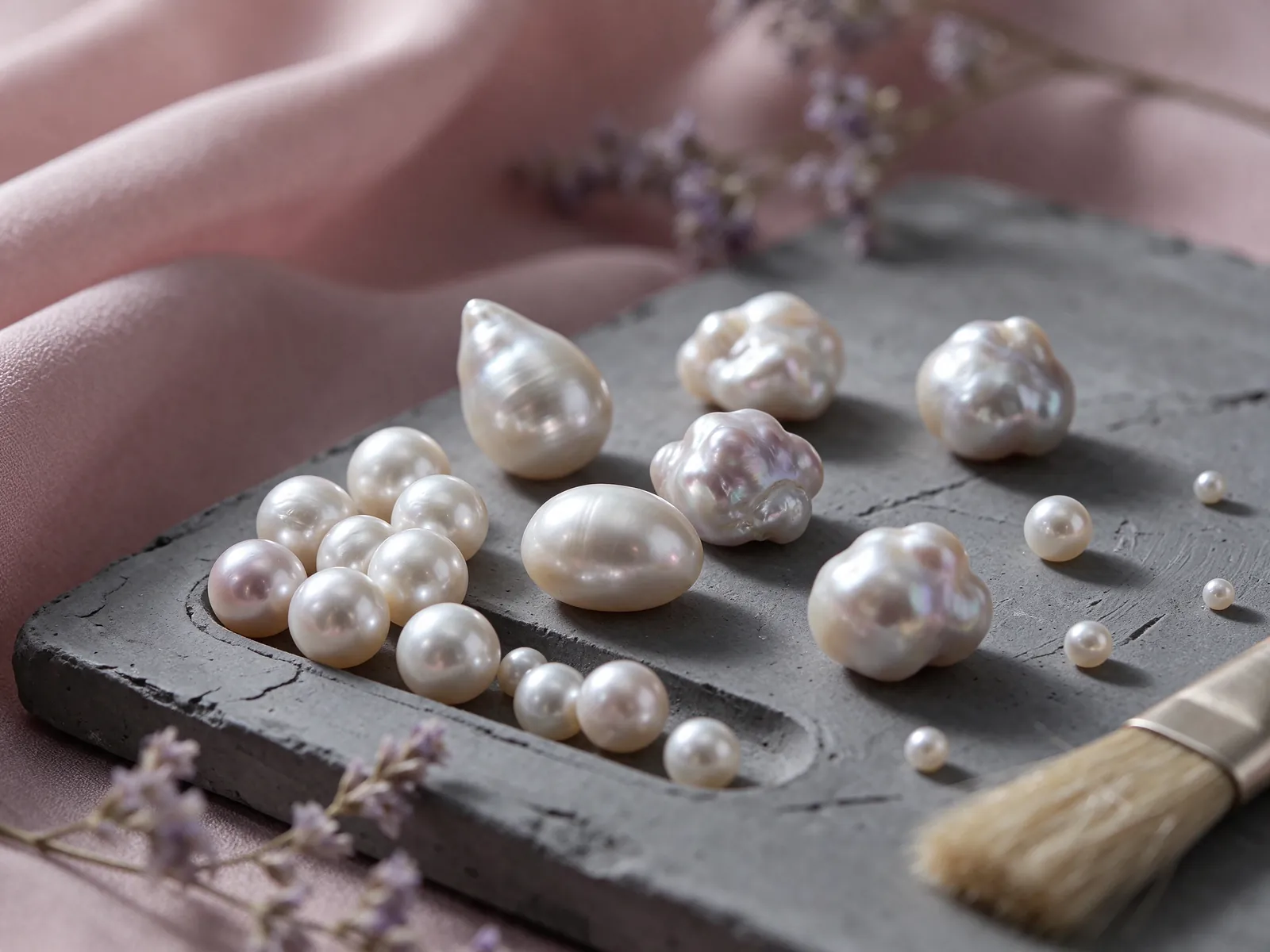
Account for camera angle and mounting direction
A pearl photographed at an angle can look shorter than it does from a straight view. Bright reflections and generous white space can also influence perceived volume. Read the measured long axis and maximum width together, then use a side image to understand thickness. Length-to-width proportion is useful for description, but assigning an unsupported universal cutoff would overlook end curves and fullness. Two pearls with similar proportions can still have noticeably different silhouettes.
For an assembled arrangement, the drilling direction matters to the way the pearl points. A hole following the long axis can produce a different visual direction from one crossing the body. Inspect the complete layout rather than assuming that a loose-pearl photograph predicts the finished effect. If several pearls are involved, look at their widths, orientations and color transitions together. Decide whether the variation creates the intended rhythm or distracts from it.
Read rings and outlines as separate features
When a surface ring catches your eye, the guide to circle pearls can help you keep that feature separate from the overall body shape. Follow the whole silhouette before naming the form. A single visible ring does not replace the observations of length, width and ends, and a full layout shows how surface details contribute to the overall appearance.
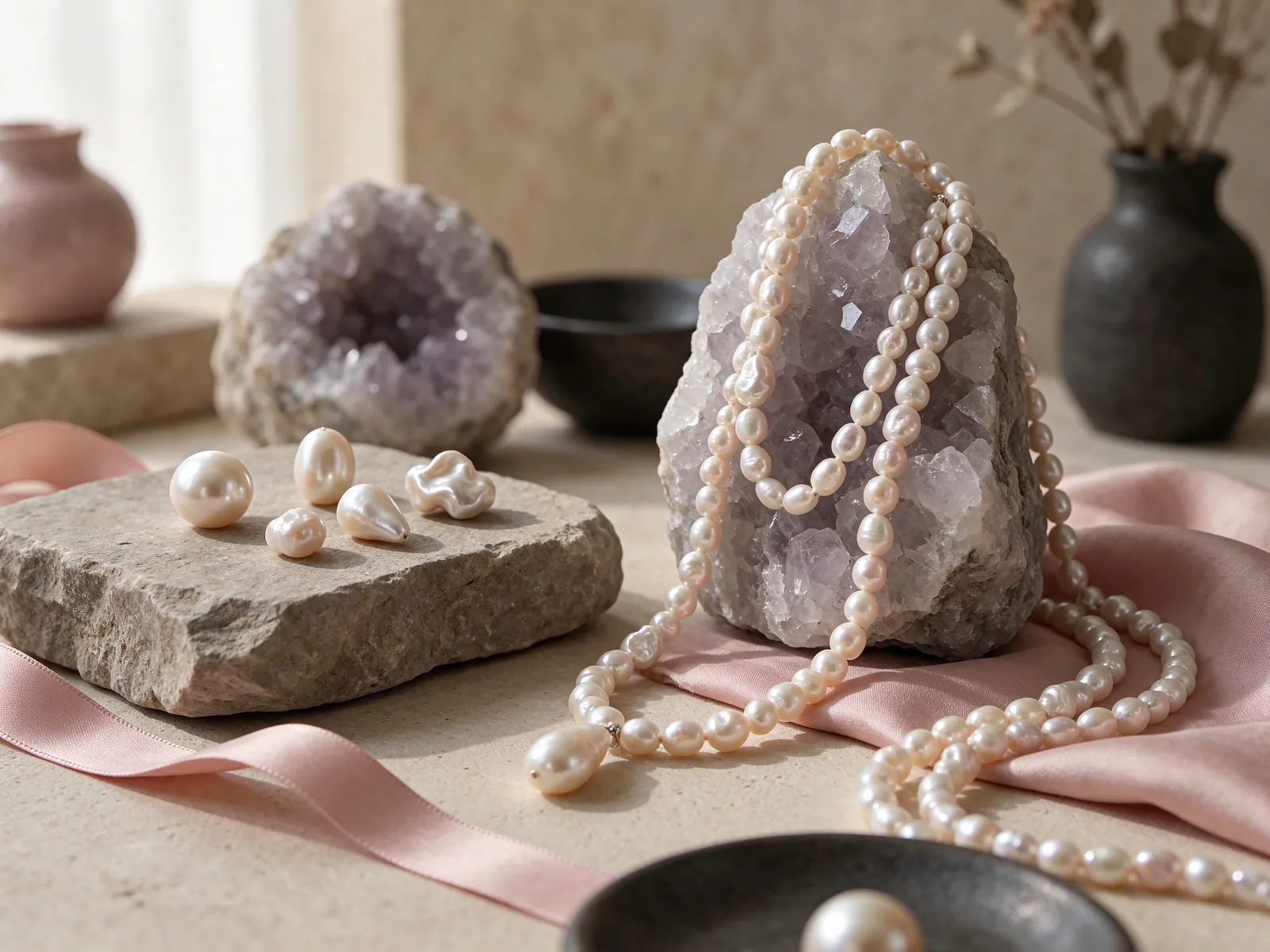
Use a complete quality framework, not shape alone
GIA describes seven pearl value factors: size, shape, color, luster, surface quality, nacre quality and matching. This gives rice-shape comparisons a broader context. A slender contour can be your preferred style without serving as an overall quality rating. Equally, a pearl should not be dismissed merely because it is not round. Evaluate the available information about the particular pearl and keep aesthetic preference separate from conclusions about all the other factors.
Examine how clearly light is reflected rather than relying only on brightness in a photograph. Locate visible pits, wrinkles or other surface features, and see where they sit in the complete arrangement. For color, compare under similar lighting; warm surroundings and changed exposure can affect the impression. A pastel color or a rice outline does not identify origin. Nor can nacre quality or thickness be measured from the elongated silhouette or a bright highlight.
Record what you like and what you know separately
A preference note might say 'slender with soft ends' or 'a regular sequence with small variations'. A quality note can record dimensions, visible surface details, luster and matching. This distinction makes it easier to compare options without treating the most elongated pearl as the best one by default. It also makes your questions more specific when further information matters.

Let clothing and spacing guide the styling decision
Think of the rice contour as a short, softly rounded line within an outfit. Look first at the neckline, seams and patterns already present. Repeating their direction can create continuity, while a contrasting orientation can add interest. This is a visual arrangement technique, not a guaranteed effect on body proportions. Assess the jewelry from the distance at which an outfit is normally seen, not only through a magnified image of individual pearls.
A detailed print or textured knit may make fine outlines less distinct. A plain area of clothing and some empty space around the arrangement can help the pearl shapes read clearly. If mixing elongated and rounded forms, choose a leading rhythm and use the other as an accent. On quieter clothing, gentle variation between pearls can be visible without competing with numerous other details. The goal is a coherent composition, not maximum attention from every element.
Judge visual presence from the complete look
The name rice does not tell you whether an arrangement will be subtle or bold. Dimensions, quantity and spacing all contribute. Compare against clothes and accessories you already wear, ideally in the same light and from a similar viewing distance. This helps separate your attraction to the pearl outline from the lighting, cropping or background of a styled photograph.

Choose with everyday handling in mind
For the final comparison, move from outline to measurements, then orientation and quality information. If you plan to combine the pearls with existing jewelry, compare the actual pieces under similar light rather than assuming that matching color names guarantee a match. Ask whether an image shows the complete arrangement or one sample pearl. A full view is essential when your choice depends on a repeated direction, gradual size changes or balanced visual weight.
GIA rates pearl at 2.5 on the Mohs hardness scale and says pearls should never be cleaned in ultrasonic or steam cleaners. An elongated shape does not make those methods suitable. Wipe with a very soft, clean cloth after wearing, and avoid acids, perfume, hair spray and excessive heat. Do not use a stiff brush on the ends or around holes. The appeal of a smooth-looking body is not a promise of resistance to scratches.
Keep hard objects away and wait for string to dry
Store pearls away from harder accessories so that a slender body is not pressed between clasps or other objects. For strung pearls cleaned with water, GIA advises allowing the string to dry completely before wearing. Check the string, not just the pearl surfaces. Careful handling and gentle cleaning are practical habits regardless of the name given to the pearl's outline.
Would you like to compare rice outlines with other pearl shapes or discuss your preferred look? Contact Flint Jewelry on WhatsApp +85260106207 and share the contours and styling ideas that interest you.
| Feature | What it tells you | How to compare | Effect in an outfit | Useful buying question |
|---|---|---|---|---|
| Overall proportion | How the long body relates to its width | Read length and maximum width separately | Introduces a short-line direction | Which axes were measured? |
| Both ends | Whether the contour is balanced or varied | Inspect the entire uncropped outline | End balance contributes to rhythm | Are both ends shown in the images? |
| Body depth | What a front image leaves out | Look at a side or turned view | Changes how the form sits near clothing | Can I see the side and reverse? |
| Surface and luster | Quality observations beyond shape | Use consistent lighting | Simple backgrounds make detail easier to read | Where are the visible surface features? |
| Layout and matching | How separate pearls work together | Inspect the complete composition | Spacing sets the level of visual emphasis | Does the image show the finished arrangement? |
Pearl knowledge and authoritative references
GIA lists 7 pearl value factors: size, shape, color, luster, surface quality, nacre quality and matching. An elongated shape addresses only one part of this framework.
Read the reference for this factFrequently asked questions
Can a rice-shaped pearl have unequal-looking ends?
The ends can contribute different visual impressions, so inspect both rather than relying on the middle alone. Decide whether the asymmetry suits your preferred look, and compare the complete outline from more than one angle.
Is a narrow front view enough to choose the shape?
No. It may hide thickness or make the pearl look more slender. A side or turned view, together with length and maximum width, gives a more useful picture of the three-dimensional form.
Should I choose rice shapes by picking the longest pearl?
Length alone is not a complete selection method. The widest point, end contours, luster, surface features and arrangement all matter. Separate your preference for an elongated look from your assessment of the pearl's quality information.
How can I mix rice and round forms without a busy result?
Choose one form as the main rhythm and let the other provide accents. Compare the whole arrangement against the neckline and pattern of your clothing, leaving enough visual space for the different outlines to remain clear.
Does the rice outline change how pearls should be cleaned?
It does not make ultrasonic or steam cleaning appropriate; GIA advises against both for pearls. Use a very soft, clean cloth after wearing, and if strung pearls are cleaned with water, let the string dry completely before wearing again.
Updated: