

How does a black diamond pearl brooch complement a neckline, and where should a pearl brooch with black diamonds or a black diamond and pearl pin sit?
Think of the brooch as part of a silhouette, not an isolated decoration. The dark stones may trace a border, frame one pearl or create a directional line across the lapel. Each arrangement changes where the eye lands. Before choosing, look at the width of your collar and the space beside its fold. A pearl brooch can look balanced when the garment remains visible around it, but there is no single placement that suits every neckline. Bring the jacket you expect to wear rather than judging only against a display background.
Begin on a flat section of the lapel, then check whether the pearl is partly hidden by the collar. Move farther from the mirror to judge the full upper body. The relationship with buttons, pockets and your face matters more than a dramatic close-up. An angled motif can lead attention upward; a wider line can emphasize the shoulder. Try ordinary movement as well: sitting, lifting an arm and closing the jacket may reveal a fold or tilt that was not obvious while standing still.
Before wearing a black diamond pearl brooch, how can you assess the fabric and clasp for a pearl brooch with black diamonds or a black diamond and pearl pin?
Read the garment's care information and inspect the weave before allowing a pin through it. A loosely knitted top and a structured coat offer different support. Understand the clasp's opening motion, confirm where the point sits after closure and check the back's contact with your body. If the brooch leans outward, reassess the support and weight balance. Pulling delicate fabric tight is not a suitable solution to an awkward fastening.
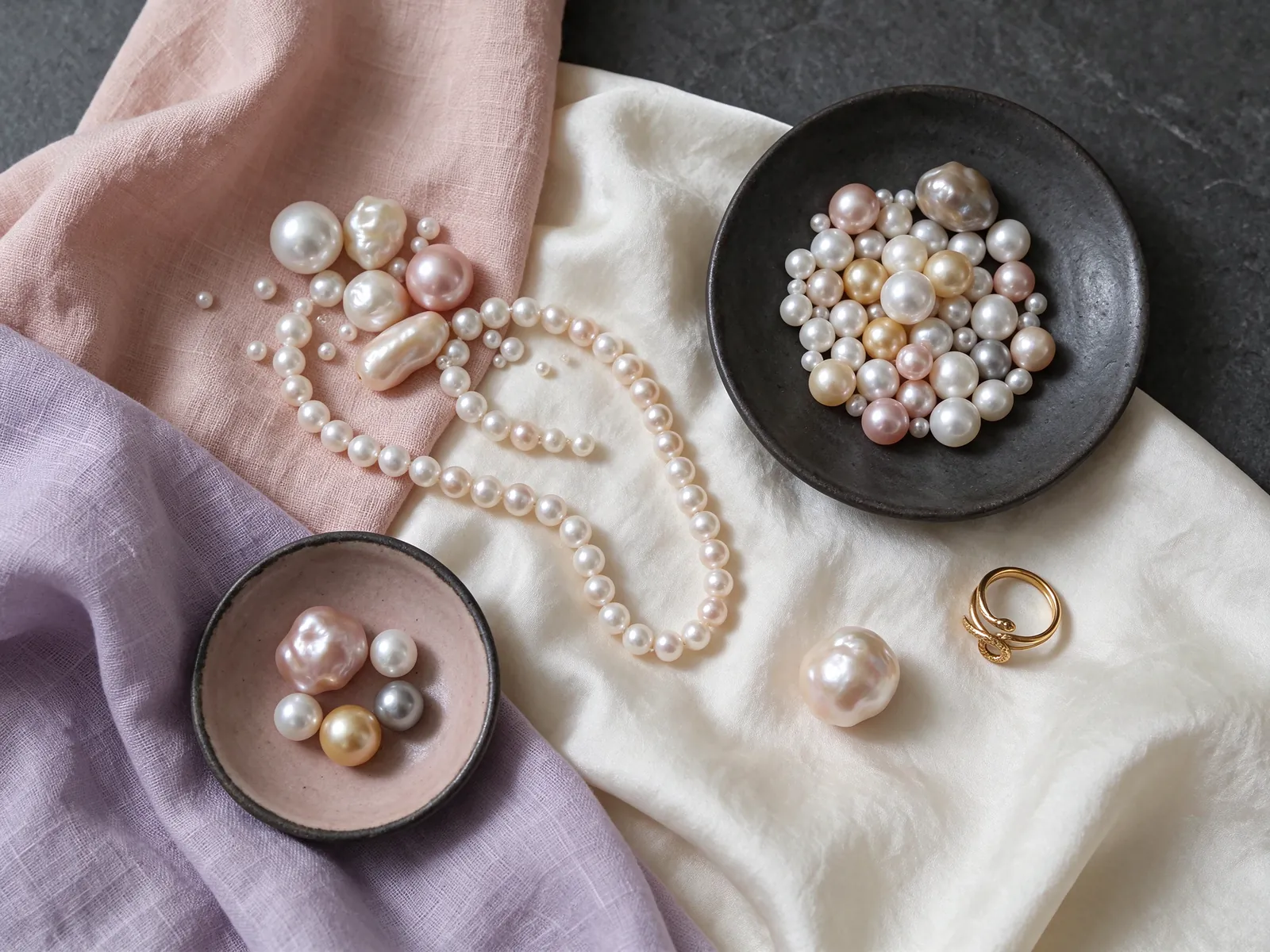
Know which part of the description is actually black
The name black diamond pearl brooch describes a combination, not a promise that both materials are dark. A pale pearl can create a strong highlight within a black outline, while a darker pearl may make the contrast more subtle. Compare which effect suits the clothes you wear most often. The pearl and diamond brooch guide is useful for broader composition questions, but the information attached to a different piece cannot establish the identity, weight or color details of the brooch in front of you.
GIA discusses bodycolor, overtone and orient as distinct pearl color components; not every pearl displays all three. View the pearl from several directions and against a familiar fabric so you can distinguish its appearance from the presentation. If dark pearls interest you, the Tahitian black pearl brooch topic provides a separate category introduction. A dark-looking pearl is not, on appearance alone, proof of geographic origin or natural-versus-cultured identity. Nor does a black-diamond label establish any pearl certification.
Use clothing contrast before adding more decoration
On a black jacket, a dark outline can recede rather than stand out. Compare the piece near a lighter collar edge or with a warm ivory inner layer. If the garment has a strong print, simplify nearby accessories to keep the pearl readable. The goal is separation between fabric and ornament, not a prescribed number of gemstones. A quiet effect may be exactly right if you want details that become apparent at closer range.

Ask component-specific questions instead of relying on a title
Read the pearl description for stated type, natural or cultured identity, measurements, shape, color and surface characteristics. Read the diamond description for identity, color wording, treatment information and the meaning of any weight figure. Ask whether that figure covers all stones or an individual stone. These questions help you understand a piece without guessing from a photograph. If paperwork accompanies the jewelry, determine what it describes and how that information corresponds to the actual components of the brooch.
GIA identifies seven pearl value factors: size, shape, color, luster, surface quality, nacre quality and matching. This framework encourages a more useful comparison than diameter alone. For one focal pearl, consider how its shape and luster work with the dark border. With several pearls, consider their relationship within the intended composition. An artistic arrangement need not be judged only by uniformity. The freshwater pearl brooch guide offers another pearl-category discussion without establishing that any particular black-diamond piece contains freshwater pearls.
Make the comparison conditions consistent
Look at alternatives in similar light and against the same garment when possible. Note the outline, luster, visible surface details and fit independently. Descriptive letters or grading words should be explained before you compare them across different descriptions. Ask how measurements were taken and what a stated weight includes. You will learn more from clear, component-specific information than from a general impression of sophistication.

Choose a role for the brooch within your outfit
For everyday tailoring, consider where bags, coat folds and arm movement will intersect the brooch. A position directly under a shoulder strap may look attractive while standing but be inconvenient in use. Try gray, navy and light neutral backgrounds as well as black. The men’s pearl brooch guide can help with clean lapel lines and restrained proportions; those design principles are useful regardless of who wears the piece. Prioritize a location that remains comfortable throughout the activities associated with the outfit.
For a dressier outfit, identify the main focal area before adding accessories. Statement earrings, a necklace and a detailed brooch can compete if they sit too close together. A simple neckline may leave room for the brooch to carry the visual interest. If you wear a tie, a pearl tie pin involves another placement and fastening approach. Do not assume that a decorative brooch can substitute for it simply because both ornaments use a pearl or sit near the chest.
Add accessories one at a time during a fitting
Start with the brooch and the finished garment, then add the earrings or necklace you intend to wear. Check for visual crowding and physical contact as you move. Front and side views can reveal a projecting edge or overlapping necklace that a close-up misses. Removing one accessory is a valid styling choice; coordination does not require every piece to repeat the same materials or compete for the same space.

Inspect depth, balance and the back of the setting
A pearl brooch with black diamonds may appear compact from the front while projecting considerably from the side. Inspect how far the pearl extends, where the pin lies relative to the composition and whether any edges could catch fibers. A more sculptural shape can create appealing depth, but the garment must support its actual construction. A flatter outline may sit closer to a lapel without necessarily being lighter. Overall dimensions, weight and the back view answer different questions and should be considered together.
Metal color can blend into the dark stones or outline the pearl with a contrasting border. Compare that visual effect with your usual jewelry. Material names to consider are 18K 750 white gold, 18K 750 yellow gold, 18K 750 rose gold, PT950 platinum and PT900 platinum; the description of the particular piece should identify its actual material, since a photograph cannot do that reliably. Comfort also depends on where the back rests, whether the clasp is easy to access and whether closing the jacket creates pressure. A smooth appearance alone does not establish comfortable wear for every person or garment.
Check normal clasp operation without forcing it
If a fitting is permitted, first learn the fastening sequence. Close it slowly with the pin point in view and confirm that it is contained as intended. Gentle, ordinary movement can show drooping or rotation. Stop if something feels blocked. Do not bend a pin, twist a clasp or squeeze thick fabric simply to make the closure work. Mechanical suitability and visual preference are separate parts of the assessment.
Build a short checklist around real wearing needs
Choose the garments and occasions first, then compare the brooch against them. An everyday blazer, a fine blouse and an evening coat are not interchangeable test surfaces. Describe the features you actually value: a pale highlight, a defined dark border, generous space around the motif or a relatively contained side profile. Separating these observations makes it easier to explain your preference. Words such as elegant or timeless may express a feeling, but they do not tell you whether the piece fits a particular lapel.
When selecting a gift, consider the recipient's habits before choosing a motif. Someone may love the look of brooches but rarely wear clothing that supports a pin comfortably. Another person may prefer a clear pale accent on dark tailoring rather than dark-on-dark detail. A styling inquiry can explain the intended neckline, fabric and occasion so the conversation stays focused on how you would wear the brooch. Keep appearance, pearl and diamond descriptions, and fastening requirements as separate items in the conversation.
Separate essentials from preferences you can adjust
Reliable normal closure, suitable fabric support and unobstructed movement should precede motif preference. Directional lines, contrast and metal color can be adjusted to personal style. If a favorite design works best on one substantial coat, regard it as a specific wardrobe pairing rather than a universal accessory. That limitation concerns the wearing context and does not by itself say anything about the quality of its pearl.

Let pearl care guide cleaning of the whole combination
A black diamond and pearl pin should not be cleaned solely according to its diamond components. GIA places pearl at 2.5 on the Mohs hardness scale and specifically advises against ultrasonic and steam cleaning for pearls. The figure supports gentle care; it is not a guarantee about the durability of the assembled brooch. After wear, wipe the pearl with a very soft, clean cloth while supporting the piece. Avoid dragging the point across a surface or pulling on the pearl during wiping.
Protect the pearl from perfume, hair spray, acids and excessive heat. Finish grooming before putting the brooch on, and take it off before applying stain treatments to clothing. Store it apart from other jewelry with the clasp closed, preventing hard edges or pin points from rubbing nearby surfaces. Do not yank away fibers caught around a setting. If a component seems loose or the clasp behaves differently, arrange an assessment appropriate to pearls and the specific construction rather than attempting a home repair.
Use a brief inspection before putting it away
Check for cosmetic residue, trapped threads and changes in closure after removing the brooch. Routine wiping is different from straightening metal, reattaching a pearl or testing color with chemicals. Keep storage dry and away from excessive heat, and inspect the fastening again before the next wearing. Caring for a mixed-material piece means respecting each component, not seeking one aggressive method that makes every surface equally bright. To discuss how dark accents and pearl luster could complement your wardrobe, share your usual fabrics, neckline and occasion with Flint Jewelry on WhatsApp +85260106207 for a conversation about brooch styling.
| Factor | Look for | Ask about | Decision to make |
|---|---|---|---|
| Color contrast | Visible separation of pearl, dark stones and cloth | How does it look against my garment? | Bold highlight or quiet detail |
| Dimensions and depth | Lapel space and side projection | How are overall size and weight recorded? | Visual presence and garment support |
| Pearl information | Luster, shape, color and surface characteristics | What are the stated type and identity? | One focal pearl or a coordinated group |
| Diamond information | Color description and weight notation | Is weight total or per stone; is treatment addressed? | Composition and component clarity |
| Clasp suitability | Contained point, normal closure and balance | Does it fasten properly on this fabric? | Practical use before preferred location |
Pearl knowledge and authoritative references
GIA identifies seven pearl value factors: size, shape, color, luster, surface quality, nacre quality and matching. They provide a framework for examining the pearl within a black diamond brooch, not certification or a grade for an individual piece.
Read the reference for this factFrequently asked questions
Do black diamonds identify the pearl as a black pearl?
No. Diamond color and pearl identity are separate descriptions. The pearl may have a different color, and its type, origin and natural or cultured identity cannot be established from the dark-diamond label.
What if the brooch blends into a dark blazer?
Try a contrasting collar edge or a lighter inner layer, and leave more fabric visible around the ornament. Check the actual outfit from farther away before deciding that the jewelry itself needs a stronger design.
Can I compare brooch size using total diamond weight?
Not reliably. Total stone weight does not describe the assembled width, depth or layout. Read overall dimensions separately and judge the brooch against the lapel you plan to use.
Is a pearl brooch suitable for fastening a wrap?
Only if the construction and intended use suit that task and the fabric can accommodate it. A decorative position is different from holding cloth under tension. Do not force the pin through thick material or assume a load-bearing function.
Can I use an ultrasonic cleaner because the piece includes diamonds?
No. GIA says pearls should never be cleaned in ultrasonic or steam cleaners. The mounted pearl remains part of the piece, so cleaning must account for it alongside the settings and clasp.
Updated: