

What can report wording tell you about Aurora Hanadama grade for Aurora Hanadama pearls called ‘Aurora certified Hanadama pearls’?
When a jewelry description uses Aurora Hanadama pearls, identify the report behind the phrase. An issuing organization’s particular designation and a seller’s own quality guarantee do not become the same document simply because both mention pearls. The expression Aurora certified Hanadama pearls should lead to a readable report showing its issuer, exact wording and subject. Read the explanation of certified Hanadama pearls alongside the item description, then check that the document refers to the same pearl, pair or strand you are considering.
A straightforward approach is to compare the full item description with a clear image of the complete report. Read the issuer and designation, then locate the information identifying the subject. A heading photographed on its own may leave out the details that explain what the report covers. If identifying numbers, images or dimensional descriptions appear, use them to understand the connection with the object. No single feature should be treated as an independent authenticity guarantee. Establishing the relationship between document and item comes before interpreting Aurora Hanadama grade.
When assessing Aurora Hanadama pearls, does the report match the item and substantiate Aurora Hanadama grade and the term ‘Aurora certified Hanadama pearls’?
Ask whether the report was issued by Pearl Science Laboratory, abbreviated PSL and named 真珠科学研究所 in Japanese. Locate the full quoted designation rather than relying on a cropped heading. Establish whether its subject is one pearl, a pair or a strand and how that subject relates to the finished jewelry. Identifying numbers, images and dimensions help with correspondence; none alone guarantees authenticity.

Understand what each name is doing in the description
Pearl Science Laboratory explains that the traditional word Hanadama refers generally to top-quality pearls without a clear overall definition. For its own designation オーロラ花珠, commonly discussed as Aurora Hanadama, PSL states a defined scope: white-series Akoya measuring at least 6 mm, with nacre thickness of at least 0.4 mm. Semi-round shapes are within its permitted range, surface is checked against its standards, and teri receives particular emphasis through brilliance and interference color. These are the issuer’s criteria, not specifications for Flint jewelry. Hanadama vs Akoya pearls helps distinguish this quality terminology from pearl-type information.
Within PSL’s system, Aurora Tennyo identifies the highest-teri pearls among Aurora Hanadama, according to its certification page. That relationship does not make the two names interchangeable; a Tennyo pearl necklace still calls for its own document reading. The WSP English and Traditional Chinese product headings both use the English combination Aurora Hanadama. A retailer’s title establishes naming usage, not the wording of every certificate. Read WSP pearl grading in its separate context instead of converting a retail grade or translation into a PSL conclusion.
Compare explanations instead of inventing a grade conversion
AAA and AAAA are not globally standardized numerical grades or universal GIA pearl grades. Ask a seller what observations support its label, then compare those explanations rather than equating the label with Aurora Hanadama grade. Likewise, size and nacre minima are only part of PSL’s criteria; reaching those two thresholds alone does not establish its designation without the other assessments.
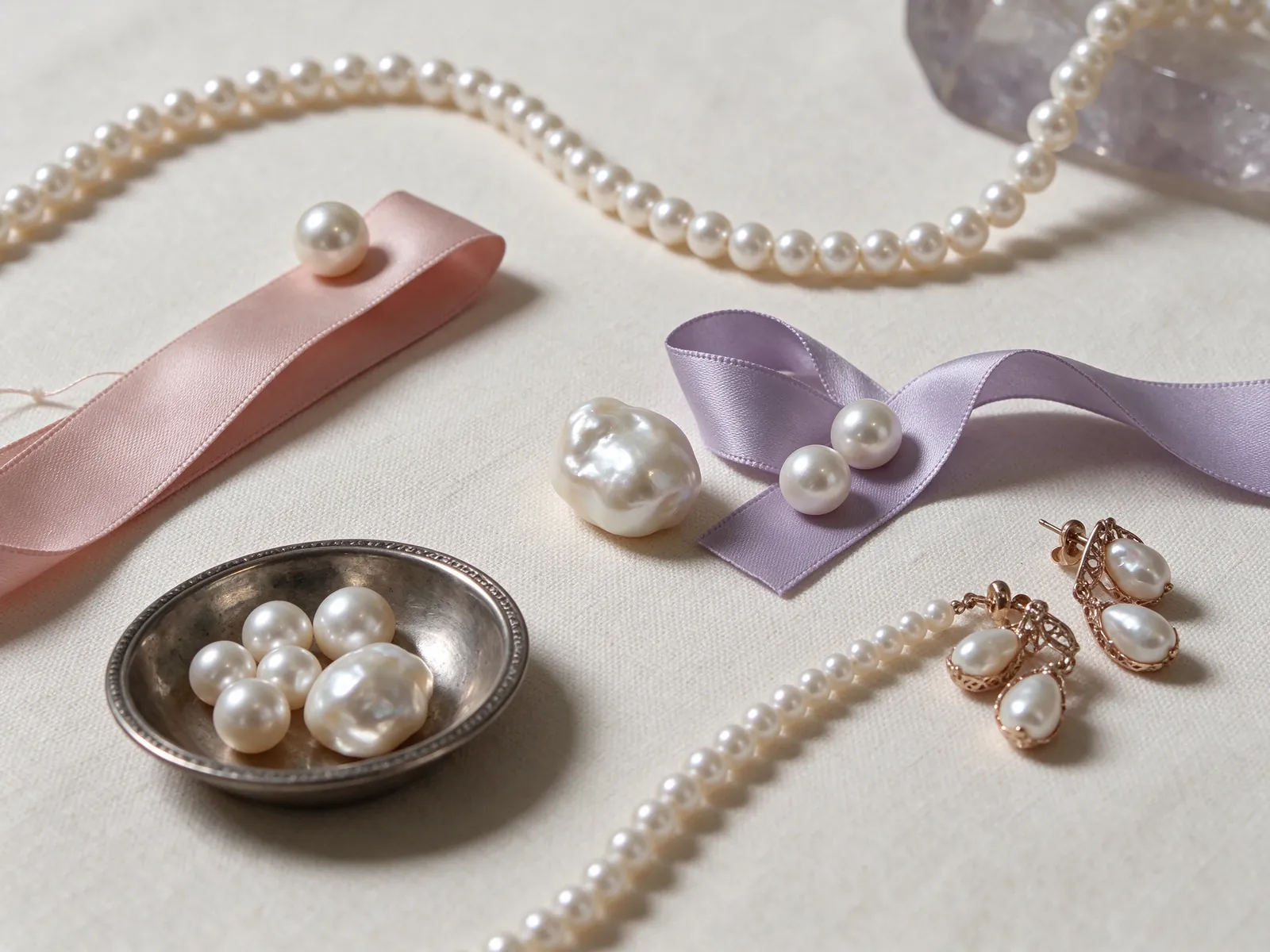
Look beyond the designation with a seven-factor framework
GIA describes seven pearl value factors: size, shape, color, luster, surface quality, nacre quality and matching. They help organize a visual and informational comparison; they are not universal Aurora Hanadama certification criteria or an endorsement of a retailer. Use the pearl grading guide to decide which observations matter to your piece. Earrings bring the relationship between two pearls into focus. A strand invites attention to consistency along its curve. A pendant allows attention to concentrate on the face displayed in the finished composition.
For luster, look at the clarity of reflections and the overall presentation rather than only the strongest highlight. For surface quality, notice visible features and whether their position affects the view when worn. Color may include bodycolor, overtone and orient; not every pearl shows all three components. Compare pieces in similar light against similar backgrounds to avoid confusing photographic differences with pearl differences. Roundness, whiteness or brightness alone cannot establish origin, natural-versus-cultured identity or the presence of a named certificate.
A measured nacre value and a treatment comment answer different questions
PSL says that X-rays are used to measure nacre thickness for its highest-quality-series reports. The reported value should be read with its unit and identified subject, not estimated from an image. A published minimum is not the measurement of every pearl bearing the name. PSL also notes that comments such as no color adjustment may be added to the report. Read any actual treatment information separately; the Hanadama designation alone does not establish that a specific piece is untreated or unadjusted.
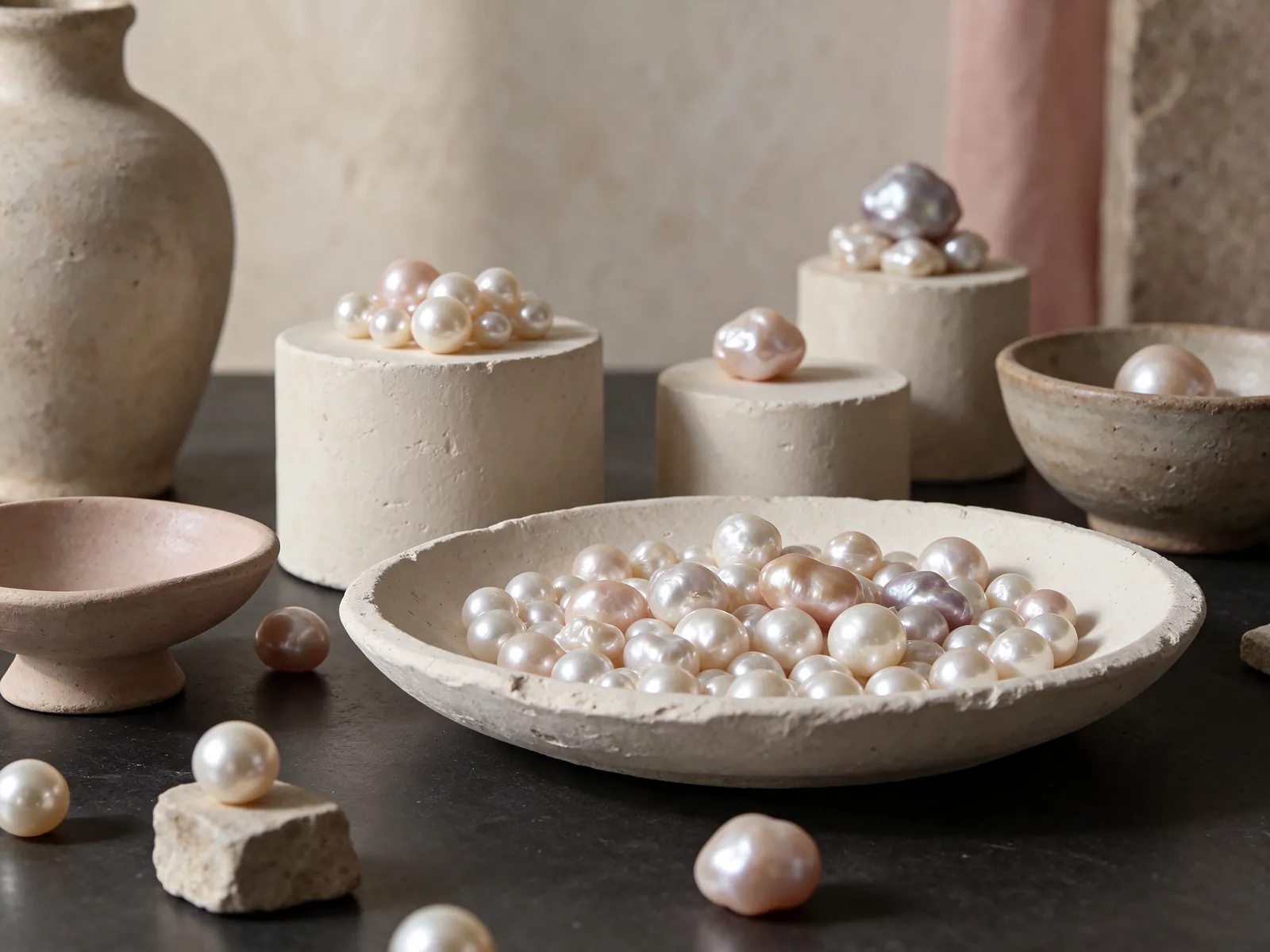
Read the covered object before interpreting matching
A document covering a pair or strand does not remove the need to understand which characteristics it discusses. Individual attractiveness and coordinated appearance are related but different. Two pearls can each appeal to you while showing a difference in color or luster when worn together. With a necklace, observe the entire arrangement around the neckline rather than judging from one prominent pearl. A report’s scope tells you its subject; it should not automatically be expanded into a claim that all quality factors are identical throughout.
The jewelry form helps determine the next question. For an Aurora Akoya Queen pearl necklace, consider the relationship between the name and the strand description. For an Aurora Phoenix pearl pendant, consider what the wording identifies about the pendant or pearl. These topics offer separate reading contexts, not a shared ranking that converts Queen or Phoenix into Hanadama. If customization involves separating a strand or combining pearls with another design, preserve the original object’s description before deciding how to explain the resulting piece.
A redesign needs both visual planning and clear object records
Keep the complete original report and photographs that show the arrangement before changes. Do not automatically transfer a whole-strand description to each separated pearl or to a newly added pearl. Plan the visible face, balance and placement for the new design while keeping those styling questions distinct from the original documentary scope.
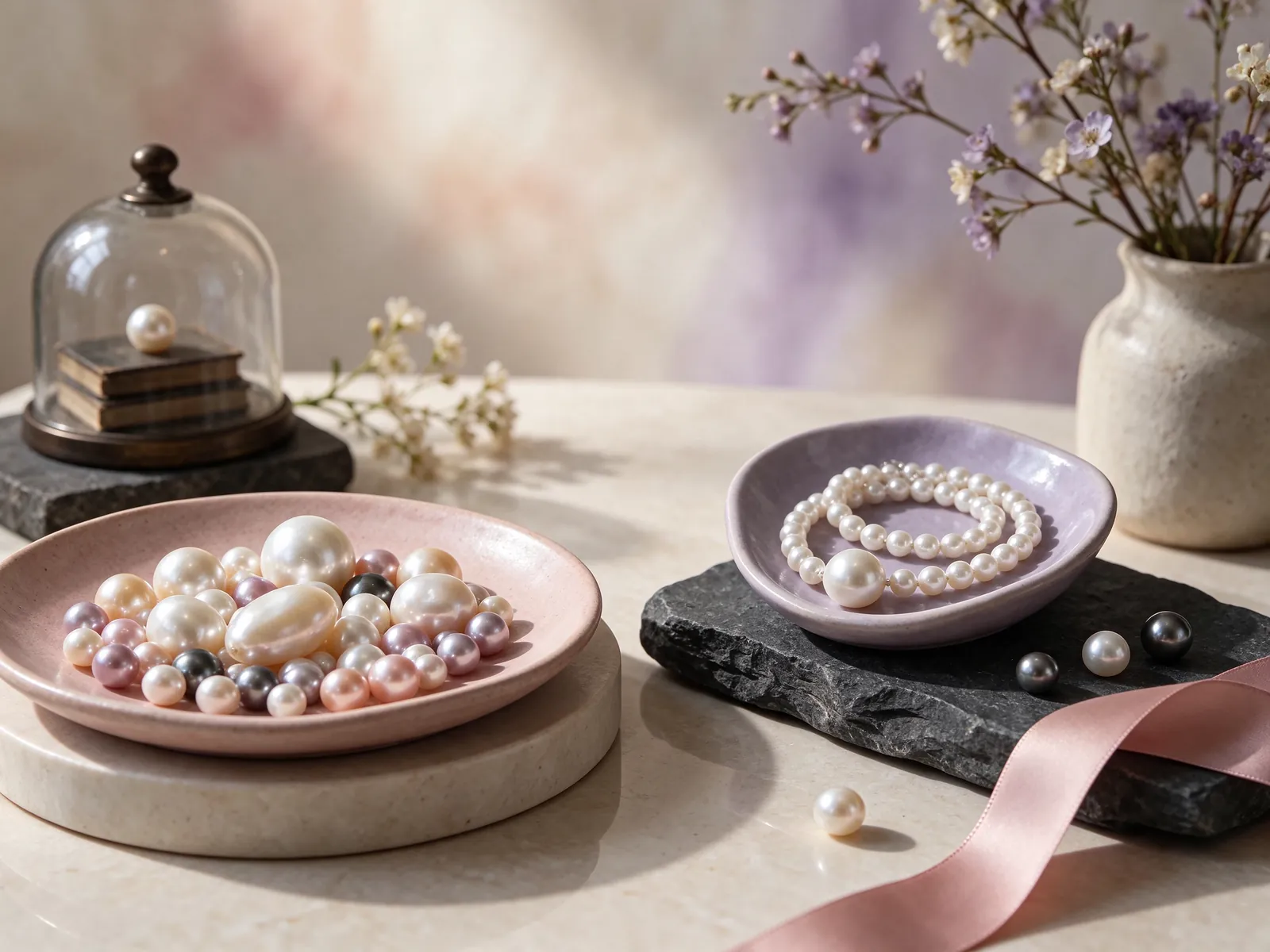
Let your clothing and routine guide the jewelry choice
Once the wording is understood, assess how the piece fits your actual wardrobe. A necklace should have a comfortable visual relationship with the neckline rather than compete with a collar or decorative trim. During a try-on, move and sit as you would during an ordinary day to see whether the focal point stays where you expect. A simple garment may give a coordinated strand space, while a detailed outfit may work better with one pearl accent. These preferences do not increase or decrease the report’s designation.
Compare the pearl beside fabrics you commonly wear, including light neutrals and deeper colors. A different background can change your impression of the same overtone. For earrings, view the pair beside your usual hairstyle and glasses; for a pendant, consider how the focal point relates to garment details. Two pieces described with the same quality name may still create very different looks. You can choose the one that fits your proportions and habits without treating a personal style preference as proof of a superior Aurora Hanadama grade.
A gift starts with the wearer, not the prestige of a title
Find out whether the recipient regularly wears earrings, pendants or strands, and whether they prefer coordinated pieces or one accent. Someone interested in documentation may appreciate a clear explanation of the exact designation and covered object. Someone focused on everyday style may care more about color, neckline compatibility and the overall composition.

Build a comparison around questions that can be answered
Divide your notes into documentation, appearance and intended use. Under documentation, record issuer, exact wording and subject. Under appearance, record what you observe about luster, surface and matching under comparable conditions. Under use, record the clothing and occasions you have in mind. This turns a vague search for the best name into several manageable decisions. Elaborate vocabulary should not outweigh a clearer explanation of the traits that matter to you, especially when one item’s description leaves essential questions unanswered.
If your search also includes Kingfisher certified pearl jewelry, treat that term as a separate documentary topic instead of forcing all names into one conversion system. Your priorities may differ by form: a strand comparison may emphasize coordination, while a pendant comparison may emphasize its visible face and composition. A designation is neither a price formula nor evidence of investment performance. Record the attributes you would trade off, the description you can actually read and the practical reasons you favor one piece.
An unanswered question is better than an assumed conclusion
Leave a field open if the information is not stated, then ask a focused follow-up. Keep three categories distinct: what you observed, what the report says and what the name suggested to you. This prevents the familiar wording Aurora Hanadama from silently supplying details that have not been established for the object.

Protect the pearl in daily use and keep its original records clear
Pearl-care needs do not disappear behind a quality label. GIA ranks pearl at 2.5 on the Mohs hardness scale and states that ultrasonic and steam cleaners should never be used. Wipe after wearing with a very soft, clean cloth, and avoid acids, perfume, hair spray and excessive heat. Apply fragrance and hair products before putting on jewelry to reduce direct contact with the pearl. These practices support careful handling; they are not a guarantee that any designation makes a pearl resistant to every kind of damage.
Separate pearls from other jewelry that could rub against them, and avoid dragging or pulling a strand. Consider the entire piece before cleaning: string, adhesive and settings may require different handling, and a quality name does not authorize extended soaking. A wet string must dry completely before wearing. Do not use toothpaste, bleach or high heat to try to reverse yellowing. Loose string, insecure settings and changes to the pearl need an assessment of actual condition rather than a promised repair outcome. Preserve the report and original photographs for future reading.
Use the full original designation in future comparisons
Before adding or redesigning a piece, return to the full original designation and covered object. Keep before-and-after photographs separate so a new composition does not inherit unsupported documentary claims. Illustrations explain style and pearl knowledge; they do not establish identity, certificates or availability. Contact Flint Jewelry on WhatsApp to discuss the document terminology, form and wearing habits relevant to your design. Specific designs and quotes are discussed individually, without treating another brand’s certificate or warranty as a promise for the new work.
| Comparison area | Document detail | Appearance question | Buying question | Unsupported shortcut |
|---|---|---|---|---|
| PSL scope | White-series Akoya; size at least 6 mm; nacre at least 0.4 mm | Assess shape, surface and teri as well | Is the complete designation stated in the report? | A certificate inferred from two numbers |
| Designation | Exact original wording | Does the description use the same term? | Where is Aurora Hanadama stated? | Replacing it with a similar name |
| Covered object | Single pearl, pair or strand | How does the identified object relate to this piece? | Which pearls are described? | Extending the conclusion to every component |
| Luster and surface | Any relevant stated findings | What is visible in consistent light? | Can I see front and turning views? | Deriving a nacre measurement from an image |
| Color and matching | Any stated color description | Is the pair or strand visually balanced? | Does the color suit my usual clothing? | Inferring identity from white color or roundness |
| Wear and care | Construction and care guidance | Does the focal point fit the neckline? | How will I handle and store it? | Treating a designation as a durability promise |
Pearl knowledge and authoritative references
PSL defines Aurora Hanadama for white-series Akoya of at least 6 mm with nacre thickness of at least 0.4 mm. Shape, surface and teri are additional criteria; these minima are not measured specifications for a Flint item.
Read the reference for this factFrequently asked questions
How does PSL distinguish Aurora Tennyo from Aurora Hanadama pearls?
PSL describes Aurora Tennyo as the highest-teri pearls within Aurora Hanadama. They are related designations in that issuer’s framework, not synonyms or universal equivalents of a retailer’s letter grades. Read the designation actually stated for the item.
Does the phrase Aurora certified Hanadama pearls explain the certificate by itself?
No. It points to a documentary question: which report is being referenced, what wording does it use and which object does it cover? A legible complete report is more informative than the phrase alone.
Can I establish Aurora Hanadama grade from size and a bright photograph?
No. PSL’s definition includes white-series Akoya, size and nacre minima, shape, surface and teri. An image cannot provide the nacre measurement or certificate. Read the full report; reaching two numerical thresholds alone does not establish the complete designation.
Why does the distinction between a pair and a strand matter?
Matching is considered in relation to the arrangement. A pair invites a left-to-right comparison, while a strand invites attention to continuity around the neckline. Read the document’s subject and statements rather than assuming identical quality in every pearl.
Will a named grade change how I should clean the pearls?
A designation does not replace pearl-care guidance. GIA advises against ultrasonic and steam cleaning and recommends a very soft, clean cloth after wearing. Consider string, adhesive and settings before using water, avoid extended soaking, and let any wet string dry fully before use. Cleaning cannot guarantee reversal of yellowing.
Updated: