

How does report wording clarify Aurora Hanadama grade for Aurora Hanadama pearls described as ‘Aurora certified Hanadama pearls’?
Begin with the document rather than the headline. Aurora Hanadama pearls may refer to an issuer’s particular designation, but the report should identify who issued it, the wording used and the object described. Read those details before interpreting Aurora certified Hanadama pearls. A seller’s own guarantee document and a Pearl Science Laboratory report have different issuers and should not be treated as the same document. The discussion of certified Hanadama pearls is a useful companion when placing the seller’s description beside the report and checking that both refer to the same pearls.
For a practical comparison, place the item description beside a legible image of the whole report. Look for the issuing organisation, the exact designation and any description identifying the pearl or jewellery. A cropped photograph of a heading is less useful than a readable document showing the surrounding information. If a number, photograph or dimensional description is present, use it to understand the relationship to the item; do not treat one feature alone as proof of authenticity. The aim is to establish what the words refer to before deciding how much weight to give them.
For Aurora Hanadama pearls, does the report cover the item and support both Aurora Hanadama grade and the description ‘Aurora certified Hanadama pearls’?
Ask whether the issuer is Pearl Science Laboratory, also known as PSL or 真珠科学研究所, and where the complete designation appears. Does the document describe a single pearl, a pair or a strand? Ask how that object corresponds to the jewellery being considered. A report number, photograph and dimensional description can help establish that correspondence, but no one feature supplies an independent authenticity guarantee.

Separate pearl identity, quality terminology and naming conventions
PSL explains that Hanadama is traditionally used for top-quality pearls but has no clear general definition. Its own Aurora Hanadama designation, written オーロラ花珠, applies to white-series Akoya of at least 6 mm, with nacre thickness of at least 0.4 mm. Its published criteria allow shapes up to semi-round, assess surface under its own standards and place greatest emphasis on teri: brilliance and interference colour. These are the laboratory’s criteria, not measurements for a Flint item. Reading Hanadama vs Akoya pearls helps separate the pearl-type information from this specific quality designation.
PSL’s certification page identifies Aurora Tennyo as pearls with the highest teri within Aurora Hanadama. The names are related within that framework, but they are not synonyms. A Tennyo pearl necklace therefore needs its own document checked. WSP uses Aurora Hanadama in both the English and Traditional Chinese product-page headings reviewed here. This demonstrates a commercial use of the English name; it does not make a translated expression the issuer’s original wording. The WSP pearl grading discussion belongs to another naming context, not an automatic conversion into a PSL report.
Do not convert a name into a letter grade without a stated basis
AAA and AAAA labels do not have a globally standardised numerical conversion and are not GIA’s universal pearl grades. Ask the seller to explain the characteristics behind a letter label rather than converting it into Aurora Hanadama grade. Meeting the stated size and nacre minima alone is also insufficient: shape, surface and teri remain part of PSL’s criteria.
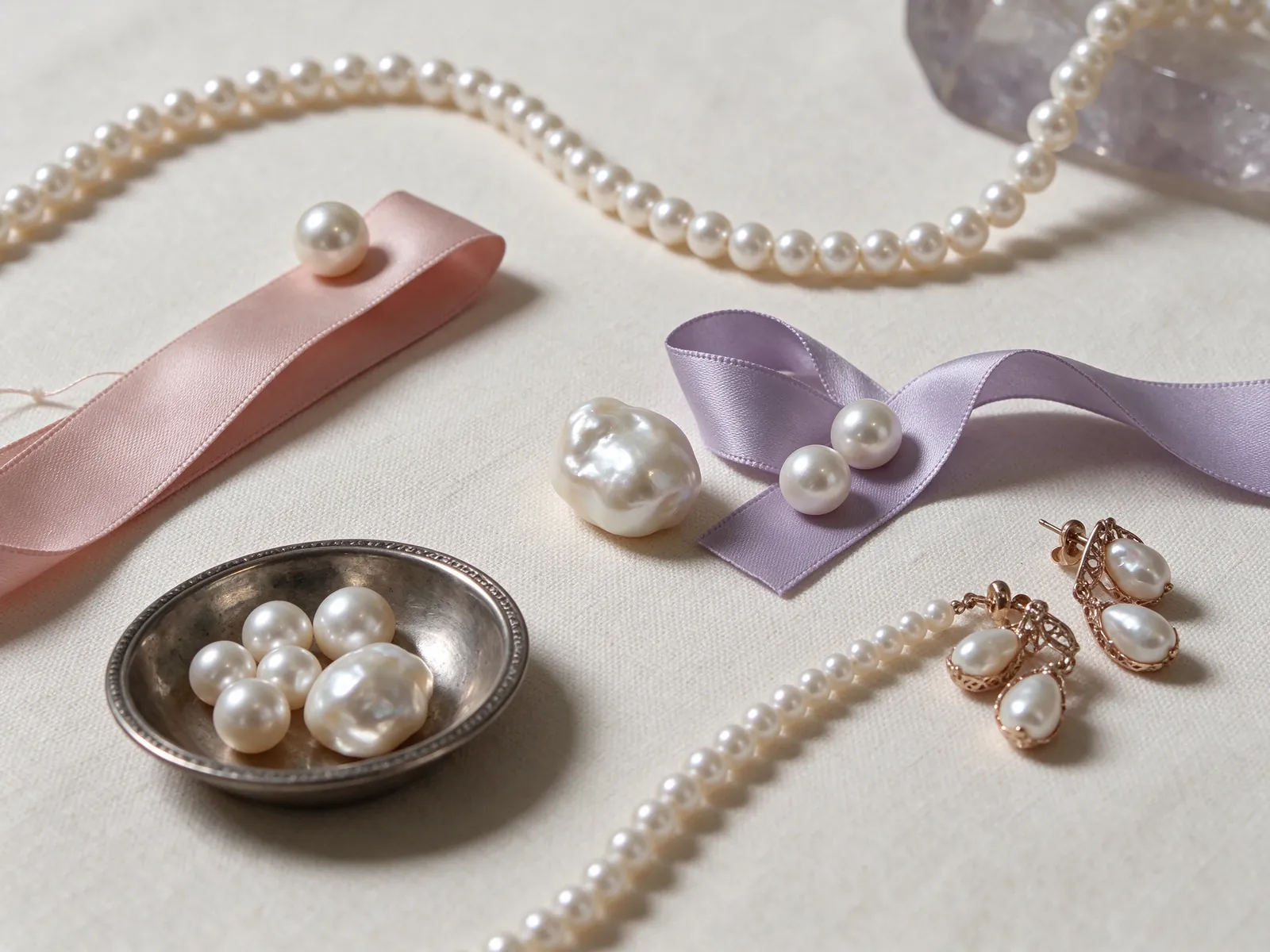
Use seven quality factors to organise the visual comparison
GIA identifies seven pearl value factors: size, shape, colour, lustre, surface quality, nacre quality and matching. This is an observation framework, not a universal Aurora Hanadama threshold or a certification of a retailer’s goods. The pearl grading guide provides a starting point for deciding which factors matter most to your intended use. A pair of earrings invites attention to visual balance, a necklace to continuity along the strand, and a single-pearl pendant to the appearance of the face presented when worn.
When comparing lustre, consider the definition of reflections and the overall appearance rather than the brightest spot in a photograph. For surface quality, look at where visible features occur and whether the setting turns them towards or away from view. Colour can involve bodycolour, overtone and orient, and not every pearl displays all three. Similar lighting, background and viewing distance make colour comparisons easier. A white appearance, round outline or bright photograph cannot by itself establish origin, natural-versus-cultured identity or the existence of a particular certificate.
Read nacre measurements and treatment comments separately
PSL states that its highest-quality-series reports use X-rays to measure nacre thickness. Read the value, unit and identified object in the report; do not infer a measurement from reflected light or turn a minimum requirement into an actual measured result. PSL also explains that comments such as no colour adjustment can be added. That is separate information to read in the document: the Hanadama designation alone should not be expanded into a claim that a particular item is untreated or unadjusted.
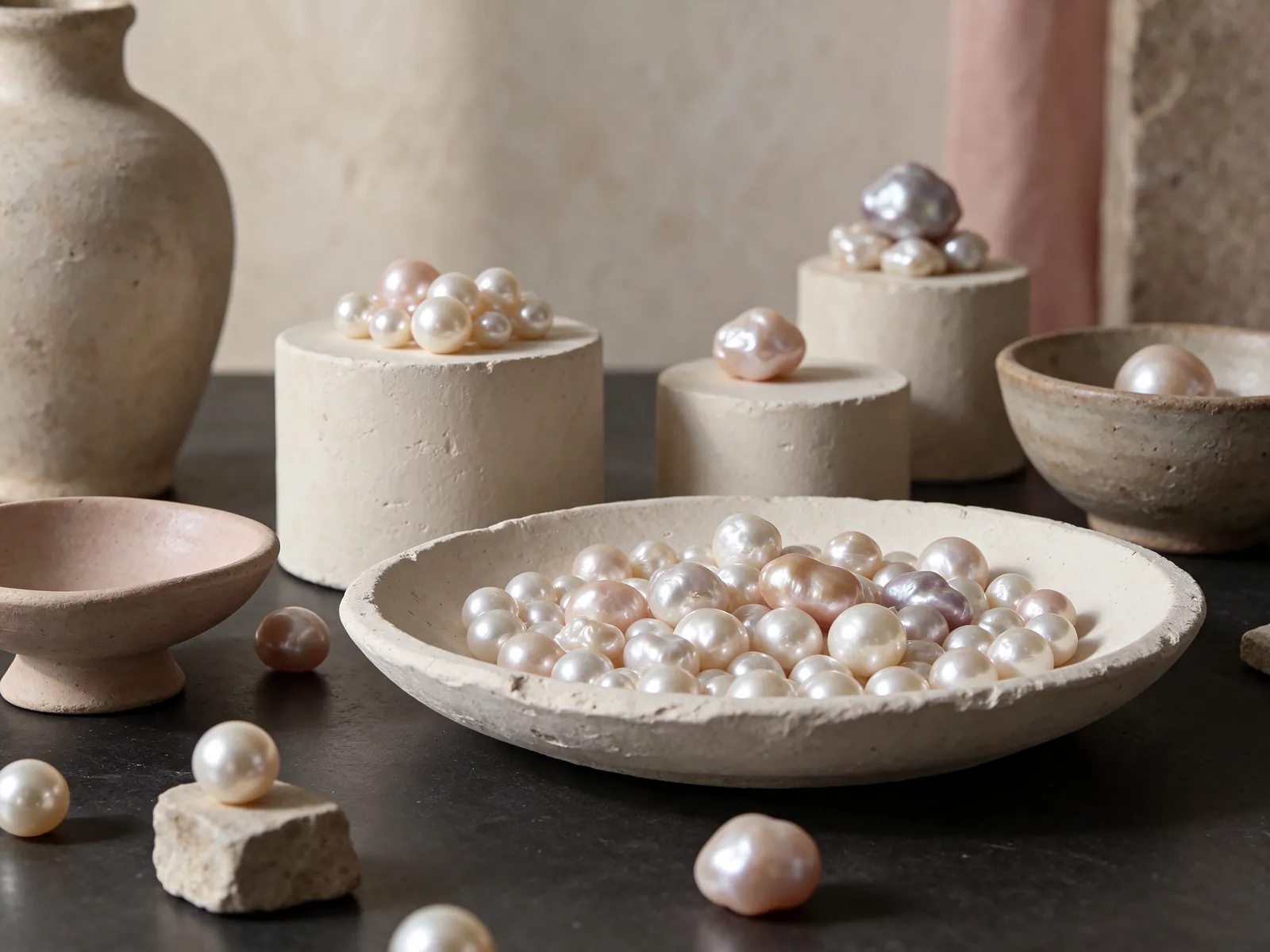
Check whether the document describes one pearl, a pair or a strand
The scope of a document matters because individual appearance and matching answer different questions. Two attractive pearls may still create a visibly uneven pair if their colour or lustre differs. A strand needs consideration as a whole, especially as it curves around the neckline. Read what the document says about its subject rather than assuming that a report covering several pearls states that every quality factor is identical. The jewellery’s presentation also matters: the face visible when worn can differ from the face shown on a display.
Different item names should lead to different scope questions. An Aurora Akoya Queen pearl necklace comparison concerns the relationship between that designation and a necklace, while an Aurora Phoenix pearl pendant discussion calls attention to a pendant or its pearl. Neither topic creates an automatic ranking connecting Queen, Phoenix and Hanadama. If you are considering redesigning a strand, keep the original object and its report in mind before extending any original description to separate pieces or additional pearls.
Keep the original object identifiable before discussing a redesign
Retain the original report and photographs showing the complete piece. A description applied to a strand should not simply be reassigned to each pearl after separation, and newly added pearls do not automatically acquire the same designation. Discuss the intended visible face and matching needs separately from the original document’s coverage.
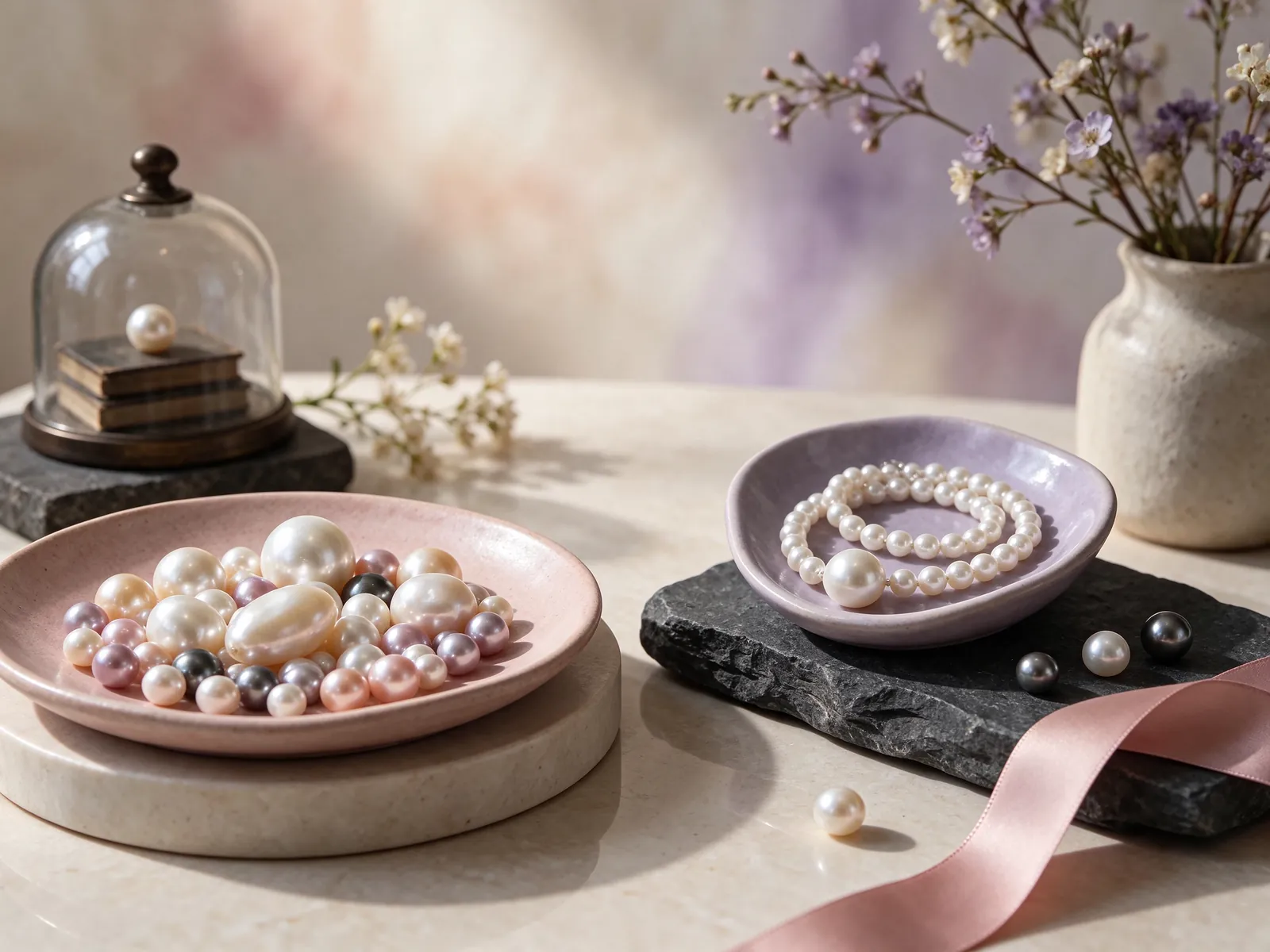
Choose the look for your wardrobe after reading the paperwork
For Hong Kong workwear, consider how a pearl piece sits beside a shirt collar or jacket rather than choosing by title alone. Move your head and sit down during a try-on to see whether the jewellery remains visible or competes with the collar. A restrained outfit may suit a single focal point, while a plain neckline can give a coordinated strand more room. These are styling decisions, not adjustments to the report’s designation. A quality term cannot decide which silhouette feels most natural on you.
Try the pearl against colours you actually wear. Warm ivory, pink and dark fabrics can create different impressions of the same pearl’s overtone. For earrings, examine the outline beside your usual hairstyle and glasses; for a pendant, consider its position relative to garment details. Comparing two similarly described pieces may reveal a clear personal preference based on colour, balance or comfort. It is reasonable to favour the one that suits your routine without claiming that your preference establishes a higher Aurora Hanadama grade.
For gifts, start with the recipient’s usual jewellery choices
Ask whether the recipient favours earrings, necklaces or pendants and whether they enjoy coordinated sets or a single accent. If reports matter to them, explain the exact designation and covered object clearly. If everyday styling matters more, concentrate on their clothing and colour preferences instead of relying on an impressive-sounding name.

Turn a broad quality question into specific buying questions
Organise your comparison into documentary, visual and practical questions. The documentary group covers issuer, wording and object. The visual group covers comparable views of lustre, surface and matching. The practical group covers where and how you expect to wear the piece. This prevents the question ‘Which name is better?’ from hiding several unrelated decisions. If one description is elaborate but provides little readable information, its vocabulary should not outweigh another item’s clearer explanation of the features you value.
When considering Kingfisher certified pearl jewellery alongside Aurora terminology, read each naming context independently rather than creating a shared conversion table. Allocate your attention according to your priorities: matching may dominate a strand comparison, while the visible face and composition may dominate a single pendant decision. A quality label is not a price formula or evidence of investment value. A personal comparison sheet can record the exact designation, document scope, preferred appearance and unanswered questions without pretending to calculate a universal score.
Leave unanswered fields open instead of guessing
If a characteristic is not stated, note the question and ask about that characteristic specifically. Separate what you have seen from what the document states and from what the name merely suggests. This makes a later conversation more focused and prevents a familiar designation from filling gaps with assumptions.

Care for the pearl and preserve the meaning of its records
A quality designation does not change basic pearl-care needs. GIA places pearl at 2.5 on the Mohs hardness scale and advises against ultrasonic or steam cleaners. After wearing, use a very soft, clean cloth and avoid exposure to acids, perfume, hair spray and excessive heat. Finish applying fragrance and styling products before putting on your jewellery to reduce direct contact. These are sensible care practices, not a promise that any named grade is permanently resistant to wear or damage.
Store pearls separately from jewellery that could rub against them, and avoid pulling a strand when handling it. Cleaning must take account of the whole construction, including string, adhesive and settings; a Hanadama name is not permission for prolonged soaking. If the string becomes wet, let it dry completely before wearing. Avoid toothpaste, bleach and excessive heat intended to remove yellowing. Loose string, insecure settings or changes in appearance require a condition-based assessment, not assumptions about guaranteed restoration. Keep the original report and photographs for later reference.
Return to the original wording when adding another piece
For a future purchase or redesign, compare the full original designation and covered object with the new composition. Keep photographs before and after changes distinct. Illustrations show styling and educational ideas, not evidence of pearl identity, certificates or stock. You can discuss appearance and design with Flint Jewellery on WhatsApp by sharing the report terminology, jewellery form and wearing habits that matter to you. Specific designs and quotations are discussed individually; another brand’s certificate or warranty should not be transferred to a new piece.
| Area | Read first | Observe separately | Useful question | Does not establish alone |
|---|---|---|---|---|
| PSL criteria | White-series Akoya; at least 6 mm; nacre at least 0.4 mm | Shape, surface and teri still require assessment | Does the report state the full designation? | Qualification from two minima alone |
| Exact designation | Full report wording | Consistency with the item description | Where does Aurora Hanadama appear? | Equivalence with a similar name |
| Document scope | Single pearl, pair or strand description | Relationship to the jewellery considered | Which pearls does the document describe? | The same grade for every component |
| Lustre and surface | Relevant stated findings | Reflections and visible features in consistent light | Can I compare front and turning views? | A nacre measurement from a photograph |
| Colour and matching | Any stated colour information | Balance across a pair or strand | How does it look beside my usual clothes? | Identity from white colour or round shape |
| Use and care | Construction and care information | Neckline, hairstyle and handling habits | Do I want a strand or a single focal point? | A durability guarantee from the designation |
Pearl knowledge and authoritative references
PSL defines Aurora Hanadama for white-series Akoya of at least 6 mm with nacre thickness of at least 0.4 mm. Shape, surface and teri are additional criteria; these minima are not measured specifications for a Flint item.
Read the reference for this factFrequently asked questions
Do 6 mm size and 0.4 mm nacre establish Aurora Hanadama grade?
No. PSL also specifies white-series Akoya and assesses shape, surface and teri under its own criteria. Those numerical minima are only part of the definition. Read the complete report and its covered object rather than assigning the designation yourself.
What should I ask when the description says Aurora certified Hanadama pearls?
Ask for the legible document behind that description and how it relates to the item. Identify the exact wording, issuer and covered pearl, pair or strand rather than treating certified as a self-explanatory term.
Does Aurora Hanadama mean the pearl has no colour adjustment?
The name alone does not establish that. PSL explains that comments such as no colour adjustment may be added to the report. Read the actual treatment wording separately instead of extending a quality designation into an unstated treatment conclusion.
If two pieces use the same designation, must I prefer the same style?
No. Colour, matching, the visible face and the way the jewellery sits with your clothes can create different preferences. Styling suitability is a personal decision and does not alter either document’s designation.
Does a strand designation automatically follow pearls used in a redesign?
Do not assume that it does. Read the original document’s scope and keep the original piece identifiable. A whole-strand description and a description of an individual pearl answer different questions, especially when pearls are separated or added.
Updated: