
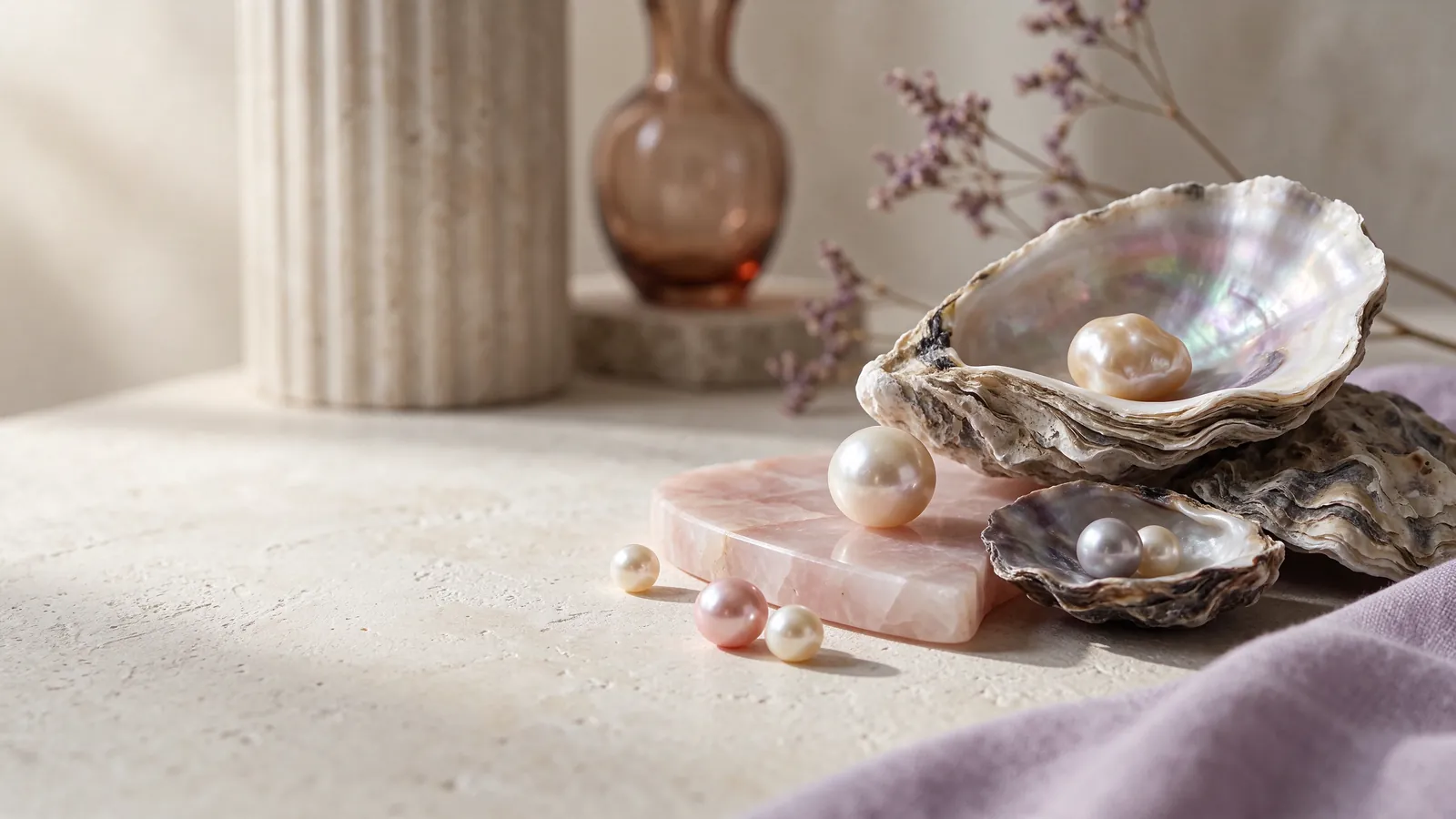
Why does pearl identity matter beyond colour for abalone pearls vs classic white pearls as well as abalone pearls vs Akoya pearls and pāua vs Akoya pearls?
The first useful distinction is between a description of appearance and a description of pearl type. White tells you about colour; it does not establish Akoya identity. Classic white pearls include Akoya, while abalone pearls bring a different naming and visual context to the comparison. The pearl types guide helps organise these categories before you compare individual pieces. This prevents a similar-looking photograph from becoming the basis for assuming that two pearls share the same identity.
A classic white pearl is often considered in terms of roundness and a coherent overall look. Abalone pearls vary in colour, shape and pattern, so an individual outline or colour arrangement can lead the design instead. These are starting points for looking, not identification rules. An irregular pearl is not automatically abalone, and a round white pearl is not automatically Akoya. Begin by deciding whether you want visual consistency or a more individual focal point, then examine the actual pearl.
Can names alone establish origin or natural versus cultured formation in abalone pearls vs classic white pearls as well as abalone pearls vs Akoya pearls and pāua vs Akoya pearls?
No single name answers all those questions. Abalone pearls from New Zealand are often called pāua, after the Māori name for the local abalone, but abalone pearls can be naturally formed or cultured. Ask for pearl type, the stated place of origin and natural or cultured identity as separate pieces of information. A name can explain the context of a pearl without proving every claim made about an individual example.
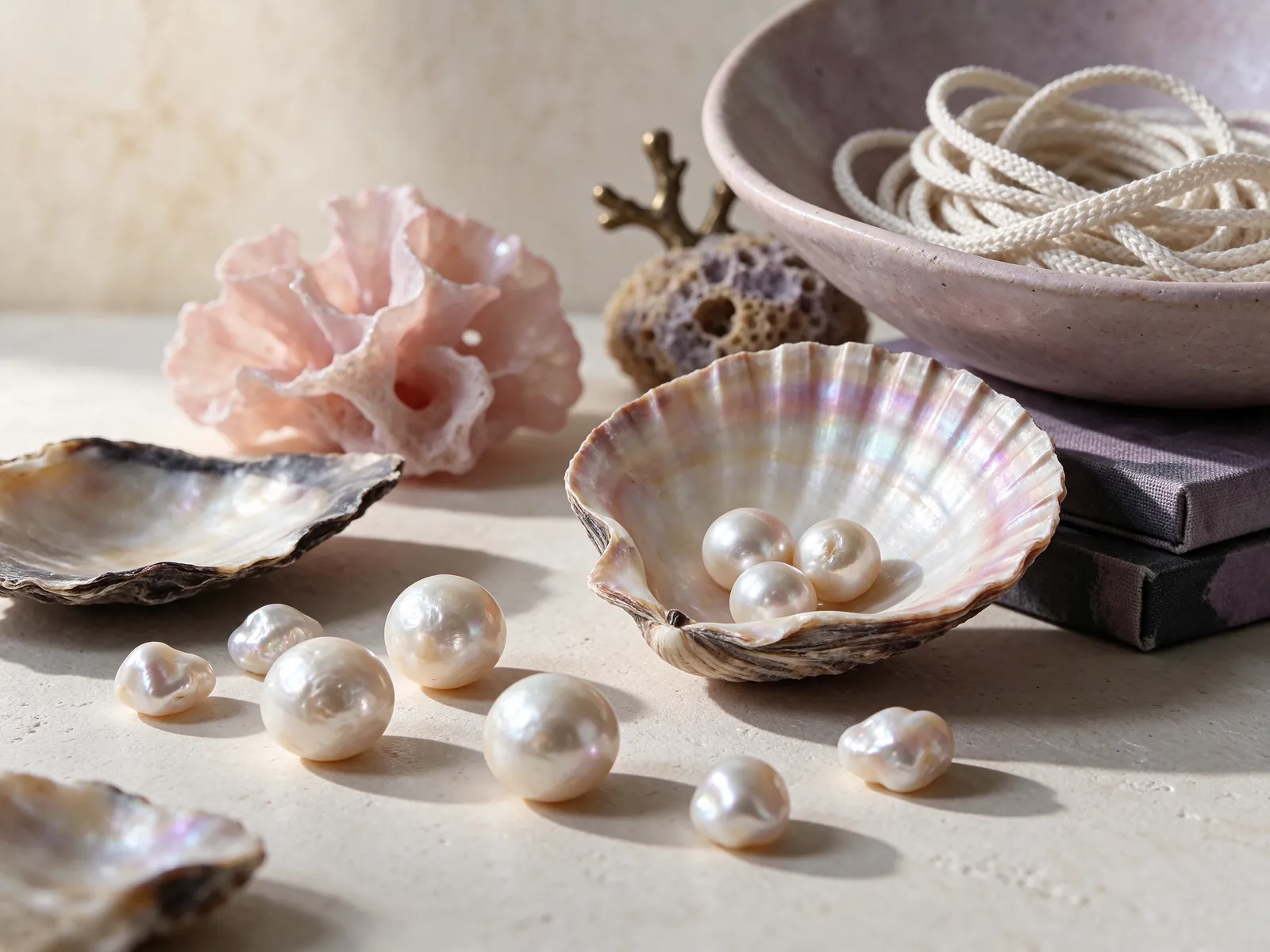
Read the material name before judging the visual effect
When a description uses pāua, consider whether it names a pearl or merely describes a colour palette. Reading what is an abalone pearl gives the term a useful context, rather than treating blue-green appearance as a material test. Wording such as an abalone-inspired finish can describe a design idea without identifying an abalone pearl. The practical question is what the object actually is, followed by whether its appearance suits the person who will wear it.
Use the same discipline with Akoya. A white colour, a round outline or a Japanese-style presentation does not establish that identity. The explanation of what are Akoya pearls is useful when you need to understand the category before comparing a particular pair of earrings or a pendant. Keep the material name separate from flattering adjectives: classic, luminous and distinctive describe an impression, but they do not answer questions about formation or origin.
Separate place of origin from the way a pearl formed
Natural and cultured are formation terms, not alternatives to attractive and unattractive. Cultured does not mean imitation, and a name that evokes a particular place does not mean naturally formed. The guide to natural vs cultured pearls helps keep those distinctions clear. For a gift, a precise material description is more useful than a vague promise of rarity: it gives the recipient an accurate way to describe the piece later.
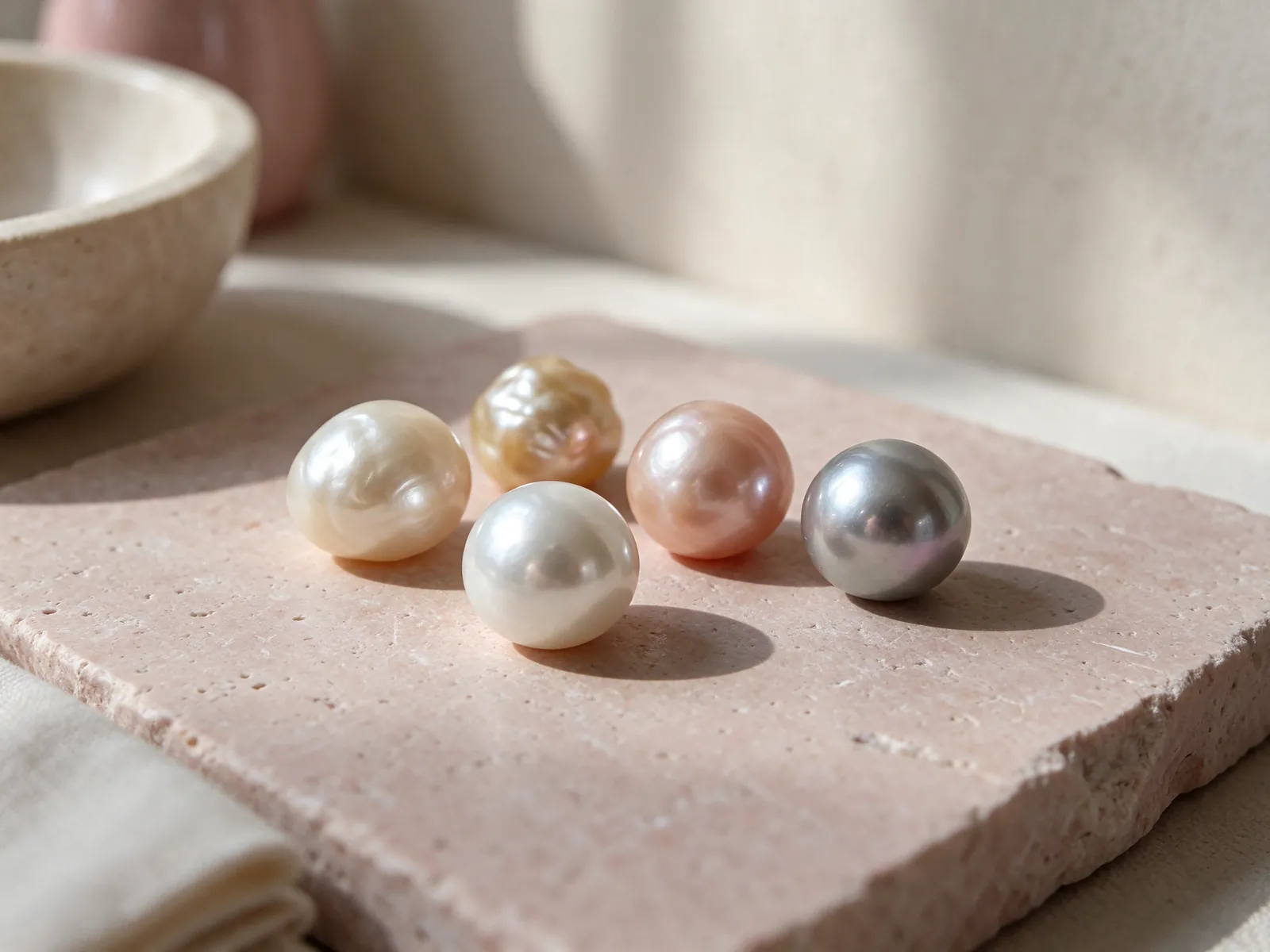
Compare colour and lustre under consistent lighting
Start with an overall view in soft, consistent light, then turn the pearl to examine how colour and reflected light change. With abalone pearls, different colour arrangements, patterns and outlines can make each example visually distinct. Do not choose solely from the most dramatic angle in a photograph. With a white pearl, look beyond the word white: the relationship between colour and lustre can matter more to your preference than the label on the image.
GIA distinguishes bodycolour, overtone and orient, and notes that not every pearl displays all three. This vocabulary helps explain why two white-looking pearls need not create the same effect. GIA also lists seven pearl value factors: size, shape, colour, lustre, surface quality, nacre quality and matching. Use them as a balanced framework for questions, rather than as a scoring system you can apply from a single photograph or a shortcut to identifying origin.
Ask to see surface details without hiding the setting
A colour pattern, a change in outline and a surface blemish are not interchangeable descriptions. Look at several angles, including the areas near the setting, before deciding which details you find appealing. Do not assume every variation is damage or that every visible mark is desirable character. Consider whether a feature is noticeable at normal wearing distance and whether the mounting leaves your favourite part of the pearl visible.

Choose a layout that supports the pearl rather than conceals it
A single-pearl pendant can give an individual outline room to be seen. If a colour pattern is the reason you like an abalone pearl, consider whether the pendant rests in an orientation that reveals it. Try the piece against the neckline you actually wear, not only against an empty display background. A visually striking front view is less useful if fabric, a collar or the way the pendant turns hides the detail during everyday movement.
For earrings or a multi-pearl arrangement, matching becomes especially relevant. With white pearls, compare not only colour but also apparent size, shape and lustre across the group. With abalone pearls, coordination need not mean identical patterns: a related colour emphasis or compatible outline may create a considered pair. Decide whether you prefer symmetry or a deliberate variation. Neither preference establishes a universal quality hierarchy between the two kinds of appearance.
Confirm whether the feature is a pearl or shell material
An iridescent abalone shell element and an abalone pearl are different objects. Flatness or a marine colour palette alone is not a reliable material identification. The comparison abalone pearl vs abalone shell is helpful before discussing how a pendant should be arranged. Both appearances can be appreciated, but the description should distinguish the material clearly rather than using pearl as a decorative label for shell.

Make the wardrobe decision with the clothes you wear most
For an office wardrobe of white shirts, warm neutrals and dark jackets, white pearls can place the emphasis on reflected light and a clean outline. If the pearl sits against similarly coloured fabric, check whether enough contrast remains to see it clearly. A darker neckline may reveal the detail more effectively. This is a styling decision, not evidence of Akoya identity, and a formal outfit does not require every pearl to be perfectly round.
When the interest lies in an abalone pearl's colour and pattern, a simpler top can leave room for that variation. Look at the combination in daylight and indoor lighting before deciding it works for both daytime meetings and dinner. If an outfit already has a print, bright buttons or layered jewellery, reducing the number of competing accents can make the pearl easier to appreciate. Matching every accessory to the same marine colour is not essential.
For gifts, choose an aesthetic the recipient already enjoys
Notice whether the recipient usually wears small earrings, a single pendant or repeated elements, and whether they prefer consistency or expressive outlines. Individuality does not guarantee that an abalone pearl will be the right gift, just as white does not mean impersonal. If the story matters, provide a clear material description; if everyday use matters most, put their favourite necklines, hairstyle and usual colours ahead of a claim that one appearance is more special.

Treat value and documentation as specific questions
Do not assume that abalone must be more expensive, that white must be more valuable, or that either is an investment. Compare the individual pearl and the jewellery as a whole, alongside how often you expect to wear it. The GIA factors provide useful questions about appearance and quality, but they do not supply a universal price ranking for this comparison. Words such as rare or classic should not replace a clear explanation of the material.
Geographical wording also deserves careful reading. Japanese pearls vs Akoya pearls explains why a place-related expression and a pearl type should not be treated as interchangeable. If you want to broaden the comparison beyond Akoya, what are South Sea pearls offers another category to explore. Neither a country name nor a white appearance should become a shortcut for assigning an individual pearl to a type without a clear description.
Read only the conclusions a report actually gives
If a report accompanies a pearl, first make sure the described object corresponds to the piece you are considering. Then read the listed conclusions individually. An institution's name on a document does not let you add an unstated origin, treatment status or grade. Documentation answers the questions it addresses; your preference for a particular outline, colour arrangement or balanced pair remains a separate judgement.

Plan care around the way the jewellery will be worn
GIA lists pearl at 2.5 on the Mohs hardness scale. That number is a reminder to avoid abrasion, not a prediction of how many knocks a piece will survive. With a pendant, consider contact with zips and other jewellery; with a ring or bracelet, consider repeated contact with desks and hard objects. Placement and daily habits matter, and neither white colour nor an abalone name establishes a guarantee of durability.
After wearing, use a very soft, clean cloth. GIA advises against ultrasonic or steam cleaning for pearls and warns about acids, perfume, hair spray and excessive heat. Finishing fragrance and hair styling before putting on the jewellery helps reduce contact. Store pearls so they do not rub against harder pieces. These practical habits support careful use without promising permanent colour, waterproof performance or a fixed lifespan.
Keep the description and the care routine together
Save the material description and any accompanying report for future reference or gifting. If a strung pearl piece is cleaned with water, GIA says the string must be completely dry before wearing; a dry-looking pearl surface is not the same as a dry string. The final choice should combine an appearance you enjoy, an identity you understand and a care routine you can follow, whether the attraction is individual abalone character or a coordinated white-pearl look.
Do you prefer an individual abalone outline or a coordinated classic white-pearl look? WhatsApp +85260106207 to speak with Flint Jewellery about your wardrobe, the person you are choosing a gift for, or your pearl questions. Start with the appearance you enjoy and a clear material description.
| Decision | Abalone / pāua pearls | Classic white pearls, including Akoya | Useful action |
|---|---|---|---|
| Identity | Pāua is associated with New Zealand abalone naming | White is a colour, not an Akoya identity test | Read type, origin and formation separately |
| Appearance | Individual colour, shape and pattern can guide the design | Observe lustre, shape and colour nuances | Compare several angles in consistent light |
| Layout | A focal pearl can show an individual outline | Repeated elements can emphasise coordination | Try the piece with your usual neckline |
| Quality | Strong colour is not the only consideration | Roundness is not the only consideration | Use GIA's seven value factors as a framework |
| Care | Avoid abrasion and unsuitable cleaning | Apply careful pearl handling too | Do not use ultrasonic or steam cleaners |
Pearl knowledge and authoritative references
GIA identifies seven pearl value factors: size, shape, colour, lustre, surface quality, nacre quality and matching. They offer a broader comparison than colour or roundness alone.
Read the reference for this factFrequently asked questions
Is classic white a recognised pearl type on its own?
It describes an appearance rather than establishing a type. Akoya is included in the classic white comparison, but the word white alone cannot identify an individual pearl as Akoya.
Can I identify pāua from a blue-green photograph?
No. Colour can help you decide whether you like an object, but it cannot establish that it is a pāua pearl, prove its place of origin or determine natural or cultured formation.
What should I compare first in a pair of white-pearl earrings?
Look at the pair together for compatible shape, apparent size, colour and lustre. Then inspect individual surfaces. An isolated close-up of one pearl does not show how well the pair works when worn.
Does a more unusual outline automatically make a pearl better?
No. An individual outline may be attractive for a focal pendant, while consistency may suit another design. Consider the full quality framework and the intended layout rather than turning shape into a universal ranking.
Should a strung pearl necklace be worn as soon as its surface looks dry?
If it has been cleaned with water, the string must be completely dry before wearing, as GIA advises. The visible pearl surface does not tell you whether the string has dried throughout.
Updated: