

Learn how to clean pearl clasps and earring posts with a soft cloth: a gentle routine for pearl necklace clasp cleaning and pearl earring post care
Remove the jewellery and place it on a clean, stable surface with soft support. Have a small tray ready for normally removable backs, and choose a dry, soft cloth free from grit or cleaning-product residue. A cloth previously used with metal polish is not suitable for this routine. Support an accessible metal area close to where you are wiping; do not use the pearl as a handle or pull against the strand. Gently wipe exposed surfaces, moving to a clean part of the cloth if it picks up residue. The aim is modest after-wear care, not polishing the fitting to a new finish.
WSP’s public pearl care guide also recommends including clasps and earring posts in the after-wear wipe. Keep the whole construction in mind when applying that advice: cloth edges and liquids can reach nearby pearls, glued connections or string. The pearl care guide places this small task alongside care for pearl surfaces and storage. Accessibility is a useful boundary. If reaching a surface means bending the post, moving the pearl or drawing the strand tight, leave that area alone. A cleaning method used for an unattached metal object is not automatically appropriate for an assembled piece of pearl jewellery.
When residue persists: how to clean pearl clasps and earring posts and when pearl necklace clasp cleaning or pearl earring post care need assessment
Pause when a gentle wipe does not remove a mark. Note whether it is on the metal, at a connection or on the pearl itself, and whether the fitting behaves differently during normal use. Do not scrape it with a fingernail or probe it with a pointed tool. If the cloth catches or a part moves unexpectedly, stop. Describing the location and the change is more useful than trying a succession of stronger cleaning products.

Necklace clasps: support the strand before wiping the outside
For pearl necklace clasp cleaning, lay the necklace flat with the strand supported. Once it is unfastened in the normal way, gently wipe the visible clasp face and easily reached outer connecting surfaces. Do not hold the necklace suspended from its clasp or grip a knot to steady the metal. Keep cloth edges clear of narrow gaps that can catch. Hidden springs and internal mechanisms are not cleaned by pushing a cloth corner, brush or pin into the casing. If a fibre or deposit lies inside a connection, note where it is rather than tugging it free against the strand.
A cleaner surface does not confirm that a clasp closes securely. If it no longer fastens as usual, a connecting part shows an obvious gap or the necklace has come undone during wear, set it aside. The topic of pearl necklace clasp replacement helps distinguish a possible fitting change from simple surface care. Avoid squeezing a connector shut or applying oil to encourage movement. The clasp and its attachment to the strand need to be considered together before a next step is chosen.
Check how your collar, scarf and hair meet the clasp
A high collar or scarf can hide the clasp while you take a necklace off. Move the fabric aside so you can see and support the fitting rather than pulling through it. Long hair can also bring styling-product residue close to the back of the necklace. When choosing jewellery, ask to understand the fastening action and consider whether you can manage it comfortably with your everyday clothing. This is a practical selection question, not just a matter of how the necklace looks from the front.

Earring posts and backs: normal removal is not disassembly
Pearl earring post care begins after the earring is off your ear. Take off a back only if that is part of its normal wearing action, place it in the tray, then wipe its accessible exterior and the exposed post with a clean, soft cloth. A removable back does not mean the pearl or fixed setting can be dismantled. Support the metal without rotating the pearl or pushing it aside to reach the post base. Material at the junction might be residue or part of the attachment; appearance alone cannot settle that. Leave it intact, and stop if normal removal meets resistance.
If your pearl earring silicone cover came off, treat the missing or displaced component as a fitting issue, not as extra cleaning access. Keep the earring and any remaining parts together, and avoid wearing it without the component that normally secures it. Different backs can look similar without sharing the same attachment. Describe which side is affected and whether you found the loose part; do not select a replacement by appearance alone or try to hold it in place with glue.
A soft-cloth wipe does not disinfect a post
Routine wiping addresses accessible residue; it is not a disinfection procedure. A shiny post is also not proof that an earring will suit every wearer. Do not apply an alcohol wipe or disinfectant spray simply because the exposed part is metal. If you have a particular hygiene concern, ask about a treatment appropriate to the entire earring before proceeding. If wearing it causes discomfort, stop wearing it rather than testing whether harder rubbing or stronger chemicals make a difference.
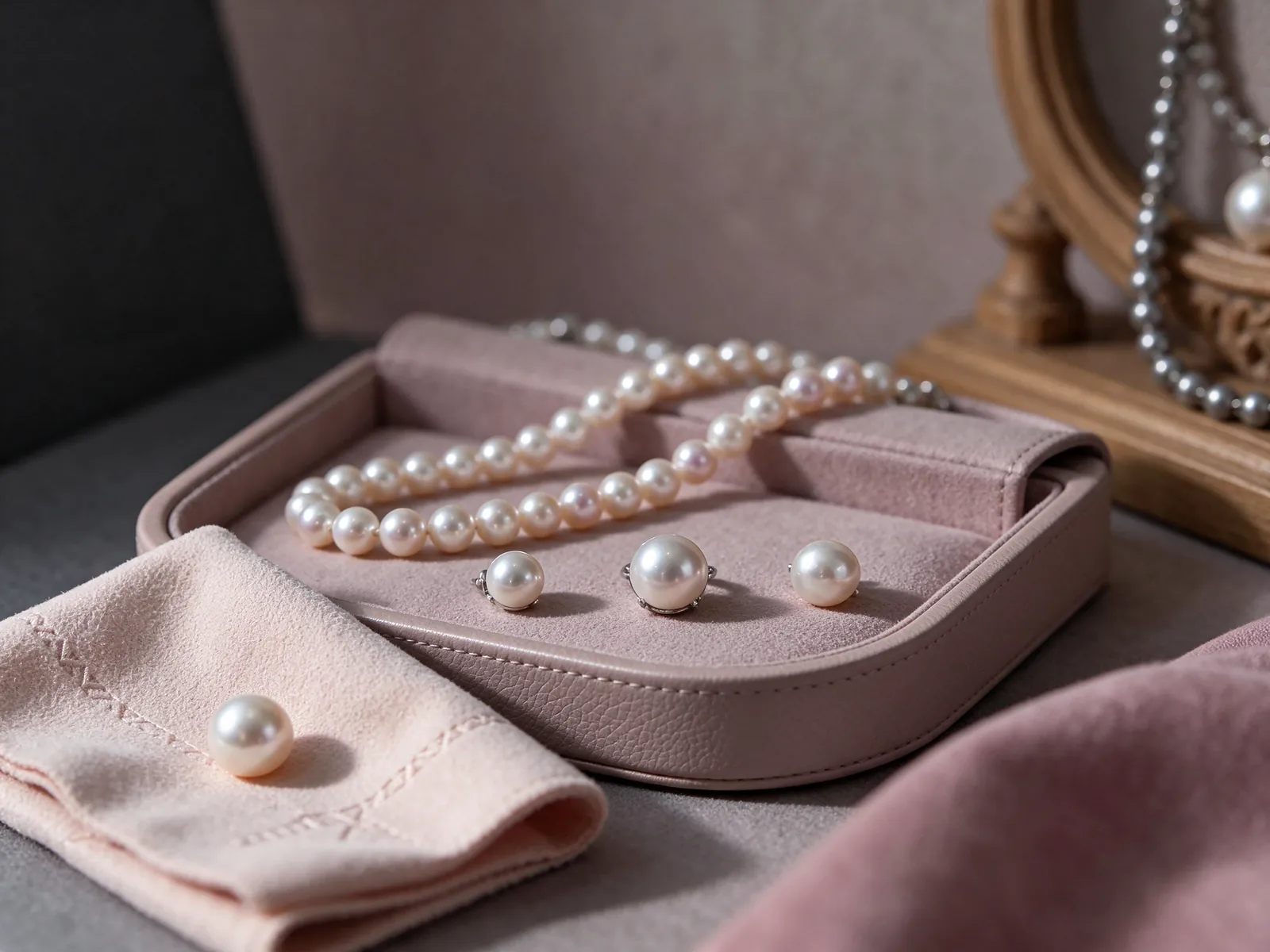
Locate the mark before deciding what needs attention
Locate the mark in clear, ordinary light before selecting a care approach. GIA lists pearl at 2.5 on the Mohs hardness scale and notes that pearls scratch easily. That number does not specify a safe wiping pressure. An abrasive metal-polishing cloth, stiff brush or polishing paste can contact the pearl beside a fitting, even if you start on the metal. GIA also states that pearls should never be cleaned in ultrasonic or steam cleaners. A clasp does not make either machine suitable for the complete necklace. Unknown attachments are another reason not to experiment with heat or chemical cleaners.
When the mark is actually on the pearl, how to remove stains from pearls is the more relevant subject. If the concern is an overall change in appearance, how to care for dull pearls considers a different question from cleaning a post. Do not assume either observation is transferred metal residue and experiment with a metal-brightening product. Comparing the same area in similar light can help you describe it, but differences caused by viewing angle do not establish damage or a successful restoration.
Do not make a mirror finish the goal
A fitting’s existing finish and wear marks may remain after accessible residue has been wiped away. The practical aim is gentle surface care and noticing changes in normal fastening, rather than producing a mirror finish. Do not escalate to toothpaste, polishing paste or household stain removers around an attached pearl. Any further metal work, including polishing, heating or soldering, needs assessment of the whole piece first. The person handling it must be able to consider the pearls, glued or set connections and any string, rather than receiving a request to treat the clasp as isolated metal.
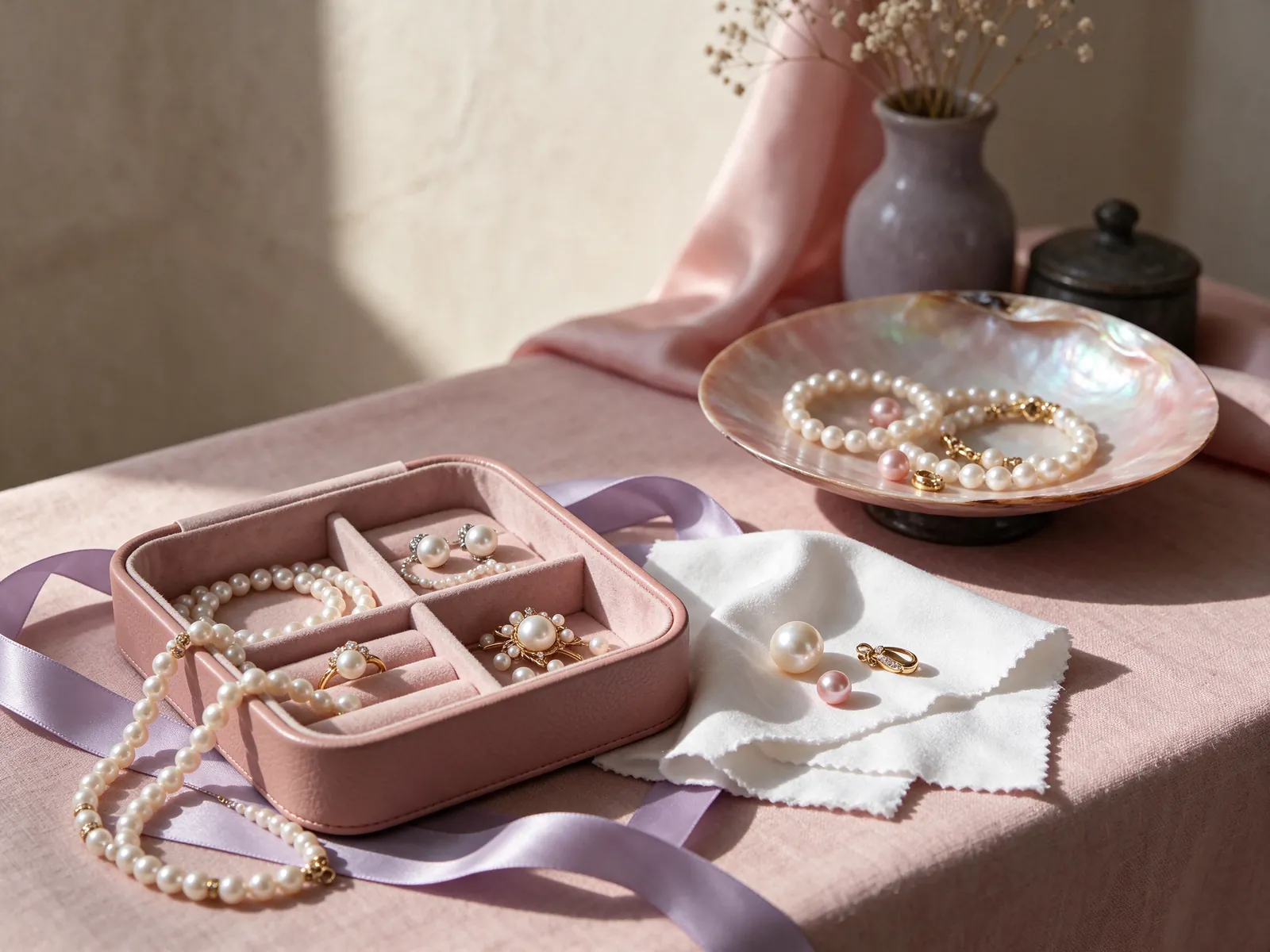
Use your dressing routine to reduce avoidable residue
Apply perfume, hair spray and skin products before putting on pearl jewellery, allowing them to dry or absorb first. Avoid spraying towards an earring or the clasp behind your neck. Remove the jewellery before taking off make-up, washing your hair or showering; products intended for skin are not automatically suitable for earring posts. When changing clothes or arranging long hair and a scarf, keep the fittings visible and supported. If your hands still carry lotion, wash and dry them before handling the piece. Limiting product contact is easier to control than trying to clear residue from a narrow junction later.
When planning an outfit, check whether a collar presses against the earring backs or a scarf knot repeatedly catches the clasp. Contact does not automatically mean damage, but repeated pulling is a reason to reconsider the arrangement. Do not tighten a back excessively or force a clasp to accommodate the fabric. Adjusting the collar, hair or jewellery placement is a more practical response. After an outing, gently wipe the accessible parts; greater perspiration is not a reason to scrub more firmly.
Make the after-wear step easy to repeat
Keep a clean cloth and a secure tray where you normally remove jewellery. Place backs in the tray before wiping so that small components do not roll away. Looking at the fitting and cloth first helps you notice a changed knot or loose part before rubbing over it. There is no universal number of seconds or repeated passes for cleaning. Finish once accessible surfaces have been gently wiped, or stop earlier if anything catches or moves. Away from home, separate and protect the jewellery until a suitable cloth is available rather than improvising with a sleeve, tissue or unfamiliar cleaner.
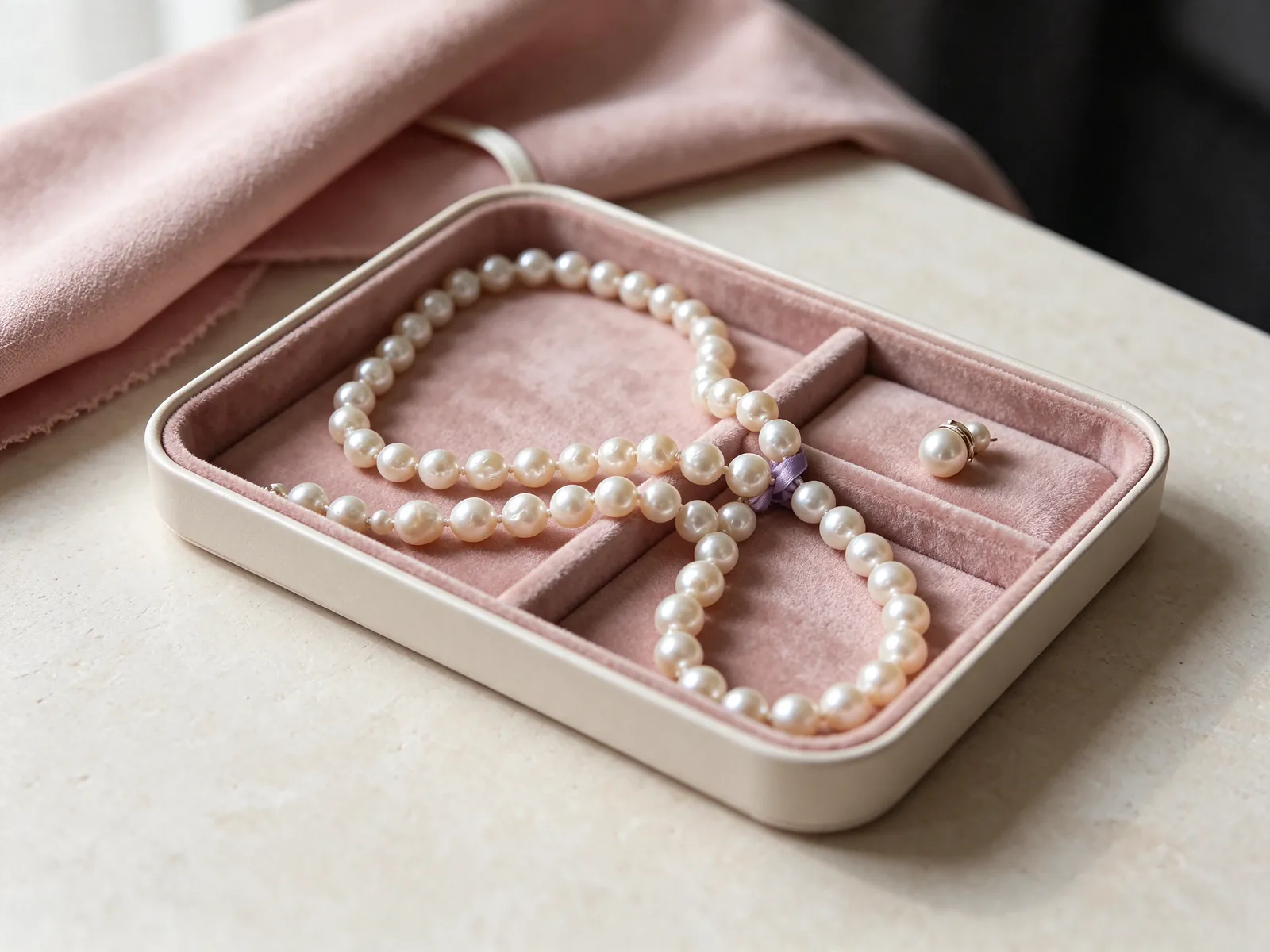
Store the fittings so they do not press against the pearls
After wiping, arrange the necklace, earrings and removable backs separately rather than crowding them into one compartment. Provide soft support and position exposed posts and clasps away from pearl surfaces; keep the two earrings from knocking together. Guidance on how to store pearls explains separation and scratch prevention. Soft lining cannot offset an overfilled box, and the direction of metal fittings matters inside a pouch too. If the piece has accidentally become wet, do not use hot air to dry it or hide it in a box as a substitute for dealing with moisture. String drying needs separate attention.
Before putting a necklace away, look at the point where the clasp meets the strand without pulling on it. A changed knot, different spacing or altered string appearance is a separate concern from a dirty clasp. The question of when to restring a pearl necklace is about the strand's condition, not a fresh usage period earned by cleaning the metal. GIA says that string must be completely dry before wearing if strung pearls have been cleaned with water. This guide uses dry-cloth care rather than soaking to address fittings.
Keep loose backs out of the bottom of a travel bag
For travel, organise the earrings and removable backs on a stable surface before closing the case. Do not leave small parts loose among cosmetics, hair clips or keys. Open the case on a flat surface too, rather than shaking it to locate a missing back. If a fitting has been caught or pulled during the journey, keep it as it is and describe what happened. Borrowed hotel cleaning products and improvised tools are not a suitable shortcut.
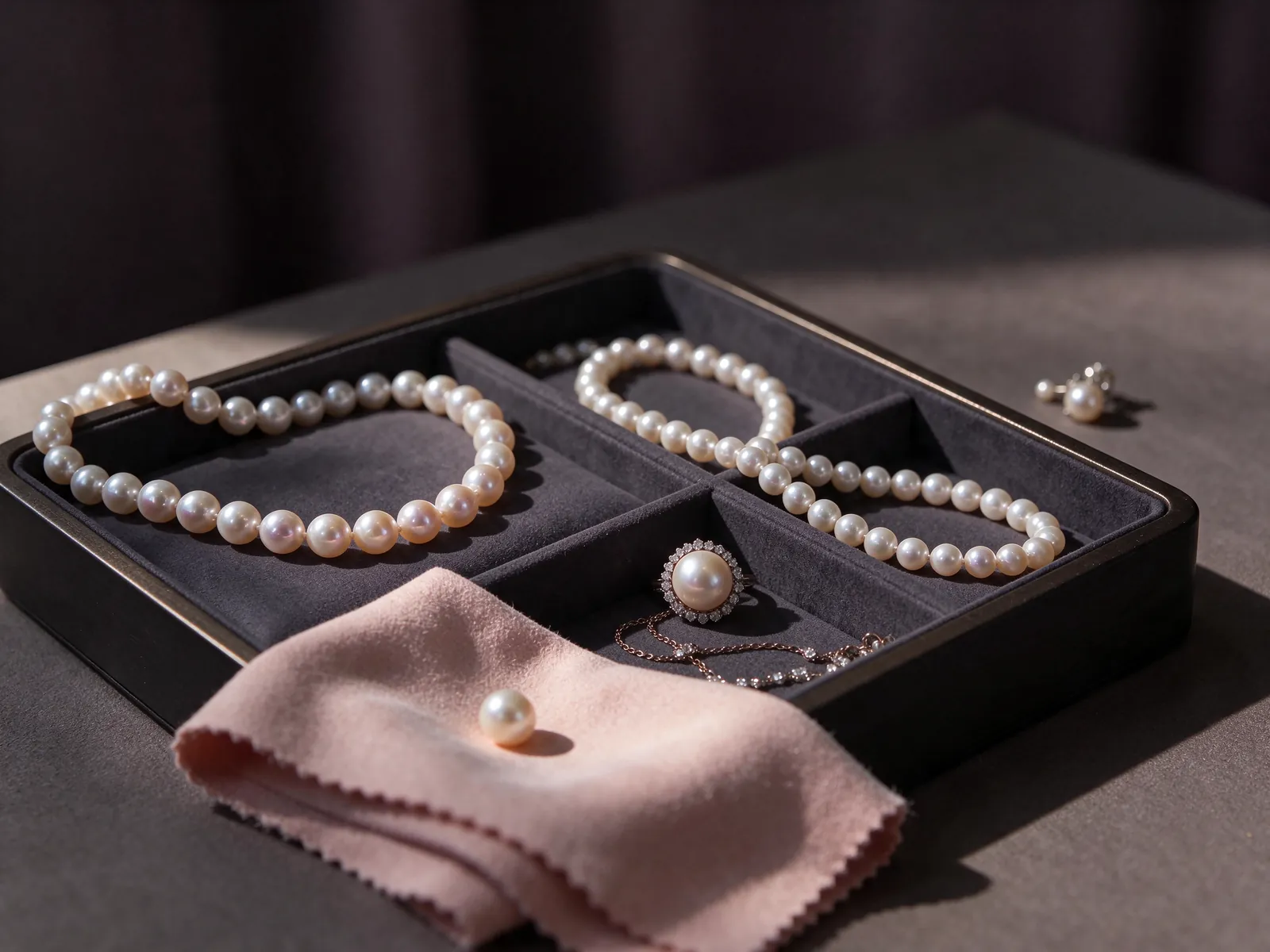
Ask about everyday handling when choosing or assessing a piece
Selection should include the parts you handle, not only the visible pearl arrangement. Ask how the clasp fastens, whether a back comes off during normal wearing and which surfaces can be wiped without moving a fixed component. A simple-looking design can still have a small connection, while a decorative one is not necessarily difficult to care for. If you often wear high collars or find small backs hard to hold, discuss those habits rather than inferring the fastening from a photograph.
For an existing piece, clear photographs of the front, side and nearby pearl can help explain where a problem sits. Say whether the issue is persistent residue, an insecure fit or resistance during normal removal. Do not dismantle or polish it to prepare the photographs. Images support a conversation, but they cannot replace checking the actual connection, moving parts and string. Cleaning and repair may address different needs, so explain the symptom rather than deciding in advance that the fitting merely needs a stronger cleaner.
Describe the change before discussing a next step
When enquiring with Flint Jewellery, say when the piece last worked normally, when the change appeared and whether perfume or a cleaning product touched it. Name any product already tried and keep detached components with the jewellery; there is no need to test another cleaner before asking. WhatsApp can be used to discuss care questions and share clear views of the affected area. Photographs help locate a concern, but the next step still depends on the actual piece. Wiping cannot secure a loose connection or straighten a bent post, so distinguish routine care from a fitting that needs attention.
| Area observed | Routine action | Reason to stop | What to assess |
|---|---|---|---|
| Exposed clasp face | Support the strand and wipe gently with a clean, soft cloth | Cloth catches or fastening changes | Clasp and connection to the strand |
| Post and removable back exterior | Wipe accessible surfaces after removing the earring | Post moves or back no longer secures normally | Residue versus a fitting problem |
| Pearl-to-metal junction | Observe without pushing the pearl or inserting tools | Persistent material or unexpected movement | The complete earring or necklace |
| Mark on the pearl | Identify its location; avoid metal-polishing products | A gentle wipe does not change the mark | Pearl staining or overall appearance |
| String beside the clasp | Look while the strand is supported; do not pull-test | Changed knots, spacing or string appearance | Strand condition rather than metal cleanliness |
Pearl knowledge and authoritative references
GIA lists pearl at 2.5 on the Mohs hardness scale. This supports avoiding scratches to the pearl while wiping an adjacent clasp or post; it is not a formula for safe wiping pressure.
Read the reference for this factFrequently asked questions
Can I use an alcohol wipe if I touch only the earring post?
Do not treat a post attached to a pearl as an isolated metal object. The wipe or liquid can reach a connection or the pearl, and the construction may not be evident from appearance. Use a clean, soft cloth for ordinary wiping and ask about whole-piece treatment if you have a particular disinfection concern.
Should I open a clasp repeatedly to clean its internal mechanism?
No. Wipe the accessible outside after normal removal, without probing the mechanism or repeatedly operating it as a cleaning technique. If fastening feels different, stop and describe that change. Surface cleaning does not establish that an internal component is working reliably.
Does a removable back mean the pearl can also be removed for cleaning?
No. Taking off a back in the normal wearing action does not authorise dismantling the post, pearl or fixed setting. Keep the pearl-to-metal connection intact and leave inaccessible residue for assessment. Stop if normal removal meets resistance or something moves unexpectedly.
Why does the clasp still look dull after wiping?
Existing finish and wear can remain after surface residue has been wiped away. A mirror finish is not the objective of routine pearl care. Do not escalate to polishing paste or abrasive rubbing; further metal treatment needs to account for the nearby pearls and their connections.
What should I record before asking about a loose fitting?
Describe which part is affected, when it last behaved normally and what changed during wearing or removal. Clear views of the fitting and adjacent pearl can help communication. Keep the components together, do not dismantle them for a photograph, and mention any cleaning product already used.
Updated: