
Japanese Akoya vs freshwater pearls: how do growing environments explain the difference between Akoya and freshwater pearls?
The useful starting point is that this guide compares Akoya and freshwater cultured pearls. This is not a comparison between genuine pearls and imitation beads. Their categories reflect different growing environments and different pearl-producing molluscs: Akoya belongs to saltwater cultivation, while freshwater pearls belong to freshwater cultivation. For a fuller introduction, what are Akoya pearls explains the category before you begin evaluating an individual piece of jewellery.
An environment tells you about classification, but it does not tell you how a particular pearl will look beside your face or against your favourite shirt. Read what are freshwater pearls for the other side of the comparison, and freshwater vs saltwater pearls for the broader distinction. Keeping these categories separate also prevents the mistaken assumption that every saltwater pearl is Akoya. Start with the names, then move to the actual candidates.
Japanese Akoya vs freshwater pearls: why does the difference between Akoya and freshwater pearls in growing environments not determine individual quality?
Two pearls with the same type name can still have different surface appearances, shapes and lustre. Equally, candidates from different categories can each offer features you enjoy. Avoid giving one piece an automatic advantage before looking at it. Decide whether you want a crisp visual accent, a gentle colour impression or an expressive outline, then compare those qualities directly rather than asking the category to make the decision.
Compare lustre and colour in conditions that make sense
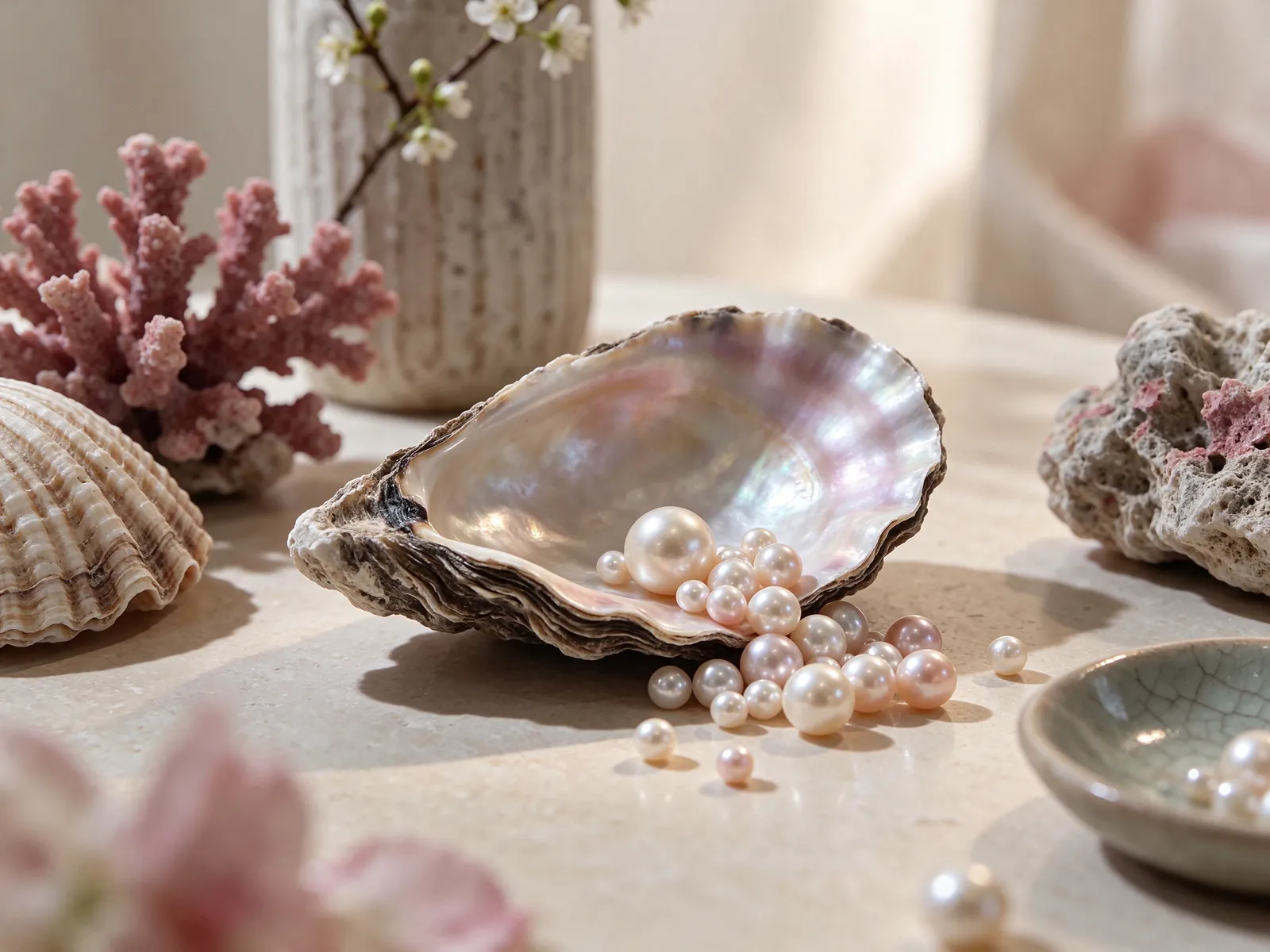
For lustre, look at the reflections on the pearl rather than the overall brightness of the photograph. Notice whether reflected edges appear clear and whether you like the light-and-shadow contrast as the piece moves. Exposure and lighting can make one image look much whiter than another. A bright studio photograph and a dim phone picture are therefore poor starting points for a confident quality comparison.
GIA distinguishes bodycolour, overtone and orient, and notes that not every pearl displays all three. For styling, first identify the main colour impression, then notice any additional colour effect as you change the viewing angle. A pinkish or warm appearance may suit your clothes, but an image alone does not establish that a colour is untreated, identify the pearl's origin or confirm its cultured identity.
Try your regular shirt as a background
A familiar white shirt helps you judge subtle colour differences, while a dark top lets you assess the pearl's outline and presence. Use the same garment and similar lighting for both candidates wherever possible. If a piece only appeals in a tightly cropped photograph, also consider how it looks at a normal conversational distance. Jewellery should work in your wardrobe, not just in an isolated close-up.

Shape and matching matter differently in earrings and necklaces
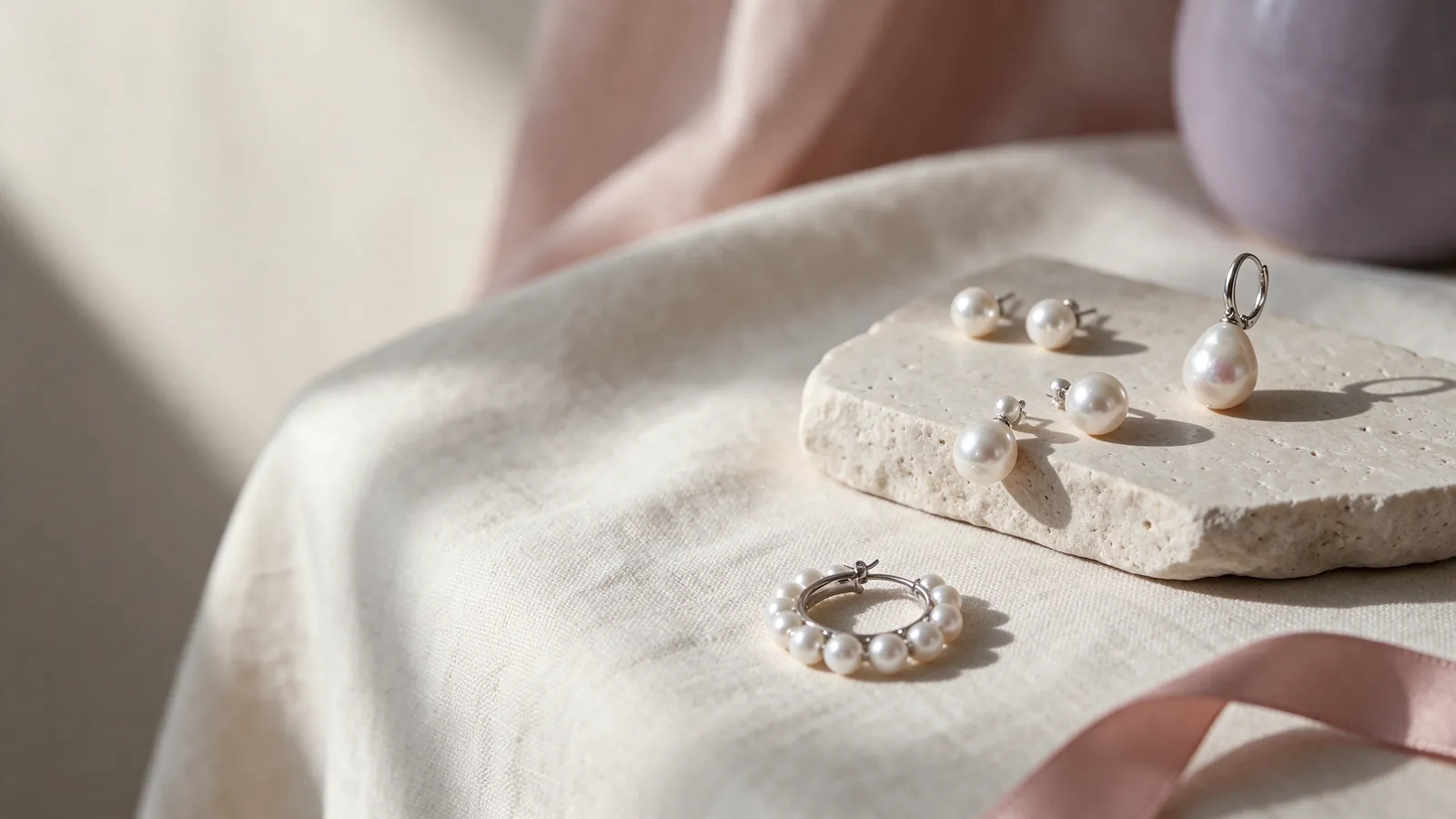
A round outline is a style choice, not a requirement for every wearer. For symmetrical earrings, assess whether the two pearls feel balanced in visible size, colour and outline. If you prefer irregular shapes, look for a pleasing relationship between their lines rather than insisting on identical contours. Neither preference can be resolved by selecting a pearl category alone, and a front-facing photograph cannot show every part of a surface.
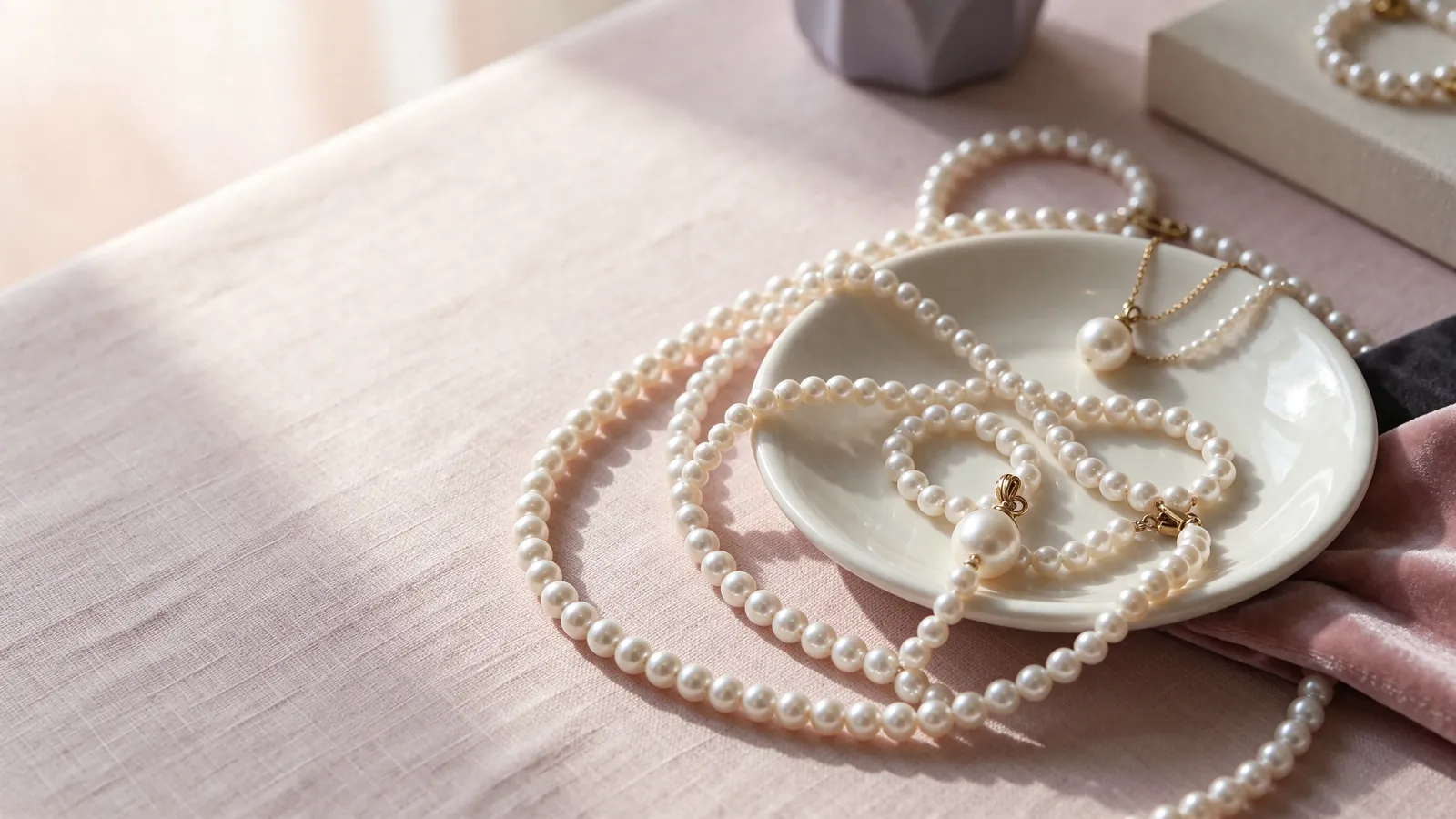
For a necklace, move your attention along the whole arrangement. One attractive pearl does not tell you whether the remaining pearls create a harmonious sequence. For a pendant, focus on the visible face of the principal pearl and its relationship with the setting. Enlarged images are useful for surface details, but return to ordinary viewing distance before deciding how much those details matter to your enjoyment.
Use GIA's seven factors as a question list
GIA identifies seven pearl value factors: size, shape, colour, lustre, surface quality, nacre quality and matching. This is a more useful framework than a single type-based ranking. Some factors require more than a photograph to assess, particularly nacre quality. Matching is especially relevant to jewellery containing several pearls. Using the list to organise your questions does not mean a particular item has been graded or certified by GIA.

Separate Japanese naming, cultured identity and nucleation
The word Japanese and the word Akoya answer different questions. When reading a description, establish whether a place name refers to origin, processing or simply part of the item's name. Japanese pearls vs Akoya pearls explores that distinction. If geographic origin matters to your purchase or gift, look for an explicit description of the individual piece; its packaging, colour or classic styling cannot supply missing geographic information. GIA notes that Akoya pearls are produced in Japan and China, while China is the main source of freshwater cultured pearls. Akoya therefore does not mean exclusively Japanese origin, and the category cannot establish the origin of an individual item.
Cultured describes human involvement in pearl formation; it does not mean imitation. Nucleation is a separate technical question, and the freshwater label should not be used as a complete answer about internal structure. The discussion of bead-nucleated vs non-bead-nucleated freshwater pearls provides a more focused route into that subject. For a specific piece, rely on clear information rather than trying to infer its construction from its silhouette.
Read each statement for what it actually establishes
Check the pearl type, cultured identity, stated origin and any treatment information as distinct entries. If a document accompanies the piece, consider whether it identifies that piece and what it says, rather than treating its presence as an answer to every question. A colour description cannot replace an origin statement, and a type name cannot establish a certificate. Keeping the questions separate makes discussions with a jeweller more precise.

Let your neckline and occasion guide the shortlist
For office dressing, consider how earrings sit beside a shirt collar and your usual hairstyle. A detailed collar may work best with a restrained outline near the face, whereas a plain top can accommodate a stronger visual accent. These are questions of proportion rather than rules assigning one pearl type to workwear. Compare the actual silhouette and reflection, then decide whether the result feels comfortably polished for you.
For a wedding or evening event, assess the relationship between the neckline, earrings and necklace before concentrating on the pearl label. Strong earrings do not necessarily need an equally prominent necklace. A simple neckline may instead give a neckpiece room to become the focal point. For a gift, find out whether the recipient normally wears earrings or necklaces and whether they enjoy symmetry or more organic forms.
Repeat the same outfit test for both candidates
Compare your shortlisted pieces with the same clothing, hairstyle and viewing distance. Look at the overall balance first, then inspect details. Imagine adding a jacket or sitting down, not just standing for a close-up. If one candidate wins on pearl detail but feels awkward with the clothes you actually wear, that mismatch deserves attention. The most appealing category on paper may not be your best everyday choice.
Budget for the features you value, not a fixed multiplier
A fixed price multiplier cannot describe every Akoya and freshwater comparison. Two pieces may differ in pearl appearance, number of pearls, matching, setting design and metal content. Attributing the entire price difference to the pearl type hides these distinctions. Before comparing quotations, understand what each covers, then identify which visible or practical feature you would actually pay more to obtain.
Make a short list of essentials and preferences you can compromise on. Essentials might include a balanced pair of earrings, a particular colour impression or a shape that suits your regular neckline. Decorative details you feel less strongly about can sit in the second group. If your shortlist needs a broader perspective, the pearl types guide helps you place these two categories alongside other pearl types without turning the exercise into a hierarchy.
Ask a question that refers to the actual jewellery
Instead of asking which type is more prestigious, ask how the candidates differ in colour, matching or visible surface characteristics at wearing distance. Ask whether the outline works with your preferred collar. Specific questions produce more useful answers than broad status comparisons. If an important detail remains unclear, you can keep considering your options rather than letting a familiar type name stand in for the missing information.
Plan care around pearls, whichever category you choose
GIA lists pearl at 2.5 on the Mohs hardness scale. That number is a reminder to consider scratching, not a promise about how long jewellery will last. Store pearls so that they do not rub against other pieces, and wipe them with a very soft, clean cloth after wearing. A realistic routine is more helpful than assuming one category can be treated carelessly because it sounds more durable.
GIA advises never using ultrasonic or steam cleaners for pearls. Avoid acids, perfume, hair spray and excessive heat. Finish fragrance and hair styling before putting pearls on, and remember that settings and stringing also need consideration when cleaning. If strung pearls have been cleaned with water, the string must be completely dry before wearing again; a dry-looking pearl surface does not show whether the string has dried.
Check that the choice fits your actual routine
Before deciding, picture when you will wear the piece, which clothes it will accompany and how you will store it afterwards. A candidate that fits those habits may be more rewarding than one chosen primarily for its label. Understanding the Akoya and freshwater distinction helps you ask better questions; your final choice should come from the individual jewellery's appearance, clear information and compatibility with daily life. To discuss the comparison around your usual neckline, preferred colour or gift occasion, contact Flint Jewellery on WhatsApp +85260106207 and tell us which pearl features matter most to you.
| Comparison point | Reading an Akoya description | Reading a freshwater description | Fair comparison method | Buying or styling purpose |
|---|---|---|---|---|
| Growing environment | Saltwater cultivation category | Freshwater cultivation category | Do not convert environment into a quality rank | Understand classification before judging the piece |
| Lustre and colour | Assess the individual pearl's reflections and colour | Assess the individual pearl's reflections and colour | Use similar light and backgrounds | Test against clothing you regularly wear |
| Shape and matching | Look at outlines and harmony between pearls | Look at outlines and harmony between pearls | View the pair or whole arrangement | Choose symmetry or expressive lines to suit your taste |
| Origin and other information | Type naming does not answer every origin question | Type naming does not settle nucleation or treatment | Read each explicit statement separately | Useful when a gift has a specific origin requirement |
| Budget and care | Compare the contents of the actual piece | Compare the contents of the actual piece | Avoid fixed multipliers; protect both categories | Choose jewellery you will wear and care for |
Pearl knowledge and authoritative references
GIA identifies seven pearl value factors: size, shape, colour, lustre, surface quality, nacre quality and matching. They offer an individual assessment framework rather than a pearl-type hierarchy.
Read the reference for this factFrequently asked questions
Are freshwater pearls imitation pearls because they are not Akoya?
No. This comparison concerns two cultured pearl categories, not pearls versus imitation beads. Different environments and pearl-producing molluscs do not make freshwater pearls artificial substitutes. The identity of a specific piece should still be described explicitly.
Can a brighter online image prove better lustre?
Not by itself. Lighting, exposure and backgrounds affect brightness. Look for comparable images, examine reflections and also consider normal wearing distance. A whiter photograph is not automatically evidence of superior lustre.
What should I prioritise in a balanced pair of pearl earrings?
Compare visible size, outline, colour and reflections across both earrings, then inspect surface details. Sharing a pearl category does not guarantee pleasing matching. For irregular shapes, complementary lines may matter more to you than identical contours.
Does Japanese Akoya wording explain origin and treatment completely?
No. Read pearl type, geographic origin, cultured identity and treatment information as separate statements. Packaging and photographs cannot provide information that the description does not establish.
Is ultrasonic cleaning acceptable for either category?
GIA advises never using ultrasonic or steam cleaners for pearls. Use a very soft, clean cloth for routine wiping and avoid perfume, hair spray, acids and excessive heat. If a string has become wet during cleaning, allow it to dry completely before wearing.
Updated: