

How do proportion and chain choice shape a heart diamond pearl pendant, a pearl pendant with heart bail or a heart motif pearl pendant?
Begin with the whole outline rather than a close-up of the sparkle. A heart may form the bail above the pearl, sit below a separate bail, or appear as a decorative accent. Diamond accents and a heart-shaped diamond are not interchangeable descriptions. When comparing a pearl pendant, identify the chain's route through the design and decide whether you want the pearl or the heart to attract attention first. That makes proportion a practical choice rather than a search for one supposedly ideal size.
For a pearl-led look, check whether the heart covers the upper pearl surface or leaves its reflection visible. For a more expressive motif, look at whether the two lobes and central dip remain recognisable at normal conversational distance. Enlarged photographs can make a small detail appear more prominent than it will be on the body. Try the outline against an open shirt collar and a plain round neckline, then consider whether the chain competes with the design or simply supports it.
Will your chain's end fitting pass through the bail of a heart diamond pearl pendant, a pearl pendant with heart bail or a heart motif pearl pendant?
The widest part of the chain may be its end fitting rather than its links. Compare that fitting's width and thickness with the usable opening, including the angle of entry and any obstruction behind the bail. A broad heart outline does not guarantee a broad internal passage. Stop if fitting requires force, twisting a connector or pressing against the pearl; a jewellery professional can assess the combination without treating resistance as something to overcome.

Read the heart's structure before choosing its style
A pearl pendant with heart bail describes the shape of a chain-carrying component. A separate heart ornament may serve no chain-carrying function at all. Likewise, a part casually called a clasp is not necessarily designed to open. Establish whether the bail is fixed, articulated or explicitly openable before imagining how it will attach to an existing necklace. The ability to change chains depends on the actual construction, not on the romantic meaning of the outline.
An open heart creates different negative space from a filled heart, while small diamonds arranged around a contour read differently from a single heart-cut stone. To explore a quieter, linear alternative, compare the styling ideas of a geometric pearl pendant. A pyramid pearl pendant introduces a more pointed visual direction. These comparisons help you choose between curves and angles without assuming that different motifs share the same attachment, pearl details or proportions.
Use side and back views to understand movement
A front view shows the outline, but the side view reveals spacing between the pearl and heart. The back helps explain the chain's direction. During a fitting, walk gently and see whether the motif turns away or disappears behind the pearl. Also consider the surfaces that touch skin or knitwear. A pendant that looks balanced when held still may present a different face during everyday movement.

Assess the pearl separately from the diamond detail
GIA describes seven pearl value factors: size, shape, colour, lustre, surface quality, nacre quality and matching. For a single-pearl pendant, start with the clarity of reflections and the location of visible surface features. See whether the pearl's shape supports the heart outline rather than judging roundness in isolation. Matching becomes more relevant when you pair the pendant with earrings or other pearls; it should not distract from assessing the individual pearl in front of you.
Colour or shape alone cannot establish pearl origin, natural-versus-cultured identity or certification. Gentle lighting and different viewing angles are more useful for understanding appearance than one highly lit photograph. GIA distinguishes bodycolour, overtone and orient, and not every pearl shows all three. For the diamond description, distinguish the stated total weight of several accents from the weight of a single stone. Neither a heart outline nor an attractive photograph supplies those details on its own.
Balance sparkle without hiding the pearl
Try the pendant first without other decorative necklaces. If the heart already draws the eye, simpler earrings can keep the pearl visible as a separate element. If lustre is your priority, look at whether the metal setting obscures reflections from your preferred viewing angle. Describe the colour and reflection you actually enjoy rather than relying on a broad adjective that may mean different things to different people.
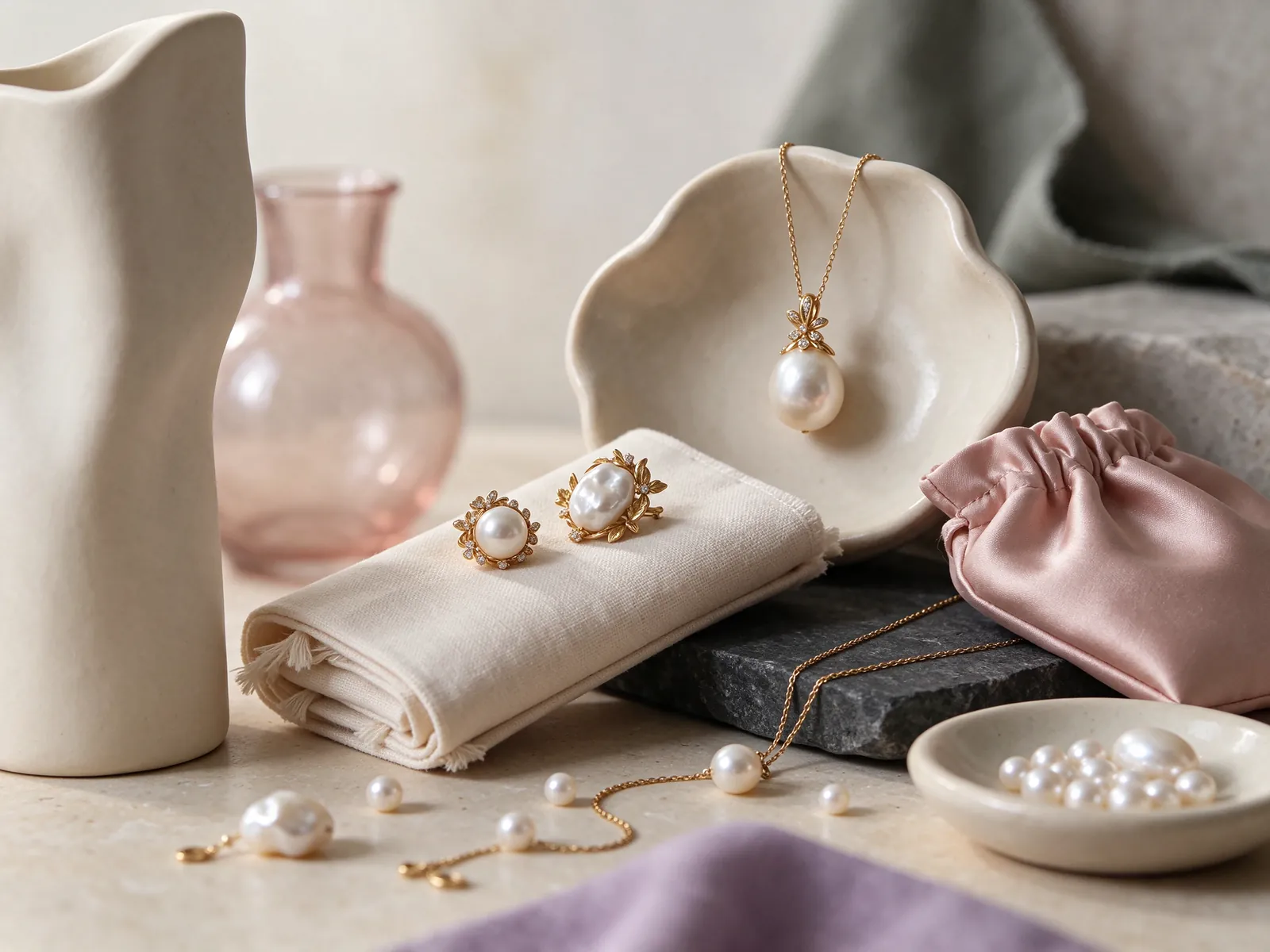
Work with shirt collars, knitwear and evening necklines
With an open shirt, position the pendant in the clear space rather than against a button or overlapping collar edge. With a round-neck top, compare wearing it entirely above the neckline with letting it sit on the fabric; a partly hidden heart can lose its outline. Check the arrangement while sitting and turning, not only while standing still. Coat lapels, scarves and zips can also interfere with the pendant's position or repeatedly touch the pearl.
A plain evening neckline can let the heart and pearl form one deliberate focal point without several competing pendants. On high-neck knitwear, watch for fibres catching around the bail or setting. If you would rather place the pearl detail on a jacket lapel, consider a pearl brooch instead. The guide to how to wear a pearl brooch helps distinguish a fabric-mounted accent from jewellery suspended on a chain; each needs a different approach to placement and movement.
Layer only when the pendants remain separate
Let the heart be the only pronounced pendant and use a simpler chain for the other layer. Lean forward and check whether the chains cross or another metal ornament knocks against the pearl. Adjust the arrangement to your neckline and the actual drop of the pendant, rather than copying a photograph's chain lengths. If it needs constant repositioning, wearing the heart alone may create the cleaner result.
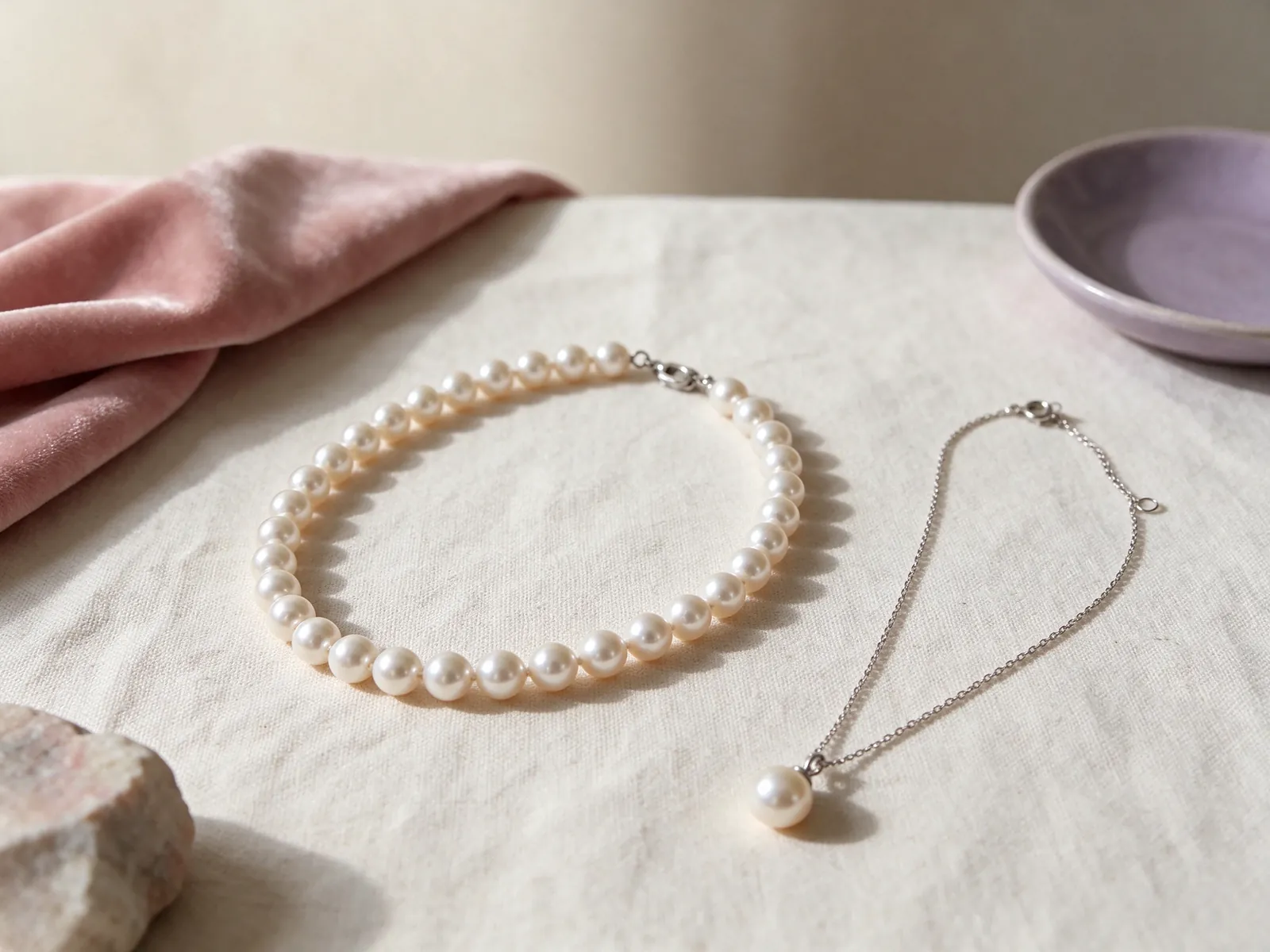
Choose a gift around the recipient's everyday taste
A heart can feel affectionate, but its scale and visibility should suit the recipient rather than the occasion alone. Notice whether they wear discreet single pendants, recognisable motifs or clean metal lines. Someone who enjoys understated jewellery may prefer a heart integrated into the bail; someone who enjoys a graphic detail may want the outline to be obvious. Ask which element they would like to notice first, the pearl or the motif, without assigning the design a fixed identity or promised effect.
For a more playful direction, explore the design questions around an ice cream pearl pendant or an apple pearl pendant. These topics help distinguish light-hearted imagery from a romantic outline, but do not replace checks on chain fit and attachment. Before choosing a pendant to accompany an existing necklace, understand the recipient's usual chain end fitting and preferred neckline. A thoughtful visual choice still needs a workable way to be worn.
Keep the surprise without guessing technical details
Use the recipient's existing metal colours and familiar clothing as a starting point, or ask them to choose between a curved and an angular outline. That gives useful style information without guessing pearl identity or diamond specifications. Explain the gift through their taste and shared memories, not through claims that a heart motif brings health or happiness. Leaving room for their own styling is part of a considerate choice.

Consider the metal tone and the complete chain together
For a metal discussion, the options are 18K 750 white gold, 18K 750 yellow gold, 18K 750 rose gold, PT950 platinum and PT900 platinum. Compare their visual relationship with the pearl and your usual wardrobe rather than treating a metal tone as evidence of pearl type. A warmer or paler frame may change how clearly the heart reads against an outfit. The useful question is whether you like that contrast alongside the chain you intend to wear.
A chain that passes through the opening still needs to move freely and close properly. Look for visible wear at the contact point, a distorted connector or a clasp that does not close securely. Read whether a particular pendant and chain are described together or separately; a styling photograph alone does not establish what is included. If the existing chain is damaged, address its condition before using it to carry another piece of jewellery.
Bring the whole necklace to a fitting
Include both ends of the chain and show the fastening position you normally use. A close photograph of the end fitting and a front-facing outfit photograph can clarify questions about passage through the bail and the desired drop. Mention whether you want the heart above the neckline or on the fabric. Chain thickness alone leaves out several of the practical details that determine a successful combination.

Care for the combined pendant with the pearl in mind
GIA ranks pearl at 2.5 on the Mohs hardness scale and says pearls should never be cleaned in ultrasonic or steam cleaners. Diamond accents do not make those methods suitable for the whole pendant. After wearing, gently wipe the pearl with a very soft, clean cloth. Avoid acids, perfume, hair spray and excessive heat. Do not scrub the heart's edges in a way that drags dirt or the metal setting across the pearl surface.
Before putting the pendant away, check for fibres caught around the heart, without using sharp tools to pick at the setting. Separate the pearl from other jewellery's metal edges in storage and untangle the chain without pulling on the pearl. If the heart, bail or attachment appears loose or distorted, stop wearing the piece and ask a jewellery professional to examine it. Bending a component back or adding adhesive yourself is not a suitable way to assess its condition.
Make a styling enquiry specific and useful
Prepare the heart position you prefer, the pearl appearance you enjoy, your usual neckline and a photograph of the complete chain end fitting. Ask how to keep the outline visible, reduce contact between layered pieces or understand the chain's route through a bail. These details focus the conversation on proportion and wear. Questions about a particular piece's gemstones or construction should be answered through its own description and professional examination.
To discuss a heart pendant with your neckline, existing chain or necklace layers, contact Flint Jewellery on WhatsApp +85260106207: https://wa.me/85260106207. Describe your preferred heart position and share an outfit view or chain-end photograph to make your styling question more specific.
| Feature | What to inspect | Useful fitting check | Visual intention | Common oversight |
|---|---|---|---|---|
| Heart-shaped bail | Usable opening and entry angle | Compare the complete chain end fitting | Heart close to the chain, pearl below | Outer width does not describe internal space |
| Separate heart accent | Spacing from the pearl and chain-carrying part | Look from the front and side | Distinct motif and pearl focal points | An attachment is not necessarily openable |
| Diamond detail | Outline arrangement or individual stone shape | View at normal conversational distance | Fine sparkle or a clear heart outline | Total accent weight differs from single-stone weight |
| Neckline and layers | Pendant position and nearby ornaments | Sit, lean forward and turn | Clear space around the heart | Another metal pendant may touch the pearl |
| Care and storage | Pearl, setting and bail as one piece | Soft clean cloth and separated storage | Keep the surface and outline presentable | Diamond-only cleaning advice is insufficient |
Pearl knowledge and authoritative references
GIA ranks pearl at 2.5 on the Mohs hardness scale. A diamond-decorated heart therefore does not remove the need for pearl-appropriate care; pearls should never be cleaned in ultrasonic or steam cleaners.
Read the reference for this factFrequently asked questions
Does a heart diamond pearl pendant always contain a heart-cut diamond?
No. The wording may describe small diamond accents arranged into a heart outline rather than one heart-cut stone. Read the description of the motif, the diamond arrangement and the individual gemstone shape separately.
Can a heart bail be opened to attach the pendant to another necklace?
Only if the particular component is designed to open. A heart outline or the informal word clasp does not establish that function. Do not twist a fixed bail in an attempt to turn it into an opening attachment.
Why will a fine chain not pass through the bail?
Its end fitting may be wider or thicker than the chain itself, and the entry angle may restrict passage. Compare the full fitting with the usable opening and stop if you encounter resistance rather than forcing it against the pearl.
How can I keep the heart visible with a high-neck top?
Try placing the complete pendant on the fabric instead of across the neckline edge, then check for fibres catching on the bail or setting. If the fabric repeatedly catches or moves the pendant, choose a simpler arrangement rather than forcing that combination.
Can the diamond heart be cleaned ultrasonically while still attached to the pearl?
No. GIA says pearls should never be cleaned in ultrasonic or steam cleaners, so the diamond detail does not justify putting the combined piece into either machine. Use a very soft, clean cloth for routine wiping and seek professional advice for difficult deposits.
Updated: