

how to read a pearl certificate by checking its issuer: Hanadama certificate explained in the context of a pearl identification report
Begin with the complete laboratory name rather than the decorative cover. Note the document title, date and report number where provided, retaining letters and punctuation when saving a copy. A retailer's description, a purchase receipt and a laboratory report serve different purposes even when each includes a pearl photograph. The pearl grading guide helps organise quality vocabulary, but the current report title still matters: does the document identify the sample, classify its quality, or do both?
Next establish what was described: an individual pearl, the pearls in a pair of earrings, a strand or a mounted piece. Compare any photograph, quantity, shape and measurement information with the jewellery, rather than accepting a similar colour as a match. For a necklace, ask whether the description covers the whole strand. Removing pearls or adding different ones later can change the relationship between the original document and the item now being worn.
how to read a pearl certificate within its stated scope: Hanadama certificate explained without overstating a pearl identification report
Make two short lists: conclusions explicitly stated and questions still unanswered. GIA's current services illustrate why the report title matters. Its Pearl Identification Report records identity and related sample information. The Pearl Identification & Classification Report also includes lustre, surface and matching where applicable. A Cultured Pearl Classification Report classifies cultured pearls using the seven value factors. These similar titles do not promise identical content; an identification result alone should not be expanded into the highest appearance grade.

Read identity, origin and treatment as separate questions
Is it a pearl, what type is it, and what does the document say about treatment? These questions need separate answers. Generic authenticity wording alone does not establish cultured identity, natural rather than cultured identity or untreated colour. Find the sentence relevant to each concern and leave unaddressed matters open. Roundness, dark colour or a large appearance can guide visual preferences, but they should not be used to supply an identity conclusion missing from the document.
An origin phrase also needs context: is it about where the pearl grew, where processing occurred, or a commercial collection? When exploring a pearl necklace with GIA report, separate the named report from its findings. GIA's services list identity, mollusc, environment and detectable treatments among the recorded information. That does not let a reader supply a particular country from packaging or a collection name. Read the relevant statement rather than assuming the laboratory's name answers every provenance question.
Ask whether a colour sentence describes appearance or a finding
If colour is important to your choice, ask which words address its appearance and which address treatment or colour origin. GIA distinguishes bodycolour, overtone and orient; not every pearl has all three. A pinkish overtone that appeals to you can be considered visually under soft white light, while any conclusion about its cause needs the relevant report wording. A warmer lamp can change your impression without changing what the document establishes.
Use measurements to identify the sample, not to guess wearing length
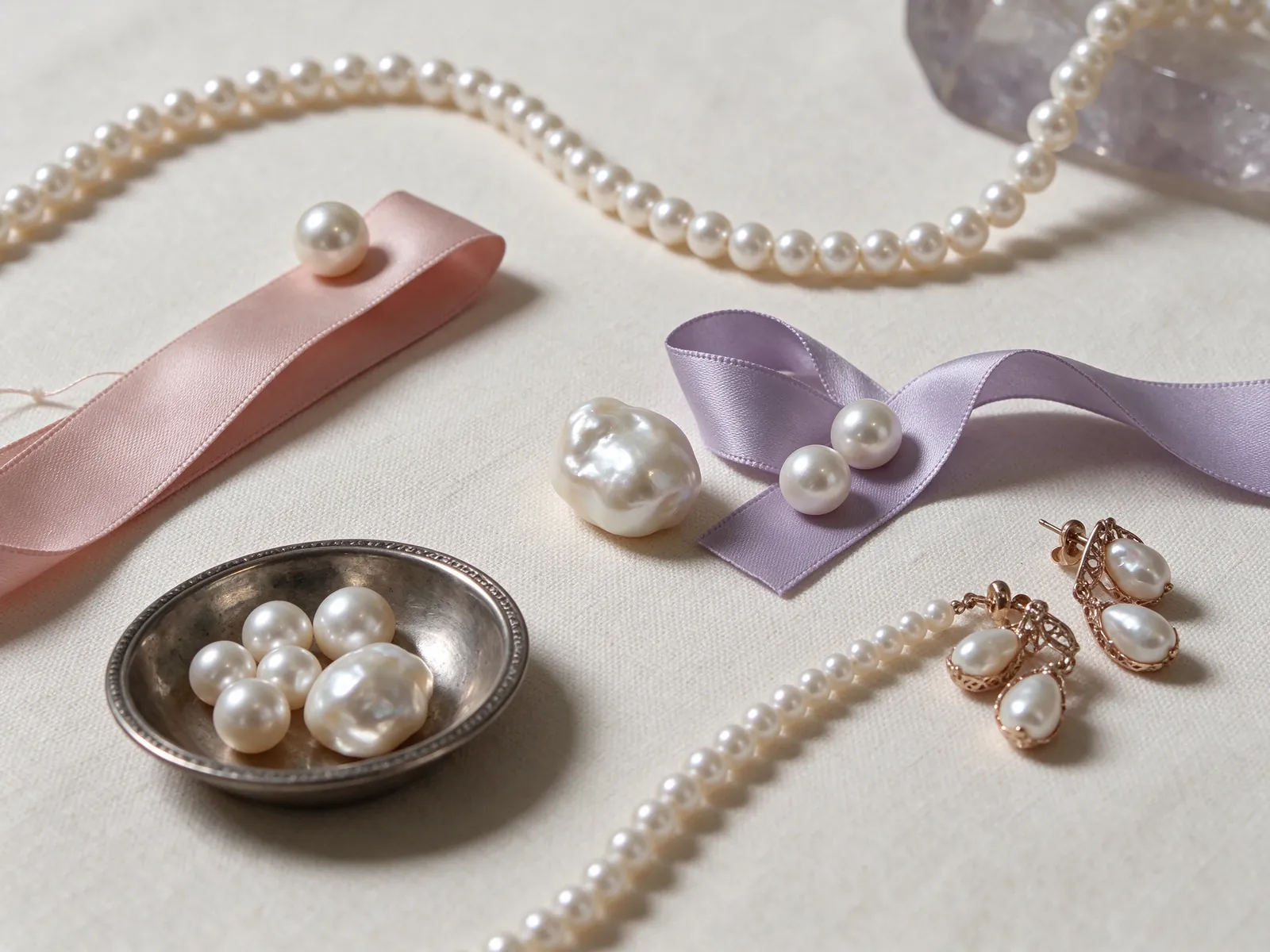
Locate the unit first, then decide whether the document gives one dimension, a range or measurements in several directions. The pearl size guide helps separate pearl diameter from wearing length. A pearl's size is not the height of a complete pendant, and a strand's pearl diameter is not its length around the neck. Different directions can clarify a non-round outline. Read the numbers as descriptions of the stated sample, not as unrecorded findings about nacre thickness or resistance to wear.
For earrings, check whether the wording concerns both pearls or only one sample. For a pendant, distinguish the pearl from the surrounding setting. The pearl pendant with GIA certificate topic considers that document-to-object relationship. A try-on still matters: look at the pendant's position against an open collar and the earring's proportion beside the face. Measurements help comparison, but they do not settle comfort or the balance of a particular outfit.
A document photograph is not an on-screen measuring tool
A photograph can help recognise a sample, but cropping, perspective and display size make it unsuitable for calculating a pearl's diameter on a phone screen. Start with written measurements and units. If quantity or outline clearly differs, resolve sample correspondence before discussing grades. Saving clear photographs of the jewellery as received can also help explain later changes if the strand is rearranged or the pearls are incorporated into another piece.
Separate quality factors instead of searching for one overall score
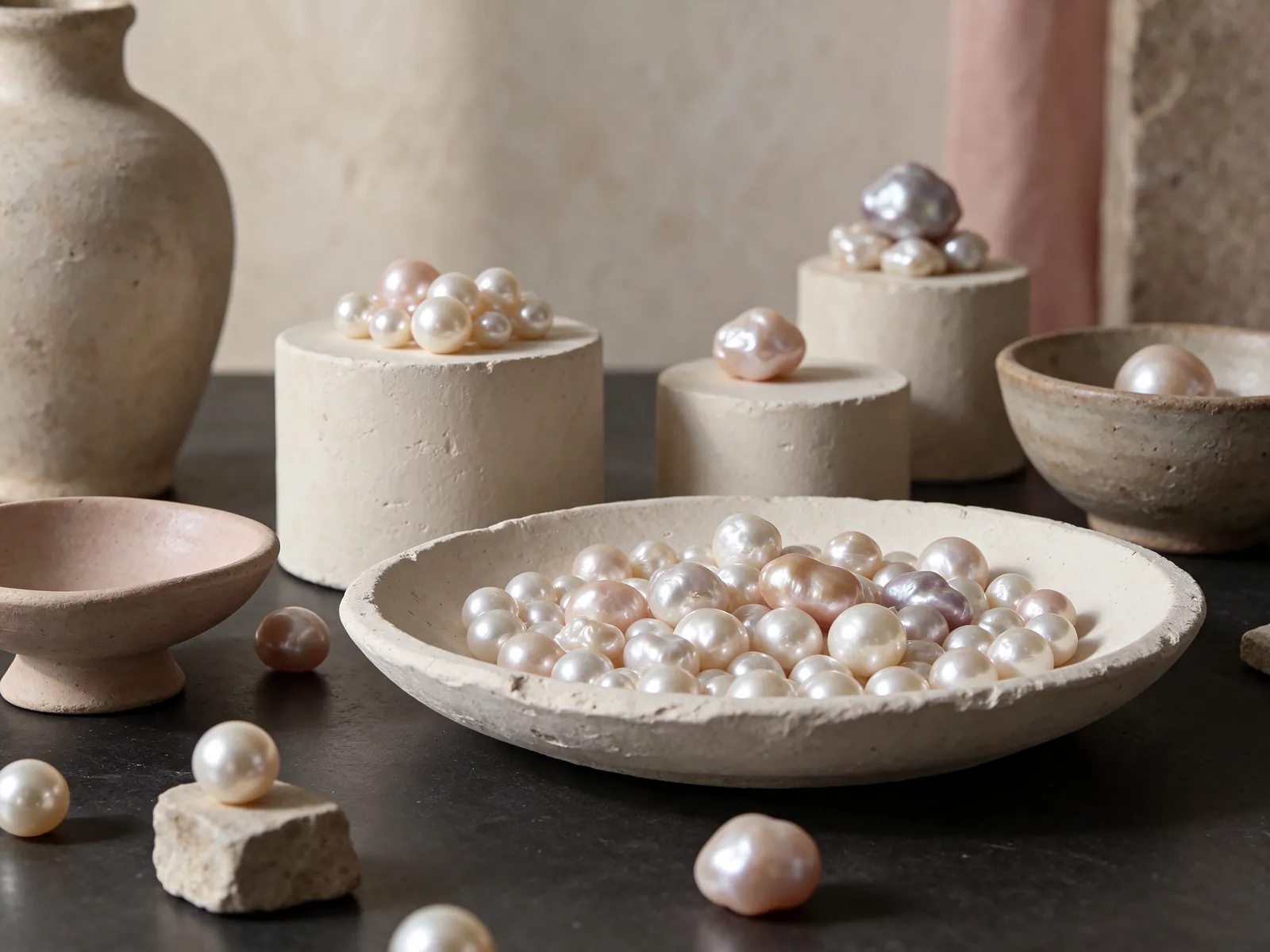
GIA identifies seven pearl value factors: size, shape, colour, lustre, surface quality, nacre quality and matching, with matching relevant to combinations of pearls. This is an organising framework, not a promise that every certificate lists all seven. Learning how to judge pearl lustre focuses attention on brightness and the clarity of reflections, but a retailer's AAA or AAAA wording cannot be converted directly into a GIA classification. Identify what each document actually addresses before comparing its descriptions.
When looking at lustre, notice the clarity of reflections as you turn the piece under comparable light. With surface features, consider their position and visibility at normal wearing angles. Assessing pearl matching quality focuses on visual coordination rather than whether every tiny detail is identical. Against a plain blouse, the rhythm and colour balance of a strand may matter more to you than one feature seen close up. A single pendant gives its front-facing pearl greater emphasis. Use those observations to ask what the report's wording means for this sample.
Compare like information while preserving each document's wording
Place comparable headings side by side without turning different descriptive words into an improvised ranking. If one document does not discuss nacre, do not borrow a conclusion from the other. View the pieces under similar lighting and connect the comparison to how you will wear them: balanced earrings, a consistent strand or a pendant with an appealing outline. The document supplies information; your clothing and try-on supply the context for choosing.
Understand Hanadama and other names in the issuer's own context
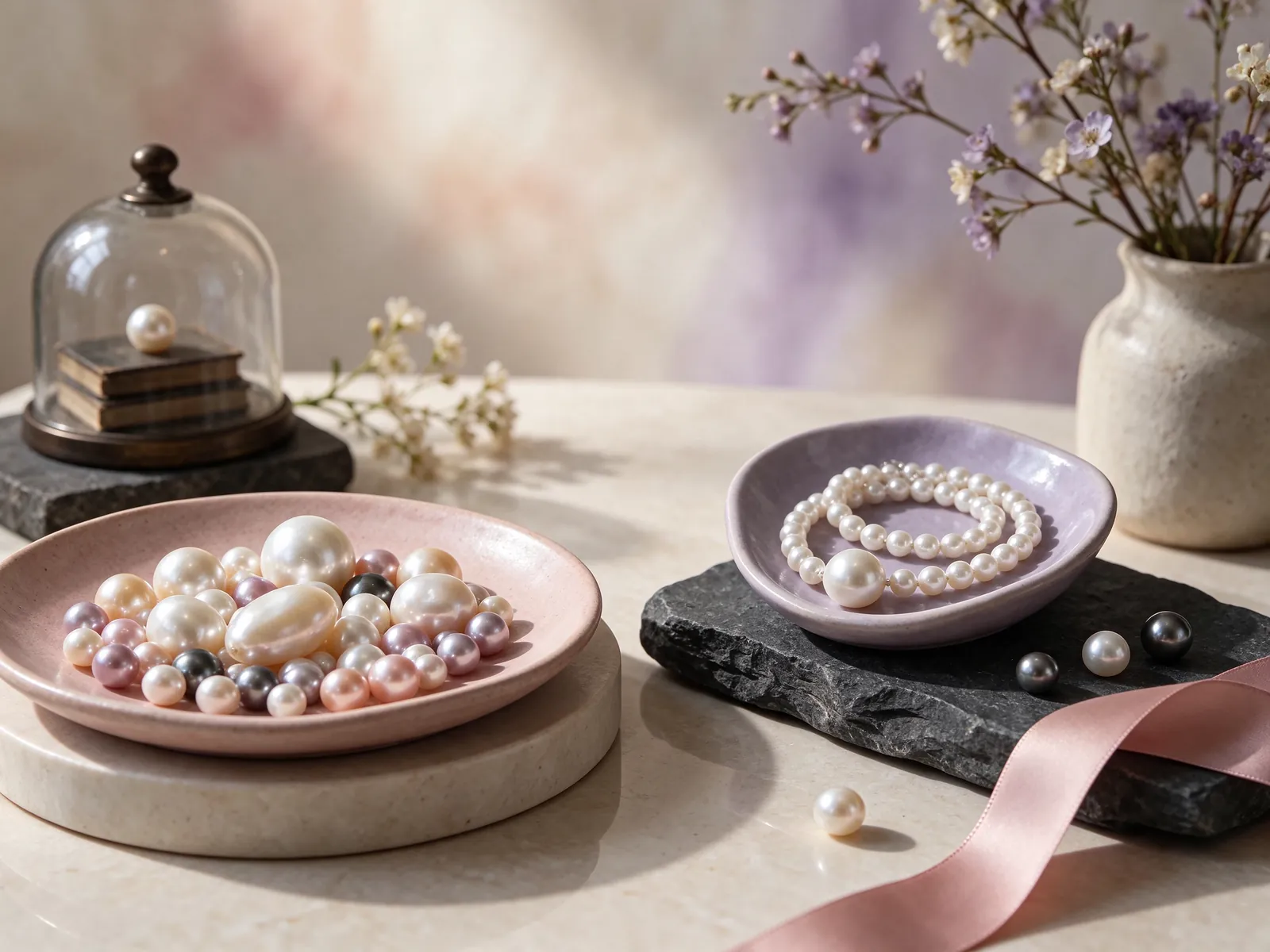
In the Akoya context, Hanadama describes a quality designation rather than a separate pearl species. Hanadama vs Akoya pearls helps clarify that relationship before the report is read. PSL's official guidance describes its SS identification and grading certificate as used for Aurora HANADAMA, with nacre thickness measured by X-ray. It says statements such as natural colour can be added. Can be added does not mean the statement appears on every report: locate the actual wording rather than inferring untreated colour from the Hanadama name.
Comparing certified Hanadama pearls requires the particular document, not a universal league table. GIA announced in 2023 that pearls meeting its specified parameters can receive a Hanadama quality-range comment on a pearl classification report. Conditions include round to near-round shape, white bodycolour, excellent lustre and a clean to lightly spotted surface, among other requirements. GIA can therefore address Hanadama, but its name alone does not establish that comment. Read the actual finding; PSL's Aurora designations and GIA's comment should not be treated as interchangeable credentials.
Keep PSL and PRL attached to their complete laboratory names
Pearl Science Laboratory (PSL) and Pearl Research Laboratory (PRL) are different institutions. PRL distinguishes grading reports from identification documents without grades and explains that its Hanadama designation uses its own criteria. PSL lists separate SS, SP and other report types. Saying Japanese certificate leaves those important details unresolved. WSP's comparison article describes PSL or PRL certificates for its own Hanadama merchandise; that retailer-specific arrangement is not a certificate-inclusion promise for an unrelated piece of jewellery.
Move from document reading to a useful jewellery try-on
Once the document is understood, put the jewellery into the clothes you actually wear. With a round neckline, see whether a strand competes with the edge of the fabric. With an open shirt collar, assess its curve against the opening. Look at earrings with hair loose and tied back, or a pendant against both pale and dark tops. These are styling judgements, not laboratory identity findings, and no report name can guarantee the same effect for every wearer.
For a gift, discover whether the recipient normally chooses a strand, earrings or a pendant and whether they prefer a discreet or prominent outline. The pearl gift guide can help with that wearing context; documentation explains the selected pearl's recorded information. Interest in a certificate and enthusiasm for wearing the jewellery are different matters. Keep the full document alongside, but separate from, the purchase receipt. Neither the report nor its name decides wardrobe preferences, sets a resale value or creates a seller's aftercare guarantee.
Care requirements do not become less important with a report name
A certificate does not change how pearls should be handled. GIA recommends a very soft, clean cloth after wearing and avoiding acids, perfume, hair spray and excessive heat. Do not use ultrasonic or steam cleaners. A pearl care guide must also be applied with the whole piece in mind, including thread, adhesive and settings. Avoid prolonged soaking. If water cleaning is suitable for a strung piece, let the string dry completely before wearing. An impressive report name is not permission for stronger cleaning or a promise of permanent lustre.

Ask complete buying questions and preserve the complete record
Before deciding, summarise the issuer, sample scope, identity and treatment wording, measurements and quality descriptions. Put the unanswered question that matters most first, such as whether the whole strand is covered. Understanding what determines pearl value also requires comparison of the complete jewellery: a laboratory report is not a quotation or a guarantee of appreciation. When contacting Flint Jewellery on WhatsApp, explain the style and wearing needs you have in mind. The practical design discussion and quotation remain separate from laboratory findings.
After purchase, retain the complete paper document and a legible digital copy, keeping the receipt as a separate transaction record. Where an issuer offers an official verification route, navigate to its official website yourself and compare the number and available information. Finding a record is not the entire sample-matching process. If details disagree, ask the seller and issuer about the difference instead of deciding from a stamp, paper colour or forwarded link alone.
Record changes before restringing or making another piece
Photograph the original arrangement and note which pearls are retained, moved or added during a redesign. A document describing a strand should not be presented as describing every part of a new pendant merely because one pearl came from that strand. If pearls become earrings, consider their new pairing and orientation as well. A clear before-and-after record makes future conversations about the jewellery more precise without enlarging the original report's scope.
| Reading area | Look for | Do not automatically infer | Useful question | Compare with the item |
|---|---|---|---|---|
| Issuer and sample | Full laboratory name, title, number and scope | A decorative cover means comprehensive findings | Does this describe the whole strand? | Photograph, quantity and jewellery form |
| Identity and colour | Specific identity and treatment wording | Authenticity establishes wild-natural identity or untreated colour | Is this appearance wording or a colour-origin finding? | Colour under soft white light |
| Measurements | Units, ranges and measurement directions | Pearl diameter establishes strand length or nacre thickness | Does the number describe the pearl or complete piece? | Outline and wearing proportions |
| Quality | The factors actually discussed | Every document covers all seven GIA value factors | Which factors have a description? | Reflections, surface position and visual balance |
| Named terminology | Issuer using the term and the relevant text | Hanadama, AAA and GIA are interchangeable credentials | How is the name used in this document? | Confirm correspondence, then try on |
| Report type | Identification, quality classification and any actual Hanadama comment | The same issuer means identical report coverage | What is the full title and stated comment? | The current item and its recorded sample details |
Pearl knowledge and authoritative references
GIA identifies 7 pearl value factors: size, shape, colour, lustre, surface quality, nacre quality and matching, with matching relevant to combinations of pearls. They help organise a comparison without implying that every report records all seven.
Read the reference for this factFrequently asked questions
Does a working QR code prove that the pearl matches the report?
No. If the issuer provides official verification, reach its official website independently and compare the number and available details. You still need to relate the document's photograph, quantity, shape and measurements to the item. Finding a report record is not the same as matching the sample.
Does a Hanadama name mean there are no visible surface features?
Not necessarily. GIA's Hanadama quality-range conditions include a clean to lightly spotted surface, so the name is not a promise of no visible features. For another issuer, read its own criteria and the particular document. Position, visibility and overall lustre also affect how a feature appears when worn.
Why does a size entry not tell me where a necklace will sit?
Pearl dimensions and necklace wearing length are different information. Establish what the measurements describe, then ask about the complete strand and try it against your neckline. A diameter should not be used to calculate its position on your neck.
Can I keep using a strand's report after making one pearl into a pendant?
Keep it as information about the original sample, alongside a record of the change. Be clear about what the document originally described. Using one pearl from a strand does not extend that strand's description to every part of the new pendant.
If treatment is not mentioned, can I call the colour untreated?
No. An absent treatment statement is not an untreated-colour finding. Separate visual colour descriptions from conclusions about treatment or colour origin, and ask which wording answers the question that matters to your purchase.
How does an identification report differ from a classification report?
GIA's current Pearl Identification Report provides identity and related information. Its Identification & Classification Report adds lustre, surface and matching where applicable; a Cultured Pearl Classification Report classifies cultured pearls using the seven value factors. Read the complete title to establish which document you have.
Updated: