

How does a pearl necklace pendant shape a pearl pendant necklace?
A pearl pendant creates a focal point through more than pearl size. Its outline, the metal detail above it and the direction of the drop work together. A rounded outline can feel concentrated and balanced, while an uneven profile encourages the eye to follow its curves. Before comparing details, decide whether you want a small point of light or a more visible vertical line. View the whole necklace against clothing rather than judging its presence from a tightly cropped photograph.
For a restrained look, a single pearl pendant invites attention to the space between the pearl, its bail and the chain. A smaller bail is not automatically better: its proportions must make sense beside the pearl, and its connection affects how the pendant hangs. Explore Pearl Jewellery as a complete outfit choice, too. If the pendant is intended to lead the look, consider whether earrings and other necklaces should provide a quieter frame instead of a second competing focal point.
How do chain length and neckline frame a pearl necklace pendant on a pearl pendant necklace?
A neckline supplies a visual boundary. With a V-neck, a vertical drop can follow the opening; with a crew neck, decide whether the pendant should sit clearly on the fabric or within the exposed space above it. A pendant resting directly on the edge may disappear as you move. Try familiar clothes, then sit down and look down as well as standing upright. One chain length cannot predict the same resting position on every wearer.

Plan the Look Around Shirts, Knitwear and Layering
With a shirt, begin with the button opening rather than the pendant alone. Leave a clear area for the drop, or place the necklace outside the garment if the opening is shallow. Dark knitwear can make a white pearl easier to distinguish, but textured fabric may reduce the visibility of a fine chain. Look at both elements together: a pearl that reads clearly and a chain that almost disappears produce a different effect from a fully visible necklace outline.
Layering is easier when each necklace has a role. Position a second chain above or below the pendant instead of letting two centrepieces occupy the same space. Choosing a chain for pearl pendant styling means supporting the focal point, not merely adding another metal line. Walk around after arranging the layers and check whether they repeatedly cross or tangle. If your top already has a prominent zip, print or decorative buttons, wearing the pendant alone may give its outline more room.
Should Earrings Echo the Pendant or Stay Quiet?
Repeating every detail is not necessary. If the pendant has an expressive outline and a bright accent, understated earrings can keep the attention at the neckline. If larger earrings are the feature of the day, let the necklace take a supporting position. Check the result with your usual hairstyle and glasses, since their shapes also frame the face. This approach is about distributing attention, not following a rigid rule about matching jewellery.

Tide · Stillwater: A Curved Pearl Beneath a Bright Accent
The Flint Tide · Stillwater Necklace, FN012, places a white baroque pearl beneath a round bezel-set diamond. Its listed details are an approximately 7–8mm pearl, 0.03ct of diamond and a 45-centimetre chain. These measurements describe different things: pearl diameter, diamond weight and chain length. They do not provide the total length of the pendant. The visual idea comes from the contrast between the pearl's uneven curves and the small circular point of brightness above it.
Fine elongated chain links guide attention towards the drop without competing with its texture. Against a plain dark top, the white lustre and diamond accent can be read separately. When considering the design, look first at the relationship between the pearl and the upper setting, then consider its side profile and resting direction. The stated chain length is useful information, but its position on you still depends on your neckline and proportions. A photograph of a necklace you already enjoy wearing helps explain your preferred placement.
How Can You Describe a Preferred Baroque Outline?
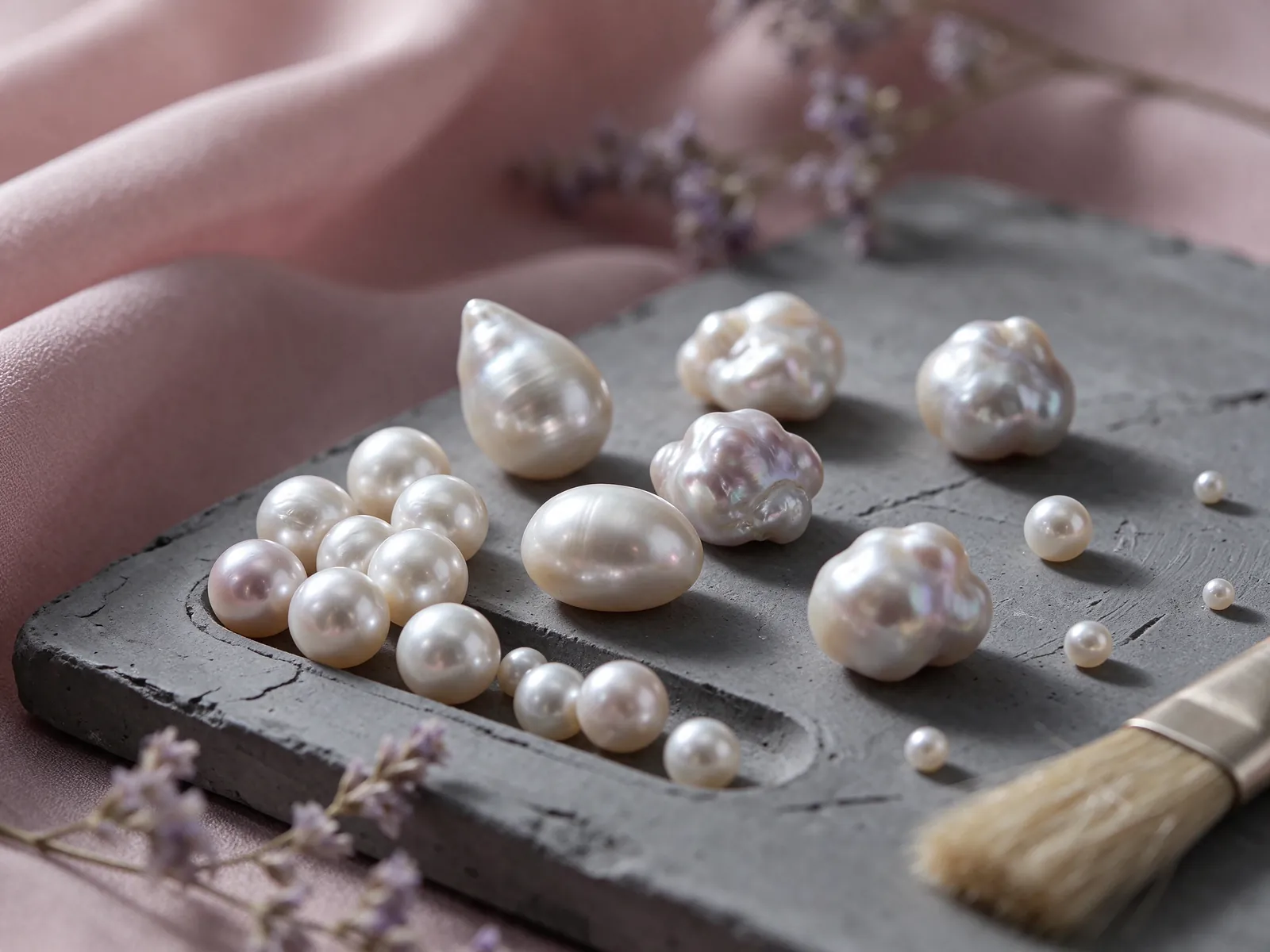
Try describing the outline as longer, more rounded, fuller on one side or softer at the lower end. Then explain how visible you want the surrounding metal to be. Baroque refers to an irregular shape; the word alone does not identify pearl species or origin. For customisation discussions, use the balance of flowing curves and a restrained bright accent as a starting point rather than expecting every pearl to reproduce precisely the same contour.
Separate Chain Compatibility from Pendant Style
Decide whether you are looking for a complete necklace or a pendant to use with a chain you already own. A pearl pendant top raises practical questions about the bail opening, link thickness and whether the clasp can pass through. Matching metal colours does not establish physical compatibility. A chain may fit through an opening while its clasp does not. Avoid forcing either component; understanding the connection is more useful than assuming that all pendants are interchangeable.
A pearl necklace enhancer introduces a different question: how does its opening mechanism work, and what kind of necklace can it attach to? An opening fitting and an ordinary closed bail are not the same structure. Ask how the fitting closes and holds its position, rather than deciding from appearance. A pendant-style necklace should not be assumed to have a detachable drop or opening clasp simply because there is a visible metal connection above the pearl.
What Should You Bring When Reusing an Existing Chain?
Bring the chain itself, or clear photographs of its links, clasp and usual resting position. Explain whether you prefer the pendant to remain centred or move freely along the chain, and whether you regularly swap pendants. Chains of equal total length can have very different links and clasps. Your handling habits matter as well: a connection that suits occasional changes may not answer the same needs as one you expect to operate frequently.
Keep Visual Scale and Pearl Quality as Separate Questions
A dainty pearl pendant may suit a small, quiet focal point, but a smaller design is not automatically easier to wear or more suitable as a gift. Thick clothing can hide a delicate drop, while a narrow exposed neckline may frame it clearly. Compare the pearl, bail and chain together at a similar viewing distance. Close-up photography can make a tiny detail seem more dominant than it will be when the necklace is worn as part of an outfit.
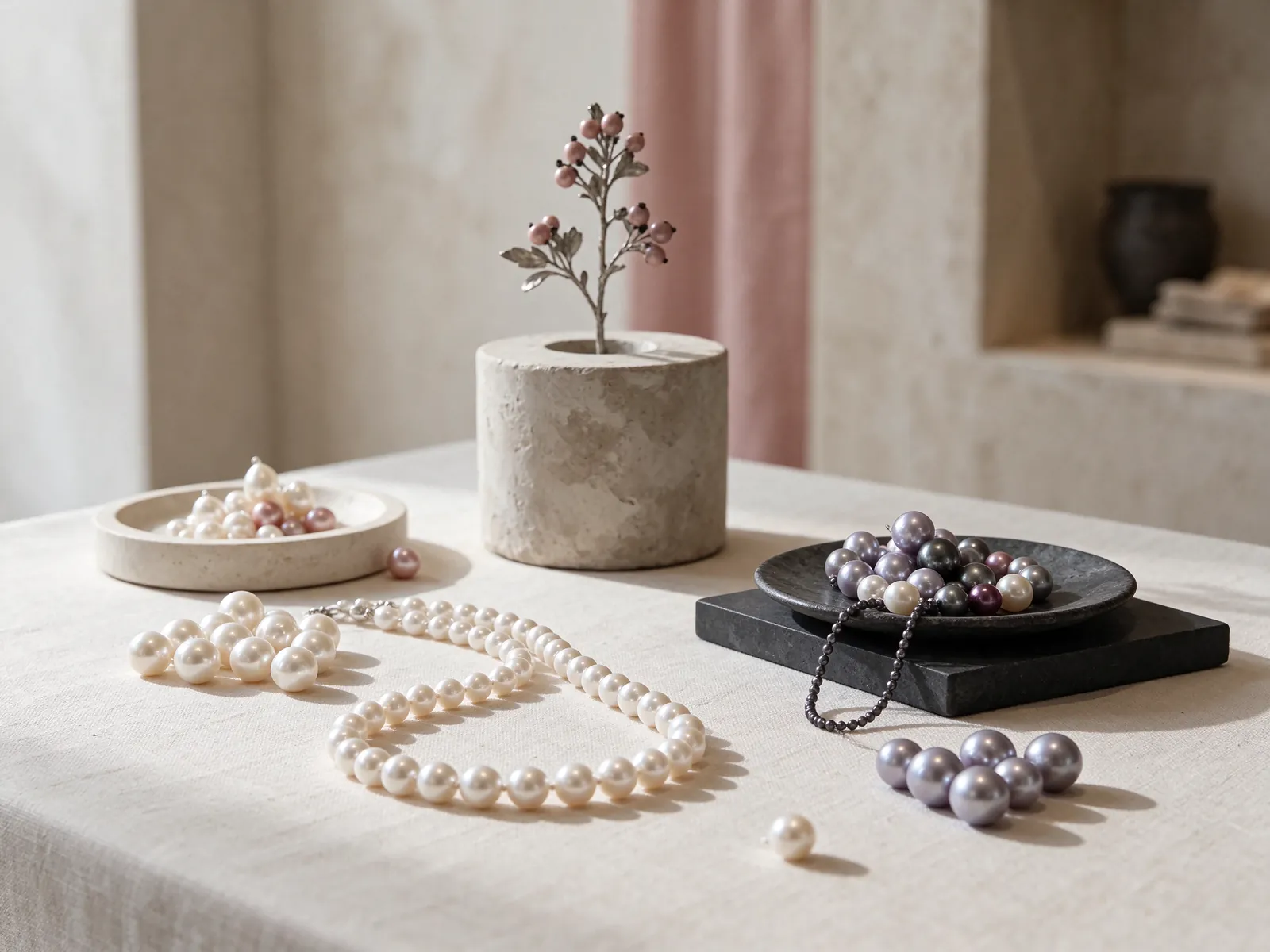
GIA describes seven pearl value factors: size, shape, colour, lustre, surface quality, nacre quality and matching. For a pendant, this is a useful reminder not to reduce every choice to size or roundness. Lustre and surface appearance should be considered alongside the intended shape, while matching becomes relevant when coordinating several pieces. An expressive baroque contour can be part of the design direction. Appearance alone does not establish origin, natural-versus-cultured identity or the existence of a certificate.
What Can Different Lighting Tell You?
Soft natural light helps you observe the overall colour impression; changing the angle shows how lustre moves across the curved surface. Do not use a phone screen's version of white as the only basis for choosing. Bodycolour, overtone and orient describe different colour components, and not every pearl has all three. Hold the pendant near familiar fabrics to assess the contrast you enjoy, rather than expecting a colour name to describe every visual effect.
Choose Metal Tone and Gift Direction Through Everyday Habits
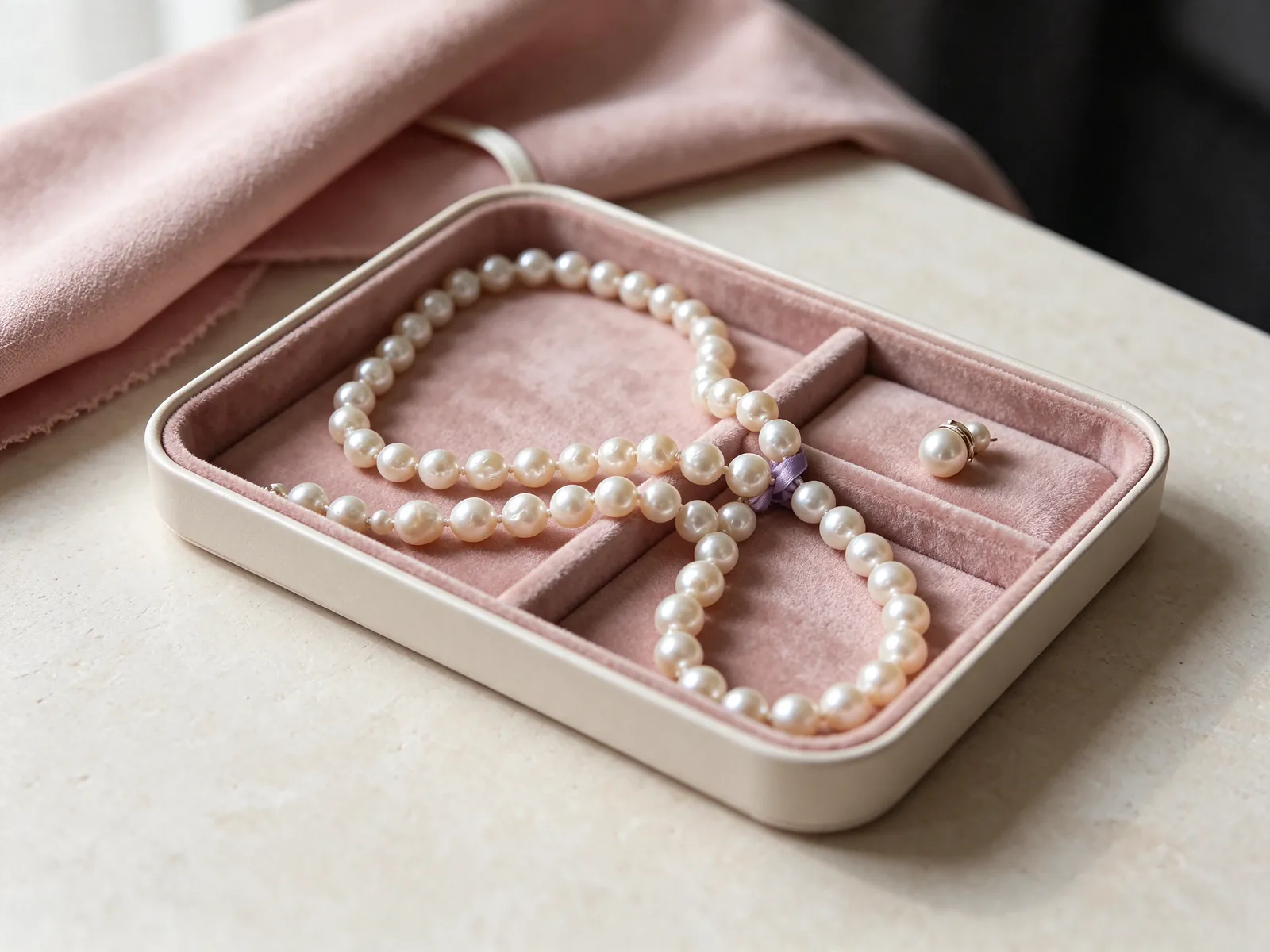
Flint Jewellery's material choices for design discussions are 18K 750 white gold, 18K 750 yellow gold, 18K 750 rose gold, PT950 platinum and PT900 platinum. Start by explaining whether you want the metal to blend visually with a white pearl or create a warmer contrast. Compare that preference with jewellery you already wear, then discuss the material that suits your individual design direction.
For a gift, familiar habits provide better direction than a general idea of what pearls ought to look like. Does the recipient wear necklaces alone or in layers? Are their usual collars high or open? If they rarely wear a necklace, consider whether they dislike a moving drop or simply find necklaces difficult to style. Gather a few examples of clothes and jewellery they choose themselves. The aim is a design conversation grounded in actual use, not an assumption that one pendant suits everyone.
How Can You Explain a Gift Idea Before Choosing Dimensions?
Translate the feeling into visible details: a soft outline, a small bright accent, clear contrast on dark clothing or a position away from the collar edge. Explain dislikes too, such as too much metal surrounding the pearl. A preferred wearing picture is often more informative than specifying a diameter immediately. It gives the discussion a direction while leaving room to consider proportion, chain placement and the relationship between the individual elements.
Use Pearl-Suitable Care for the Whole Necklace
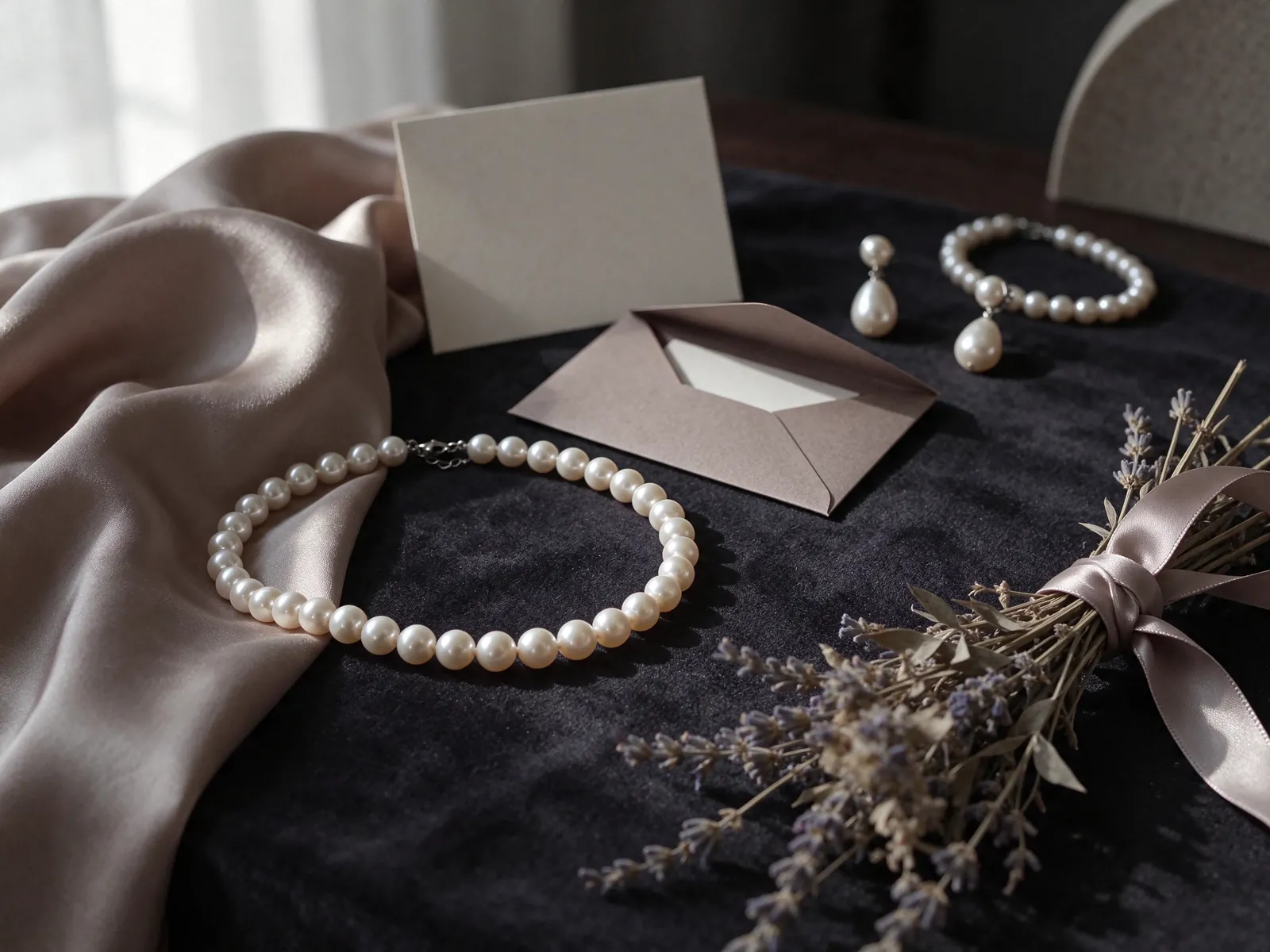
GIA ranks pearl at 2.5 on the Mohs hardness scale. Treat this as a reason to take abrasion and contact with other jewellery seriously, not as an invitation to test its surface. After wearing, wipe the pearl gently with a very soft, clean cloth and store it apart from pieces that could rub against it. A diamond accent does not make a pearl necklace suitable for the cleaning methods used on a diamond-only item.
Pearls should never go into ultrasonic or steam cleaners. Avoid contact with perfume, hair spray, acids and excessive heat; finish applying cosmetics and fragrance before putting on the necklace. When dressing, notice nearby zips and rough decorations that might catch the chain or pendant. Before storage, check for tangles or an unusually loose connection. Stop wearing a piece if something seems wrong rather than pulling at it or using household tools around the pearl and setting.
What If the Pendant Turns or Layered Chains Tangle?
Remove the necklace and let the chain rest naturally on a stable surface. Distinguish twisted links from a pendant being moved by a collar. If layering is the cause, change the relative positions or wear the pendant alone to observe the result. Turning is not automatically a consequence of pearl shape: the chain, connection and clothing all interact. Describe when it happens and what you were wearing, rather than treating every movement as the same problem.
Have a favourite pearl outline or neckline in mind? Contact Flint Jewellery on WhatsApp +85260106207 to discuss pearl pendant proportions, chain details and your preferred metal tone, starting with the jewellery and clothes you enjoy wearing.
| Decision | What to observe | Styling aim | Useful wearing check | Question to ask |
|---|---|---|---|---|
| Pearl outline | Width, length and direction of curves | A quiet point or flowing vertical line | View against a plain top | Do you prefer a rounder or longer outline? |
| Chain and neckline | Position relative to the collar edge | Clear space above or on the fabric | Stand, sit and look down | Does the neckline keep covering the pendant? |
| Bail connection | Opening, chain links and clasp | Reuse a chain or consider a complete necklace | Compare with the existing chain | Can the clasp pass through without force? |
| Layering | Overlap and repeated tangling | Distinct roles for each necklace | Walk around after arranging layers | Would wearing the pendant alone work better? |
| Daily care | Friction and cleaning habits | A design compatible with your routine | Check contact with zips and decorations | How will you wipe and store the necklace? |
Pearl knowledge and authoritative references
GIA describes seven pearl value factors: size, shape, colour, lustre, surface quality, nacre quality and matching. Pendant selection should consider more than diameter or roundness.
Read the reference for this factFrequently asked questions
Does pearl pendant mean the chain is included?
The term describes a drop or focal element and does not, by itself, establish what is included. A pendant necklace describes the overall wearing form. Check the actual connection and chain details, especially if you want a separate pendant for an existing chain.
Will a 45-centimetre chain sit at the same point on everyone?
No. The Tide · Stillwater Necklace lists a 45-centimetre chain, but neck size, body proportions, the drop and clothing affect its visible position. Trying familiar necklines while standing and sitting gives a more useful picture than treating the number as a universal placement rule.
Is an irregular pearl always more noticeable than a round one?
Not necessarily. An uneven contour can create movement, but scale, chain visibility, metal accents and the clothing background all affect presence. Compare the whole necklace at a realistic distance. Baroque is a shape description, not proof of pearl species or origin.
Can I use any fine chain with a separate pearl pendant?
A fine chain is not automatically compatible. Its links may fit while its clasp is too large for the bail opening. Consider the links, clasp and pendant connection together, and do not force the fitting. Bringing your chain makes the discussion more concrete.
Can a pearl necklace with a diamond accent be steam cleaned?
No. GIA advises against steam and ultrasonic cleaning for pearls. The pearl must be considered even when the necklace also contains a diamond. Use a very soft, clean cloth after wearing and avoid perfume, hair spray, acids and excessive heat.
Updated: