

Why does colour origin matter for natural grey vs treated grey pearls when discussing cobalt treated pearls and irradiated pearl colours?
Cobalt treated pearls belong to the discussion of colour treatment. WSP's pearl colour article describes Akoya pearls with natural colour as well as versions described as cobalt, or radiation, treated. This establishes a useful distinction between colour sources, not a rule that every grey Akoya or every blue-looking pearl has received that treatment. Begin by asking whether a term such as cobalt grey describes an appearance or a disclosed process.
Irradiated pearl colours do not provide a complete account of quality. Two pieces described as grey can differ in darkness, surface colour effects, lustre and matching. Use the pearl colour guide to organise your visual preferences, then keep those preferences separate from the information about colour origin. You can like a shade while still asking how it is described, rather than treating the shade name as proof of identity or quality.
What treatment details should accompany cobalt treated pearls and irradiated pearl colours in a comparison of natural grey vs treated grey pearls?
Ask three separate questions: how is the pearl's identity described, is its grey colour described as natural or treated, and which treatment has been disclosed? If a listing gives only a colour name, ask whether it refers to irradiation and whether that statement applies to the particular pearls you are considering. Do not complete an unclear description by assuming either natural colour or an absence of treatment.

Natural colour and natural pearl identity answer different questions
Natural grey describes colour origin; natural pearl describes formation identity. A cultured pearl can have naturally occurring colour, so natural colour does not establish that it is a wild-natural pearl. When reading a description, identify the formation term and the colour term separately. If only natural grey is stated, it is not enough to establish species, geographic origin or natural-versus-cultured identity.
Treatment terms also need their own space. Dyeing, toning and irradiation should not be substituted for one another, and disclosure of one does not establish the presence or absence of the others. Read natural colour vs dyed pearls for the colour-origin distinction, and pearl colour toning for the language of colour adjustment. During a purchase conversation, ask about the treatments disclosed for the actual pearls, rather than relying on the broad question, 'Are they natural?'
State your preference without creating an identity assumption
If natural colour matters to you, say that you want a clear description of natural colour origin. If disclosed treatment is acceptable, describe your preferred depth and warmth of grey while asking for treatment information separately. Neither preference needs to be expressed as a claim about wild-natural identity. Precise questions help a seller understand both your aesthetic choice and the information you need to make it.
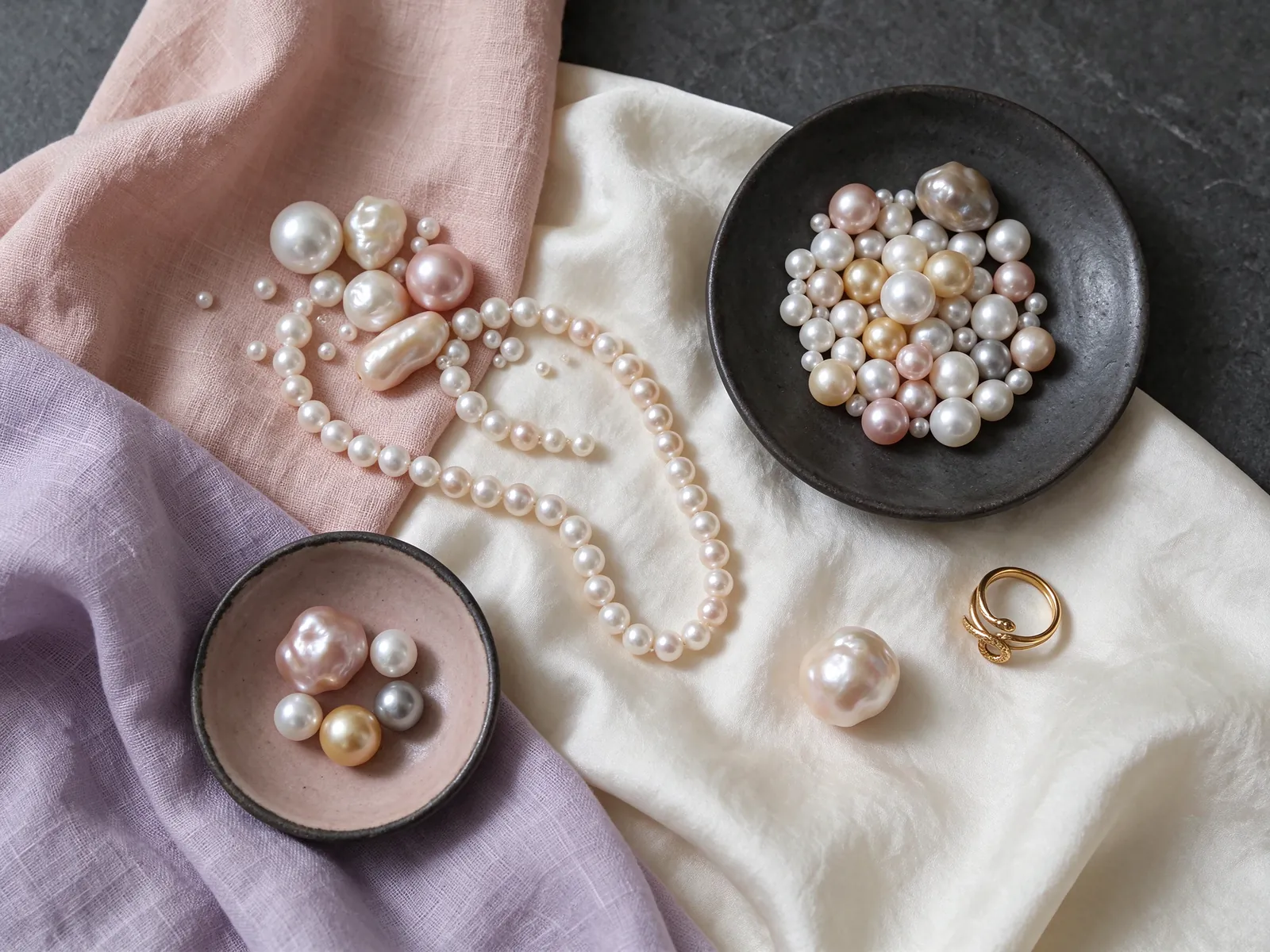
Compare colour layers without using photographs as a treatment test
Start with the dominant colour across the pearl, then look at any surface colour effect. GIA distinguishes bodycolour, overtone and orient, and notes that not every pearl has all three. Understanding pearl body colour and overtone helps you explain whether you prefer a grey base or a particular surface impression. A coloured reflection alone should not be labelled as evidence of dyeing or irradiation.
Lighting, background and screen settings can change your impression of a photograph. When comparing grey blue pearls, seek a similar viewing setup and a neutral background rather than placing a warm-lit image beside a cool-lit one. Look beyond the brightest reflections to judge the overall shade. This makes the visual comparison more orderly, but it does not identify a treatment; that question still needs a clear description.
For earrings, look at the pair rather than one attractive close-up
Compare both earrings together for depth of grey, overtone, lustre and surface appearance. Decide whether you prefer a closely coordinated pair or visible individual character. Similar-looking pearls are not necessarily documented as having the same colour origin or treatment history. Matching is an appearance consideration, while disclosure answers a separate information question; neither should be used to stand in for the other.
Read treatment descriptions and documents for their actual scope
A helpful description keeps identity, colour and treatment distinct. Grey cultured pearl states identity and appearance, but does not by itself explain colour origin. Irradiated states a treatment, but does not summarise every quality factor. Ask for wording that relates to the particular jewellery under consideration, especially if the difference between natural grey and treated grey is important to your choice.
If an identification document is available, read its conclusion, the object examined and the relevant observations. A cover, organisation name or report number should not be treated as confirmation of every pearl and every treatment in a piece. A necklace contains multiple pearls, and a document may concern only the material examined. Check what its wording actually covers before extending a statement to the whole item.
An omitted treatment statement is not a negative finding
Words such as cool grey or ocean tone can express style without explaining colour origin. Equally, a description that does not mention irradiation should not automatically be read as 'never irradiated'. A statement of natural colour should not be expanded into 'no treatments of any kind'. Ask for the distinction to be made clearly, then decide whether the available information meets your own buying preference.

Assess grey pearls using more than colour origin
GIA lists seven pearl value factors: size, shape, colour, lustre, surface quality, nacre quality and matching. Colour is only one of them. Natural grey should not automatically mean superior overall quality, and a treatment name should not be used to dismiss every aspect of appearance. Once you have chosen a colour direction, compare lustre, surface and coordination in a way that suits the piece you want.
For a single-pearl pendant, concentrate on the visible face, shape and surface as well as its lustre. For a strand, also consider how the pearls work together across the necklace. The same grey description does not promise the same matching. Think about whether the jewellery will sit against skin, above a collar or alongside other pieces, because those uses change what you notice most.
Do not explain a price difference with one colour label
When comparing quotations, first establish whether the descriptions cover comparable identity, colour origin, quality and design. Metal, construction and the arrangement of pearls also affect what is being compared. A natural-colour label alone is not a sufficient explanation for a difference between two complete pieces of jewellery. Compare the information and intended use rather than deriving a price premium or investment expectation from the treatment term.
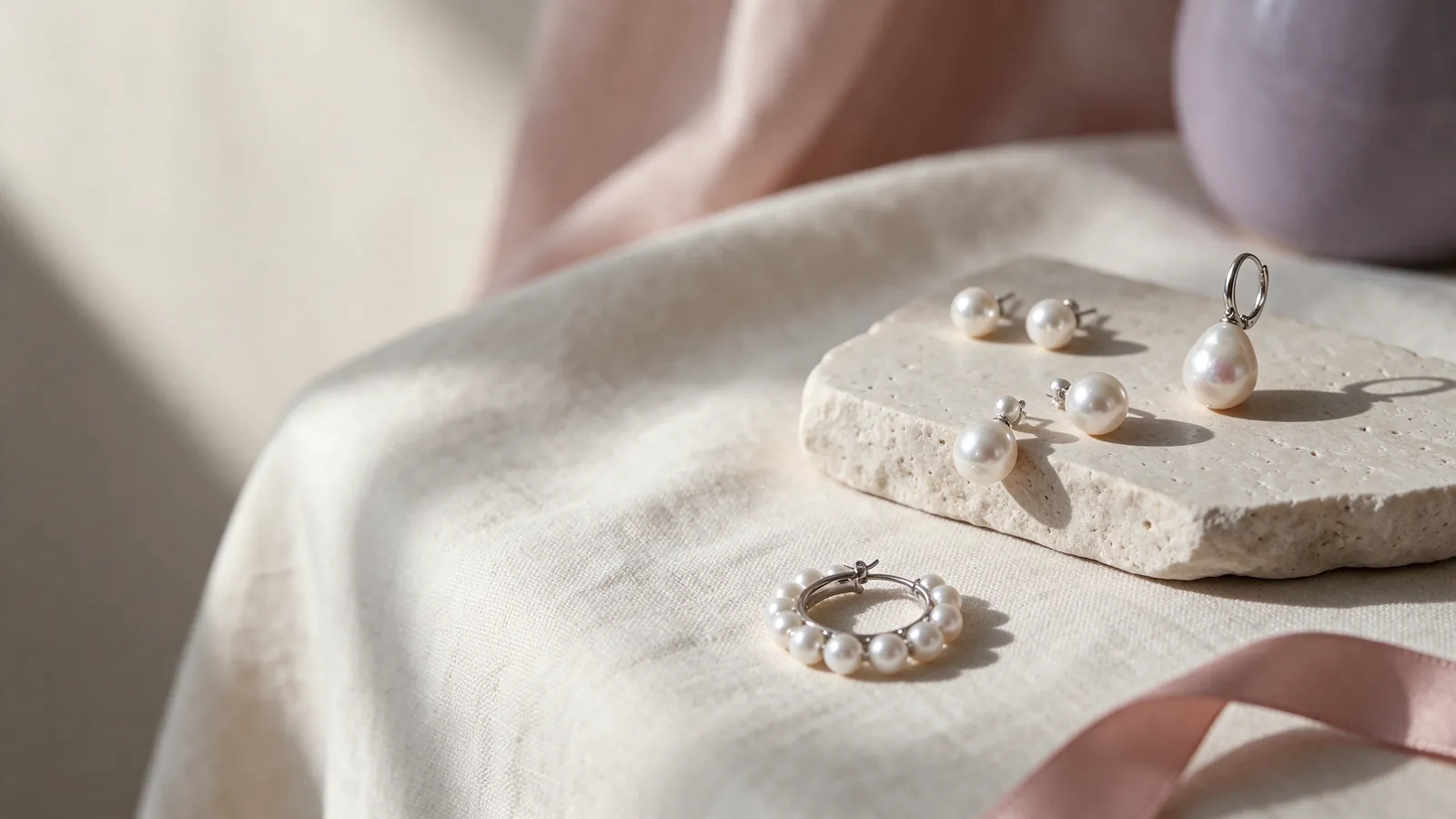
Style grey pearls with clothing and a deliberate metal colour
Grey can act as a quiet neutral or become a focal point through its surface colour effects. Against navy or charcoal clothing, look for enough tonal contrast to keep the pearl visible. Against warm ivory, observe whether you enjoy the cooler impression. Comparing the look with white pearls can clarify whether you prefer brightness or a more subdued effect, without turning that preference into a ranking of quality.
A cooler metal setting can continue a restrained grey palette, while a warmer setting can create contrast. When discussing design preferences, the metal choices are 18K 750 white gold, 18K 750 yellow gold, 18K 750 rose gold, PT950 platinum and PT900 platinum. Use your usual clothes as the background for that discussion. The colour of the setting does not disclose whether the pearl was irradiated.
Workwear and evening clothes may favour different visual effects
With a patterned work shirt, consider whether the pearl remains distinct near the collar. With plain evening clothing, you may want lustre and overtone to carry more of the look. A photograph of a frequently worn neckline can help explain whether you want the jewellery to blend in or stand out. These are styling decisions; identity and treatment information still deserve a separate reading.

Care for the pearl rather than testing its grey colour at home
Grey appearance does not make a pearl suitable for rough cleaning. GIA gives pearl a Mohs hardness of 2.5 and advises against ultrasonic and steam cleaners. After wearing, use a very soft clean cloth and avoid acids, perfume, hair spray and excessive heat. These are care principles for pearls, not tests that distinguish natural grey from treated grey, and they do not promise permanent colour.
Do not use chemicals, heat or forceful rubbing to investigate colour origin. Those actions cannot replace treatment information and may damage jewellery. GIA also advises that a strand's string must be completely dry before wearing if it has been cleaned with water. Keep pearls away from abrasive contact in storage, and pay attention to the condition of the string and fastening appropriate to the construction.
Finish with a short, useful buying checklist
Before deciding, ask how identity is described, how grey colour origin is stated, which treatments are disclosed, whether quality and matching suit your use, and how the jewellery should be cared for. For a colour discussion with Flint Jewellery, describe the depth of grey you like and your usual clothing style on WhatsApp +85260106207. Include the identity and treatment questions that matter to you, so the conversation addresses both your visual preferences and the information you need.
| Description | What it may explain | What it does not establish | Useful next step |
|---|---|---|---|
| Natural grey | Colour origin | Wild-natural identity or absence of every other treatment | Ask about identity and treatment separately |
| Cobalt grey / irradiation | A shade name or disclosed treatment; distinguish the two | The treatment of all grey pearls | Ask whether the wording applies to the pearls considered |
| Bodycolour and overtone | Visual colour layers | Colour origin, species or formation identity | Compare under similar light and background |
| GIA's seven value factors | Size, shape, colour, lustre, surface, nacre and matching | Overall quality from grey alone | Assess factors for the intended jewellery use |
| Mohs hardness 2.5 | GIA's stated pearl hardness | Suitability for harsh, ultrasonic or steam cleaning | Use gentle care and avoid damaging exposure |
Pearl knowledge and authoritative references
GIA lists seven pearl value factors; colour is one factor rather than a complete judgement of quality.
Read the reference for this factFrequently asked questions
Does cobalt grey in a listing necessarily mean disclosed irradiation?
Not necessarily. It may be a colour name. Ask whether it refers to cobalt irradiation and whether the statement applies to the particular pearls being considered.
Can a cultured pearl have natural grey colour?
Yes. Colour origin and formation identity are different descriptions. Natural colour does not establish wild-natural pearl identity.
Does a blue reflection reveal that a pearl was irradiated?
A reflection alone is not a treatment finding. Consider bodycolour, overtone and the viewing conditions for appearance, and obtain treatment information separately.
What should I compare in a pair of grey pearl earrings?
Compare the pair together for grey depth, overtone, lustre and surface appearance. Decide how closely matched you want the look, without assuming visual similarity proves shared treatment history.
Can I rub a grey pearl with a cleaning chemical to check its colour origin?
Do not use chemicals, heat or forceful rubbing as a home identification test. It may damage the pearl and cannot replace treatment information. GIA advises gentle care and no ultrasonic or steam cleaning.
Updated: