

How do pearl placement and proportion shape a crescent moon pearl pendant or crescent pearl pendant?
Start with the whole composition rather than the pearl alone. A broad crescent can make the metal outline the main feature, while a finer curve gives the pearl more visual emphasis. Look at the space between the pearl and both tips: generous open space reads differently from a tightly framed centre. Neither arrangement is automatically better. Decide whether you want a recognisable moon silhouette or a quieter curve that supports the pearl.
Compare close views with the effect at ordinary conversation distance. Details that appear beautifully separated in a large photograph can merge into one bright area when worn. A pearl pendant comparison is useful for identifying whether your preference is for the pearl, the frame or a balanced relationship. Keep the camera angle in mind, because a tilted image can make an open crescent appear narrower than it is.
Which chain length lets a crescent moon pearl pendant or crescent pearl pendant sit well with your neckline?
Try the position with a shirt you actually wear, not an imagined neckline. Aim to place the complete outline above the collar on skin, or below it on a reasonably flat area of fabric. Avoid a collar edge cutting across the pearl and curve. Sit down and turn your head before judging the result; the pendant's height and bail position affect its final landing point as well as the chain length.

How do fixed and suspended pearls behave within the curve?
A pearl fixed within the crescent keeps a more consistent relationship with the frame. A pearl attached beneath it by a moving connection may introduce a little swing and changing reflections. The distinction matters when you walk, lean over a desk or put on a scarf. Ask how the connection moves and whether the pearl can touch the metal. A front photograph alone cannot establish the construction or how steadily it will sit.
The direction of the crescent's opening also shapes the composition. An opening towards one side may echo a side parting, an asymmetric blouse or the line of a lapel. There is no universal rule requiring it to face left or right. What matters is whether the preferred orientation remains comfortable in use rather than being pushed around by a collar or a twisted chain.
Check the bail and reverse before choosing a chain
When using an existing chain, compare the widest part of its clasp with the bail's internal opening. A chain may be thin enough while its clasp is not. Examine the reverse for projecting connections and edges, especially if the piece will sit on bare skin. These practical details help you evaluate compatibility without trying to force a clasp through a narrow opening.
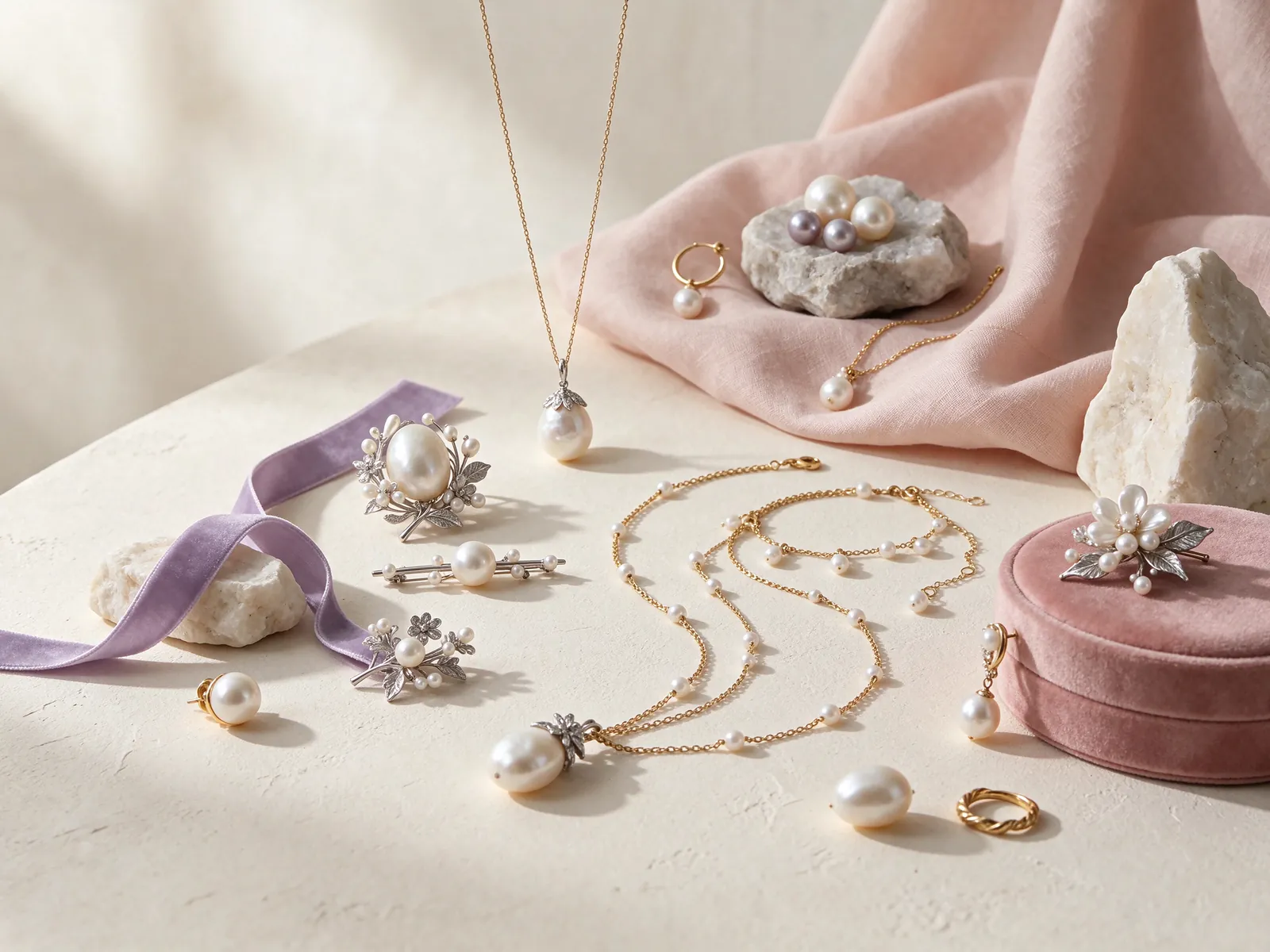
Separate the moon motif from the pearl's quality information
The phrase moon pearl pendant describes a design idea, not a pearl species, origin or natural-versus-cultured identity. White, blue-green or irregular appearance cannot answer those questions on its own. For a visual assessment, look at the clarity of reflections, the distribution of surface features and the colour relationship with the frame. Record the appearance you enjoy separately from the identity information supplied for the pearl.
GIA describes seven pearl value factors: size, shape, colour, lustre, surface quality, nacre quality and matching. Matching concerns the relationship between multiple pearls, not a separate score for a single-pearl pendant; coordinating with your earrings can still be a personal styling choice. The educational guide to a pearl pendant with GIA certificate helps distinguish what a document actually records from descriptive selling language. A moon outline or a letter grade is not itself a laboratory report, and these general factors do not establish GIA certification for a Flint product.
Compare colour under similar viewing conditions
Use similar lighting and backgrounds when comparing images. Warm shop lighting and cooler daylight can give very different impressions of the same composition. Bodycolour, overtone and orient are distinct colour components, and not every pearl displays all three. A coloured reflection in a photograph should not automatically be treated as a permanent bodycolour or proof of a particular pearl identity.
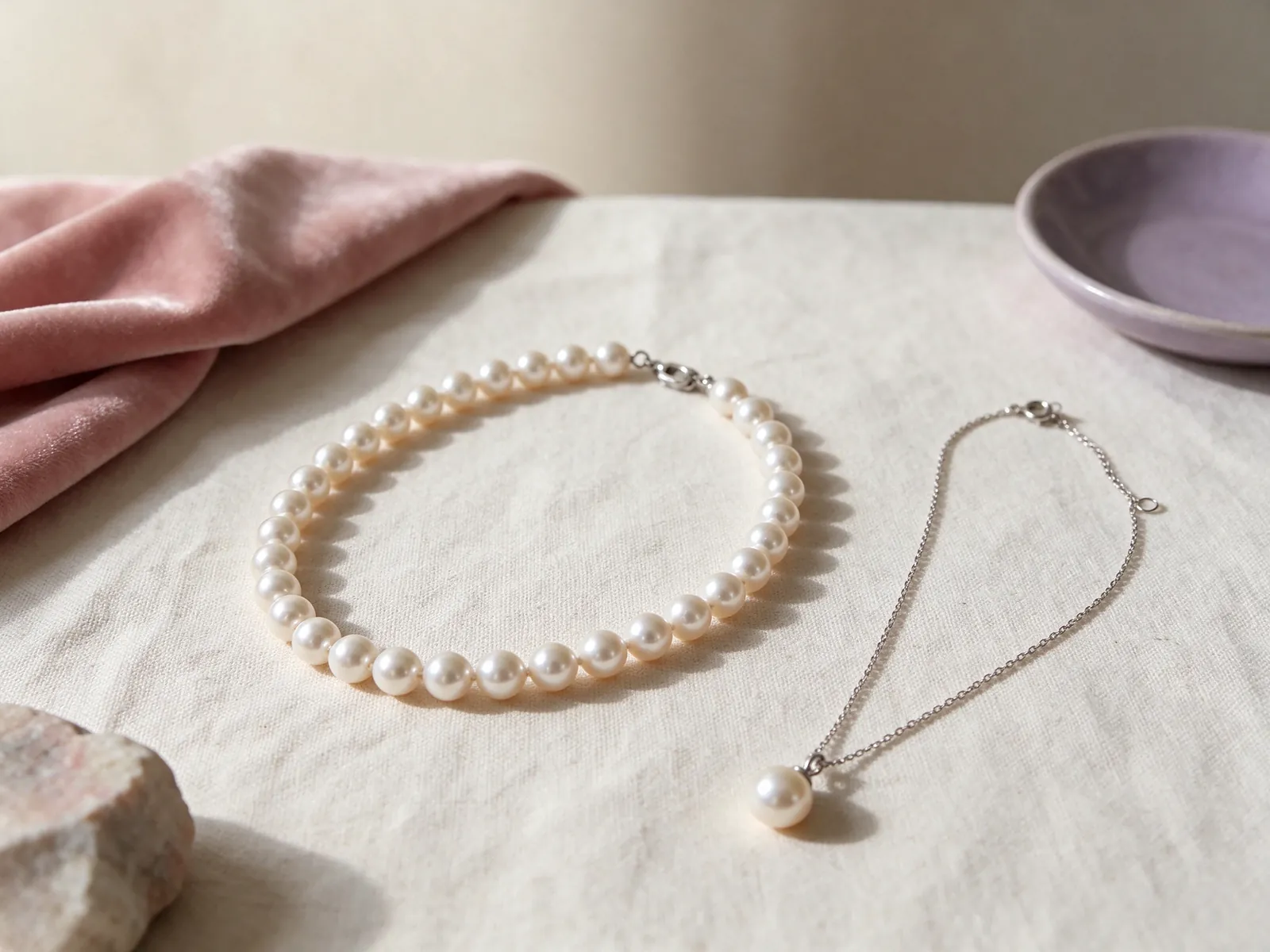
Make the outline work with office and evening clothes
With an open-neck shirt, check that the collar leaves enough room for both crescent tips. With a crew neck, avoid a position where half the pendant lies on skin and the other half catches the ribbed edge. If you prefer understated jewellery for the office, a dainty pearl pendant comparison can help you think about the visual weight of the entire piece rather than simply choosing a smaller pearl.
For evening clothes, a plain background makes it easier to read the open curve; elaborate embroidery or a busy print may compete with it. You can introduce colour through another accessory without repeating the moon motif everywhere. The styling discussion around a pearl and sapphire pendant offers a useful way to consider a cool-colour accent, whether you ultimately use that idea in earrings, a ring or your clothing instead.
Layer only after testing the pendant on its own
First establish where the crescent sits alone, then add another chain and check the gap while standing and sitting. Different chain lengths do not always prevent contact: pendant height, width and movement also count. A second metal charm should not repeatedly strike the pearl. Leave enough space for the crescent's opening to remain visible instead of turning the arrangement into a crowded cluster.
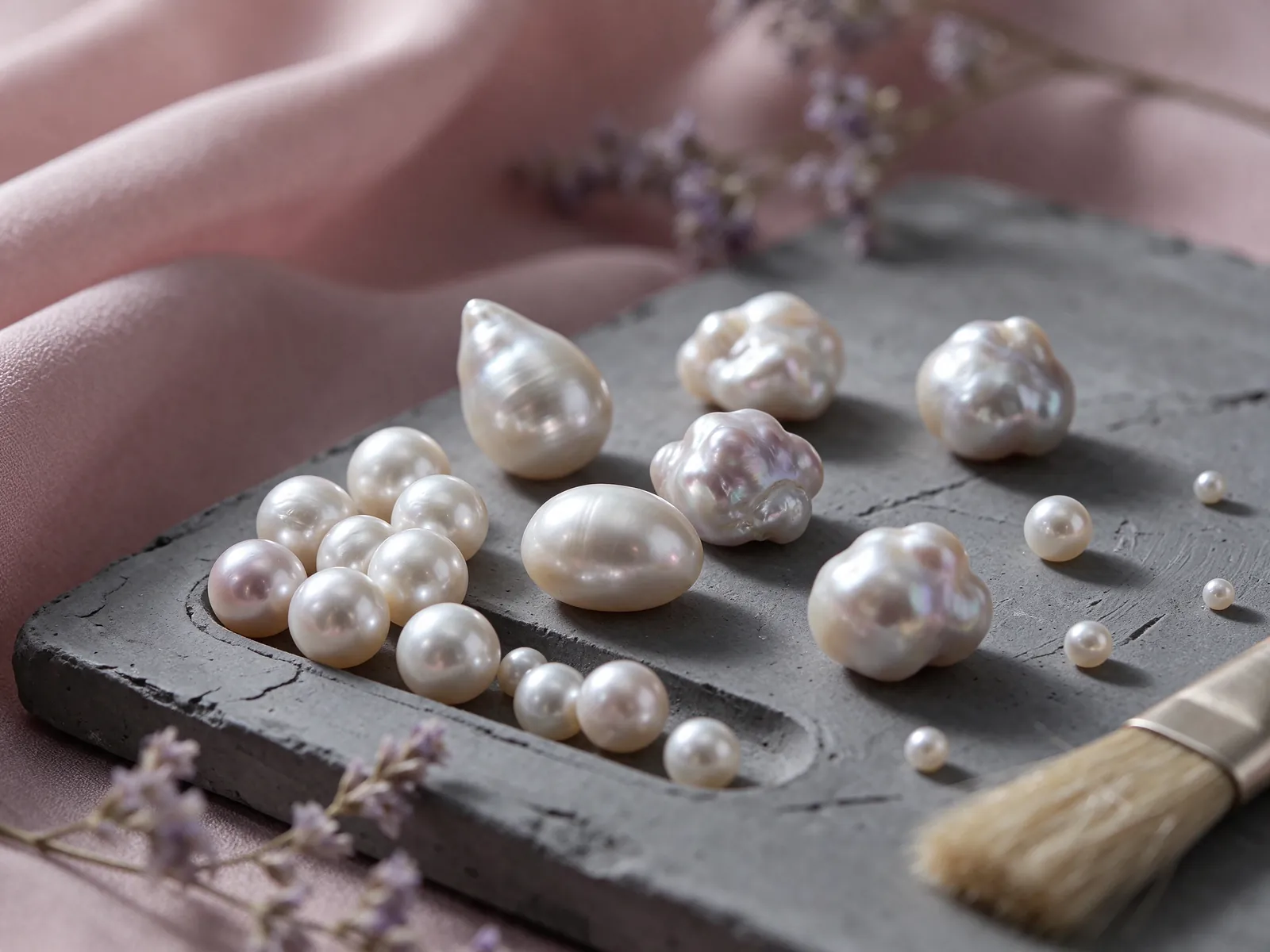
Choose a personal moon association without assuming its meaning
A crescent may suggest the night sky, a shared memory or simply a pleasing curve. The recipient may read the same shape differently, so do not assume a religious message, relationship meaning or effect on wellbeing. When choosing a gift direction, notice whether the person wears recognisable motifs or prefers abstract geometry. Their existing clothes and jewellery often provide more useful guidance than a story attached to the shape.
Think about the actual occasions on which the pendant might be worn. For daily commuting, scarves, shirt collars and a work lanyard can all affect how a curved piece sits. For occasional dinners, the recipient's favourite neckline may be the better starting point. Exploring Pearl Jewellery as a broader category can also help you decide whether a pendant suits their habits better than earrings or a bracelet.
Use everyday habits to guide a thoughtful gift
A surprise need not depend entirely on guessing. You can ask which necklace they wear most, whether they prefer jewellery inside or outside a collar, or whether small clasps are convenient for them. Someone who seldom wears necklaces may appreciate a different accessory. The meaning of the motif and the ease of wearing the piece are separate questions, and both deserve attention.

Turn a design preference into a practical comparison checklist
Divide your questions into silhouette, chain compatibility and pearl information. For the silhouette, ask about overall height, width, opening direction and the reverse. For compatibility, ask about the bail's internal space and whether pendant and chain details are listed separately. For the pearl, seek the stated identity and quality description. Written dimensions are more useful than estimating scale from a model's neck or the apparent size of a photograph.
When discussing general pearl pendant preferences with Flint Jewellery, describe your usual neckline, existing chain and desired balance between pearl and metal. A request such as a clear curve that does not compete with a shirt collar is more informative than simply asking for an elegant piece. Keep any inspirational photograph separate from the details of another design; a shared motif does not mean shared pearl identity or construction.
Give each photograph a specific job
Use close-ups for line junctions and surface detail, side views for thickness and projecting parts, and wearing views for the relationship with clothing. None replaces the others. If only a front view is available, identify the reverse, bail and movement questions you still want answered rather than filling in those gaps from imagination. This makes a comparison clearer and more useful.

Care for the pearl as well as the crescent edges
An open curve can become caught in other chains during storage. Keep the pendant separate from hard-edged accessories and support the whole piece when wiping it, particularly around a moving pearl connection. Do not use the pearl as a handle for pulling or straightening the metal. After wearing, gently wipe with a very soft, clean cloth and check whether fine fibres have caught near the tips or attachment.
GIA gives pearl a Mohs hardness of 2.5 and advises against ultrasonic or steam cleaning. This is a reason not to apply a metal-only cleaning routine to the entire pendant. Avoid acids, perfume, hair spray and excessive heat. Finish beauty and hair preparations before putting the necklace on, and stop wearing it if a connection appears loose rather than trying to bend or glue it back yourself.
Check the collar and clasp before leaving home
Make sure the clasp is closed and the pendant is not trapped under a collar or wrapped around another chain. When travelling, store it separately so that luggage pressure does not push hard objects against the pearl. These are practical habits for reducing pulls and friction, not tests of pearl identity or a guarantee that a particular design cannot be damaged.
To discuss your preferred curve, usual necklines and existing chain, contact Flint Jewellery on WhatsApp +85260106207 for a conversation about general pearl pendant preferences.
| Feature | What to observe | Wearing check | Question to ask |
|---|---|---|---|
| Pearl position | Inside the opening or below the curve | Which element draws your eye first? | Is the pearl fixed or able to move? |
| Open space | Clearance around the pearl and tips | Does the outline read from a distance? | Can front and side views be compared? |
| Neckline position | Overall pendant height as well as chain length | Sit and turn your head in a usual shirt | Where will the complete outline land? |
| Bail and reverse | Internal opening and projecting connections | Compare the widest part of your chain clasp | Can the clasp pass without forcing it? |
| Movement and storage | Swing and possible points of contact | Add a second chain only after testing alone | How should the piece be supported when wiping? |
Pearl knowledge and authoritative references
GIA lists seven pearl value factors: size, shape, colour, lustre, surface quality, nacre quality and matching between pearls. Consider the pearl separately from the crescent composition; these factors do not certify or grade a Flint product.
Read the reference for this factFrequently asked questions
Does a crescent need a perfectly round pearl?
No. A round pearl creates a clear contrast with the curve, while an irregular outline can introduce a different rhythm. Judge whether the pearl obscures the opening and whether the balance suits you. Shape alone does not establish pearl quality or identity.
Should the crescent opening face a particular side?
There is no universal left-or-right rule. Compare the opening with your hairstyle, lapels and asymmetrical necklines, then check how the pendant returns to position after movement. The preferred appearance and the way it settles both matter.
Can I judge the size from a wearing photograph?
A wearing photograph helps you imagine the style, but lens choice, angle and the wearer's proportions affect apparent scale. Use written height and width, and establish whether those measurements include the bail and any suspended pearl.
Will my existing chain fit the pendant?
Compare the bail's internal opening with the widest part of the clasp, not just the chain's thickness. Also consider the pendant's weight and position. A narrow chain can still have a clasp that will not pass, so do not force it.
How can I layer a moon pendant without hiding it?
Establish its position alone before adding another necklace. Check the gap when sitting and walking, accounting for both pendants' height and movement. Keep another metal charm from repeatedly contacting the pearl or covering the open curve.
Updated: