

Lustre, nacre and blemishes: what determines pearl value, and how do these pearl price factors shape pearl quality and value?
Start by separating the qualities of the pearl from the suitability of the finished jewellery. WSP describes its own grading approach in terms of a balance of lustre, nacre and surface condition. GIA provides seven value factors: size, shape, colour, lustre, surface quality, nacre quality and matching, with matching relevant when jewellery contains two or more pearls. These approaches encourage a comparison of several features rather than a verdict based on one attractive detail. A pearl grading guide can help you organise observations before deciding which differences matter most. Neither framework supplies a universal conversion from a list of qualities to a selling price.
The relationship between pearl quality and value depends on what is being compared. A pair of earrings needs to work as a pair, while a pendant asks you to judge an individual pearl within its setting. A finished necklace includes construction choices that a loose pearl does not. When considering pearl price factors, establish what each description includes. Seller labels such as AAA and AAAA are not globally standardised grades and cannot automatically be translated into GIA descriptions. Ask what the seller means by the label, then return to the qualities and construction you can actually compare.
Beyond the Hanadama label: what determines pearl value when assessing pearl quality and value alongside other pearl price factors?
WSP's Hanadama article describes Hanadama as a quality label for white Akoya pearls that meet a pearl appraisal laboratory's standards, not a separate pearl species. It also notes that price still depends on size, quality and how the piece is made. Learning how to read a pearl certificate starts with the issuing laboratory and the object identification: does the document concern an individual pearl, a pair or a strand? Then check the assessments it actually records. Laboratories can differ in their standards and terminology. Keep each result within its stated scope; identification or quality information is not, by itself, a valuation or assurance of future resale value.

Compare lustre under consistent viewing conditions
Place candidates against the same background and view them in the same light. Look at the definition of reflected areas, then turn the pearls to see how light and shade change. Step back to the distance at which the jewellery will normally be seen. Learning how to judge pearl lustre is more useful than comparing the brightest spot in unrelated photographs, because exposure, light placement and camera angle can change the impression considerably.
Keep nacre quality and visible lustre as separate entries in your notes. Both appear in GIA's framework, but seeing an attractive reflection does not give you a measured thickness. Nor can a photograph supply a missing measurement. Where documentation discusses nacre, read exactly what it states and which pearl or group it concerns. Record the appearance you can observe alongside the information actually supplied, without converting one into an unsupported numerical conclusion.
Check the effect beside clothes you actually wear
Try the pearl beside a familiar pale shirt and a darker neckline. You may prefer a different contrast in each setting, and that preference can be more useful than a showroom impression alone. Keep the close-up examination for detail and the wearing-distance view for overall effect. When reading about pearl nacre thickness, distinguish documentary information from styling observations; an appealing look beside an outfit is not a thickness measurement.
Judge surface marks by position and visibility
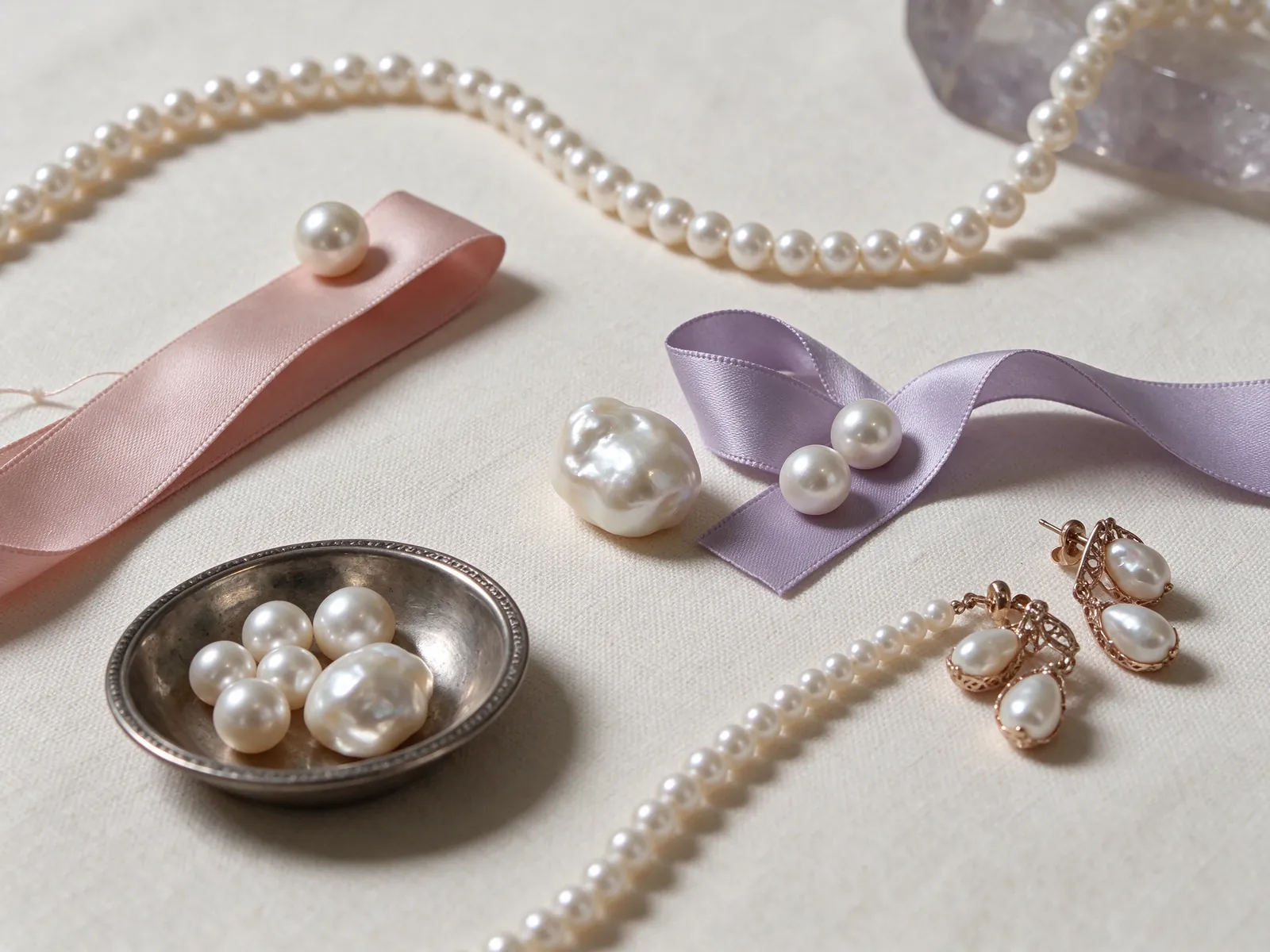
A surface assessment should describe more than the presence of a dot or mark. Turn the pearl and observe where the feature sits, how much area it occupies and whether it is visible from the intended front. A close photograph may reveal details that are less noticeable in ordinary wear, while a carefully chosen angle may conceal another area. Use pearl surface quality as a prompt to ask specific questions rather than accepting a broad word such as flawless.
Shape needs a similarly practical approach. If you want orderly earrings, compare the outlines from the front and side. If you enjoy an organic silhouette, judge whether the variation supports the design you like. Neither preference establishes a universal price ranking. For a pendant, see which face turns forward when it hangs naturally. The shape that looks appealing on a flat surface may create a different impression once the piece is worn.
Separate residue from lasting surface features
Fingerprints, lighting and residue can complicate a photographic comparison. Ask about the location of a visible feature and, where appropriate, examine the appearance after suitable cleaning. For previously worn jewellery, distinguish the present condition from an earlier report description. An old document does not describe every change since it was issued, and cleaning should not be assumed to remove every mark. This distinction keeps your comparison focused on the actual piece.
Use size and colour to solve a proportion question
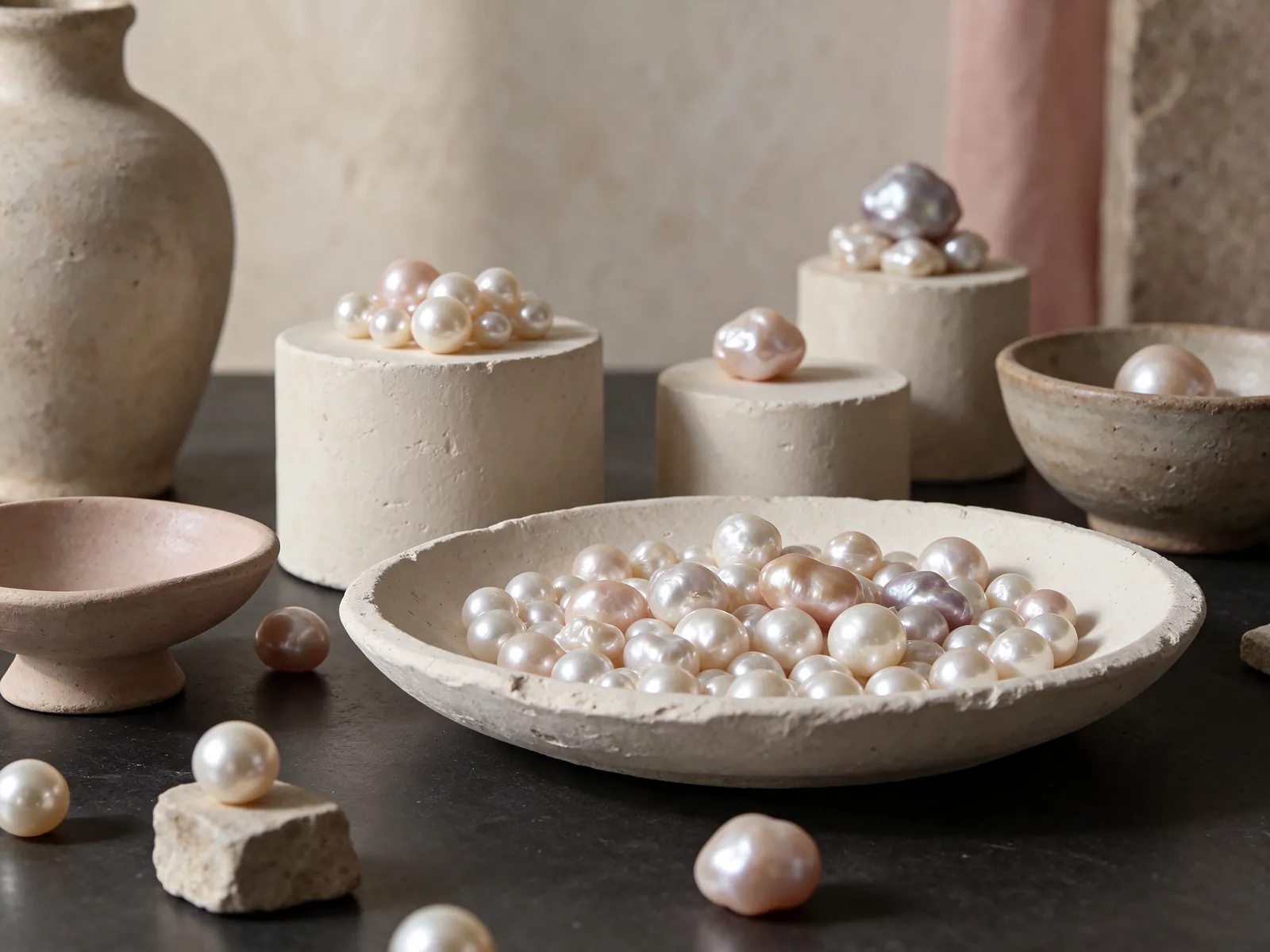
Size matters, but it is most useful as a value comparison within the same pearl type when other quality factors are comparable. Bigger is not automatically a better answer to a wardrobe need, and a diameter alone cannot explain a difference between unlike pearls. For earrings, consider the relationship with your ear and face; for a pendant, look at the space within your usual neckline. A more prominent silhouette may suit one outfit while another calls for restraint. Use the pearl size guide to understand stated dimensions, rather than estimating diameter from a model photograph or inventing a universal size-to-price ladder.
GIA distinguishes bodycolour, overtone and orient. Every pearl has a bodycolour, but it may not display overtone or orient. Begin with the main colour you see, then describe any additional colour impression as you turn the pearl. Colour or shape alone cannot establish origin, natural-versus-cultured identity or certification. In styling, a warm or cool impression is a matter of preference and contrast with clothing, not a universal declaration that one colour is more valuable for everyone. Record what you enjoy without presenting that preference as a laboratory result.
Identify what you are actually responding to
If one candidate feels more flattering, ask whether the reason is its colour, its brightness or its proportion. Try it with your regular hairstyle and glasses if these are part of your daily look. Naming the attraction makes budget decisions clearer. You may discover that the quality you enjoy most is not the largest stated dimension, and that paying attention to your own wearing habits resolves a comparison better than chasing an abstract specification.
Evaluate matching and construction at the jewellery level
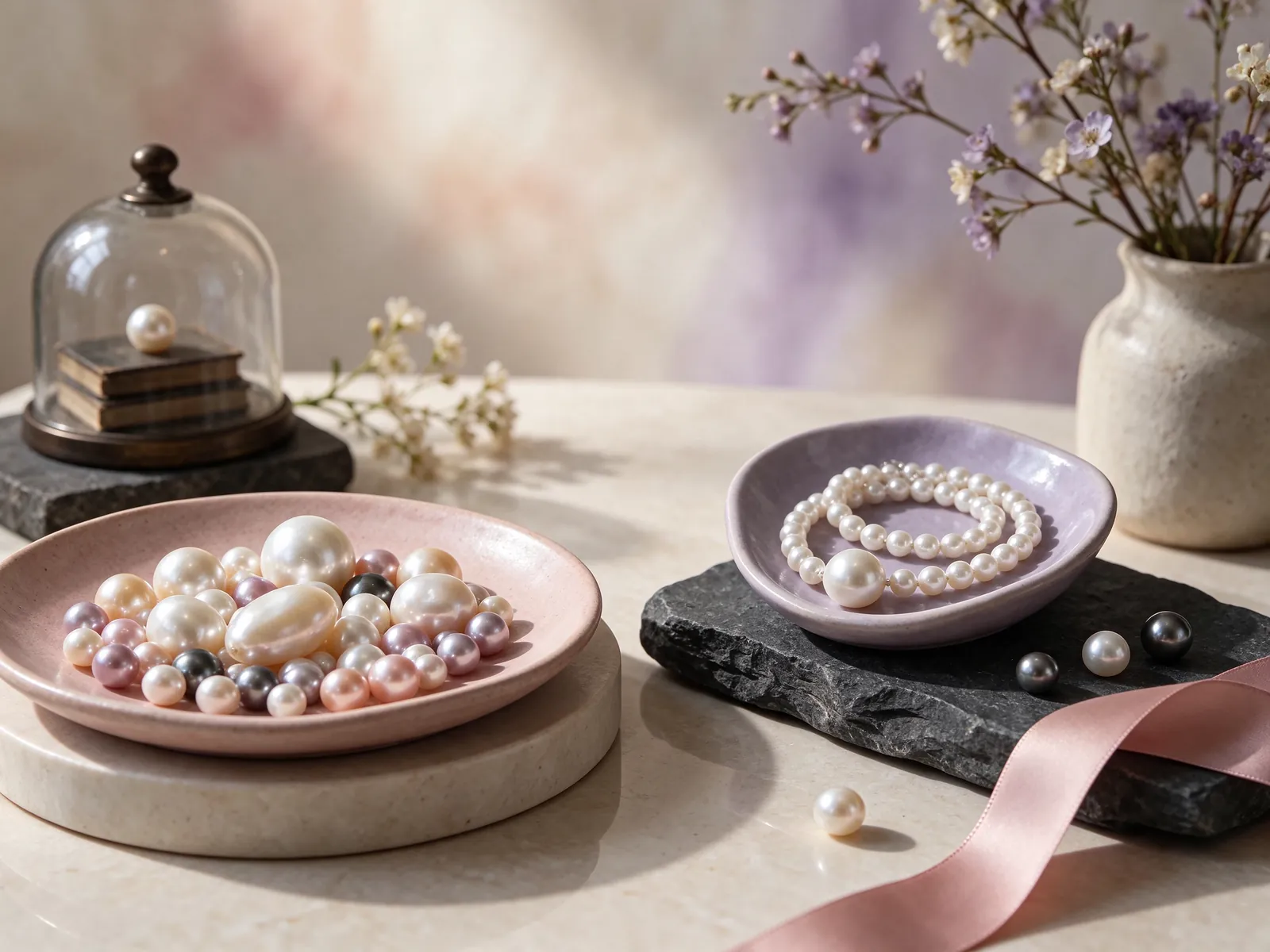
An attractive individual pearl does not automatically produce a coherent pair or strand. Compare earrings for their combined impression of colour, outline, size and lustre. With a strand, assess the whole progression rather than only the central pearl. The idea of pearl matching quality helps distinguish intentional variation from a combination that does not achieve its intended effect. Establish whether you want uniformity or a deliberate progression before treating every difference as a fault.
Construction should be assessed through observable details. Look at how the setting frames the pearl, whether the back sits comfortably in the intended position and whether you can operate the fastening. A loose pearl and a completed piece have different contents, so pearl appearance alone cannot explain their entire price difference. Keep the pearl description, metal information and construction details distinct when reading a quotation, and ask for a specific explanation of any feature you do not understand.
Test ordinary movements, not just a still pose
Consider how an earring interacts with hair when you turn your head, or how a pendant settles beside the collar of a jacket. Try the fastening in the way you would use it at home. These observations help assess convenience and styling; they are not a substitute for a security assessment. A visually elaborate piece and an easy everyday piece answer different needs, so neither should automatically be treated as the better purchase.
Set a budget around use and priorities
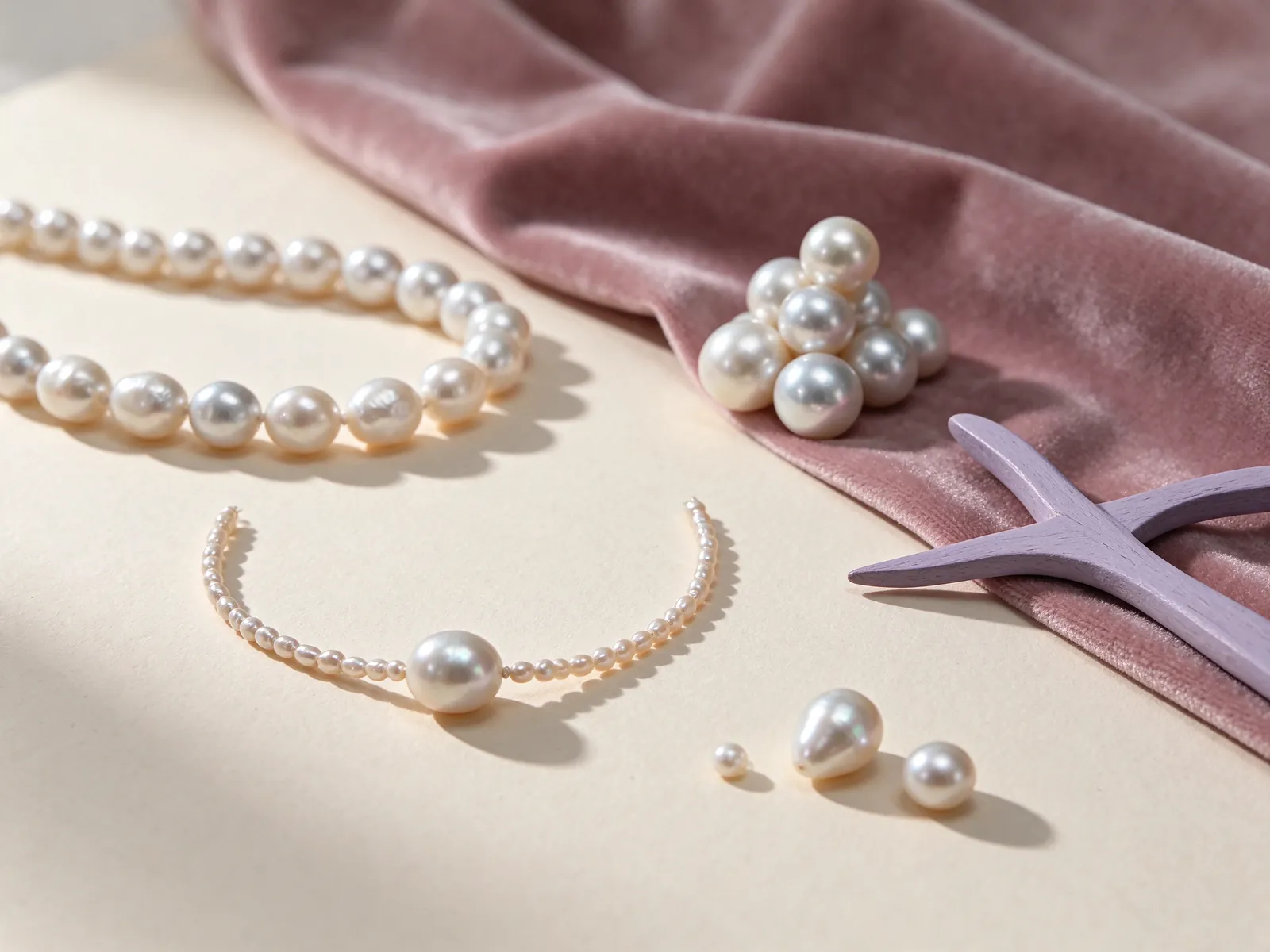
Write down the occasion, the feature you most want to enjoy and the wearing condition you will not compromise on. A daily choice may prioritise a clear visual effect and compatibility with familiar clothes. An occasional piece may be chosen for its relationship with a particular outfit. The approach to pearl gifts by budget works for self-purchases too: define priorities first, then compare acceptable differences, rather than allowing a prominent label to decide the entire allocation.
Read quotations within the same intended use and a comparable finished form. Establish which jewellery is described and which stated components are included; do not assume every accessory in an image comes with it. If one option costs more, ask what concrete difference accounts for the comparison instead of stopping at a general claim of superior quality. A price cannot establish pearl identity, treatment, origin or certification, and a purchase amount is not a promise of a future resale result.
For gifts, ask about style before status
Look at the recipient's usual jewellery scale, clothing colours and frequency of wear. These clues help you compare options without assigning them a quality label they never asked for. Explain your shortlist in practical terms: perhaps one offers the visual balance you prefer while another fits the intended neckline. For a buying discussion, bring the intended use and the report questions you want answered, rather than seeking a universal price for a name.
Finish with a comparison record and a care plan
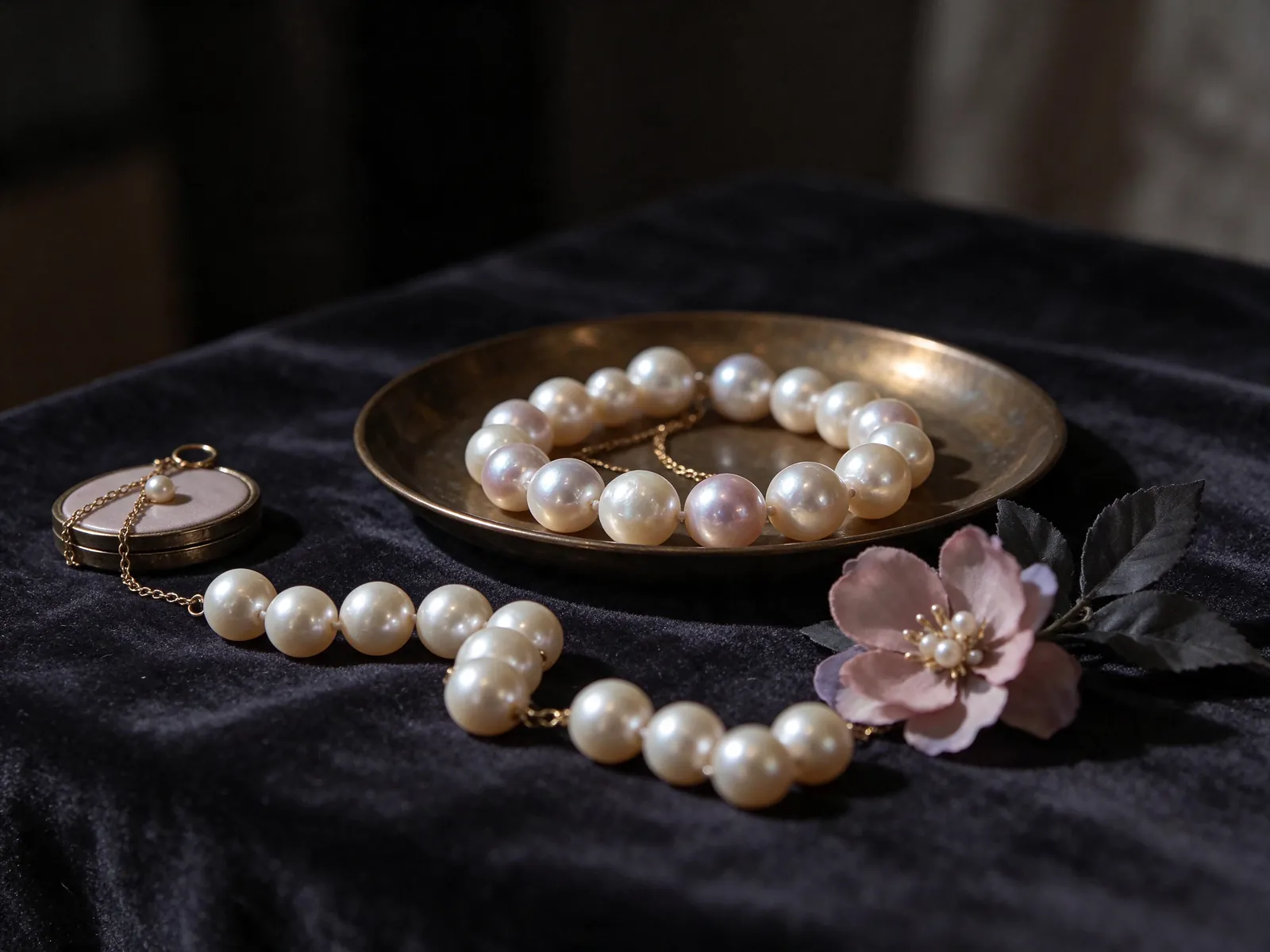
Use the same headings for each candidate: observed lustre, surface positions, shape, proportion, colour impression, matching, construction and document scope. Separate personal preference from stated information. Liking a soft outline is a preference; a dimension written in the description is supplied information. If something is absent, leave a clear question instead of completing the entry by guesswork. The images on this page illustrate knowledge and styling; they do not replace an item description or report. This record helps you remember meaningful differences after leaving the display environment.
Consider the care habits that accompany the choice. GIA advises wiping pearls with a very soft clean cloth after wear, avoiding acids, perfume, hair spray and excessive heat, and never using ultrasonic or steam cleaners. A pearl care guide can help establish a routine, but cleaning must also suit the string, adhesive and settings of the complete piece. Mild soapy water is not permission to soak every construction, and prolonged soaking should be avoided. If strung pearls are appropriately cleaned with water, the string must be completely dry before wearing. Suitable care is part of practical ownership, not a promise of permanent lustre or increasing value.
Replace a single value score with useful answers
Before deciding, answer three questions in your own words: what attracts you, what supports the difference from another option, and whether the piece fits your way of wearing jewellery. If the answer is only a prestigious name or a higher price, return to the observable details and the document. A sound choice can recognise reliable information and personal preference together, without forcing every factor into one universal score.
| Area | What to observe | What to clarify | Buying or styling implication |
|---|---|---|---|
| Lustre and nacre | Compare reflections in the same light | Keep visible lustre distinct from nacre information | Do not decide from one strongly lit image |
| Surface and shape | Turn the pearl and locate visible features | Ask for a specific surface description | Balance detail with the normal wearing view |
| Size and colour | Check proportion beside familiar clothes | Use stated dimensions, not photographic estimates | A larger look is not every wardrobe's priority |
| Matching and construction | Assess the pair or strand as a whole | Separate pearl, metal and construction descriptions | Consider coordination and ease of use |
| Label and quotation | Compare the same purpose and finished form | Read report scope and included components | A name alone cannot explain a price |
Pearl knowledge and authoritative references
GIA identifies seven pearl value factors: size, shape, colour, lustre, surface quality, nacre quality and matching. Matching is relevant to jewellery containing two or more pearls. These factors form a comparison framework, not a formula converting a combined score into a selling price.
Read the reference for this factFrequently asked questions
Is the largest pearl always the most valuable choice?
Not necessarily. Compare size within the same pearl type when other quality factors are comparable, rather than ranking unlike pearls by diameter alone. Lustre, surface, shape, colour and nacre also matter; matching applies to pairs and strands. For buying, the construction and proportions of the finished jewellery should suit the intended use.
Does a Hanadama label remove the need to examine the jewellery?
No. Hanadama is a quality label within Akoya pearls, not a price formula. Read the issuing laboratory, object identification and actual assessments, then compare the piece. Laboratory terminology and standards can differ. A certificate does not automatically provide a valuation or guarantee future resale value.
How can I compare earrings photographed in different lighting?
Seek views with a consistent background, light and angle, then compare the pair's overall colour, outline and lustre. Exposure and reflections can change the apparent brightness. Where possible, examine the earrings at a normal wearing distance rather than ranking isolated highlights.
Should a small visible mark rule a pearl out?
Consider its location, area and visibility in the intended wearing position, along with your tolerance and the other qualities. Distinguish residue from lasting surface features. A close-up mark is a useful question to investigate, not by itself a complete value assessment.
What should I ask when comparing two quotations?
Ask which finished piece each quotation describes, which stated components it includes, and where the pearl and construction differences lie. If a report accompanies the choice, check its scope and correspondence with the object. Compare concrete contents rather than relying on the word premium.
Updated: