

For certified Hanadama pearls, what should reports behind “Hanadama pearls with certificate” and “Hanadama quality Akoya pearls” identify about the issuer and the pearls?
Start by separating the jewellery description from the document itself. A phrase such as Hanadama pearls with certificate invites further reading: who issued that certificate, what does its assessment actually say, and what object does it describe? Read the complete document rather than a cropped cover or a card photographed beside a box. The title, body text and notes may answer different questions. A date helps organise the record, but it does not by itself tell you the condition of pearls after subsequent wear.
Next establish the connection between the report and the pearls being considered. Use any identifying details the document provides, such as a reference number, image, quantity or measurements; do not assume every issuer uses an identical layout. For a pair, ask whether both pearls are included. For a strand, distinguish the documented pearls from any additional pieces. The pearl grading guide provides a useful reading framework, but the particular document must still identify the particular sample. A certificate beside similar-looking jewellery is not enough to establish that connection. For a more detailed document checklist, how to read a pearl certificate separates the document type from the conclusions actually recorded.
Why is an authenticity statement alone insufficient for certified Hanadama pearls when reading “Hanadama pearls with certificate” or “Hanadama quality Akoya pearls”?
Identity and quality are separate questions, even when the documents come from the same issuer. Pearl Science Laboratory’s official report guide lists documents that establish that the sample is pearl without including a grade. It also lists a grade-free document recording nacre thickness in its remarks. Neither the laboratory name nor a thickness entry alone establishes a Hanadama assessment. AAA also does not identify an issuer or report scope on its own. Keep separate notes for identity, stated quality and the seller’s description, entering only what the relevant wording supports.

Distinguish a quality description from a named assessment
Hanadama quality Akoya pearls may appear as descriptive wording, so establish whether the phrase refers to an actual report assessment. Pearl Science Laboratory explains on its official website that the traditional term Hanadama generally refers to highest-quality pearls but lacks a clear definition; the laboratory sets its own criteria for Aurora Hanadama. Hanadama is a quality expression associated with Akoya, not a separate oyster species. Read Hanadama vs Akoya pearls to clarify this relationship, then return to the individual document. A seller’s description of Hanadama-like lustre does not supply the missing report.
For its own Aurora Hanadama designation, the laboratory specifies white-series Akoya pearls of at least 6 mm and nacre thickness of at least 0.4 mm. Shapes through semi-round are allowed; surface is checked against its standards, with particular emphasis on teri, assessed through brilliance and interference colour. These are that laboratory’s designation-specific conditions, not universal thresholds for every issuer’s Hanadama terminology or specifications for Flint jewellery. When reading Aurora Hanadama pearls, keep the complete name. A diameter or thickness figure on its own does not establish that all assessment requirements were met.
Read the sales sentence beside the document sentence
Place the complete sales sentence beside the relevant statement in the report. WSP’s current public article says that its Hanadama pearls come with a certificate from either Pearl Science Laboratory (PSL) or Pearl Research Laboratory (PRL), and notes that laboratories can differ in standards and terminology. This is WSP’s account of its own offering, not evidence that Flint holds equivalent documents. WSP pearl grading remains a useful related discussion of commercial wording, not a conversion from a seller’s letters to a particular laboratory’s designation. Ask which report is supplied and which sample it identifies.
Use physical quality factors alongside the paperwork
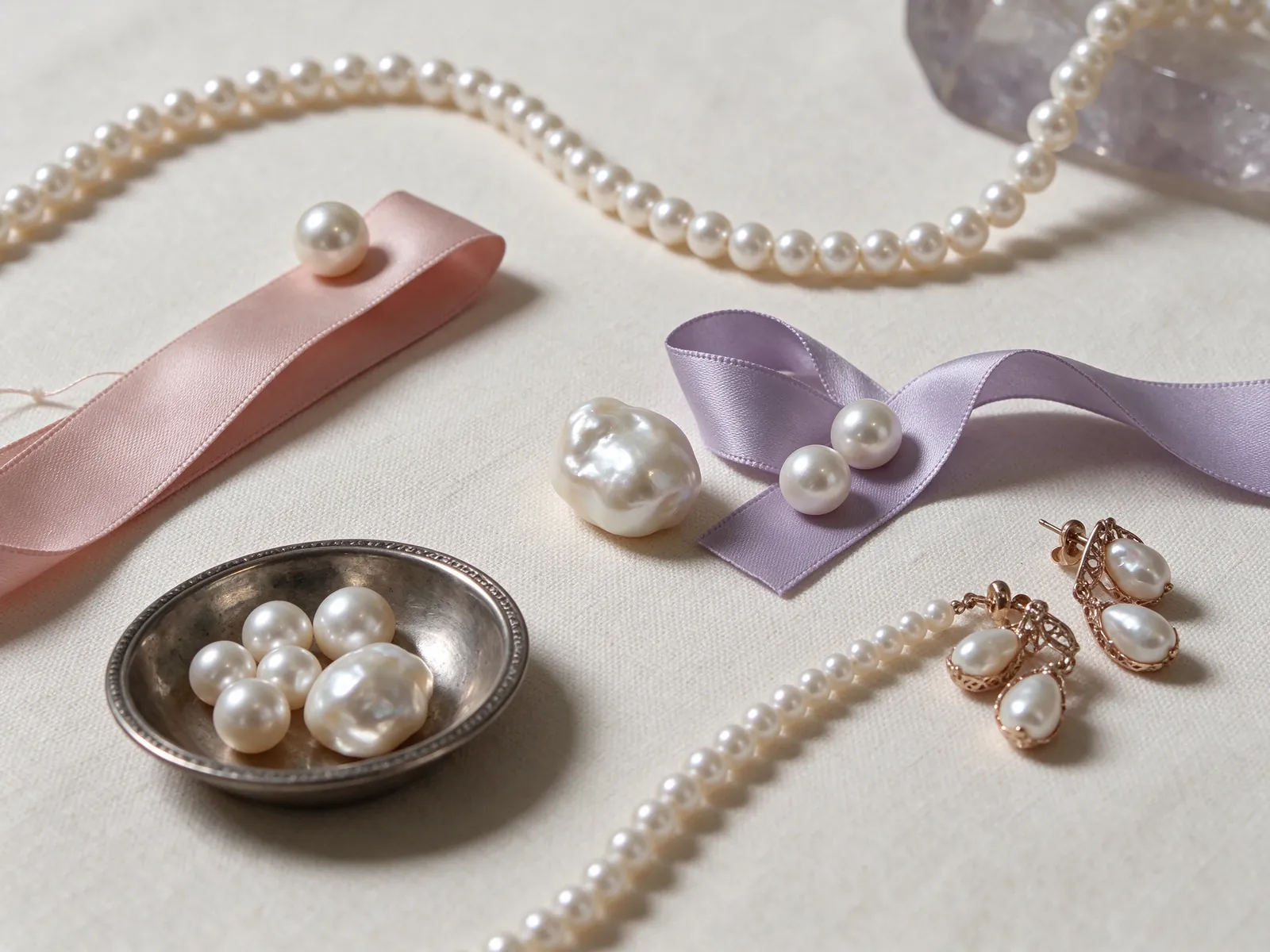
GIA discusses seven pearl quality and value factors: size, shape, colour, lustre, surface quality, nacre quality and matching. Matching applies when two or more pearls form a pair or group; it is not an extra identity test for a single focal pearl. These factors turn a general impression into useful observations, but do not replace a Hanadama report. Notice the clarity and brightness of reflections, and examine visible surface features from several angles. Consider which areas a setting conceals. A photographic highlight is not a measured result, and a frontal image cannot establish the condition of an unseen surface.
Try to compare photographs or objects under similar lighting, with a comparable background and viewing distance. Warm lighting can alter the impression of colour. GIA distinguishes bodycolour, overtone and orient, and notes that not every pearl displays all three. A white blouse and an ivory blouse may give different styling impressions, but neither establishes origin or certification. Describe the visual effect you prefer, then assess how the actual pearls look rather than assigning a pearl identity from a colour in a photograph.
Matching matters differently for a pendant, pair and strand
A pendant draws attention to one focal pearl and its visible face. Earrings invite comparison between both sides, while a strand has a continuous rhythm. View a pair together and a necklace both laid out and worn. This helps reveal differences in overall balance that isolated close-ups can obscure. Coherence within the stated design matters more than assuming every visible detail must be identical.
Check report scope for each jewellery format
When considering a Hanadama Akoya pearl necklace, distinguish the pearls, clasp and wearing length. A document assessing pearls does not necessarily describe the clasp or every component of the finished necklace. For styling, a plain neckline makes the strand's continuity easier to judge. A heavily decorated collar may hide part of it. Those observations help choose a useful format, but they should not be confused with the report's quality wording or taken as evidence of a particular grade.
A Hanadama pearl pendant concentrates the visual emphasis in a smaller area. Consider the visible pearl surface, pendant orientation and the way the chain sits against your usual neckline. A report for the focal pearl does not automatically cover the chain or additional pearls. For earrings, check the pair together with hair tucked back, then with your everyday hairstyle. The same pearl description can serve quite different wardrobe needs; paperwork does not select the best format for every wearer.
A set needs a piece-by-piece connection
List the necklace, earrings and any other pieces separately when reading a set description. A document for the strand cannot automatically be extended to the earrings. Similarly, a report for one pearl does not establish the status of other pearls with a similar appearance. Keep each object and its documented scope together rather than relying on the collective name of the set.

Compare measurements and purchase information on like terms
First identify what a measurement refers to. Pearl diameter, total pendant length and necklace wearing length are different quantities. A close-up can make a pearl look large without supplying any actual dimension. When comparing options, place the stated pearl measurements beside each other and the finished jewellery measurements in a separate category. If one description gives only overall dimensions, it cannot directly answer the same question as another description giving pearl diameter. Neckline and ear-side proportions still matter after the numbers are understood.
Price comparisons also need comparable descriptions. Two pieces using the Hanadama name may differ in pearl quantity, stated size, matching, mounting and report scope. Establish whether a quoted amount refers to a pearl, strand or complete piece of jewellery before making comparisons. A quality report is not a valuation or a promise of resale value. For a gift, first establish whether the recipient prefers a focal pendant, a continuous necklace or earrings; a prominent quality name cannot answer that preference.
Let the intended use shape the comparison checklist
For office wear, consider high collars, headphones and bag straps that may interact with the chosen format. For an occasion, look at the balance between neckline, hairstyle and other jewellery. Record practical requirements alongside report details. Do not fill unknown specifications with assumptions merely to make two options look comparable: a clear unanswered question is more useful than an invented similarity.

Keep a clear record without expanding what a report proves
Read each statement within its stated scope. Do not infer origin, treatment status or natural-versus-cultured identity from the Hanadama name, a round shape or a white appearance. If the document addresses one of those questions, that does not mean it addresses all of them. Ask separately what identity is stated, what quality assessment is given and which pearls are identified. This keeps the word certified from carrying several meanings that the actual text may not support.
Retain a complete document image, the purchase description and photographs identifying the object. If pearls are restrung, replaced or moved into a pendant, retain the explanation of those changes and their connection to the original sample. The original wording should not be extended to newly added pearls. An earlier assessment also does not describe every aspect of present condition after wear. Inspect the current visible surface rather than relying solely on the wording in an older document.
Metal and skin contact require separate information
A pearl assessment is not a description of the clasp, chain or ear post, and it does not guarantee a skin response. Read pearl jewellery and metal allergies if previous jewellery has caused discomfort, and distinguish each skin-contact component. The topic choosing metals for pearl jewellery addresses another part of the selection process. Keep that discussion separate from the pearl's assessment rather than treating certification as a universal suitability promise.

Wear and care remain important after choosing a documented pearl
GIA ranks pearl at 2.5 on the Mohs hardness scale. A quality designation does not remove the need for gentle care. After wearing, wipe pearls with a very soft, clean cloth. Avoid acids, perfume, hair spray and excessive heat. Completing fragrance and hair preparations before putting pearls on helps avoid spraying products directly onto them. Store them separately from jewellery that could rub against their surfaces, and avoid forcing a strand into a space that requires pulling or crushing it.
Do not use ultrasonic or steam cleaners for pearls. Any wet cleaning must account for the entire piece, including string, adhesive, settings and metal; a quality report is not permission for prolonged soaking. If a strung piece has been cleaned with water, let its string dry completely before wearing, rather than relying on a dry-looking pearl surface. Cleaning is not a fresh assessment and cannot be assumed to reverse wear or yellowing. Before wearing the piece again, check the visible surfaces, string and clasp. If something appears damaged or insecure, stop wearing it and seek appropriate inspection.
Use styling observations, not illustrations, to understand your preference
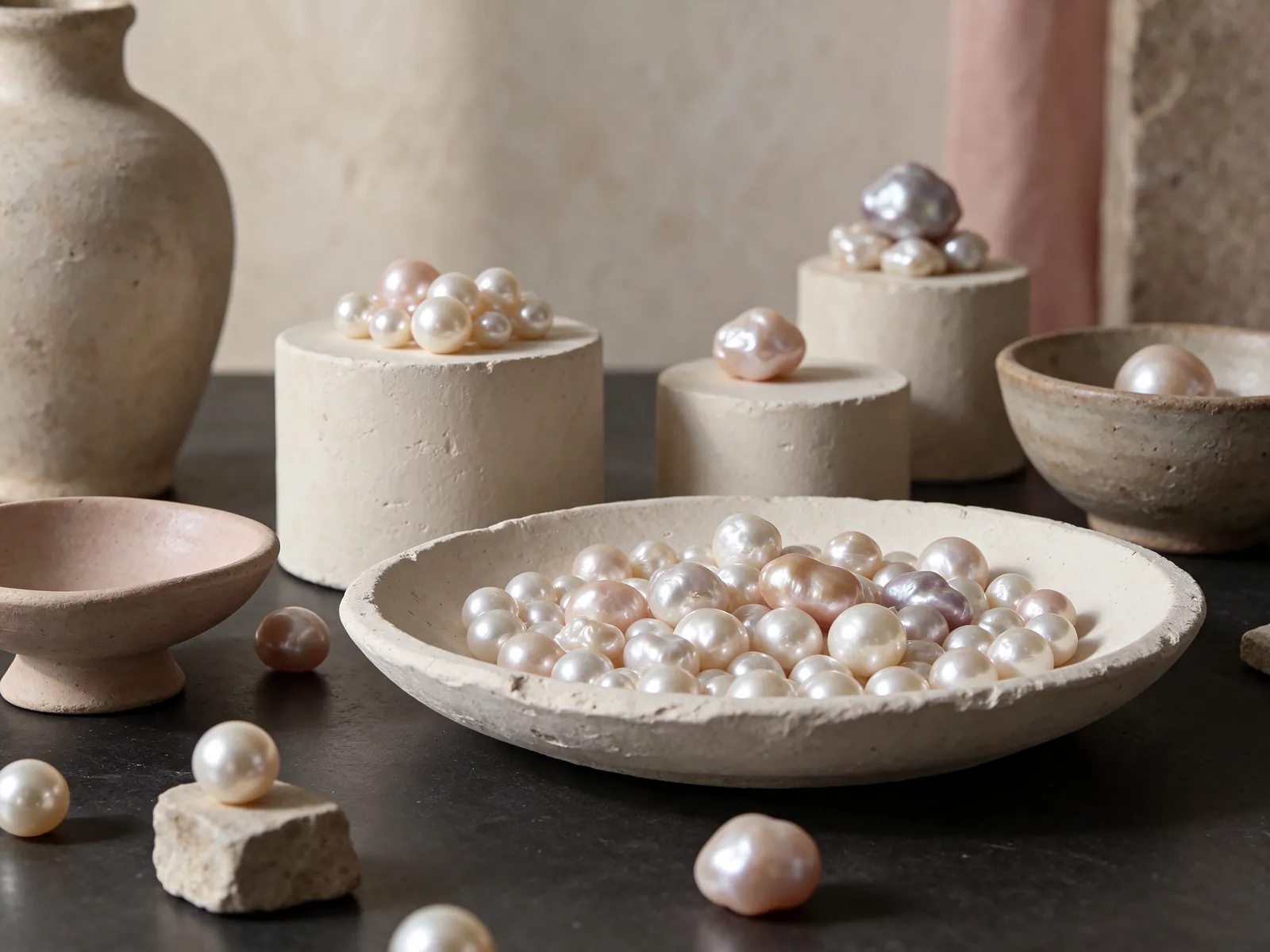
White clothing can emphasise a crisp outline, while warm ivory creates a softer backdrop. View pearls against clothes you actually wear and consider the neckline and other accessories. Background, lighting and make-up influence the impression without establishing Hanadama status. Images on this page are styling and educational illustrations, not individual pearl reports or evidence of type, origin, grade, dimensions, price or availability. Keep personal taste, physical observation and document content distinct, so that the choice is attractive without turning a visual effect into a certification claim.
| Description | What to read | What not to assume | Practical question |
|---|---|---|---|
| Certified Hanadama pearls | Issuer, exact assessment and sample connection | Every similarly named piece shares the report | Does this cover one pearl, a pair or a strand? |
| Hanadama pearls with certificate | Document type and assessment scope | Any authenticity document establishes Hanadama quality | Does it address identity, quality or both? |
| Hanadama quality Akoya pearls | Descriptive wording versus a stated report assessment | The phrase itself supplies certification | Which document statement supports this wording? |
| AAA | The seller's criteria and descriptions | A universal conversion to Hanadama | Which quality characteristics are being compared? |
| A documented strand or set | Each piece and the identified sample | Additional pearls and metal components share the assessment | Which pearls in the set are explicitly connected? |
Pearl knowledge and authoritative references
Pearl Science Laboratory’s own Aurora Hanadama criteria specify white-series Akoya pearls of at least 6 mm and nacre thickness of at least 0.4 mm, alongside its shape, surface and teri assessments. These are designation-specific criteria, not universal Hanadama thresholds or Flint jewellery specifications.
Read the reference for this factFrequently asked questions
Is a photograph of the certificate cover enough?
Usually it does not answer the scope and sample questions. Read the complete text and notes, then connect any available identifying details to the pearls being considered. A clear full image is more useful than guessing from an attractive cover.
Can a report for one pearl describe both earrings?
Not automatically. Establish which pearl it identifies and whether the other pearl has an applicable assessment. Similar appearance is useful for judging a pair's balance, but it does not establish shared document coverage.
Does Hanadama-like lustre mean certified Hanadama pearls?
No. A lustre description concerns appearance or a seller's quality wording. Reading a certification claim requires the issuer, stated assessment and connection to the particular pearls. The descriptive phrase alone does not replace that information.
What should I retain if a strand is restrung?
Keep the full original document, identifying photographs and a record of replacements or changes. Understand which pearls still correspond to the original sample. Newly added pearls cannot automatically inherit the assessment recorded for the earlier strand.
Can a necklace with a Hanadama report be steam-cleaned?
No. GIA advises that pearls should never be cleaned with steam or ultrasonic cleaners. A quality designation does not change that guidance. Routine care uses a very soft, clean cloth after wearing, with avoidance of perfume, hair spray and excessive heat.
Updated: