

How Do Face and Side Views Help You Compare coin pearls and flat pearls with disc shaped pearls?
Begin with the silhouette rather than the label. Coin pearls suggest a broad, comparatively flattened form, but the outline need not resemble a precisely manufactured coin. Look straight at the face for roundness, an elongated direction and any uneven sections along the edge. The pearl shape guide helps place those observations in context: a face-on outline and a three-dimensional profile answer different questions, even when the description sounds simple.
Next, look at the side and reverse. Flat pearls may have curved faces, a thicker centre or a profile that is not symmetrical. Disc shaped pearls can therefore share a general impression without having identical proportions. An angled photograph can make a round face appear oval and conceal part of the thickness. Prefer several complementary views when comparing appearance, and do not assume the brightest face tells you what the reverse looks like.
For coin pearls and flat pearls, Why Doesn't the Label disc shaped pearls Establish Type or Origin?
A shape term is not a pearl identification. WSP mentions coin forms in its freshwater pearl discussion, which provides context for the vocabulary rather than a test for an individual pearl. Species, origin and natural or cultured identity require their own information. Neither a circular silhouette nor a thin edge supplies those answers.

Distinguish a flattened profile from a dome or an oval body
A broad face does not necessarily mean two flat surfaces. Inspect where the profile becomes thicker and whether the edge tapers smoothly or unevenly. When comparing half round pearls, pay attention to the relationship between the domed face and the base, rather than treating every circular front view as equivalent. The useful question is which visible volume you prefer: a gentle, broad curve or a more pronounced raised form.
A slightly elongated coin outline also needs to be distinguished from a fuller oval body. With oval pearls, compare the longest direction, the position of the widest point and the depth visible from the side. A similar front outline can belong to quite different overall proportions. Place photographs at comparable angles before judging a pair; a tilted view beside a straight-on view can create a difference that is mainly photographic.
What does a rotating view add?
As the pearl turns, notice when the broad face narrows and the edge becomes visible. That transition helps explain the profile more clearly than a stationary highlight. A video remains an appearance aid, not a precision measurement, but it can show whether the two faces seem balanced and where an uneven edge sits.

Judge lustre and surface features across the broad face
The broad face often attracts attention first, so look beyond its brightest reflection. Consider the clarity of reflected light and the surface around it. GIA treats lustre and surface quality as separate pearl value factors: a strong reflection does not establish a feature-free surface, and a visible uneven area is not by itself an identity test. Comparing similar views under soft and more concentrated light helps separate the pearl's appearance from the photograph's lighting choices.
Location matters when deciding whether a surface feature bothers you. A mark near the centre of the outward face may be more noticeable than one close to an obscured edge. If you are comparing ridged appearances, circle pearls address a different descriptive feature from a coin outline. Consider the placement of the ridges or uneven areas alongside overall lustre, rather than assuming every irregularity has the same visual effect.
Keep colour comparisons consistent
A warm wall, white collar or different lamp can change how colour appears in a photograph. GIA distinguishes bodycolour, overtone and orient, and not every pearl has all three. Compare against similar backgrounds and identify whether you mean the overall hue or a surface colour effect; neither alone proves origin or treatment status.
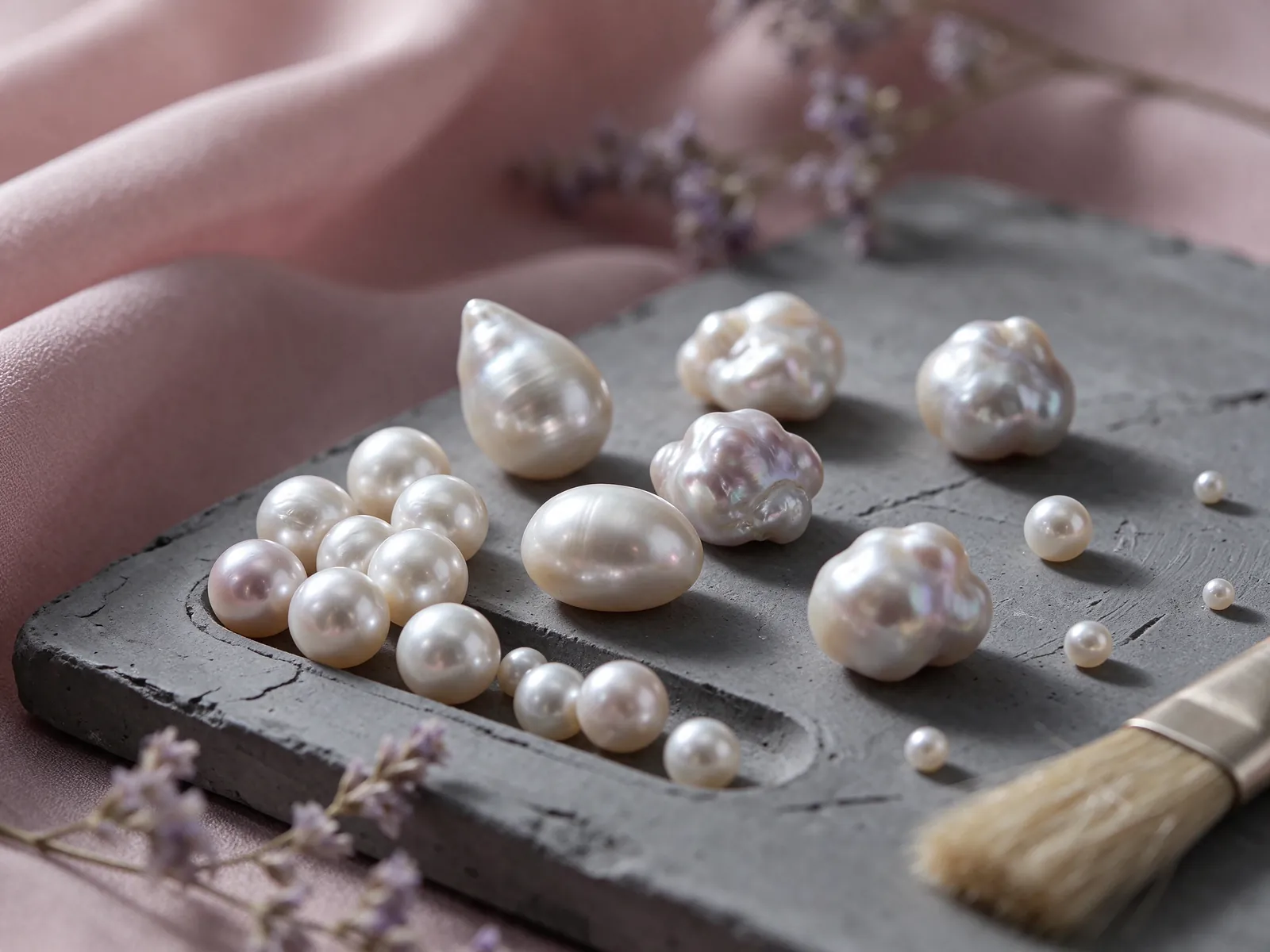
Read dimensions together with the intended wearing direction
One measurement may not describe a flattened form completely. When dimensions are given, establish whether they refer to face width, the longest direction or thickness. Those measurements should not be compared as though they were interchangeable. Screen size is also unreliable because cropping and image scaling alter the apparent size. For a restrained look, consider the broad face against your usual neckline and nearby jewellery, rather than assuming a thin pearl must look small.
Ask how the pearl is intended to face when worn and whether it can turn towards its edge. A flattened form may look noticeably different as its broad face rotates away. If you prefer a more vertical visual rhythm, drop shaped pearls offer a useful comparison through their narrowing end and directional outline. This is a way to clarify your preference for a broad focal area or a flowing line, not a rule assigning shapes to particular occasions.
Which face will actually be visible?
Compare the outward face, reverse and any visible attachment together. A hole position or setting can influence orientation and hide part of the edge. Establish what is visible during normal movement before deciding that one attractive face represents the whole appearance. This is more informative than asking for the shape name alone.
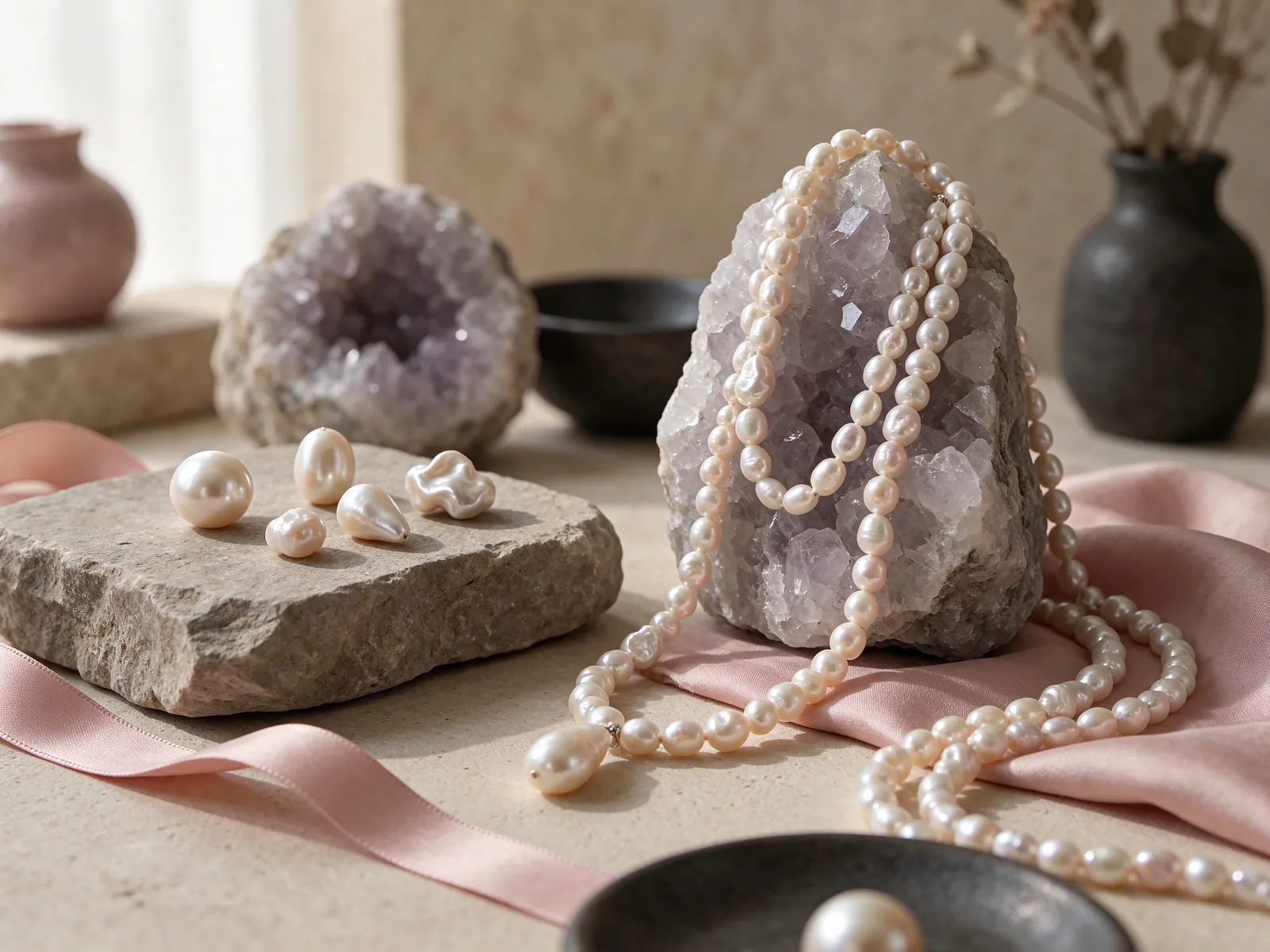
Build an outfit around a clear shape rather than a busy arrangement
A simple neckline and a quieter fabric pattern can make a broad, rounded silhouette easier to see. If your clothing already has large dots or dense decoration, the pearl outline may compete with that background. You need not automatically choose a larger pearl; reducing nearby accessories or changing the visible background may create a clearer focal point. Imagine the shape with clothes you regularly wear, not only against a display photograph.
For mixed shapes, decide which element should lead. The elongated line of stick pearls offers a different direction from a broad disc, while rice shaped pearls provide another slender-outline comparison. These contrasts help you decide between compact visual weight and a more continuous linear rhythm. There is no requirement to match every shape, but allowing each element to compete equally can make the arrangement feel crowded and obscure the outline that first appealed to you.
How should a pair or group be compared?
View the group against one background and at comparable angles. Compare outline, thickness, colour and lustre before focusing on individual features. Matching is one of GIA's value factors, but a pleasing group need not erase every difference. Decide whether you prefer consistency or visible variation, and assess the complete arrangement rather than its most flattering single pearl.
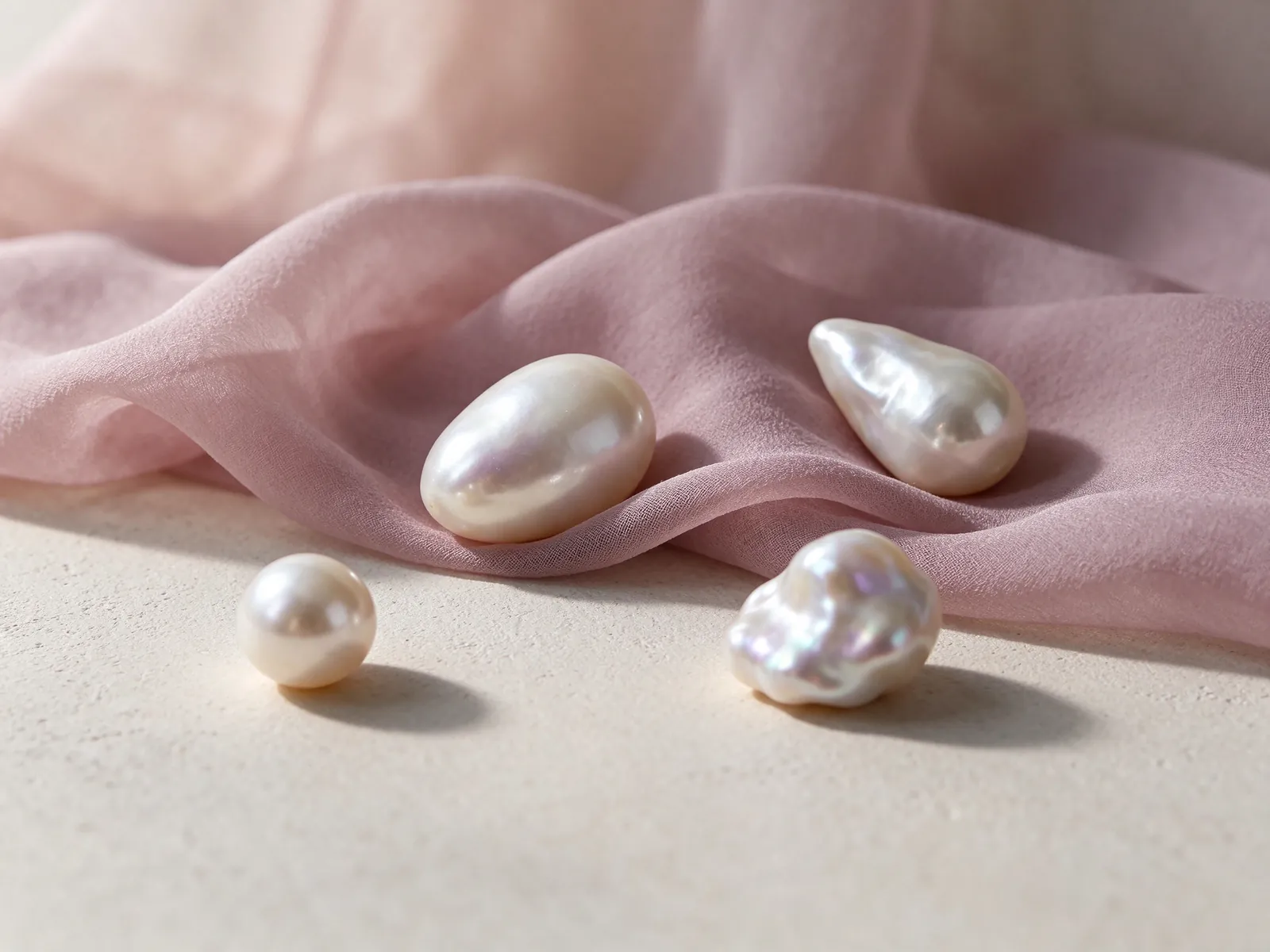
Separate appearance preferences from identity information
Read a description in two parts. Coin, flat and disc-shaped tell you about form; pearl type, origin and natural or cultured identity belong to a different set of information. If only the shape is stated, do not fill in the missing identity yourself. Where documentation is provided, read what it actually addresses and which pearl or group it covers. An accessible shape name should not replace the information you need to understand the object.
GIA lists seven pearl value factors: size, shape, colour, lustre, surface quality, nacre quality and matching. For a coin-shaped appearance, this framework is useful because roundness in the front view addresses only part of the assessment. It does not establish the other factors. Start by describing the appearance that matters to you, then use the separate categories to organise comparisons rather than treating a shape word as a complete quality grade.
Ask questions with a specific visual purpose
Explain the outline you like, your preferred impression of thickness and how you expect to wear it. Then ask for complementary views, the direction of any stated measurements and the available identity description. Each question resolves a different uncertainty; a request for a universal coin-shape grade would be less helpful.
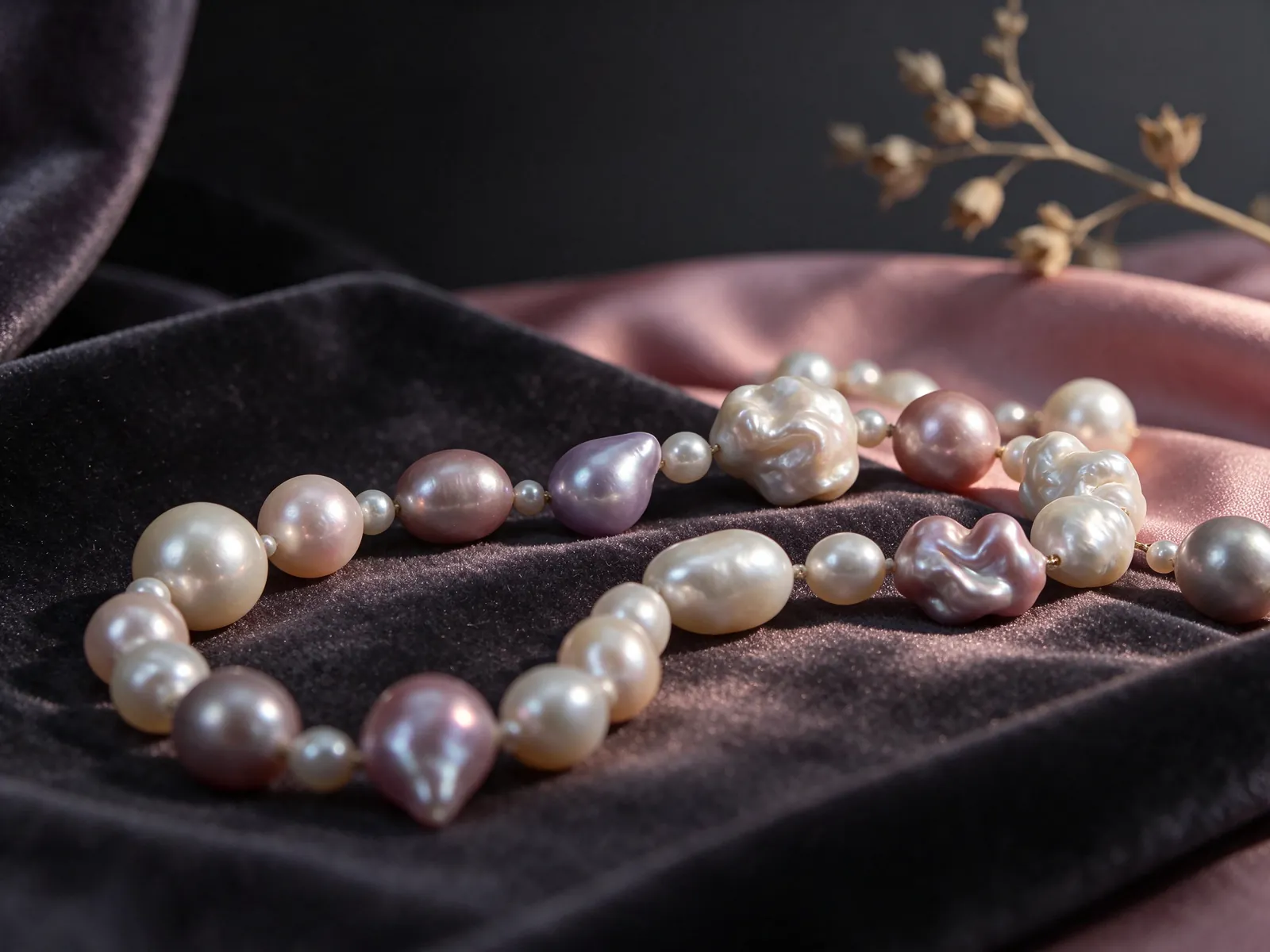
Protect the face and edge through appropriate pearl care
GIA gives pearl a Mohs hardness of 2.5, so avoid rubbing it against harder objects. A flattened form deserves attention at both the broad face and the edge. Store pearl jewellery so that other pieces do not press or scrape against those areas. The hardness figure is not a promised lifespan or an impact-resistance rating for a particular shape; its practical value here is the reminder to reduce abrasion and avoid unsuitable cleaning methods.
After wearing, gently wipe with a very soft, clean cloth. Avoid acids, perfume, hair spray and excessive heat, and never use ultrasonic or steam cleaners for pearls. If strung pearls are cleaned with water, the string must be completely dry before they are worn again. A broad face does not call for stronger rubbing or polishing products. Care for the pearl material itself rather than assuming a flattened profile makes it waterproof or more resilient.
Make a gentle visual check before wearing
Under soft light, notice any new edge damage, unusual surface change or loose visible connection. Stop wearing a piece with damage or looseness and seek an appropriate assessment rather than pulling it or attempting a repair with glue. Knowing its usual appearance is more useful than repeatedly rubbing an area to test the shine. For a conversation about a flattened outline, the two faces or wearing direction, contact Flint Jewellery on WhatsApp +85260106207 and tell us which pearl shapes appeal to you.
| Observation | What to inspect | Useful question | Styling or care relevance |
|---|---|---|---|
| Front outline | Roundness, long direction and uneven edges | Is this a straight-on view? | A quieter background makes the silhouette clearer |
| Side profile | Centre curve, edge thickness and reverse | Which direction does the measurement describe? | Rotation can change the visible area |
| Lustre and surface | Reflection clarity and feature location | Can both faces be compared in similar light? | The outward face shapes the main impression |
| Group matching | Outline, colour, lustre and thickness together | Are all pearls shown at comparable angles? | Choose a deliberate balance of consistency and variation |
| Identity and care | Separate identity information and applicable documents | What does the description actually establish? | Store without rubbing; avoid ultrasonic and steam cleaning |
Pearl knowledge and authoritative references
GIA identifies seven pearl value factors: size, shape, colour, lustre, surface quality, nacre quality and matching. A coin-shaped outline concerns the shape factor, not the complete assessment.
Read the reference for this factFrequently asked questions
Must a coin pearl be flat on both sides?
No. The name describes a general form, not two perfectly flat faces. A curved centre, tapered edge or unequal reverse may still be part of the appearance described. Compare front, side and reverse views.
Can I compare flat pearls using a single diameter?
First establish what that measurement refers to. Face width, the longest direction and thickness describe different aspects of a flattened pearl. A photograph's displayed size cannot supply a missing dimension.
Are coin and baroque interchangeable terms?
No. Coin emphasises a flattened, disc-like impression, while baroque concerns irregular form. Descriptions may overlap in an individual appearance, but neither label automatically establishes the other or confirms pearl identity.
Does an uneven broad face show that a pearl is imitation?
Not by itself. A surface feature is not an identity test. Consider its visual location separately from any natural or cultured identity information, and use applicable identification documentation when that distinction matters.
Should I polish a broad face more firmly to increase its shine?
No. Use a very soft, clean cloth gently after wearing. GIA lists pearl at Mohs hardness 2.5 and advises against ultrasonic and steam cleaning. A wider visible face does not justify abrasive rubbing or polishing products.
Updated: