
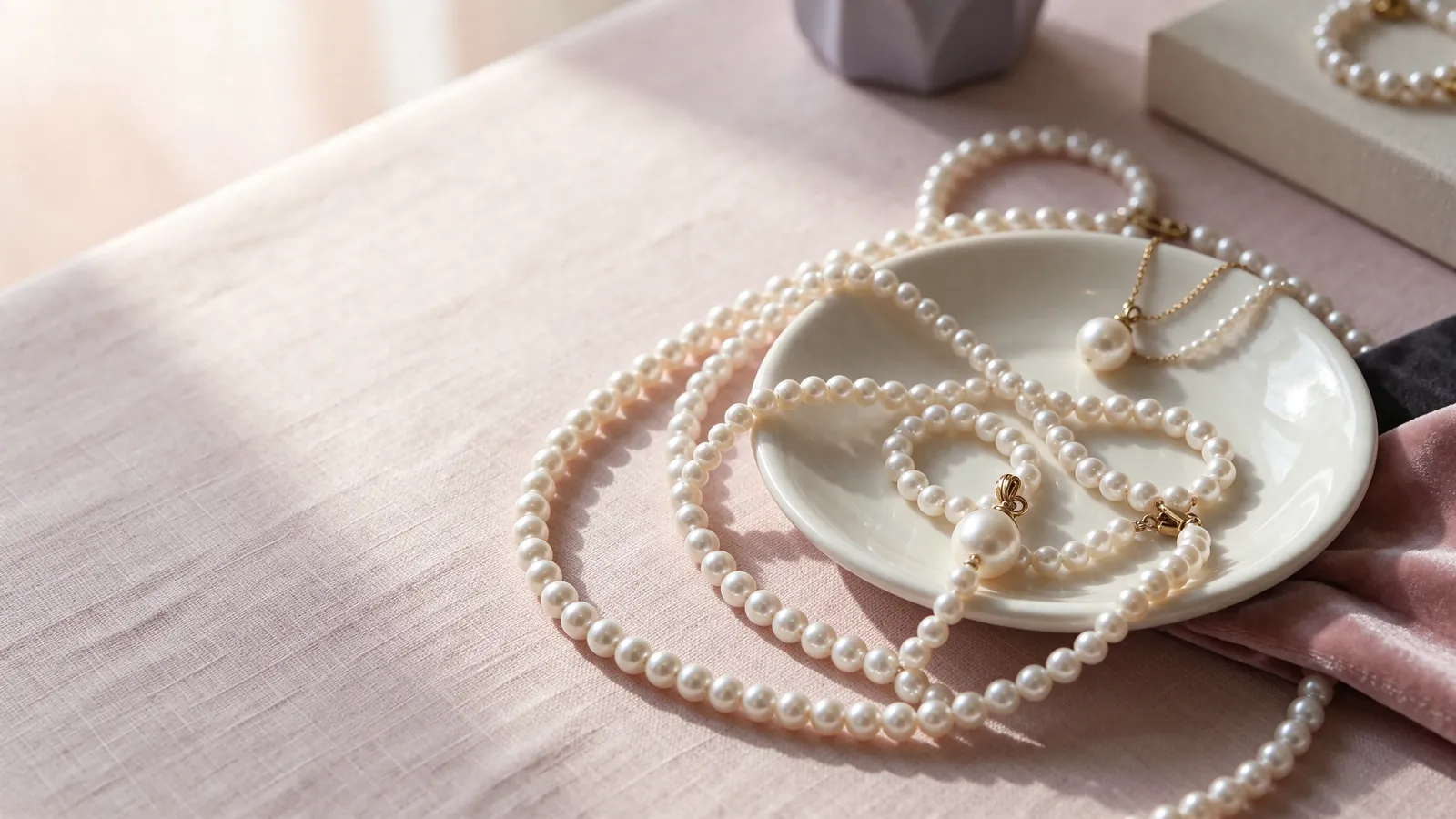
From formal pearl jewellery sets to a ceremony pearl necklace and earring set: what dress codes matter when choosing pearl sets for special occasions?
Start with the invitation and the part you will play in the event. Someone presenting an award, a guest watching the ceremony and a host greeting people throughout the afternoon have different practical needs. Where the organiser specifies clothing or ceremonial accessories, leave room for those first. Otherwise, use the outfit's lines and decoration to decide how much emphasis to add. Formal pearl jewellery sets can help organise a look, but a set is not an instruction to wear every component at once.
Choose a focal point before adding extra pieces. An open, undecorated neckline may give a necklace room to lead; a detailed bodice may work better with emphasis near the face. A ceremony pearl necklace and earring set should support that choice rather than compete with the clothing. Add each piece separately and step back to compare the whole outfit. Daytime presentations, seated dinners and evening receptions may involve different light and movement. When considering pearl sets for special occasions, test those situations rather than judging the whole schedule by one posed evening photograph.
Balancing formal pearl jewellery sets with your neckline and hairstyle: styling a ceremony pearl necklace and earring set as part of pearl sets for special occasions
Try the pairing with the intended neckline and a hairstyle close to the one you expect to wear. Hair worn up reveals the earring outline more clearly; loose hair can cover it or catch on fastenings. Check that the necklace sits deliberately above, below or within the neckline rather than repeatedly slipping over the fabric edge. Step back to assess your whole appearance before looking closely at individual pieces. Attractive details do not automatically make a balanced combination.
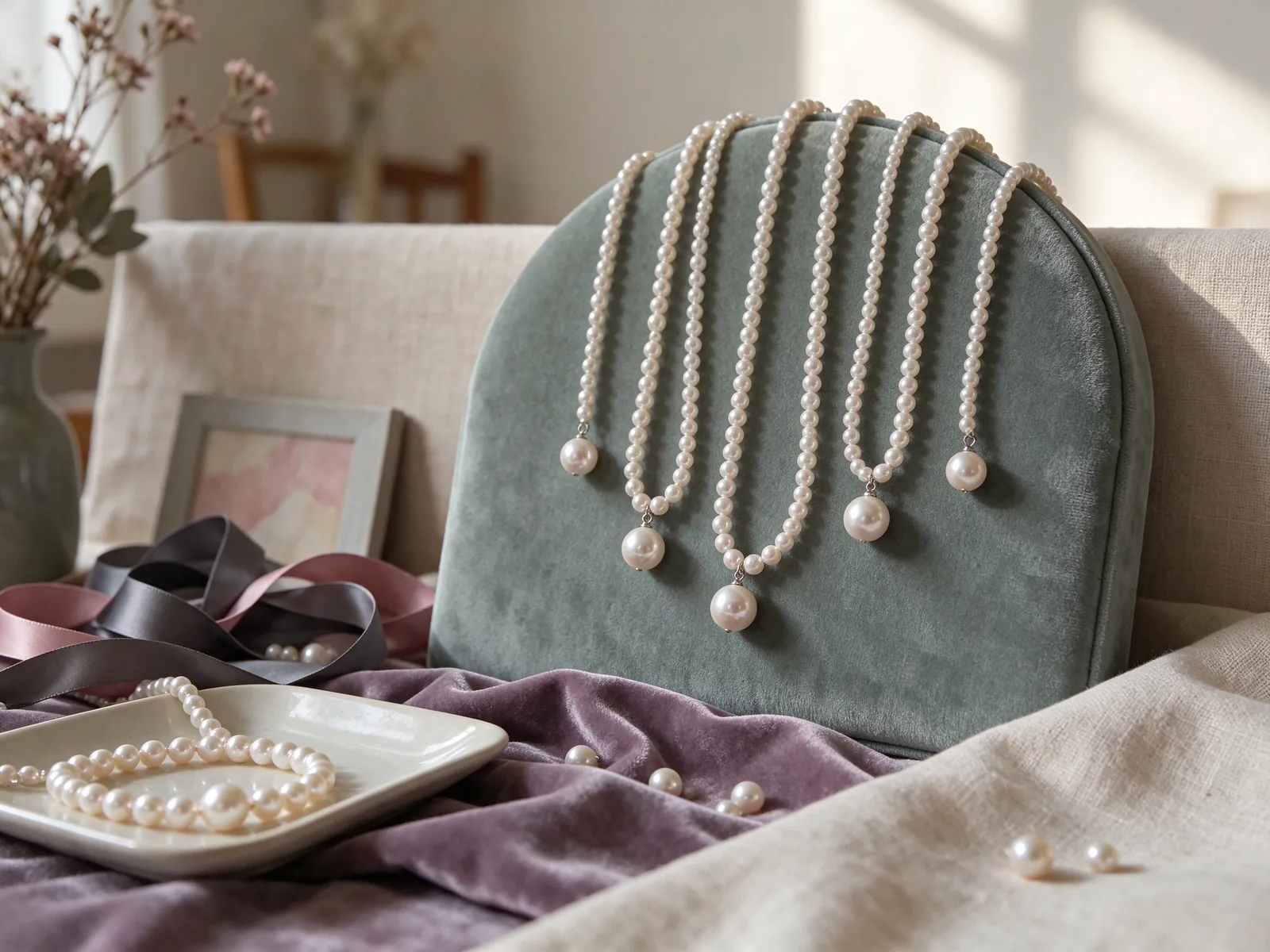
What makes necklace and earrings look coordinated?
Place both pieces against the same background in the same light. Compare the warmth or coolness of their colour, the appearance of lustre, their outlines and their relative visual size. Then try them on together: earrings sit beside the face, while a necklace may receive reflected colour from the outfit. Understanding pearl matching quality helps you judge the relationship between pieces without treating exact sameness as the only acceptable result. A shared visual direction can be more useful than matching every detail.
GIA identifies seven pearl value factors: size, shape, colour, lustre, surface quality, nacre quality and matching. They provide useful questions, not a grade you can award from a photograph. Examine the necklace as a whole and both earrings together, rather than selecting the brightest pearl as representative. A seller’s AAA or AAAA label is not a globally standardised scale or a GIA grade; ask how that seller defines it. If origin or natural-versus-cultured identity affects your decision, read the description and relevant documentation for the particular piece. Check what the document actually identifies. Identity information is not a price valuation, an appreciation promise or a brand service guarantee.
Use an existing piece as the starting point
A favourite necklace does not need replacing simply because it was bought on its own. Bring it into the comparison and decide what the earrings should contribute: a quiet echo, a clearer outline near the face or a deliberate contrast. Check the metal details and fastening shapes as well, because their lines affect the impression. Styling illustrations can suggest a direction, but cannot establish pearl type, identity, origin, grade, size or availability. For purchase information, use the description of the specific jewellery rather than treating an illustration as a product record.
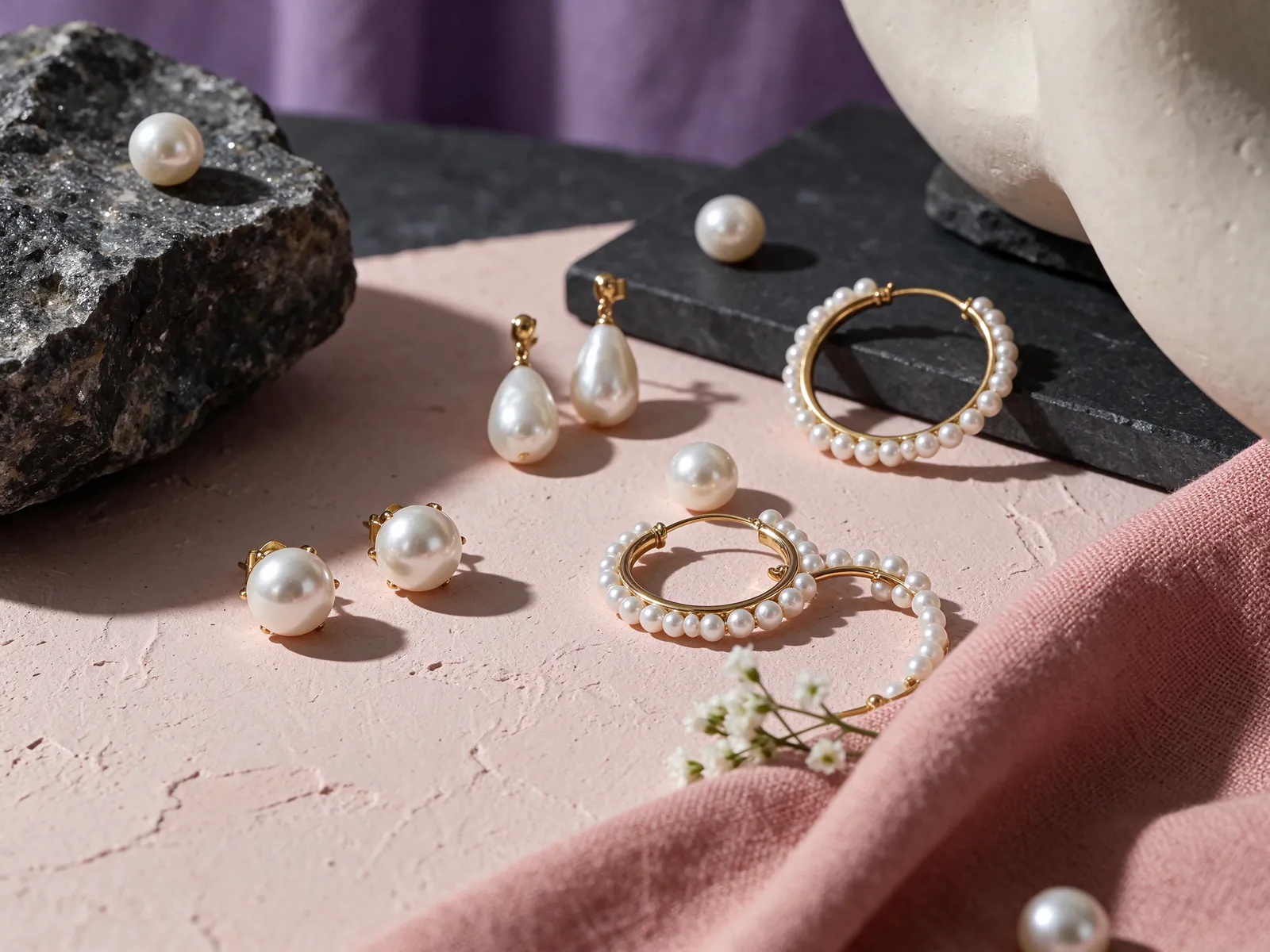
Let the neckline and fabric determine necklace placement
A round neck, boat neck, open shirt and off-the-shoulder dress offer different spaces. Instead of relying on a fixed length rule, check where the actual necklace rests on your body in the chosen outfit. It may sit fully against skin or fully over fabric; a position that crosses the edge can become distracting if it keeps moving. Add the jacket or shawl you will wear and see whether it pushes the necklace sideways or presses the fastening against your neck.
Lace, embroidery and beaded clothing already contain visual detail. Check for rubbing or catching, especially when putting on a jacket. If the neckline leaves little useful space, retaining the earrings alone may be the more comfortable choice. Another way to organise the outfit is to consider how to wear a pearl brooch, with attention to fabric support and placement. This is an alternative styling direction, not a reason to add a brooch, necklace and prominent earrings all together.
Check the seated view as well as the standing view
Sit down, lean slightly forward and turn to either side during the trial. A necklace that looks settled while standing may meet a clothing fastening or move towards a decorated area when seated. Rehearse putting on a shawl, removing the jacket and adjusting the neckline too; note whether a fastening needs assistance. A full-outfit photograph and a closer view can help compare proportions, but use them for styling rather than proof of quality. The actual fit and freedom to move deserve more weight than one flattering camera angle.
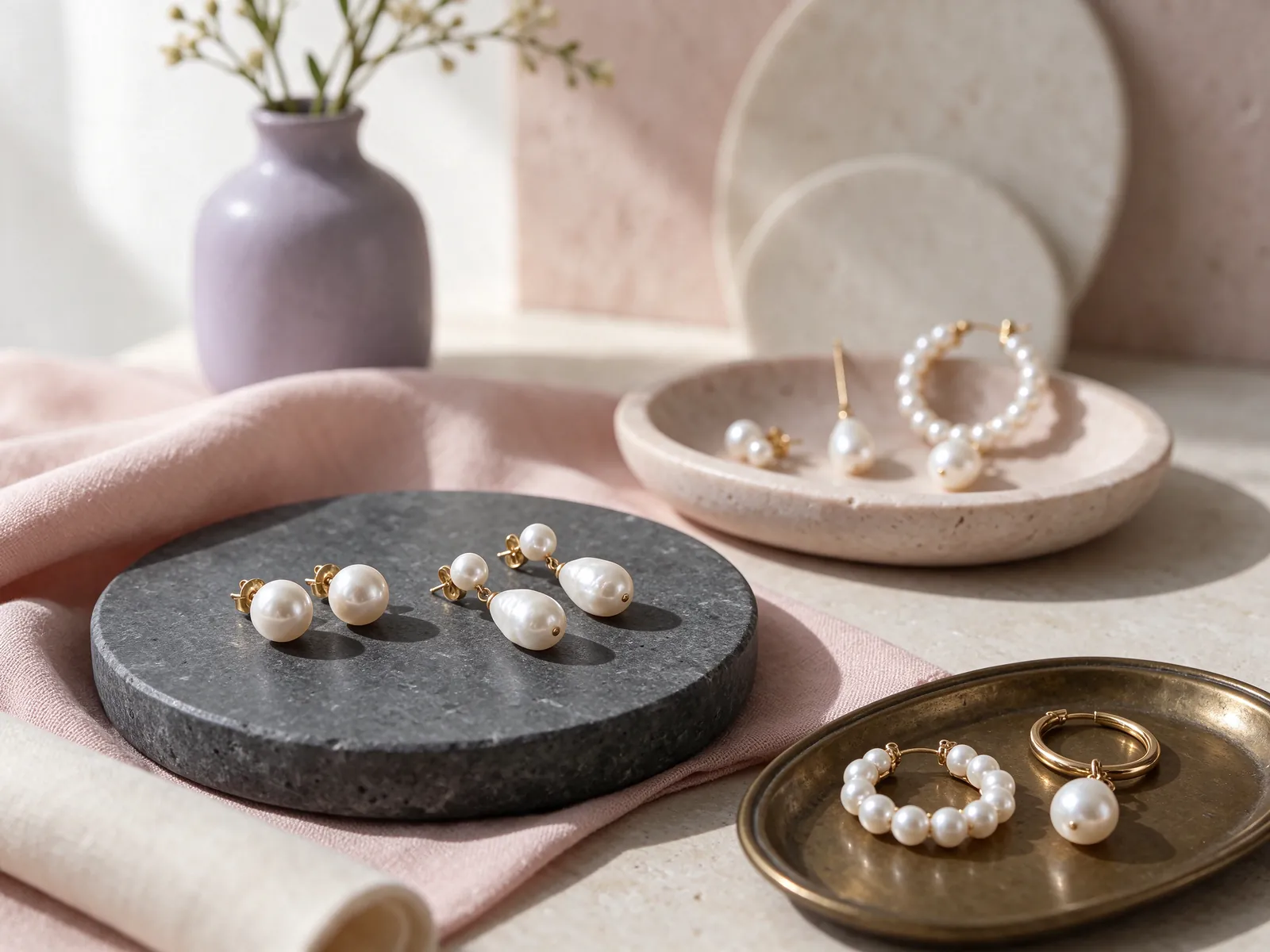
Choose earrings for movement, hair and personal comfort
There is no compulsory earring shape for short hair, loose hair or an updo. What matters is how the pieces behave with your own accessories. Try glasses, a headpiece or a hat at the same time if they are part of the occasion. Turn your head to check whether the earrings touch a collar, hair accessory or the side of your neck. Loose strands catching on a fastening can be more troublesome than an earring being partly hidden in a photograph.
Check the contact of posts and backs, how easily you can operate the fastenings and whether movement produces pulling or pressure. Wear the necklace at the same time to assess the combination, including anything that requires repeated adjustment. If jewellery causes pain or irritation, remove it rather than endure discomfort for a formal look. When discussing a choice, explain whether you usually wear pierced earrings, which closures you find manageable and any previous wearing difficulties. These details are more useful than assuming that a metal name alone promises suitability for every wearer.
Give one element the leading role
If the earrings are visually prominent, reduce the emphasis at the neckline or omit the necklace. If the necklace leads, earrings can provide a quieter connection near the face. Apply the same judgement when glasses, a headpiece or detailed make-up are present. Remove one item and compare the result before looking for another accessory. This simple exercise often makes the outfit clearer without changing the clothing or requiring a completely new pairing.
Adapt the pairing to your role at the ceremony
At a wedding, the bride may need to consider a veil and gown together, while attendants may work within an agreed styling arrangement. The guide to bridal pearl jewellery explores that wider outfit relationship. For attendants, pearl bridesmaid jewellery can follow a shared colour direction or focal point while allowing for different necklines, hairstyles and wearing preferences. Confirm any prescribed accessories with the organiser before making changes. Suitable existing pieces can also join the trial: coordination does not necessarily require everyone to buy or wear an identical necklace and earring combination simply for the group photograph.
Guests should begin with the host's instructions rather than assume one tradition applies everywhere. The discussion of wedding guest pearl jewellery etiquette can help frame questions about clothing and visual emphasis. For a graduation, include the gown, hood and cap in the trial. An award presentation may involve an official badge or other specified accessory, so reserve its position before adding jewellery. Pearls can form part of a formal outfit, but they cannot substitute for understanding the particular ceremony's requirements.
Plan for changes of venue or clothing
If a ceremony is followed by a dinner, decide beforehand which pieces will stay on when you change a jacket or rearrange your hair. Take soft, separate storage for anything you remove; loose earrings should not be dropped among keys or other hard objects. Where safe storage is difficult, a simpler pairing that works throughout the event can be easier to manage than carrying several accessories and improvising changes between activities.
Choose a milestone gift around the recipient's wardrobe
A gift for a ceremony should take account of life beyond the photograph. Does the recipient usually wear earrings, favour open necklines or prefer pieces that can be used separately? An existing necklace can provide a useful starting point. When considering coming of age pearl gifts, focus on the person's own preferences rather than deciding what their adult style ought to become. A pairing is more meaningful when the wearer can imagine using it with clothes they already enjoy.
The meaning of a gift can be decided between giver and recipient. June birthstone pearl meaning may provide background for a card, but a more personal message can explain why the pieces reminded you of the recipient’s usual clothing or the day you are marking. To preserve some surprise, ask whether they favour necklaces or earrings and quieter or more prominent styling, then keep the final combination undisclosed. Allowing each piece to be worn separately can also make the gift more flexible. Actual ear-wearing habits matter more than an expectation that the recipient will wear the full pairing every time.
Allocate your budget by likely use
Decide your total budget, then consider which piece will be worn most often. There is no reason to assume a set is automatically better value than separate pieces. Read what each purchase includes and distinguish a coordinated styling suggestion from the actual contents being offered. If the recipient already has comfortable earrings, a necklace that complements them may be a more focused choice than adding another pair simply to create a complete-set impression.

Finish with a practical trial and a gentle care routine
Before the occasion, practise the fastenings yourself and try sitting, turning and putting on the outer layer. Check for looseness, catching or anything that needs constant adjustment. To discuss the styling with Flint Jewellery on WhatsApp, describe the occasion, your role, the neckline and any existing pieces you hope to reuse. Your budget direction also helps focus the conversation on meaningful choices. Confirm the specific contents, quotation and feasible arrangements during that discussion; a styling image cannot establish those details. If one component makes the trial difficult, simplify the combination before the day.
GIA places pearl at 2.5 on the Mohs hardness scale and advises against ultrasonic or steam cleaning. Finish applying perfume, hair spray and make-up before putting pearls on, and keep those substances, acids and excessive heat away from the pearl surface. After wearing, wipe gently with a very soft, clean cloth and store separately from objects that could scratch them. Cleaning must take account of the whole piece, including string, adhesives, settings and metal; general pearl advice is not permission to immerse every item. Avoid prolonged soaking. If string becomes wet, let it dry completely before wearing rather than speeding the process with heat.
Do not let an event deadline override a wearing concern
A doubtful fastening, concern about string condition or uncomfortable fit is a reason to stop and choose another workable combination. Avoid improvised fixes with glue, harsh chemicals or hard tools. You do not need every planned accessory to attend well dressed. The most useful formal pairing is one you can wear calmly, store sensibly and bring into other outfits after the important day has passed.
| Setting | Necklace consideration | Earring consideration | Try together with | Main decision |
|---|---|---|---|---|
| Daytime award presentation | Allow for the neckline and any official badge | Check the relationship with glasses and collars | Jacket, badge and glasses | Keep the seated and standing outline clear |
| Formal evening dinner | Let a simple neckline give the necklace room | Balance emphasis with the necklace | Dress and shawl | Test movement and the seated dining position |
| Wedding guest | Follow the invitation and clothing detail | Choose around hair and wearing habits | The complete guest outfit | Respect the host's particular arrangements |
| Graduation | Check for movement against the gown and hood | Avoid catching on hair or the cap | Gown, hood and cap | Include putting on and removing the gown |
| Adding earrings to an existing necklace | Keep the placement and lines you already like | Compare lustre, colour and outline | The necklace and planned clothing | Aim for coordination rather than compulsory sameness |
Pearl knowledge and authoritative references
GIA identifies seven pearl value factors: size, shape, colour, lustre, surface quality, nacre quality and matching. Matching is especially relevant when considering how necklace and earrings work together.
Read the reference for this factFrequently asked questions
Does a formal invitation mean I must wear both necklace and earrings?
No. Follow any specific clothing instructions first, then judge the outfit as a whole. A detailed neckline or prominent earrings may make a necklace unnecessary. A coordinated look can use fewer pieces, particularly when that improves comfort and movement.
How can I compare new earrings with a necklace I already own?
View them against the same background in the same light, then wear them together with the intended outfit. Compare colour, lustre and outline, including the metal details. Visual agreement does not establish pearl identity or a grade; read the individual descriptions for those matters.
Should I choose more prominent earrings if I will wear my hair down?
Not automatically. Check whether strands catch on the fastenings and whether the earrings remain comfortable when you turn. A small change to the hairstyle may reveal the pieces without increasing their visual emphasis. Ease of wearing matters more than visibility in every photograph.
What should I include when trying pearls for a graduation?
Use the gown, hood and cap as well as your underlying clothing. Check whether the necklace shifts at the edge of the fabric and whether earrings touch the cap or hair. Include sitting, turning and putting on or removing the gown in the trial.
Can I clean the whole pearl pairing in an ultrasonic cleaner afterwards?
No. GIA advises never using ultrasonic or steam cleaners on pearls. For routine care after wearing, wipe with a very soft, clean cloth and avoid perfume, hair spray, acids and excessive heat. Consider string, adhesives and settings before any cleaning with water; do not soak the whole pairing. If string becomes wet, let it dry completely before wearing.
Updated: