

How do the proportions and outlines of elongated stick pearls vary among stick shaped pearls?
Start with the outline, not an imagined perfectly straight rod. Stick pearls draw attention along an extended body, but the edges need not be parallel and the ends need not match. Find the two ends, locate the widest part of the middle and consider how these areas relate. A narrow centre with fuller ends creates a different impression from a body with relatively even width. The pearl shape guide provides a useful wider comparison of round, oval and irregular outlines, helping you describe what you can actually see rather than relying on a label alone. To discuss the contours you enjoy, contact Flint Jewellery on WhatsApp +85260106207 for a conversation about pearl shapes.
There is no need to impose a universal length-to-width threshold when comparing elongated stick pearls. Photographic position can make one pearl look slimmer than another, particularly if a flatter body is turned towards the camera. Compare similar views and ask which part appears broadest, whether the outline narrows gradually and how much of its length remains visible when turned. These observations help distinguish a genuinely slender impression from an effect created by the viewing angle. They are also more useful for choosing a preferred silhouette than treating the longest-looking example as the automatic winner.
How do the ends and curves of elongated stick pearls shape the appearance of stick shaped pearls?
Rounded ends soften the line, while flatter ends can make it look more deliberately interrupted. An uneven pair of ends may give the outline a clear visual emphasis towards one side. Imagine a line joining the ends, then note where the body bends away from it. A gentle arc and a pronounced turn create different moods; neither observation is a quality grade. Decide whether you want quiet continuity or a curve that becomes the main point of interest.

Distinguishing an extended line from rice and drop outlines
Slender does not always mean stick shaped. When comparing rice shaped pearls, look for the impression of a compact oval, often with a fuller centre and narrowing ends. A stick-like outline places more emphasis on the extended axis and may maintain a more continuous width along the body. These descriptions can overlap, especially with irregular contours. Rather than debating the single correct name for a photograph, describe the centre, the ends and the curve separately. That gives a clearer basis for a selection conversation and reduces misunderstandings caused by different uses of shape vocabulary.
The appeal of drop shaped pearls often rests on a narrower end leading towards a fuller end. If a long pearl tapers only on one side, compare the entire body before deciding which description feels most appropriate. A gradual taper can suit someone seeking a softer line, while a more even width may appeal to someone who enjoys structured clothing and graphic outlines. You can make that preference practical by asking for a view that shows both ends together, followed by a side view that reveals whether the apparent taper continues around the pearl.
Use shape terminology for appearance, not identity
WSP mentions stick shapes in the freshwater section of its pearl types guide. The term describes appearance; it does not mean that every slender pearl belongs to that category. For a purchase where origin, natural versus cultured identity or treatment matters, read the description and documentation for the individual pearl. The visible outline answers a styling question; identity information answers a different question and should remain distinct.

Read the body, end profiles and surface rings separately
First trace the outside edge without concentrating on surface reflections. Is the body nearly straight, gently bowed or interrupted by a more obvious bend? Then inspect the ends for roundness, flattening or an unequal visual weight. Comparing square baroque pearls introduces a different emphasis: corners and broader planes can attract attention, while an elongated body tends to lead the eye along a direction. If your wardrobe uses clean tailoring, decide whether a bend should echo that structure or provide a softer contrast. An unusual contour can be an intentional focal point rather than something to hide.
A ring around the surface is a separate observation from the overall length of the pearl. Reading about circle pearls can help you distinguish circumferential surface features from the body outline. A visible band does not, by itself, identify species or establish damage. Compare whether the feature continues around the body and how it looks as the light moves. If there appears to be an open crack, a chipped edge or a newly changed area, closer observation is needed; calling every irregularity characterful would overlook the difference between an interesting contour and a condition concern.
Build a useful set of views
A front view helps with length and curve, a side view shows thickness, and an end view helps explain tapering. Notice whether the outline changes substantially between them. An asymmetric body may naturally look different when turned, so the important question is which face will normally be visible in wear. A short movement view can clarify that relationship more effectively than several photographs taken from almost the same position.
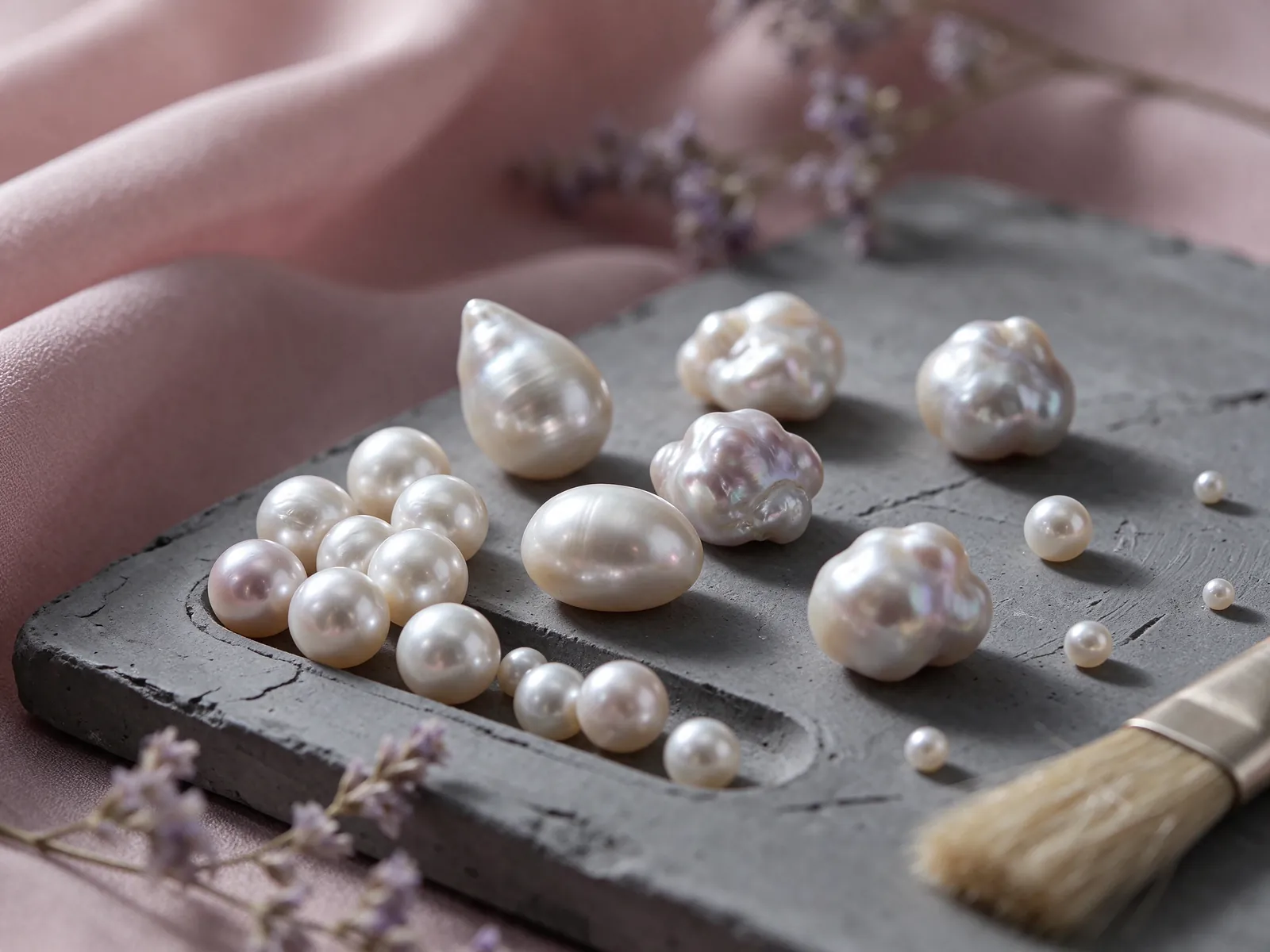
Balance the silhouette with lustre and surface condition
GIA describes seven pearl value factors: size, shape, colour, lustre, surface quality, nacre quality and matching. Shape is therefore one part of a broader assessment. A longer or straighter pearl is not automatically the better overall choice. Establish the contour you like, then compare reflection and visible surface condition under similar lighting. Keep your aesthetic preference separate from the condition questions: you may prefer a lively curved outline while still wanting to understand a mark near its end. This approach avoids using a dramatic shape as a substitute for looking carefully at the rest of the pearl.
Reflections on a long irregular body need not be evenly distributed. Different parts face the light at different angles, so a bright centre and darker ends do not alone prove that lustre varies in the same pattern. Watch how the reflection moves as the pearl turns. Comparable background, exposure and lighting make this easier to judge. A depression also deserves context: it may be part of the body contour, while a broken surface is a different issue. Look closely enough to distinguish the two rather than assuming every shadow is a blemish or every hollow is harmless.
Matching means visual coordination, not identical curves
When several slender pearls will be seen together, compare their apparent width, curve direction, end weight and colour. Differences can create rhythm if the overall balance feels considered. They do not have to reproduce the same outline precisely. Instead, notice whether one pearl dominates unintentionally or whether all the shapes contribute to a coherent arrangement. This makes matching a practical visual decision rather than a search for interchangeable irregular forms.

Choose a direction that works with your clothes
An extended pearl outline can echo a vertical opening, an angled seam or a horizontal neckline. A vertical presentation encourages the eye to follow the body downwards; a horizontal one can read as a short graphic pause. These are compositional effects, not promises to alter body proportions. Try the shape against clothing you actually wear and include nearby jewellery and hair in the view. If the fabric already carries dense stripes, reducing other linear elements nearby may make the pearl easier to notice. The goal is a clear relationship between the silhouette and its surroundings, not a rule that everyone must follow.
Compare that directional effect with coin pearls, which place more emphasis on a visible rounded plane. The form of half round pearls provides another way to think about a raised profile and a flatter face. Ask whether you want a line, a broader visual area or a softly raised shape before combining several outlines. If you prefer restrained dressing, one clear form can be easier to integrate than a mixture competing for attention. Consider visual weight as well as direction: a slender outline can still be prominent when its colour strongly contrasts with the fabric behind it.
Check the moving view as well as the still one
Turn gently while trying the piece to see whether the slender body disappears behind a collar or rotates to show a different face. Notice contact with nearby jewellery, fastenings and fabric. A more prominent end may need extra attention where it sits close to a weave that could catch. What matters is whether the outline remains comfortable and visually appealing through ordinary movement, not whether it stays at one perfect photographic angle.

Use colour and background to make the line readable
A slender outline can appear quiet against a similar-toned fabric and more distinct against a contrasting one. Reflection, texture and room lighting also affect the result, so do not judge colour in isolation. The pearl colour guide helps you consider the overall palette, but your practical question is whether you want the colour or the line to be noticed first. A pale pearl on a pale blouse may produce a gentle effect; the same outline against darker clothing may be easier to trace. Neither result is universally more flattering or more versatile.
Do not use only the brightest portion of a long pearl as a colour reference. GIA distinguishes bodycolour, overtone and orient, and not every pearl displays all three. A moving highlight is not the same thing as a changing bodycolour. Begin with the overall impression in soft, reasonably even light, then turn the pearl to observe local reflections. When comparing several examples, avoid placing one in shadow and another beneath a strong lamp. Camera settings and screens can also affect appearance, making the in-person impression an important part of a colour-sensitive decision.
Create a comparison using familiar fabrics
Use a plain top you wear regularly and another with a clearly contrasting tone. Compare the same outline against both rather than changing pearl and background together. This reveals whether you like the pearl's colour itself or a particular clothing combination. For patterned fabric, start with an open area of the print so its edges do not visually merge with the pearl's curve, then check the fuller outfit.

Protect projecting ends during wear and storage
The ends and raised areas of an elongated body deserve attention when they sit near hard objects. GIA lists pearl at 2.5 on the Mohs hardness scale and says pearls should never be cleaned with ultrasonic or steam cleaners. Hardness does not predict where an individual pearl might break, but it does explain why treating the surface as scratch-resistant is inappropriate. After wearing, gently wipe with a very soft clean cloth and keep pearls from rubbing against harder jewellery. Avoid acids, perfume, hair spray and excessive heat rather than trying an aggressive cleaner to restore brightness.
Before putting the piece away, check whether a narrow end is pressed against a fastening or trapped in a tight part of the box. Soft separation can reduce contact between pieces, but the pearl still needs enough room to rest without pressure. If strung pearls have been cleaned with water, GIA advises allowing the string to dry completely before wearing them again. A newly noticed chip or loose pearl calls for appropriate physical inspection, not repeated polishing or improvised glue. Avoid continued knocks while arranging that assessment.
Bring a contour-led shortlist of questions
Summarise your preferences before choosing: straight or curved, rounded or flatter ends, vertical or horizontal presentation, and whether a flatter side matters to you. Add the necklines and fabrics you expect to wear. Then ask about lustre, surface condition and pearl identity separately. This keeps the conversation anchored to visible form and real use, instead of assuming that everyone imagines the same object when they hear stick shaped pearls. Share your preferred curves and usual necklines with Flint Jewellery on WhatsApp +85260106207 to discuss pearl shapes and styling.
| Feature | What to compare | Visual preference | Useful question |
|---|---|---|---|
| Length and width | Ends and the widest middle area in similar views | A slender line or fuller body | Does the side view still suit your preference? |
| Curve | The body's departure from a line joining its ends | Straight, flowing or distinctly bent | Should the curve be the focal point? |
| End profiles | Rounded, flatter and one-sided tapering ends | A soft finish or interrupted line | Could a projecting end catch nearby fabric? |
| Thickness and surface | Front, side and close views together | Raised profile and changing reflection | Is the hollow part of the contour or surface damage? |
| Direction and background | Vertical and horizontal views against usual clothing | An echo of tailoring or a visual pause | Does movement hide the outline behind the collar? |
Pearl knowledge and authoritative references
GIA identifies seven pearl value factors: size, shape, colour, lustre, surface quality, nacre quality and matching. A stick silhouette concerns shape and does not alone establish overall quality.
Read the reference for this factFrequently asked questions
Must stick pearls be perfectly straight to be appealing?
No. The term describes an extended outline, and a gentle bow or asymmetric curve may be part of its appeal. Choose the line you enjoy, then assess lustre and surface condition separately. Straightness is not a complete quality assessment.
How should I describe a long pearl with only one tapered end?
Describe the body as slender, note the one-sided taper and explain whether the other end is rounded or flatter. It may evoke both stick and drop outlines. Specific observations communicate your preference more clearly than forcing a single label.
Does a ring around a stick pearl mean it is cracked?
Not by itself. Circumferential contours, lighting bands and open cracks are different observations. Look at close views from several angles; a chipped edge, open surface or recent change warrants physical inspection.
Can a front photograph show the thickness of a stick pearl?
Usually not adequately. A front view mainly shows length and width, while a side view makes flattening or a raised profile easier to understand. Include a turned view when thickness matters to the intended presentation.
Why can the same elongated pearl look shorter when turned?
Its extended axis may point away from the camera, shortening the visible projection. Curvature can make the difference more noticeable. Compare equivalent views and consider which face will be visible during wear rather than assuming its dimensions have changed.
Updated: