

What do different viewing angles reveal about round pearls and near round pearls in a round vs baroque pearls comparison?
Begin with the outside edge rather than the brightest reflection. A round pearl has a spherical visual character, whereas a near round outline stays close to a sphere while showing small variations as the view changes. Compare front and side views under similar lighting, then gently change the angle. A setting may conceal part of the contour, so a tidy front view is not a complete shape description. The pearl shape guide helps place these observations alongside other outlines.
Think about the view you will actually notice when wearing the jewellery. A slight variation at the rear of a pearl may be less prominent than one facing outwards, while a close photograph can emphasise a detail that is subtle at ordinary viewing distance. This does not make either view wrong. It means that selecting for a rounded appearance requires both a detailed look and an understanding of the finished piece, rather than a decision based on one attractive image.
Reading round pearls and near round pearls in a round vs baroque pearls comparison: shape alone does not identify pearl type
A spherical outline is not evidence of a particular pearl type. A large, rounded pearl should not automatically be called South Sea, and a slight irregularity does not establish freshwater identity. Read the stated pearl description separately from the shape description. Questions about origin or natural-versus-cultured identity need relevant information, not a visual assumption based on roundness.

Distinguishing subtle roundness from a directional outline
Near round shapes remain close to spherical without necessarily having a strong directional character. By contrast, oval pearls have a more evident long and short axis, which can change the impression of a hanging design. If you prefer a vertical line, compare that effect rather than treating every departure from round as the same thing. With drop shaped pearls, notice the narrowing end and fuller end, then consider which way the pearl sits when suspended.
A near round pearl is not a half-dome. When comparing half round pearls, inspect the domed face and flatter back rather than relying on a front-on image that hides the distinction. A ring-like feature is a different observation again: circle pearls draw attention to rings around the surface, so separate that local feature from the overall contour. Describing the position of a change is more useful than using one shape name to explain every visible detail.
Choose an aesthetic, not a shape hierarchy
The irregular contours of baroque pearls offer a different visual character from the restraint of round forms. A rounded accent can soften a sharply defined shirt collar, while an unexpected outline can provide the focal point against plain fabric. Decide whether you want the jewellery to blend into an outfit or lead it before turning shape into a ranking of better and worse.

Give lustre and surface appearance their own attention
Roundness and lustre answer different questions. The edge tells you about the contour, while reflections help you appreciate how the pearl looks in light. Start by noticing the clarity and character of the reflection, then return to the outline. Strong lighting can obscure local details and dim lighting can flatten the impression. Comparing pearls in similar conditions helps prevent a photographic effect from being mistaken for a meaningful difference between the pearls themselves.
Likewise, a small surface mark is not the same as a change in overall shape. A pearl can look rounded while showing a local surface feature, or slightly elongated while having an appealing visible surface. Separate the observations: which side faces outwards, what details are visible there, and how does the whole piece look at ordinary distance? This makes your preference easier to explain without letting one appealing characteristic stand in for everything else.
Use GIA's seven-factor framework to organise the comparison
GIA describes seven pearl value factors: size, shape, colour, lustre, surface quality, nacre quality and matching. Shape is one element, not a verdict on the other six. Matching deserves particular attention in paired earrings and strands. This framework helps organise your questions; it is not an indication that a particular piece of jewellery has a GIA certificate.
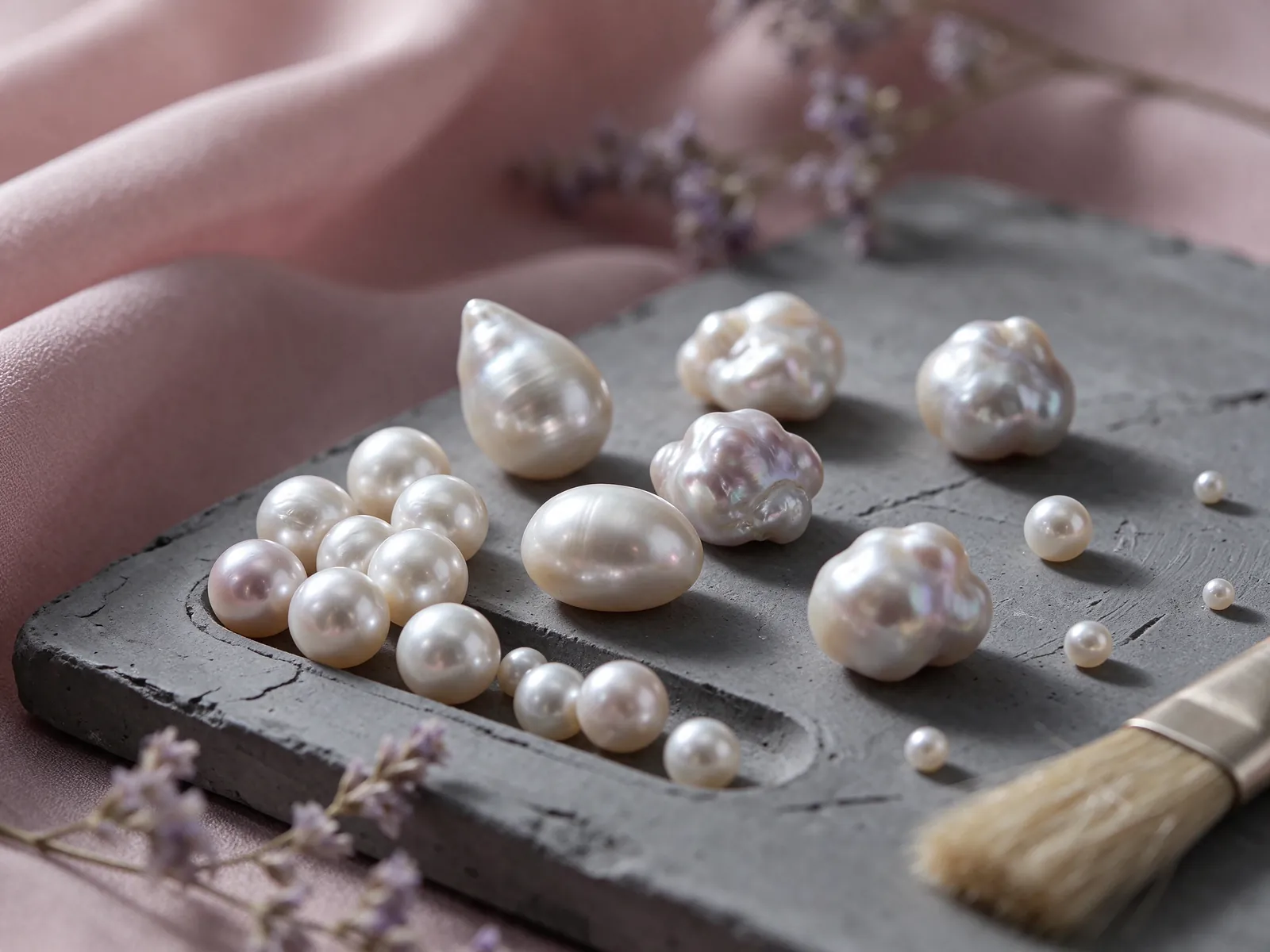
For earrings, compare the pair in its wearing position
View both earrings together before inspecting each pearl separately. Look for a compatible front outline, then compare how far each pearl projects and which part faces the viewer. Two near round pearls may differ in a hidden area yet give the balance you enjoy from the front. Conversely, a shared shape label does not guarantee a harmonious pair. Visible size, colour and lustre can influence the impression as much as a small variation in contour.
Your usual hairstyle can guide the comparison. With hair tied back, side profiles become part of the visible design, so the direction of a slight elongation may matter more. With loose hair, the front-facing rounded accent might be your main focus. Consider the neckline too: a crisp collar and a curved pearl create contrast, while softer clothing may echo the curve. These are styling options, not fixed rules about which face shape must wear which pearl.
Describe the balance you want in observable terms
Instead of asking only for identical shape names, describe your priorities: a rounded front, compatible side profiles, or similar brightness across the pair. If one pearl has a longer-looking axis, notice whether both earrings orient that feature consistently. The setting and the way an earring sits on the ear affect its appearance, so a flat arrangement cannot fully predict the wearing position.
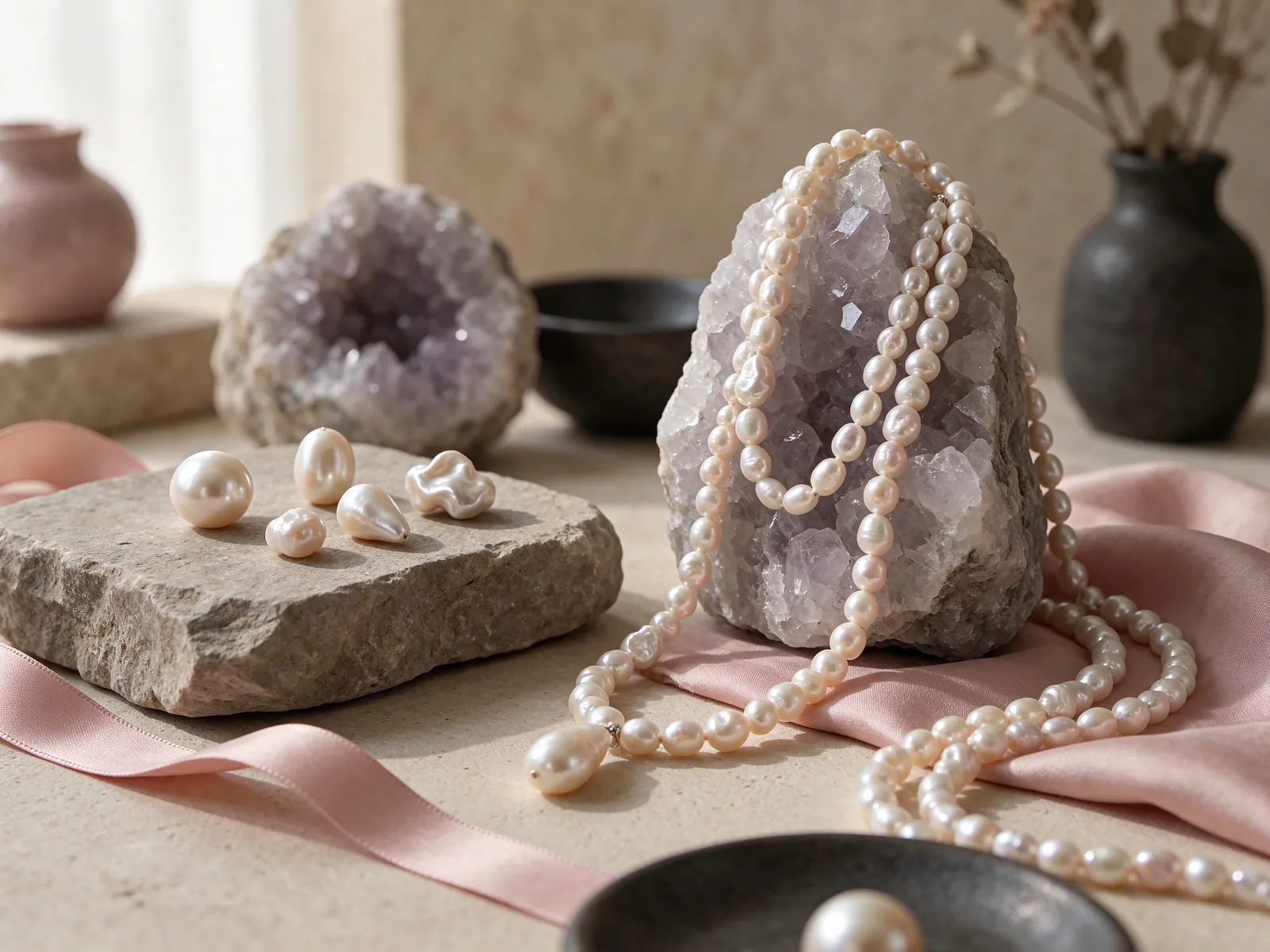
A strand creates rhythm; a pendant creates a focal point
With a pearl necklace, step back before concentrating on individual beads. Observe the strand as a natural curve and ask whether its shapes, colours and lustre read as a coherent whole. Near round pearls can introduce subtle variation, but whether that variation feels pleasing depends on the complete arrangement. A close image of the centre cannot show all of the matching along the sides. Look at the whole strand as well as selected details when forming an impression.
A single-pearl pendant places more attention on one visible contour and its relationship with the setting. A rounded outline can contrast with a straight neckline or sit comfortably among the softer lines of knitwear. If a near round pearl is slightly longer in one direction, observe whether that line follows the pendant's hang or leans sideways. Include the suspension point in your view; an isolated crop of the pearl removes part of the design that controls its visual direction.
Bring your usual wardrobe into the decision
Think of a shirt, a plain top and a jacket you wear often. Against a busy texture, a clean rounded silhouette may provide a clear accent. Against a simple background, a subtle irregularity may be something you enjoy rather than something to conceal. The useful question is how much visual presence you want, not whether one outline is universally the most classic.

Read photographs and descriptions as complementary information
A photograph shows a particular angle in particular light. Before comparing it with another, check whether the distance, background and lighting are broadly similar. Ask what the image actually reveals: the exposed front, a side profile, the back, or the whole mounted piece. A bright highlight may obscure the edge, while a very close view may exaggerate a minor feature. For paired earrings, a paired image answers different questions from an individual pearl portrait.
The words round and near round should be read alongside the visible outline, not converted into an unstated precision standard. Keep shape separate from pearl type when reading a description. If documents accompany a piece, understand which questions they address instead of assuming that rounded appearance establishes origin, treatment status or identity. Clear written information and a useful set of views complement each other; neither should be stretched into claims it does not actually make.
Make a shape enquiry specific to your use
You might explain that you prefer a rounded front for earrings, accept a slight side variation, or want to compare a spherical pendant with a more directional outline. Mention your usual clothing and the feature you notice most. A shape enquiry to Flint Jewellery through WhatsApp can focus on these practical preferences rather than relying on an undefined request for a perfect pearl.
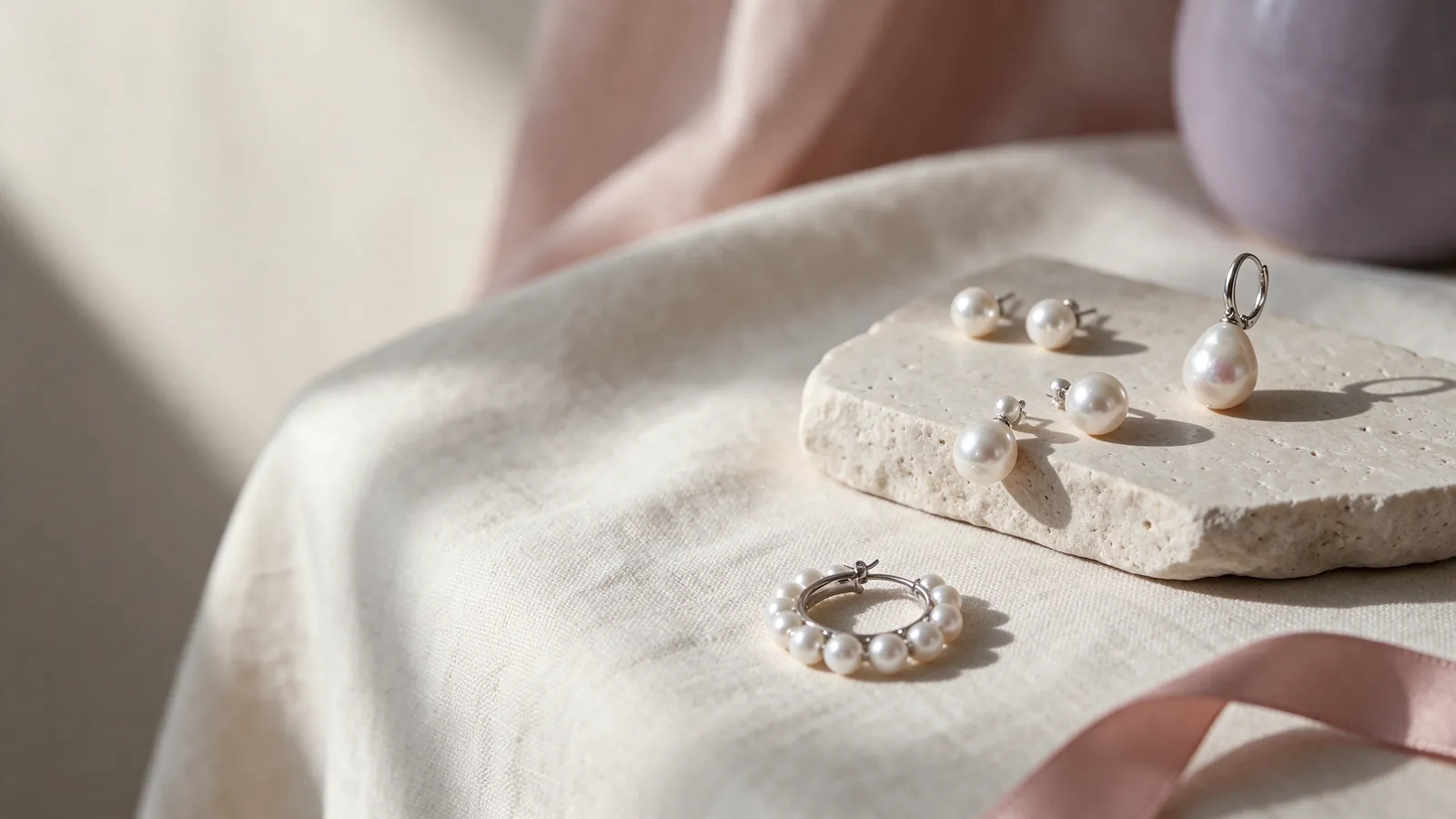
Keep the rounded appearance in perspective when caring for pearls
A smooth-looking sphere is not a promise of resistance to everyday abrasion. After wearing, wipe pearls with a very soft, clean cloth and store them separately from jewellery that could rub against them. Be mindful of earrings catching while you adjust hair, scarves or outerwear. These habits apply to near round shapes too. The outside contour tells you how a pearl looks; it does not tell you that the piece can tolerate pulling, rough surfaces or careless storage.
Use perfume and hair spray before putting on pearls, and avoid direct contact with acids and excessive heat. GIA advises against ultrasonic and steam cleaning for pearls. Do not treat a stubborn mark as a reason to use a more aggressive cleaning method. Do not leave pearls soaking for long periods. If a strung piece is cleaned with water, the string must be completely dry before wearing. Care choices should follow pearl care guidance rather than assumptions drawn from how full or polished the outline appears.
Finish the comparison at ordinary viewing distance
After examining the details, return to the whole piece. Decide whether the contour appeals to you, the pair or strand feels balanced, and the jewellery suits what you normally wear. Magnification is helpful for understanding details, but it need not replace that overall judgement. Round simplicity and near round variation can both be deliberate aesthetic choices when you understand what you are choosing. For a shape enquiry, contact Flint Jewellery on WhatsApp +85260106207 and share the outline you prefer and how you plan to wear it.
| Outline | What to notice | Useful view | Styling consideration | What it cannot establish |
|---|---|---|---|---|
| Round | Spherical visual character | Front, side and changing angle | A clean accent against a defined collar | Pearl type or origin |
| Near round | Small variations around a near-spherical form | The side where the variation appears | Balance the visible direction in earrings | Natural-versus-cultured identity |
| Oval | A more evident long and short axis | Front and axis direction | Compare a vertical line with a round accent | Overall pearl quality |
| Drop | A narrower end and a fuller end | The natural hanging position | A directional pendant focal point | Diameter or weight |
| Half round | A domed front and flatter back | Side and back structure | Notice how the pearl relates to its setting | Equivalence to a near round sphere |
| Baroque | Irregular three-dimensional contours | Several angles and the whole piece | Let an individual outline lead a plain outfit | Treatment status or certification |
Pearl knowledge and authoritative references
GIA describes seven pearl value factors: size, shape, colour, lustre, surface quality, nacre quality and matching. Shape is only one part of the framework, so roundness alone is not a complete quality judgement.
Read the reference for this factFrequently asked questions
Can a near round pearl look round from the front?
It can present a rounded front while showing a slight variation from another angle. Check the side profile and the orientation within the jewellery. A single front-facing photograph cannot explain every part of the three-dimensional contour.
Should I compare earrings loose or as a mounted pair?
For a wearing decision, the mounted pair is important because the setting influences what faces outwards. Compare the two together for outline, visible size, colour and lustre, then examine individual details. A loose-pearl view may be informative but does not fully predict the on-ear result.
Does greater roundness tell me the pearl's origin?
No. Shape describes appearance and cannot establish origin or pearl type by itself. Read the pearl identity information separately and use relevant documents for the questions they actually address, rather than treating roundness as a substitute.
Why does a whole-strand photograph matter for near round pearls?
A necklace depends on repetition and matching across the strand. A central close-up may hide how the side pearls relate in shape, colour or lustre. A whole-strand view lets you judge its visual rhythm before looking at individual surface and contour details.
Is ultrasonic cleaning suitable for smooth round pearls?
No. GIA advises that pearls should never be cleaned with ultrasonic or steam cleaners. A smooth outline does not change that guidance. For routine after-wear care, use a very soft, clean cloth and avoid contact with perfume, hair spray, acids and excessive heat.
Updated: