
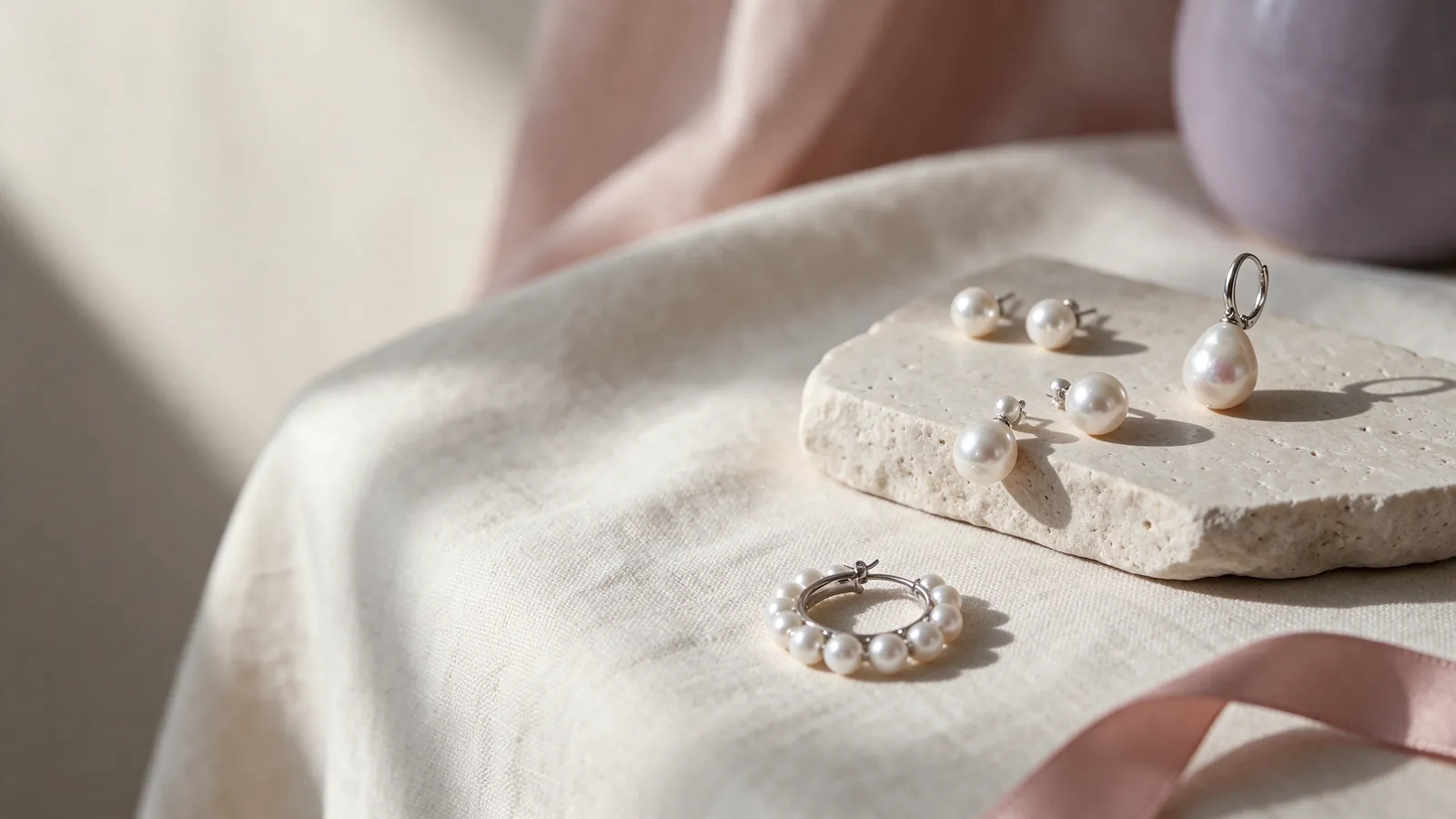
How can pearl bridesmaid jewellery and pearl bridesmaid sets suit different dresses when chosen as pearl gifts for bridesmaids?
Start with the dresses and each bridesmaid’s role rather than the number of pieces you want to give. Embroidery, pleats or beading around a neckline already create a focal point; adding a necklace may obscure the detail. With an open neckline, test whether a necklace sits within the space without touching the fabric edge. Pearl Jewellery can be approached through placement first. Ask who will carry flowers or help with the train, so the chosen accessory supports both the outfit and the practical tasks rather than only a photograph.
Ask each bridesmaid what she actually enjoys wearing. One may prefer understated earrings, another may regularly wear necklaces, and another may want bare wrists while helping with the dress or bouquet. Pearl bridesmaid sets can describe a coordinated styling idea without becoming a requirement to wear every piece. Agree on one shared visual direction, then allow its placement to vary. The result can feel considered without turning a thank-you gift into a compulsory costume.
Which neckline and wearing preferences matter when selecting pearl bridesmaid jewellery or pearl bridesmaid sets as pearl gifts for bridesmaids?
Try accessories with an actual dress or a top with a similar neckline. Check whether a pendant disappears behind the fabric and whether earrings catch an updo or hair accessory. A high or halter neckline does not need a necklace simply to complete a set. If someone has no pierced ears, begin with a necklace or bracelet she already feels comfortable wearing rather than asking her to change her habits for the wedding.
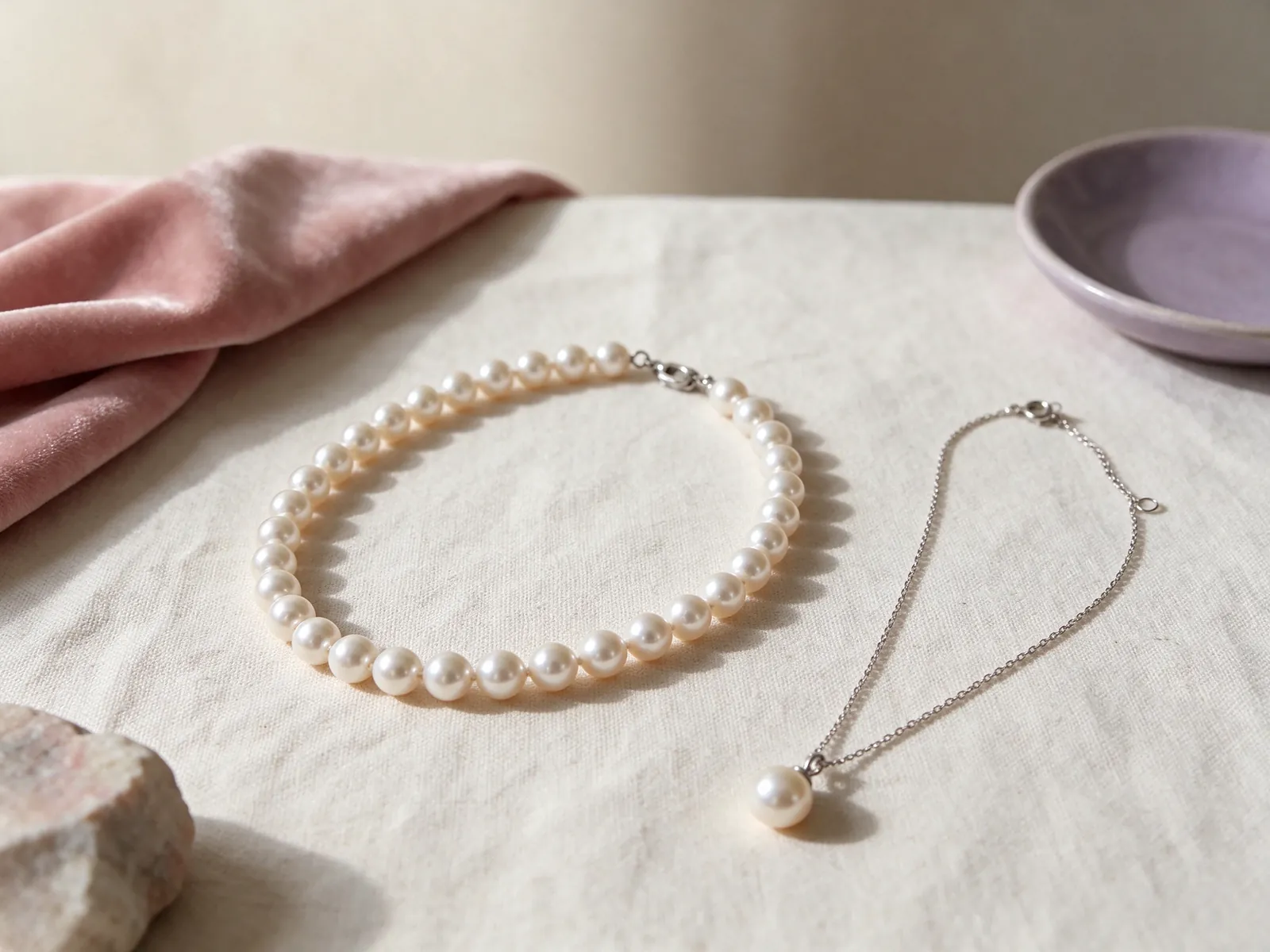
Create a shared look without making every accessory identical
Make the styling brief more useful than 'everyone wears pearls'. You could agree to keep the overall look uncluttered, avoid several layered necklaces, or choose either prominent earrings or an elaborate hair accessory as the main detail. When dress necklines differ, similar visual weight matters more than identical placement. Existing favourite jewellery can remain part of the outfit, with the gift filling a genuine gap rather than replacing everything a bridesmaid already likes.
Compare jewellery beside the actual dress fabric rather than in separate phone photographs. Warm ivory, crisp white and pink can each change the impression of the same accessory. Begin under similar lighting, then look at the combination in an indoor or outdoor setting relevant to the celebration. A phone photograph records overall balance but is not a specification: screens and lighting can alter colour. Metal colour may echo each person’s existing accessories without being identical across the group. Keep a clear relationship between the dress, hair and jewellery.
Add the second piece only if it improves the outfit
Photograph the outfit with one accessory, then add another and compare the front and side views. If attention jumps between the neckline, earrings and hair ornament, removing a piece may give a calmer result. The guide to formal pearl jewellery sets explores combinations for different occasions; a coordinated set is an option to assess against the outfit, not a wedding rule that everyone must follow.
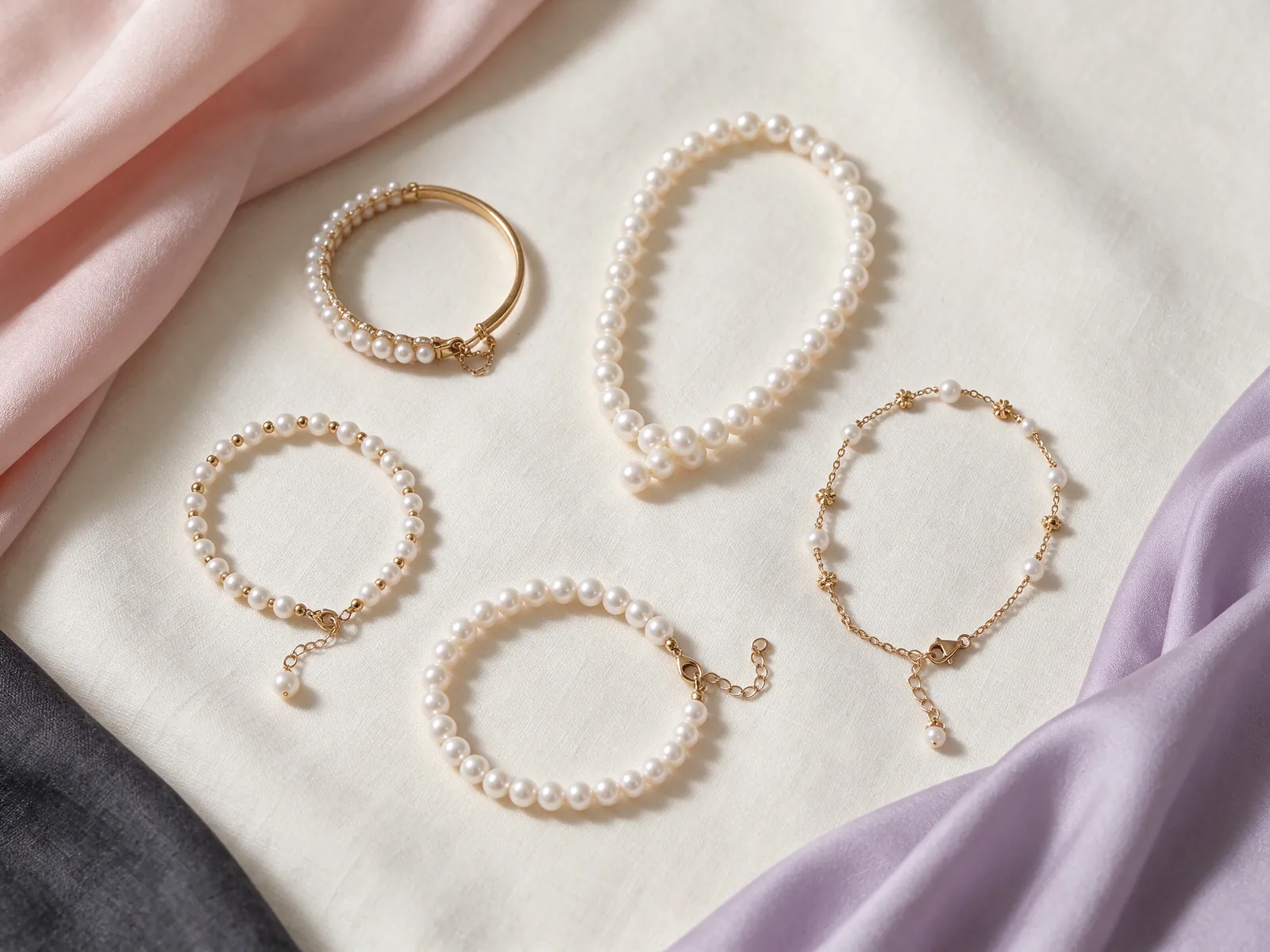
Coordinate with the bride through conversation, not a fixed hierarchy of pearl sizes
Discuss the bride's outfit before finalising the bridesmaids' accessories. A prominent headpiece, detailed bodice or elaborate necklace may suggest a simpler focal point for the surrounding wedding party. A minimalist bridal look can still be distinguished through the dress, hairstyle and overall silhouette. The approach to bridal pearl jewellery helps separate the bride's priorities from those of her attendants without assuming that everyone should wear a smaller version of the same outfit.
No pearl colour or accessory count resolves every family’s preferences. Ask the couple about their preferred visual direction and whether the ceremony and reception involve different outfits. If dresses will change, try each neckline separately; one accessory need not stay on throughout the day. Reading about wedding guest pearl jewellery etiquette can frame questions about respect for the occasion, but bridesmaids have their own clothes and practical roles to consider. Direct agreement with the couple is more useful than buying additional pieces to satisfy an assumed rule.
Review the whole outfit in a group photograph
Compare photographs taken against the same background and include full-length views, not only close-ups of pearls. Notice whether an accessory hides dress details or becomes disproportionately prominent. If a bridesmaid's hair ornament is already distinctive, simplifying her earrings may be more effective than changing all her jewellery. This makes coordination a practical visual decision rather than an attempt to follow an unspoken rule.
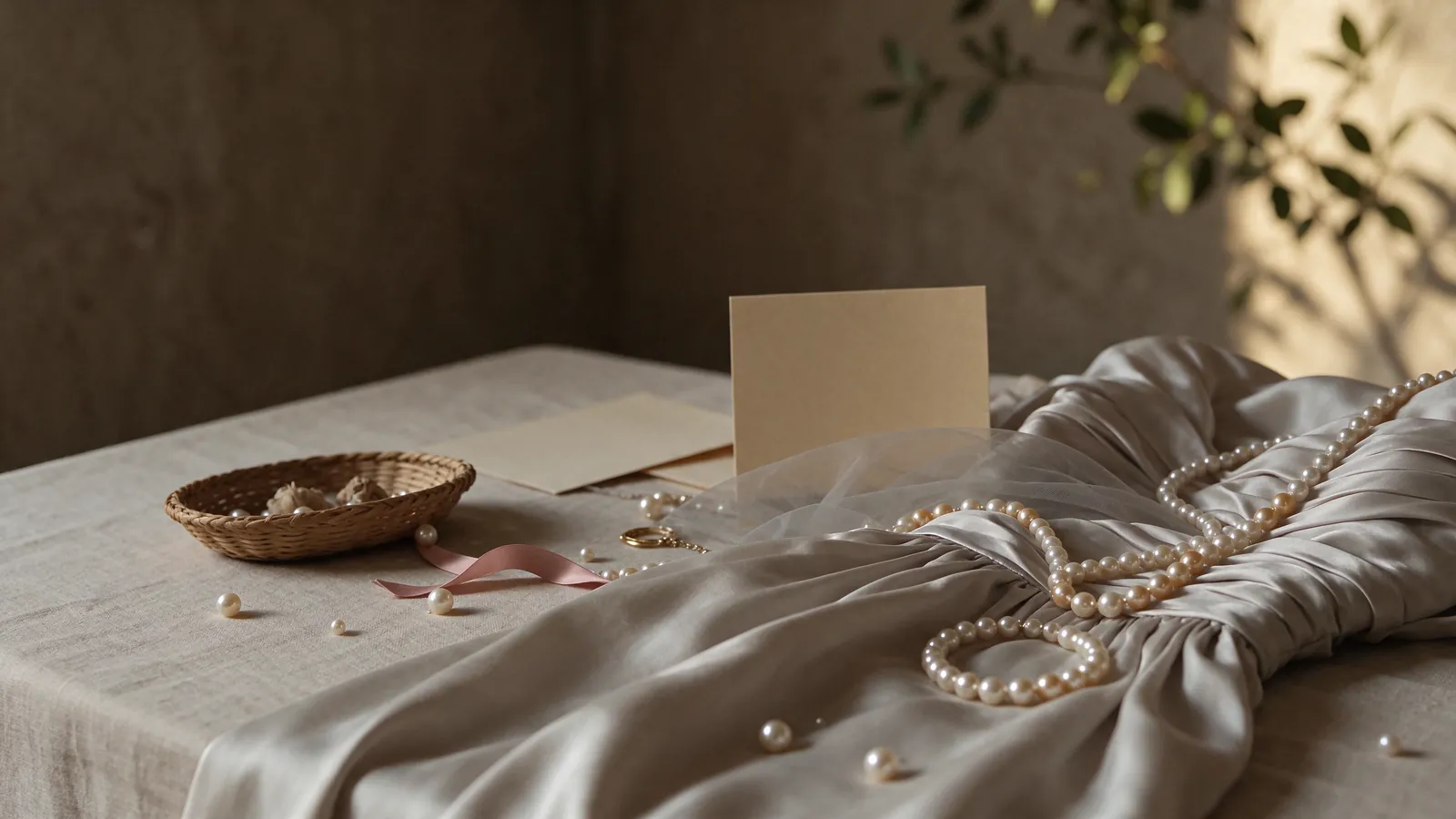
Use pearl quality factors to make a purposeful comparison
GIA describes seven pearl value factors: size, shape, colour, lustre, surface quality, nacre quality and matching. For bridesmaid styling, matching and lustre are especially useful areas to examine when pieces will be worn together. Matching is not simply a matter of equal diameter: two accessories can appear similar in size but differ in colour impression or reflected light. These factors provide a comparison framework; they do not establish that a particular piece has a certificate.
View combinations under comparable lighting and examine the balance of the earrings before reading any grading labels. If a seller uses AAA or AAAA, ask how those terms are defined; they are not universal or GIA grades. The pearl grading guide helps organise those questions. Where a report is supplied, check its issuer, wording and the item it describes. Identification information is not a price appraisal or service guarantee. A white colour, round outline or bright photograph cannot establish pearl type, origin, treatment or natural-versus-cultured identity, nor show that a Flint piece has any certification.
Separate essential needs from details that may vary
Comfort and an easy-to-use fastening may matter more to the recipient than identical shapes across the whole wedding party. For jewellery that will be worn separately after the wedding, individual preferences can take priority over matching every gift. When several pieces will share one outfit, assess their relationship together. This distinction keeps the decision focused on actual wear rather than an abstract idea of perfect uniformity.
Make the thank-you personal and the gift useful after the wedding
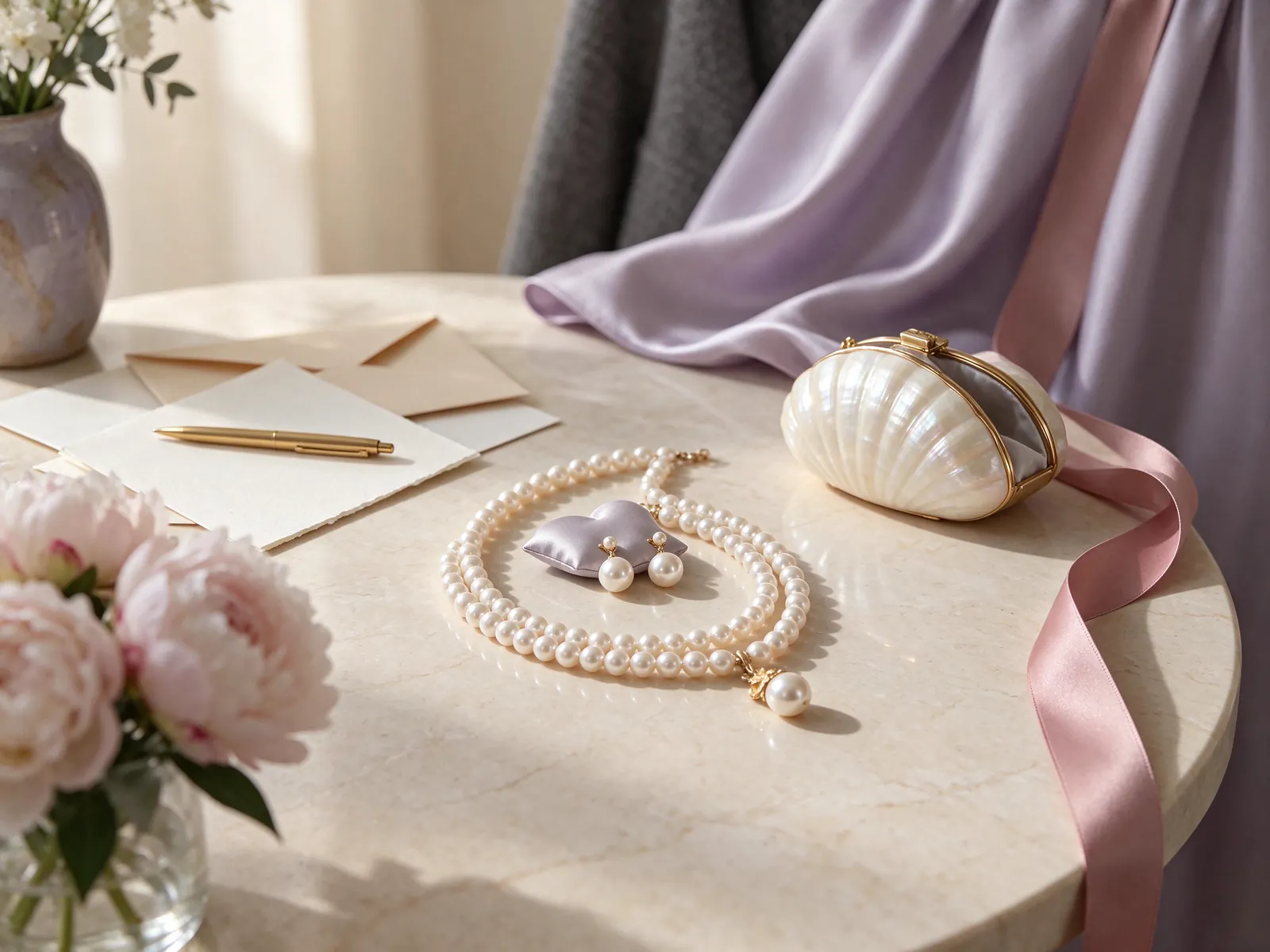
Ask about a familiar everyday outfit and the accessories she enjoys with it. Someone who normally wears one simple piece may appreciate a focused gift more than several items chosen for photographs. When considering pearl gifts by budget, define the purpose of each gift before discussing a single piece or a combination and its quotation. Piece count need not measure gratitude. Also clarify whether the jewellery is hers to keep or being lent for the ceremony, and agree on any wedding-day styling expectations before presenting it.
A card can mention something specific you appreciate, such as help with preparations or a conversation you shared beforehand. The approach to pearl gifts for a friend starts with the individual’s life, not a single template for everyone in the wedding party. Keep a common expression of thanks if you wish, then add a personal memory for each recipient. A sincere account of why you value her support can carry the sentiment without borrowing a traditional phrase that does not fit your friendship. Your reason for giving the gift need not depend on a fixed symbolic meaning.
Let the jewellery belong to her wider life
The pearl gift guide can help connect a keepsake with realistic future wear. If she already has a necklace she loves, a gift may complement it rather than replace her existing jewellery. Let her decide when to wear the piece, and do not expect it to appear whenever you meet. A gift that belongs to her wider wardrobe can gather memories beyond the wedding while remaining a reminder of your thanks.

Test realistic movement before a long day of wearing jewellery
A bridesmaid may carry flowers, adjust a train, greet relatives or tidy her hair. Try the proposed jewellery while turning the head, lifting the arms gently and sitting down, rather than only standing still at a mirror. Notice earrings catching hair, a bracelet meeting the cuff, or a necklace slipping into the neckline. Persistent pulling or pressure is a reason to reconsider the combination, not something the wearer should simply plan to tolerate.
Let each wearer practise fastening and removing the jewellery without pulling on pearls or the chain. If she needs help, agree who can assist. Previous skin discomfort deserves attention: check the actual material information and contact points rather than using metal colour as a guide to suitability. No material should be treated as a universal allergy-free promise. If the trial causes discomfort, remove the accessory and reconsider it instead of expecting the wearer to tolerate it for the event. A useful fitting considers her experience as well as appearance.
Include the hairstyle and bouquet in the trial
Try earrings with hair both loose and arranged in the planned style, since the available space and points of contact change. Hold a bouquet of a similar shape to see whether wrist jewellery catches its ribbon or stems. If the outfit is already complete, leave an inconvenient piece for another occasion. Giving a gift does not require displaying every part of it during the ceremony.
Plan gentle care and a focused styling discussion
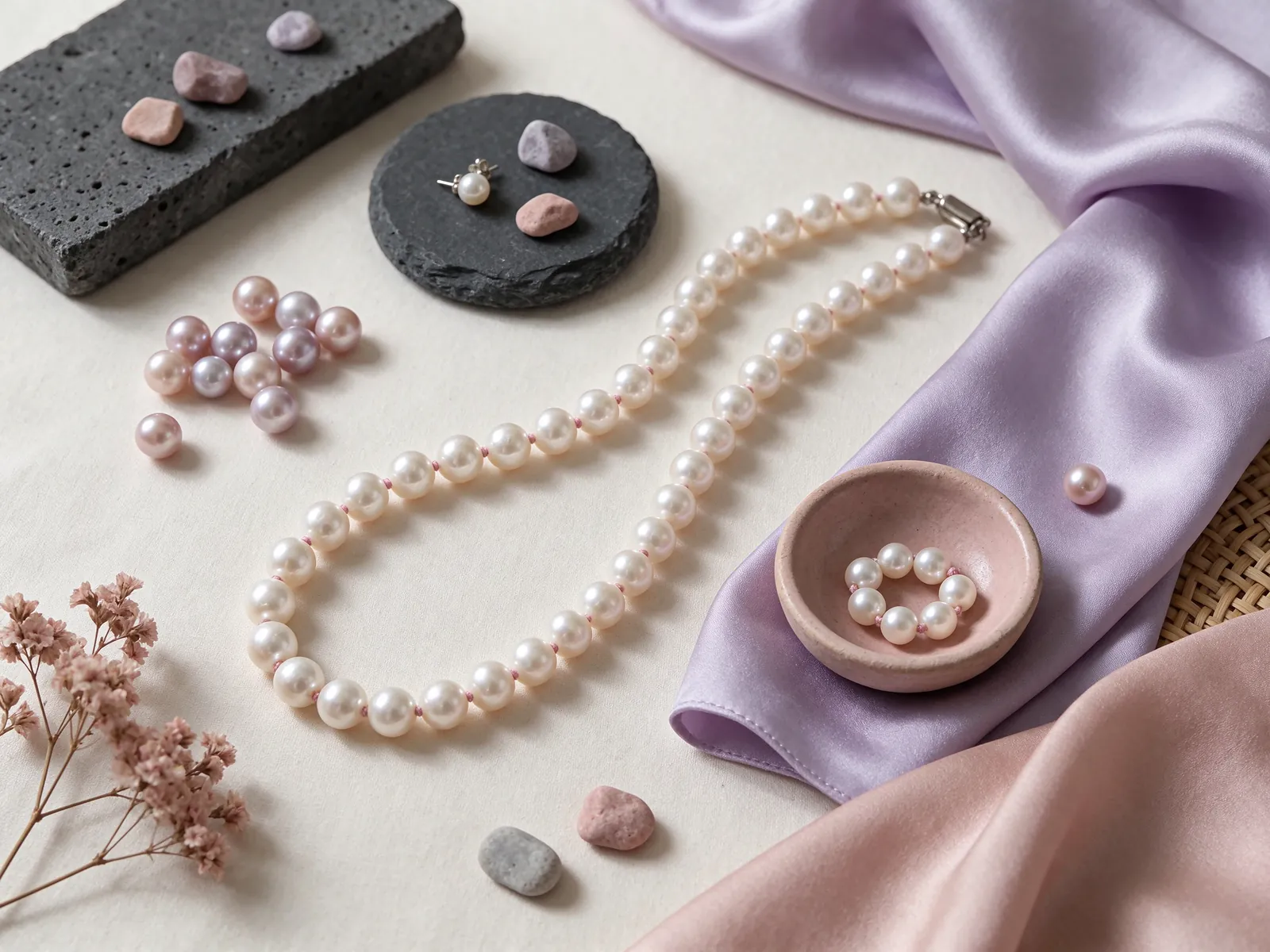
GIA lists pearl at 2.5 on the Mohs hardness scale, making protection from harder objects relevant to a busy wedding day. Keep the jewellery somewhere clean and soft during make-up and hairstyling. Apply perfume and hair spray away from pearls and allow the contact area to dry before putting jewellery on. When changing clothes or packing a bag, avoid letting pearls rub against other jewellery or hard objects.
After wearing, wipe pearls with a very soft clean cloth and store them away from harder objects. Do not use ultrasonic or steam cleaners, and avoid prolonged soaking. Any more involved cleaning needs to account for the string, adhesive, settings and metal: general pearl-care advice does not mean the entire piece can safely be immersed. If a strung piece is suitable for cleaning with water, the string must dry completely before wearing. A pearl care guide can support simple daily habits. During the wedding, use separate suitable storage rather than a tissue that could be discarded.
Bring the dresses and preferences into the conversation
For a discussion with Flint Jewellery, prepare neckline photographs, hairstyle ideas, wearing preferences and the everyday occasions you hope the gifts will suit. Explain where coordination matters and where you welcome differences, then use WhatsApp to discuss design and a quotation. A styling concept does not establish a particular set or a group quantity. Images on this page illustrate styling and care only; they do not establish pearl type, origin, size, grade, certification, price or availability. Confirm the details of any actual piece separately.
| Situation | Look at first | Possible focal point | Movement to test | What may be omitted |
|---|---|---|---|---|
| High or halter neckline | Neckline detail and space around the ears | Earrings or a wrist accessory | Turn the head and arrange the hair | A necklace hidden by fabric |
| Open or off-the-shoulder neckline | Chest space and hairstyle volume | Try a necklace before adding earrings | Sit down and gently lift the arms | An accessory competing with the hair ornament |
| Different bridesmaid necklines | The focal area of each dress | A shared outline with different placements | Take a full-length group photograph | A rule that everyone wears every piece |
| Carrying flowers or adjusting a train | Contact with cuffs and bouquet ribbon | Neck or ear accessories first | Hold the bouquet and adjust the cuff | Wrist jewellery that catches |
| Usually wears simple jewellery | A familiar everyday outfit | One gift with a use beyond the wedding | Fasten and remove it independently | Extra pieces added only to complete a set |
Pearl knowledge and authoritative references
GIA describes seven pearl value factors: size, shape, colour, lustre, surface quality, nacre quality and matching. Matching is useful when considering several bridesmaid accessories together, but appearance alone cannot establish pearl identity or origin.
Read the reference for this factFrequently asked questions
Do identical dress colours mean every bridesmaid needs identical jewellery?
No. Begin with a shared visual direction, then adapt the position of the jewellery to each neckline and hairstyle. A high neckline may work without a necklace, while an open neckline can still suit earrings alone. Coordination depends on the overall balance, not just an equal number of pieces.
How can a bridesmaid without pierced ears join a coordinated look?
Start with a necklace or bracelet she already enjoys wearing and carry a similar visual detail across the group. Different accessory positions need not make the outfit incomplete. There is no need to ask her to have her ears pierced for the wedding.
Can a coordinated gift be worn as just one piece on the wedding day?
Yes. Separate the gift from the requirements of the outfit. If several pieces compete with the neckline or hair accessory, wear the one that works best and save the others for later. Tell the recipient she has that freedom rather than leaving her to assume everything must be worn.
Must a bridesmaid's pearls be smaller than the bride's?
There is no size rule that applies to every wedding. Discuss the overall dress, headpiece and jewellery with the bride, and use the balance between simple and elaborate styling to establish the desired emphasis. Size alone does not determine appropriateness, pearl quality or value.
Should pearl jewellery be removed before refreshing perfume or hair spray?
Avoid letting either product contact pearls. Removing the jewellery and putting it somewhere separate is a practical approach; replace it after the products have been applied and the contact area is dry. After wearing, use a very soft clean cloth, never an ultrasonic or steam cleaner.
Updated: