

How can a pearl and diamond brooch or pavé diamond pearl brooch complement your neckline and fabric?
Start with the neckline that will frame the brooch. A tailored lapel offers a clear direction for an elongated outline, while a round neckline can leave room for an accent slightly to one side and below the collar. If your blouse already has a bow or textured trim, consider whether another focal point adds clarity or creates competition. A broader pearl brooch comparison can help you decide whether you want a restrained accent or a more decorative composition.
Fabric affects support as well as appearance. A loose knit or light chiffon may pull under concentrated weight; a structured jacket may hold an outline more evenly, although its seams and surface still matter. Bring the intended garment when trying a piece. Before inserting the pin, hold the design against the fabric to compare positions. This is particularly useful with delicate cloth, where repeatedly moving a pin may leave visible holes or disturb the weave.
When trying a pearl and diamond brooch or pavé diamond pearl brooch, what should you check about the fastening and balance?
After closing the fastening, look from the front and side, then sit, turn and raise your arm. Watch for a pearl tipping outwards, a distorted lapel or the whole piece rotating. The relationship between the pin position and the weight of the composition matters more than the apparent size of the clasp. Make sure the point is contained by the catch and that you can operate it without forcing or bending the mechanism.

Give pearl lustre and pavé sparkle distinct roles
The two kinds of light do not need equal space. Notice where your eye lands first: on the pearl's reflected highlight, a sparkling border or the shape of the metalwork. If you want the pearl to lead, look for a composition that leaves it visually legible. If you want a defined outline, diamonds tracing an edge may be more relevant than a bright central cluster. Compare under diffuse light and ordinary indoor lighting rather than judging one highly reflective image.
A pavé diamond pearl brooch describes an arrangement of closely set diamonds, not an automatic quality grade. Look at the distribution of bright points and whether surrounding metal distracts from the pearl. For a stronger light-and-dark composition, a black diamond pearl brooch is a useful related styling topic. A dark appearance in a photograph, however, does not establish a diamond's identity or treatment history; those are separate questions from the visual contrast you enjoy.
Compare the whole outfit at conversational distance
Look closely at the details, then step back to judge the upper body as a whole. An enlarged photograph can make individual diamonds prominent when normal viewing reveals only a bright line. Try the composition against a light and a dark garment you already own. Choose the version whose pearl and outline remain pleasing at a realistic distance, rather than the one that produces the strongest flash in a single moment.

Read pearl quality beyond size and roundness
GIA describes seven pearl value factors: size, shape, colour, lustre, surface quality, nacre quality and matching. For a brooch, these offer a more useful framework than choosing the largest or roundest pearl alone. Observe the clarity of the reflected light and the visible surface at the angle in which the design will be worn. With several pearls, look at their relationship to each other as well as the appeal of each individual pearl.
Placement changes what you see. The outward-facing surface may matter differently from an area close to the mounting, and a side view may reveal a different balance. A freshwater pearl brooch and an Akoya pearl brooch provide related reading about pearl types and design choices. For any particular piece, read its stated pearl information rather than deriving origin, natural-versus-cultured identity or certification from shape and colour. Appearance and identity should remain separate parts of the decision.
Matching can support a deliberate composition
For a single pearl, assess its relationship with the surrounding diamonds and outline. For several pearls, consider whether their colour and lustre create a coherent rhythm. Perfect visual sameness is not the only aesthetic possibility: an intentional graduation can also be appealing. The useful question is whether differences guide the eye through the design or make one pearl unexpectedly distracting when the brooch is held at its wearing angle.
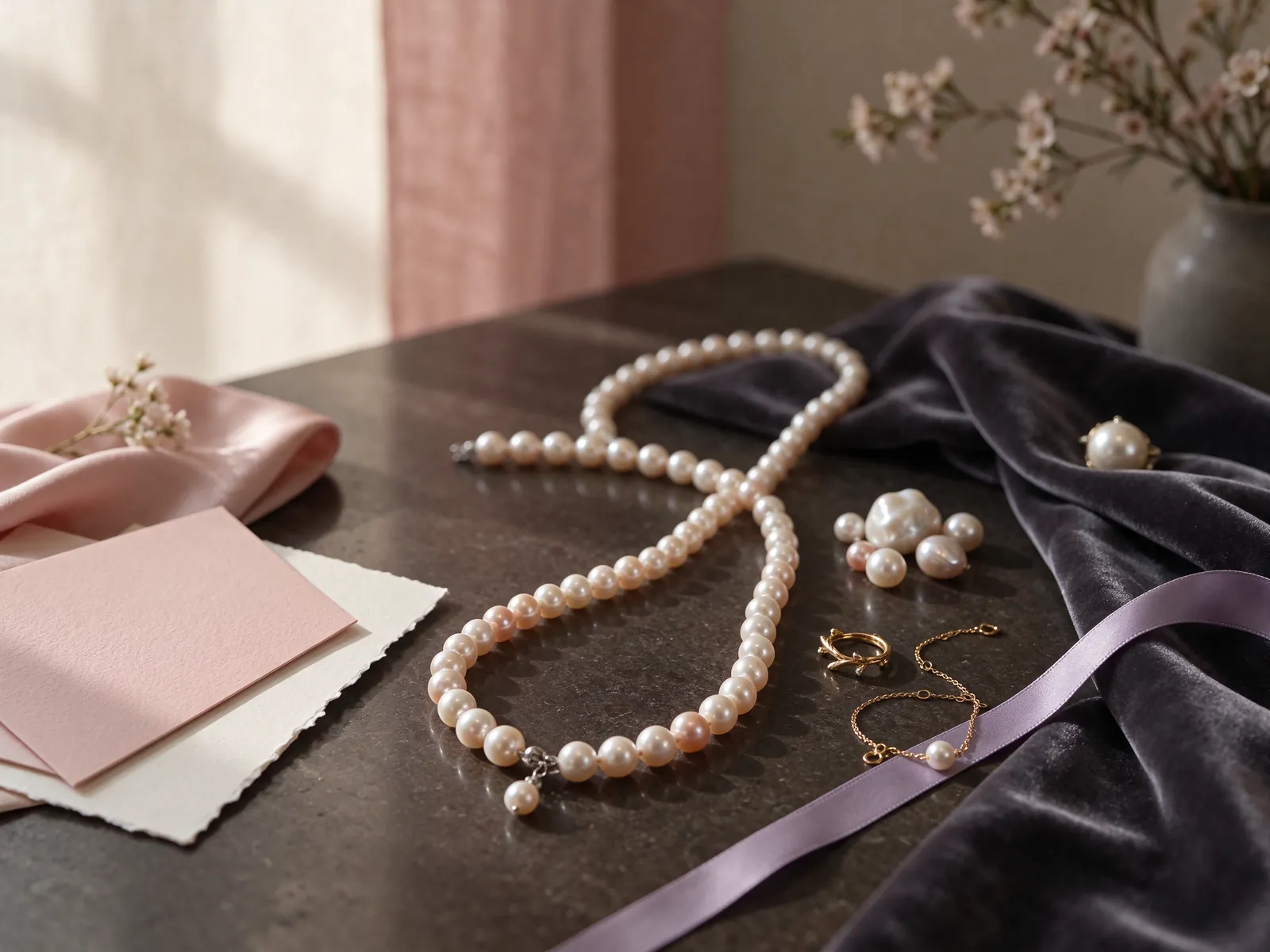
Evaluate outline, weight distribution and everyday movement
An elongated diamond pearl brooch needs enough uninterrupted fabric to show its direction; a curved composition may echo a collar without following it exactly. If the pearl sits at one end, the visual centre and the physical balance need not coincide. Test whether the piece turns when worn. A wide outline that crosses a seam may sit less evenly than it does on a flat display, so check the garment's construction as well as the brooch's front.
Inspect how the catch opens, where the point rests and whether your fingers can reach the mechanism comfortably. Do not compensate for resistance by bending the pin. If a fastening is visibly distorted, loose or pressing against the pearl, stop wearing it and seek an appropriate jewellery professional's assessment. If your aim is to secure a tie rather than decorate a jacket, compare a pearl tie pin separately; a decorative brooch should not be assumed to perform the same fastening function.
Check the route of bags, scarves and sleeves
Put your usual shoulder bag and scarf back in place during the fitting. See whether a strap brushes the pearl, a setting edge catches the scarf or raising an arm brings fabric across the design. Moving the brooch may be simpler than adding improvised support. Avoid trapping a projecting outline between scarf folds and relying on pressure to hold it still. Everyday movement deserves the same attention as the still, front-facing view.

Style for work, evening wear and a tailored suit
For office clothing, establish one clear accent. When the brooch has a busy sparkling outline, quieter earrings or a simpler collar can keep the upper body composed. For evening wear, compare the jewellery with the dress's own surface: smooth fabric, embroidery and sequins already contribute different reflections. A larger or brighter piece is not automatically more appropriate. Trying the full outfit gives a better answer than treating an occasion as a fixed rule about size.
A men’s pearl brooch can be considered through lapel width, pocket-square placement and tie pattern rather than restrictive assumptions about pearl shape. If the pocket square is vivid, leave the brooch a visually independent area; if the tie is patterned, assess whether dense sparkle adds too much activity. This approach works equally well for any wearer who enjoys tailoring. The practical aim is a deliberate relationship between the accessories, not a requirement that everything match exactly.
Decide whether a necklace shares the focus
A necklace and brooch can be worn together, but start by deciding which should lead. A necklace near the collar need not be joined by a brooch in the same small space. Try moving the brooch lower and to the side, then compare the outfit with one accessory removed. This simple comparison often reveals whether both outlines have room to read clearly, without imposing a rigid etiquette rule.

Ask specific questions about the components
Once the appearance appeals to you, read the information by component. For pearls, look for the stated type, size, shape and any treatment description. For diamonds, understand whether a weight refers to the combined stones or an individual stone, and what any accompanying document actually covers. A descriptive term such as pavé is not a complete specification. Information about one gemstone should not automatically be extended to every gemstone in the finished brooch.
Similar total diamond weights can be arranged across different outlines, so the number alone does not describe the visual result. Look at the front, side and back together. Consider the pearl's clearance from metal edges, the proximity of settings to clothing and the ease of fastening. For a gift, the recipient's usual garments and comfort operating a catch may narrow the choice more usefully than guessing how much sparkle they want.
For a materials discussion, preferences can be expressed in terms of 18K 750 white gold, 18K 750 yellow gold, 18K 750 rose gold, PT950 platinum or PT900 platinum. Read the specific design's stated material separately, and consider how its metal colour complements the pearl, diamonds and clothing. A photograph of metal colour alone does not identify the material.
Make a styling discussion concrete
Bring a photograph of the jacket or dress and explain the intended position, fabric weight and use of a shoulder bag. Say whether you prefer the pearl to dominate or the diamonds to define a line. These details are more informative than simply requesting an elegant look. If discussing customisation of a structure, keep fastening access and fabric support within the conversation rather than treating appearance and wearability as unrelated decisions.
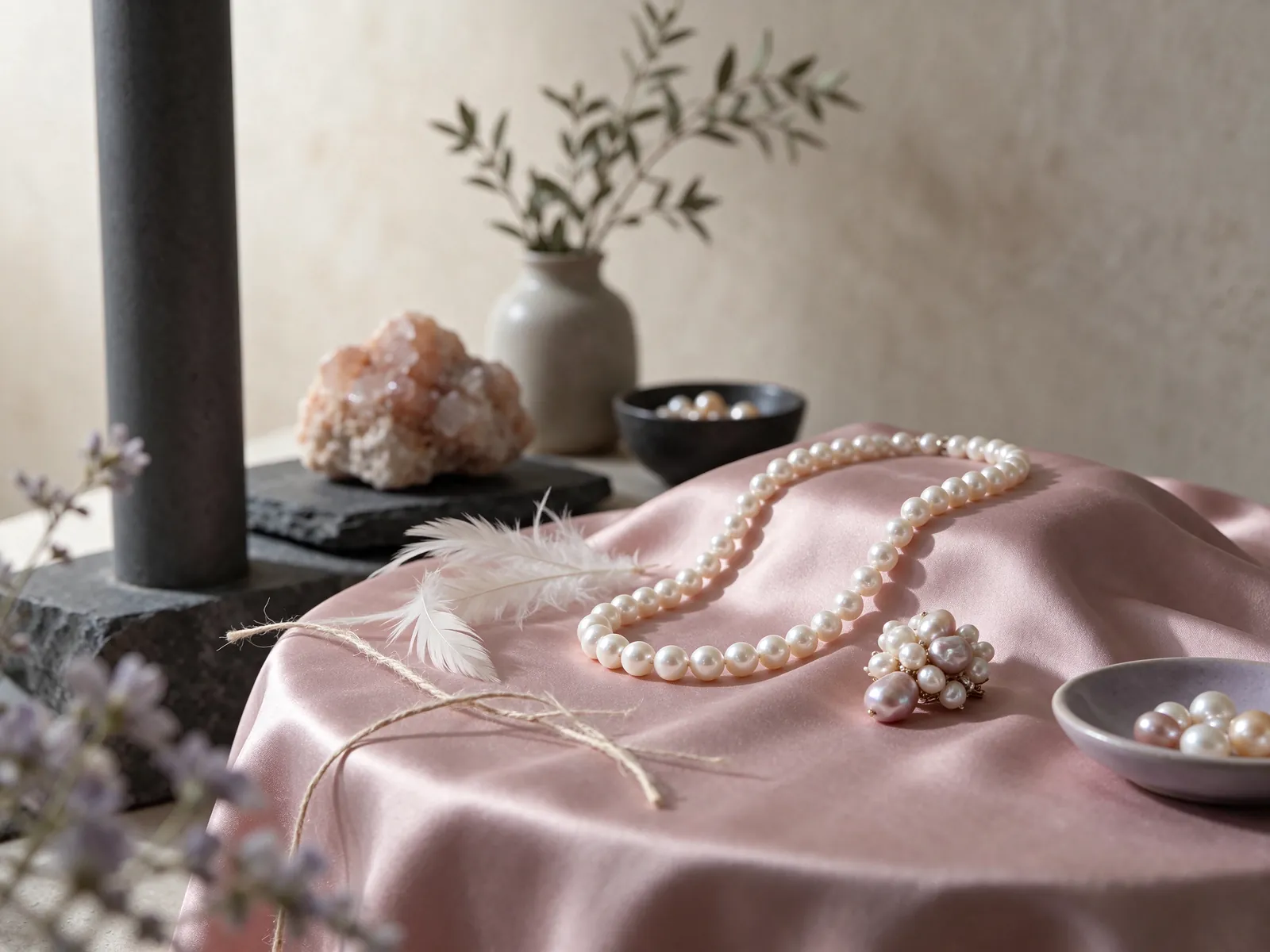
Care for the pearl within a mixed gemstone brooch
Choose care around the pearl's needs, not only the impression that diamonds resist scratching. GIA lists pearl at 2.5 on the Mohs hardness scale and says pearls should never be cleaned with ultrasonic or steam cleaners. After wearing, gently wipe the pearl with a very soft, clean cloth. Keep cloth edges clear of small settings and the catch, and do not scrub dirt near the pearl with a hard brush.
Apply perfume and hair spray before putting on the brooch to reduce direct contact with the pearl. When removing it, fully open the catch and support the outline rather than pulling on the pearl or a diamond-set edge. Contain the point before storage and separate the pearl from jewellery that could scratch it. Avoid acids and excessive heat. A change in fastening behaviour or movement at a mounting deserves attention before the next wear.
Finish an evening with a simple visual check
In good light, look for cosmetic residue, trapped fabric fibres, an unsecured point or a new irregularity in the settings. This is not a substitute for a professional examination, but it can alert you to a reason to pause wearing the piece. If you are unsure about a cleaning method for the whole construction, limit routine care to gentle wiping with a soft dry cloth rather than soaking it or experimenting with strong cleaners.
To discuss pearl-led accents, pavé outlines and the clothing you usually wear, contact WhatsApp +85260106207. Share your intended neckline position and fabric weight to make the conversation about brooch choices and styling more specific.
| Feature | Practical comparison | Question to ask | Do not judge only by |
|---|---|---|---|
| Neckline and outline | Hold against the intended jacket | Does it cross a seam or crowd the collar? | A front-facing photograph |
| Pavé distribution | Compare diffuse and indoor light | Should the pearl or bright outline lead? | The strongest flash |
| Pearl appearance | Observe the wearing angle and grouping | What does the pearl description state? | Roundness or colour |
| Catch and support | Sit, turn and raise an arm | Does the cloth pull or the piece rotate? | Its position on a display |
| Routine use | Check straps and the stored point | How should the mixed gemstones be cleaned? | Diamond care alone |
Pearl knowledge and authoritative references
GIA lists 7 pearl value factors: size, shape, colour, lustre, surface quality, nacre quality and matching. For a pearl and diamond brooch, this framework helps separate pearl assessment from diamond distribution; matching is particularly relevant when the design contains several pearls.
Read the reference for this factFrequently asked questions
Does a denser pavé surface always suit formal clothing better?
No. Embroidery, sequins and a reflective fabric may already provide activity. Compare the whole outfit and decide whether the sparkling outline gives the pearl a clear role or competes with existing decoration. Formality does not require the greatest number of bright points.
Can I pin a pearl and diamond brooch straight onto a light scarf?
First assess whether the fabric can support it and whether pin holes are acceptable. Hold the design in place before piercing the cloth. If the scarf pulls or the piece rotates, choose a better-supported garment position rather than assuming every delicate fabric can carry it.
Why can similar total diamond weights look different?
The same kind of weight description does not imply the same outline or distribution. A central group and an extended border lead the eye differently. Establish whether the figure is a combined weight, then compare the actual composition and its relationship with the pearl.
Must every pearl in a brooch look identical?
Matching is relevant, but exact sameness is not the only design goal. A consistent group or a deliberate variation can both be attractive. Check whether the colour and lustre differences support the outline at its wearing angle, without deriving pearl identity from the appearance.
Can an ultrasonic cleaner be used just because the brooch contains diamonds?
No. GIA advises that pearls must never be cleaned with ultrasonic or steam cleaners. Use a very soft, clean cloth for routine wiping, and ask a jewellery professional familiar with mixed gemstone structures about dirt that cannot be removed safely around the settings.
Updated: