

How Can a flower pearl pendant or floral pearl pendant Balance a pearl flower necklace?
Start with the overall outline rather than the smallest decorative detail. A pearl placed within the flower directs attention towards its centre, while a pearl hanging below the petals can create a longer visual path. Neither arrangement is automatically more elegant. Ask whether you want the pearl to be the main accent or whether you prefer the floral shape to register first. The wider pearl pendant guide offers a useful starting point for comparing a motif with a simpler silhouette.
Open spaces between petals allow the background to become part of the composition. A closely framed centre, by contrast, may read as a more concentrated accent. Compare images at similar viewing sizes and include a side view where possible: a close-up can make delicate details seem much more substantial than they would appear when worn. A paper outline held against a top can help you explore visual scale, but it cannot tell you how an actual pendant will feel or move.
Which Necklines Complement a flower pearl pendant or floral pearl pendant on a pearl flower necklace?
With a round neckline, choose a position clearly above the edge or fully against the fabric, rather than letting the edge cut through the flower. A V-neck invites you to compare the direction of the petals with the sloping sides. For shirts, check both an open collar and the buttoned position you normally wear. Look again after lowering your head or reaching forward; a balanced stationary view is only part of a useful fitting check.

What Do Petal Outline and Open Space Add to Everyday Styling?
A floral motif does not need elaborate detail to feel recognisably floral. Clear edges and a well-defined centre can provide a gentle accent with a plain shirt, while overlapping forms may suit an outfit where the necklace is intended to carry more visual interest. Petal count is not a quality ranking. At normal viewing distance, ask whether the flower still reads clearly and whether the pearl remains visible, instead of judging the design by how many tiny elements a close-up reveals.
Consider the direction of the silhouette as well as its theme. A broad outline can echo an open neckline, whereas a form that narrows below the centre creates a more vertical impression. If your preference is really for curved lines, compare a ribbon pearl pendant; if it is for an airy, spreading outline, a butterfly pearl pendant offers another point of comparison. This exercise helps distinguish affection for a flower motif from a preference for a particular rhythm of lines.
Which Side and Back Details Matter with Knitwear?
Look at any projecting petal edges, the depth of the centre and the surfaces that would meet clothing. Fine knits and lace can interact differently with a three-dimensional outline than smooth fabric does. You do not need to infer a fastening method from a photograph to ask useful questions: a clear side and back view can reveal where contact is likely. For regular wear, these practical relationships deserve as much attention as the decorative front.

How Can You Assess the Pearl Separately from Its Floral Frame?
GIA describes seven pearl value factors: size, shape, colour, lustre, surface quality, nacre quality and matching. In a flower setting, it is easy to focus on the petals and overlook the centre. Look at the clarity of reflected light and the surface features you can actually see, then decide how they affect the appearance you enjoy. The seven-factor framework helps organise questions; it is not a way to assign a grade or identify a pearl from a styled photograph alone.
Compare colour under reasonably similar lighting and against similar backgrounds. Warm room lighting, a dark blouse or surrounding metal can change your impression of the centre. GIA distinguishes bodycolour, overtone and orient, and notes that not every pearl displays all three. If one photograph attracts you because of a pink reflection, look for another angle and softer lighting before deciding that the effect defines its whole appearance. A photographic colour impression should remain separate from any description of identity or origin.
Does a Multi-Pearl Flower Need a Different Comparison?
With several pearls, consider how their colour, shape and lustre relate to each other as well as to the petals. Matching does not have to mean visual uniformity when a composition deliberately uses contrast. If documentation accompanies a piece, read identification and treatment information separately from its decorative description. A flower outline, a white appearance or a round shape cannot by itself establish origin, natural-versus-cultured identity or the existence of a certificate.

How Should Metal Colour Work with Your Existing Jewellery?
Treat metal colour as a styling decision before allowing it to dominate the choice. Compare the outline with the earrings and rings you already enjoy, and consider whether the pearl or the metal edge draws the eye first. A pale outline may look distinct against a dark blouse, while a warm-coloured outline may echo a cream or pink outfit. These are useful trial combinations rather than rules about skin tone, and appearance alone does not establish a pendant's actual metal. For material comparisons, consider 18K 750 white gold, 18K 750 yellow gold, 18K 750 rose gold, PT950 platinum and PT900 platinum.
For gold-colour styling, the 18K gold pearl pendant guide can help you think about warm or pale accents in a wider outfit. The platinum pearl pendant guide provides a separate comparison for a white-metal direction. Keep the whole composition in view: petal density, chain colour and surrounding jewellery can matter more to the result than choosing a material name in isolation. A colour preference should not be used to infer the pearl's type, treatment or other characteristics.
Must Earrings and Rings Match the Flower Exactly?
Exact matching is not essential, but a clear hierarchy helps. When the flower has a detailed outline, try simpler earrings first so that the necklace can remain the main accent. If you enjoy mixed metal colours, repeat one colour elsewhere in the outfit to make the combination feel intentional. Two floral pieces can also work together, provided their scale and level of detail do not compete for the same visual attention.

What Should You Check about Necklace Position and Movement?
A stated chain length does not tell the whole story of where a flower will sit. The pendant's height, its suspension point and your neckline all affect the visible result. Begin by deciding whether you want the entire flower on fabric or in the open space above it. An existing necklace can show your preferred position, but it cannot reproduce the way a different pendant hangs. Include any element below the flower when comparing the overall outline rather than judging only the central motif.
When trying a necklace, use ordinary movements: lower your head, turn to the side and reach for a bag. Then check whether the pendant has turned, shifted against the collar or become partly hidden. If you like layering, assess the flower on its own before adding another chain. Watch whether the second chain crosses the pearl or enters an open petal space. A carefully arranged photograph can show a styling idea without demonstrating that the same arrangement will remain undisturbed throughout the day.
How Can You Compare a Smooth Top with a Detailed One?
Use a plain, smooth top as a baseline, then try the neckline you wear most often, including any lace, loose knitting or decorative cords. If the flower becomes visually lost, change its position or choose a quieter background rather than pulling the chain tightly into place. This comparison separates a silhouette you genuinely enjoy from a necklace that only looks clear with a particular outfit. Comfort and unobstructed movement belong in the decision too.
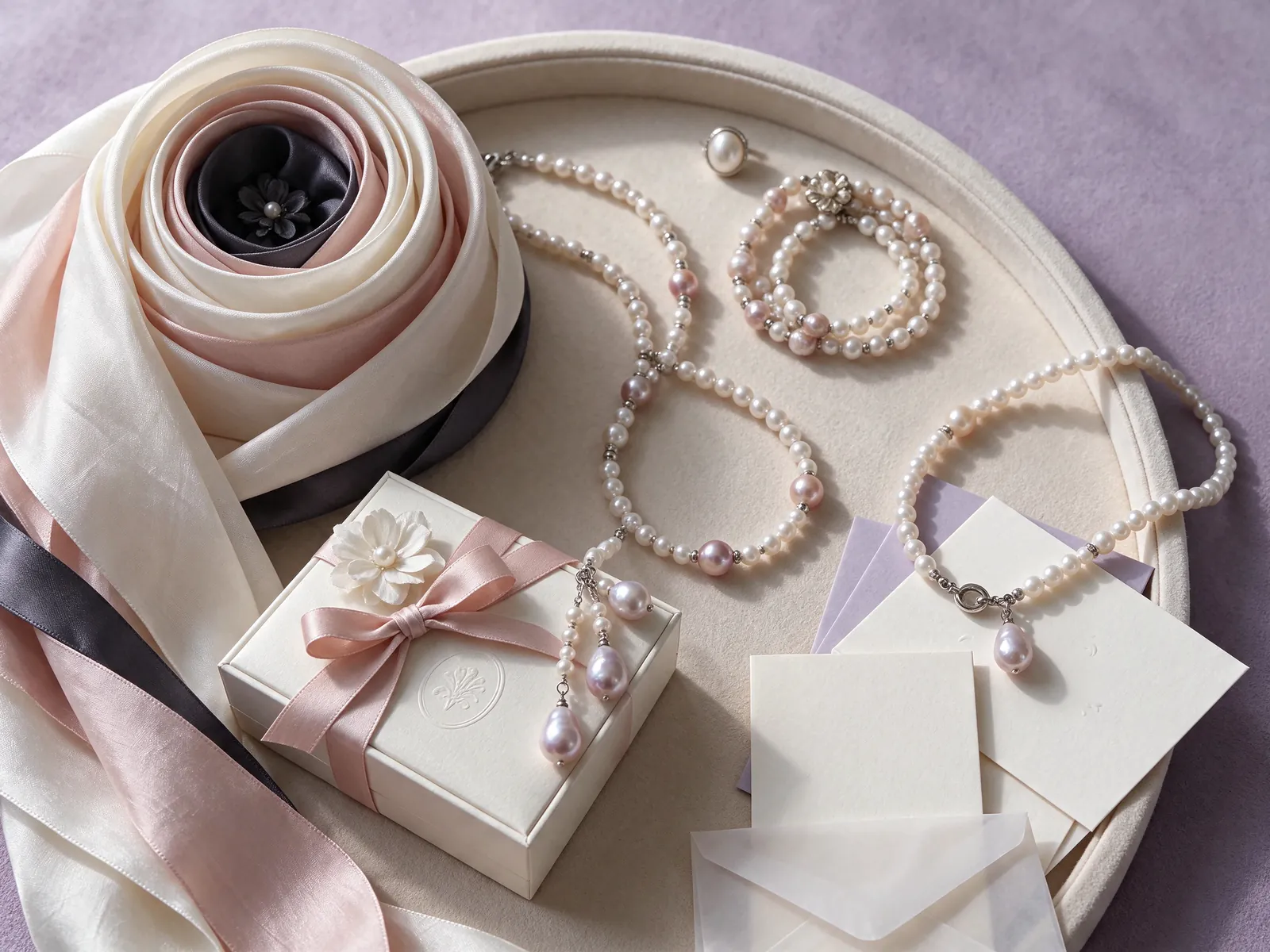
How Can Floral Styling Suit Workwear or a Thoughtful Gift?
For workwear, let the flower be one deliberate soft detail against a plain shirt or smooth blouse, rather than adding several competing motifs nearby. For a dinner or celebration, an open neckline can give a more pronounced outline room to be seen. With floral fabric, compare whether the necklace echoes the print or simply disappears into it. A simpler flower may sometimes express the idea more clearly than an elaborate outline surrounded by another busy pattern.
For a gift, notice the recipient's usual necklines, preferred necklace position and appetite for a visible focal point. Someone who enjoys curved forms but seldom wears figurative jewellery may prefer to compare a crescent moon pearl pendant. A tiara pearl pendant provides a different reference when the attraction is to symmetry or a decorative outline. The aim is not to prescribe one motif for a personality, but to recognise which visual qualities fit the jewellery the recipient chooses for herself.
How Can You Keep a Gift Personal without Assuming Flower Symbolism?
Use a shared memory or the recipient's own taste to explain the choice. A favourite garden or a colour she often wears can be meaningful without claiming that a flower motif carries a universal blessing. Look at everyday jewellery rather than one formal photograph, and identify the preference that matters most: outline, colour direction or a subtle accent. A personal reason grounded in her routine is more useful than an imposed symbolic interpretation.

How Do You Care for a Pearl Centre and Petal Gaps?
GIA lists pearl at 2.5 on the Mohs hardness scale, making gentle handling particularly relevant around a floral centre. After wearing, use a very soft, clean cloth rather than a hard tool pushed between petals. Narrow spaces can tempt you to brush more firmly, but friction close to the pearl deserves caution. If an area is difficult to see or reach, stop and seek advice from someone familiar with pearl jewellery instead of forcing a tool into the gap.
Keep perfume, hair spray, acids and excessive heat away from the pearl. Put the necklace on after dressing and applying cosmetics, and remove it before pulling clothing over your head. GIA states that pearls should never be cleaned in ultrasonic or steam cleaners; metal petals do not make the pearl centre suitable for those methods. Store the flower separately from harder jewellery, with the chain arranged so that it does not tangle through the petals or rub repeatedly against the centre.
What Can You Observe before Wearing It Again?
Check that the chain has not entered an open petal space and that the flower and pearl appear in their usual positions. If something has visibly shifted, avoid twisting it back or pulling the chain through with force. This is a simple observation, not a diagnosis of how the piece is secured or what repair it needs. A clear photograph of its normal appearance can help you describe a change when seeking appropriate advice.
For help comparing petal outlines, neckline positions or gift styling, contact Flint Jewellery on WhatsApp +85260106207 to discuss flower pearl pendant styling. Share the necklines you usually wear and the lines you enjoy so the floral idea can be considered alongside your everyday wardrobe.
| Feature | First observation | Useful outfit test | Movement check | Decision question |
|---|---|---|---|---|
| Pearl-to-petal balance | Which element draws attention first | Plain, smooth blouse | Does the collar obscure the centre? | Do I prefer the pearl or flower to lead? |
| Outline and open space | Clarity of the overall silhouette | Unpatterned round or open neckline | Do projecting edges meet fabric details? | Is the motif clear at normal viewing distance? |
| Metal colour | Relationship with existing jewellery | A frequently worn outfit | Does changing reflection dominate the centre? | Is there a clear colour hierarchy? |
| Position and suspension | The full height of the composition | Open and buttoned shirt collar | Does it turn or catch after ordinary movement? | Does the position suit my routine? |
| Pearl and care | Lustre and surface apart from decoration | Similar soft lighting and background | Keep the stored chain out of petal gaps | Can I handle the centre without rough friction? |
Pearl knowledge and authoritative references
GIA identifies seven pearl quality factors: size, shape, colour, lustre, surface quality, nacre quality and matching. Assess the pearl separately from the floral frame; matching between pearls is relevant to multi-pearl compositions rather than a single-pearl centre.
Read the reference for this factFrequently asked questions
Can a flower pearl pendant look restrained with an office shirt?
Yes. A clear outline against a plain shirt can be the outfit's only soft accent. Check that the collar does not cut across the flower and keep nearby jewellery simple if the petals are detailed. The floral theme alone does not determine how dressy or romantic the result feels.
Does a flower with more petals indicate better quality?
No. Petal count describes a design choice, not a pearl quality ranking. Compare the clarity of the silhouette and its contact with clothing, then assess the pearl separately using factors such as lustre, surface quality, shape and colour.
Is layering a flower pendant with another necklace a good starting point?
Try the flower alone first. Once you understand where it sits and how it moves, add another chain and check whether it crosses the pearl or enters a petal gap. A layered arrangement should still allow the central motif to remain clear.
What should I notice before choosing floral jewellery as a gift?
Observe everyday necklines, necklace position and whether the recipient enjoys subtle accents or prominent motifs. Her own jewellery choices provide more practical guidance than an assumed meaning attached to flowers. A shared memory can make the choice personal without imposing symbolism.
Can an ultrasonic cleaner reach dirt between metal petals?
Do not use it for a pendant with a pearl centre. GIA says pearls should never be cleaned in ultrasonic or steam cleaners. Use a very soft, clean cloth for routine care and seek suitable professional advice for inaccessible areas rather than using hard tools.
Updated: