

Using a pearl grading guide: comparing pearl quality grades and understanding pearl grades fairly
A grade becomes useful only when you know what the seller means by it. WSP describes its own five-level scale, from A to E, and evaluates the balance of lustre, nacre and surface condition. Those letters are not interchangeable with another seller’s AAA label. When reading WSP pearl grading, identify the stated criteria before comparing them with another description. Ask whether the same factors are assessed and how they affect the category. WSP’s scale describes its own approach, not a Flint Jewellery product grade, and the label alone cannot supply a missing definition.
For a fair shortlist, put the known descriptions side by side: pearl type, recorded size, shape, surface observations and lustre. Keep differences in jewellery format visible rather than comparing unlike pieces as though they were identical. Learning what determines pearl value also helps separate a quality observation from a style preference. An irregular outline may be exactly the look you enjoy, while the clarity of its reflections and the position of surface features still deserve their own assessment.
Reading reports in a pearl grading guide: pearl quality grades and understanding pearl grades with evidence
Read a report separately from the seller’s grade. Identify the issuer, the pearl or jewellery item covered, and the findings actually recorded. The same approach applies to certified Hanadama pearls: a name is not a universal translation of a seller’s top category. Pearl Science Laboratory (PSL) lists several certificate types on its official page, including FA and FC identification certificates that contain no grade. Having documentation therefore does not necessarily mean having a quality assessment. Establish how the report corresponds to the object, and do not extend its findings into a valuation, investment promise or service guarantee.

Assess lustre with consistent light, not the brightest photograph
Lustre is not simply whiteness or the brightness of a single highlight. Look at the definition of reflections and the transition between brighter and darker areas as the pearl is turned. GIA describes lustre using Excellent, Very Good, Good, Fair and Poor; these terms are not a conversion table for AAA or AAAA. A practical way to learn how to judge pearl lustre is to compare candidates against a similar background under the same soft light. A strong spotlight creates an eye-catching reflection, but that isolated point does not assess the whole surface.
Then consider how the pearl looks at a normal conversational distance. Close viewing helps reveal reflection details; stepping back shows its visual presence beside your face or neckline. A dark blouse may make a pale pearl appear more striking, but that contrast is a styling effect, not a change in grade. Try to distinguish what you enjoy about the pearl itself from what the background and lighting contribute to the overall impression.
Use images to narrow choices, then ask about viewing conditions
Different exposure and white balance can make unrelated photographs difficult to compare. If images are your starting point, ask whether different angles of the same object can be viewed under comparable light. A polished photograph should not be used to infer a pearl's identity, origin, treatment status or certification.
Surface assessment depends on location as well as visibility
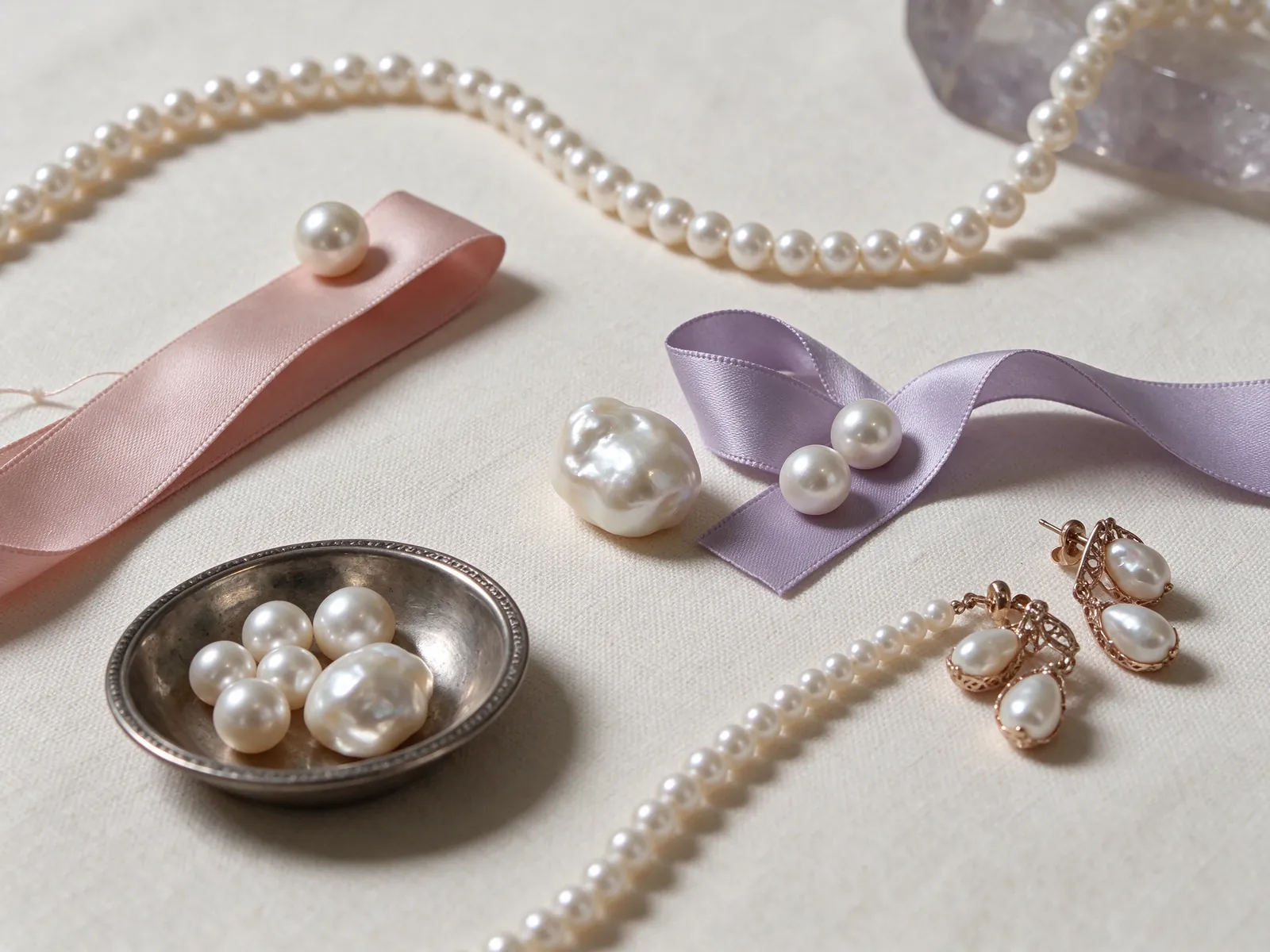
Counting visible dots is an incomplete way to evaluate pearl surface quality. Consider the location, extent and prominence of pits, textures or other surface characteristics. Begin with the part that normally faces outwards, then look at the sides and any areas concealed by the setting. Concealment affects how a design presents a pearl; it does not establish that the concealed area has no features. Ask for descriptions that explain where a characteristic occurs, not merely a favourable adjective.
A pearl with clear reflections and a localised surface feature can present a different choice from one with a more even-looking surface but softer reflections. Decide what you find distracting before relying on a letter to settle that trade-off. An earring’s outward face, a turning pendant and a ring viewed from above each expose different areas. If you notice cracking, peeling or damage near a setting, ask about the condition of the entire piece separately. A possible structural problem should not simply be dismissed as an acceptable growth mark or reduced to an aesthetic preference.
Balance enlarged detail with the normal wearing view
Magnification helps explain a local feature, but it should not replace the view in which the jewellery will be worn. Ask whether the feature is noticeable at that distance and whether it sits on the most visible face. Neither a close-up showing detail nor a small image hiding it justifies a blanket quality conclusion.
Separate shape and colour preferences from a single quality ranking
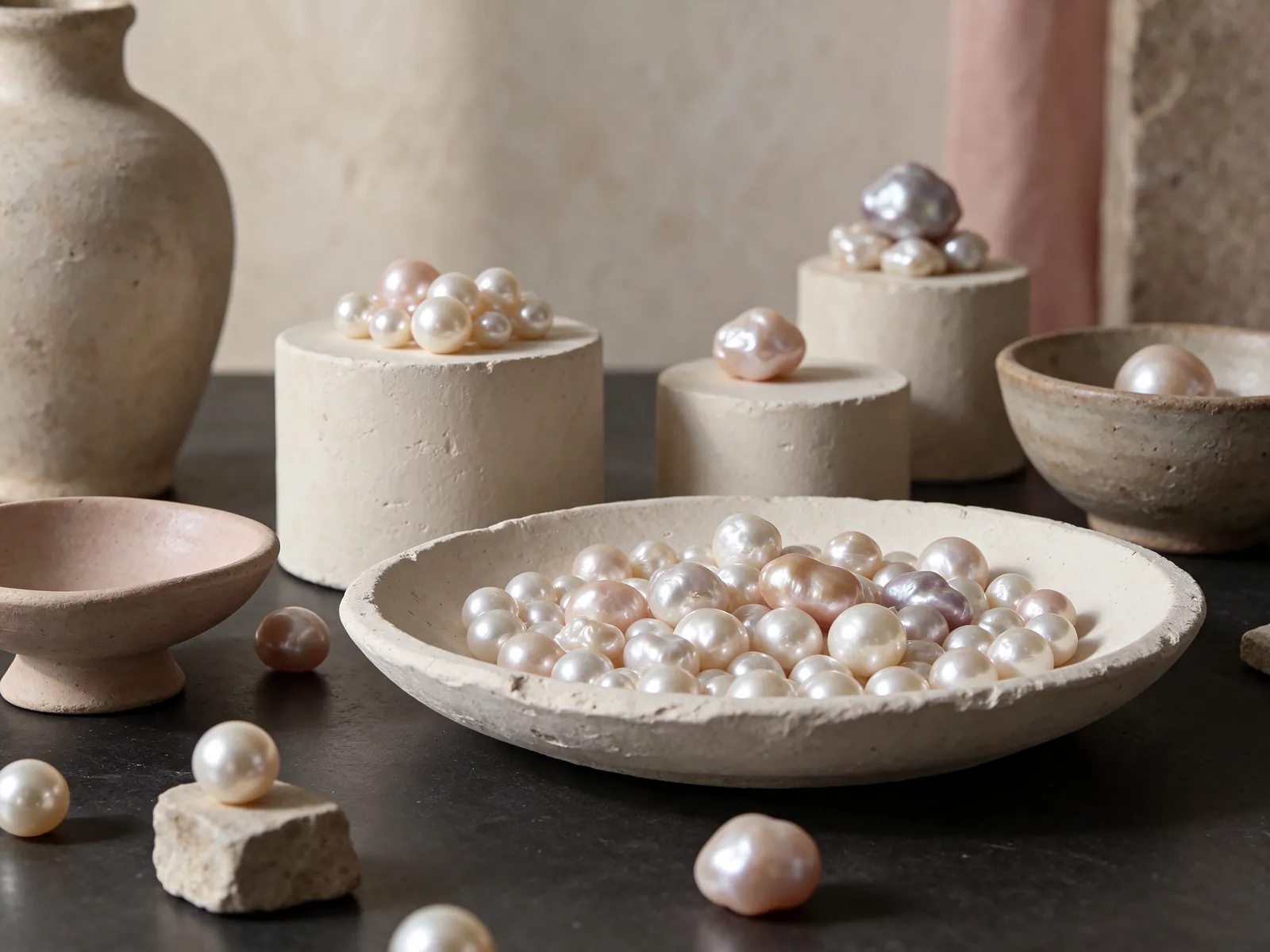
GIA includes size, shape and colour among pearl value factors, but these do not instruct every wearer to choose the largest, roundest or whitest appearance. A regular outline can give a neat visual rhythm, while an irregular form can be the intended focal point. Establish the shape you want before comparing examples within that preference. Otherwise, a roundness-based ranking may lead you away from the very silhouette that attracted you in the first place.
Colour can involve bodycolour, overtone and orient. Every pearl has a bodycolour, but it need not display the other two components. Observe the appearance beside your skin and clothes rather than treating a colour name as a complete description. Colour and shape alone cannot establish origin or natural-versus-cultured identity. For size, use the pearl size guide to distinguish a single recorded diameter from a range covering several pearls. Keep that recording basis consistent between candidates. The setting, position and overall proportions also affect visual weight, so even a reliable measurement does not answer every styling question.
Choose a proportion that works with your everyday neckline
With a shirt, check whether the pearl remains visible near the collar and whether it competes with buttons or other details. With a simple evening outfit, consider how it sits alongside earrings and hairstyle. Decide whether you want a quiet accent or a stronger focal point before making the final quality comparison.
Nacre information and report names answer different questions
Nacre quality relates to lustre, but a bright appearance does not provide a numerical thickness measurement. When considering pearl nacre thickness, distinguish an explanation of the concept from a result recorded for a particular pearl. For a recorded result, read how the object and measurement are described. Do not transfer a number from a different specimen, a general article or an unrelated report to the pearl you are considering.
A seller’s grade, a report title and a test result are different kinds of information. PSL’s official page states that its SS certificate type is used for Aurora Hanadama and that nacre thickness is measured by X-ray. When reading about Aurora Hanadama pearls, return to the actual report type and recorded result rather than calculating thickness from a photograph. PSL also describes FC identification certificates that contain no grade but record thickness in the remarks. A measurement and a quality designation cannot replace one another, and neither creates a cross-seller letter conversion. Preferred outline and wearing proportions still require separate consideration.
Compare shared report content without filling gaps yourself
Keep identity descriptions, measurements and visual opinions in separate columns of your notes. If two documents cover different subjects, compare the information they have in common. A longer document is not automatically evidence of a higher visual grade, and an unrecorded measurement should not be converted into an assumed value.
For pairs and strands, matching deserves its own assessment
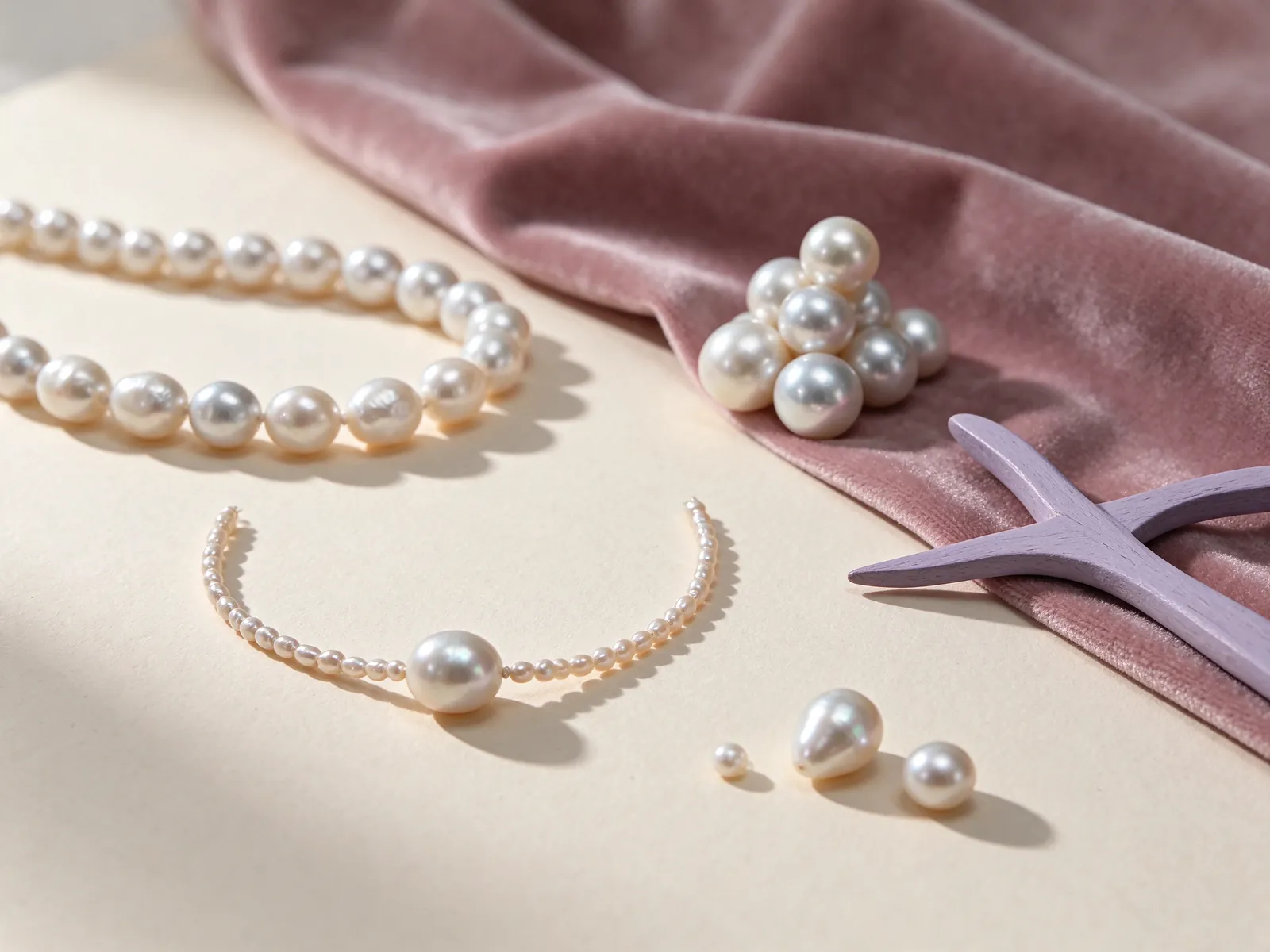
Matching is one of GIA’s seven pearl value factors and applies to jewellery containing two or more pearls. Assessing pearl matching quality is particularly helpful for earrings and strands. Two individually attractive pearls can differ noticeably in colour, lustre or outline when placed together. View both earrings against one background and consider front and side views, rather than relying on a close-up of only one pearl. An intentionally asymmetric design has a different visual aim; judge whether the contrast achieves that intention instead of imposing uniformity it was never meant to have.
For a strand, first examine the overall rhythm of colour and reflection, then look for differences that draw attention away from the intended effect. A graduated or deliberately varied design need not make every pearl identical. Its progression should be considered as a composition. Try to see how the centre and sides balance when worn. Individual quality descriptions cannot replace this whole-strand view, just as a harmonious overall appearance does not prove that every surface is featureless.
Coordination with existing jewellery need not mean exact colour equality
If you already own pearl earrings, compare the character of the reflections and the visual weight of a prospective companion piece. Decide whether similarity or deliberate contrast works better with your clothes. The suitability of that combination is a style judgement; sharing a grade label does not guarantee that two pieces will coordinate.
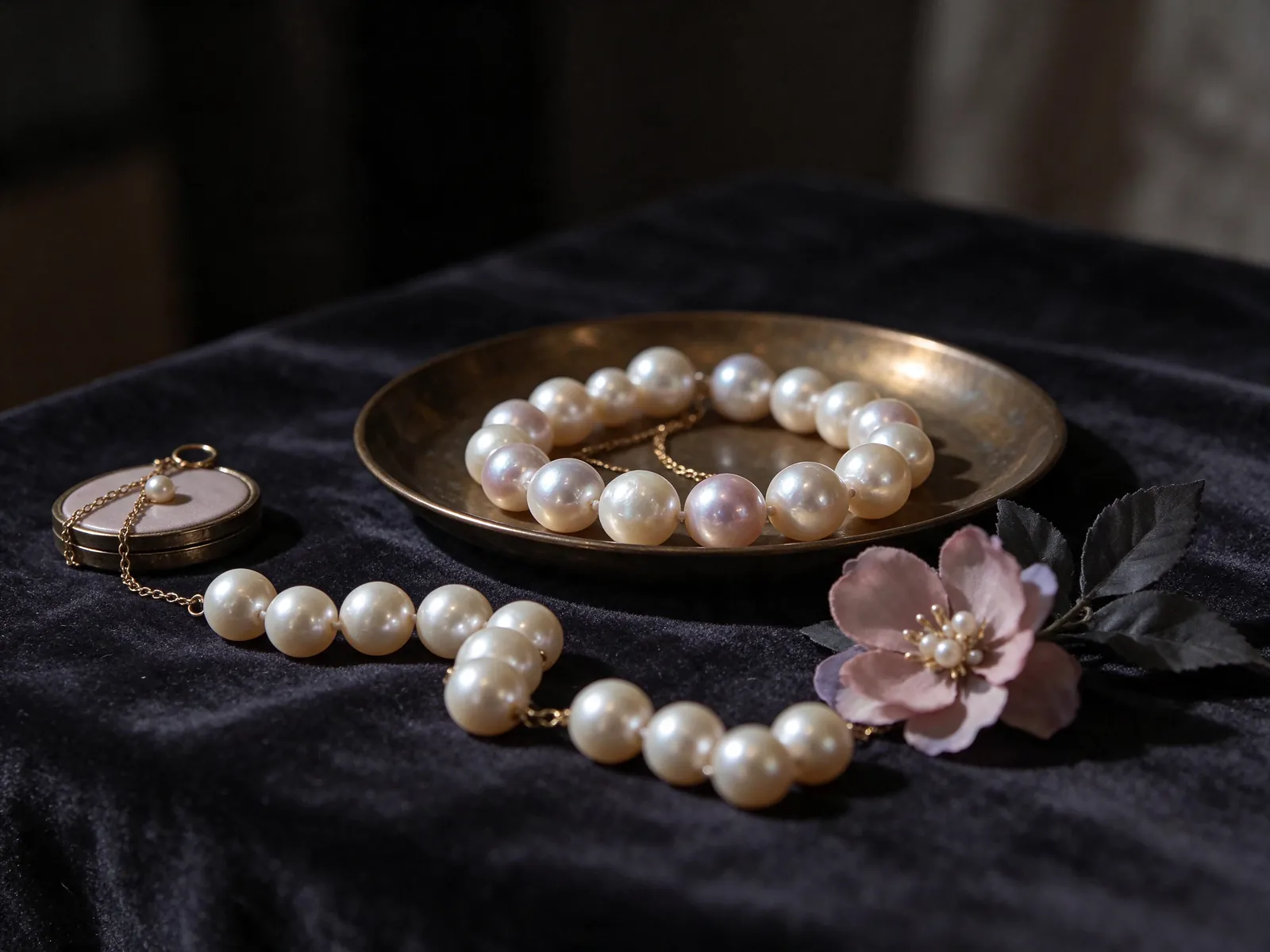
Build a comparison around intended use and specific questions
Begin with the wearing situation: a discreet workday accent, an easy-to-coordinate gift, or a focal point for a particular neckline. Next identify your priorities within the quality factors. You might care most about defined reflections, an unobtrusive outward-facing surface or a well-balanced pair. This makes the conversation more useful than asking only for the best grade. It also helps you recognise when a higher-sounding label does not answer the question that matters to you.
Record the seller's definitions, your observations and any report details separately, then ask the same questions of each candidate. If you are exploring different forms of Pearl Jewellery, narrow the choice by wearing position before comparing the relevant quality descriptions. A pair of earrings and a strand do not need to sit on one letter-based league table. Your final choice should be explainable through its appearance and intended use, not merely through a repeated label.
A consistent question list is more useful than a supposed conversion chart
Ask who defines the grade, which factors it includes, whether the images depict the object being discussed, what the document covers and which visible qualities you prioritise. Clarify an ambiguous answer before proceeding. For a conversation with Flint Jewellery, bring the descriptions or report questions that concern you and explain the intended use. Discuss any quotation individually through WhatsApp; a third-party grade does not determine a Flint price, and a laboratory document is not a Flint service guarantee. This keeps the buying discussion focused on information that actually answers your questions.
| Area | What to examine | Useful question | Avoid assuming |
|---|---|---|---|
| Seller's scale | The seller's own written definitions | Which factors contribute to this category? | Identical letters mean identical criteria elsewhere |
| Lustre | Reflection detail under comparable light | Can I view different angles of the same object? | The brightest photograph indicates the highest grade |
| Surface | Location, extent and wearing visibility | What features occur on the outward-facing area? | A concealed area is necessarily featureless |
| Shape and matching | Desired outline and overall balance | Does the pair or strand achieve its intended rhythm? | One pearl's description establishes matching |
| Report | Issuer, covered object and recorded findings | How does this document correspond to the object? | A report name translates into a universal top grade |
| Identification-only document | Whether a grade or measurement is included | Does the document identify the pearl, assess quality, or both? | Documentation automatically establishes quality, value or a guarantee |
Pearl knowledge and authoritative references
GIA identifies seven pearl value factors: size, shape, colour, lustre, surface quality, nacre quality and matching. Matching applies to jewellery containing two or more pearls. These are comparison factors, not a universal letter-grade conversion system.
Read the reference for this factFrequently asked questions
Can I compare two sellers simply because both use AAA?
Not on that label alone. Read each seller's definition and compare the shared criteria, such as lustre, surface and shape. Where the definitions differ, use specific descriptions and comparable observation rather than inventing a conversion between the scales.
Does a Hanadama report replace the seller's grade?
The two may address different questions. Check the issuer, certificate type, identified object and recorded findings first; PSL also issues identification certificates without grades. Read the seller’s category by that seller’s definitions, then consider appearance and wearing needs. Documentation is not automatically a valuation or a Flint Jewellery service guarantee.
Should an enlarged image of a pit rule out a pearl?
Consider its position, extent and visibility during normal wear. A feature on the most prominent face may matter more to you than one visible only at a particular enlarged angle. Assess it alongside the overall appearance and your own acceptance of surface characteristics.
Is a single-pearl description enough when choosing earrings?
Also examine the pair together for harmony in colour, lustre, shape and visual weight. A description of one pearl cannot establish that relationship. If the design intentionally uses contrast or asymmetry, assess whether the difference supports the intended look.
Can colour establish a pearl's origin or cultured identity?
Colour and shape alone cannot establish those identities. Use appearance for styling comparisons, and look to records or relevant testing documentation corresponding to the object for identity information. A photograph is not a basis for adding an unrecorded identity claim.
Updated: