

How do contours vary in square shaped pearls described as square baroque pearls or square irregular pearls?
Begin with the silhouette rather than an isolated corner. Square baroque pearls can create a broadly square impression while retaining curved edges, rounded corners or an uneven boundary. The useful question is whether that overall outline appeals to you at a normal viewing distance. The pearl shape guide helps place this description alongside other forms without treating every shape name as a precise geometric specification.
When comparing square shaped pearls, separate the pearl's edge from the outline created by its setting. A square metal surround does not establish that the pearl itself is square. Look for a photograph that leaves the boundary visible, and note where the widest part falls. A softened corner can make the outline gentler, while an extended edge may produce a more rectangular impression. Neither observation, by itself, establishes a quality grade.
What can a side view reveal about square shaped pearls described as square baroque pearls or square irregular pearls?
A side view reveals whether the body appears relatively flat, rounded or uneven through its depth. With square irregular pearls, also inspect the reverse and the area near the attachment: a projection hidden from the front may affect how the piece sits. Photographic shadows are not measurements. Read the stated length, width and thickness of the individual pearl rather than assuming a single diameter explains its complete form.

Read proportions and reflections as separate observations
A broad, shallow outline and a fuller body can produce quite different impressions even when both appear square from the front. Choose between them according to the intended look, not an assumption that greater thickness must mean better quality. For everyday jewellery, consider the available space at your neckline. For a focal piece, step back from the close-up and ask whether the outline remains distinct against your usual clothing.
Light can emphasise one ridge and leave another area in shadow, changing the apparent shape in a photograph. Compare images taken with similar backgrounds and lighting wherever possible. First trace the boundary, then observe the bright and dark areas, and finally examine surface detail. This sequence prevents a dramatic reflection from doing all the work in your decision. A single brightly lit photograph does not show how the pearl looks in every environment.
Which views help with a practical comparison?
A clear front, side and reverse view, together with a wearing image, answers different questions. The close views show contour and construction; the wearing image shows relative scale. Check the attachment position as well. A connection near a corner may present the silhouette as a diamond, while a connection along an edge may create a more level square impression. Read those views alongside actual dimensions.

Compare neighbouring shapes without treating them as interchangeable
The wider subject of baroque pearls includes irregular appearances; square is a more specific way of describing the outline you see. Identify what attracts you to it. You may prefer a substantial face, recognisable corners or the contrast between a geometric impression and uneven detail. Naming that preference is more useful than expecting every pearl described with the same term to look alike.
Compare stick pearls if you are deciding between an elongated line and a broader face. Looking at half round pearls can also help you distinguish a front-facing impression from a side profile. These are comparisons of appearance, not interchangeable identities. With strongly vertical clothing details, a square-looking silhouette may introduce a different visual rhythm; an elongated form may instead repeat the direction already present in the outfit.
Keep the outer boundary distinct from surface lines
A shape description concerns the outer silhouette, while surface features describe what happens across the face. Reading about circle pearls helps separate those observations. Trace the complete edge first, then inspect any visible lines or ridges. Recording both is more informative than calling every uneven feature the same thing, and makes it easier to explain which details you find attractive.

Plan a pendant around the neckline and its direction of wear
With a crew neck, check whether the entire pearl remains visible rather than having its lower edge disappear into the fabric. With an open shirt collar, decide whether it belongs in the space at the neckline or outside the clothing. A plain background makes the corners easier to read; a small, busy print may compete with them. Include your usual jacket when judging the result, rather than styling only for an unobstructed photograph.
Turning a square-looking outline into a diamond changes its visual height and the position of its corners. The attachment can determine this orientation, while movement may reveal the side or reverse. If you intend to layer necklaces, leave enough visual space for the pearl's boundary to remain legible. A chain crossing the face or a neighbouring pendant hiding a corner can change the very outline that attracted you.
Should every accessory repeat the square?
Matching geometric names is not necessary. A simpler earring or ring can make an uneven pearl outline easier to appreciate. Compare the relative size and brightness of the accessories, then add one element at a time. This is particularly helpful when a pendant is already the focal point: repetition can create a theme, but it can also make the outfit visually crowded.
For earrings, look for balance rather than identical corners
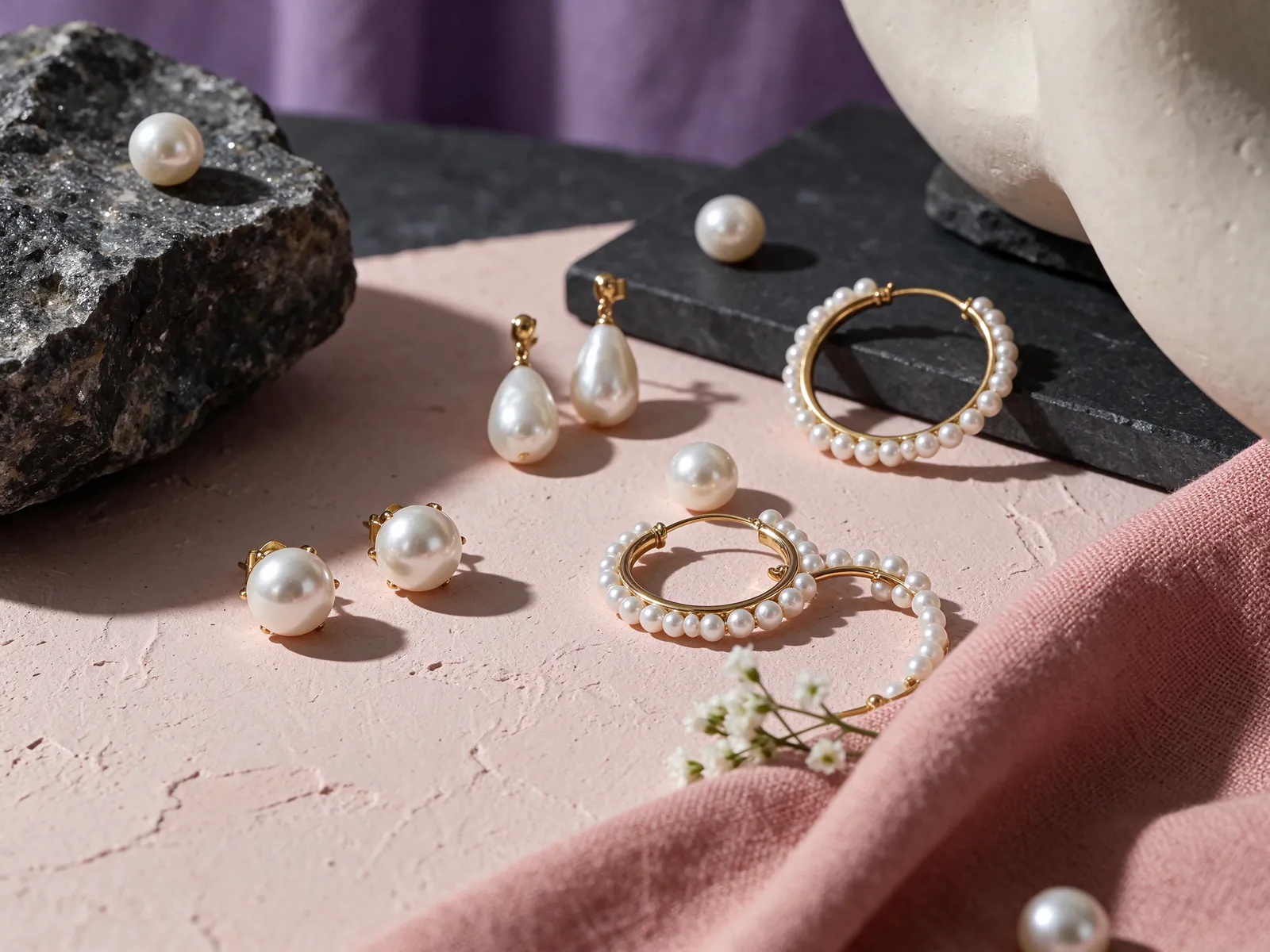
Assess a pair together on the same background. Compare outline height, the widest areas, corner direction, lustre and colour. Two square-looking pearls can differ in depth or in how rounded one edge appears. Decide whether you prefer a closely balanced pair or a deliberately individual look. That preference matters more than demanding that every point on two irregular outlines occupy exactly the same position.
The earring attachment affects which edge faces the cheek and how the pearl hangs below the earlobe. A wearing view can reveal whether the reverse projects towards the skin or the pearl approaches a collar. Weight and comfort cannot be calculated from a shape name or photograph. Consider the actual construction and try the piece where possible, using the hairstyle and clothing you normally wear.
How can an intentionally different pair still feel coherent?
Differences can be balanced by a shared visual scale, brightness or hanging length. Compare both front and side views before judging the pair in wear. If one side draws much more attention, decide whether that asymmetry is part of the look you want. For a gift, understanding whether the wearer enjoys orderly matching or individual contours is more helpful than choosing solely by the shared shape description.

Keep quality and colour in the decision alongside shape
GIA describes seven pearl value factors: size, shape, colour, lustre, surface quality, nacre quality and matching. A square outline addresses only the shape observation. Keep your contour preference separate from the other information about the individual pearl. For a pair of earrings, matching also deserves its own comparison. Finding a silhouette attractive is not evidence that every other quality factor is equally strong.
The pearl colour guide can help you compare the pearl against clothing rather than judging colour on a disconnected close-up. The terms pearl body colour and overtone are distinct observations, and lighting can alter the impression in photographs. Compare similar views, then consider how the piece looks near your own skin. Neither a square outline nor a photograph's colour establishes origin, natural-versus-cultured identity or treatment status.
What information should accompany the appearance?
Read the individual dimensions, pearl identity description, treatment information and the jewellery's attachment and material details. If colour formation matters to you, natural colour vs dyed pearls offers a useful related topic. A favoured appearance cannot replace documentation, and the measurements or report belonging to another similar-looking piece should never be transferred to the pearl you are considering. Images on this page illustrate appearance; they do not establish the pearl identity, treatment status or specifications of an individual product.

Finish with a care plan and a clear order of priorities
GIA places pearl at 2.5 on the Mohs hardness scale. Store the piece so it does not rub against harder jewellery, paying attention to any projecting corners when placing it in a box. After wearing, use a very soft, clean cloth. Avoid perfume, hair spray, acids and excessive heat. Uneven surfaces are not a reason to scrub aggressively, and pearls should never go into ultrasonic or steam cleaners.
Make the final comparison in a practical order: intended use, preferred outline, side profile, reflections, actual dimensions and construction. Then return to your everyday neckline or hairstyle. You do not need to ignore irregular detail to enjoy a square impression. Explaining which edges, rises and reflections you like creates a clearer selection brief than simply asking for the most geometrically square appearance.
Remember connections and stringing during care
Do not pull on the pearl to test its attachment. If a connection appears loose, stop wearing the piece until it can be assessed. For pearls that are strung and cleaned with water, GIA advises allowing the string to dry completely before wearing. A surface that looks dry is not the same as fully dry stringing, so follow the care instructions for the complete piece.
Ready to clarify the outline you enjoy? Contact Flint Jewellery on WhatsApp +85260106207 to discuss your usual neckline, hairstyle and preferred corner details.
| Feature | Front view | Side view | Styling consideration | Decision question |
|---|---|---|---|---|
| Edges and corners | Read the complete silhouette | Inspect projections near the corners | Plain fabric keeps edges visible | Do you prefer crisp or softened lines? |
| Body proportions | Compare length and width | Consider depth and the reverse | Check scale against neckline or earlobe | Do the actual dimensions suit the use? |
| Attachment direction | Square or diamond impression | Look at the face exposed by turning | Allow space around a pendant | Does it hang in your preferred direction? |
| Earring balance | Compare contour, colour and brightness | Compare depth and hanging direction | Consider hair and collar contact | Do you want close matching or visible differences? |
| Quality and care | Consider lustre and surface as well as shape | Separate contour from shadows | Avoid rubbing against harder jewellery | Have you read the individual details and care guidance? |
Pearl knowledge and authoritative references
GIA describes seven pearl value factors: size, shape, colour, lustre, surface quality, nacre quality and matching. A square-looking outline concerns shape, not the complete quality assessment.
Read the reference for this factFrequently asked questions
Does square mean that every edge must be straight?
No. It describes an overall square-looking outline, which may include curved edges, softened corners and uneven details. Evaluate the complete silhouette before examining individual features; precise geometric symmetry is not promised by the descriptive name.
Why does a square-looking pearl sometimes hang as a diamond?
The position of the attachment can rotate the outline in wear. A connection near a corner may create a diamond impression without changing the pearl's underlying shape. Compare the visible boundary and connection rather than judging only the angle in one photograph.
Should square pearl earrings have identical profiles?
Your preferred balance is the deciding point. Compare depth, colour, lustre, size and hanging direction as well as the front outlines. A closely matched pair and an intentionally individual pair can create different looks; a shared shape name alone does not explain the difference.
Can a front photograph tell me the pearl's thickness?
Not reliably. Reflections and shadows may suggest depth without measuring it. Read the individual length, width and thickness alongside side and reverse views. A wearing photograph explains relative scale but is not a substitute for dimensions.
Is ultrasonic cleaning suitable for an uneven square pearl?
No. GIA advises that pearls should never be cleaned with ultrasonic or steam cleaners. Use a very soft, clean cloth for routine after-wear care, avoid aggressive brushing, and allow any stringing cleaned with water to dry completely before wearing.
Updated: