

How should you compare reports for Kingfisher certified pearl jewellery, whether an Aurora Kingfisher pearl pendant or a Kingfisher pearl necklace?
For help thinking through pearl documents and wearing preferences, contact Flint Jewellery on WhatsApp +85260106207. Tell us whether you prefer a single pendant or a strand, the necklines you usually wear and any chain you hope to reuse, so the comparison begins with your own priorities.
Start a comparison of Kingfisher certified pearl jewellery by separating the retailer's title, the document's wording and the object being sold. A title can combine a style name, a colour description and a designation without explaining the whole assessment. Use the pearl types guide to distinguish pearl categories from designations, then organise your questions: who issued the document, what does it describe, and which pearls does it identify? This gives the name a meaningful context rather than treating it as a complete buying answer.
The distinction matters differently for a pendant and a necklace. With a pendant, you need to separate information about the pearl from information about its bail and chain. With a necklace, ask whether the document concerns the complete strand, selected pearls or another stated grouping. Read the full document rather than a cropped heading or cover, and compare its scope with the description of the finished piece.
Matching the report to the pearls: what should you check in Kingfisher certified pearl jewellery such as an Aurora Kingfisher pearl pendant or a Kingfisher pearl necklace?
Look for the identifying information actually present, such as a number, photograph, stated quantity or description of form; different documents need not contain identical fields. If a photograph shows an unmounted pearl but you are considering a mounted pendant, ask how the connection is established. For a strand, ask whether any pearls have been replaced or the necklace restrung. A description of one pearl should not silently become a conclusion about every pearl in a necklace.

Understanding the name without turning it into a universal grade
Kingfisher and the Chinese term used on this page refer to the same designation context, not separate pearl species. WSP's public descriptions associate Aurora Kingfisher with Pearl Science Laboratory and an assessment centred on lustre. That explains why the term appears in certain retail descriptions. It does not make a retailer's explanation a universal specification for all pearls, nor does it tell you everything about a different finished piece carrying similar wording.
Words such as Certified and Appraisal can appear in translated product titles. Do not decide what kind of document exists from the translation alone. Find the original wording, the issuer and the actual conclusions. Likewise, Aurora should not be read on its own as a highest grade shared by all pearl categories. A description of lustre cannot also establish geographic origin, treatment status or natural-versus-cultured identity without the relevant evidence.
Compare the questions that documents answer, not just their names
If you are also reading about a pearl pendant with GIA certificate, compare the purpose and contents of each document separately. GIA, Kingfisher and a shop's letter grades are not interchangeable steps on one quality ladder. Ask whether a document identifies pearl characteristics, records quality observations or uses a specific designation. Two attractive titles can refer to different kinds of assessment, even when both sound reassuring to a buyer.
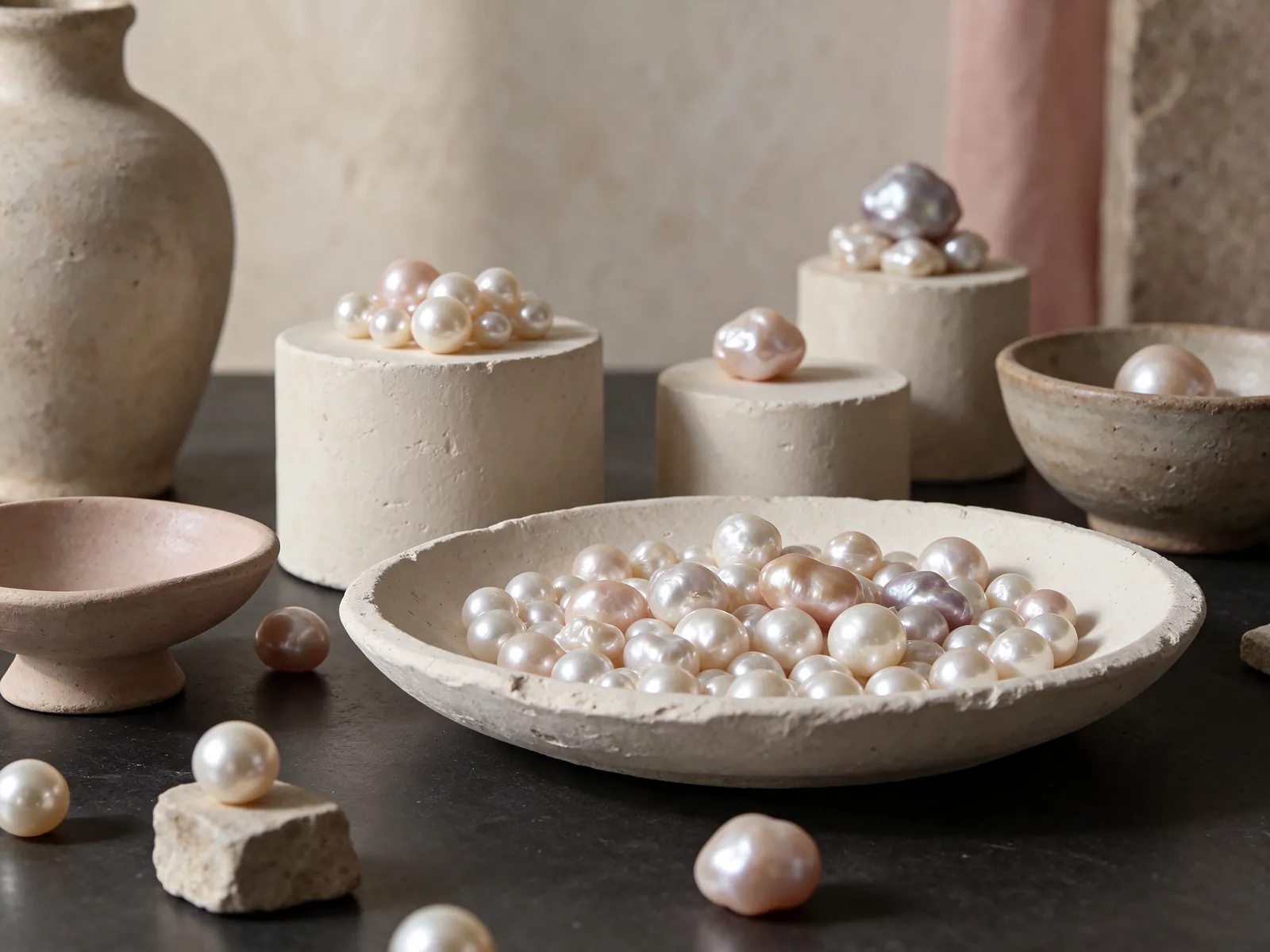
Looking at lustre in lighting that makes comparison useful
Lustre is central to reading this topic, but practical viewing should be consistent. Place the pieces against a similar background, at a similar distance and in gentle light. Notice the clarity of reflections and the sense of depth at the surface, then turn the pearl to see other areas. A strong spotlight can create a dramatic bright patch, while a close-up photograph can favour one angle. Neither is a substitute for observing the whole pearl.
GIA describes seven pearl value factors: size, shape, colour, lustre, surface quality, nacre quality and matching for multiple pearls. This framework keeps an appealing shine in proportion. You may love the reflections yet prefer a different outline, a less visible surface feature or a more balanced strand. Do not estimate nacre measurements or treatment status from appearance. Where a document addresses those subjects, read its conclusion together with the identity and scope of the pearls it covers.
Separate bodycolour from overtone and orient
GIA distinguishes bodycolour, overtone and orient, and not every pearl displays all three. First identify the main colour impression, then observe any additional colour effects as the pearl moves. A pink or lavender impression is not proof of pearl identity. Try the piece against an ivory blouse and a darker top: the contrast may change what you notice. Choose between quiet harmony and a stronger focal point using clothing you actually wear.

Choosing a pendant by its position and construction
When choosing a pearl pendant, decide where you want it to sit relative to your usual neckline. A single pearl pendant draws attention to one compact area, so the bail, chain line and direction of the connection all influence the look. Check the front view, then turn slightly and see whether the pendant rotates or catches the neckline. These are wearing decisions, distinct from the pearl characteristics described in a report.
Begin with a plain top if lustre is the feature that attracts you. Add your usual earrings afterwards to see whether the pendant remains the focus or competes with another prominent detail. A bail can conceal part of the pearl, making the visible face and the angle worn important to the finished appearance. A document describing the pearl does not, by itself, answer questions about chain strength, clasp operation or the workmanship of the setting.
Check the chain end, not only the chain's thickness
A pearl pendant top may be offered separately from a chain, so first establish what the purchase includes. When considering an existing chain, compare the bail opening with its end fitting as well as the chain itself. A fine chain can still have an end that will not pass through. Also check whether the pendant moves smoothly without twisting. Bringing the actual chain into the comparison is more useful than estimating compatibility from a photograph.

Reading a necklace as a complete visual composition
For a Kingfisher pearl necklace, look beyond the pearl at the centre. Lay out the strand and view it from a normal wearing distance, noticing transitions in colour, shape and brightness. Then consider the pearls at the sides of the neck and near the clasp when worn. The appearance of an entire strand depends on its matching and rhythm, not simply the most impressive individual pearl shown in a close-up.
A neckline changes the composition. With a crew-neck top, compare a strand resting on the fabric with one framed by exposed skin. With an open shirt, notice whether it catches a button or disappears under the collar. Decide whether the necklace or the earrings should lead the outfit, then allow enough visual space for that choice. A designation cannot determine the balance that suits your wardrobe or the way you prefer to dress.
Adding an enhancer does not remove the need for a fit check
A pearl necklace enhancer is a useful styling subject, but it is not automatically compatible with every strand. Examine the opening mechanism, the space after closure and whether metal will rub the pearl surface or compress the string. An added focal piece can also change where the necklace rests. If a document identifies a particular strand, attaching an accessory does not automatically extend that document's assessment to the new complete combination.

Making metal colour and wardrobe choices independently
Start a metal-colour comparison with the rings, earrings or spectacle frames you already enjoy wearing. Do not infer a setting metal from the Kingfisher name. When discussing Flint Jewellery's customisation options, the materials are 18K 750 white gold, 18K 750 yellow gold, 18K 750 rose gold, PT950 platinum and PT900 platinum. The chosen material and the pearl's documentation remain separate matters; a designation does not establish an existing configuration for a piece.
Against lavender, pink or warm ivory clothing, compare whether the metal line blends gently or creates a distinct contrast. Against a dark jacket, notice whether the pearl or the bail becomes the stronger detail. The dainty pearl pendant guide can help you think about visual weight and open space if you prefer a quieter everyday look. It cannot supply a pearl diameter from an image; the useful decision is about the proportions you see when wearing the piece.
For a gift, ask about habits before asking about prestige
Consider the recipient's usual necklines, whether they already have a favourite chain and whether they wear pendants or strands more often. If documentation matters to them, keep the complete report with the description of the piece so its scope remains understandable. Treat appearance, practical use and document preference as three separate questions. This is more personal than choosing a name because it sounds more prestigious or assuming that everyone values the same characteristic.

Bringing documents, wearability and care into the final decision
For each candidate, note what the document actually describes, the appearance you like most and any practical fit questions. One pendant may attract you through its individual reflections while a necklace appeals through coordinated matching; a shared name should not erase that difference. If prices differ, ask what pearls, fittings and documents each purchase includes. The designation alone cannot explain a fixed premium or predict a future resale figure.
GIA recommends wiping pearls with a very soft, clean cloth after wearing and avoiding acids, perfume, hair spray and excessive heat. Never use ultrasonic or steam cleaners for pearls. If water has been used on a strung piece, allow the string to dry completely before wearing it. A lustre-related designation does not change these care requirements. Keeping a document should accompany thoughtful handling, not encourage more aggressive cleaning or careless storage.
Keep the whole record rather than just the report cover
Retain the complete document, the purchase description and a photograph of the piece together. If a strand is restrung, pearls are replaced or the bail is altered, keeping a record of the changes helps distinguish the originally described pearls from the current arrangement. This is practical record-keeping, not a promise about value. It provides a clearer basis for later conversations about the jewellery you own and the information that accompanied it.
To discuss pearl selection and styling, contact Flint Jewellery on WhatsApp +85260106207. Share the reflections you enjoy, your preferred neckline proportions and the document questions you want to understand, keeping personal style and practical wearing needs at the centre of the conversation.
| Comparison point | Read in the document | Observe on the piece | Buying purpose | Do not infer |
|---|---|---|---|---|
| Name and issuer | Original designation and issuing organisation | Wording in the retail description | Understand what is being compared | All credentials are equivalent |
| Pearl correspondence | Identification details and stated scope | One pearl or the complete strand | Identify the covered objects | All fittings were assessed |
| Lustre | The actual description of lustre | Reflections in consistent light | Choose a visual effect you enjoy | Origin or treatment status |
| Colour and matching | Characteristics actually recorded | Transitions and clothing contrast | Judge overall harmony | Colour establishes species |
| Finished construction | Separate pearl and fitting information | Bail, chain end and neckline position | Check wearing compatibility | The name guarantees durability |
Pearl knowledge and authoritative references
GIA describes seven pearl value factors: size, shape, colour, lustre, surface quality, nacre quality and matching for multiple pearls. Lustre is one factor within that wider framework.
Read the reference for this factFrequently asked questions
Is Kingfisher the name of a pearl species?
No. It is used here as a designation in a report-reading context. The Chinese term and Kingfisher do not identify two separate species. Pearl identity must come from the relevant documentation and explicit description, not from the translated name.
Does Certified in a title tell me exactly what document is included?
Not by itself. Read the full document, identify the issuer and check its scope and pearl correspondence. A translated retail title using Certified or Appraisal cannot replace the actual contents of the document.
Does a designation for one pearl apply to a whole necklace?
You cannot assume that it does. Check whether the document identifies one pearl, selected pearls or the entire strand, and whether the present arrangement corresponds to that description. Assess the strand's overall matching separately.
Will my existing chain fit an Aurora Kingfisher pearl pendant?
The name does not establish compatibility. Check whether a chain is included, whether the chain's end fitting passes through the bail and how the pendant sits when worn. Comparing the actual chain is preferable to judging only its thickness in a photograph.
Can a pearl with a lustre designation be cleaned ultrasonically?
No. GIA advises against ultrasonic and steam cleaners for pearls. Use a very soft, clean cloth after wearing, avoid perfume, hair spray, acids and excessive heat, and let a wet string dry completely before wearing a strung piece.
Updated: