

How should you compare reports for Kingfisher certified pearl jewelry, whether an Aurora Kingfisher pearl pendant or a Kingfisher pearl necklace?
For help considering pearl documents and wearing preferences, contact Flint Jewelry on WhatsApp +85260106207. Share whether you prefer a single pendant or a strand, your usual necklines and any chain you would like to reuse, so the comparison starts with what matters to you.
A useful way to approach Kingfisher certified pearl jewelry is to ask three separate questions: what does the seller call the piece, what does the document say, and which physical pearls does that document concern? Those answers may sit in different places on a product page. The pearl types guide helps distinguish pearl categories from designations, giving you context before you consider the actual characteristics and document scope that matter for your purchase.
Do not rely on a report cover as though it described every part of a finished item. In a pendant, pearl information is distinct from the chain and mounting. In a necklace, the document might describe a complete strand, selected pearls or a different stated group. Ask to read the full document and compare it with the item description. This prevents a narrow statement from becoming a broader assumption during shopping.
Matching the report to the pearls: what should you check in Kingfisher certified pearl jewelry such as an Aurora Kingfisher pearl pendant or a Kingfisher pearl necklace?
Review whatever identifying details the document provides: these might include a reference number, photograph, quantity or written description. Do not expect every document to use the same format. When a loose pearl is pictured but the item is now mounted, ask how the correspondence is established. When shopping for a strand, ask whether its pearls or arrangement have changed. The key is a clear connection to the present item, not merely a similar-looking name.

What the Kingfisher wording means, and what it leaves unanswered
The Chinese term discussed on this page and Kingfisher belong to the same designation context; they do not describe different pearl species. In WSP's public descriptions, Aurora Kingfisher is associated with Pearl Science Laboratory and luster assessment. This is useful context for understanding a retail term. It should not be expanded into a universal technical definition or applied automatically to another seller's pearls simply because the wording appears similar.
Translated titles may use Certified, Appraisal, certification or identification in ways that do not tell the full document story. Look for the original term and the issuing organization, then read the conclusions themselves. Aurora alone is not a shared highest grade for every pearl category. Nor does a luster description establish origin, treatment status or natural-versus-cultured identity. Each of those subjects requires its own relevant statement rather than an inference from a name.
Different credentials should not be ranked by title alone
When comparing a pearl pendant with GIA certificate alongside Kingfisher wording, first ask what each document is intended to answer. Identification information, quality observations and a specific designation are different kinds of content. GIA, Kingfisher and store letter grades do not form interchangeable positions on a single ladder. A more useful comparison is whether each document gives clear information about the particular questions you want answered for that piece.
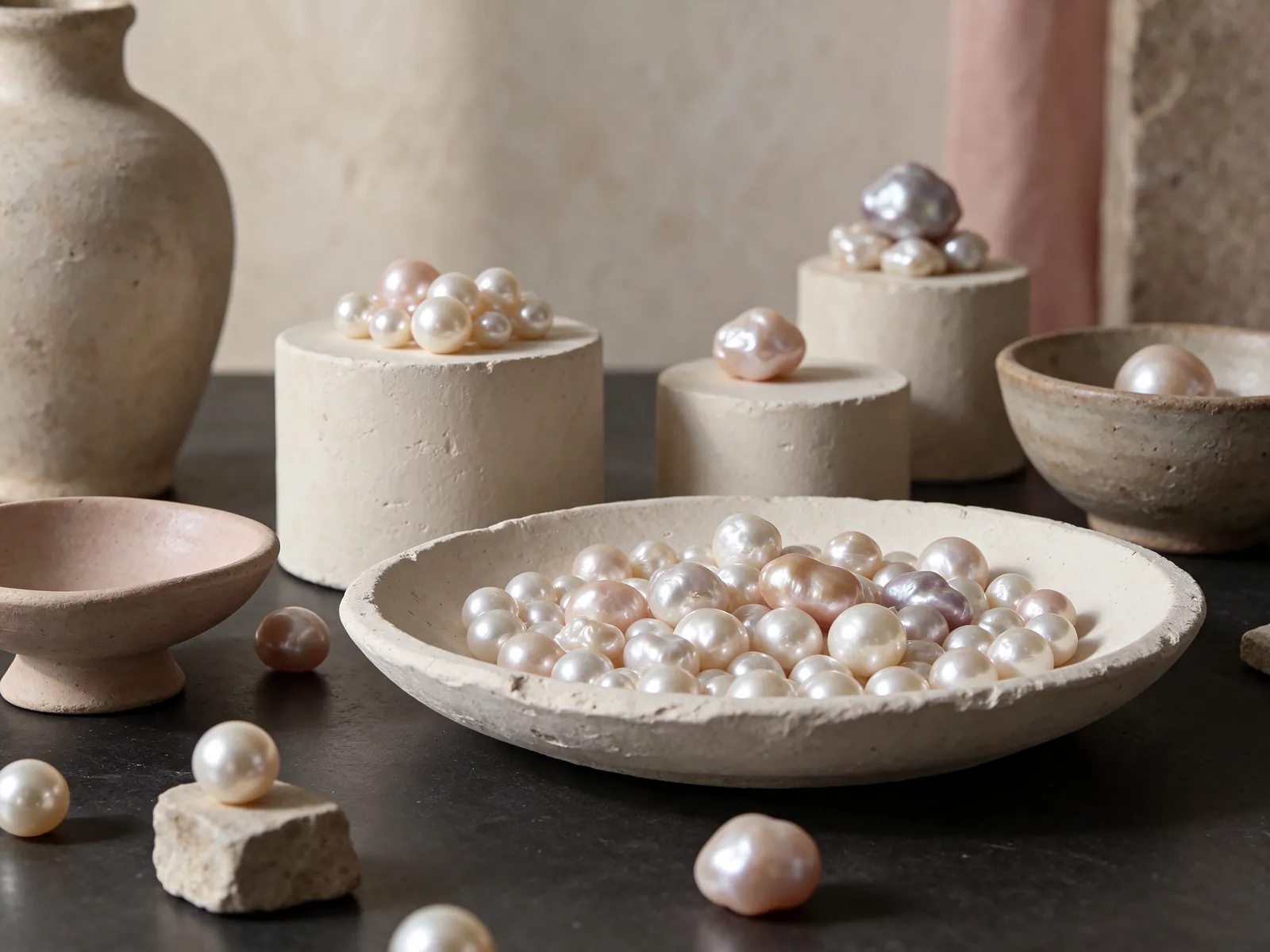
Make luster comparisons fair before deciding what you prefer
Before comparing brightness, put the pieces in similar viewing conditions. A neutral background, consistent distance and soft lighting make it easier to notice reflection clarity and the visual depth of the surface. Turn each pearl instead of choosing from a single favored angle. A concentrated display light can produce an impressive white highlight, but that highlight is not the same thing as a complete view of the pearl's appearance in ordinary use.
GIA lists seven pearl value factors: size, shape, color, luster, surface quality, nacre quality and matching for multiple pearls. Use that list to keep luster from crowding out everything else. Consider whether you like the outline, where visible surface features sit and how a strand works as a whole. Nacre measurements and treatment status should not be guessed from photographs. If the document addresses them, read those findings within the document's stated coverage.
Use clothing to judge color preference, not pearl identity
GIA separates bodycolor, overtone and orient, and notes that not every pearl shows all three. Observe the main color impression first, followed by any additional effects as the pearl moves. Pink or lavender tones alone do not establish pearl identity. Against an ivory shirt the result may look softly coordinated; against a dark neckline it may read as a stronger focal point. Choose the effect you like, without turning that preference into a classification claim.

Let pendant placement and hardware answer the wearing questions
For a pearl pendant, start by considering whether the pearl should sit above the neckline, within an opening or over the fabric. A single pearl pendant concentrates attention in a small area, so the bail's shape and the chain's line can be as important to the composition as the pearl. View it straight on and from a slight turn, noticing whether it stays facing forward or shifts against the garment.
If the pearl's reflections are your favorite feature, begin your comparison with a simple top. Then add the earrings you normally wear and decide whether the two elements complement one another or compete. Notice how much of the pearl is visible below the bail and which face is presented when worn. Pearl documentation does not automatically evaluate the chain, the security of a clasp or the craftsmanship of the finished mounting.
A slim chain can still have an incompatible end fitting
Before choosing a pearl pendant top, establish whether the purchase includes a chain. If you plan to use your own, compare its end fitting with the bail opening, not just the thickness of the chain links. Also consider whether the pendant slides freely and rests without twisting. An actual fit comparison is more dependable than an estimate from an image, and the Kingfisher designation does not resolve this hardware question.
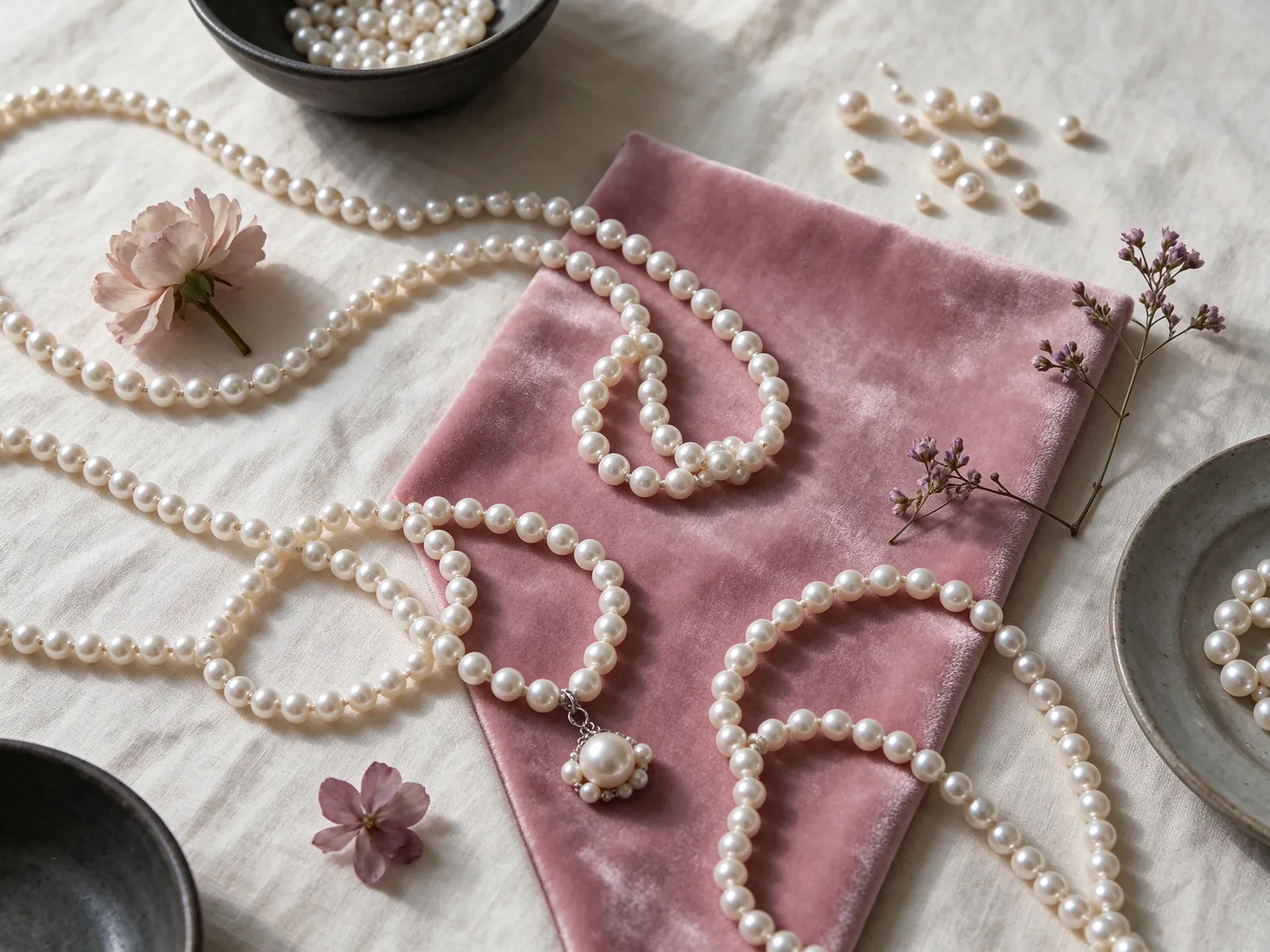
For a necklace, look at the transitions across the whole strand
A Kingfisher pearl necklace should be considered as a sequence, not only through a close-up of its center pearl. Lay the strand out and look at it from a realistic wearing distance. Follow the changes in shape, color and brightness from one area to another. Then consider how the side pearls and the clasp area appear when worn. Overall matching can influence your preference even when individual pearls are attractive on their own.
Test the visual position against the kinds of necklines in your wardrobe. A crew neck can frame the strand differently depending on whether it rests over fabric or against exposed skin. An open collar can hide part of it or interrupt the line. Decide whether the necklace will lead the outfit or share attention with earrings, leaving enough open space for the result you want. No designation can choose that balance for you.
Check contact points before adding an enhancer
A pearl necklace enhancer introduces both a new focal point and a new contact area. Consider how it opens, the room inside when closed and whether metal could press on the string or rub a pearl surface. Do not assume that every enhancer suits every strand. The accessory may also move the necklace's resting position. A document describing the original pearls does not automatically assess the complete combination after an accessory is added.
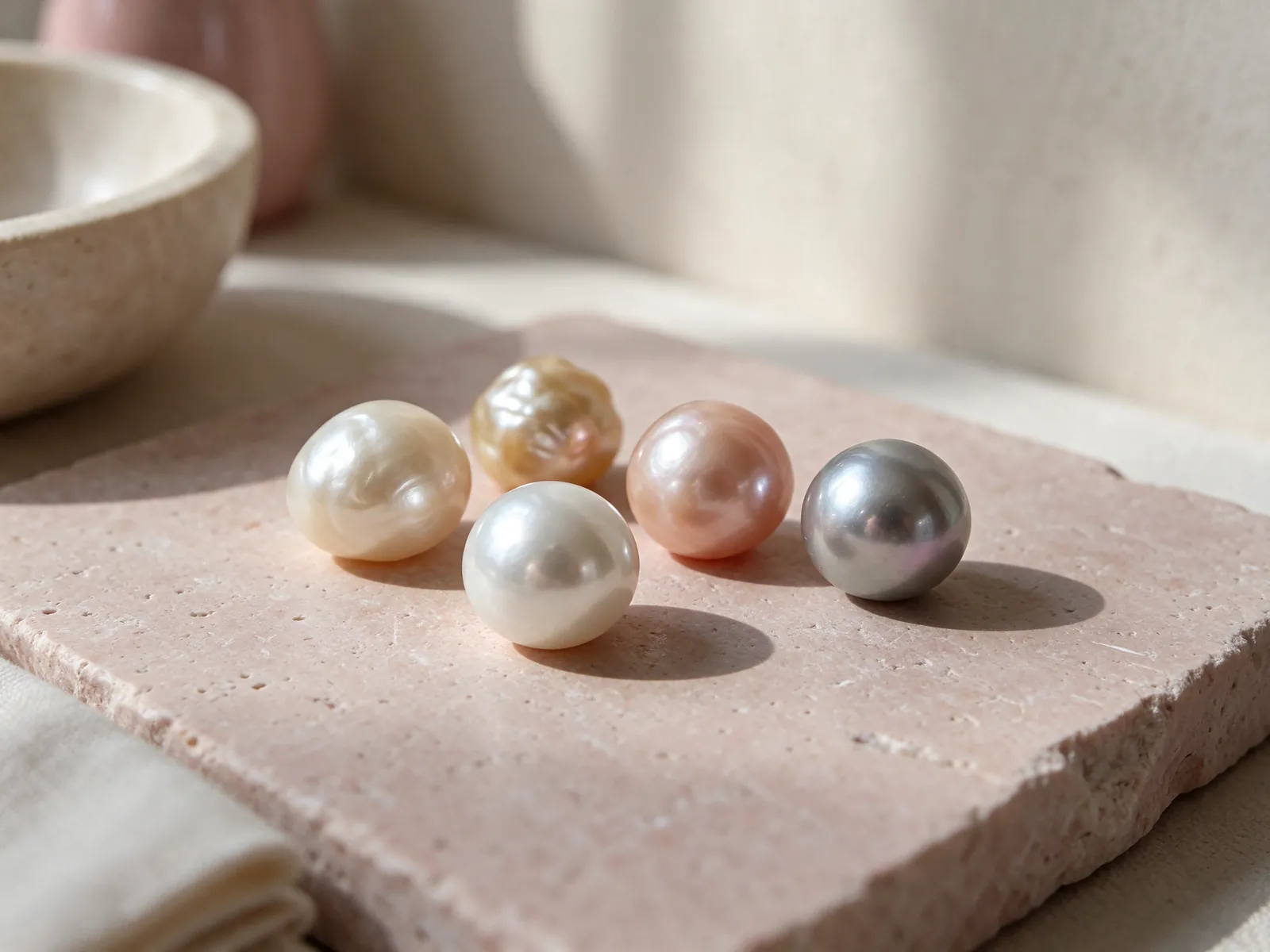
Choose metal color and visual scale from everyday preferences
Your existing rings, earrings and glasses can provide a practical starting point for metal color. There is no need to derive that preference from the Kingfisher wording. Flint Jewelry's customization material options are 18K 750 white gold, 18K 750 yellow gold, 18K 750 rose gold, PT950 platinum and PT900 platinum. The selected metal should be discussed separately from pearl documentation; the designation does not establish that a particular mounting is already available.
Compare the setting against lavender, pink and warm ivory clothes to see whether the outline blends or contrasts. Then try a dark jacket and notice which detail becomes dominant. If you want a more understated composition, the dainty pearl pendant guide offers a way to think about visual scale and the space around the pearl. It is not a basis for estimating diameter from a picture; the relevant choice is how the proportions look on you.
A gift decision benefits from questions about real use
Ask whether the recipient usually wears open collars or higher necklines, has a favorite chain, and reaches more often for a pendant or a strand. If reports are important to them, preserve the complete document with the item description so they can understand the designation's scope. Appearance, wearing habits and documentation are separate preferences. Considering all three is more thoughtful than assuming an impressive-sounding name will be everyone's main priority.

Complete the comparison with care and a clear ownership record
Write down the strongest reason for choosing each candidate: the document's information, the visual feature you enjoy and the practical fit. A pendant chosen for individual luster and a strand chosen for matching need not be judged as though their shared designation makes them identical. If asking about different prices, ask what pearls, fittings and documents are included. The name alone does not establish a standard premium or forecast what a later resale might bring.
Care remains important regardless of the designation. GIA recommends a very soft, clean cloth after wearing and avoidance of acids, perfume, hair spray and excessive heat. Pearls should never go into ultrasonic or steam cleaners. If a strung item has been cleaned with water, its string must be completely dry before it is worn again. Documentation is useful information, but it does not make aggressive cleaning or casual handling appropriate.
Record changes without assuming the original scope expands
Store the full report with the purchase description and a photograph of the jewelry. If you later replace pearls, restring a necklace or change the bail, record what changed. This helps distinguish the pearls originally identified from the current wearing arrangement and makes future conversations clearer. Keeping such records is about understanding the item and its documentation; it is not a claim that a designation guarantees resale value or every aspect of the finished piece.
To discuss pearl selection and styling, contact Flint Jewelry on WhatsApp +85260106207. Tell us about your favorite reflections, the proportions you prefer at the neckline and any document questions, so appearance and practical wearing needs remain distinct parts of a considered choice.
| Comparison topic | Document question | Physical observation | Decision it helps | Unsupported extension |
|---|---|---|---|---|
| Designation and issuer | Who issued the original wording? | How is it described by the seller? | Identify the actual comparison | Every credential means the same thing |
| Covered pearls | Which objects are identified? | Does the present piece correspond? | Understand document coverage | All hardware is included in the assessment |
| Luster | What is explicitly stated? | Compare reflections in similar lighting | Choose your preferred appearance | The name proves origin or treatment |
| Color and matching | Which characteristics are recorded? | Follow transitions across the strand | Judge visual balance | Color alone identifies a species |
| Wearing construction | Separate pearl and mounting information | Check bail fit and neckline placement | Assess practical compatibility | The designation guarantees durability |
Pearl knowledge and authoritative references
GIA identifies seven pearl value factors: size, shape, color, luster, surface quality, nacre quality and matching for multiple pearls. A luster description addresses one part of this broader framework.
Read the reference for this factFrequently asked questions
Does Kingfisher identify a distinct pearl species?
No. This page uses Kingfisher as a designation in a document-reading context. The Chinese name does not identify an additional species. Use the relevant document and explicit item description to understand pearl identity rather than inferring it from a name.
Can I establish the report type from a Certified product title?
A title is not sufficient. Look at the complete document, its issuing organization, its conclusions and how it identifies the pearls. Translated words such as Certified or Appraisal do not replace those details.
Can one designated pearl establish the status of a complete strand?
Not without the corresponding document scope. Check whether one pearl, a group or the complete strand is identified, and whether any pearls or the arrangement have changed. Evaluate the visual matching of the current necklace separately.
What should I check when reusing a chain with an Aurora Kingfisher pearl pendant?
Confirm what is included in the purchase, then compare the chain's end fitting with the bail opening. Observe whether the pendant moves freely and faces forward when worn. The designation itself says nothing about chain compatibility.
Does a luster designation change the cleaning rules?
No. GIA advises never using ultrasonic or steam cleaners for pearls. Wipe them with a very soft, clean cloth after wearing, avoid acids, perfume, hair spray and excessive heat, and allow a wet string to dry completely before wearing the piece.
Updated: