

pearl and diamond pendant proportions: balancing a pearl pendant with diamond within a diamond pearl pendant necklace
A successful pairing gives the pearl and diamond distinct roles. The pearl supplies an undulating outline and soft luster; the diamond creates a concentrated point of light. Before comparing sizes, decide whether you want the eye to settle on the pearl or notice the upper accent first. For a pearl pendant, the chain, connecting area, and metal surround matter as much to the silhouette as the two principal elements. Assess them together at an ordinary viewing distance.
Avoid treating millimeters and carats as a single scale. A pearl measurement concerns dimensions, whereas a diamond carat figure concerns weight. The bezel adds another visible outline, and the arrangement determines how tall or compact the pendant appears. Look at the front for the relationship between shapes, the side for depth, and the complete necklace for its vertical line. A magnified image can show details well while giving a misleading impression of how prominent they feel when worn.
Styling a pearl and diamond pendant: choosing a neckline for a pearl pendant with diamond worn as a diamond pearl pendant necklace
Begin with a solid-color shirt you wear regularly. Dark fabric helps define a white pearl's edge, while pale fabric makes subtler surface and metal differences more important. A baroque pearl pendant introduces an uneven curve against a clean neckline. Include the diamond when checking the available space: a collar that crosses between the stones can break up the visual connection. The goal is to see a complete composition rather than a pearl peeking out from clothing.

Find a pendant position that works beyond a photograph
Different necklines create different boundaries. With a round neck, consider whether the pendant belongs above the fabric edge or fully on the shirt. With a V-neck, notice how the pendant relates to the point of the opening. An open collar adds another complication: collar tips and the button line can compete with the vertical arrangement. These are useful observations, not rules that require every necklace to follow the neckline exactly or sit at one prescribed location.
If your preferred focal point is lower, compare the considerations behind a long pearl pendant necklace. Extra length only helps when it gives the pendant a suitable background; a printed area, pocket, or decorative fastening may make a small bright accent harder to distinguish. Use a necklace you own to explore positions with the intended outfit. Describe the place where you would like the pearl to sit, rather than assuming a length category alone communicates the result.
Test the outfit in three everyday situations
Observe the neckline while standing, sitting, and wearing your usual jacket. Check whether both pearl and diamond remain visible, whether the pendant meets the collar when you lean forward, and whether lapels crowd the chain. For a high-neck top, assess the pendant on fabric instead of assuming exposed skin is necessary. These comparisons identify what you find comfortable and visually clear; they cannot make one chain length suitable for every body or wardrobe.

Compare the path of the eye, not just the number of diamonds
A small diamond above a pearl creates a top-to-bottom sequence. A ring-shaped frame instead emphasizes the pearl's boundary. Exploring a halo pearl pendant helps distinguish these design ideas without turning diamond count into a measure of elegance. In Tide · Stillwater, the round bezel-set diamond sits above the white baroque pearl. The clear circle and irregular lower outline remain separate forms; the design is not described as a halo around the pearl.
Negative space is part of the design. Notice the interval between the diamond's metal edge and the pearl, and how it allows each shape to remain recognizable. Bright close-up lighting may draw attention to reflective metal while obscuring the spacing you would notice in person. Consider the composition under gentler light as well as in an everyday indoor setting. A dramatic flash in one image is not evidence of a particular diamond grade or a consistent effect in all environments.
What the stated diamond weight can and cannot tell you
Tide · Stillwater lists a diamond weight of 0.03ct. That figure does not independently establish face-up diameter, cutting quality, or perceived brightness. For a design conversation, describe whether the bright point should feel discreet or distinct and how visible you want the metal border to be. Those preferences connect the specification to a real visual goal. They are more useful than treating a larger number as an automatic improvement to a pearl-led composition.
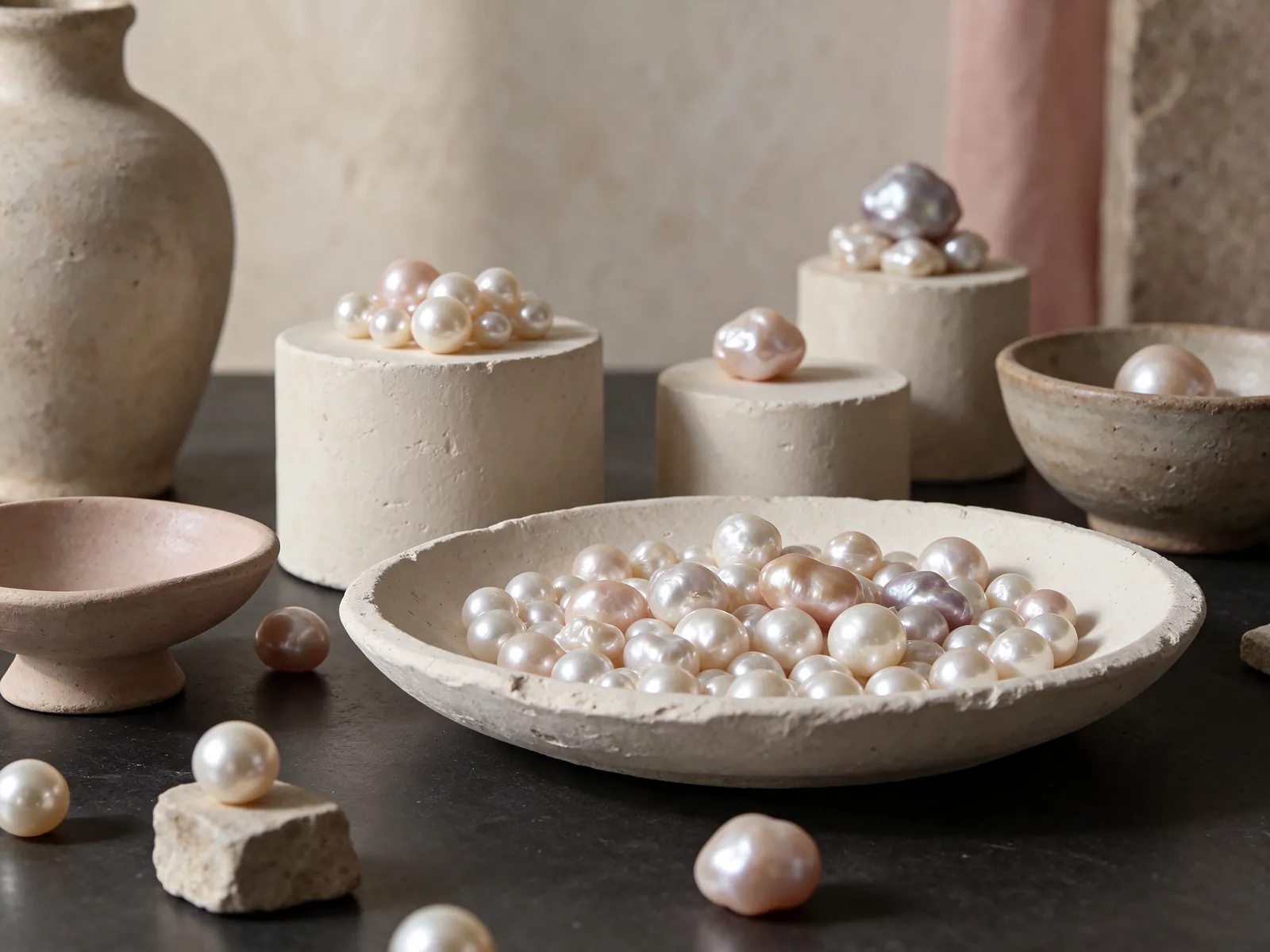
Use Tide · Stillwater to understand an actual composition
The Flint Tide · Stillwater Necklace is design FN012. Its stated details are a white baroque pearl approximately 7–8mm, diamonds of 0.03ct, and a 45-centimeter chain. A round bezel-set diamond sits above the pearl, while fine elongated chain links continue the delicate line. Consider the flowing pearl edge first, then the circular accent that anchors it visually. The written dimensions provide context, but the neckline and viewing distance still shape your impression of the necklace.
Baroque styling does not require the pearl to become a symmetrical shape. A balanced outfit can let the pendant supply a small irregularity, while clothing with folds or an angled neckline may benefit from fewer additional neck accessories. Looking from the side also matters: changes in the pearl's curves affect the depth of the silhouette. Instead of asking only whether a front image is attractive, ask whether you enjoy the outline from the viewpoints relevant to everyday wearing.
Read approximate dimensions without imagining a perfect sphere
The approximately 7–8mm description should be read with the pearl's irregular outline in mind. It is not a statement that the pearl forms a perfect circle, and photographic enlargement can make the scale feel unfamiliar. Compare the intended prominence with a necklace you already wear. Keep shape, size, and surface appearance separate, and do not use white color or a baroque silhouette to infer species or origin. State whether you prefer a subtle detail or a stronger outline.
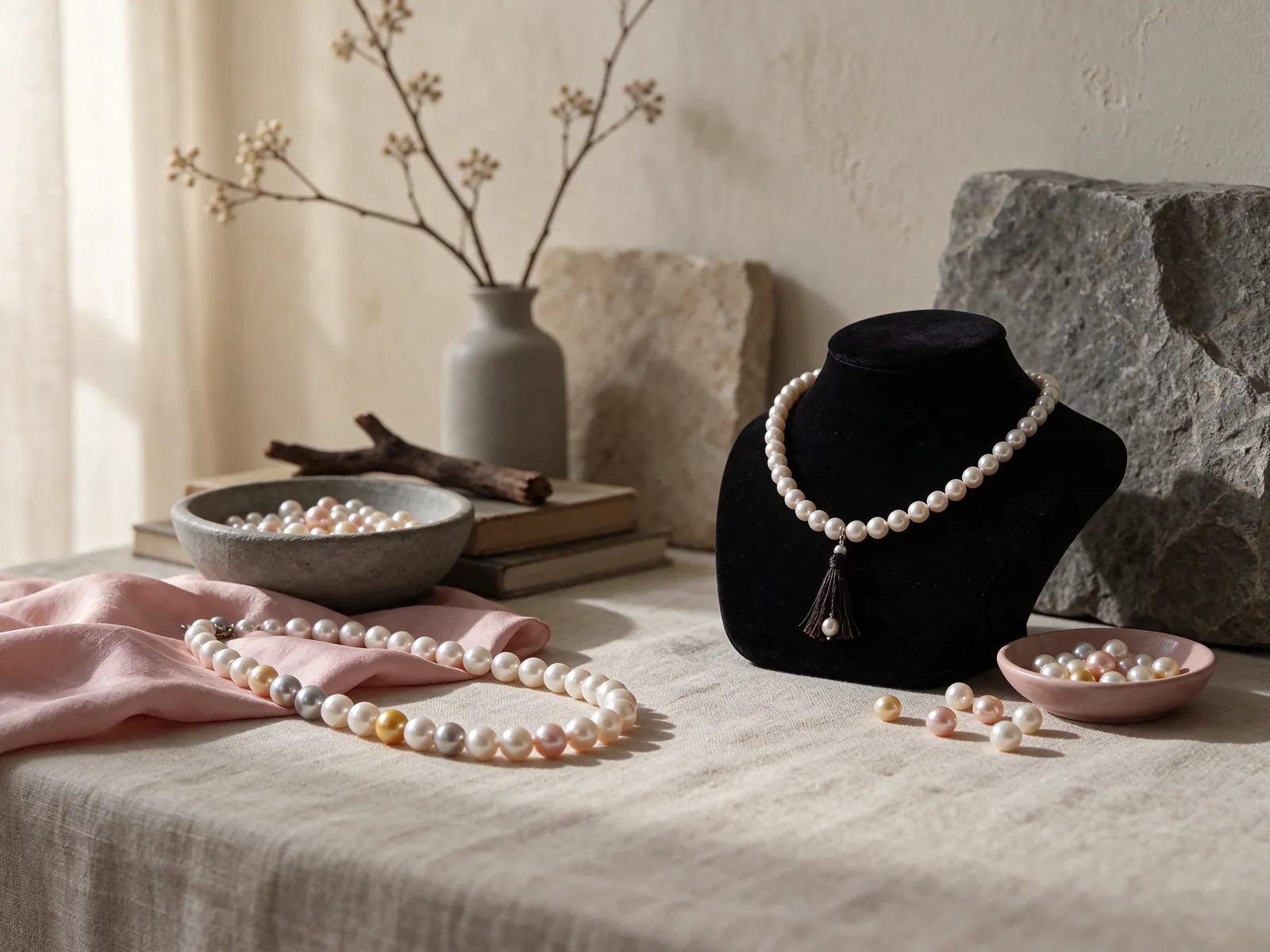
Build a color relationship with your existing jewelry
Your usual clothing and earrings offer a practical starting point for metal tone. Warm and cool backgrounds can change how the white pearl and its surround look together, without creating a fixed rule for your skin tone. Flint's customization material discussions cover 18K 750 white gold, 18K 750 yellow gold, 18K 750 rose gold, PT950 platinum, and PT900 platinum. Begin with a preferred tone, then discuss the material in relation to the pendant rather than combining every option into the same outfit.
Decide whether your priority is a crisp point of light or a visibly colored focal point. The pearl and sapphire pendant topic explores a different color direction; it is not a sapphire specification for Tide · Stillwater. Consider the pendant beside the earrings and rings you typically wear. Giving one feature a leading role can make the combination easier to read, particularly when clothing already has a strong color or a distinctive pattern.
Keep the comparison consistent
Use the same shirt and similar lighting when assessing color directions. Notice whether the metal recedes into the outfit or provides a separate outline, then check whether the pearl still has a clear presence. Add familiar earrings only after considering the necklace alone. Repeating one metal tone can connect separate accessories; mixing tones can also reflect personal taste. Neither choice establishes a universal best partner for white pearls, and both should serve your intended overall look.
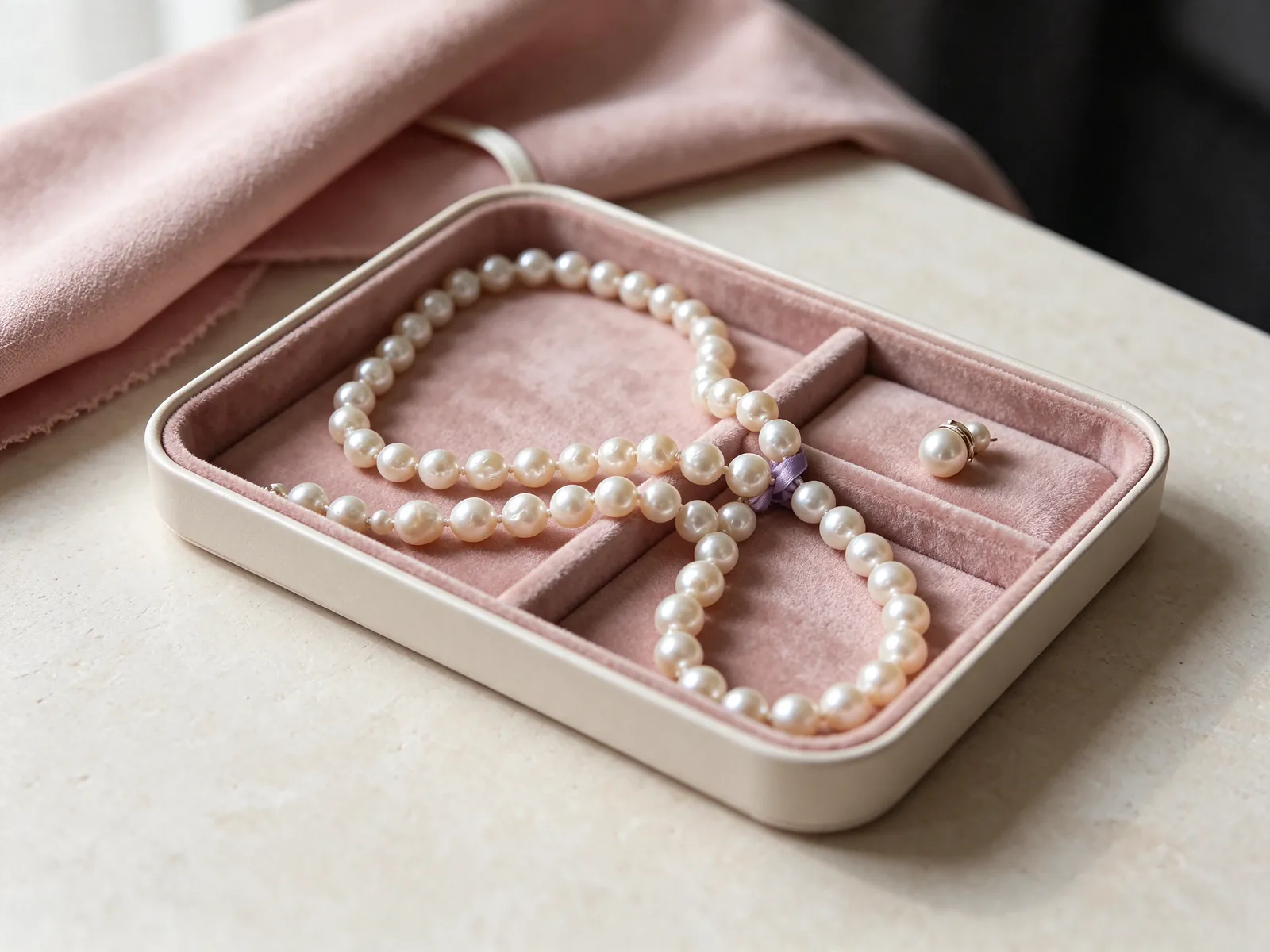
Make quality questions specific and separate from taste
GIA identifies seven pearl value factors: size, shape, color, luster, surface quality, nacre quality, and matching. They provide a vocabulary for looking beyond size. For a single pearl, outline affects the pendant silhouette while surface and luster observations concern how the pearl presents itself. This framework is not a grade assigned to every design and does not imply a certificate for FN012. Select the characteristics you value most, then read the relevant descriptions individually.
Matching is particularly useful to consider when several pearls appear together, but a single pearl still needs a coherent relationship with the diamond, metal, and chain. A graduated pearl pendant introduces a different kind of rhythm through progression. Comparing that concept with a single pearl and upper accent can clarify which arrangement you enjoy. More pearls do not automatically mean a better result; the composition should support your chosen focal point and the amount of detail you want to wear.
Turn a general request into answerable questions
Instead of asking only for high quality, ask how the dimensions relate to the entire pendant, which views best explain its outline, and what is stated about the pearl. GIA distinguishes bodycolor, overtone, and orient, and not every pearl shows all three. For questions about species, origin, or documentation, consult the corresponding written information. A white appearance, irregular shape, or diamond pairing is not enough to establish those identities or records on its own.
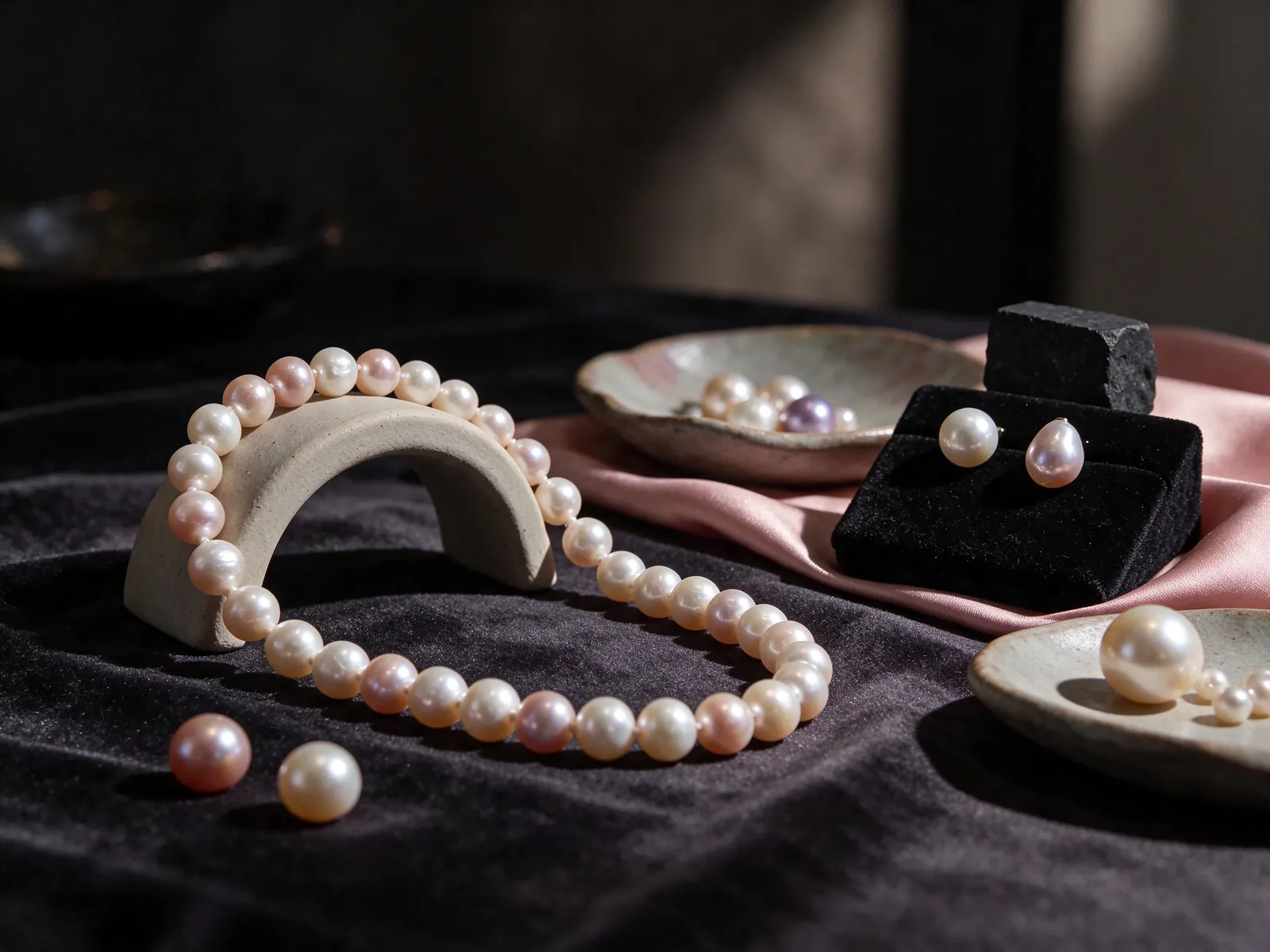
Let pearl care guide the whole necklace
A diamond accent does not change the cleaning limits of a pearl. GIA ranks pearl at 2.5 on the Mohs hardness scale and says pearls should never be cleaned with ultrasonic or steam cleaners. Gently wipe after wearing with a very soft, clean cloth. Keep perfume, hair spray, acids, and excessive heat away from the pearl. Treat the combination according to the pearl's needs rather than choosing a cleaning method solely because the upper stone is a diamond.
Prevent unnecessary rubbing against other jewelry during storage, and avoid tugging on the connection between the chain and pendant. Before putting the necklace on, observe the clasp, chain, and area around the pearl for an unusual change or a loose feeling. If something seems wrong, stop wearing the piece and discuss an inspection. Routine observation can help you notice a change, but it does not replace examination or guarantee that every problem is preventable.
Prepare a conversation around real wearing habits
When speaking with Flint Jewelry, bring a photo of a frequently worn neckline and the length of a necklace you already find comfortable. Describe the pearl outlines and metal tone you enjoy, the intended occasions, and the prominence you want from the diamond accent. If the necklace is a gift, consider the recipient's existing earrings and clothing preferences. This practical information supports a discussion of proportions and customization without relying on a vague style label or an assumption based on age. WhatsApp +85260106207 to share your usual neckline and preferred pearl outline with Flint Jewelry and discuss your pearl and diamond pendant design.
| Area to assess | Composition detail | Everyday comparison | Question to ask |
|---|---|---|---|
| Focal point | Pearl silhouette versus upper diamond accent | Look from a normal viewing distance | Which feature should lead the eye? |
| Pendant position | Space around both stones | Stand, sit, and add a jacket | Does clothing divide the composition? |
| Irregular outline | Front shape and side depth | Compare with a clean neckline | Do you enjoy the outline from multiple views? |
| Color relationship | Metal surround and existing jewelry | Keep shirt and lighting unchanged | Should the metal blend with or contrast against the outfit? |
| Care limits | Pearl needs within a mixed-stone necklace | Gentle wiping and storage without rubbing | Does the method respect pearl care guidance? |
Pearl knowledge and authoritative references
GIA ranks pearl at 2.5 on the Mohs hardness scale and states that pearls should never be cleaned in ultrasonic or steam cleaners; a diamond accent does not change the pearl's care needs.
Read the reference for this factFrequently asked questions
Is diamond carat weight a reliable guide to the pendant's overall size?
Not by itself. Tide · Stillwater states diamonds of 0.03ct, which concerns weight. The approximately 7–8mm white baroque pearl, bezel border, and arrangement also affect the visible composition. Review each type of measurement separately and consider the full necklace against the clothing you plan to wear.
Can I predict the pendant position from a 45-centimeter chain alone?
No. The stated FN012 chain length is 45 centimeters, but body proportions, neck circumference, clothing, and the pendant arrangement influence where it appears. Try a familiar necklace with your usual neckline, note the location you prefer, and use that observation to begin a design conversation.
Does an irregular pearl work with a tailored outfit?
It can. A clean, balanced neckline can give a baroque outline room to provide a small contrast. Review the pearl's front and side, and limit nearby accessories if the clothing already has strong folds or an angled collar. The shape you enjoy is a styling preference, not proof of a pearl's species or origin.
Does the diamond make steam cleaning suitable for this necklace?
No. GIA advises that pearls should never be cleaned with steam or ultrasonic cleaners, even when another stone is present in the piece. Routine care uses a very soft, clean cloth. If a mark cannot be handled gently, discuss an appropriate approach rather than applying a diamond-focused cleaning method to the pearl.
How can I prepare for customization without knowing technical jewelry terms?
Bring a neckline photo, the length of a comfortable necklace, and a description of the pearl shape and metal tone you like. Explain whether the pendant is for everyday, work, or formal clothing and how noticeable the bright accent should be. For a gift, the recipient's existing jewelry and wardrobe offer helpful context.
Updated: