

how to clean pearls with a cloth: choosing dry or damp for cleaning pearl jewelry as you clean pearls after wearing
The practical answer to how to clean pearls is to begin gently, not to reach for a cleaning solution. Place your jewelry on a clean, soft surface and lightly wipe exposed pearl surfaces with a very soft clean dry cloth. Ordinary after-wear care is different from polishing. If you are buying a cloth, consult the best cloth for cleaning pearls guide and distinguish plain soft fabric from a product intended to polish metal. Never reuse a gritty household cleaning cloth on pearls.
When cleaning pearl jewelry, a damp cloth is a conditional next step, not a requirement after every wear. WSP’s public care guide recommends a well-wrung damp cloth for a deposit that a dry cloth will not lift. Consider the entire piece before following that step: the string, adhesive and setting may have care requirements of their own. Ask first if those requirements are unknown. For suitable construction, moisten a soft cloth with clean water, wring it thoroughly and lightly wipe only the affected spot; it should not drip. As you clean pearls after wearing, support the jewelry without pulling its connections. Do not soak, scrub or add soap or chemical cleaners.
how to clean pearls if a mark remains: when to stop cleaning pearl jewelry as you clean pearls after wearing
A mark that remains after gentle wiping is a reason to stop, not to increase pressure. Roughness, a crack, a dent or an unusual dull area also deserves attention. What looks like dirt may be a surface change, and a photograph cannot reliably settle that question. The guide to how to remove stains from pearls helps you organize useful observations before asking a jewelry professional about the piece and its contact history.

Set up the work area before touching a mark
Choose a clear, stable surface away from a sink or drain. Move other jewelry, cosmetics and hard objects aside, then lay down a soft cloth to support the piece. Use another clean cloth for wiping so you are not cleaning with the same area that holds the jewelry. Wash and dry your hands if they carry lotion or other residue; otherwise you may transfer it straight back to the pearls.
Use enough comfortable light to locate the deposit before you start. Remember where it sits and compare that spot afterward rather than repeatedly rubbing the entire piece. Do not trap visible grit between cloth and pearl and slide it across the surface. Stop if it cannot be lifted gently. Turn to a fresh part of the cloth when it picks up makeup, and replace the cloth if it contains a hard particle. Fingernails, brushes and paper edges are not tools for scraping a pearl clean.
A jewelry label does not tell you whether a cloth is untreated
Some jewelry cloths are made for metal polishing and may carry ingredients for that purpose. Check the intended use before bringing one into contact with pearls. The pearl care cloth guide explains why suitability and a clean surface matter more than a claim of instant shine. If you do not know what a treated cloth is designed to do, do not use a pearl as the test surface.

Handle strands and mounted pearls differently
Keep a strung necklace or bracelet resting on its soft support while moving along the pearls in sections. Holding one end with the rest dangling concentrates the weight on the string. Do not pull the strand tight for wiping or force cloth between its knots. If you see a loose string, an uneven knot or a clasp that looks out of place, put cleaning aside and have the construction assessed.
For an earring, ring or pendant, identify how the pearl meets its setting before wiping. Adhesive and mounted connections need to be considered; a cleaning method that suits the metal does not automatically suit the whole piece. Hold a supported part of the jewelry rather than using the pearl as a handle. Release a snagged cloth instead of dragging it through a post or loop. Do not probe a gap with a sharp object or twist the pearl to check its security. A moving pearl, open joint or bent post is a reason to stop and have the construction assessed.
Separate the fitting question from the pearl surface question
A deposit on a clasp or earring post may require different attention from residue on the pearl, but nearby connections still limit what you should attempt. Do not immerse an entire earring or let metal polishing products spread onto the pearl. Read how to clean pearl clasps and earring posts to identify the location involved. Leave an inaccessible deposit intact for professional assessment instead of dismantling the fitting to reach it.
Plan for skin contact, makeup and fragrance
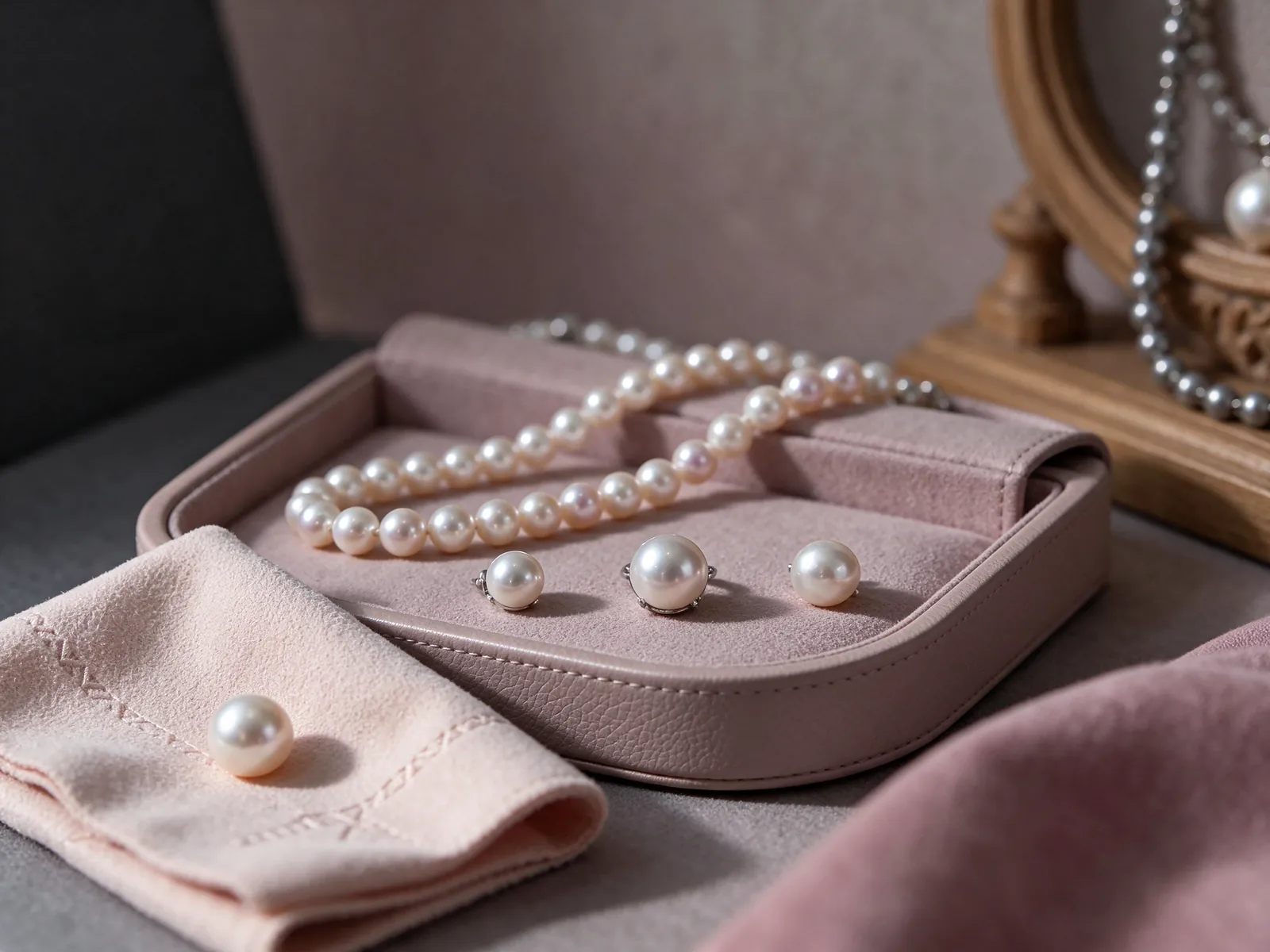
After a warm day or a long event, pay attention to the side of each pearl that rested against the neck or wrist. Begin with a soft dry wipe even if the jewelry contacted perspiration; sweat is not a reason to soak the piece. Remove pearls before exercise, swimming or extensive household chores to reduce avoidable exposure. Do not swap the cloth for an alcohol or disinfectant wipe because it feels more convenient.
Put on pearls after applying fragrance, hair products and makeup, and take the jewelry off before adding another spray. Avoid direct contact instead of expecting stronger cleaning to undo it. The question can sweat and perfume damage pearls connects everyday styling with care decisions. A pearl sitting near a makeup-covered collar can pick up residue, but that does not make a cosmetic cleansing product an appropriate pearl-cleaning tool.
Keep facial cleansers out of the after-event routine
For a foundation mark after an evening out, support the piece and try a gentle dry wipe first. If residue remains and the construction allows local damp wiping, a thoroughly wrung damp cloth is the next option. Do not replace it with makeup remover, cleansing oil or facial wash. Avoid working moisture into an adhesive joint. A persistent mark should be left for assessment; record which cosmetic touched the jewelry instead of testing different cleaners or attempting to open the connection yourself.
Avoid polishing pressure and unsuitable machines
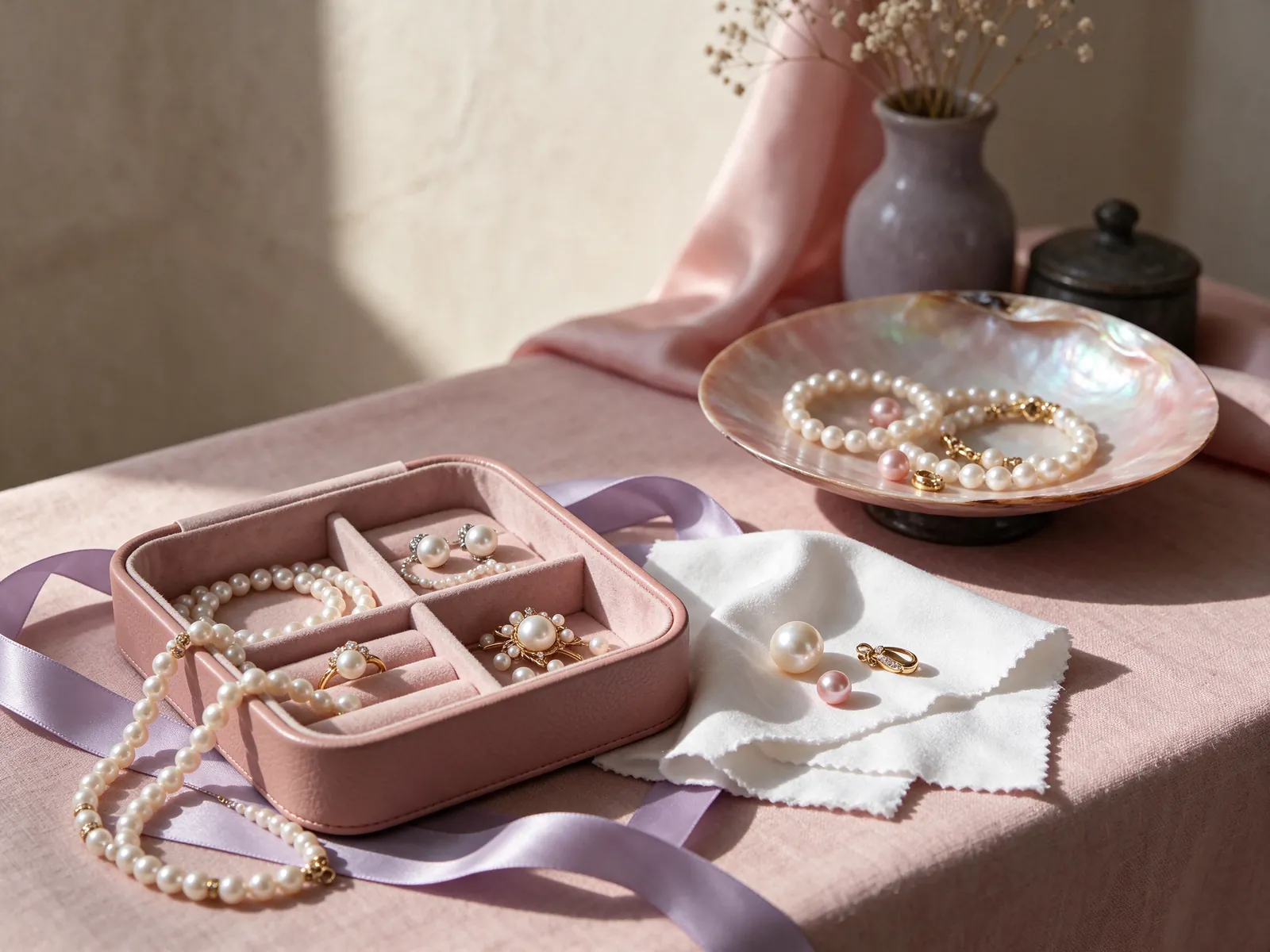
GIA lists pearl at 2.5 on the Mohs hardness scale, making scratch avoidance relevant to routine care. That number is not a waterproof rating, a chemical-resistance rating or a permitted rubbing force. Do not chase a brighter finish with abrasive powder, stiff fabric or a metal polishing product. A clean soft cloth should lift surface residue lightly; it should not be used to remove or reshape the pearl surface.
GIA says pearls should never be cleaned in ultrasonic or steam cleaners. A device sold for jewelry cleaning is not automatically suitable for a pearl piece. Keep hairdryer heat and other heat sources out of the drying routine as well. Toothpaste, acidic liquids and aggressive cleaning products are not the next step when a mark survives a gentle cloth; that is the point to stop and ask about the actual condition.
Do not treat every change in reflection as a stain
Luster can look different when the viewing angle, lighting or background changes. Compare under similar conditions before deciding that wiping left a pearl dull. Neither another pearl nor an online image is a finish to reproduce by rubbing. Yellowing or discoloration may not be removable surface dirt, and a cloth cannot be promised to reverse it. A lasting dull patch, crack or rough area warrants assessment. Photos help show its position but cannot establish its cause or guarantee that cleaning will restore the original appearance.
Check the string as well as the surface before wearing again
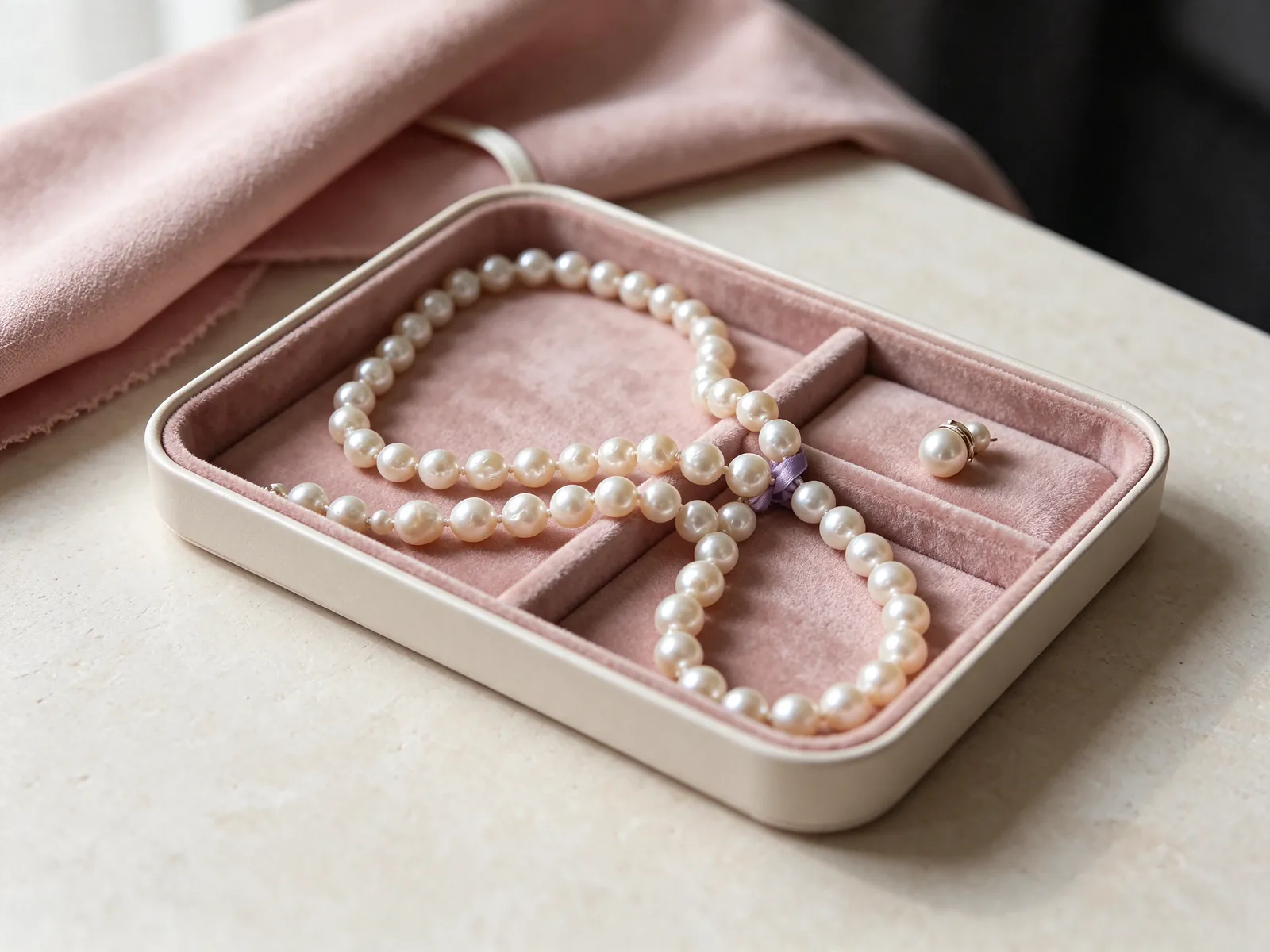
If you used a damp cloth, gently pick up visible moisture with a separate clean soft dry cloth. Leave the piece flat on a clean soft surface to dry naturally. Strung pearls need particular attention: GIA says a string cleaned with water must be completely dry before wearing. The pearl surface looking dry is not enough to establish that, and an arbitrary waiting time does not replace checking the actual condition.
After drying, keep pearls separate from pieces that could scratch them. Do not seal a used damp cloth into the jewelry pouch, and do not hang a wet strand with its weight pulling on the string. The how to store pearls guide takes this last cleaning step into the storage routine. Give the wiping cloth its own clean, accessible place so it does not carry yesterday's residue into your next wear.
Make room for gentle care when packing for travel
Bring a clean soft dry cloth and choose a stable resting place before removing pearl jewelry in unfamiliar accommodation. If there is no suitable workspace, secure the piece first rather than trying to clean over a drain. Travel does not change the dry-first approach or justify using a disinfectant wipe. Plan for a supported, unhurried inspection instead of treating whatever cleaning product is available as interchangeable with a cloth.
Ask care questions when choosing and styling a piece
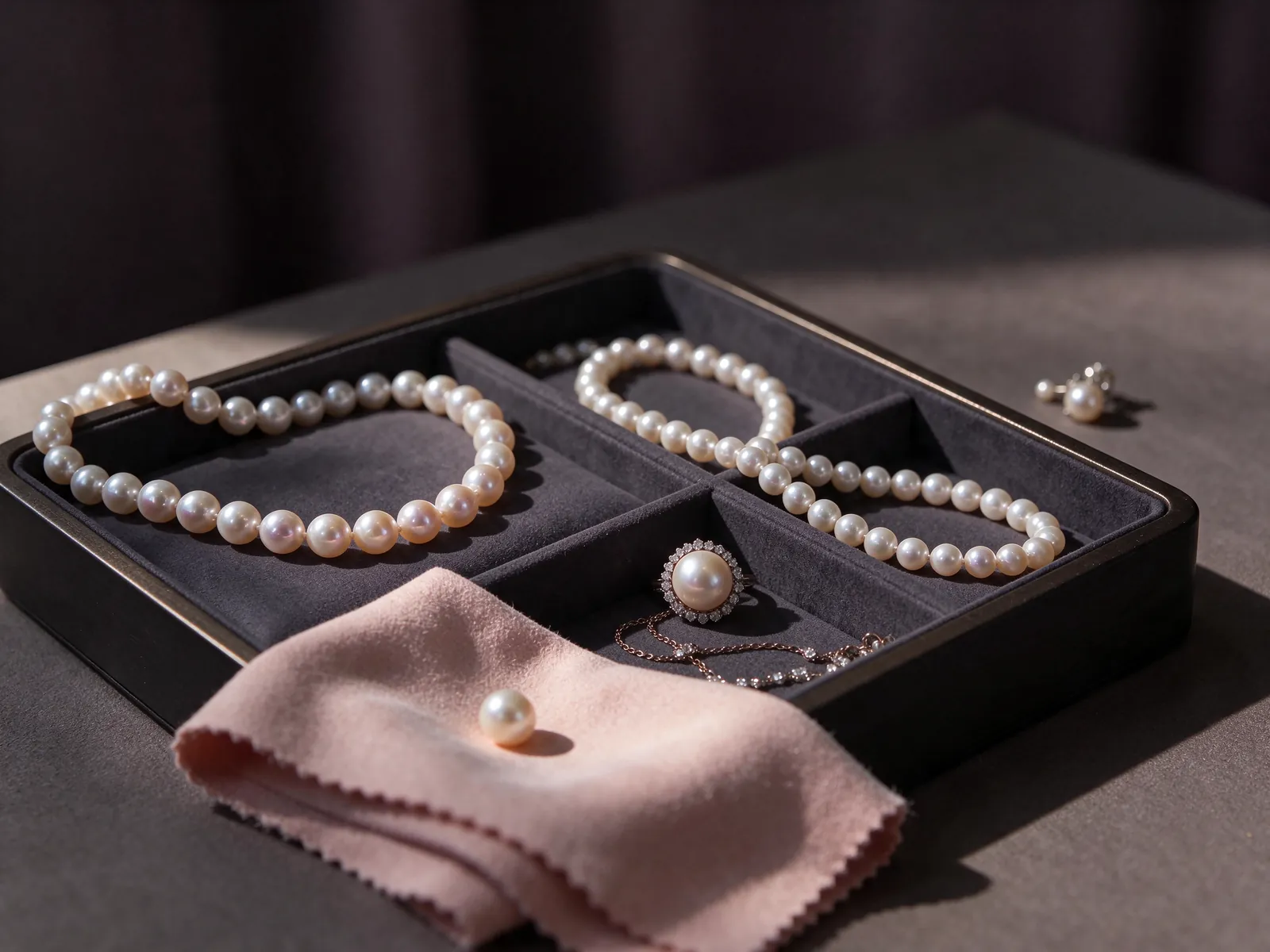
When considering pearl jewelry, ask where to hold it during wiping and which connections should not be pulled. Necklace buyers can ask about the strand and knots; earring buyers may focus on posts and fastenings. Understanding construction helps you choose something that fits your daily habits without assuming any design is maintenance-free. The pearl care guide puts gentle cleaning alongside wearing and storage so these decisions can be considered together.
During styling, notice contact with rough fabric, a zipper or another piece of jewelry and reduce repeated rubbing where possible. Everyday wear does not mean the whole piece needs wet cleaning every day. Occasional wear still benefits from a gentle dry wipe afterward. Keeping that habit consistent helps you recognize new residue or a structural change, instead of judging care by how much pressure or how many cleaning products you use.
Prepare a useful description when professional advice is needed
Photograph the entire piece and the marked area in comfortable light. Explain when you noticed the issue, any contact with perfume, makeup or perspiration, and whether you used a dry or damp cloth. Include original care instructions if available. Flint Jewelry can be contacted on WhatsApp for everyday cleaning questions. Images help communicate location but do not replace examination. The condition determines whether further cleaning or other work is appropriate and what improvement might be possible; there is no promised restoration outcome. Keep the piece intact rather than scraping or dismantling it while seeking advice.
| What you notice | Start here | Do not | Stop when |
|---|---|---|---|
| No obvious mark after ordinary wear | Support the jewelry and wipe with a clean soft dry cloth | Rub hard to create a polished finish | A surface or connection looks unusual |
| A local deposit survives the dry cloth | For suitable construction, gently use a well-wrung damp cloth on the spot | Soak the piece or apply chemical cleaners | The construction requirements are unknown or the mark persists |
| Moisture has reached a strung piece | Rest flat and let the string dry completely before wearing | Use hot air or hang the wet strand | A string, knot or clasp looks loose or displaced |
| Residue sits near a clasp or post | Identify the fitting and its connection to the pearl | Probe with a sharp object or dismantle it | The deposit is inaccessible or the connection moves |
| A crack, rough spot or persistent dull area | Leave it intact and seek assessment | Try ultrasonic, steam or abrasive cleaning | Do not continue home experiments |
Pearl knowledge and authoritative references
GIA lists pearl at 2.5 on the Mohs hardness scale. The figure describes hardness, not waterproof performance, chemical resistance or a guaranteed cleaning result.
Read the reference for this factFrequently asked questions
Do pearls need a dry wipe even after a brief wear?
A gentle dry wipe is a useful routine even when dirt is not obvious. Include the side that contacted skin. That does not require damp cleaning each time; use the damp-cloth option only when a local deposit remains after the dry cloth.
Is makeup remover appropriate for a foundation spot on a pearl?
Facial cleansing products are not part of this routine. A well-wrung damp cloth may be used locally only when the entire piece is suitable; ask first if adhesive or string requirements are unclear. If residue stays, stop and tell a jewelry professional which cosmetic touched it and what cleaning you have already tried.
How do I decide whether a wiped necklace is ready to wear?
Check the string, not only the pearl surface. GIA says the string must be completely dry after water cleaning before wearing. Let it dry naturally while flat; do not substitute a fixed time, hot air or hanging the strand.
Can a metal polishing cloth double as a pearl cloth?
Do not assume it can. A metal polishing cloth may contain ingredients intended for a different surface. Check its purpose rather than testing it on pearls; everyday care calls for a very soft clean cloth without polishing pressure.
Should I finish wiping if a pearl starts moving in its setting?
Stop immediately rather than trying to finish the mark. Avoid twisting the pearl, pulling the connection or taking the setting apart. Describe the movement as well as the residue when seeking assessment; cleaning cannot correct a loose connection.
Updated: