
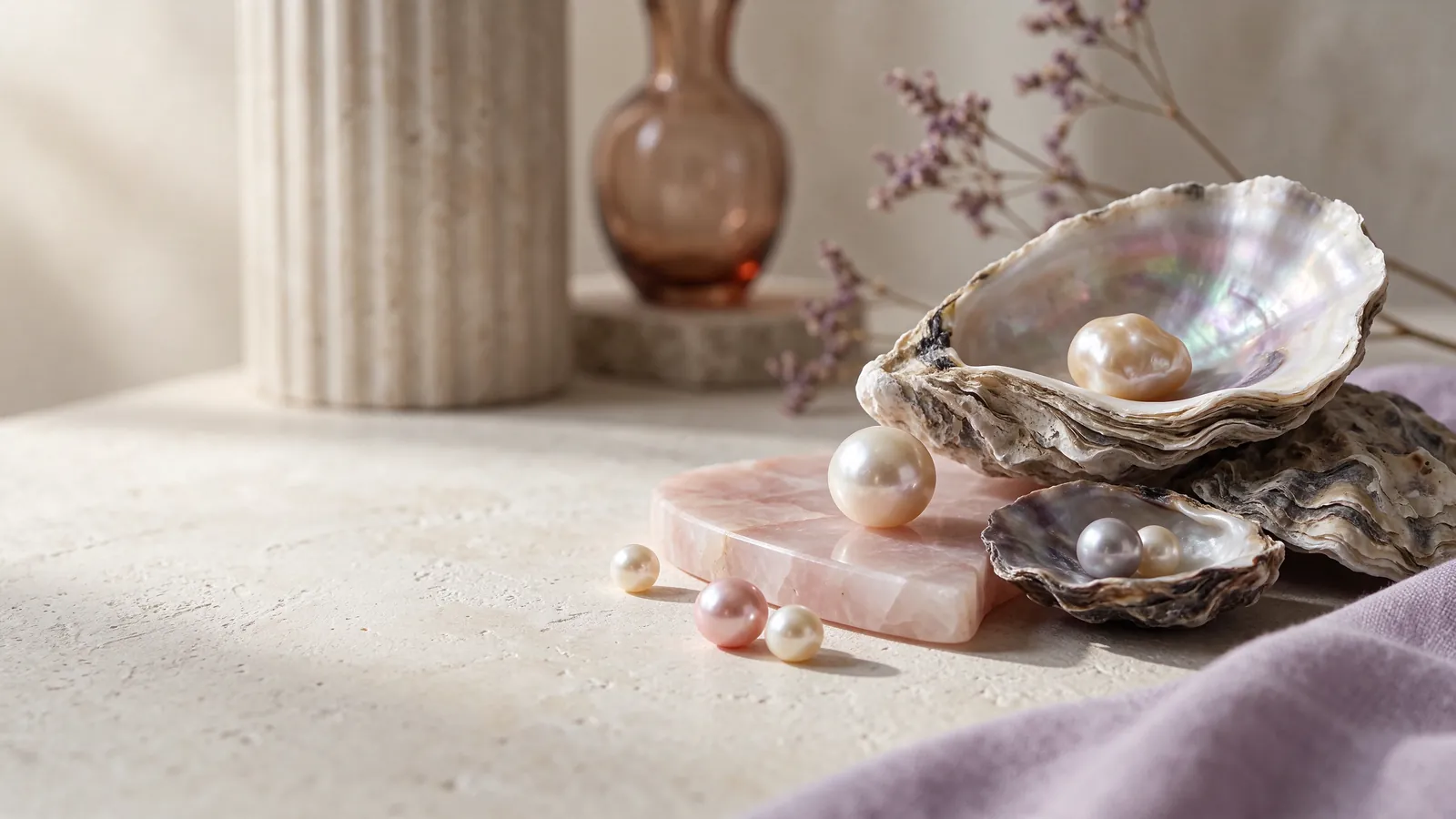
Growing environments explain the difference between freshwater and saltwater pearls: freshwater vs saltwater pearls across saltwater cultured pearl types
Start with the question the label actually answers. Freshwater pearls come from mussels living in rivers and lakes, whereas Akoya pearls are cultured in saltwater oysters. That describes a growing environment, not the beauty of an individual pearl. The pearl types guide can help you organize the categories, but the buying decision still depends on the particular pearls and the complete piece of jewelry in front of you.
Neither freshwater nor saltwater proves that a pearl formed naturally without human intervention. Neither is a quality grade. When comparing descriptions, distinguish the environment label from the specific pearl type and formation identity. One item may have a detailed description while another gives only a broad category. Do not treat those as equivalent, or assume that the shorter label supplies information that has not actually been stated.
Within saltwater cultured pearl types, how does Akoya illustrate the difference between freshwater and saltwater pearls in a freshwater vs saltwater pearls comparison?
GIA lists four major types of whole cultured pearls: Akoya, South Sea, Tahitian and freshwater. Akoya is a helpful example because it connects a named cultured category with a marine growing environment. It does not represent every saltwater pearl: South Sea and Tahitian are also saltwater cultured categories. Once you understand that broader grouping, examine the named type and the actual jewelry separately. A general impression of one category should not replace an assessment of the pearl's luster, surface or proportion in its setting.
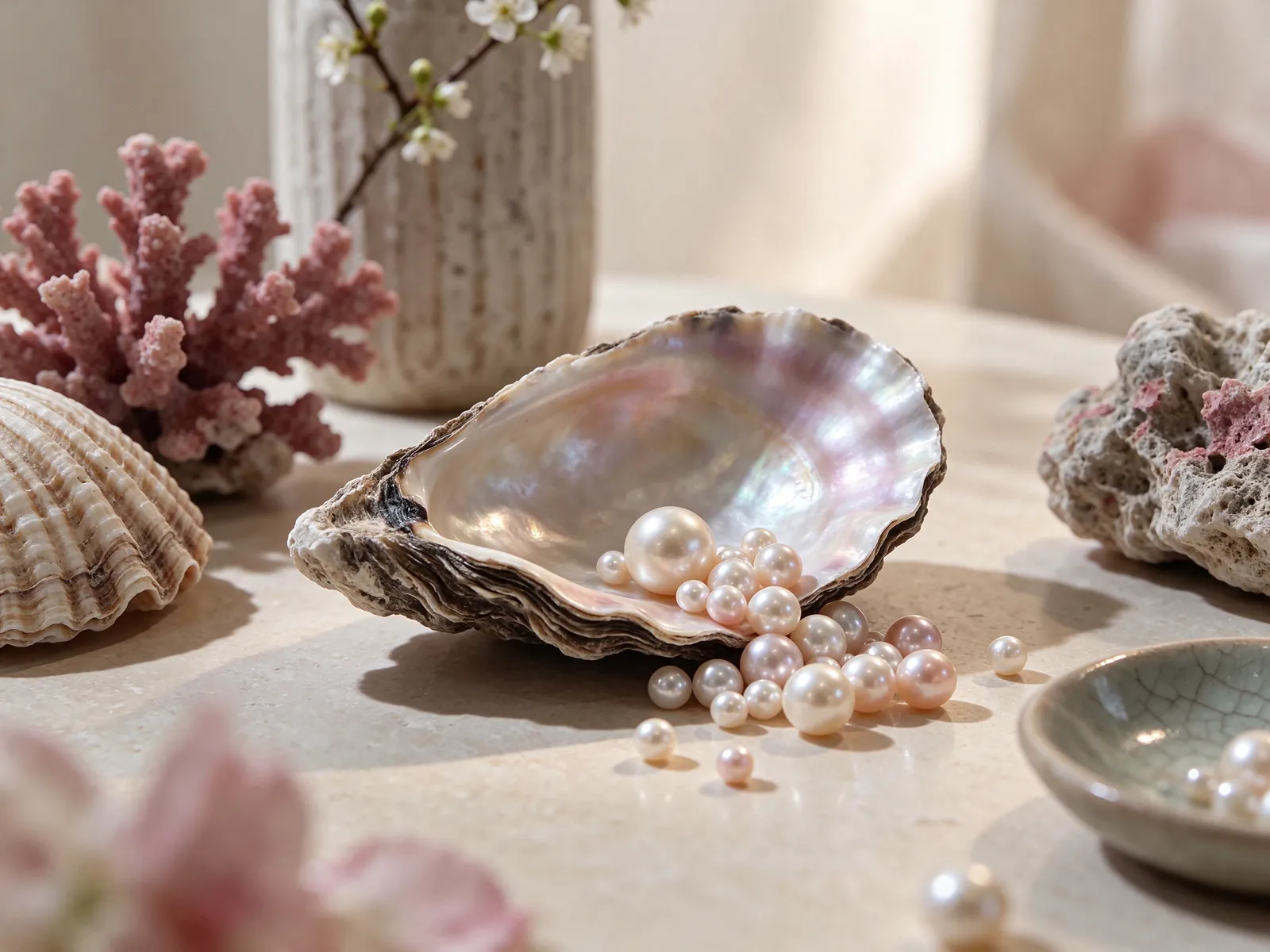
Ask about environment, formation identity and nucleation separately
When learning what are freshwater pearls, keep three questions distinct: the water environment, how the pearl formed, and what is described about nucleation. The freshwater label is not another word for imitation, and cultured is not a synonym for plastic or glass. A description can answer one question without answering the others. Recognizing the difference helps you request useful information rather than assuming that all pearl terminology describes the same feature. The distinction between natural and cultured pearls concerns human intervention in their growth, not whether they are real or fake pearls.
You cannot establish a bead nucleus from a round outline or a polished-looking image. The topic bead-nucleated vs non-bead-nucleated freshwater pearls can help clarify the questions to ask, but it should not become a shortcut for judging nacre quality or durability. Compare the information supplied for each individual pearl, and do not fill an unanswered detail with a general expectation about its category.
Check the scope of an individual description
For jewelry containing several pearls, find out whether the description refers to every pearl or just one part of the design. If an individual document is supplied, read what it actually states and check which pearl it covers. A general explanation of a category can be useful education, but cannot identify every component of a separate item. Clear wording is more helpful than a collection of impressive terms without a clear connection to the jewelry.
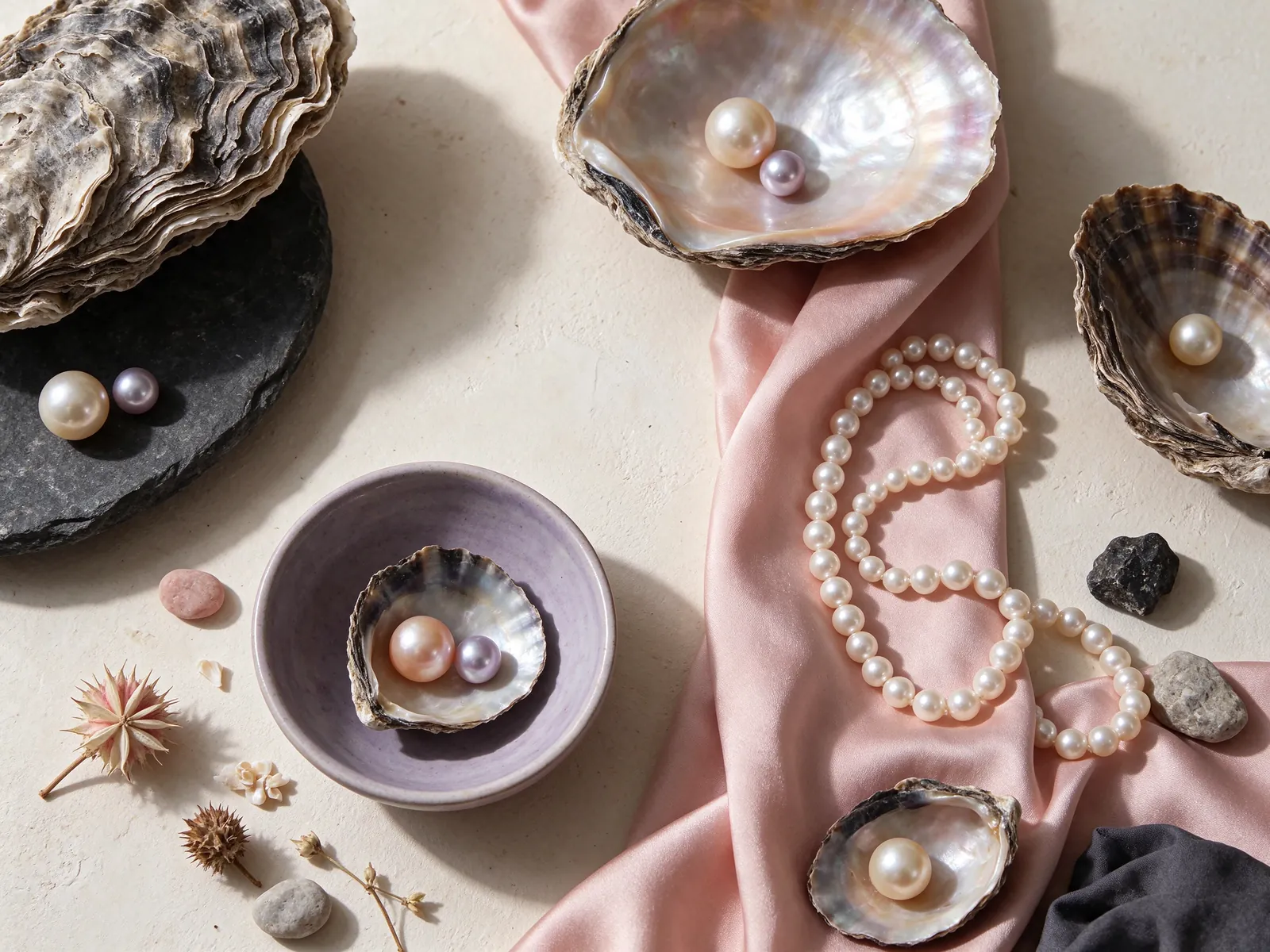
Use individual quality factors rather than an environmental hierarchy
GIA identifies seven pearl value factors: size, shape, color, luster, surface quality, nacre quality and matching. They give you a structured way to compare pearls across freshwater and saltwater categories. They do not require everyone to prefer the same look. You may want a tidy round shape for a restrained design or an irregular outline for a more individual accent. State your priorities before deciding which differences matter.
For a fair visual comparison of Akoya vs freshwater pearls, use similar lighting, backgrounds and viewing distances whenever possible. Look at the definition of reflections and inspect the surface from several angles. If you are choosing earrings, view both pearls together. A strongly lit image can look brighter than a shaded one because of photographic conditions, so a difference between pictures should not be mistaken for proof that one environment always produces better quality.
Keep color, luster and surface observations distinct
A pearl's color does not tell you the quality of its luster, and a bright reflection does not establish a flawless surface. GIA separates bodycolor, overtone and orient, and notes that not every pearl has all three. Consider color as part of your styling preference, not as proof of origin, natural formation or treatment status. If one of those identity questions matters to you, look for an individual description rather than guessing from appearance.

Explore the saltwater categories without prescribing one style
The question what are South Sea pearls introduces another saltwater category beyond Akoya. For selecting jewelry, move from the category name to the actual pearl's visual weight, shape and position. A general category cannot supply an individual measurement, origin or grade. Editorial visuals can help you imagine different proportions, but they are not specifications for an item and should not be treated as evidence of what a particular design contains.
Understanding what are Tahitian pearls adds another part of the saltwater family without turning dark color into a reliable identification method. If you like contrast against a light sweater or ivory blouse, compare the actual pearl's tone with those clothes. If you prefer a softer effect, judge the whole combination of pearl, setting and fabric. Formality comes from the complete styling choice, not simply from whether the pearl grew in fresh or salt water.
Decide where the jewelry should draw attention
An earring frames the face, while a pendant directs attention toward the neckline or the front of an outfit. Choose the focal point you want before focusing on a pearl category. Consider the setting and chain along with the pearl. Patterned clothing may call for a simpler outline, while a plain fabric can make an unusual silhouette easier to appreciate. Proportion is a whole-design decision.

Match the jewelry to everyday outfits and the recipient's preferences
For daily wear, think about your usual necklines, hairstyle and other accessories. Hair can hide an earring, and a high collar can change a pendant's position. Imagine the jewelry with several outfits you already own, not only with the clothing used in a display image. Decide whether the pearl should be a quiet accent or a clear focal point, then compare pieces according to that goal.
For gifting, find out whether the recipient tends to wear earrings or necklaces and whether they enjoy uniform shapes or more distinctive outlines. Consider any jewelry they hope to wear with the gift. Saltwater is not automatically the more appropriate choice, and freshwater should not be limited to a first purchase. Compatibility in color, luster and proportions may be more important than a shared category name.
Evaluate matching according to the jewelry format
Two earrings invite a side-by-side comparison of shape, luster and color. A single-pearl pendant emphasizes the relationship between one pearl and its setting. A necklace with multiple pearls also has an overall rhythm that deserves attention. If you want deliberate variation, use a shared tone or repeating line to connect the elements. First decide whether you prefer consistency or intentional contrast, then assess how well the design delivers it.
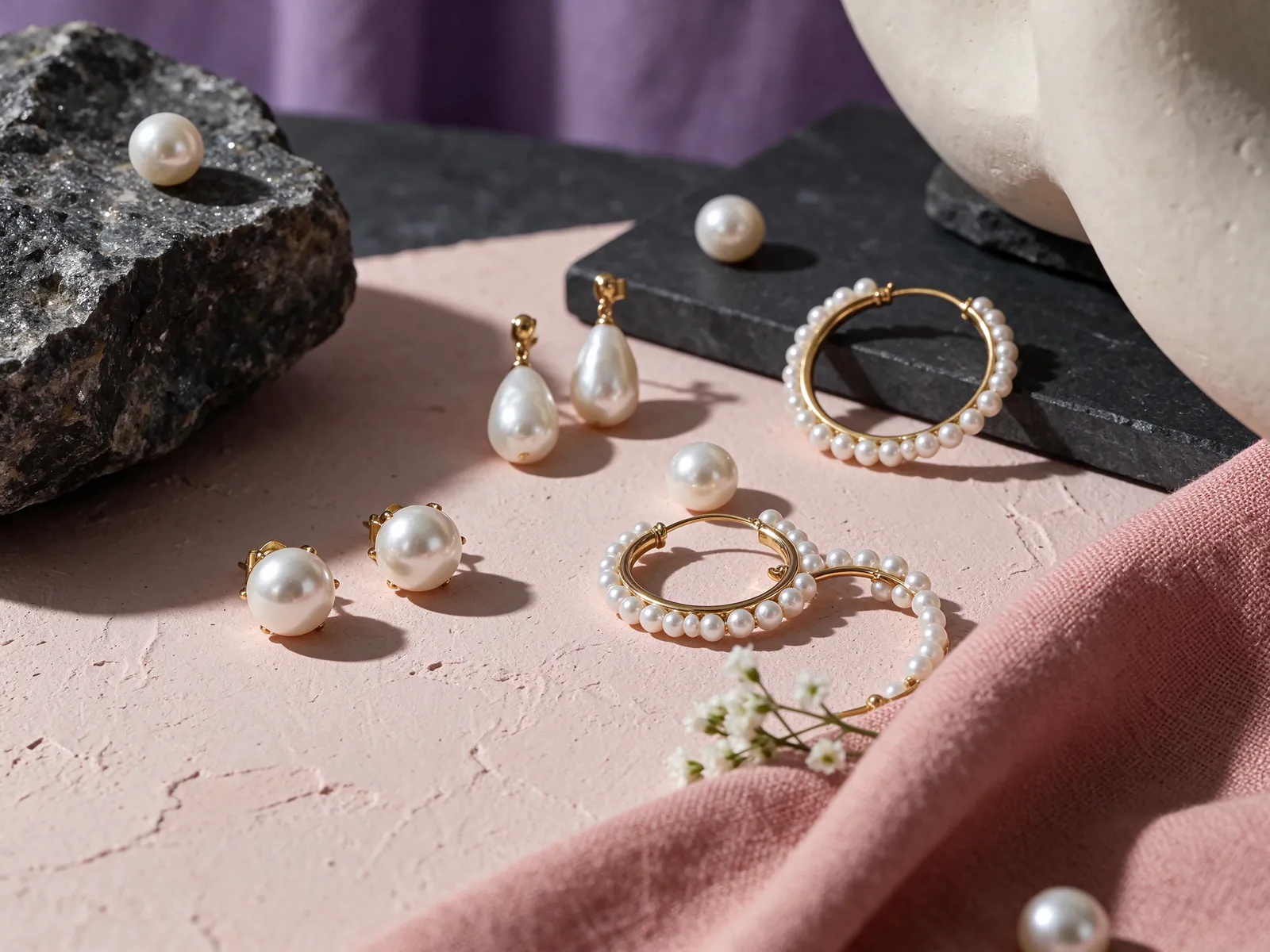
Compare the complete piece, its budget and its supporting information
The freshwater or saltwater label cannot establish what a finished piece ought to cost. Evaluate the individual pearls, pairing or matching needs, jewelry format and metal components together. Comparing a single-pearl pendant with a multi-pearl necklace involves more than the growing environment. Identify the visual features you value most and judge the complete design against your budget, without expecting a universal price difference between the two categories.
Place names can also be mistaken for pearl types. Exploring Japanese pearls vs Akoya pearls helps keep geographical descriptions separate from a specific category. When reading an item description or individual report, distinguish origin statements from formation identity and quality observations. A report title or an institution's name does not by itself establish all the features of a piece; pay attention to the information actually stated and the pearl to which it relates.
Create an equivalent comparison before deciding
For each piece, list the category description, visible qualities, matching, design format and any accompanying information. Leave unanswered questions open instead of supplying details from a photograph. This makes it easier to see what still matters to your decision without assigning an invented grade. If a technical detail is not central to your priorities, return to the fit, appearance and styling you will experience when wearing the jewelry.
Use appropriate pearl care for both environments
Saltwater does not mean pearl jewelry is suitable for swimming, and freshwater does not mean it is unsuitable for ordinary wear. GIA advises keeping pearls away from acids, perfume, hair spray and excessive heat. It also says never to use ultrasonic or steam cleaners. Complete fragrance and hair styling before putting pearls on, and use a very soft, clean cloth to wipe them after wearing.
If strung pearls are cleaned with water, the string needs to dry completely before they are worn. Avoid storage that allows the pearls to rub against harder jewelry, and keep them away from excessive heat. Think about whether these care habits suit your lifestyle rather than inferring durability from an environment label. During activities involving water or cleaning products, putting the pearls on afterwards can limit unnecessary contact.
Make the final decision about the individual jewelry
Check that you like the pearl's actual color and outline, that its luster and surface meet your expectations, and that the design complements your usual clothing. Confirm that the description answers the identity questions important to you. Freshwater and saltwater are valuable background categories, but they should not overrule your preferences. The best-grounded choice is the individual piece that fits your style, information needs and wearing routine. To discuss the pearl look you prefer alongside your everyday outfits or gift ideas, contact Flint Jewelry on WhatsApp +85260106207.
| Topic | Freshwater label | Saltwater label | Individual comparison | Practical consideration |
|---|---|---|---|---|
| Growing environment | Mussels in rivers and lakes | Marine environment; Akoya, South Sea and Tahitian are cultured categories | Read the specific category and identity description | Environment does not determine the occasion |
| Formation and nucleation | Does not answer every formation question | Does not answer every formation question | Keep formation identity and nucleation separate | Do not infer comfort from a nucleus |
| Quality | Not a grade | Not a grade | Use GIA's seven factors, including luster and surface | Choose an appearance you genuinely prefer |
| Matching | Assess the actual pearls and design | Assess the actual pearls and design | Compare pairs and overall visual rhythm | Balance with necklines and hairstyles |
| Care | Does not establish water resistance | Does not establish water resistance | Avoid ultrasonic and steam cleaners | Wear after applying fragrance and styling hair |
Pearl knowledge and authoritative references
GIA identifies seven pearl value factors: size, shape, color, luster, surface quality, nacre quality and matching. Use these individual factors for comparison instead of treating freshwater or saltwater as a quality grade.
Read the reference for this factFrequently asked questions
Are all saltwater pearls Akoya pearls?
No. Akoya is one category of saltwater cultured pearl. South Sea and Tahitian are other saltwater cultured categories. The broader environment label is a starting point; the specific category and individual qualities provide the next level of information.
Is a freshwater pearl the same as an imitation pearl?
No. Freshwater describes the growing environment of pearls from mussels living in rivers and lakes. It does not mean plastic or glass. Imitation status and formation identity are separate issues, and a particular piece should not be identified from an environment label alone.
Can a pearl's white or dark appearance reveal whether it is freshwater or saltwater?
Color alone cannot establish origin, formation identity or treatment status. Lighting can also change the impression given by a photograph. Use the individual pearl description when the category matters to your purchase rather than relying on color as an identification shortcut.
Could a mixed freshwater and saltwater earring pair look coordinated?
It can be considered as an intentional design choice. First confirm how the actual pearls are described, then compare their visual weight, shape, luster and color. A shared tone or repeated line can create coherence even when the outlines are deliberately different.
Should I choose saltwater pearls just because the jewelry is a gift?
No. Start with the recipient's preferred styles, usual clothing and willingness to follow pearl care. Saltwater is not a quality ranking or a measure of personal suitability. A well-chosen individual piece can be a more thoughtful choice than selecting by category alone.
Updated: