

can sweat and perfume damage pearls? Keep pearls and sunscreen apart with a last on first off pearl jewelry routine
Sweat and perfume can affect pearl surfaces, but a single splash does not tell you whether a pearl has permanent damage. Sweat, skin oils, and cosmetics may leave deposits. WSP warns that perspiration and dirt left on pearls can reduce luster; GIA advises avoiding acids, perfume, and hair spray and wiping after wearing with a very soft, clean cloth. An unchanged appearance does not mean repeated contact is safe. Instead of counting exposures, identify what reached the pearl, where residue remains, and whether the surface or construction has changed before deciding on further care.
Build a last on first off pearl jewelry routine around getting dressed. Finish skincare, makeup, hair styling, and fragrance before fastening the piece with clean, dry hands. At home, take it off before washing your face, changing clothes, or stepping into the shower. This order reduces opportunities for direct transfer; it does not seal or waterproof the pearl. The pearl care guide brings the wearing routine together with gentle wiping and storage so that care remains an everyday habit.
can sweat and perfume damage pearls even with a last on first off pearl jewelry routine? When pearls and sunscreen have touched, assess any surface change
Look under gentle light for visible cream or an area that reflects differently from its surroundings. Do not keep touching the surface to test whether it is sticky, or try to scrape a deposit with a fingernail. Compare from different angles under similar light before treating a dark reflection as damage. If gentle wiping leaves a mark, stop experimenting and note the product involved. Photographs can explain the appearance and location but cannot identify the cause or replace an examination of the piece.

Perfume and hair products: check the necklace, neckline, and hair together
Spray fragrance and finish your hairstyle while the pearls are still put away. Do not apply perfume to a neck or wrist with jewelry already in place; covering a pearl with your hand cannot reliably exclude airborne mist. Hair or skin carrying the product may transfer it later. Fasten the piece with clean, dry hands after getting ready. During a dinner or ceremony, remove it before refreshing fragrance and leave it somewhere clean away from the spray. Keep the storage pouch away too, and do not spray it. A short pause alone is not evidence that all contact has been avoided.
A fitting should include the outfit and hairstyle you intend to wear. Notice whether a necklace rests on fragranced skin, whether a pendant touches sprayed fabric, and whether earrings brush hair behind the ear. Bracelets have their own contact point at the wrist. A pearl worn over clothing is not automatically isolated from products. Turn your head, move your arms, and adjust the collar to see how the piece moves, rather than assuming a longer chain or a different jewelry category solves the issue.
Make temporary removal easy before you leave home
Bring a clean pouch or box with room to keep pearls apart from other accessories. Avoid placing them on a sink edge or loose beside a fragrance bottle while touching up. Knowing how to store pearls makes temporary removal more practical and reduces rubbing against hard clasps or other jewelry in a bag. The storage place should be clean, not a pocket already carrying cosmetic residue.

Sunscreen and makeup: protect your routine without coating the pearl
Keep sunscreen as part of your skincare routine. WSP recommends applying it first and letting it absorb before wearing pearls, with makeup, hair spray, and perfume also used before jewelry. This timing helps reduce transfer, but absorption does not coat or protect the pearl. Movement can still bring it against treated skin. No fixed number of minutes makes every formula safe for every pearl and setting. Follow the sunscreen instructions, check the contact area for visible cream or wetness, and clean your hands before fastening the piece. A sensitive-skin label is not a test of compatibility between pearls and sunscreen.
When it is time to reapply sunscreen, remove jewelry that may touch the application area, then finish applying the product and allow it to absorb before wearing the piece again. Makeup around the neckline, concealer near earrings, and lotion on wrists can also transfer. Do not wipe nearby skin with makeup remover while a pearl is still touching that area. Reading can you shower with pearls can help you organize cleansing separately: a shower should not become an improvised way to wash cosmetic residue from jewelry.
Choose the contact area, not a supposed pearl-safe cosmetic category
For a day of frequent sunscreen reapplication, consider how often a necklace would need to come off. An earring may also need removal if you apply products behind the ear. Try the piece and identify the areas it actually touches as you move. Ask whether fastening and unfastening are comfortable for you. These observations provide a useful basis for choosing an outfit without inventing a universal pearl-safe sunscreen rule.
Sweat during travel, exercise, and outdoor events: plan the wearing window
Plan around the activity, not an assumed safe number of wearing hours. A warm commute, dancing, or outdoor photographs can bring sweat onto pearls even during a short wearing window. Leave them off for exercise or expected heavy sweating, then put them on after the activity and your skincare are finished. Perspiration deposits, accidental impact, and a damp string or attachment are separate concerns. Rinsing the entire piece afterward is not a suitable substitute for removing it beforehand. Bringing a clean separate pouch or box makes timely removal more practical when the day becomes warmer or more active than expected.
If you are dressing for work after a warm commute, carrying jewelry separately until arrival may fit your routine. For outdoor photographs or a ceremony, arrange a clean place to leave it during a break. A collar can change the way a necklace touches the neck, but it is not a guaranteed sweat barrier. A bracelet can still meet perspiration at the wrist. Practical outfit planning considers movement, skin contact, and removal, not only whether a style looks formal enough.
Choose a gentle wiping cloth before an active day
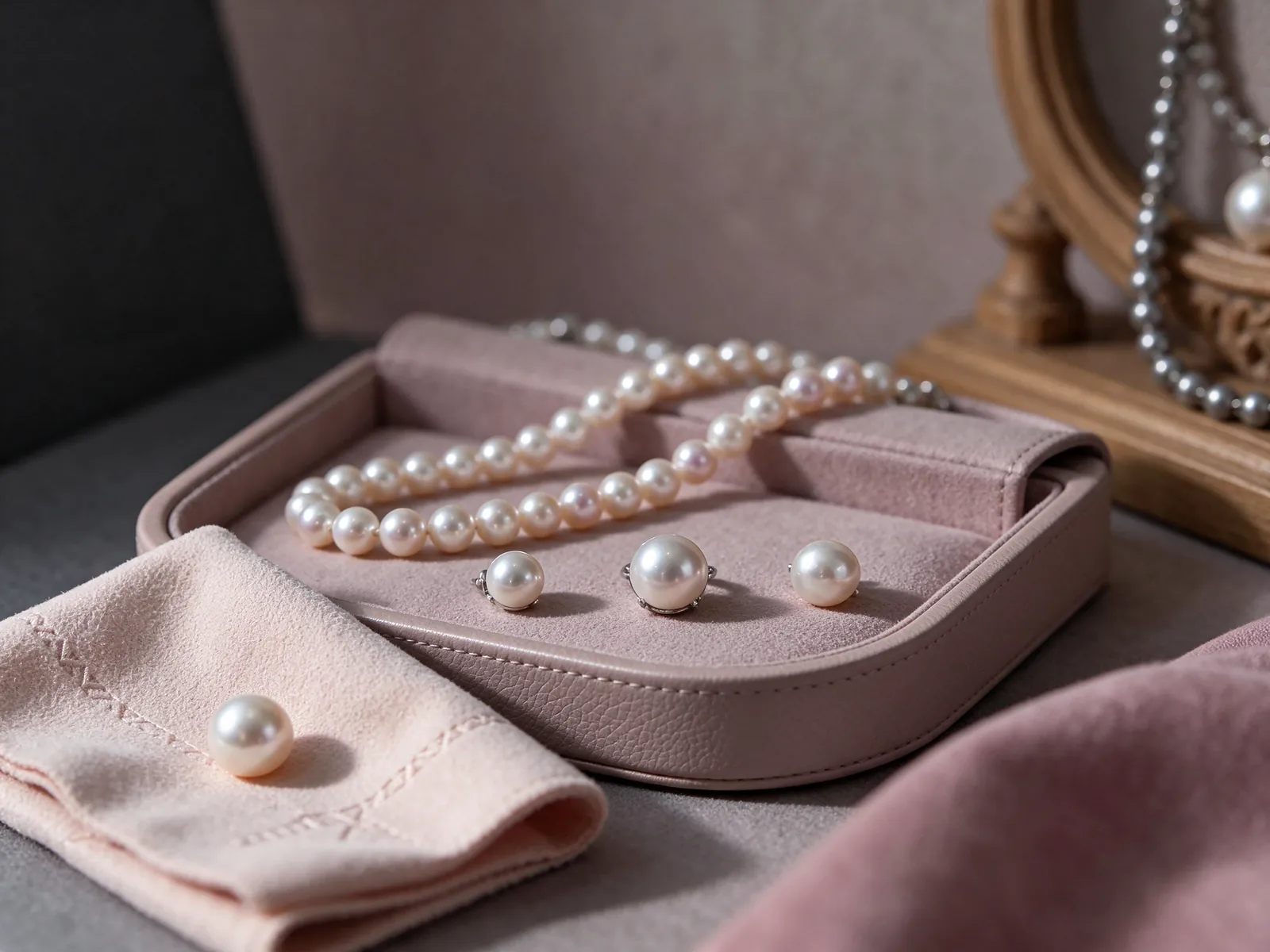
After removing the piece, use a very soft, clean cloth rather than a sleeve or rough towel. A fabric that feels soft can still carry grit, makeup, or cleaning chemicals. Keep the wiping cloth clean and separate from product spills. The best cloth for cleaning pearls guide is useful when choosing between plain gentle fabric and a cloth intended to abrade or chemically polish another material.
Gentle after-wear cleaning: support the piece and avoid stronger remedies
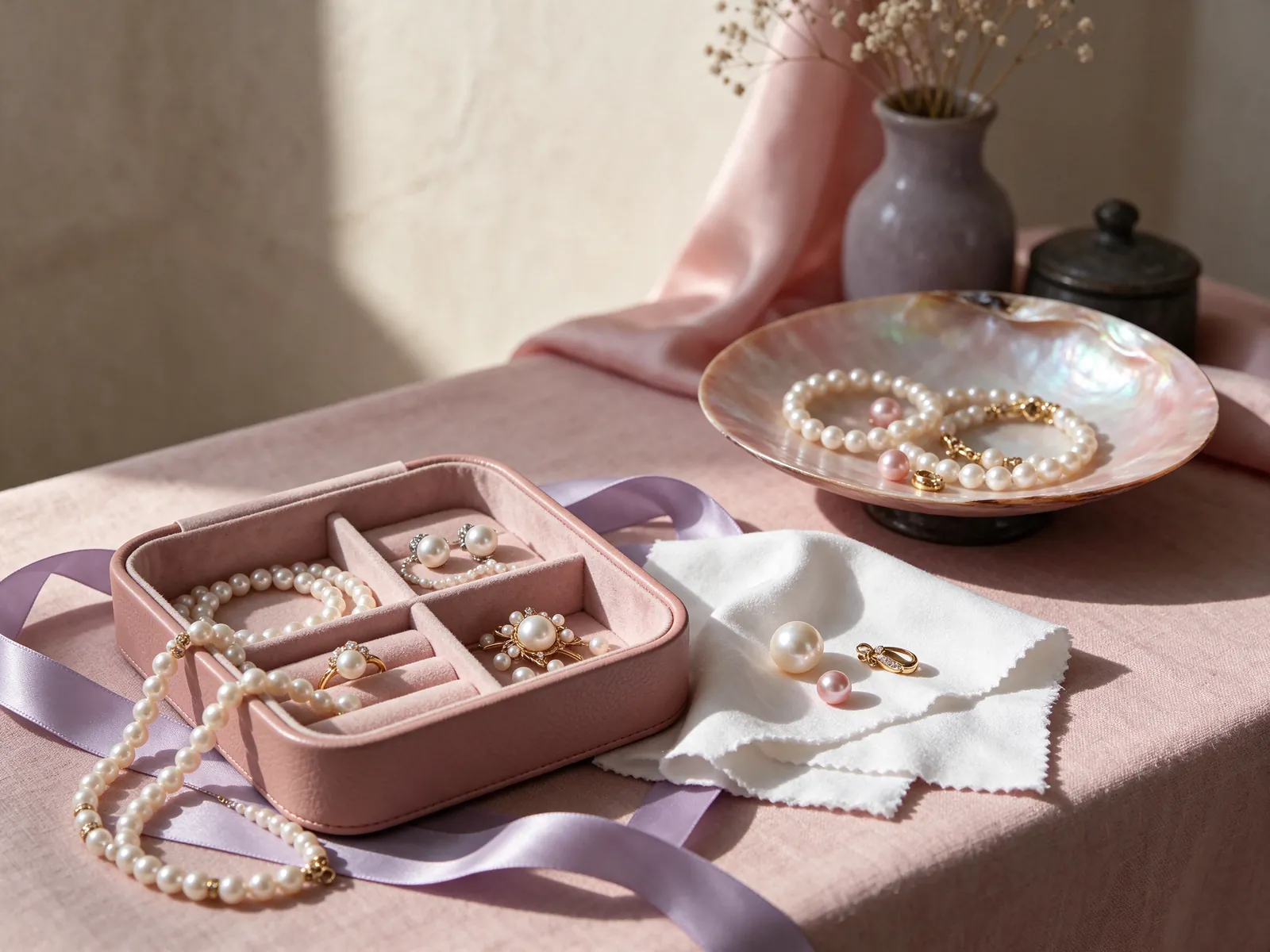
Set the jewelry down securely and support it as you wipe, rather than pulling on a string or twisting a pendant by its attachment. Move to a clean area of the cloth so that removed residue is not spread onto another pearl. If a creamy mark does not lift with gentle wiping, do not keep increasing pressure. The guide to how to clean pearls separates routine care from situations that need closer attention. A quick bright finish is not a reason to scrub.
GIA lists pearl at 2.5 on the Mohs hardness scale. This indicates scratching hardness, not resistance to perfume, sweat, or sunscreen. GIA also says never to use ultrasonic or steam cleaners on pearls. Do not experiment with toothpaste, alcohol, acids, or household cleaners on cosmetic deposits. Select a pearl care cloth for very soft, clean wiping without abrasives or unsuitable cleaning additives. A cloth designed to polish metal is not automatically safe for a pearl attached to that metal, and greater pressure is not a better response to a stubborn mark.
Treat the post, clasp, string, and pearl as different locations
Locate the residue before cleaning: pearl, glue joint, prongs, post, clasp, and string may need different handling. A dirty post is not a reason to immerse the whole item in metal cleaner. GIA mentions occasional mild, warm soapy-water cleaning, but that does not authorize soaking every glued or strung construction. Ask about the complete item if its materials or condition are uncertain, and avoid prolonged immersion. A string cleaned with water must be completely dry before wearing; do not rush drying with heat. Consult how to clean pearl clasps and earring posts when deciding whether professional help is appropriate.
A persistent stain or new surface change calls for a clear care history
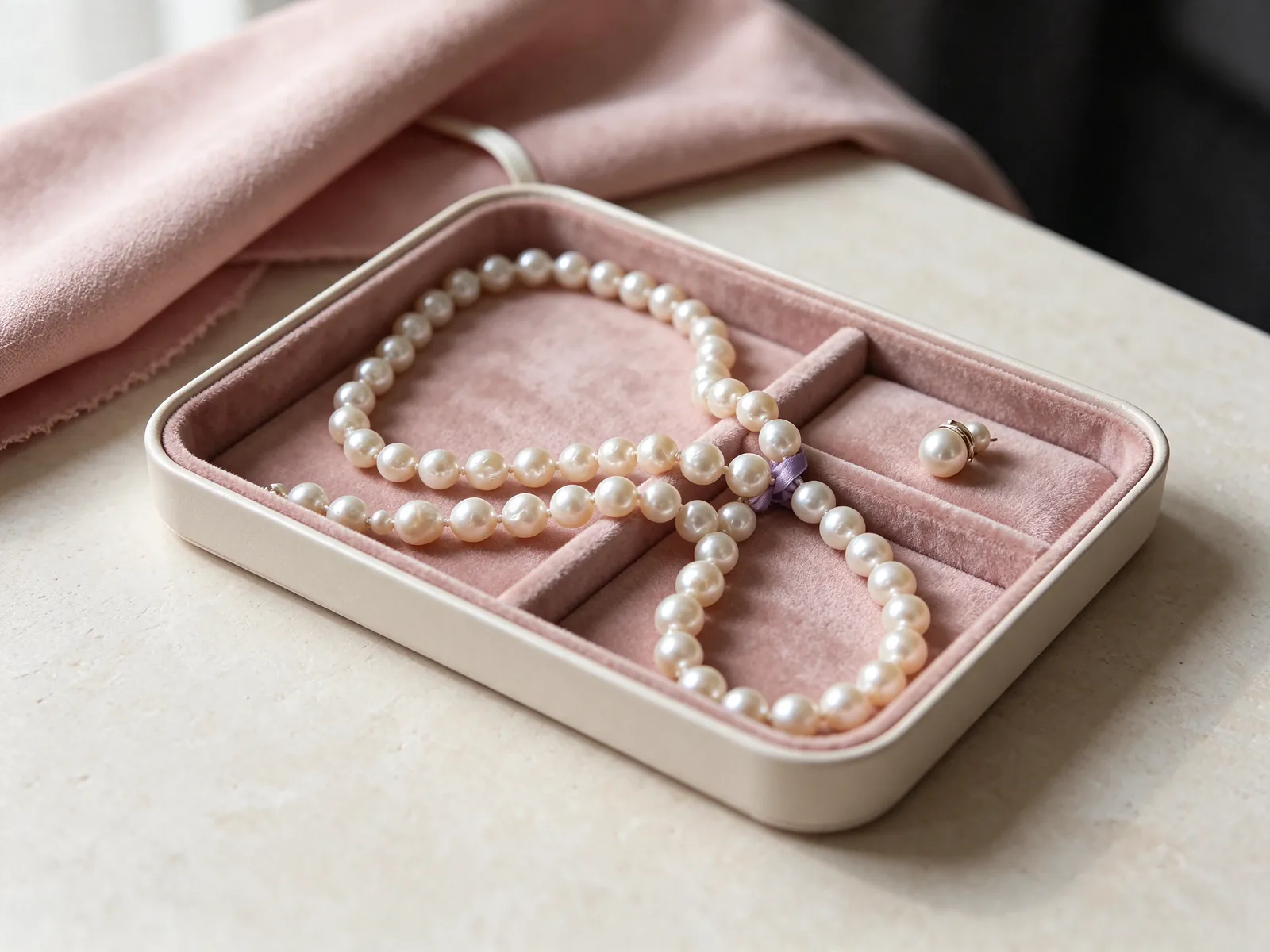
A white mark may be a product deposit, while a dark reflection can depend on light, angle, or the pearl surface. A brief description cannot diagnose the cause. If gentle wiping leaves a clear mark, more polishing is not automatically the next step. New roughness, a crack, or an obvious loss of luster calls for stopping home cleaning and storing the piece safely. Record when the change appeared, the products involved, and your cleaning attempts. Removing residue is different from repairing an affected surface; neither complete removal nor restoration of the original luster can be presumed.
Photograph the whole piece and the affected area in gentle light without filters or heavy color correction. Showing both earrings, or indicating a particular section of a strand, can make the situation easier to explain. The guide to how to remove stains from pearls helps frame the next steps; it does not mean every stain has a guaranteed remedy. Pictures support initial communication, while the actual surface and construction may need examination before a cleaning approach can be chosen.
When requesting help, explain contact and cleaning rather than guessing the diagnosis
Tell Flint Jewelry what type of piece you have, where the mark sits, which product was involved, and what you have already done. Clear photos can help start the conversation. If a pearl looks loose or a clasp or string seems changed, stop wearing the piece rather than pulling it to test strength. The next step may involve the surface or the structure, and neither restoration nor replacement should be presumed from appearance alone.
Everyday selection and storage: make pearl care fit the way you get ready
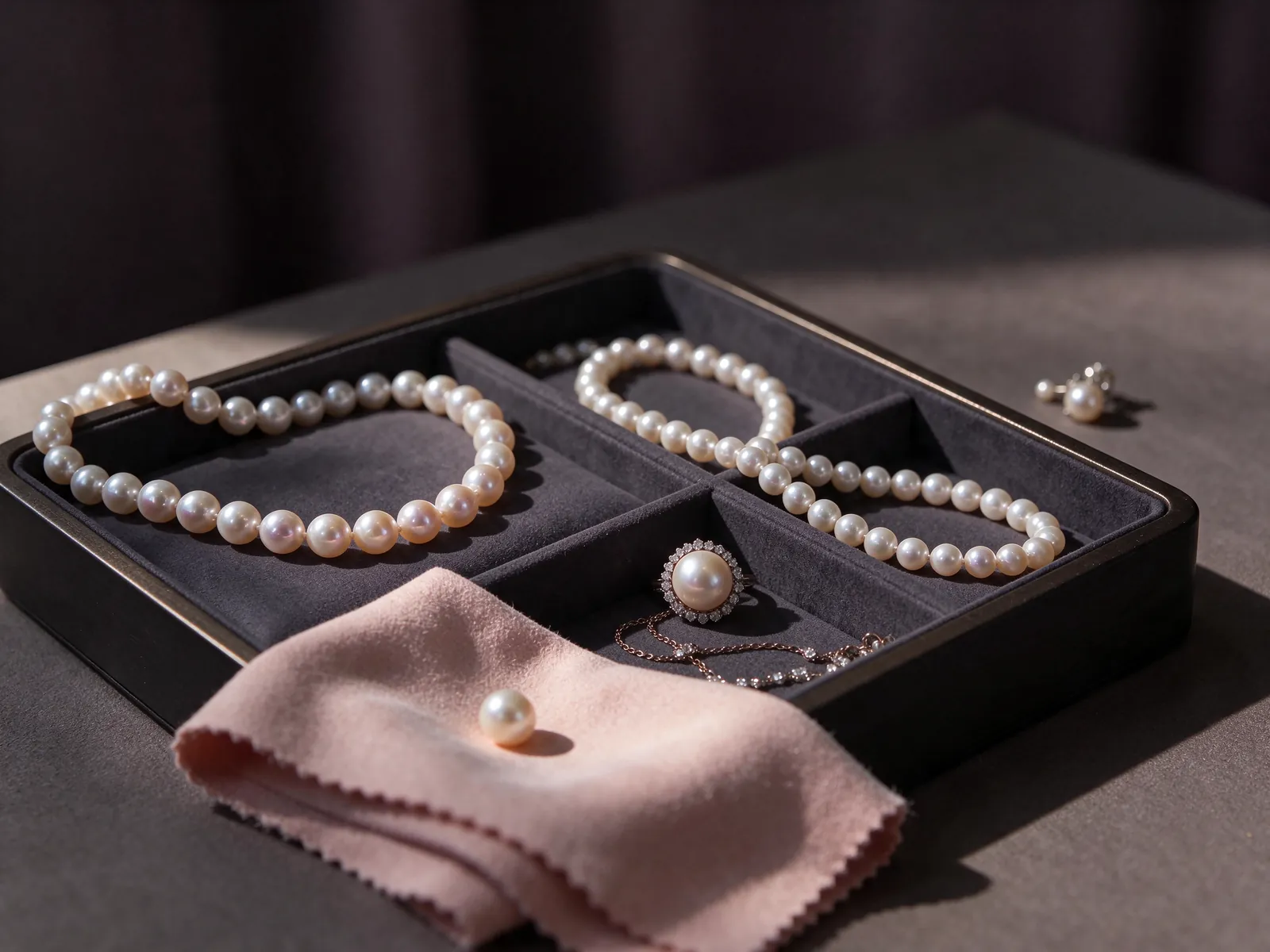
For regular wear, think about fragrance placement, lotion, sunscreen reapplication, and activities that make you perspire. Try the piece with your usual clothing and hairstyle. Check where each pearl rests, whether earrings brush your hair, and whether removing and refastening the piece is comfortable. Convenient removal supports good habits without proving that a design resists sweat or chemicals. A different metal does not shield the pearl from product contact. Necklaces, pendants, earrings, and bracelets each have distinct contact points; select around the day you actually expect rather than declaring any category care-free.
Before putting pearls away, gently wipe them and check for obvious moisture or deposits. Keep them separate from other jewelry and hard-edged parts that could rub against the surface in a bag. A cloth with sunscreen residue should not remain in the same pouch. If water was used to clean a strand, the string must be completely dry before it is worn again. Avoid excessive heat. Having a clean soft cloth and a separate storage place ready is more useful than collecting strong cleaners for later.
Check contact before putting jewelry on, then condition when taking it off
Before wearing, finish products and styling and confirm that hands and contact areas have no obvious residue. After wearing, remove the pearls first, inspect, gently wipe, and store separately. Change the wearing plan before sunscreen top-ups, fragrance spraying, or heavy sweating. This straightforward routine allows you to enjoy the finished outfit while paying attention to new marks early, instead of waiting until deposits become difficult to address.
| Situation | Getting ready | Later adjustment | After-wear care |
|---|---|---|---|
| Fragrance or hair spray | Spray and style before putting on pearls | Remove the piece and keep it away from mist before refreshing | Look for deposits and wipe gently |
| Sunscreen or lotion | Allow absorption; check contact areas for visible cream | Take off jewelry before reapplication to those areas | Stop if residue remains after gentle wiping |
| Makeup near the neck or ears | Finish makeup and use clean hands | Check contact with skin, hair, and fabric | Locate residue on the pearl, attachment, or post |
| Exercise or a warm commute | Keep pearls off for heavy-sweating activities | Wear after activity and skincare are finished | Use a very soft, clean cloth |
| Water used on a strung piece | Wait for the string to be completely dry before wearing | Do not accelerate drying with heat | Check the construction and separate from hard objects |
Pearl knowledge and authoritative references
GIA lists pearl at 2.5 on the Mohs hardness scale. The figure describes scratching hardness, not a safe number of hours with sweat, perfume, or sunscreen and not a chemical-resistance guarantee.
Read the reference for this factFrequently asked questions
Can I spray perfume on my shirt instead of my skin and ignore pearl contact?
No. A pendant or necklace may touch sprayed fabric, and mist may land nearby. Apply fragrance before wearing jewelry, check the finished outfit's contact points, and remove pearls before another spray.
Is there a universal waiting period after sunscreen?
No fixed period applies to every formula and amount. Follow the sunscreen instructions, let it absorb, and check for visible cream or wetness where jewelry rests and on your hands. Absorption does not guarantee that later transfer cannot occur. Remove pearls before reapplying to their contact area; do not skip sunscreen for jewelry.
If I wear a necklace outside a collar, can sweat still matter?
Yes. Clothing changes contact but does not guarantee separation. Movement may bring the pearl to skin or fabric carrying products and perspiration. Remove it before heavy-sweating activities and still inspect and wipe it afterwards.
Can I use a makeup-remover wipe on a sunscreen deposit?
Do not treat a makeup-remover wipe as a pearl cleaner. Begin with a very soft, clean cloth and gentle wiping. If a deposit remains, record the product and request assessment rather than scraping or trying household chemicals.
Does a pearl looking darker after one event prove that fragrance damaged it?
Not by itself. Viewing angle, lighting, residue, and its earlier condition can affect appearance. Observe under similar light. A persistent change, new roughness, or a crack calls for stopping further home cleaning and seeking assessment.
Updated: