

How do proportion and chain choice shape a heart diamond pearl pendant, a pearl pendant with heart bail or a heart motif pearl pendant?
Think of the design as a relationship between a pearl, a heart and the chain carrying them. The heart might be the bail itself or a separate ornament beneath another chain opening. Diamond accents can trace a heart without being individual heart-shaped diamonds. When you consider a pearl pendant, first decide what should stand out from across a room: the pearl's reflection, the recognizable symbol or the overall outline. That decision helps you compare proportions without assuming that a larger detail is automatically better.
If you prefer the pearl to lead, look for visual space around its surface and notice whether the heart overlaps the reflection you enjoy. If the symbol matters most, check that the two lobes and center notch remain readable when the pendant is worn, not just magnified on a screen. A detailed close-up cannot show how the piece relates to your shoulders, collar or other jewelry. Compare a normal outfit view with a closer view before settling on the balance.
Will your chain's end connector pass through the bail of a heart diamond pearl pendant, a pearl pendant with heart bail or a heart motif pearl pendant?
Include the end connector's widest and thickest points when assessing fit. The chain links may be slim while the terminal component cannot clear the opening. Entry angle and the space behind the bail matter too; the outside heart silhouette tells you little about the usable passage. Do not pull harder, squeeze a connector or press against the pearl to make the combination work. Have a jewelry professional evaluate a fit that is not straightforward.

Distinguish a decorative motif from a working attachment
A pearl pendant with heart bail places the motif in the part that carries the chain. In another heart motif pearl pendant, the heart may simply decorate the space above the pearl. These arrangements can look similar from the front but behave differently when you change chains. A component described informally as a clasp is not necessarily hinged or openable. Look for an explicit explanation of how it functions rather than testing it by twisting the metal.
An open outline can give the design a lighter visual feel, while a filled shape directs more attention to the heart. Diamonds tracing the perimeter create a different effect from one stone whose cut supplies the shape. If curves feel too expressive for your wardrobe, explore a geometric pearl pendant for a linear comparison. A pyramid pearl pendant provides another way to consider pointed contours. Compare design language without transferring construction or gemstone details from one theme to another.
Check whether the heart stays in view as you move
Use a side view to understand the gap between the motif and pearl, and a back view to see the chain's path. During a fitting, turn and walk gently to see whether the heart faces forward or rotates behind the pearl. Pay attention to the back surfaces touching skin and clothing as well. A front-facing photograph presents one angle; it does not establish how the pendant will sit throughout the day.

Separate pearl appearance from diamond descriptions
GIA identifies seven pearl value factors: size, shape, color, luster, surface quality, nacre quality and matching. A single-pearl design lets you focus on the clarity of reflections, visible surface features and the relationship between the pearl's shape and the heart. Matching deserves more attention if you intend to coordinate the pendant with pearl earrings. The presence of a sparkling motif does not answer any of these questions about the pearl itself.
Evaluate appearance in gentle light and from more than one angle. A bright photograph or a particular color cannot establish pearl species, origin, natural-versus-cultured identity or a certificate. GIA distinguishes bodycolor, overtone and orient, and not all pearls show every component. Read diamond wording separately: a combined weight for several accents is different from the weight of an individual stone. The shape of the heart does not tell you which description applies.
Make your preferred focal point clear
Remove other decorative necklaces during the first comparison so that the pendant can be judged on its own. Then add your usual earrings and see whether the heart still leaves room for the pearl to be noticed. If you favor luster over a graphic motif, check the pearl's reflection at your normal viewing angle. Describe the actual color and reflection you like rather than depending on a single broad style label.
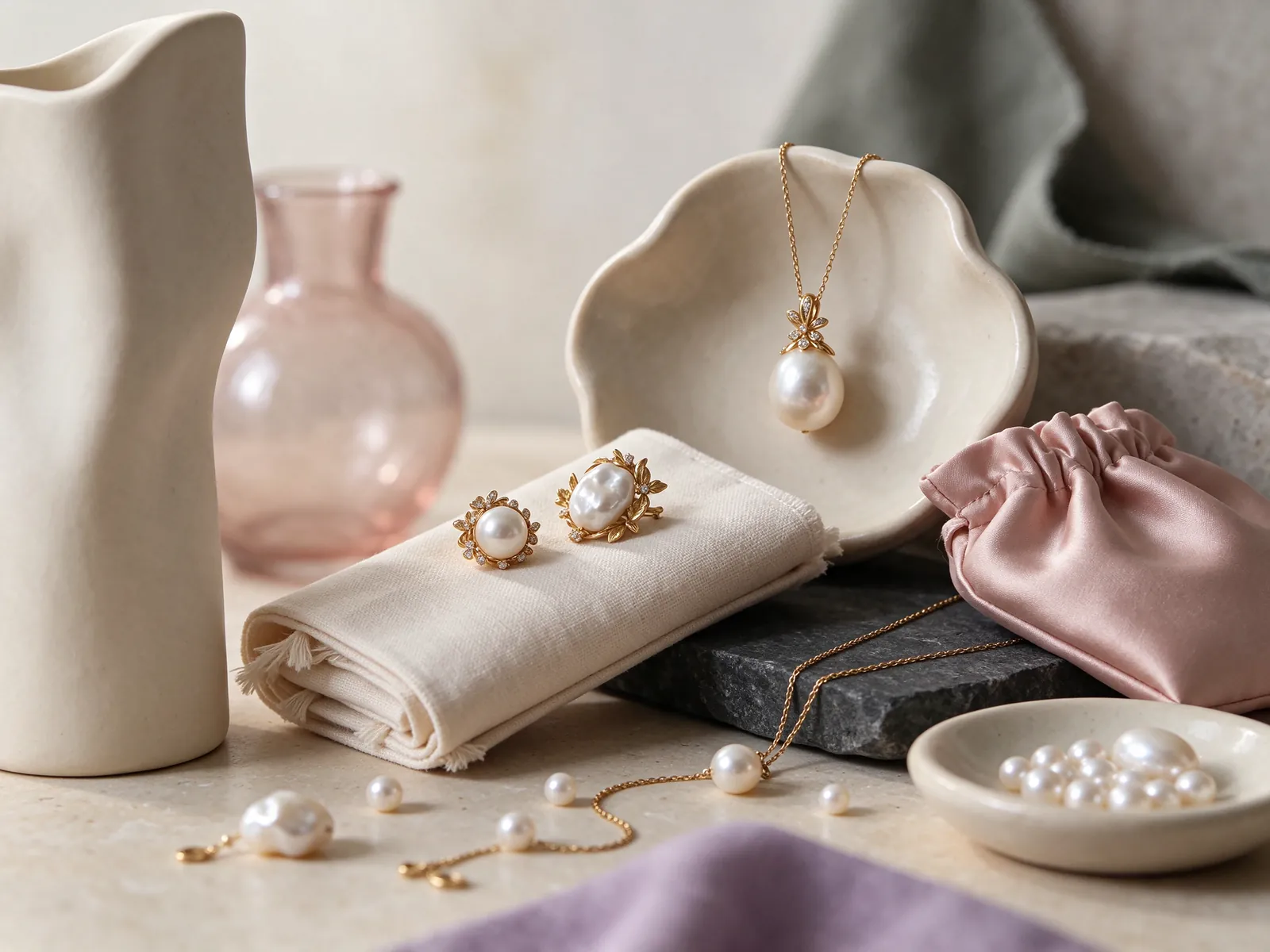
Plan the pendant's position around real outfits
A button-front shirt gives the pendant a clear opening, but its collar tips and buttons can interrupt the heart's outline. With a crewneck, decide whether the pendant belongs above the edge or fully on the fabric. Avoid a position that leaves only half the heart visible. Check the arrangement while seated as well as standing, and consider whether a jacket zipper or scarf will repeatedly come into contact with the pearl.
For a dressier neckline, one clear focal point often communicates the design better than several large ornaments. A high-neck sweater offers a fabric background, but its fibers should not catch around the setting or bail. If the outfit leaves little useful space at the neck, consider the placement choices of a pearl brooch. Reading how to wear a pearl brooch can help you compare a lapel accent with a suspended pendant, especially when fabric and movement influence the choice.
Check contact points before layering necklaces
Start with the heart as the only substantial pendant, adding a plain chain if you want another layer. Lean forward and turn to check whether the chains cross or a second ornament hits the pearl. Choose spacing based on the actual neckline and pendant position, not a photographed formula. If maintaining the layers requires frequent untangling, a single necklace may show the motif more clearly and involve fewer contact points.
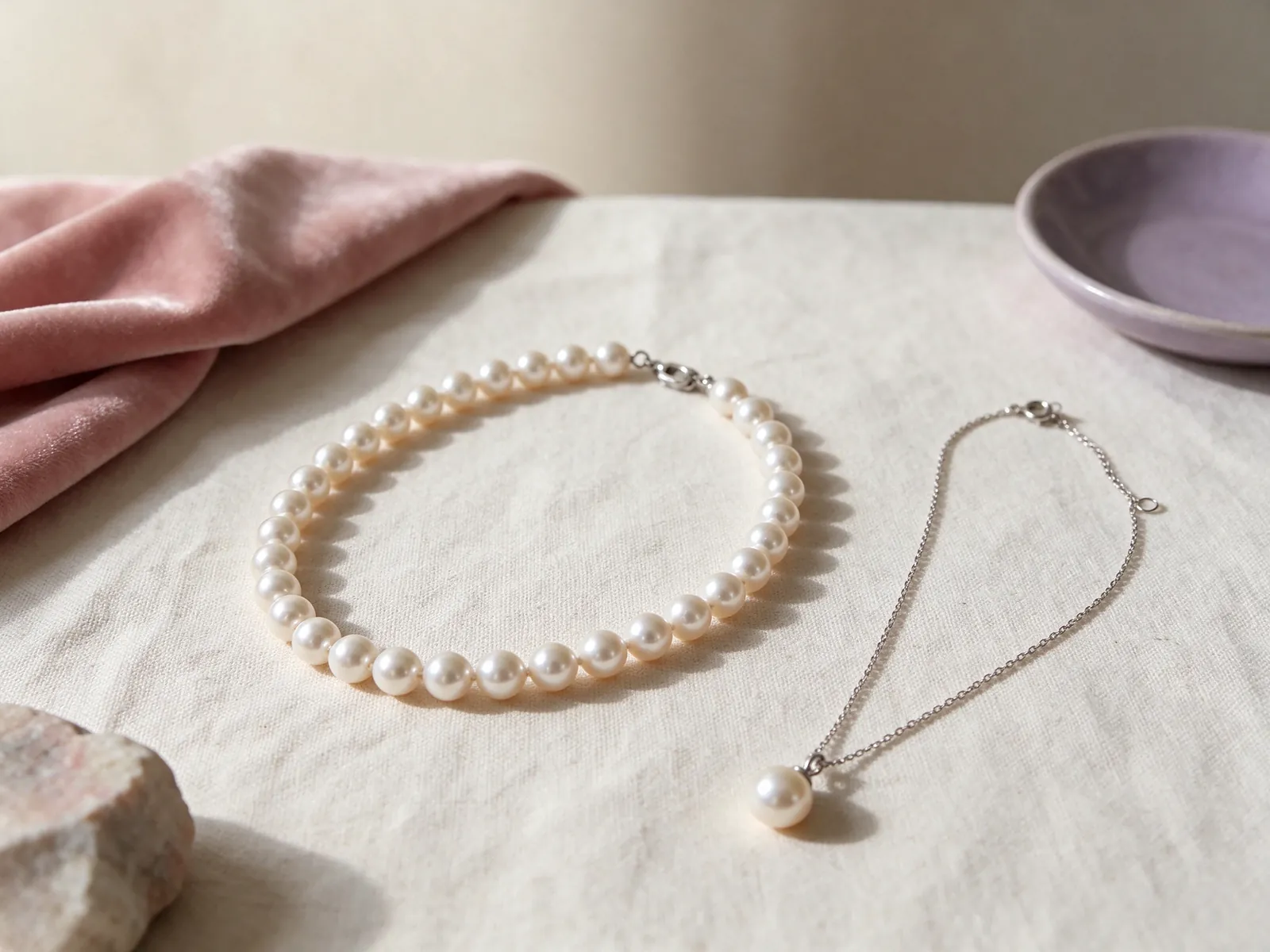
Use the recipient's style to guide a heart-themed gift
The heart is a familiar affectionate symbol, but the wearer decides how prominent it should be. Look at whether the recipient usually chooses small, discreet pieces or clearly recognizable imagery. A heart integrated into a bail may suit someone who likes subtle details; a more visible outline may appeal to someone who enjoys expressive accessories. Their regular clothing and existing chains offer better practical guidance than choosing the motif only because of a holiday or relationship label.
If playful imagery seems closer to their taste, compare the questions explored in an ice cream pearl pendant guide or an apple pearl pendant guide. These subjects help separate a whimsical direction from a romantic one; they do not establish that a particular piece will fit an existing chain. Find out how the recipient normally wears a necklace and what its end connector looks like. A meaningful design still needs to work with the way they dress.
Preserve choice without guessing gemstone details
You can ask whether they prefer curved or angular outlines without revealing the whole gift idea. Their favorite metal colors and neckline shapes can narrow the styling direction further. Avoid guessing pearl identity or diamond specifications from a photograph of jewelry they already own. Explain a heart gift through personal taste or shared memories, rather than suggesting that the symbol guarantees happiness, health or another outcome.

Treat the chain and metal tone as part of the design
The metal options for discussion are 18K 750 white gold, 18K 750 yellow gold, 18K 750 rose gold, PT950 platinum and PT900 platinum. Consider how each tone frames the pearl against your clothing and coordinates with the chain you plan to use. A warmer frame and a paler frame can emphasize the same outline differently. There is no universal color pairing, and a pleasing match does not provide information about the pearl's species or origin.
Passing through the bail is only part of chain compatibility. The chain should move without binding, and its clasp should close properly. Check visible wear where metal components meet and notice any distorted end connector. Read whether the pendant and chain are described as separate pieces or as a combination; a photograph showing both cannot answer what is included. An existing chain with damage or an unreliable closure should be examined before it carries another piece.
Bring useful information to a fitting
Bring the whole chain, including both terminal components, and demonstrate the fastening position you normally choose. A close photograph of the end connector and an outfit view can make a styling question much clearer. Say whether you want the heart on the skin above the neckline or on the fabric below it. Include concerns about turning or tangling rather than reducing the conversation to chain thickness alone.

Clean the complete piece according to pearl care needs
GIA gives pearl a Mohs hardness of 2.5 and states that pearls should never be cleaned in ultrasonic or steam cleaners. The presence of diamonds on the heart does not change that instruction for the combined pendant. Use a very soft, clean cloth after wearing and avoid acids, perfume, hair spray and excessive heat. Do not rub debris from the metal frame across the pearl while trying to reach the heart's small corners.
When storing the pendant, separate the pearl from other jewelry's metal edges. Handle a tangled chain without pulling on the pearl, and do not pick caught fibers out of a setting with sharp tools. If an attachment feels loose, the bail looks distorted or a new movement is noticeable, stop wearing the piece and seek professional examination. Trying to bend it back or applying adhesive does not establish that the original structure is sound.
Ask focused questions about wear and construction
Summarize your preferred heart position, the pearl appearance you like, your usual neckline and the chain's end connector. Ask how to keep the motif visible or prevent another necklace from touching the pearl. These are concrete styling questions that can be discussed without assumptions about a gemstone's identity. For details of a particular pendant's materials or attachment, rely on its individual description and a professional examination of the piece.
To discuss a heart pendant with your neckline, existing chain or necklace layers, contact Flint Jewelry on WhatsApp +85260106207: https://wa.me/85260106207. Describe your preferred heart position and share an outfit view or chain-end photograph to make your styling question more specific.
| Design element | Inspection point | Fitting action | Styling purpose | Detail not to assume |
|---|---|---|---|---|
| Heart bail | Internal passage and entry angle | Check the entire chain end connector | Heart near the chain with pearl below | A wide outline may have a narrow opening |
| Decorative heart | Gap from the pearl and separate bail | Compare front, side and moving views | Give the motif its own visual space | The heart may not carry the chain |
| Diamond accents | Contour arrangement versus stone shape | Look at normal wearing distance | Choose subtle sparkle or a distinct symbol | Several accents are not one heart-cut diamond |
| Clothing and layers | Collar edge and neighboring ornaments | Sit, turn and lean forward | Keep the outline visible | Another pendant may strike the pearl |
| Whole-piece care | Pearl, frame and attachment together | Wipe softly and store separately | Respect the pearl's care requirements | Diamond cleaning methods may be unsuitable |
Pearl knowledge and authoritative references
GIA lists pearl at 2.5 on the Mohs hardness scale. A heart with diamond accents remains part of a pearl-containing piece, and pearls should never be cleaned in ultrasonic or steam cleaners.
Read the reference for this factFrequently asked questions
Is a diamond-lined heart the same as a heart-shaped diamond?
No. A diamond-lined heart describes stones arranged along a motif, while a heart-shaped diamond describes the outline of an individual cut stone. Check the particular description rather than treating these as equivalent gemstone specifications.
Does the word bail mean the heart can clip onto a necklace?
No. A bail carries a chain, but it is not necessarily designed to open. An opening attachment needs an explicit construction and use description. Do not twist a fixed component to see whether it can become a clip.
What should I compare if I want to reuse a chain?
Compare the full end connector, including its widest and thickest points, with the usable bail passage. Also inspect chain movement, closure and visible wear. Chain-link thickness alone does not settle whether the combination is appropriate.
Should the heart sit above or below a crewneck collar?
Try both positions with the actual outfit. The useful goal is a fully visible outline that does not straddle the collar edge or catch in the fabric. Check again while seated and moving, since the pendant's position may change.
How should I handle dirt around the heart when a pearl is attached?
Use a very soft, clean cloth for gentle routine wiping and avoid dragging debris across the pearl. Do not use ultrasonic or steam cleaning, which GIA rules out for pearls. Difficult deposits around the setting are a reason to seek professional advice, not to use sharp tools.
Updated: