

Before using a pearl care cloth or pearl cleaning cloth, how do you read the suitability guidance for a pearl polishing cloth set?
Begin by identifying what the cloth would touch on your jewelry. On a pendant, that may include a pearl and a nearby setting; on a strand, pearls sit alongside string and a clasp. Read the intended surfaces and restrictions, not just a headline about shine. Distinguish plain after-wear wiping from a specialized treatment before deciding which cloth to use. A cloth marketed broadly for jewelry does not automatically cover every part of a pearl piece. Ask the manufacturer when the pearl-specific instructions are unclear rather than trying it to find out.
Treat pearl wiping, metal care and construction checks as separate questions. Permission to polish a clasp does not extend to the pearl next to it. Likewise, a pearl cloth cannot tell you whether that clasp closes securely. To choose the best cloth for cleaning pearls, match the instructions to the actual contact area. If you cannot keep the cloth away from a neighboring surface with different care needs, ask for piece-specific guidance before proceeding.
How do polishing agents affect the choice of a pearl care cloth or pearl cleaning cloth and the use of each cloth in a pearl polishing cloth set?
When a label mentions polishing agents or a treated cloth, check whether the treatment is specifically intended for pearls and which restrictions apply. Not all treated cloths are metal-only, but a cloth specified only for metal should never overlap onto the pearl. Coming in the same set does not make separate cloths interchangeable. Keep the directions for each item distinct. Do not experiment on a less visible pearl to discover suitability, and do not interpret polishing as permission to rub away a scratch. Unclear instructions are a reason to pause.

How do you assess the cloth's contact surface before buying or using it?
GIA recommends a very soft, clean cloth for routine after-wear care. That means checking cleanliness as well as texture. Spread out the cloth and look for trapped particles, hardened residue or attached objects. A previously suitable cloth may no longer be ready if it has fallen on the floor or picked up makeup. Do not use the pearl itself to test whether the cloth feels abrasive.
Practical handling matters more than an impressive size or plush appearance. You should be able to see and control the area that touches the pearl, keeping stiff seams and labels out of the way. Check that fabric is not catching an earring post, prong or small connection. If it catches, stop and release it while supporting the jewelry. Pulling harder can turn a simple wipe into unwanted tension on the piece.
What should happen when a cloth becomes dirty?
Set it aside rather than assuming a folded corner is clean. Read whether the particular cloth can be washed; laundering may alter a treatment or leave detergent residue. A cloth that has been washed should not automatically be assumed to work as originally intended. Do not add household cleaner or invent a laundering method. Choose another suitable clean cloth while deciding whether the old one can be cleaned or should be replaced. Its condition and manufacturer’s instructions matter more than an arbitrary replacement calendar.

What makes a multi-cloth set understandable in everyday use?
Ask how each cloth is identified once the package is open. A count of several cloths does not tell you which one belongs on a pearl, which one is for metal, or whether any should be used together. Buy for understandable roles rather than extra steps. If the instructions call for one cloth for ordinary wiping, there is no need to use the others just to complete the set.
When comparing names such as Pearl Science Lab Pearl Luster Cloth, separate ordinary wiping from specialized maintenance. WSP’s current product page names “Pearl Care Cloth Set (Luster & Refresh), 2 pieces”; its public care instructions also describe Pearl Refresh Cloth as fabric containing an abrasive. This is a statement about a particular product. It does not establish the composition of every pearl cleaning cloth or turn every cloth in a set into an everyday wiping tool. Follow the complete directions for the item you have, not a clean-then-rub-harder sequence imagined from the names.
Keep identification separate from the jewelry-contact area
Retain the original directions and put different cloths in their own clean pouches or compartments. Mark the purpose on the outside of a pouch, so a label is not rubbing against the pearl. Do not stack a used metal polishing cloth on the pearl cloth. If the set is a gift, include the full instructions: the recipient should not have to guess each cloth's function from its color.
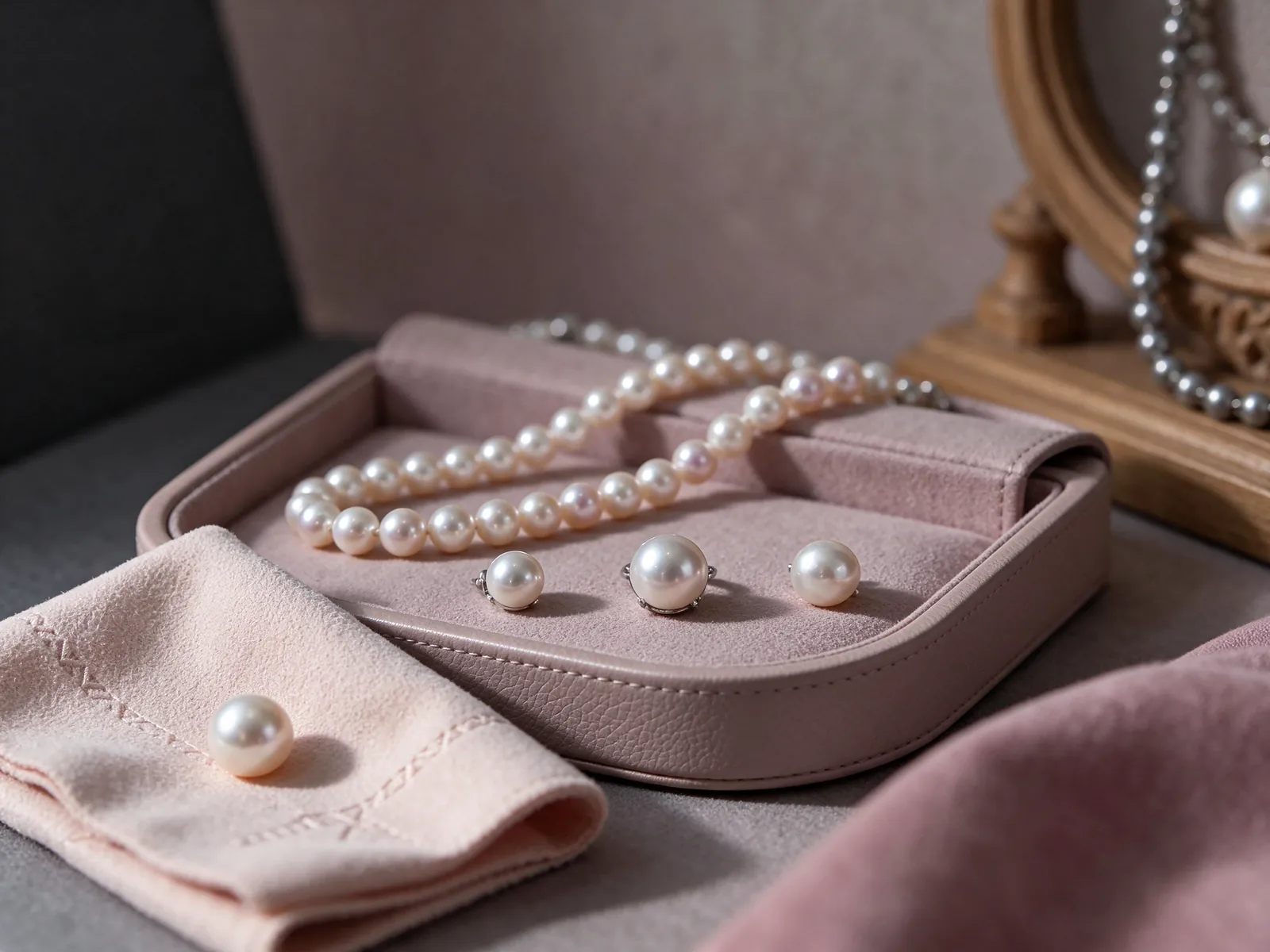
What does gentle after-wear wiping look like for different pieces?
Take the jewelry off over a clean, stable area and examine it before wiping. Notice visible dirt, a loose component or a spot where the cloth might snag. Support the piece and gently wipe the accessible pearl surface with a very soft, clean cloth. In learning how to clean pearls, distinguish routine after-wear attention from trying to eliminate a persistent mark. Do not scratch at deposits with a fingernail or pull a strand through a tight grip.
Hold a pendant so its small connecting parts are not taking the force of the cloth. Support a strand’s weight instead of dragging it by one pearl or by the clasp. Do not pull back and forth at drill holes or stretch the string to chase every gap. Avoid pushing fabric into a narrow setting or a hidden underside you cannot inspect. Wiping should not become a test of how firmly a pearl is mounted. If a pearl, connection or knot shifts unexpectedly, stop and have the condition assessed.
Why a stubborn mark does not justify stronger cleaning equipment
GIA places pearl at 2.5 on the Mohs hardness scale. This is useful context for cautious handling, not a formula that gives a safe amount of rubbing pressure. GIA also says pearls should never be cleaned in ultrasonic or steam cleaners. A mark that remains after gentle wiping is not a reason to switch to these methods. Avoid repeated pressure on one area and preserve the condition for assessment.
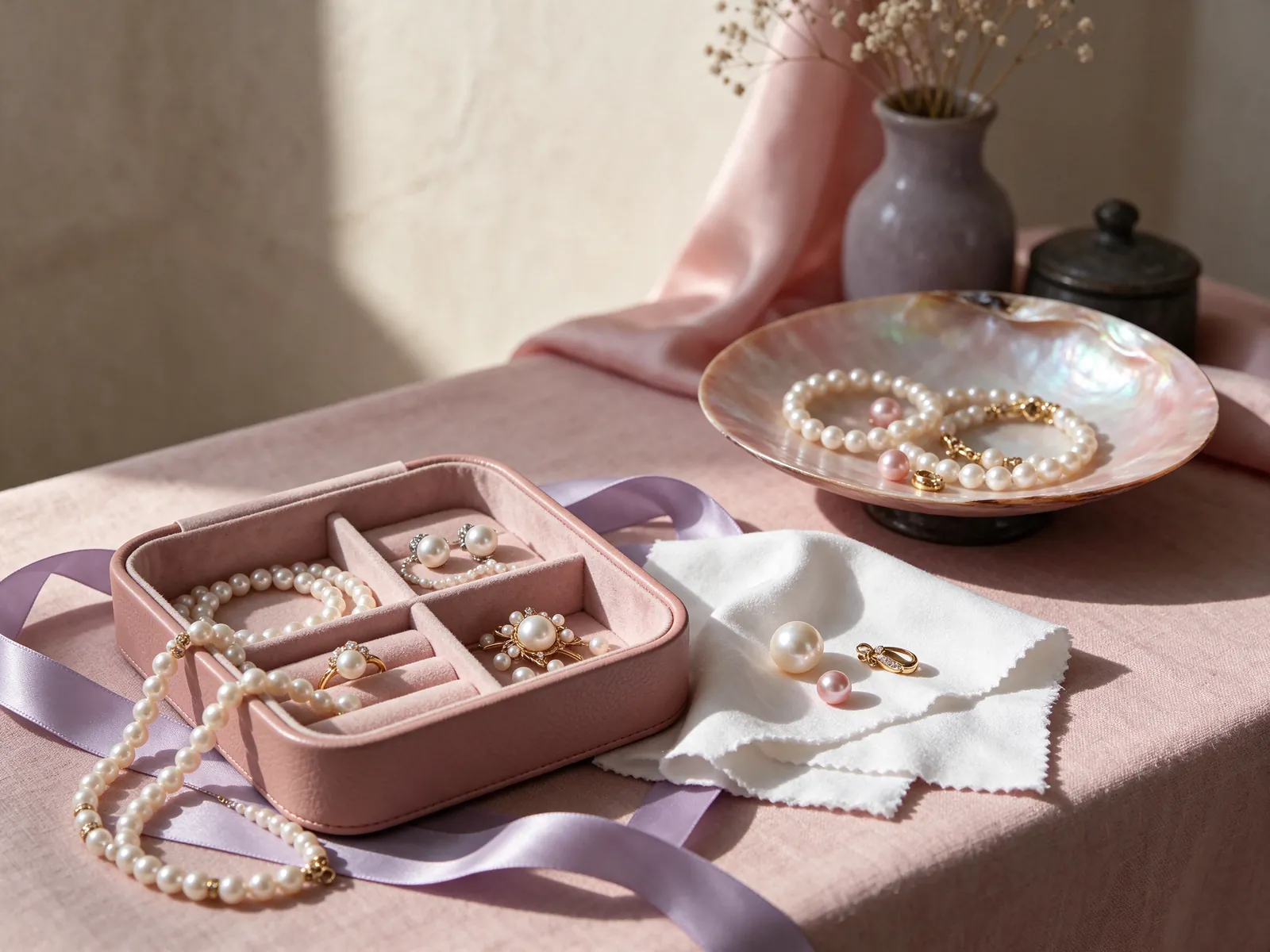
How do clothing and cosmetics change your care routine?
When styling pearls with a textured jacket, embellished neckline or everyday bag, consider repeated contact with rough trim and hard hardware. Apply perfume, hair products and makeup before putting the jewelry on, and do not spray toward worn pearls. Asking can sweat and perfume damage pearls brings attention to contact that a cloth cannot simply undo. A stronger-sounding cleaning name is not a substitute for reducing exposure while dressing.
Set aside the suitable clean cloth for after-wear use instead of reaching for a sleeve, tissue or purse lining. When moving from work to a dinner or celebration, keep the cloth in a separate pouch away from cosmetics. Remove and handle small pieces at a well-lit, steady surface, not above a sink where an earring could fall. The routine should make careful attention convenient rather than encourage a hurried polish.
Can an exterior wipe make a wet strand ready to wear?
If strung pearls have been cleaned with water, GIA specifies that the string must be completely dry before wearing. Dry-looking pearls do not prove the string is dry. When asking can you shower with pearls, planning to wipe them afterward is not protection. Routine dry wiping differs from occasional water cleaning; advice about one is not permission for prolonged soaking. Follow the whole piece’s care guidance, including its string and glued connections. Avoid excessive heat as a shortcut for drying, and do not assume that a cloth makes the jewelry waterproof.
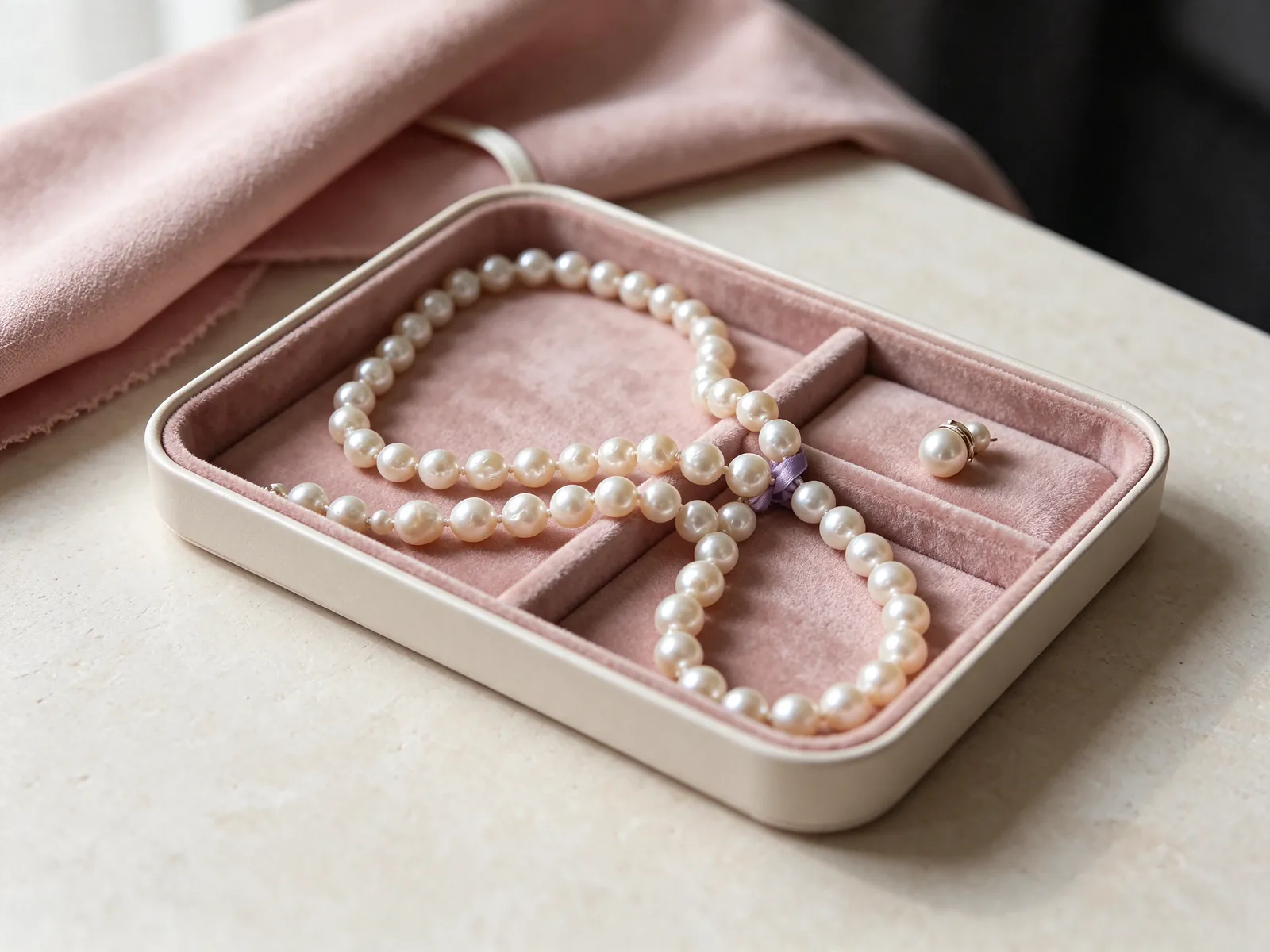
How should you pack the cloth without letting jewelry rub together?
Give the cloth its own clean space and separate the jewelry pieces after wiping. Knowing how to store pearls includes recognizing that soft wrapping does not separate everything inside it. Several pieces rolled into one cloth can still put a clasp or earring post against a pearl. Individual compartments make it easier to avoid contact and to inspect the next piece before wearing it.
For travel, do not pack the ready-to-use cloth with loose change, makeup brushes or shoes. Arrange the jewelry case for each piece's shape rather than compressing strands and earrings into a crowded pocket. Check the cloth each time instead of using an uncertain, previously used cloth as permanent wrapping. Also avoid excessive heat: a soft case addresses contact but does not make every storage environment appropriate.
Create a simple one-piece-at-a-time station
At home, use a clean area beside the jewelry box to wipe and inspect each piece before returning it to a separate compartment. Keep the instructions easy to find and cloths with different purposes apart. Move a dropped or stained cloth out of the usable group right away. You do not need an elaborate setup; the useful habit is knowing which clean surface will touch the pearl every time.
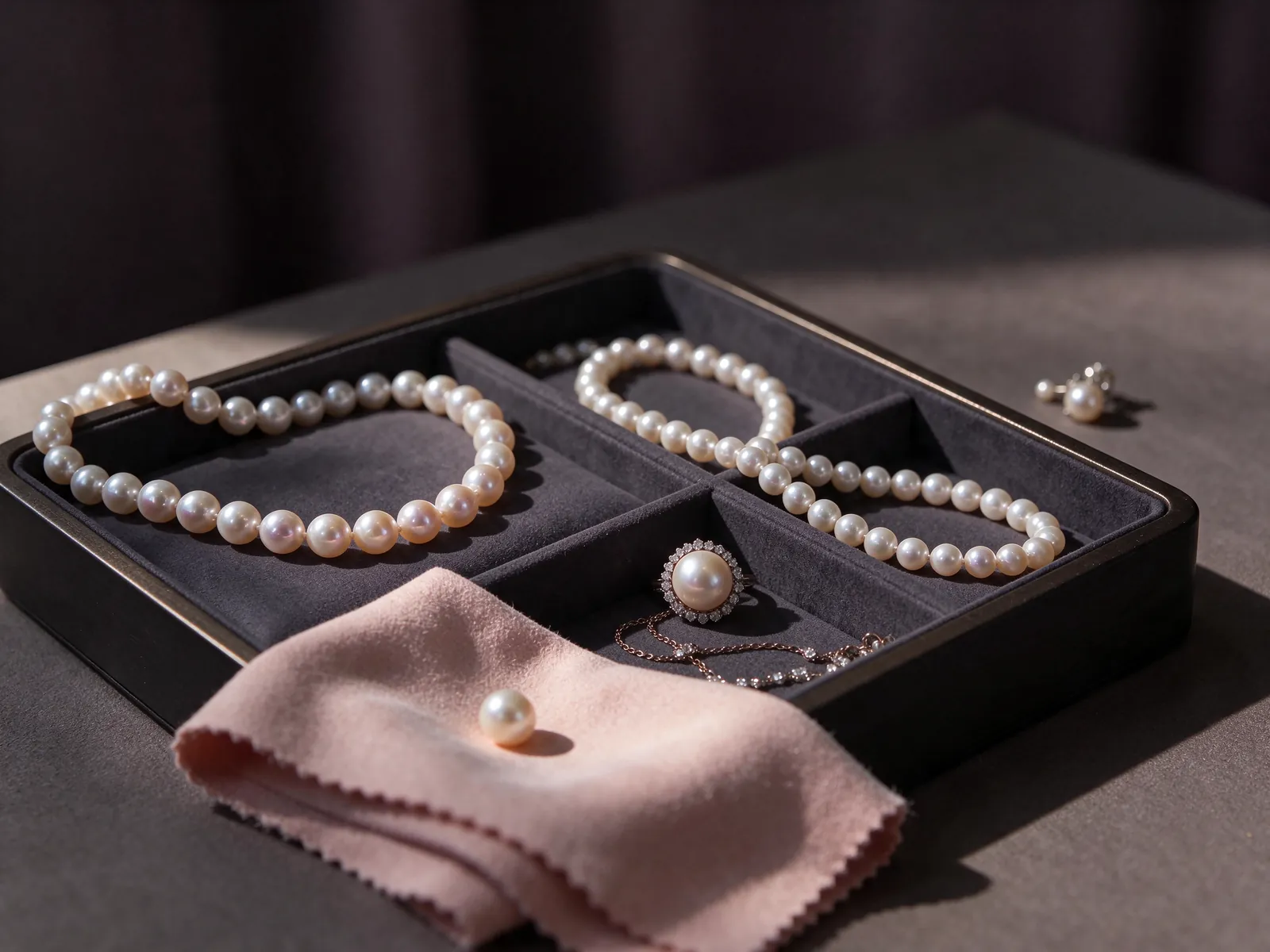
What should you do when wiping does not resolve a visible change?
Do not assume a remaining mark is dirt. A surface scratch, a change in appearance and a deposit may require different handling, and a photo alone may not separate them. Before asking how to remove stains from pearls, record when you noticed the issue, possible contact and the cloth already used. Yellowing or changed luster cannot be assumed reversible through wiping. Avoid toothpaste, bleach, abrasives and improvised chemical mixtures. Stop increasing rubbing pressure and preserve the current condition so the problem can be assessed.
Pause wiping if you see a new scratch, altered luster in one area, a loose setting or a change in the string. Avoid wearing a piece if movement could strain a loose part. Take photographs of the whole item and affected area under ordinary lighting, and keep the cloth packaging available. Do not polish the jewelry to make the photo brighter. Its unchanged condition is more useful for discussing the problem.
Which details help an everyday care discussion?
Describe the form of the jewelry, the location of the change, the cloth's stated use and any recent exposure. The pearl care guide connects wearing, cleaning and storage without treating all marks as one issue. When discussing everyday care with Flint Jewelry, ask whether gentle wiping is still appropriate and whether the piece needs a closer assessment. That is more practical than requesting a cloth that will guarantee restored shine.
| Decision point | Information to check | Action at the pearl surface | Useful wearing or storage habit |
|---|---|---|---|
| Surface suitability | Read pearl and setting guidance separately | Do not extend metal-only use to the pearl | Keep piece-specific instructions available |
| Polishing agents | Identify each cloth's treatment and limits | Do not experiment with an unclear cloth | Separate cloths by their intended role |
| Clean contact area | Inspect for residue, particles and stiff edges | Use a very soft, clean cloth gently | Pack the cloth away from makeup |
| Jewelry construction | Observe posts, connections, clasps and string | Support weight and avoid pulling or forcing fabric | Handle one piece at a time |
| Unresolved changes | Record the mark and previous contact | Stop rather than escalating pressure | Preserve the current condition for assessment |
Pearl knowledge and authoritative references
GIA rates pearl at 2.5 on the Mohs hardness scale. The number provides context for cautious surface care, not a safe rubbing-pressure calculation or a claim that a cloth can remove scratches.
Read the reference for this factFrequently asked questions
Does jewelry cloth on the package mean it can touch a pearl?
Not by itself. Read the intended surfaces, treatment information and exclusions. A metal-only cloth is not suitable for the pearl beside that metal. Some treated cloths are designed specifically for pearls, but their own restrictions still matter. If the directions do not establish pearl suitability, do not experiment on the jewelry to find out.
How do I keep a gifted cloth set understandable for the recipient?
Include the original instructions and keep the cloths individually identifiable in clean separate pouches. Place purpose labels outside the pouches rather than against jewelry. Do not assume that color or a shine-related name will tell the recipient which surface each cloth is intended to touch.
Should I pull a strand through the cloth to wipe it faster?
Avoid dragging the strand through a tight grip or letting its weight pull on the string and clasp. Support the jewelry and gently address accessible surfaces instead. If a part moves or a deposit remains, stop rather than increasing pressure or speed.
Can I add household cleaner to a plain-looking care cloth?
Do not improvise a chemical treatment. Appearance does not tell you the cloth's composition, prior treatment or suitability for the piece. Routine pearl care uses a very soft, clean cloth; persistent deposits or changes should prompt an assessment, not a homemade cleaning mixture.
Will wrapping several pieces in one soft cloth prevent contact?
Not necessarily. A clasp, post or other hard part inside the bundle may still press against a pearl. Separate pieces in appropriate compartments and store the cloth in its own clean space. Check its condition before each use rather than treating used wrapping as automatically ready for wiping.
Updated: