
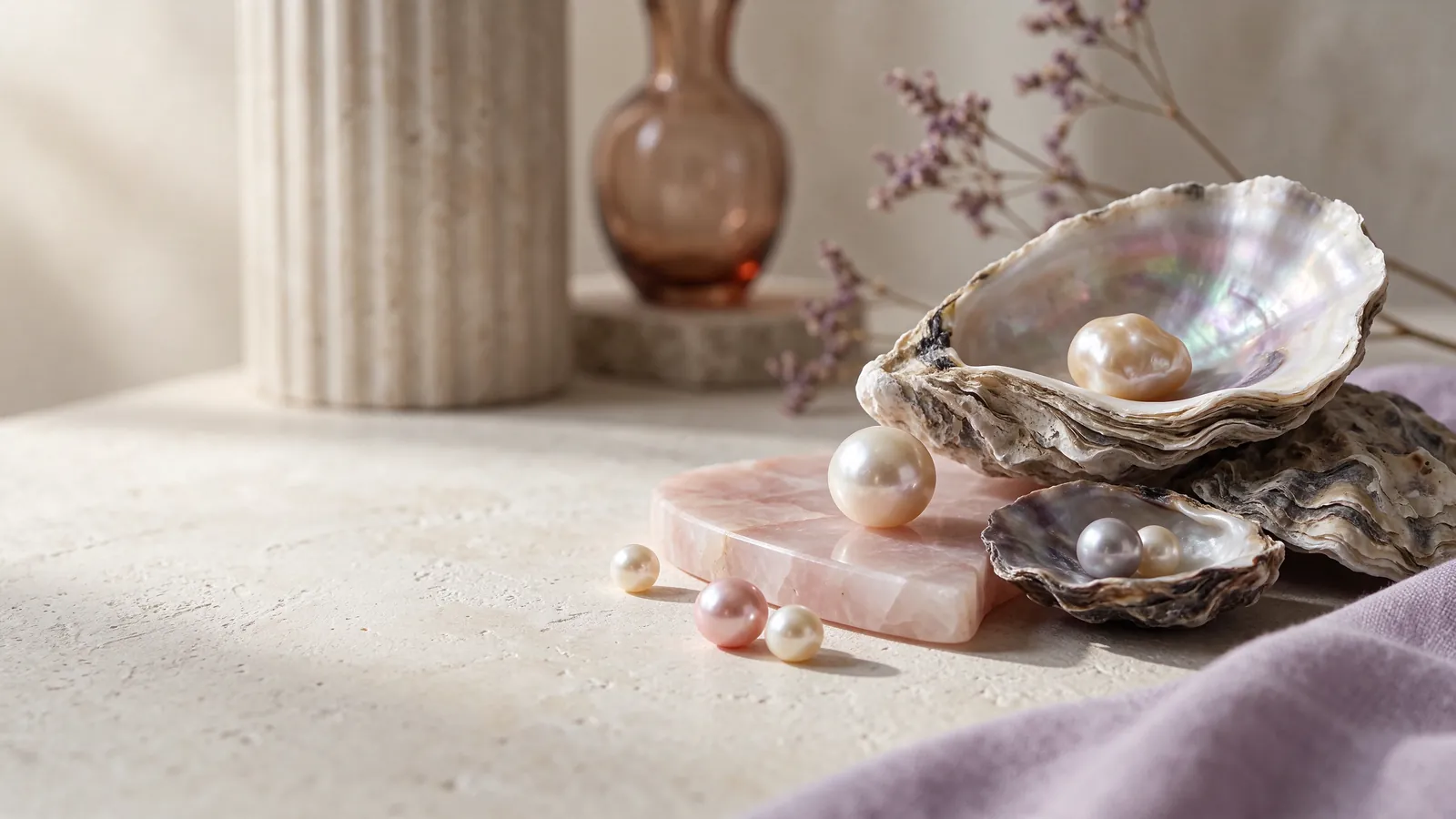
How growing environments differ: an Akoya South Sea Tahitian freshwater comparison in our pearl types guide to types of cultured pearls
Marine and freshwater environments provide a helpful first distinction. Akoya, South Sea and Tahitian are major saltwater cultured pearl types; freshwater pearls are cultivated in bodies of freshwater such as rivers, lakes and ponds. The water category does not decide which pearl is best for you. A white pearl can come from more than one type, and examples within a type vary in luster, surface and shape.
A cultured pearl grows after human intervention starts the process, followed by care of the mollusk. A natural pearl forms without that intervention. The comparison of natural vs cultured pearls explains why cultured is not another word for imitation. Neither a round shape nor an attractive natural color proves natural formation. When that distinction is important, an identification description for the individual pearl is more meaningful than a visual guess.
What color cannot tell you: an Akoya South Sea Tahitian freshwater comparison within our pearl types guide to types of cultured pearls
Look separately at bodycolor, the main color; overtone, a secondary hue over it; and orient, an iridescent effect. Some pearls do not show all three. White is not proof of Japanese origin, just as darkness is not sufficient evidence of Tahitian identity. Japanese pearls vs Akoya pearls separates a place description from a type name, helping you read both without treating them as interchangeable.
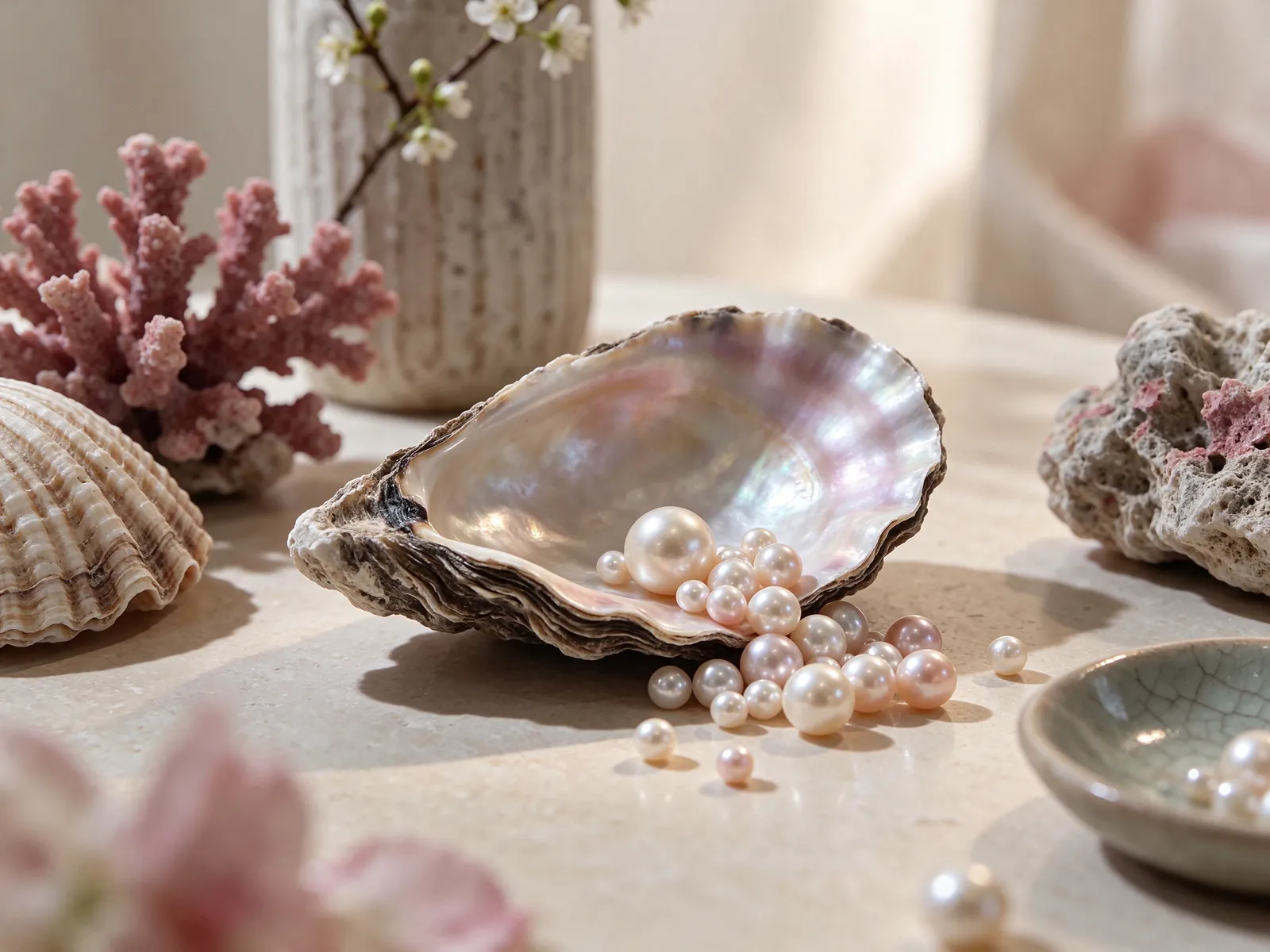
Akoya: a classic appearance still needs individual comparison
White and cream Akoya pearls are associated with the familiar classic strand. GIA identifies Japan and China as producers, so the name alone should not be treated as a country label. High-quality examples can have sharp reflections, but not every Akoya has the same luster. The explanation of what are Akoya pearls establishes the type; inspection of the actual pearls tells you about their appearance.
For a tailored shirt, consider a strand whose outline remains visible above or within the neckline rather than being covered by fabric. A single-pearl pendant can offer a quieter approach with a relaxed sweater. With earrings, hold the pair near your face to assess balance. Slight differences in overtone or reflection may matter more when worn together than when the pearls are viewed separately.
Decide which white works with your wardrobe
A cream bodycolor can feel different from a white pearl carrying a pink overtone. Compare your options under one light source on the same background so illumination does not create a false difference. Check the effect with the colors you wear regularly. There is no need to assume one overtone flatters everyone; color preference and reflection quality are related to different parts of the decision.
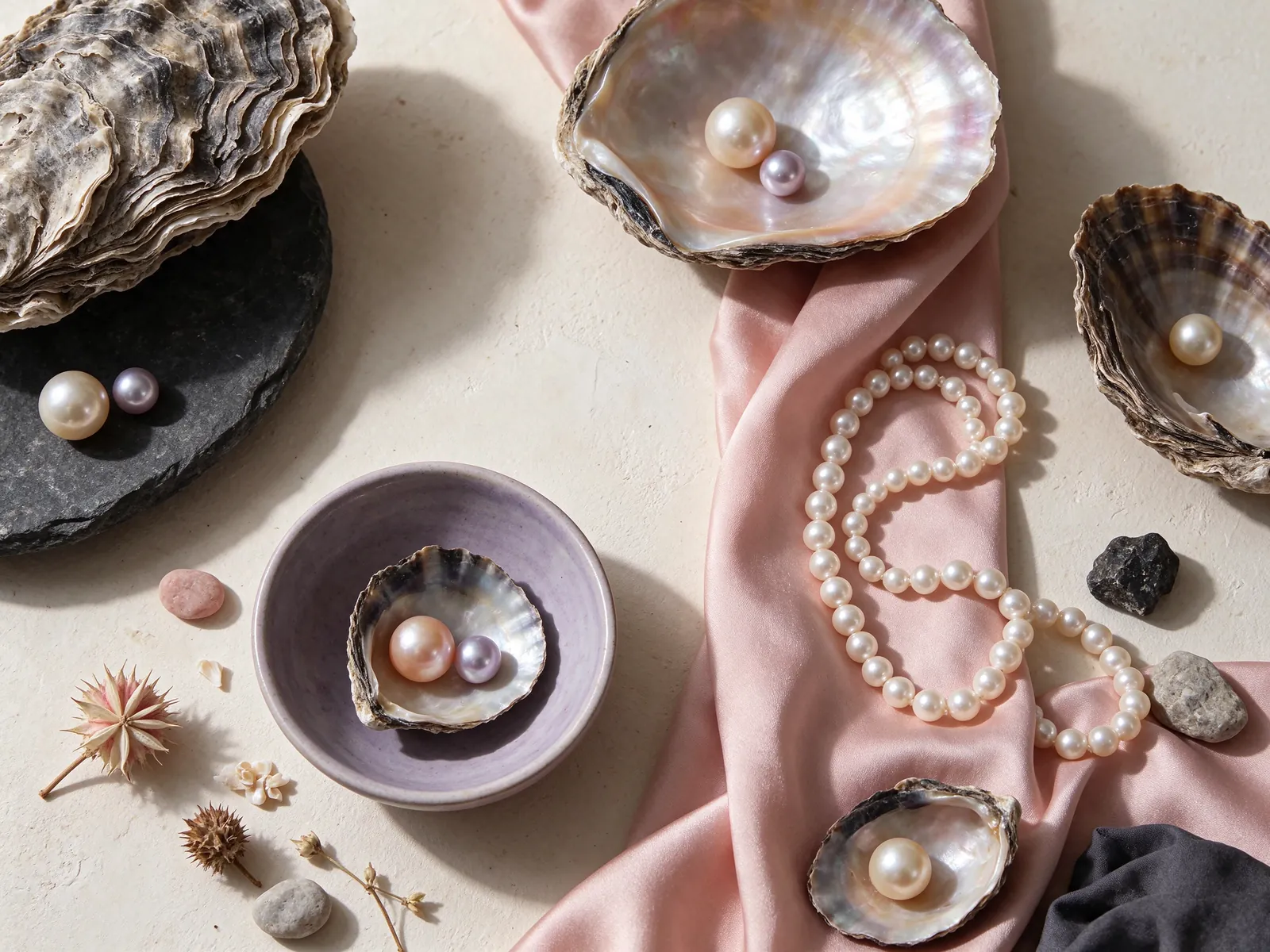
Freshwater: variety of form without assumptions about the nucleus
Freshwater cultured pearls provide a wide choice of shapes and colors, from white to pastel pink, peach and purple. China is their leading source, but an origin label is not an individual quality assessment. Reading what are freshwater pearls gives the growing context. For your own shortlist, decide whether you want a neat rounded outline, a drop shape or an irregular pearl that supplies the design's character.
Freshwater farmers use both tissue-nucleated and bead-nucleated methods. You cannot reliably determine the method simply because a pearl looks round or large. The guide to bead-nucleated vs non-bead-nucleated freshwater pearls explains the structural distinction, which is separate from whether a pearl is an imitation. Keep comparing visible quality and the finished design rather than using nucleation as an automatic verdict.
Give an expressive outline enough space
An irregular pearl can be the central feature of an otherwise simple outfit. Plain fabric and an uncluttered neckline make its edges easier to appreciate. Check how a pendant turns and whether long hair conceals an earring's shape. In a strand, variations can be deliberate, but colors and outlines should still create a coherent arrangement instead of looking unrelated.
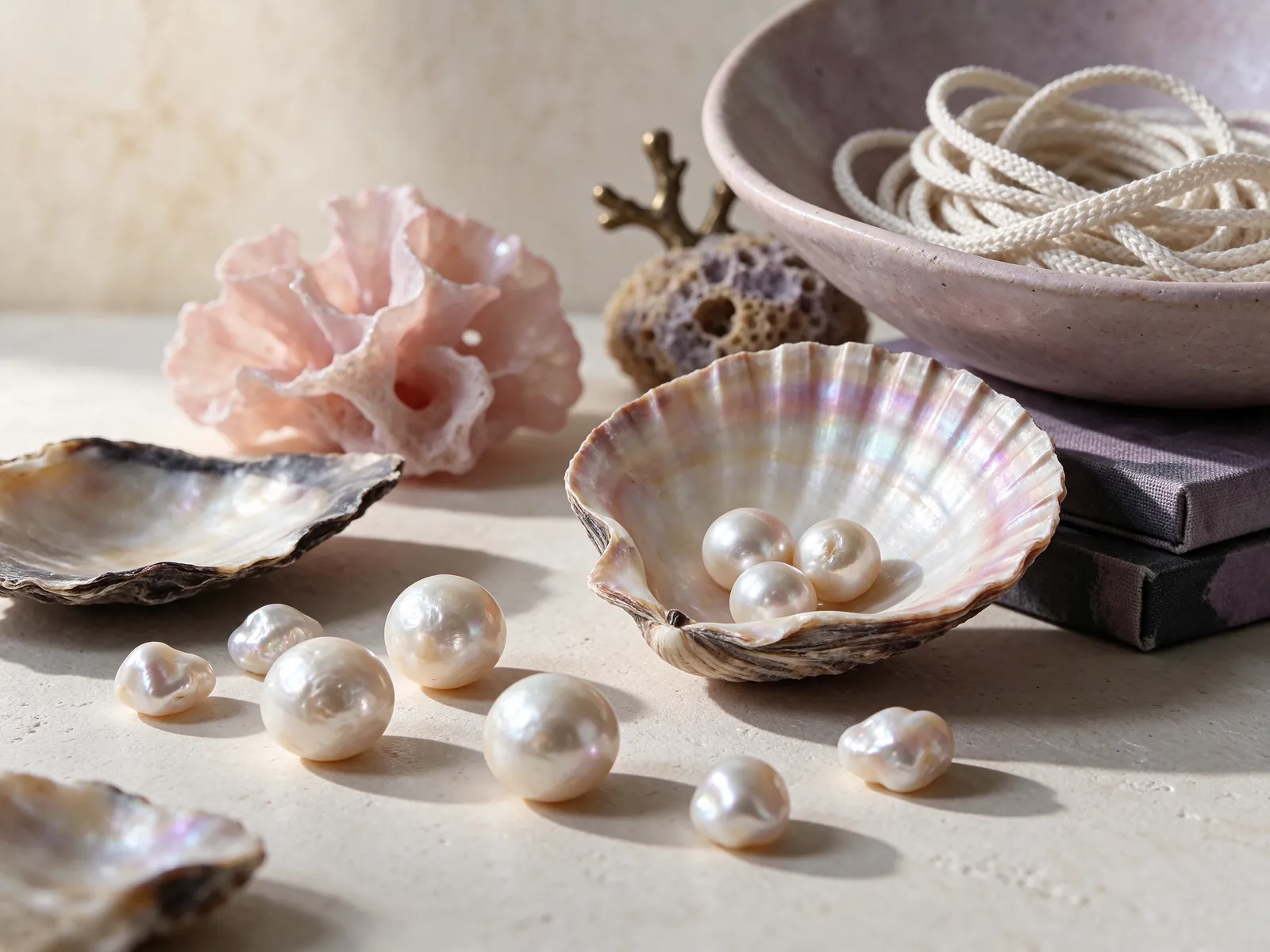
South Sea: color temperature and scale matter together
South Sea cultured pearls grow in saltwater. GIA names Australia, Indonesia and the Philippines as leading sources and describes white, silver and golden colors associated with different oyster types. Those characteristics give background, not a shortcut to identifying a pearl's exact origin. Begin by comparing cooler white-silver tones with warmer golden ones, then evaluate the quality and proportions of the individual options.
The substantial visual presence associated with South Sea pearls can suit a focal pendant or prominent earrings. It does not establish a fixed diameter for every pearl bearing the name. Read the actual dimensions and consider the entire jewelry silhouette. A busy neckline or detailed print can compete with a strand, while open space around a single pearl makes its shape and color easier to see.
Try both tones with your occasion outfit
Golden pearls can bring warmth to cream, brown or dark clothing. White-silver pearls can produce clear contrast with navy, gray or black. Either approach can work for formal dressing; the garment, lighting and scale determine the effect. When earrings are the strongest element, keeping the neckline simpler may create a more balanced result than adding another large focal point.
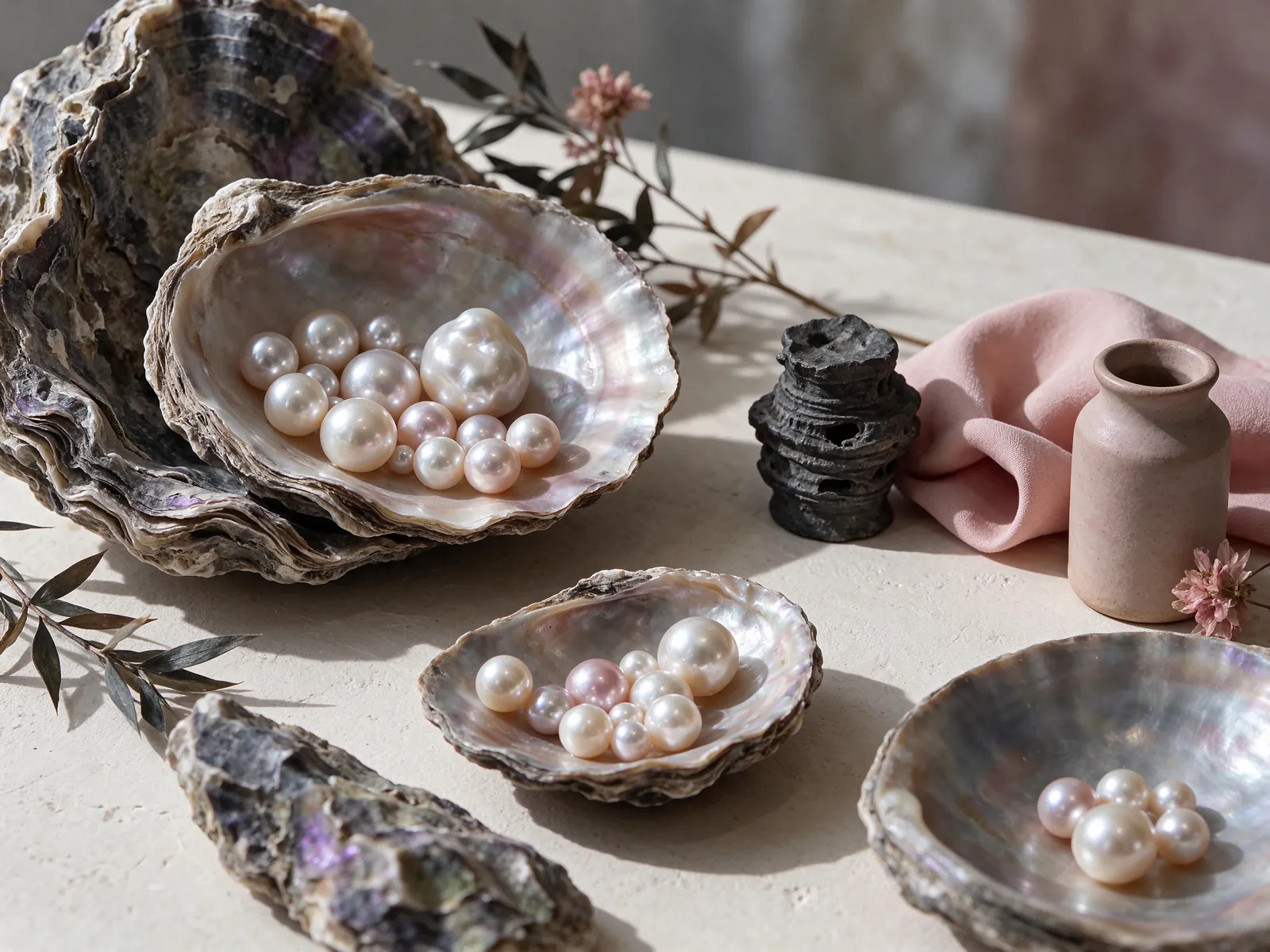
Tahitian: evaluate the full dark-color palette
Tahitian cultured pearls are grown primarily around islands in French Polynesia. The common phrase black pearl covers a broader range: bodycolors can be gray, black or brown, accompanied by blue, green, purple or pink overtones. Choose with both layers of color in mind. A striking highlight in a photograph may be angle-dependent rather than an effect that remains equally strong wherever the pearl is worn.
Against a white blouse, a dark pearl can create a defined point of contrast. Against charcoal or navy, it can look more understated. If colorful overtones are your priority, avoid surrounding the pearl with accessories that compete for attention. Compare a pair of earrings for both bodycolor and overtone; matching the first does not automatically mean that the second is equally coordinated.
Inspect more than the brightest view
Slowly turn a pearl to tell a reflection from a surface feature and to see whether its outline changes. A brilliant highlight should not distract from the rest of the surface. For a pendant, consider which areas are visible in its setting; for a strand, inspect the overall sequence. Darkness alone does not confirm an untreated state, a particular origin or an unmarked surface.
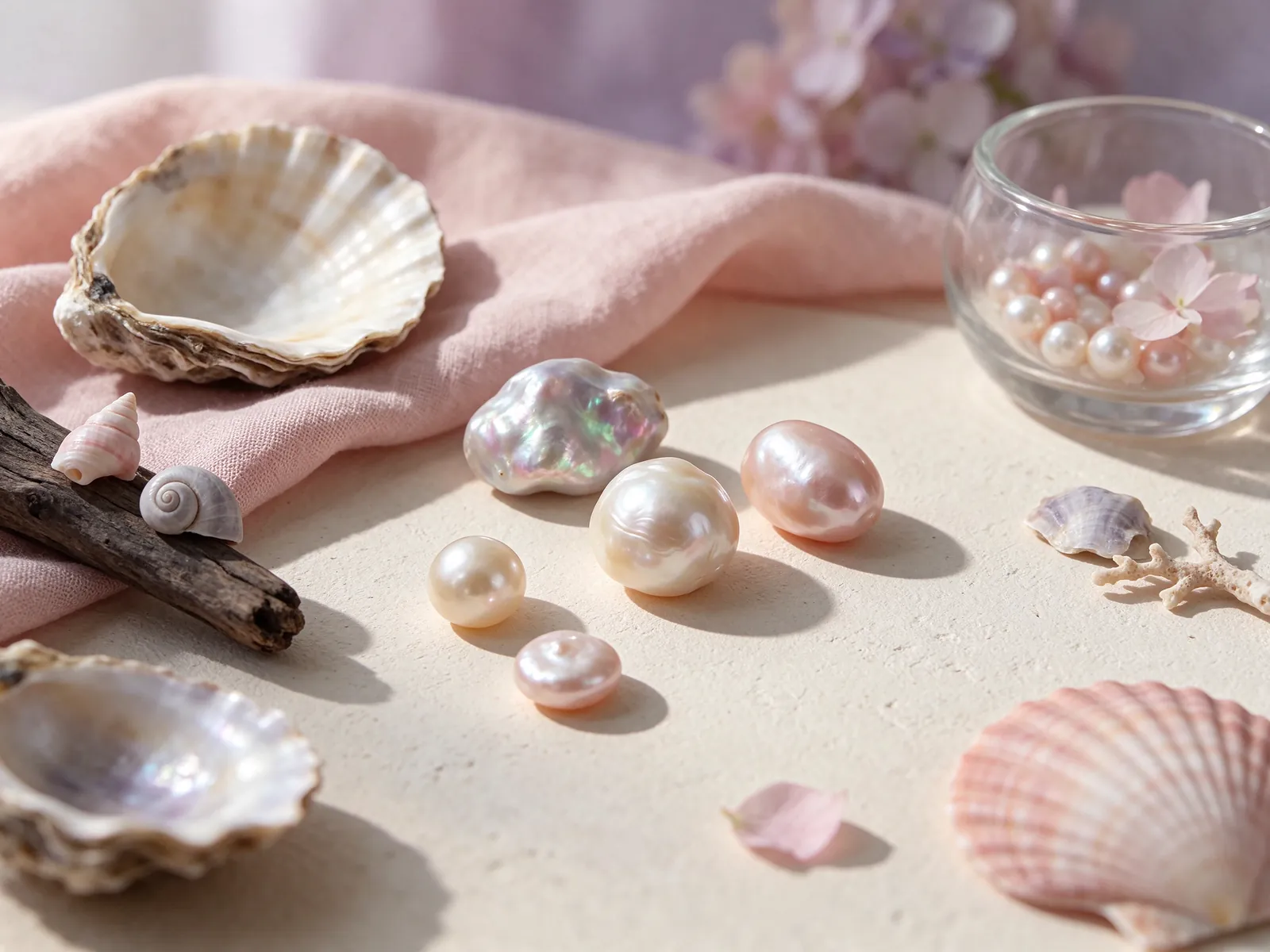
Mabé and abalone: compare structure as well as color
Mabé involves a shaped nucleus placed against the inside of a shell, where it receives a nacre coating. The finished Mabé is generally an assembled cultured blister pearl, as described by GIA, rather than a round pearl cut in half. Its raised profile is not the same starting point as a whole round cultured pearl. Side and back views of the finished piece help explain how that profile sits. Avoid ranking it as simply better or worse than a round pearl when the structure and design purpose are different.
The discussion of abalone pearls vs classic white pearls highlights vivid, shifting colors rather than the conventional white-pearl look. Someone who enjoys blue-green effects may prefer to wear such color against a simple background. An iridescent image, however, does not establish whether the material is an abalone pearl or shell. Read the material name and formation description separately from your response to its appearance. GIA also distinguishes whole abalone pearls, assembled cultured shell blisters and abalone shell; the name abalone does not establish natural rather than cultured formation.
Keep type names separate from quality designations
A pearl type, an outline description and a quality designation are not equivalent categories. Hanadama is a quality-related term rather than another pearl type in this guide. Its use does not automatically mean that any piece comes with a report. For unusual shapes, prioritize how the piece faces forward, whether it stays balanced and how its details appear during movement.
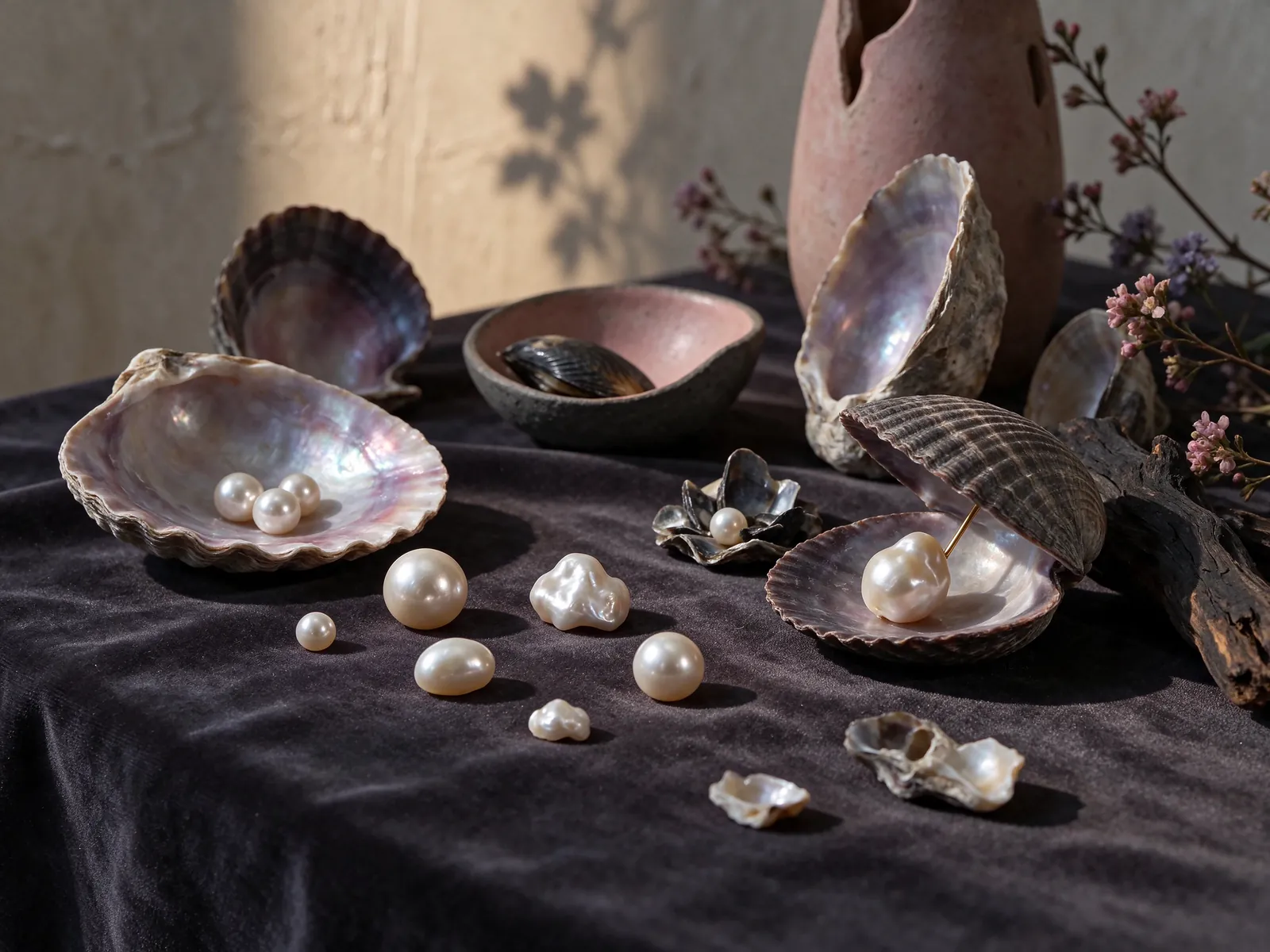
Make the final comparison with seven quality factors
GIA's seven pearl value factors are size, shape, color, luster, surface quality, nacre quality and matching. They make it possible to discuss individual pearls with a common vocabulary rather than declaring a universal winning type. Matching is particularly relevant to pairs and strands. A single pendant may place more emphasis on one pearl's shape and visible surface, depending on the intended design.
For a white-pearl shortlist, Akoya vs freshwater pearls helps clarify type differences before the final side-by-side comparison. Consider your usual neckline, preferred shapes and colors you would avoid. Explain those preferences instead of asking only for the best pearl. When choosing Pearl Jewelry, how the piece will fit into regular dressing is as useful as the type name in narrowing a decision.
Read the description, then test the visual fit
Identify the stated pearl type and read formation identity, color and origin as distinct information. Then examine whether luster appeals to you, whether the outline suits the intended use and whether multiple pearls form a balanced set. A quality description does not answer every question about identity. Combining clear information with a realistic view of the jewelry helps keep the choice both informed and personal.
Ready to make the comparison more personal? Contact Flint Jewelry on WhatsApp +85260106207 and tell us whether you prefer earrings, a pendant or a strand, together with your favorite shapes, colors and occasions. If setting material is also part of your decision, mention your preference for 18K 750 white gold, 18K 750 yellow gold, 18K 750 rose gold, PT950 platinum or PT900 platinum. Confirm the individual piece’s pearl identity, materials and any report details from its specific information.
| Name | Growing context or structure | Visual characteristics | What to consider when wearing | What appearance does not establish |
|---|---|---|---|---|
| Akoya | Saltwater cultured type | Classic white or cream with individual luster differences | Neckline clearance and earring balance | Japanese origin or a specific quality level |
| Freshwater | Freshwater with tissue or bead nucleation | Varied forms and pastel colors | Shape as a focal point and strand rhythm | Nucleation method or natural formation |
| South Sea | Saltwater cultured type | White-silver through golden tones | Warm or cool color and overall scale | Exact origin, diameter or nacre thickness |
| Tahitian | Saltwater cultured type | Dark bodycolors with colorful overtones | Contrast, light and pair coordination | Identity or treatment status from darkness |
| Mabé | Assembled cultured blister pearl; nacre grows against the inner shell | Raised shaped profile | Side projection and back construction | A whole round pearl's internal structure |
| Abalone | A pearl name associated with abalone | Vivid color shifting with viewing angle | An uncluttered background for color | Pearl rather than shell material from an image |
Pearl knowledge and authoritative references
GIA lists seven pearl value factors: size, shape, color, luster, surface quality, nacre quality and matching. These help compare individual pearls without treating a type name as a complete quality assessment.
Read the reference for this factFrequently asked questions
Do Akoya, South Sea, Tahitian and freshwater cover every pearl name?
No. GIA describes these as four major types of cultured whole pearls. Special structures such as Mabé and pearls associated with other mollusks require additional explanations. The four-type comparison is a starting framework, not an exhaustive list.
Can a white pearl be something other than Akoya?
Yes. Freshwater and South Sea cultured pearls can also be white. Compare the actual pearl's luster, shape and color, and examine matching in a strand. A classic white appearance alone does not identify the type.
How can I judge a dark pearl's overtone before choosing?
View it under soft daylight and indoor light, against a consistent background, and turn it slowly. Separate the underlying bodycolor from the overtone. A photograph captures one lighting arrangement and should not be treated as a promise of identical color effects everywhere.
Are bead-nucleated freshwater pearls imitation pearls?
No. Bead nucleation is a cultivation method: a mollusk coats the inserted nucleus with nacre. It is separate from the question of imitation material and does not, by itself, decide the pearl's visible quality.
What should guide a pearl gift if I do not know a preferred type?
Use the recipient's existing habits as a starting point: preferred jewelry format, clothing colors and taste for neat or irregular shapes. Those details can narrow a shortlist before comparing pearl quality. A more prestigious name is not automatically a more wearable gift.
Updated: