
How does a Tahitian black pearl brooch complement a suit? Tahitian pearl brooch styling
Think of the lapel as a small composition within the full outfit. Before selecting a brooch, put on a jacket you wear regularly and note where the fold, lapel edge and pocket square divide the available space. The piece should have a clear outline without crowding those boundaries. A compact-looking motif may be easier to place than a broad one, regardless of the pearl alone. The pearl brooch guide offers a broader comparison of silhouettes and wearing considerations when you are deciding where to begin.
On a charcoal, black or navy jacket, a dark pearl may blend into the fabric until its reflections catch the light. That can be appealing if you want a subtle detail, but it is different from a high-contrast focal point. Try an ivory shirt or a simple pocket square and view the outfit from farther away. Decide whether the brooch or another accessory should lead, then simplify the elements around it.
Before pinning a Tahitian black pearl brooch: checking the Tahitian pearl brooch fastening and fabric support
Check how the pin enters the catch before attaching the piece. It should close reliably without visible looseness, and the garment must allow the pin to engage fully. After putting it on, sit down, stand up and turn your shoulders gently. If the lapel droops, the cloth bunches or the motif tips outward, reconsider the position or garment. Forcing the catch against thick fabric is not a substitute for a suitable fit.
Ask what identifies the pearl, not only what makes it look dark
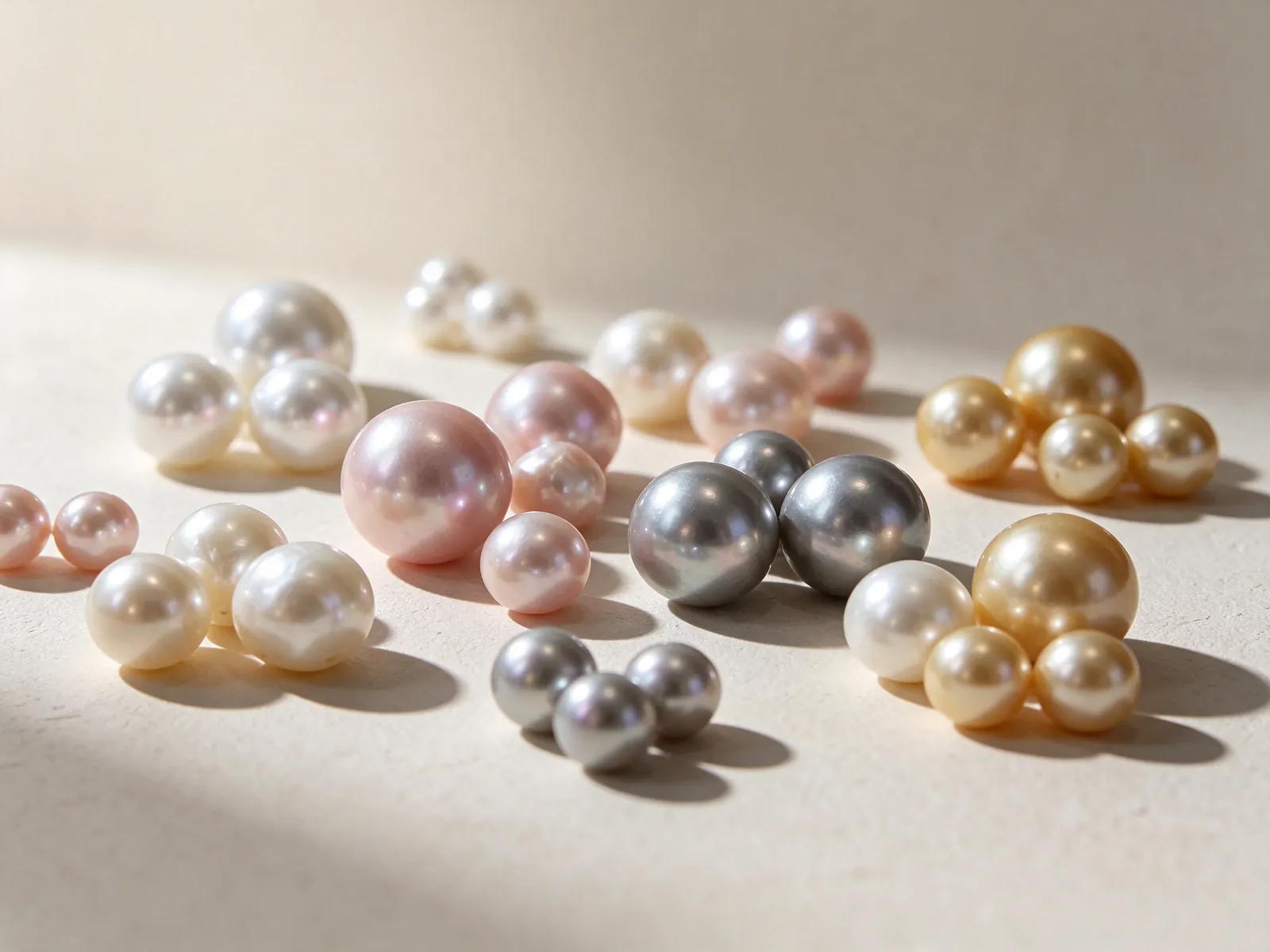
A black pearl brooch is a useful style description, but dark color is not an identification method. Shape and color alone cannot establish pearl origin, natural-versus-cultured identity or a certificate. Separate the written pearl identification from descriptive color language and from any accompanying document. If the terminology is unfamiliar, what are Tahitian pearls provides a topic introduction. Apply that background to the information for the individual piece rather than assuming every dark pearl has the same identity. GIA lists Tahitian cultured pearls among the four main types of whole cultured pearls, identifies French Polynesia as their main source and notes that they are not all black. This general background does not establish the type or origin of a pearl in an individual brooch.
GIA describes bodycolor, overtone and orient as different color components, noting that not every pearl displays all three. You can begin with straightforward observations: how light or dark the pearl appears, its overall color impression and any additional color visible in reflections. Use comparable backgrounds and lighting when looking at different pieces. This keeps a preference for a particular reflection from being confused with a conclusion about origin or treatment.
Use photographs to understand the design's visible relationships
A dramatic close-up can emphasize a reflection that is less noticeable in another setting. Exposure and angle also change the appearance of dark surfaces. Look for front and side views under consistent conditions, and judge the pearl together with its setting rather than in a tightly cropped image alone. A photograph is useful for studying composition, but cannot by itself confirm the full pearl identity or how the color will look with every garment.

Give luster, surface and proportions their own attention
GIA's seven pearl value factors are size, shape, color, luster, surface quality, nacre quality and matching. They offer a practical way to organize questions rather than reducing selection to one adjective. On a single-pearl brooch, consider reflection clarity, the visible surface and the pearl's relationship to the setting. A multi-pearl design also introduces pearl-to-pearl comparison. Using this framework does not imply that GIA has certified or endorsed the piece.
You may be considering an Akoya pearl brooch or a freshwater pearl brooch alongside a dark design. Compare the actual pieces instead of choosing a category first and overlooking their differences. Which outline works with your jacket? Which visible surface and reflections do you prefer at wearing distance? Does the color fit your wardrobe? Asking equivalent questions of each design makes the decision more concrete than a broad ranking based only on pearl names.
Inspect the wearing face without ignoring the sides
Examine surface details closely, then step back to see whether they affect the overall impression. Turn the brooch to look beside the setting and along the sides. The face intended to point outward matters especially, but a single flattering angle is not the whole picture. Keep close inspection and ordinary wearing distance as complementary views: one explains details, while the other tells you how the piece reads as an accessory.

Choose a silhouette that follows the garment
Pearl shape does not determine the outline of the complete brooch. A rounded pearl can anchor an elongated motif, and an irregular pearl can sit in a composed, restrained setting. Follow the direction of the full design against the lapel. Vertical movement may echo the jacket's lines, while a horizontal shape needs room clear of the fold. A baroque pearl brooch is worth considering when individual curves appeal to you, provided the full silhouette also suits your clothes.
For patterned fabric, a simple outline can remain easier to read. On a plain jacket, a more distinctive motif has less visual competition. Consider orientation as well as symbolism: a design that points one way may appear balanced on one lapel and awkward on the other. Its pin position and center of gravity also influence how it hangs. Choosing a favorite motif is a starting point, not the complete wearing test.
Test the position with the accessories you actually carry
Try the jacket with your usual shoulder bag, scarf or outer layer. Make sure a strap does not press on the pearl or catch the edges, and consider the path of a seat belt when planning placement. An attractive position that receives repeated contact may not suit the day's activities. Move the brooch to a clearer area or use a different garment rather than relying on a placement convention.
Let metal and gemstone accents support the pearl
Metal lines can outline a dark pearl, connect it to a motif or pick up a color elsewhere in the outfit. Look at that relationship before assuming one metal color is always more flattering or more formal. Your watch, cufflinks, earrings and clothing may already suggest a useful repeated tone. Exact matching is not required. What matters is whether those elements make the brooch feel intentional rather than adding several unrelated points of attention. For a materials inquiry, you can state a preference for 18K 750 white gold, 18K 750 yellow gold, 18K 750 rose gold, PT950 platinum or PT900 platinum. Confirm the material of any individual brooch from its written details rather than inferring it from metal color.
In a pearl and diamond brooch, consider the distribution of highlights. Accents close to the pearl can frame it, while highlights throughout a larger motif increase the presence of the complete piece. Choose the effect that suits your other accessories and usual occasions. Sparkle in a photograph does not establish gemstone identity, so read the actual gemstone description separately. A dark pearl does not need a dense arrangement of accents simply to be appreciated.
Build an evening outfit by editing, not only adding
An evening jacket can give the brooch more prominence if the shirt and surrounding accessories are quiet. Before adding another reflective detail, look at the full outfit from a distance. If the lapel, wrist and neckline all compete, remove an accessory and compare again. The goal is a readable composition; more sparkle does not automatically create a stronger or more polished result.
Plan gentle care for the pearl and reliable care for the catch
GIA ranks pearl at 2.5 on the Mohs hardness scale and says pearls should never be cleaned in ultrasonic or steam cleaners. The presence of a metal pin does not override those restrictions. Wipe the pearl gently with a very soft, clean cloth after wearing. Do not scrub the junction with the setting or pull on the pearl while cleaning. If dirt remains, seek advice for the whole item instead of escalating to stronger cleaners or heat.
Avoid exposing the pearl to perfume, hair spray, acids and excessive heat. Attach the brooch after grooming, and take it off before removing the jacket. Store it apart from other jewelry, with the pearl protected from rubbing and the pin point positioned away from neighboring pieces. Removing it also helps prevent accidental inclusion in garment cleaning. Before the next wear, check that the catch still closes and the pin remains aligned.
Treat a changed fastening as a reason to pause wearing
If the pin becomes visibly bent or the catch fails to stay closed, stop wearing the piece and consult a suitable jewelry professional. Do not attempt to straighten the pin with household tools or glue the fastening in place. Explain whether the problem concerns closure, rotation or a visible change in the metal. These mechanical observations are separate from pearl cleaning and help describe the practical issue clearly.

Turn preferences into a repeatable buying checklist
Write down the jacket you expect to use, its fabric structure, main color and available lapel space. Then identify your leading preferences, such as clear reflections, a restrained motif or an individual pearl outline. Bring those priorities into every comparison. This makes it easier to reject a visually appealing piece that does not fit your garment or wearing routine, rather than discovering the mismatch only after choosing it.
For a gift, consider whether the recipient uses pin-style accessories and what kind of garments they favor. Soft knitwear presents different support questions from structured tailoring. Ask about preferred placement and everyday bag use if you can. A gift becomes personal through a meaningful design and a practical fit with the recipient's life, not through unsubstantiated promises about luck, health or other benefits.
Keep written details separate from your visual impressions
Save the stated pearl identification, dimensions, overall measurements, fastening description, materials and care instructions. If a document is included, understand whether it refers to the pearl, another gemstone or the complete item. Your impression of color or elegance is valuable, but it is not the same as those written details. Keeping both helps you make informed comparisons and explain what worked when selecting a future accessory. To discuss your selection questions about dark pearl appearance, lapel proportions or wearing habits, contact Flint Jewelry on WhatsApp +85260106207.
| Selection point | Observation | Garment fit | Decision | Useful question |
|---|---|---|---|---|
| Color impression | Use comparable lighting and backgrounds | Check visibility against the jacket | Subtle blending or clear contrast | Will the pearl stand out as much as you want? |
| Luster and visible surface | Combine close and wearing-distance views | Assess the outward-facing composition | Detail preference versus overall effect | Does the piece still appeal when you step back? |
| Design direction | Follow the complete outline | Keep it within clear lapel space | Motif expression versus proportion | Does the design face naturally on your chosen side? |
| Pin and catch | Check alignment, closure and movement | Look for sagging or gathered cloth | Placement versus fabric support | Can the catch close without forcing the fabric? |
| Accessory coordination | Compare the whole outfit | Leave a readable focal point | More highlights or greater restraint | Which accessory should lead the outfit? |
Pearl knowledge and authoritative references
GIA describes seven pearl value factors: size, shape, color, luster, surface quality, nacre quality and matching. The framework helps organize comparisons of pearls used in brooches.
Read the reference for this factFrequently asked questions
Can I wear a Tahitian pearl brooch on a soft knit cardigan?
Check whether the knit can support the piece without pulling and whether you are comfortable with a pin passing through it. The answer depends on the garment and actual fastening, not on the pearl name. If the knit distorts, choose a more structured layer or a different placement.
How can I stop the brooch from tipping forward?
First check that the pin and catch are aligned and securely closed. Then assess fabric support and placement while wearing the garment. A different position or jacket may help if the fabric droops. If the mechanism is damaged or loose, stop wearing it and seek professional assessment.
Does a green reflection prove that a black pearl is Tahitian?
No. Visible color alone cannot establish pearl origin, natural-versus-cultured identity or treatment status. Lighting and viewing angle also affect reflections. Use the written information for the individual piece and any relevant document to understand its identification.
Is a larger pearl automatically better for a wide lapel?
Not necessarily. The overall motif, metal outline and available space matter alongside pearl size. A broad lapel may accommodate a larger composition, but it still needs clear boundaries and suitable fabric support. Compare the complete brooch on the actual jacket.
Can the metal back be steam-cleaned while the pearl stays attached?
GIA advises that pearls should never be cleaned with steam or ultrasonic cleaners. Do not treat the complete brooch as a metal-only item while the pearl remains attached. Ask for care appropriate to all its components and use gentle routine wiping for the pearl.
Updated: