

Gentle everyday wiping with the best cloth for cleaning pearls: can I use a glasses cloth on pearls, and can I wipe pearls with tissues?
Look at what the cloth will put in contact with your pearls, not simply the words on its packaging. A clean, very soft microfiber cloth without added cleaning treatments is a practical choice for gentle after-wear wiping. Unfold it to inspect the working area and creases for grit, and keep hard seams or tags from dragging across the pearl. If it has been used on another item, find out what it has touched before bringing it to jewelry care. The aim is to lift surface residue such as sweat and skin oil, not to grind or polish the pearl. For the full routine, how to clean pearls distinguishes daily wiping from decisions about a stain.
According to GIA, pearl has a Mohs hardness of 2.5, and routine care calls for a very soft, clean cloth after wearing. That number is a useful reason to pay attention to contact materials, not a calculation of safe pressure. Everyday wiping aims to remove surface traces gently. It should not be described as sanding, restoring luster or changing the pearl's natural-looking surface features. Even a silky fabric needs inspection before it touches the jewelry.
Check for added treatments before choosing the best cloth for cleaning pearls: can I use a glasses cloth on pearls, and can I wipe pearls with tissues?
Check softness, cleanliness and treatment status independently. Smooth fabric can hold particles, while a cloth with no visible mark can still carry lens cleaner. Read the use and washing directions, especially when a product mentions metal polishing or stain removal. Unclear pearl-use directions are not an invitation to test a treated cloth on a small area. An ordinary untreated soft cloth in a known clean condition is the simpler starting point for routine wiping.

Check the glasses cloth, not just the glasses case
WSP's care article names the microfiber cloth that comes with glasses as an everyday wiping example. Before using your own, check that it is clean, soft and free from added cleaning treatments. A glasses case cannot establish those conditions. Lens spray, sunscreen or hand cream may be on fabric that still looks clean. Its contact history matters alongside the original product information. Keeping a separate plain cloth for pearls makes it easier to avoid guessing what was last wiped with it, particularly when several people share eyewear-cleaning supplies.
Open the cloth fully under good light and check the area you plan to use. Grit can sit inside a fold, while a stiff edge or tag can touch the jewelry during an otherwise gentle motion. A higher price, thicker fabric or attractive color does not answer those questions. When buying a replacement, prioritize a clearly described untreated cloth with a soft working area that you can keep clean and separate from other cleaning supplies.
A dedicated cloth makes everyday care easier to track
Reserve a plain cloth for pearls and put it in a clean pouch after use. Keep it away from loose keys, makeup tools and spray bottles. The pearl care cloth topic explains why a plain wiping cloth and a specialist polishing product are different choices. Separating them also avoids guessing which product someone else in the household last used.
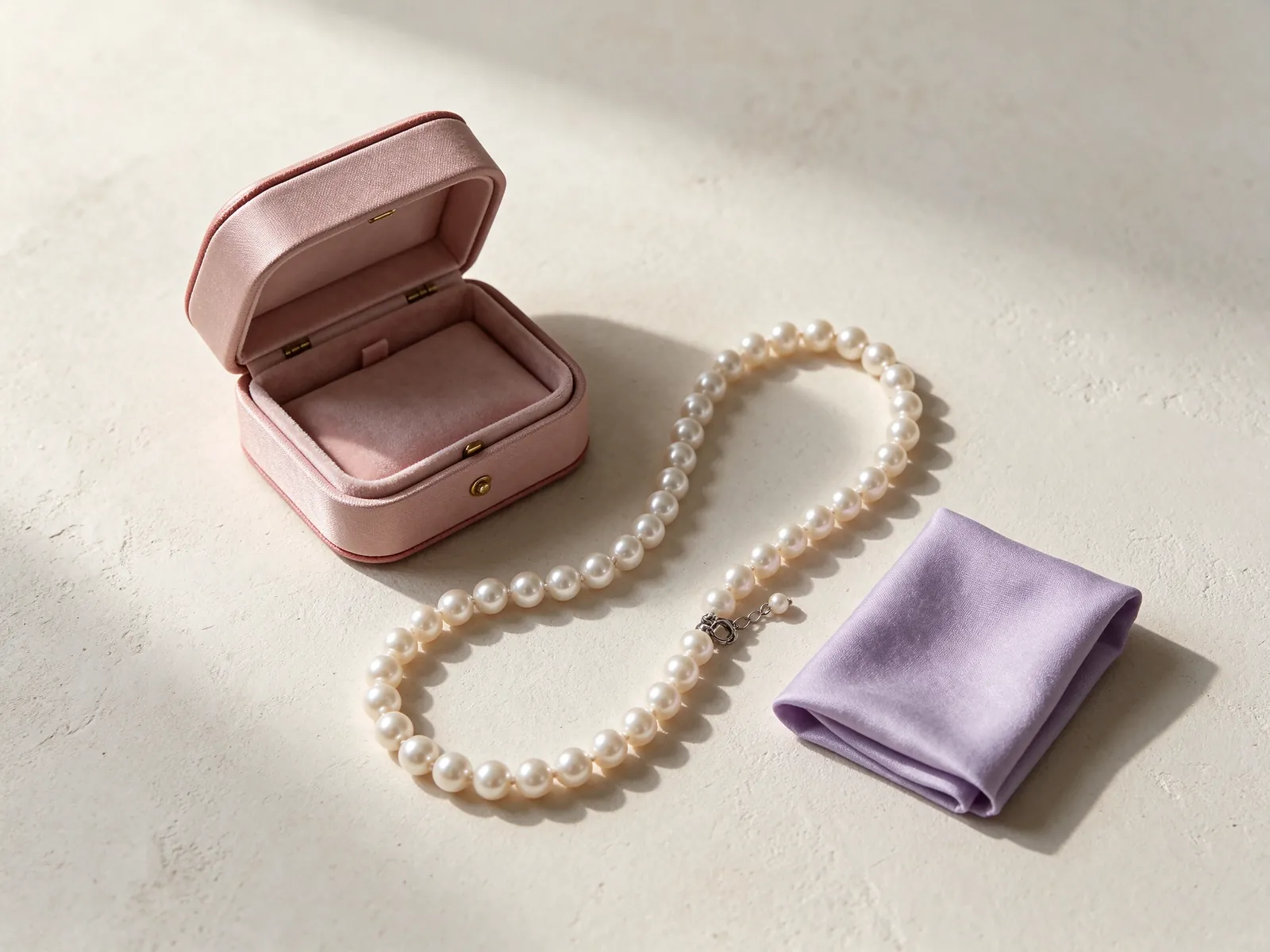
Skip tissues, even when they are labeled extra soft
WSP says tissues can scratch nacre and points out that lotion in moisturizing tissues leaves residue. These are reasons to skip them, not a prediction that every accidental contact causes visible damage. A paper product labeled extra soft or comfortable for skin is not thereby suitable for pearl care. Fragrance and moisturizing additives bring unnecessary substances to the surface. Do not make tissue an initial rubbing step and assume that finishing with microfiber removes the concern. Use a suitable clean cloth from the start for ordinary after-wear care.
If you lack a suitable cloth at a wedding or at your desk, carefully remove the piece and prevent more contact with cosmetics or dirty surfaces. Normal wearing traces can be handled once you have appropriate supplies. A fresh fruit-juice or sauce spill is different: do not leave it on the pearl for an extended period while waiting to go home. Arrange gentle attention promptly with the entire piece in mind, and ask for advice if its care requirements are unclear. The guide to how to remove stains from pearls addresses that situation. Planning around can sweat and perfume damage pearls can reduce the temptation to improvise later.
Build a simple travel routine instead of improvising
Pack the cloth separately from the jewelry and provide a protected place to put the piece after removal. A tissue used for makeup is not a storage wrap, and a cosmetic wipe is not equivalent to an untreated cloth. If your travel cloth picks up dirt, choose a clean replacement rather than assuming that another fold is uncontaminated.
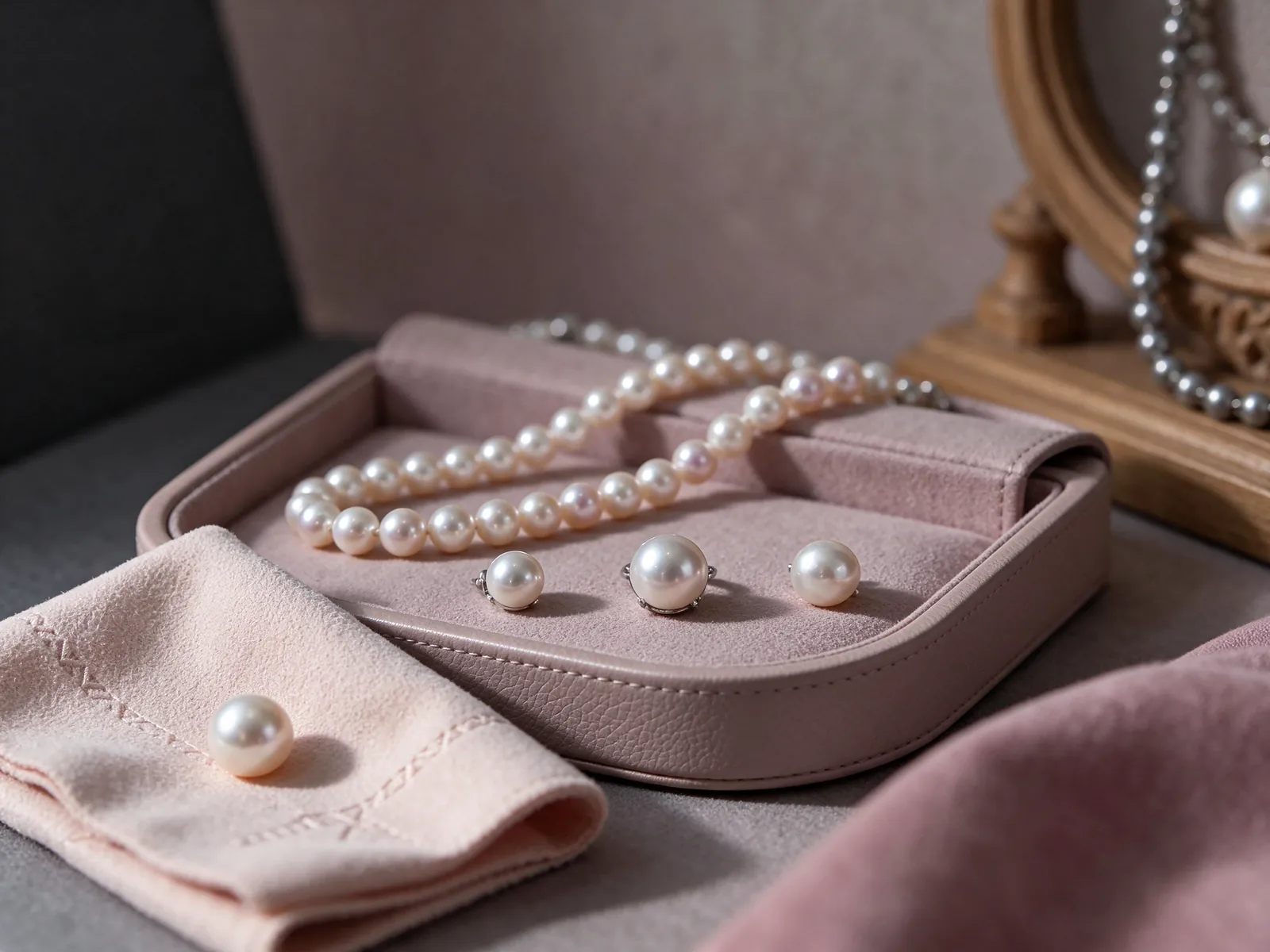
Specialty polishing cloths need their own directions
Plain untreated fabric and a specialty treated cloth are not equivalent simply because both feel soft. A treated product may contain a cleaner or abrasive ingredient. For example, WSP's official care page describes Pearl Refresh Cloth as fabric impregnated with an abrasive. Do not use that description to treat it as an ordinary glasses cloth for unrestricted daily wiping, or transfer the brand's product claims and intervals to another cloth. Check the exact product, the intended contact side and all pearl-use restrictions. A name containing pearl or luster is not sufficient guidance.
The Pearl Science Lab Pearl Luster Cloth comparison can help you decide what to read on a specialty product. It does not make similar-looking cloths interchangeable. Follow the directions for the item in your hand, and consider more than the pearl surface: string, adhesive joints and settings may require different care. A pearl-use statement does not automatically cover each of those parts. If you also need to deal with fittings, how to clean pearl clasps and earring posts helps separate that task so a metal-cleaning product is not carried back onto the pearls.
Keep the instructions and avoid homemade treatments
Do not assume laundering makes a treated cloth into an untreated one. Washing, reuse and storage should follow that product's directions. Likewise, adding an unknown jewelry cleaner to a plain cloth does not create a suitable pearl-care product. Keeping the original instructions with a specialty cloth makes later decisions more straightforward than remembering its color.
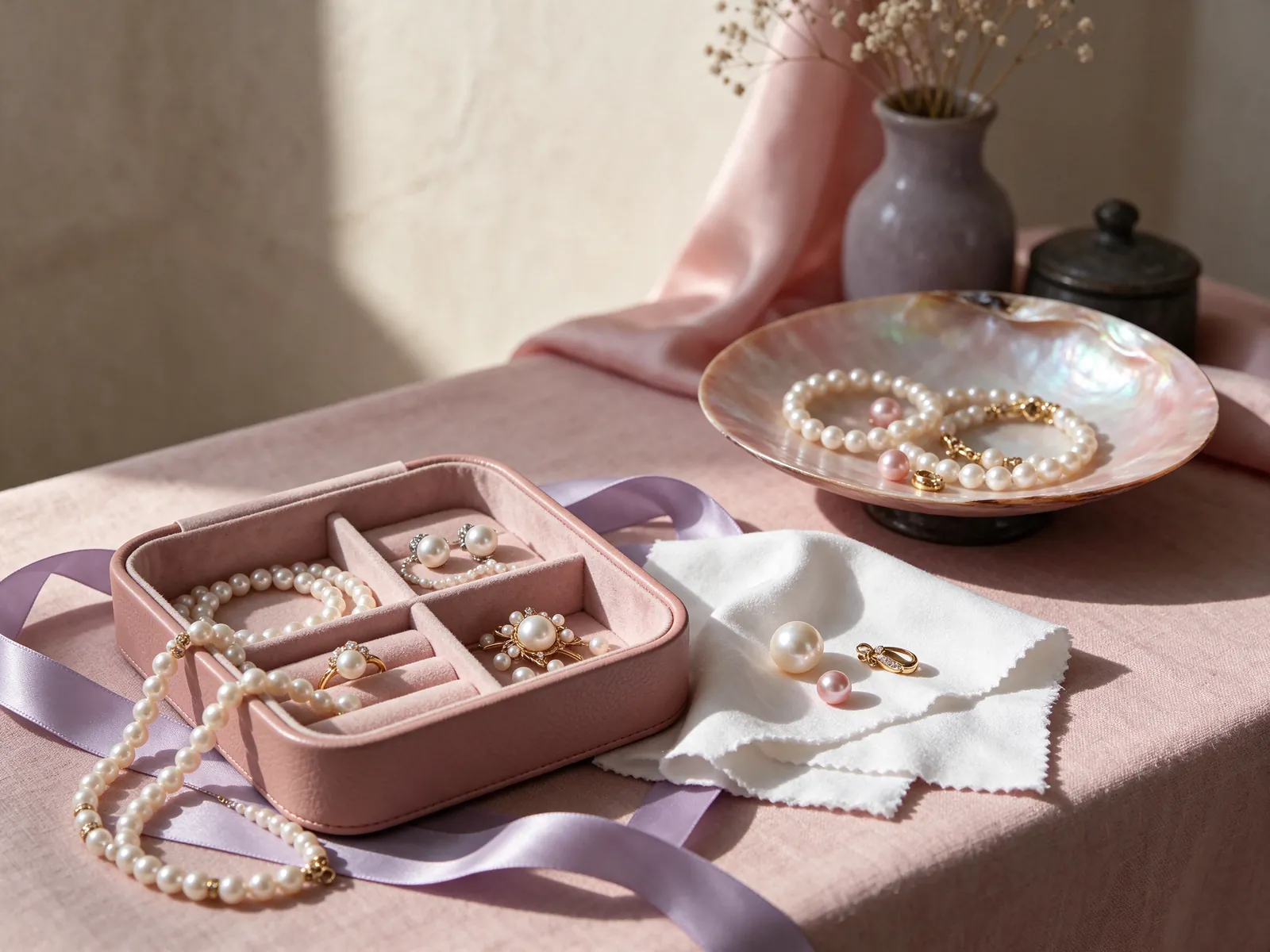
Wipe with support, not tension on the fittings
Place the jewelry in a clean, stable area and support the whole piece while the cloth moves gently over a pearl. Do not twist an earring by its post or rub a pendant while it hangs from a delicate chain. For a strand, support manageable sections instead of stretching the string and pulling the beads firmly through folded fabric. Notice any clasp or setting that catches the cloth, and keep the working area separate from fabric already used on metal. If a connection looks loose, stop rather than trying to bend it into place as part of cleaning.
When a dry wipe leaves a deposit, pause rather than press harder. If the complete piece's care directions permit damp wiping, consider a soft cloth lightly moistened with plain water and well wrung out for gentle local attention, then use a clean dry soft cloth to remove moisture. Keep water from dripping into thread or adhesive joints. If the assembly or condition is uncertain, ask before proceeding. This does not authorize soaking or rinsing the entire piece. GIA says a string cleaned with water must dry fully before wearing. Reading can you shower with pearls helps distinguish a controlled care step from prolonged water exposure while wearing jewelry.
Do not try to polish away an unexplained surface change
Roughness, flaking, cracks or a newly visible patch may not be ordinary dirt. Stop rubbing, inspect in consistent lighting and note where the change appears before asking for advice about the piece. A cloth cannot identify damage or assess a loose connection. GIA rules out ultrasonic and steam cleaners for pearls, so those are not backup methods when wiping fails.
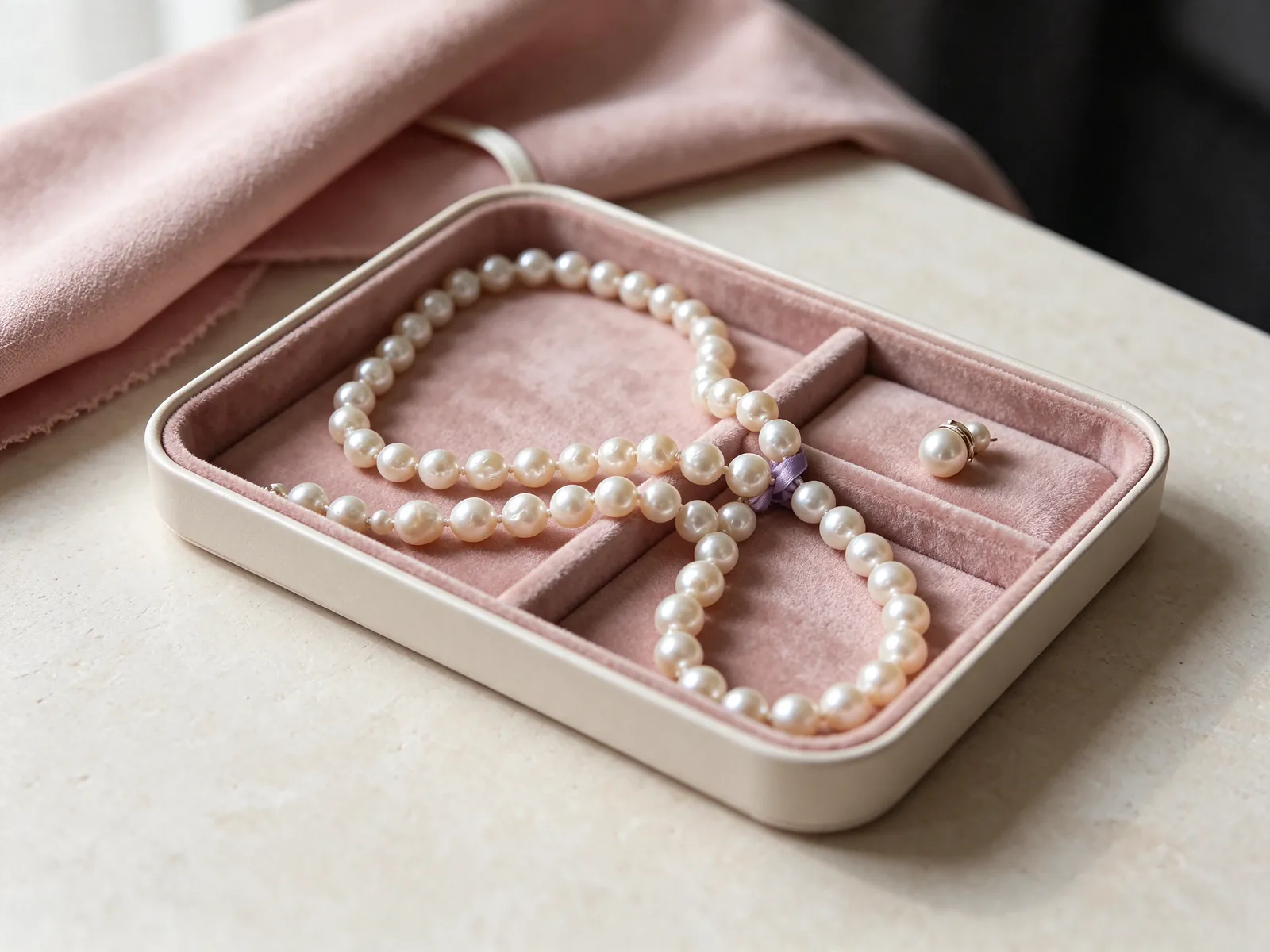
Care for the fabric as carefully as you choose it
For a plain untreated cloth, follow its fabric directions if washing is allowed. Do not add scent, fabric softener or cleaning sprays merely to make it feel fresher; they can introduce new residue. Inspect the washed contact area for particles or stiffness, and allow it to dry completely before storage. Directions for plain fabric do not establish how to wash a specialty treated cloth. Nor does laundering prove that a treatment is gone. If damage or retained grit makes the cloth unsuitable, select another clean appropriate cloth instead of testing the old one by rubbing a pearl.
There is no universal number of days after which every cloth must be replaced. A cloth used near cosmetics or carried loose during travel has a different contact history from one kept clean at home. Check before each use rather than relying on a calendar. The pearl care guide connects this inspection to the larger routine, helping you give both the fabric and the jewelry a consistent place in daily care.
Prevent confusion between household cloths
Use separate storage positions or pouches for plain pearl cloths, treated metal-polishing cloths and lens-cleaning supplies. There is no need to add fragrance to identify them. If someone has used a cloth with a metal cleaner, do not return it directly to pearl wiping just because its texture still feels soft.
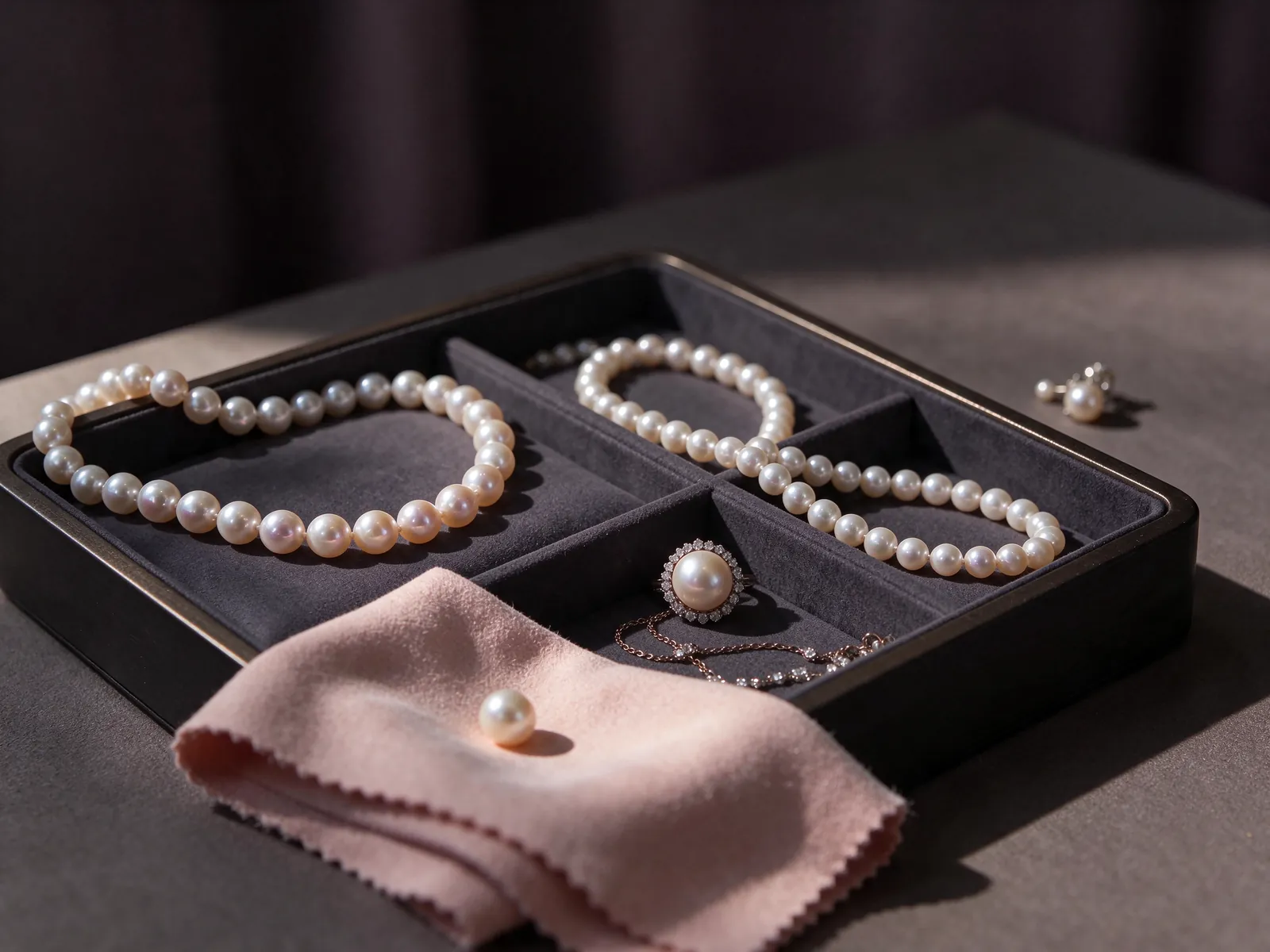
Match the routine to your outfit and finish with proper storage
Earrings near hair products, a pendant resting on the neck and pearls against a high collar meet different kinds of residue. Finish makeup and perfume before putting on the jewelry, then look at the contact areas after taking it off. For work, travel or an evening celebration, the response is still a suitable clean cloth and a light touch. Choosing a more powerful polishing product for a formal outfit does not make the routine better.
Once wiping is finished, separate pearls from hard objects and items that could snag the fittings. Do not compress a piece, keys and a used cloth into one crowded pouch. Reading how to store pearls helps plan that final step. Wrapping jewelry in soft fabric does not guarantee protection from every impact. If moisture remains in the piece or its string, address drying before storage and before the next time you wear it.
Describe the cloth and the jewelry when asking for help
For a WhatsApp inquiry to Flint Jewelry, prepare the cloth's original directions and explain any previous use with lens spray or another cleaner. If the concern is a change in the jewelry, clear pictures and its location can support an initial discussion, but photographs alone do not establish pearl identity, treatment or the cause of damage. Avoid unknown cleaners and repeated rubbing while the question remains unresolved. Cleaning or repair options depend on the complete piece and its condition; routine wiping is not a guarantee that discoloration can be reversed or a surface restored.
| Product | Check before use | Everyday decision | Practical handling |
|---|---|---|---|
| Untreated microfiber cloth | Soft, clean area with no trapped grit | An option for gentle after-wear wiping | Support the piece and avoid hard seams |
| Glasses cloth | Added treatments and previous lens-spray use | Consider only if clean, soft and untreated | Reserve a separate cloth for pearls |
| Ordinary tissue | Paper descriptions do not establish pearl suitability | Avoid as a substitute | Wait for a suitable cloth if necessary |
| Moisturizing or scented tissue | Lotion, fragrance and other additives | Avoid | Do not equate skin use with jewelry care |
| Chemically treated polishing cloth | Explicit pearl-use directions and restrictions | Not interchangeable with plain fabric | Follow its particular care and storage directions |
Pearl knowledge and authoritative references
GIA places pearl at 2.5 on the Mohs hardness scale. The relevant care choice is a very soft, clean cloth and gentle contact, not a pressure limit inferred from the number.
Read the reference for this factFrequently asked questions
Can the cloth from my sunglasses case go straight onto pearls?
Not without checking it. Clean, soft, untreated microfiber can be an option, but sunscreen, spray residue or grit may be on a cloth carried outdoors. The sunglasses case itself does not establish cleanliness or treatment status.
Does washing remove the concern about a treated cloth?
No. Do not assume a wash removes every treatment or makes the cloth equivalent to plain fabric. Follow its directions. For an untreated washable cloth, check for laundry residue, stiffness and particles before using it again.
Should I start with a tissue to absorb residue before using the cloth?
Skip the tissue stage. Use a suitable clean cloth for routine wiping. If you do not have one available, remove the piece carefully and avoid more contamination until appropriate care is possible.
What if the same pale spot remains after a gentle wipe?
Stop rather than scrub or immediately switch to a treated cloth. Inspect for roughness, cracking or flaking and ask about the particular piece. A specialty product needs explicit pearl-use instructions and cannot diagnose a surface change.
Should my travel pearl cloth be replaced on a weekly schedule?
A fixed schedule does not account for how it was used. Check its condition and contact with makeup, sprays or grit. Replace a stiff, damaged or uncertain cloth with a clean suitable one rather than trusting its age alone.
Updated: