

Using a pearl grading guide: comparing pearl quality grades and understanding pearl grades fairly
When two descriptions carry the same grade label, first ask whether they mean the same thing. WSP, for example, explains that it uses its own five-level A-to-E scale and considers the balance of luster, nacre and surface condition. Reading WSP pearl grading illustrates a seller-defined approach; it does not authorize converting those categories into someone else’s AAA. Compare the written criteria before deciding that one label represents a better choice. This third-party example does not establish a Flint Jewelry product grade, and an unexplained label is not a substitute for the qualities you want to assess.
Make the comparison concrete by listing what is known about each candidate, including the pearl type, recorded size, outline, surface description and reflected appearance. Keep differences in jewelry format in the picture. Understanding what determines pearl value helps you see why a preferred look and a quality description are related but not identical. You may favor an irregular silhouette while still wanting clear reflections and a surface presentation that suits the way the piece will be worn.
Reading reports in a pearl grading guide: pearl quality grades and understanding pearl grades with evidence
A report needs its own reading rather than being folded into a seller’s letter label. Check the issuing organization, the object described and the findings listed. With certified Hanadama pearls, the useful questions concern the document’s scope and its connection to the item. Pearl Science Laboratory (PSL) distinguishes different certificate types, including FA and FC identification documents that do not contain grades. A certificate can therefore identify a pearl without assigning a quality grade. Do not assume its name settles every quality preference or supplies a valuation, investment promise or Flint Jewelry service guarantee.

Look for reflection definition before judging photographic brightness
A bright photograph can catch your attention without giving you a fair luster comparison. Observe reflection edges and changes between light and dark areas from different angles. GIA uses Excellent, Very Good, Good, Fair and Poor to describe luster performance, not as equivalents of a seller’s AAA or AAAA labels. To explore how to judge pearl luster, use a consistent background and comparable soft lighting. This reduces the influence of display choices. One intense spotlight highlight should not stand in for the overall character of the pearl’s reflections.
Move between a close view and the distance at which someone would normally see the jewelry. The close view helps with reflection detail, while the broader view shows how the pearl reads near a face, neckline or hand. Clothing contrast can alter its apparent prominence: a light pearl may stand out more against a dark top. That is useful styling information, but it should not be mistaken for evidence that its underlying grade has changed.
Ask for comparable views rather than ranking unrelated images
Exposure, white balance and reflection placement can differ greatly between images. Where possible, ask about views of the same object from multiple angles in similar light. Treat photography as a way to explore appearance, not as a method of establishing pearl identity, origin, treatment or a certificate.
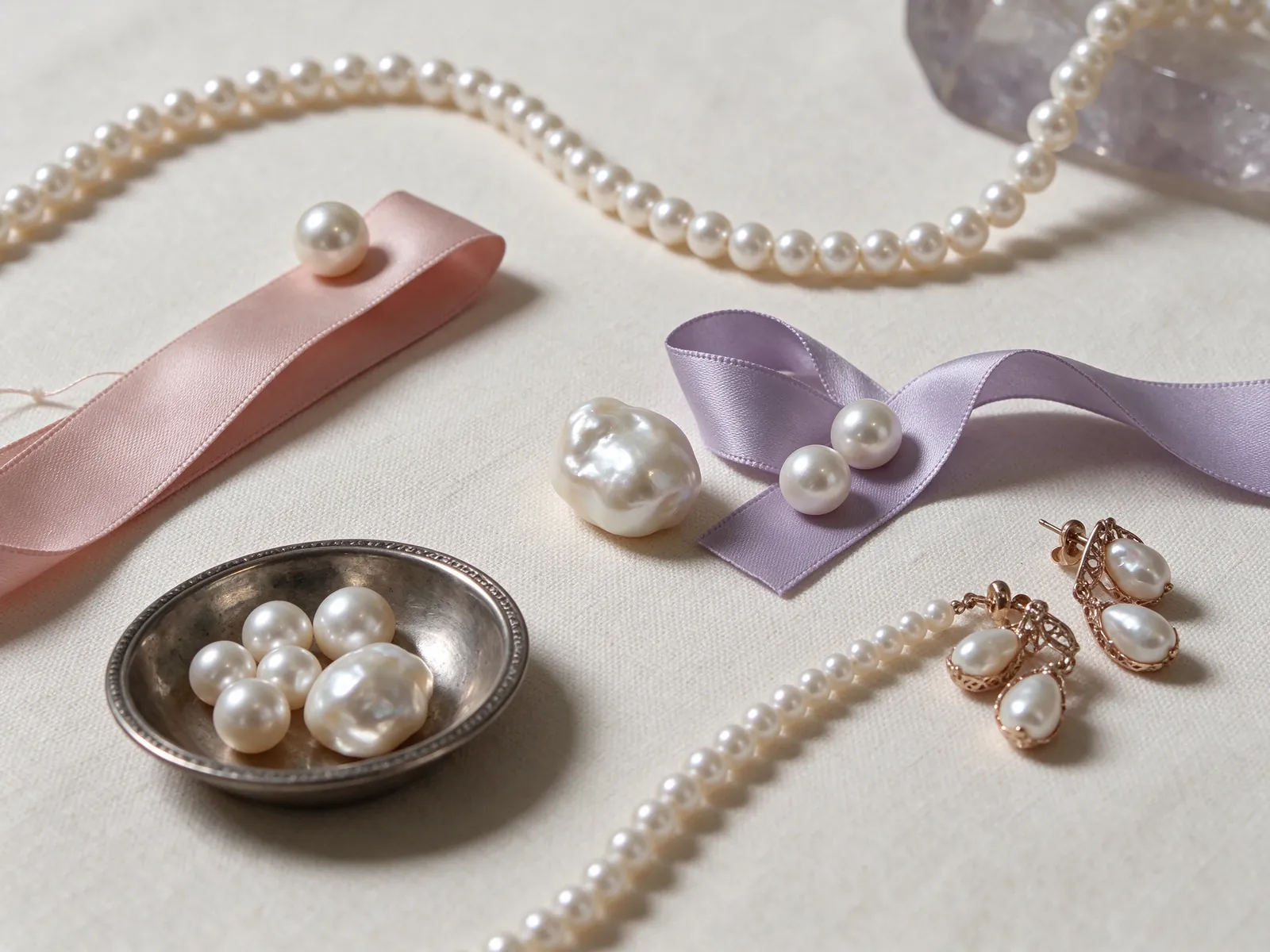
Evaluate surface features by where they will be seen
Useful surface descriptions explain more than the number of visible marks. For pearl surface quality, consider how widespread a characteristic is, where it occurs and how noticeable it appears. Start with the face presented during wear, then examine side views and areas near the setting. A setting may conceal part of the surface, but concealment is not proof that the area is featureless. Position is especially important when a design gives one side a consistently prominent role.
Some choices involve a balance between qualities rather than a winner on every point. You might compare sharply defined reflections with a localized feature against a more uniform-looking surface with gentler reflections. Decide which difference matters in your intended use. The front of an earring, the changing view of a pendant and the top view of a ring expose different areas. Cracking, peeling or damage beside a setting deserves a separate question about the whole piece’s condition. Do not assume every visible feature is simply a growth mark that can be accepted on appearance alone.
Use magnification to understand a detail, then return to the whole
An enlarged image can make a small characteristic appear dominant. Return to the normal wearing view and ask whether it remains distracting. Conversely, a small picture can conceal details without establishing a flawless surface. Use both views to understand the feature, not to jump directly from visibility to a letter grade.
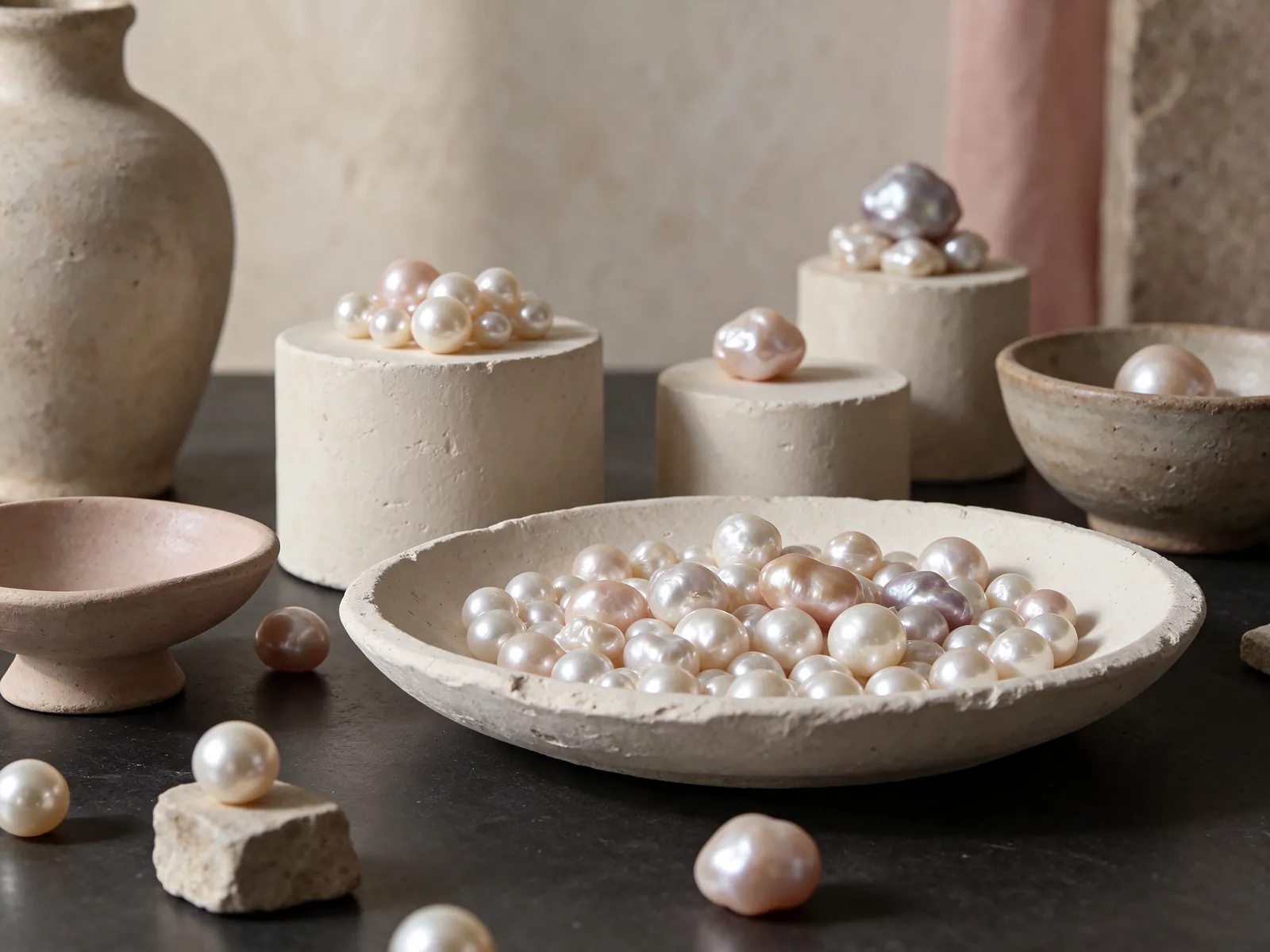
Let shape, size and color serve the look you actually want
GIA's value factors include shape, size and color, but a list of factors is not a command to choose the roundest or largest appearance. Decide whether you want a regular outline, a softer variation or a distinctly irregular focal point. Then compare how individual candidates fulfill that idea. Ranking everything by roundness can be unhelpful when the design appeal comes from an unconventional silhouette. Personal preference should be stated clearly rather than disguised as a universal quality rule.
Color descriptions can involve bodycolor, overtone and orient. All pearls have a bodycolor, but not all display the other two components. Examine the effect beside clothing and skin instead of relying only on a color name. Neither color nor shape alone establishes origin or natural-versus-cultured identity. A pearl size guide helps distinguish a single recorded diameter from a range covering a group. Use measurements for the relevant object, and keep the recording basis comparable between choices. Setting proportions and placement influence apparent scale too, so even a reliable diameter is only part of the styling decision.
Test visual scale against collars, hair and other jewelry
A pearl that looks prominent alone may sit quietly beside a detailed collar, while a simple neckline gives it more visual space. Consider whether earrings, a hairstyle or clothing patterns create competing focal points. Decide on the amount of emphasis you want before using quality descriptions to refine your choice.
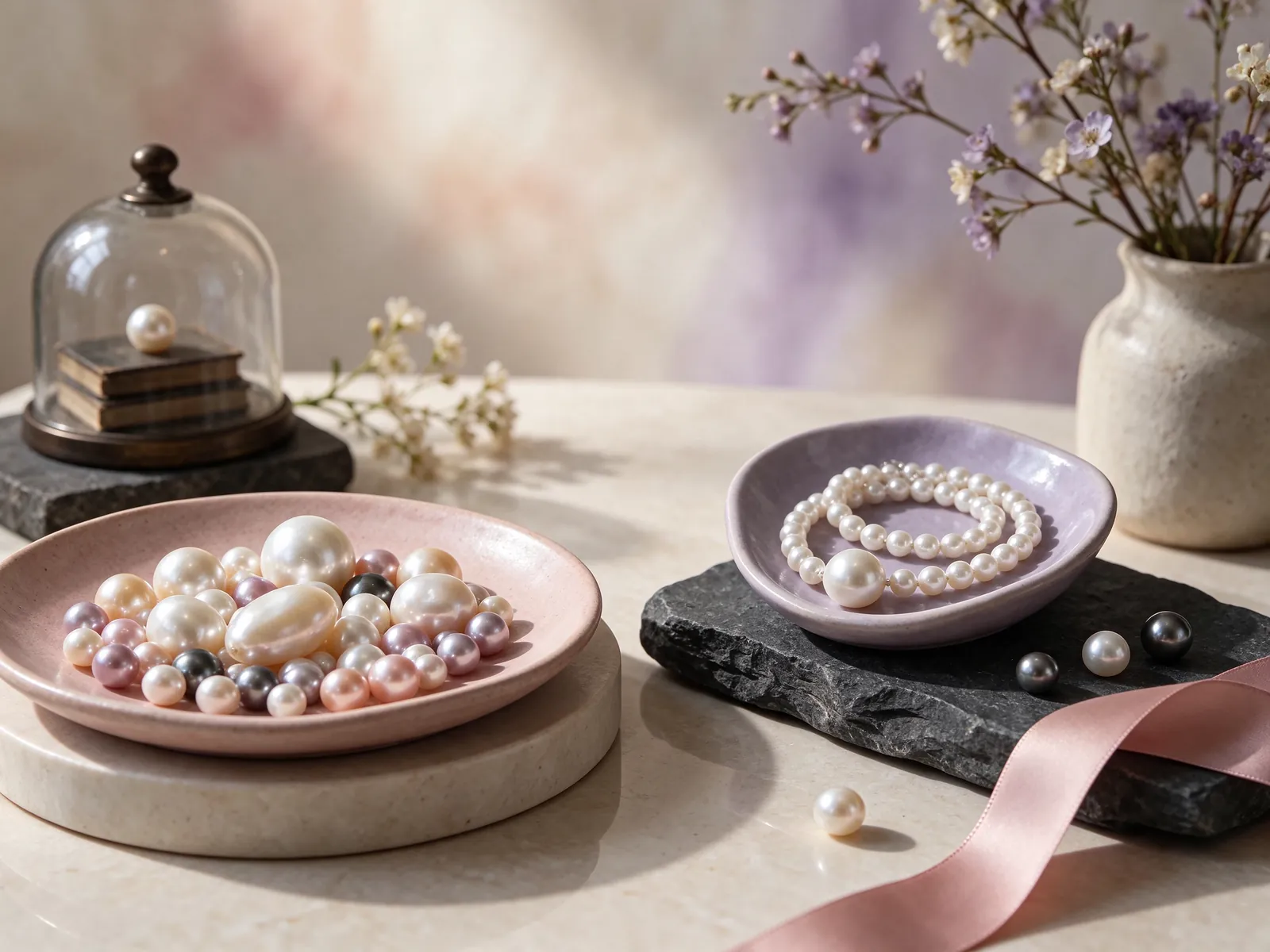
Keep nacre measurements separate from names and visual impressions
Nacre quality is relevant to luster, but visible brightness does not allow you to calculate a thickness. In discussions of pearl nacre thickness, first distinguish general educational information from a measurement recorded for a specific pearl. If a measurement is supplied, read how the object, method and result are identified. A number belonging to another specimen cannot be transferred to the item you are considering merely because the two look similar.
Keep report terminology distinct from a seller’s visual categories. PSL states that its SS certificate type is used for Aurora Hanadama and records nacre thickness measured by X-ray. If you encounter Aurora Hanadama pearls in a description, read the associated document rather than inferring thickness from the picture. PSL’s FC identification certificate is a useful contrasting example: it contains no grade, although a thickness value appears in the remarks. A recorded measurement and a quality designation answer different questions. Neither creates a cross-seller grade conversion or determines whether the shape and proportions work with your outfit.
Read the shared evidence instead of rewarding the longest document
Separate identity statements, measurements and appearance descriptions in your comparison notes. When documents cover different subjects, compare their common content and acknowledge the distinction. More pages do not automatically mean a higher visual grade, and silence about a measurement is not permission to supply one yourself.
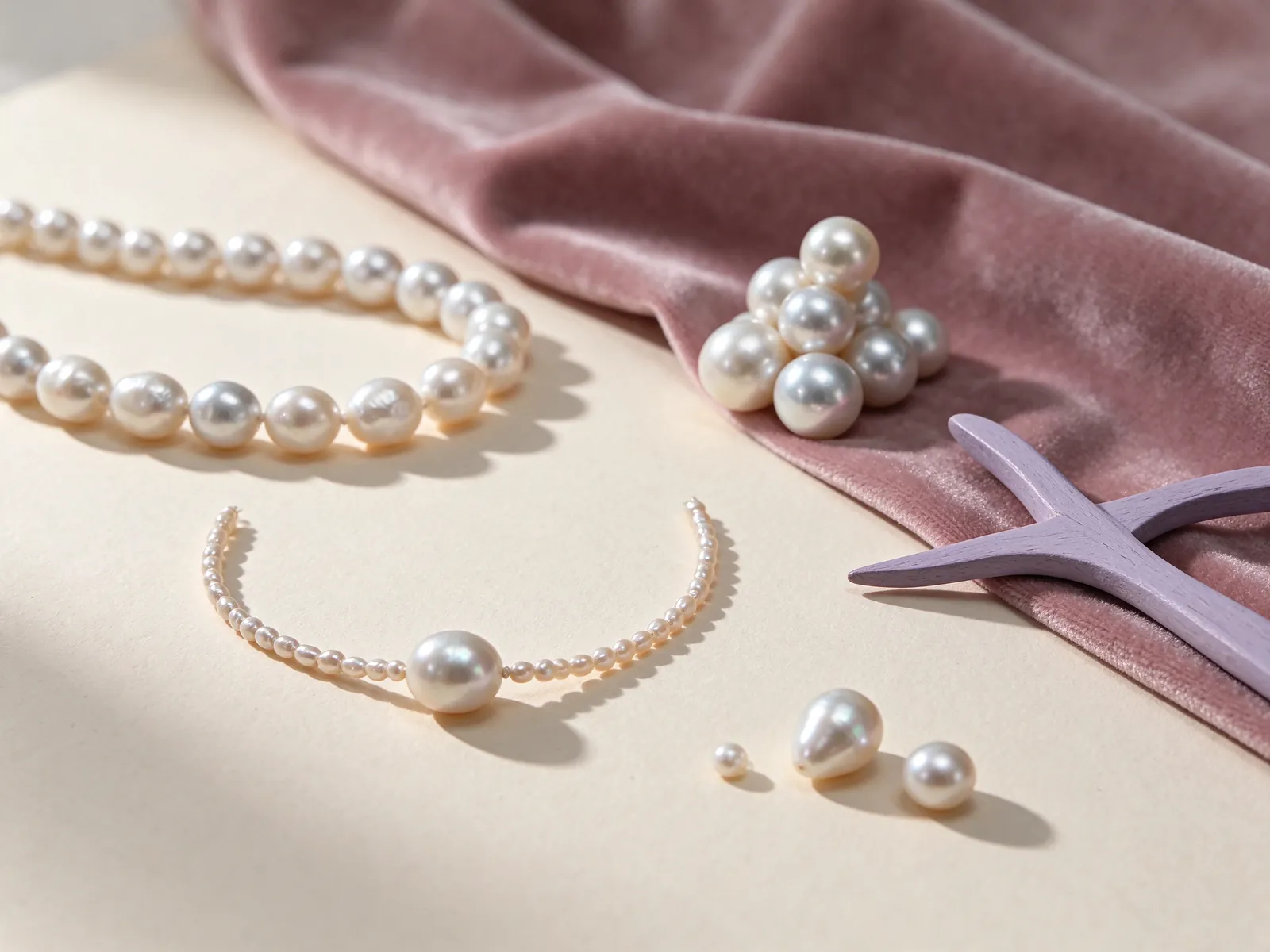
Judge matching at the pair or strand level
GIA identifies matching as one of its seven pearl value factors; this applies when jewelry contains two or more pearls. Assessing pearl matching quality asks how those pearls work together, beyond each one’s individual appeal. With earrings, compare both in one view for color, reflections, shape and visual weight, then consider side views as well. A close-up of only one earring cannot establish the pair’s balance. If contrast is intentional, ask whether it supports the design rather than assuming that every difference is a failure to match.
For a strand, observe the overall composition before examining individual differences. Look for a coherent rhythm of color and reflected light, then notice whether a particular change distracts from the intended effect. Deliberate graduation or varied shapes call for a different judgment than uniformity. The issue is whether the progression works as a design. Likewise, intentional asymmetry in earrings should be considered on its own terms rather than automatically treated as a matching failure.
A coordinated wardrobe does not require identical grade labels
When pairing a new piece with jewelry you already wear, compare visual weight and the character of reflections before deciding how closely the colors should match. A deliberate contrast can suit a simple outfit. Two pieces carrying the same grade label are not guaranteed to coordinate, because that label does not describe the entire combination.
Turn a grade question into a practical buying conversation
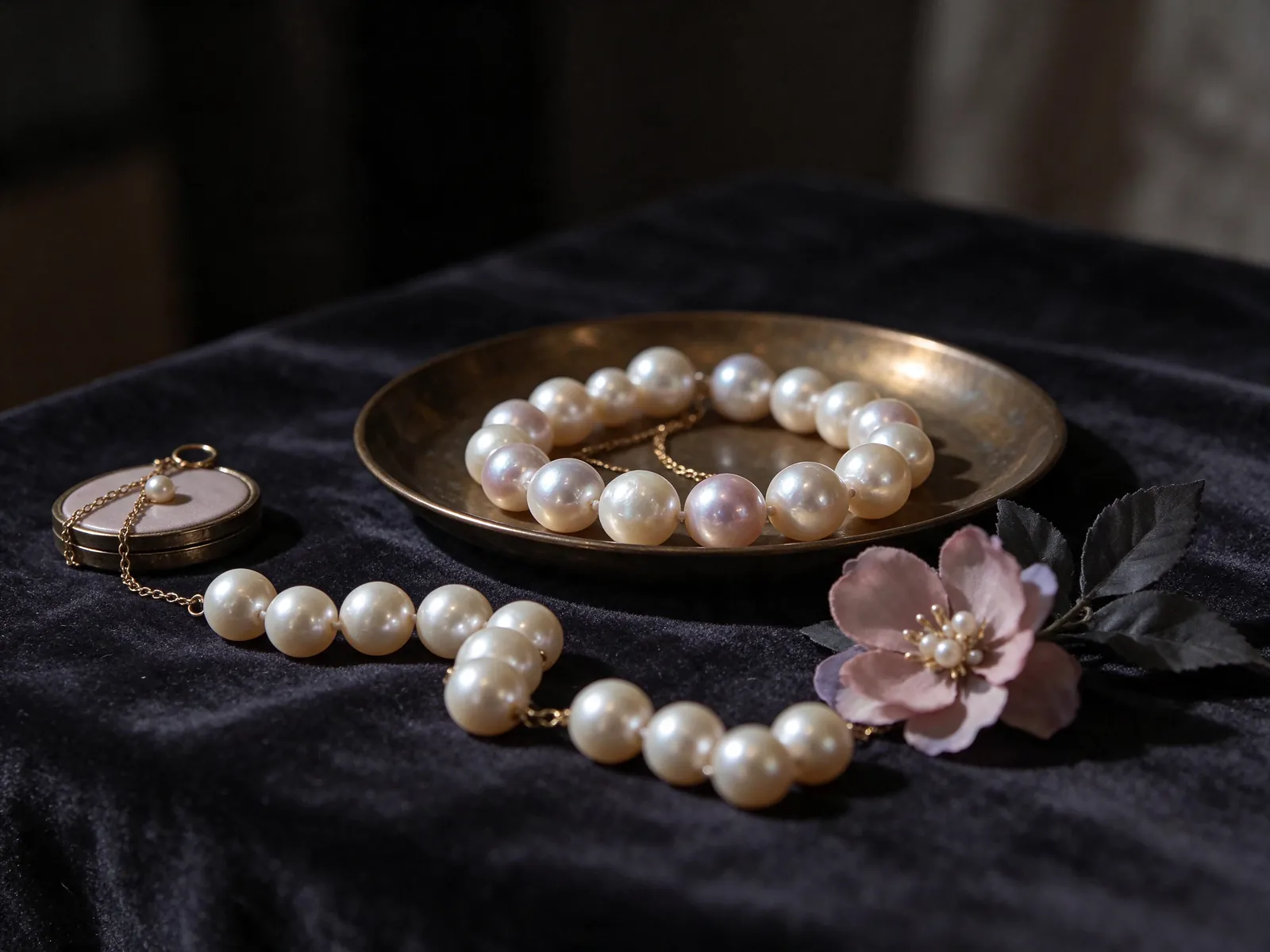
Start by naming the job you want the jewelry to do: an understated everyday accent, a gift with an approachable look, or a stronger focal point for a particular outfit. Then select the quality questions that support that purpose. You may prioritize crisp reflections, a less noticeable outward-facing surface feature or a balanced pair. Asking about those differences gives you more useful information than requesting the highest grade without defining what you hope to see.
Keep three kinds of notes separate: the seller's grading definitions, what you observe, and what any report records. Use the same questions for each candidate. If you are considering several forms of Pearl Jewelry, first narrow the choice by wearing position, then compare the qualities relevant to that form. A strand and a ring need not share a letter-based ranking. A well-explained decision connects the appearance to your intended use instead of repeating a label as the entire reason.
Ask consistent questions when the answers are incomplete
Find out who defines the grade, which factors are included, whether the images and descriptions concern the same object, and what the document covers. Add the visible feature you care about most. If an answer is vague, clarify that point instead of accepting more letters as information. When discussing your needs with Flint Jewelry, bring the descriptions or report questions you want explained. Any quotation is discussed individually on WhatsApp. A third-party grade does not set a Flint price, and a laboratory document should not be treated as a Flint service guarantee.
| Topic | What to compare | Question to ask | Conclusion to avoid |
|---|---|---|---|
| Grade definition | The criteria written by that seller | What qualities contribute to the category? | The same letters mean the same thing everywhere |
| Luster | Reflection definition in comparable light | Are multiple views of this object available? | Photographic brightness proves a higher grade |
| Surface | Position, extent and normal-wear visibility | Which features are on the prominent face? | A hidden area must be free of features |
| Shape and matching | Intended silhouette and whole-piece balance | Does the variation support the design? | One pearl's description establishes a balanced pair |
| Documentation | Issuer, identified object and stated findings | How is the report connected to this object? | A document title supplies a universal top rank |
| Identification-only certificate | Whether quality grading or thickness is recorded | Is this an identity document, a quality assessment, or both? | A certificate automatically proves a grade, value or guarantee |
Pearl knowledge and authoritative references
GIA lists seven pearl value factors: size, shape, color, luster, surface quality, nacre quality and matching. Matching applies to jewelry containing two or more pearls. These factors guide comparison; they are not a universal system for converting letter grades.
Read the reference for this factFrequently asked questions
Is AAA a reliable shortcut when comparing different sellers?
Only after you understand what each seller means by it. Without the definitions, the shared label does not establish shared criteria. Compare the actual descriptions of luster, surface, shape and other relevant factors instead of assuming a universal conversion.
Does a report name settle which pearl will look best on me?
No. Check the issuer, certificate type, object and findings. PSL also lists identification certificates without grades, so documentation does not always include a quality assessment. Your preference for shape, color, visual scale and clothing coordination remains separate. A report title cannot decide every styling question or provide a Flint Jewelry service guarantee.
How should I interpret a surface mark in a close-up?
Use the close-up to understand the mark's location and extent, then consider its visibility in the normal wearing view. A prominent feature may influence your choice, but magnification alone is not a complete quality judgment. Compare it with the overall reflections and your tolerance for that characteristic.
Why can earrings need a separate matching check?
Each pearl can be attractive individually while the pair differs in color, luster, outline or apparent weight. Look at both together. If contrast is intentional, decide whether it achieves the design's purpose rather than expecting identical appearances by default.
Can a photo tell me whether a pearl is natural or cultured?
A photo, color or shape alone cannot establish that identity. Use images to explore appearance, and consult relevant records or testing documentation corresponding to the object for identity information. Do not add a claim simply because a pearl resembles another pictured example.
Updated: