

Finding visual balance with the pearl shape guide: pearl shapes explained through round vs irregular pearls
In Pearl Jewelry, shape sets the outline before you notice the finer details. A series of rounded forms can feel calm and regular; an uneven contour can introduce a deliberate accent. Begin by deciding whether you want repetition or a distinct focal point. Both can work with a simple outfit. The choice is about your preferred composition, not a rule that one silhouette belongs at formal events and another belongs only in casual settings.
Now place that outline in the context of the whole design. A loose pearl on a neutral background tells you less about a pendant than a view showing how it hangs. Earrings should be considered as a pair, and a strand as a sequence. The same general form can make a different impression depending on orientation, spacing and the surrounding setting. Compare the overall result before concentrating on isolated details.
Naming forms accurately in the pearl shape guide: pearl shapes explained beyond round vs irregular pearls
A clear description keeps shape, size and formation separate. Baroque refers to an irregular outline. In CIBJO terminology, Keshi cultured pearl denotes a non-beaded cultured pearl formed as a by-product of saltwater pearl cultivation. Seed emphasizes small size; CIBJO defines seed pearl specifically as a small natural pearl. Rice describes a narrow, elongated silhouette and is not another word for seed. A shape label does not tell you how the pearl formed, and a size label does not tell you its outline.

A round face is not always a spherical body
For round pearls, examine the impression of roundness across several views, not just the outline in a single photograph. A near-round pearl remains close to a sphere but departs slightly from that form. Near-round does not mean half-round. If you prefer a classic stud, compare the profiles of both pearls as well as their faces. If you prefer a strand, look at how neighboring shapes work together in the complete arrangement.
Button forms can look round from the front while having a flatter side profile. That makes the side view important, especially when you are considering how much an earring projects. A button shape is not simply another name for Mabé, and a hemisphere is not a near-round sphere. Avoid compressing these descriptions into one category. The pearl's shape and the setting's construction both contribute to the finished appearance.
Check projection before choosing a stud
Look at the visible depth of the pearl, the surrounding mount and where the post sits. Consider the size of the complete earring against your earlobe rather than treating the pearl alone as the design. If photographs do not show the profile, ask for a view that does. Questions about overall dimensions and weight are more useful for practical fit than assuming every round-looking face will sit the same way.

Elongated forms: compare fullness as well as length
With oval pearls, notice where the widest point falls and how the ends taper. A full, compact oval produces a different outline from a long, narrow one. Potato is a familiar appearance description, not an exact geometric standard, so examine the actual contours rather than expecting uniformity from the word. These observations are especially helpful when deciding whether you want a soft, substantial shape or a more directional line.
The phrase rice shaped pearls points to a slender silhouette; it does not establish a particular size. Read the length and width separately if you want to understand scale. Direction also changes the effect: a long axis placed across a strand creates a different pattern from one suspended downward. Against a crew neck, an open collar or a straight neckline, compare how that direction relates to the clothing instead of relying on the name alone.
Read a strand as a sequence of proportions
Even when all the pearls share a broad shape description, differences in length, fullness and placement can change the strand's rhythm. Start with a full view and decide whether the variation feels intentional to you. Then inspect neighboring pearls for the transitions that create that impression. For a pair of elongated earrings, compare the two long axes and the location of each widest point to understand their relationship.
Drops, coins and sticks: orientation is part of the design
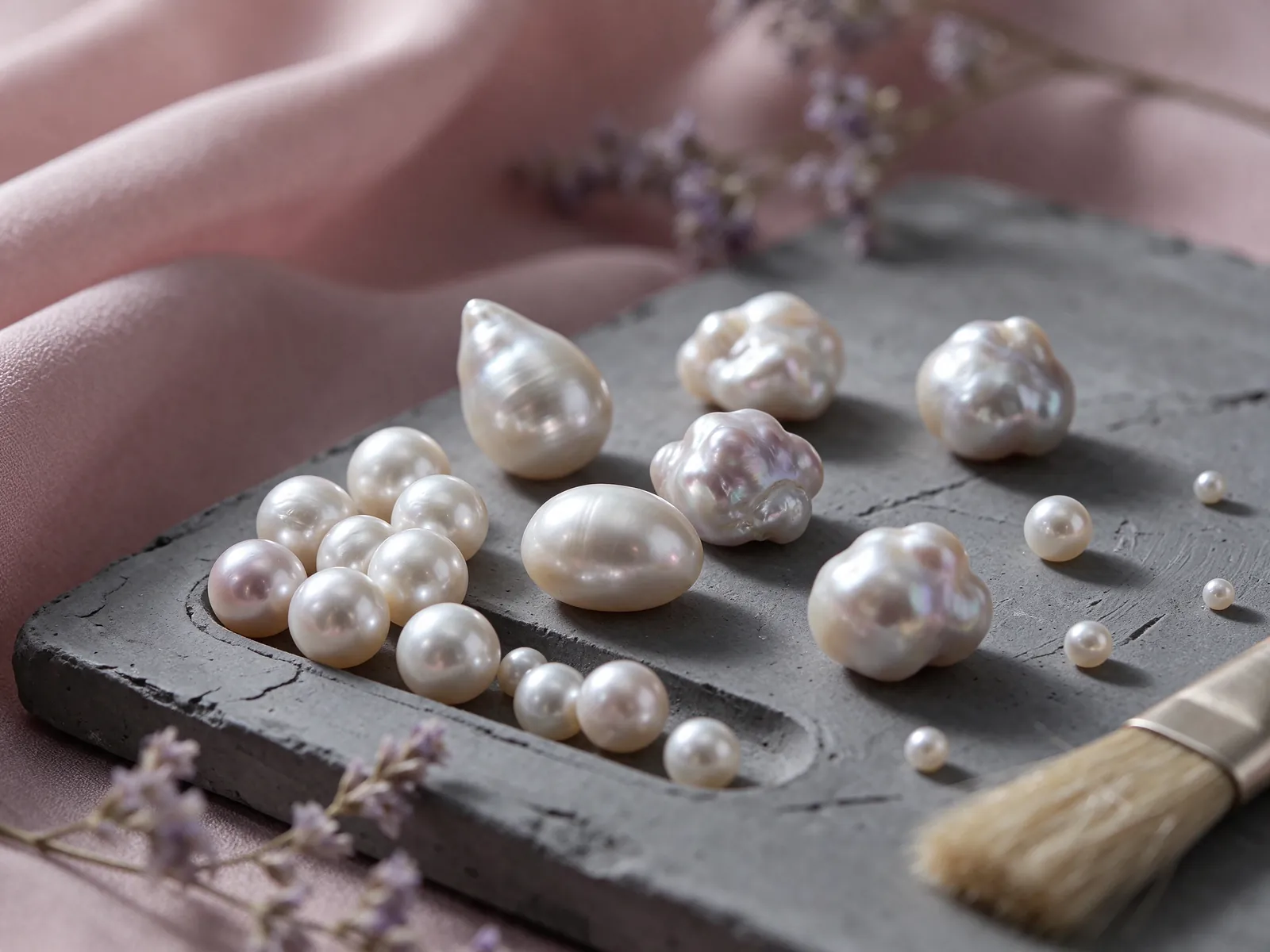
The outline of drop shaped pearls has a narrower end and a fuller end, so it naturally suggests an upward and downward direction. The attachment point determines how the design presents that shape. Look at a pendant hanging naturally and see where the fuller end rests relative to the neckline. For earrings, include the full drop length and your hair in the comparison. No single pearl outline can promise the same flattering result on every wearer.
The shape of coin pearls has a broad, flatter appearance, whereas a stick form emphasizes a stretched line. Both deserve a side view because the visible outline may change substantially as the piece turns. If you like a wide front face, decide whether you also enjoy its slimmer profile. If you like an elongated form, check the direction in which it hangs rather than assuming the studio arrangement represents every moment of wear.
Use three kinds of views for three different decisions
A face-on image helps you compare the main contour and visible surface. A profile helps you understand depth and curvature. A worn or naturally hanging image helps you judge placement. For flat forms, these views are particularly complementary. Try the outline visually against a plain neckline first, then consider patterns and texture. That approach makes it easier to distinguish the pearl's contribution from the details of the clothing.
Irregular contours and surface rings are separate observations
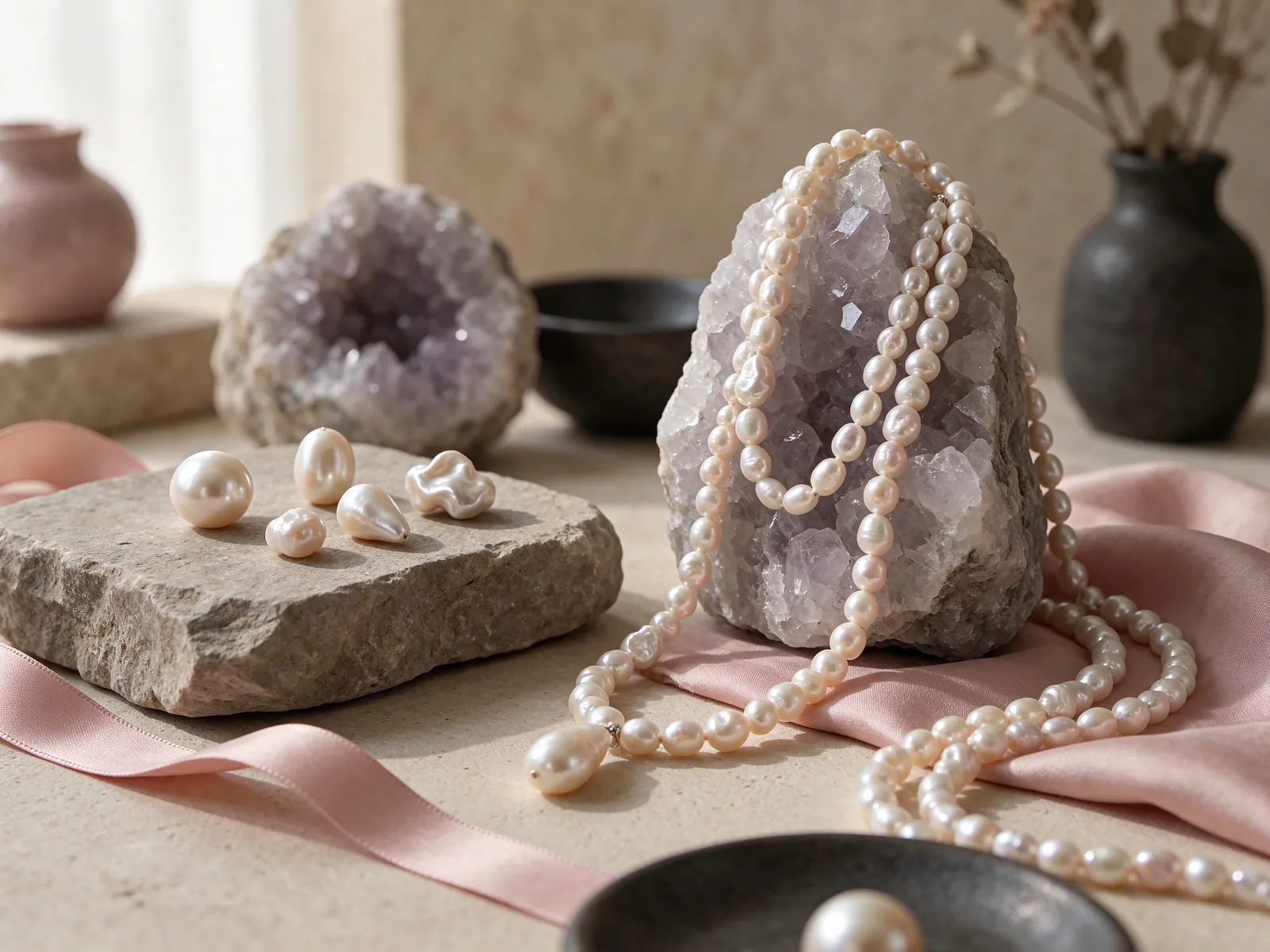
When looking at baroque pearls, identify the irregular feature you enjoy most: perhaps an off-center curve, an uneven extension or a change in fullness. Then check whether the setting puts that feature in a satisfying position. An individual contour can become the organizing point of a design rather than an interruption. A clean outfit often makes that outline easier to appreciate, but it is your preferred balance that should guide the final choice.
Circled or ringed pearls have rings around the surface; that does not mean the pearl is a round sphere. First inspect the outer boundary, then the pattern on the surface. Keeping those observations separate prevents confusion when descriptions use words associated with circles. If rings appeal to you, compare how they appear in the complete piece and how light moves across the contours rather than grouping every ringed pearl under one silhouette.
Build a pair through a visible relationship
Irregular earrings can be paired through resemblance or through complement. Similar visual weight and related color may link two different contours; alternatively, a closely matched overall outline may be what you prefer. Look at both earrings together before studying each pearl separately. Decide whether the asymmetry feels purposeful and whether their hanging directions support that effect. Exact duplication is not the only way to create a coherent pair.
Keep shape within the broader quality comparison
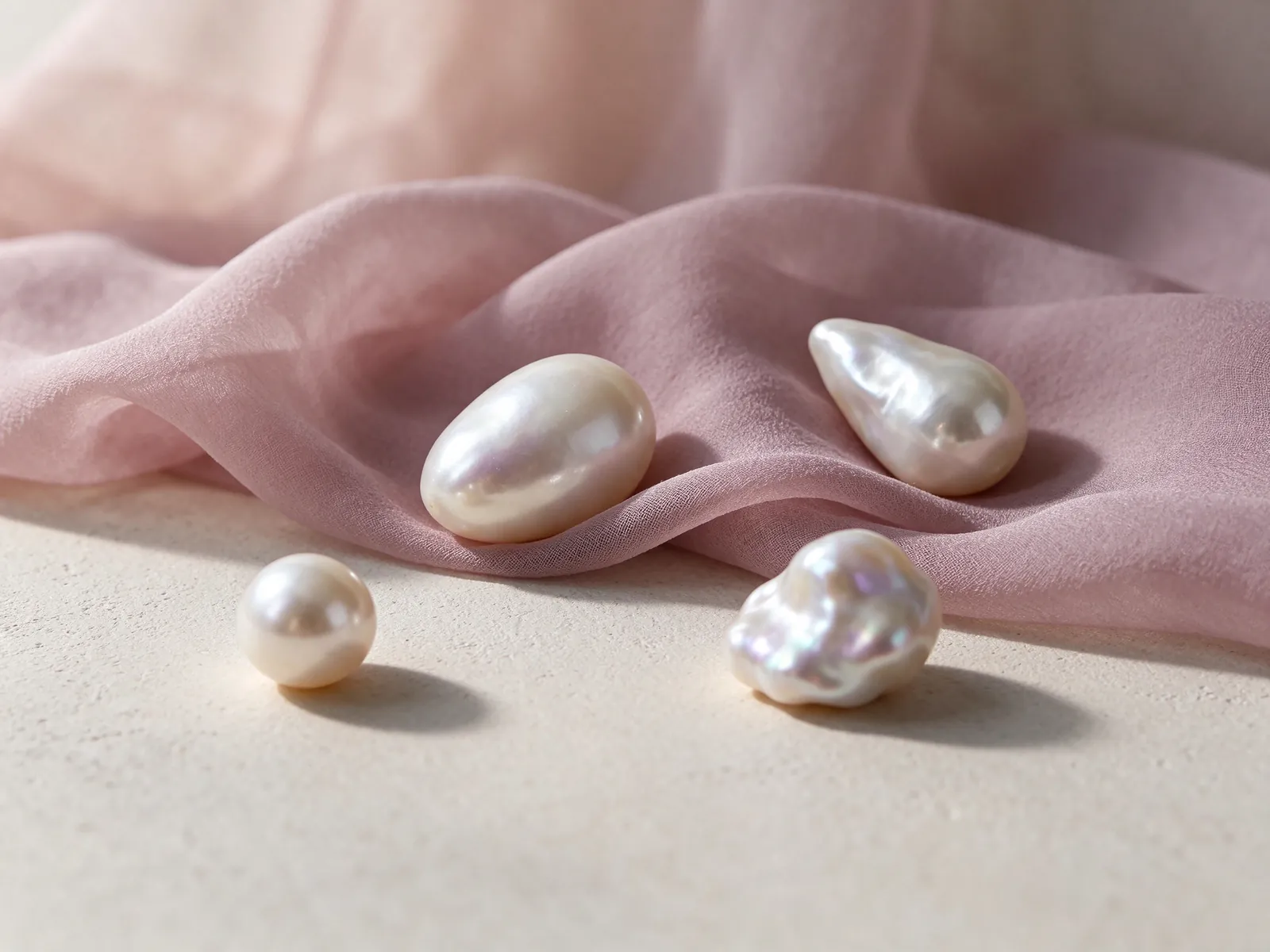
GIA describes seven pearl quality factors: size, shape, color, luster, surface quality, nacre quality and matching. That framework gives shape a specific place without making it the entire assessment. A preference for roundness should not replace attention to luster or matching. Likewise, choosing a sculptural outline does not mean those other factors stop mattering. Identify what you value most, then compare the pieces with that priority in mind.
An outline cannot establish where a pearl originated, whether it is natural or cultured, or whether a certificate exists. Color alone cannot settle those questions either. If you have jewelry documentation, read what it actually states about the pearl instead of treating a visual term as identity evidence. Photographs and documents answer different questions: one helps you consider appearance, while the other may contain the recorded identity information you need.
Do not confuse photographic contrast with a shape difference
Compare photographs with similar lighting, backgrounds and distance where possible. A strong shadow may exaggerate depth, and a bright reflection can obscure a local curve. Detail images help with close observation; worn images help with the overall composition. If an edge disappears into the background or the profile is missing, ask for a clearer angle. Resolving the specific uncertainty is more useful than assigning a complete judgment from one photograph.
Choose for the way you actually wear jewelry
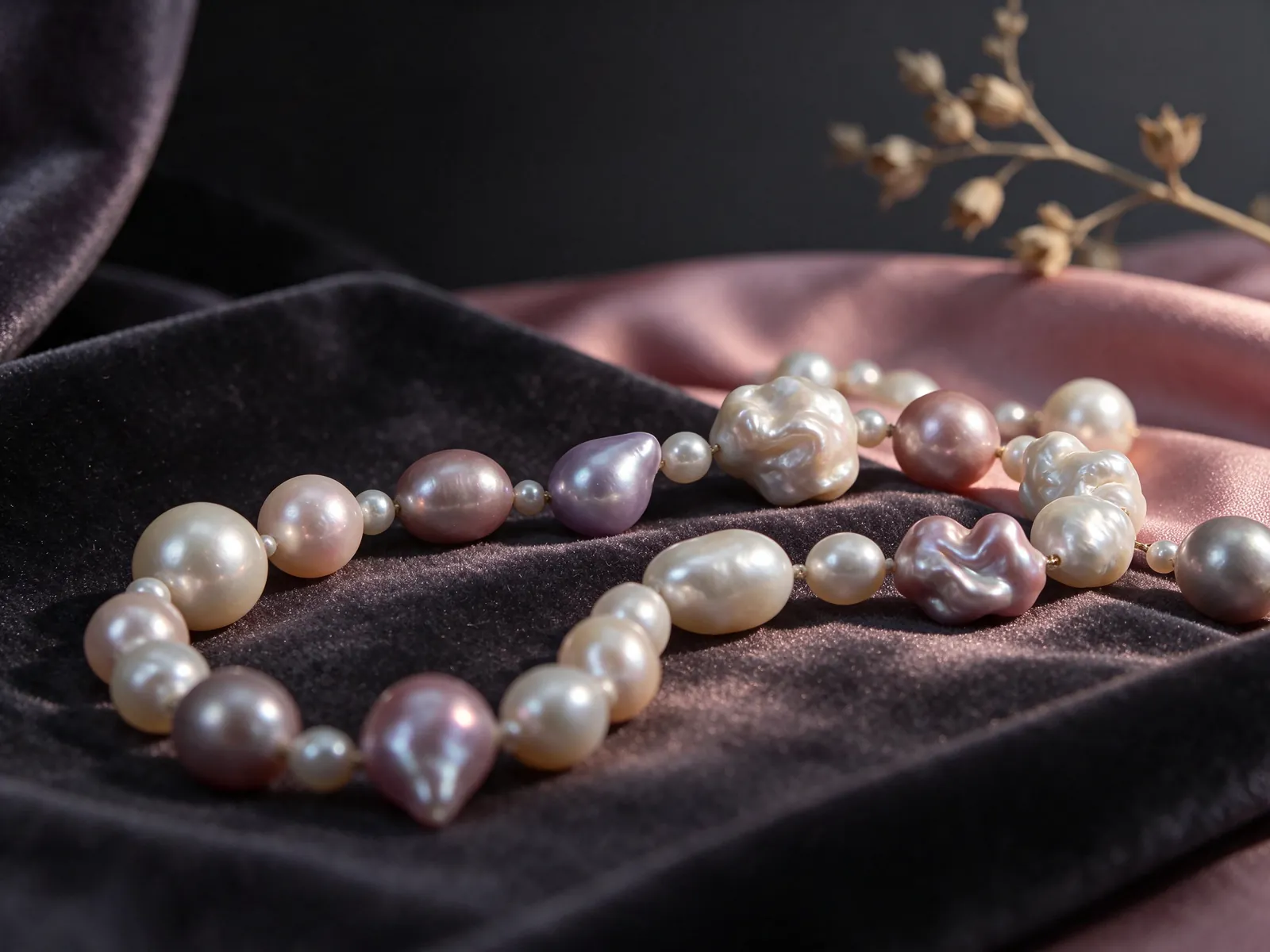
For the final decision, picture an outfit you wear often. Does the collar leave the pendant's whole outline visible? Does your usual hairstyle cover one side of the earrings? An elongated silhouette can echo a downward clothing line, while a broader outline may need more open space. Treat these as comparisons to try, not permanent style rules. The goal is a relationship between the piece and your wardrobe that you enjoy repeatedly.
Include everyday activities in that picture. A scarf, headphones or a high collar may interact differently with projecting contours or a swinging pendant. Shape is only part of the practical decision: the setting, overall dimensions, weight and wearing position also matter. A dramatic photograph does not guarantee a comfortable everyday fit. Consider the complete design and your own habits before making a shape name the deciding factor.
Make your design questions specific
Instead of asking only for a particular shape, describe the effect: a rounded stud with a restrained profile, a pendant with a fuller lower end, or earrings with complementary irregular outlines. Say whether you want a quiet accent or a strong focal point, and ask about the dimensions relevant to your use. When discussing a design with Flint Jewelry, these details keep the conversation focused on proportion and wearing preferences. For a conversation about your preferred pearl silhouette and how it relates to a design, contact Flint Jewelry on WhatsApp +85260106207.
| Shape | Recognizable feature | View to add | What to compare | Wardrobe question |
|---|---|---|---|---|
| Round / near-round | Spherical impression with varying roundness | Profile and several angles | Overall shape and pair balance | Do you want a steady visual rhythm? |
| Oval / potato | Long axis with different degrees of fullness | Ends and widest point | Proportions and neighboring transitions | Do you prefer a full or slender line? |
| Rice | Narrow elongated outline | Alternative arrangements | Length and width apart from the name | How does the axis follow your neckline? |
| Drop | One end narrower than the other | Natural hanging position | Attachment and lower-end placement | Is the whole drop visible above the collar? |
| Coin / stick | Broad flatter face or extended line | Profile as the piece turns | Depth and changing visible outline | Does the outline stand out against your top? |
| Baroque | Irregular boundary or extension | Multiple angles and both earrings together | Visual weight and related contours | Do you enjoy this particular focal point? |
Pearl knowledge and authoritative references
GIA identifies seven pearl quality factors: size, shape, color, luster, surface quality, nacre quality and matching. A shape preference should be considered within that broader framework.
Read the reference for this factFrequently asked questions
Why can two pearls look round in front photos but different in profile?
A front image does not show the full depth of the body. A button form can have a round-looking face and a flatter profile. Compare side views before assuming that a circular front outline means a sphere.
Does the term rice-shaped tell me how small a pearl is?
No. Rice-shaped describes a slender outline. Dimensions provide size information, and seed emphasizes small size rather than rice shape. CIBJO defines seed pearl specifically as a small natural pearl. Neither a rice outline nor a small size alone proves natural identity.
Is Keshi a name for every irregular pearl?
No. In CIBJO terminology, Keshi cultured pearl denotes a non-beaded cultured pearl formed as a by-product of saltwater pearl cultivation, while baroque describes an irregular shape. An irregular silhouette alone is not enough to assign the Keshi term.
Which photograph is most helpful for choosing a drop pendant?
A naturally hanging view helps you judge direction and placement, but it should complement front and side images. Together they show the outline, depth and how the attachment presents the pearl.
Does choosing a round pearl settle the quality question?
No. GIA considers shape alongside size, color, luster, surface quality, nacre quality and matching. Your shape preference is one part of the comparison, not a substitute for the other factors.
Updated: