

What should be assessed in a broken pearl necklace clasp before considering pearl necklace clasp replacement or pearl clasp repair?
Start by distinguishing a fastening that will not close from a connection that has come apart beside it. Place the necklace on a soft, clean surface and note which area looks different: the moving part, its receiving side, a connecting ring or the point where the string meets the metal. Do not pull on the strand to recreate the failure. When exploring a pearl repair service, a specific account of what happened is more helpful than calling every separation a broken clasp.
Repair and replacement respond to different needs, but your preference alone cannot decide what the structure supports. Keeping the old fitting may matter because it contributes to the necklace’s appearance; changing the closing motion may matter because fastening has become awkward. Both directions require the clasp and neighboring connections to be considered together. Explain whether the issue appeared suddenly or developed over repeated wear, and mention a snag if one occurred. These observations help frame questions, not confirm a cause. A photograph cannot establish the condition of an internal moving part or prove that a component can be repaired.
Which clasp and connection photos help explain a broken pearl necklace clasp when asking about pearl necklace clasp replacement or pearl clasp repair?
Include the entire necklace, both faces of the clasp and close views of each attachment. Leave the neighboring pearls and strand ends in frame so the arrangement is visible. Diffuse light is preferable to glare that hides an opening. Photograph detached pieces where they rest instead of pushing them together. Add a sentence about which action no longer works; images support an initial conversation but cannot confirm the condition of moving parts.

Evaluate a new clasp as part of the whole necklace
An attractive replacement is useful only if its connections and operating layout suit the necklace. Check the discussion covers both ends, not just the side that failed. A single strand and a multiple-strand arrangement may need different interfaces; ring orientation also affects whether the assembled necklace lies naturally. Buying a visually similar fitting first can leave these questions unanswered. Outline the look and handling you prefer, then discuss the actual attachment needs before committing to a component.
Replacing a clasp can change overall length because the fitting and its junctions occupy part of the necklace. Tell the assessor if you want the pearls at their current neckline position; an older wearing photograph can explain that without putting the damaged piece on again. Materials to discuss with Flint Jewelry are 18K 750 white gold, 18K 750 yellow gold, 18K 750 rose gold, PT950 platinum and PT900 platinum. Whether any option suits a particular replacement depends on the attachment and construction. These names do not establish that a compatible clasp is in stock. Include the metal color and proportions you want to preserve in the inquiry.
Use a neckline photograph to explain the fit you want
An older wearing photograph can show where the necklace sat before the problem, without putting the damaged piece on again. Explain whether you prefer the clasp hidden at the back or visible at the side. A change in position should be considered with the full assembly, not achieved by simply rotating a fastening intended for another use.

Look beyond the metal if the strand has changed
A frayed end, changed pearl spacing or looseness beside the fitting may widen the question beyond replacing metal. Include both the attachment and the full strand in your photographs. Information about a pearl necklace restringing service explains this separate aspect of construction: replacing the clasp cannot automatically correct string elsewhere. Local attachment work and restringing the whole necklace are not the same scope. Equally, a clasp problem does not mean every necklace must be completely restrung. Describe whether your priority is changing the closing motion, addressing visible strand changes or both, so each concern can be assessed.
Some visible space beside a fitting belongs to its attachment arrangement, so avoid identifying a break from that detail alone. Compare earlier images when available and report changes rather than guessing how the piece was constructed. The question of when to restring a pearl necklace is better approached through use and visible condition than through a fixed interval inferred from a broken fastening. Do not cut an end or undo a knot to make the issue easier to photograph.
Preserve loose components and their arrangement
Keep separated pearls in a container that will not spill, away from sharp metal parts. Photograph any order you can still identify and say whether components are missing. Avoid tape, glue or improvised threading to hold the necklace together. If preserving the existing pearl sequence matters, include that request before any work is discussed.
Protect the pearls while considering the clasp
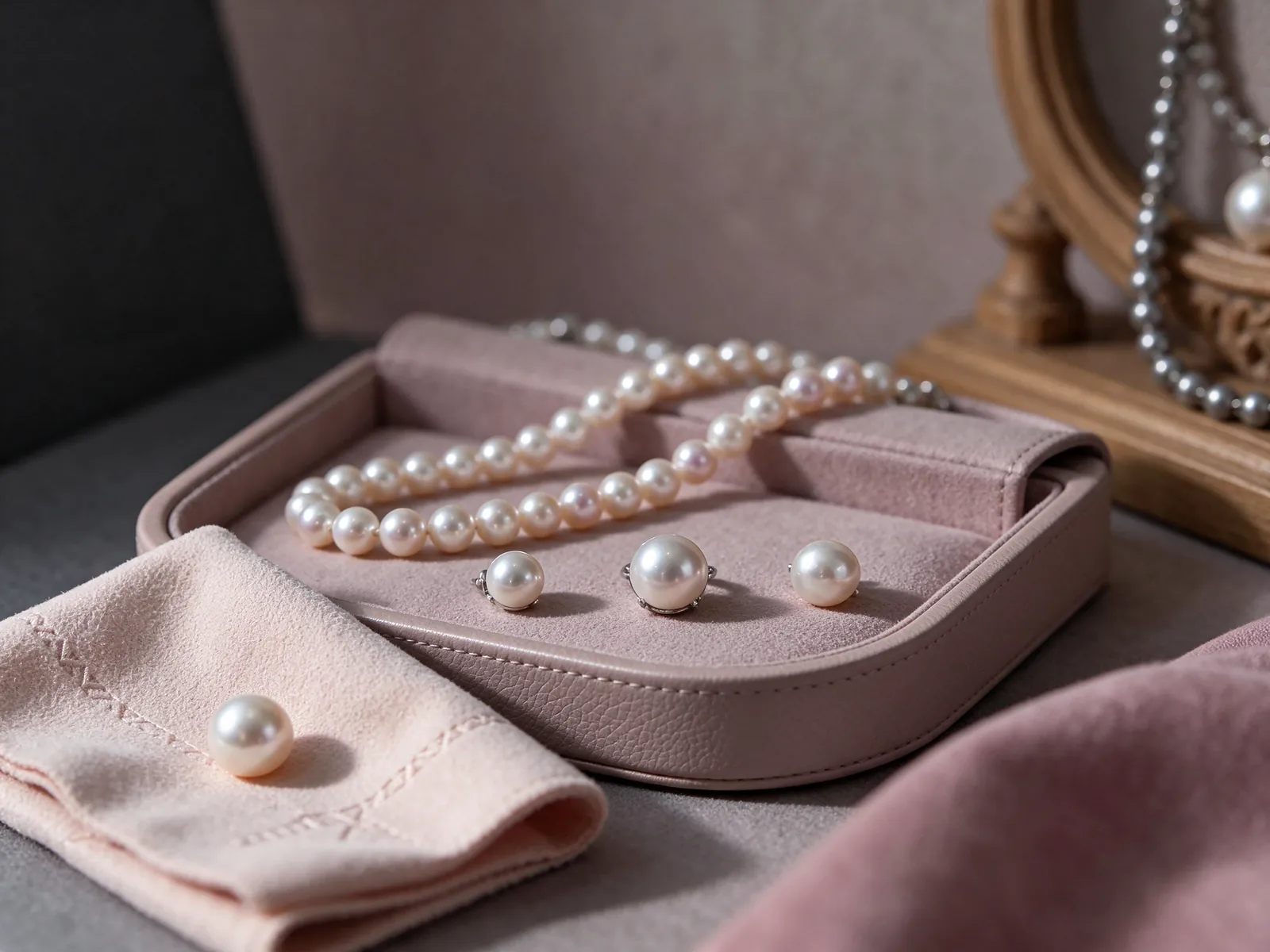
A metal fitting is not isolated from the rest of a pearl necklace. GIA lists pearl at 2.5 on the Mohs hardness scale and advises against ultrasonic and steam cleaners for pearls. This number describes scratch resistance, not clasp strength. Cleaning selected for metal alone may therefore be unsuitable for the attached piece. WSP’s care article also reminds readers to wipe clasps, but routine cleaning does not establish whether a faulty fastening can be repaired. For ordinary after-wear care, GIA recommends a very soft, clean cloth. Set a bent or unreliable clasp aside instead of rubbing hard or repeatedly trying to close it.
Read how to clean pearl clasps and earring posts to distinguish daily residue from a part requiring assessment. Keep perfume, hair spray and unknown cleaners away from the strand. GIA notes that string must be completely dry before wearing strung pearls cleaned with water; that does not mean every adhesive, setting or string material can be soaked. Do not immerse a damaged necklace to free a sticking part, and do not use hot air to dry it. Avoid household lubricant or adhesive. Describe where the clasp stops moving and retain its current condition for the inquiry.
Document the fault without a stress test
A still image and a clear description are preferable to repeatedly tugging a doubtful fastening for a video. If parts do not meet, photograph their positions without pushing them closed. Avoid bending a ring with pliers to see whether it solves the problem. Altering the connection can make the initial issue harder to explain.

Consider everyday fastening before choosing a different style
Consider a replacement in the context of the action you want to improve. Do you fasten behind your neck without help, or does someone assist? Is the difficult step gripping the moving part, finding the opposite end or keeping hair away? Describe that action rather than requesting only a bigger clasp. Size alone does not establish ease of use or reliability; grip position, closing motion and the complete attachment all matter. If you would prefer the fitting at the side rather than the back, discuss that with the whole necklace before assuming a different orientation will work.
Wrist fastening offers a useful contrast. A pearl bracelet clasp may be operated with one hand near your line of sight, whereas a necklace is often fastened where you cannot directly see it. Ideas that suit one do not automatically transfer to the other. Describe high collars, scarves or other clothing that commonly surrounds the clasp. This keeps the discussion focused on your actual use rather than a decorative type that happens to be popular.
Ask how an agreed fastening should be operated
Once any agreed work is complete, learn the intended closing method before wearing the necklace. Try the operation above a table to limit the chance of a drop. Unexpected resistance or a junction that does not align as explained is a reason to stop and ask, not to pull harder or use the necklace's weight as a test.
Discuss Hong Kong assessment before arranging movement of the piece
For an inquiry from the United States, begin by asking Flint Jewelry whether assessment in Hong Kong may be feasible for your situation. Explain your location and provide the photographs before making travel or delivery arrangements. Do not send the necklace on the assumption that it can be received or repaired. An initial conversation should clarify the next step for the actual piece, rather than imply a US repair location or a domestic service process.
Include any details you want preserved: an inscribed clasp, current length, pearl order or the appearance of a family necklace. An inscription describes one component; it does not identify the pearls or establish the material of the entire piece. Contact Flint Jewelry through WhatsApp or telephone +85260106207. Ask which parts the proposed direction would address, whether the fit would change and how costs and subsequent arrangements would be confirmed. If you already have a separate replacement clasp, share its details rather than assuming it is compatible. Photographs begin the conversation; they do not establish an agreed scope of work or shipment acceptance.
Separate preservation requests from repair feasibility
Say whether keeping an old clasp means continuing to wear it or retaining it separately for sentimental reasons. Then ask whether the issue extends to the strand ends and whether a different fitting would change length or position. These questions help distinguish your preferences from the structural decisions that require assessment, without assuming the existing component must remain usable.
| What you observe | Relevant area | Question to ask | Fit preference | Before assessment |
|---|---|---|---|---|
| Clasp fails to close | Moving part and receiving end | Is retaining the fitting a possible direction? | Comfortable closing motion | Set necklace aside |
| Attachment separates beside clasp | Both connecting junctions | Does the connection need attention instead? | Natural orientation on the neck | Photograph detached parts |
| Fraying or changed pearl spacing | Strand ends and full string | Does the discussion include restringing? | Keep existing length and order | Do not cut or undo knots |
| Current operation is awkward | Grip points and interfaces | What would a different fitting change? | Hair and collar clearance | Describe usual dressing routine |
| Family clasp has sentimental value | Old component and attachment | Could it be used or retained separately? | Preserve appearance where feasible | Photograph inscription |
Pearl knowledge and authoritative references
GIA lists pearl at 2.5 on the Mohs hardness scale and excludes ultrasonic and steam cleaning. The attached pearls must be considered when handling or cleaning a necklace clasp.
Read the reference for this factFrequently asked questions
Can I send a necklace from the United States as soon as I share photos?
Contact Flint Jewelry first to discuss whether assessment in Hong Kong may be feasible and what next step is appropriate. Sharing images does not establish acceptance of a shipment or a repair arrangement. Do not dispatch the piece on that assumption.
Can an old wearing photo help if the damaged necklace should stay off?
Yes. It can show the neckline position you want to preserve without wearing the faulty piece again. Pair it with current close-ups of the clasp and its connections; the older photo explains a preference, not the present structural condition.
If I change the clasp, will the pearl strand stay at exactly the same length?
Do not assume so. The clasp and connecting arrangement contribute to overall length. Discuss the existing position and the proportions of the proposed direction before deciding what fit you want to retain.
Why photograph the other end when only one side looks broken?
Both sides form the fastening assembly. The retained end may affect compatibility, orientation and the way a replacement connects. Showing only the damaged part can omit an important part of the assessment question.
Does keeping a family clasp mean it has to be reused?
No. Explain whether your priority is continued use or retaining the component as a keepsake. Its condition and the necklace's structure determine what can be discussed; sentimental importance alone does not establish suitability for reuse.
Updated: